DD
MM
YYYY

PAGES

DD
MM
YYYY

spot_img

PAGES

Home Blog Page 2128

Bitcoin Cash (BCH) Recovers From $284 Fall — Is DexBoss the Next Big Cryptocurrency?

0

Is it the perfect time to invest in BCH? As illustrated in Chart 1, on February 27, the BCH trading day started with an ascending channel and eyeing to break the $301 key resistance. Could it trigger a bullish trend? In the preceding day, BCH began a brief fall, entered the phase of trading range, and kept fluctuating. At 18:25 UTC, BCH broke the support at $289 and dropped to $284. A Death Cross on MACD at 16:05 confirmed this downtime. At 18:55, BCH found support, experienced an uptrend, broke the resistance at $298, and reached $301. But at 22:05, BCHs price fell and closed at $294.3.
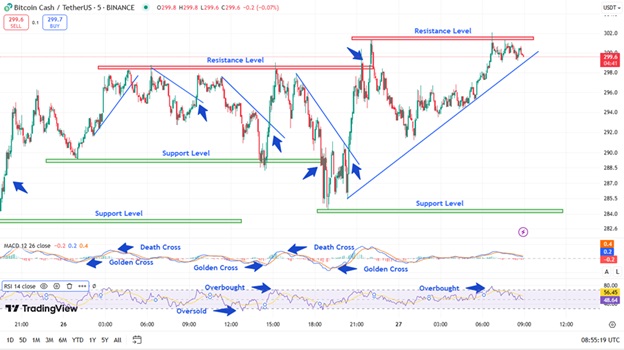
Chart 1 – Analyzed by Buvaneswari_L, published on TradingView, Feb 27, 2025

BCH’s Momentum & Best Crypto Coin to Buy Now

When it comes to the analysis of today’s BCH price, we will see a very very strong bullish momentum. Nevertheless, buyers are not so confident in the currency yet. They are, however, forcing their way through to spot those fresh cryptocurrencies known as coins to buy and make in future a considerable stack of virtual money. Those that we are going to discuss are, in a nutshell, the most rewarding asset that anyone can pick and real-time crypto farming of the decentralized finance sector. “Young money in the crypto market” There is some other project whose people are farming well. They include DexBoss, Aureal One, and three other cryptos that have proven to be legitimate projects. Let’s work on their features, one at a time.

DexBoss: A Promising Future in DeFi

One of the characteristics that makes it stand out is anchored as a vital element within the DeFi industry as a decentralized finance firm. At the most elementary level such as traditional banking and the development of blockchain-based trading, DexBoss is trying to solve the problem of the two worlds bridging this gap. DexBoss is a platform where you can stake tokens, borrow or lend funds, and earn rewards from deep pools. It is a product of its arm program and has staking and borrowing alongside the features of other automatic yield farming plus other projects.

Click here to know more about DexBoss

Its most striking feature is the buyback and burn system to reinforce the sustainability of $DEBO. Also, DexBoss does not aim for short-term success, but it is striving to work towards overcoming those major DeFi obstacles like network congestion, transaction costs, and high capital withdrawal fees. Every round offers the company a stage to gather some $50 million they are seeking in addition to their participating. A low starting value, as well as a wide ecosystem, make DexBoss a sure asset window that savvy investors are coming to the determination of the best one to go for.

Aureal One: A Revolution in Gaming and the Metaverse

Against all odds, Aureal One is making a name for itself in the metaverse and blockchain gaming space. The project, which runs on its native token DLUME, the current value of which is at $0.0011, leverages Zero-Knowledge Rollups, offering fast transaction speeds and almost freeing the network from gas costs. These two aspects are crucial in ensuring the gaming process will be smooth.

The ecosystem is made up of the very first game Clash of Tiles and other games under development like DarkLume. Alongside the already established token, Aureal One has ventured into the additional staking and governance provisions prospected from the DLUME holders to bring rigorous participation to the community. As part of their $50 million 21-round presale, this project has the attention of investors as they aim at being the first beneficiary of the booming gaming sector.

ChainGuardians: Gamifying Blockchain Security

To ensure that their users are not at risk in the long run, cybersecurity is given priority and ChainGuardians introduces a new and interesting way of virus protection by means of gamifying blockchain security. The blockchain platform, which is particularly innovative, rivals others in the industry through its ability to attract, train, and retain the users through a gaming ecosystem and cybersecurity education. ChainGuardians trade at about $0.10 at the moment but this does not overshadow how lucrative it actually is.

By teaching people about cybersecurity through gaming and informing them, ChainGuardians is able to not only incentivize users but also bring them NFT-based rewards that make gaming more interesting. Therefore, this project ranks high on the top will be one of the next Cryptocurrencies to look for ant the Price of Ante Rises due to increase in digital threats.

Holo: Bridging the Gap Between Internet and Blockchain

Holo has set a target of promoting access to the decentralized internet by introducing decentralized hosting solutions. Holo is at a price of $0.025 and it has deals with companies providing the product. This makes the cryptocurrency more lucrative because it is a real-world solution that has demand in different sectors.

Internet decentralization is an increasing focus for security and privacy, so Holo’s P2P (peer-to-peer) hosting approach could be the widespread deployment engine. The provision of decentralized applications takes care of most of the technical issues, while Holo ensures global accessibility and functionality systems.

VeChain: Optimizing Supply Chain Management

By using the emerging obsession of blockchain technology, VeChain is leading the industry in supply chain management. The use of the VET token (path) has become the most exotic and top-flight method of choice for transparent and efficient businesses tracking which is done by the company.

The startup is being talked about as it is the lightning rod on industries including food safety, pharmaceuticals, and luxury service that need transparency throughout the supply chain. Through providing an industry-specific rational blockchain full-pro cvyhs dhc k ton Vegoy Ihatchk sgz Jciomh Giding eact ivenm Weliw Callisla sini def.

Conclusion

Currency systems actually evolve on a regular basis, and development on projects such as DexBoss, Aureal One, ChainGuardians, Holo, and VeChain bring forward extraordinarily bright visions for the future. Thus, the software tackles some of the biggest issues out there, from fast transaction in Defi to redefining the gaming, cybersecurity sector, and supply chain management field.

There are investors and traders who have an interest in finding the next big cryptocurrency able to offer these opportunities that provide the possible high profit. In view of the expansion of online finance, it becomes even more important to be update about new crypto-currencies in order to have better investment opportunities in this very volatile market.

Nigeria Moves to Restructure Electricity Tariff Again, Says BandA Policy Not Working, DisCos Not Willing to Invest

0

The Federal Government of Nigeria is considering a major restructuring of Nigeria’s electricity tariff system, citing the slow pace of migration to Band A customers and the reluctance of electricity Distribution Companies (DisCos) to make the necessary investments in power infrastructure.

This was revealed by the Minister of Power, Adebayo Adelabu, on Thursday, during the ongoing public presentation of the National Integrated Electricity Policy and Nigeria Integrated Resource Plan in Abuja.

Adelabu described the huge disparity between the Band A and Band B tariffs as unfair, particularly because Band A customers are charged N209 per kilowatt-hour for only two extra hours of power supply, whereas Band B customers pay just N63 per kilowatt-hour.

“The gap between the Band A tariffs and Bands B, C, D, and E is just too wide,” Adelabu stated. “We believe it’s not fair. It is not just, and we must be able to carry out some level of regularization.”

The federal government is now proposing a new tariff model that would reduce the price gap between the bands, with the aim of creating a more balanced and equitable pricing system.

However, this announcement has sparked concerns that the policy might end up like previous failed attempts to reform the sector, particularly the controversial Band A tariff hike that was initially promoted as the key to attracting investment into the sector—but has so far failed to do so.

The Band A tariff system, introduced under the Service-Based Tariff (SBT) model, was supposed to drive investment in the power sector by allowing DisCos to charge premium rates in exchange for a guaranteed 20-hour minimum power supply.

However, despite a significant tariff increase—widely protested by consumers—the expected investments have not materialized.

According to industry experts, one of the biggest reasons for this lack of investment is insufficient power generation.

Currently, Nigeria generates just a little over 5,000 megawatts (MW) of electricity, far short of the 30,000MW required to ensure a stable power supply for the country’s growing population and economy.

This chronic power shortage has made it impossible for DisCos to fulfill their obligation of supplying 20+ hours of electricity to Band A customers.

With limited power generation, it is believed that the DisCos lack the incentive to invest in upgrading infrastructure since they cannot guarantee enough supply to match the Band A premium pricing structure.

With the government now pushing for another restructuring, concerns are growing that this new policy could end up like the Band A experiment—touted as a solution but ultimately ineffective due to fundamental supply issues.

“Always thinking about getting money from the people,” Jide Taiwo, a Nigerian consumer responding to the news, said. “Can this minister take a moment to think about how the people can get the specified number of hours daily? Check @IBEDC_NG page, you’ll see daily apologies for unfulfilled hours. Are they apologies distribution companies?”

Energy experts have warned that without first addressing the country’s generation deficit, any attempt at tariff restructuring will only lead to more disputes between consumers, DisCos, and regulators.

Nigerians are concerned that the restructuring will result in higher electricity with a meager power supply to show for it. This is despite government assurances that the tariff restructuring will not result in immediate price increases.

With Adelabu’s comments signaling an impending restructuring, the clamor for improved power generation is getting louder. It is believed that without sufficient power generation, no new structure will address Nigeria’s longstanding electricity supply challenges— as it would simply increase consumer costs without tangible benefits.

“Regularizing tariffs is one thing, but will there be a corresponding improvement in power supply? Nigerians deserve reliable electricity, not just adjusted billing structures,” a Nigerian identified as Patience noted.

Flutterwave Expands Into Zambia With Payment System License From The Bank of Zambia

0

Flutterwave, a leading payment platform that offers various payment products and services for enterprises, has achieved a significant milestone with its expansion to Zambia, having received a Payment system license from the Bank of Zambia.

This approval enables Flutterwave to operate in Zambia, providing businesses with innovative payment solutions that facilitate seamless transactions with both local and international customers. Additionally, Zambian businesses can now process single and bulk payouts to their partners and employees, gaining access to new growth opportunities in the country’s fast-evolving digital economy.

A Promising Future For Digital Payments in Zambia

Zambia’s growing digital economy, driven by a young, tech-savvy population and a shift towards digital payments, presents a major opportunity for large businesses looking to extend their reach across Africa.

The country’s digital payments market is projected to reach $6.7 billion by 2025, signaling significant opportunities for fintech innovation. With digital adoption on the rise, the demand for secure, scalable, and efficient payment solutions is greater than ever. Businesses in Zambia are increasingly leveraging digital tools to enhance customer experiences and streamline financial operations.

By entering the Zambian market, Flutterwave aims to empower businesses with cutting-edge payment solutions, supporting economic growth and financial inclusion.

Flutterwave Payments Offerings in Zambia

Flutterwave expansion to Zambia, provides businesses with a comprehensive suite of payment solutions, enabling seamless transactions and financial management.

By expanding its services to the Southern African country, the fintech company services include the following;

Payment Collection: Flutterwave’s payment gateway allows businesses to accept both local and international payments through multiple payment methods, including cards and mobile money, ensuring a smooth experience for customers.

Seamless Payouts: Businesses can efficiently disburse payments to single or multiple recipients, such as employees, suppliers, and business partners, in Zambian Kwacha.

API Solutions: Flutterwave’s robust API enables businesses to integrate secure online payment processing into their websites and applications. The API supports Flutterwave Checkout, direct charge, and plugins for platforms like WooCommerce and Shopify.

Dashboard: Businesses can monitor transactions, generate reports, and manage account activities using the Flutterwave Dashboard, providing complete control over financial operations.

Invoicing: The platform allows businesses to create and share trackable professional invoices through the Flutterwave for Business dashboard, simplifying billing processes.

Payment Links: Flutterwave enables businesses to generate single and recurring payment links, allowing them to receive payments securely in 50 + currencies.

Flutterwave’s Growth And Expansion: Powering Seamless Transactions Across

Africa Flutterwave has emerged as a leading payment technology company driving financial innovation across Africa. With its scalable and secure digital payment infrastructure, the company continues to enable businesses to expand, process transactions effortlessly, and reach a global audience.

The company’s strategic expansion across Africa has transformed how businesses and consumers engage with digital payments. By entering new markets and securing regulatory approvals, the company has strengthened its presence in key economies, empowering enterprises with innovative financial solutions.

Growth Metrics

Flutterwave impressive growth metrics include the following;

30+ Currencies: Flutterwave facilitates payments in over thirty currencies, allowing businesses to transact across multiple markets with ease.

20M+ API Calls Daily: The company’s robust payment infrastructure processes over 20 million API calls per day, peaking at 231 requests per second, demonstrating its ability to handle high transaction volumes.

500k+ Payments Processed Daily: Flutterwave processes an average of 500,000 transactions daily, ensuring businesses can receive payments quickly and securely.

15+ Payment Options: Businesses and individuals can choose from multiple payment methods, including debit and credit cards, bank accounts, mobile money, POS, M-Pesa, VISA QR, bank transfers, and USD, making transactions accessible and convenient.

As Africa’s digital economy continues to grow, Flutterwave remains at the forefront of financial innovation, simplifying payments, increasing financial inclusion, and helping businesses scale effortlessly across borders.

With its latest expansion to Zambia, Flutterwave continues to solidify its role as a leading enabler of digital commerce across Africa, helping businesses scale in an increasingly digital world.

Shiba Inu  Aims for a 390% Run, While Dogecoin Eyes 244% Rally and RXS Crypto Price a 12334% Jump: When?

0

In  Q1 2025, lately, the crypto world hasn’t been making big moves as expected with the incoming of the new pro-crypto president of the U.S. The moves investors had anticipated seem to have vanished. Due to this, The top analyst has identified the top three coins that should be in your portfolio for massive gains; these coins are Shiba Inu, which aims for a 390% run; Dogecoin, which eyes a 244% rally; and lastly, Rexas Finance(RXS) set to transform your portfolio to a six-figure and other seven figures based on the investment made since it is set for 12334% jump,  but when will all this happen With the current market trend? Let’s find out.

Shiba Inu Surges: Can It Skyrocket 390% to Unimaginable Heights?

Shiba Inu continues to thrive as one of the main currencies in the crypto universe. At its current price of $0.00001585, the token has proven its worth through a 1.21% growth. The ambitious goal of a 390% rise hinges on several factors. Shiba Inu’s market value can increase through sustained community backing, strategic token-burning initiatives, and expanded connections to decentralized finance (DeFi) platforms. Investors watch for upcoming developments that might spawn another Shiba Inu mania outbreak.

Dogecoin on the Rise: Can It Soar 244% to New Heights?

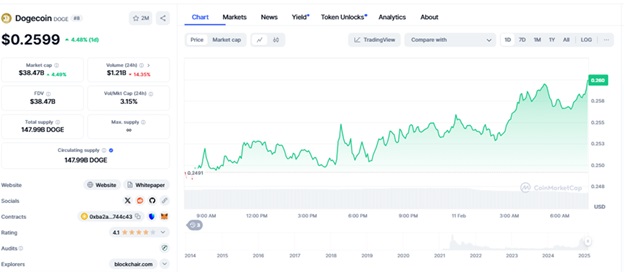
Dogecoin maintains its trading price at $0.2599, with a current growth of 4.61%. Social media and celebrity endorsements sustain Dogecoin’s price because analysts predict a 244% gain. Dogecoin experienced unexpected price boosts because of popular trends and the support of well-known personalities. The demand for Dogecoin might rise, and its upward trajectory could strengthen with additional merchant adoption and integration into payment systems. The existing market presence of Dogecoin provides a strong foundation from which it can achieve its predicted expansion.

Click Here To Buy Rexas Finance (RXS) Presale

Rexas Finance (RXS) Eyes Explosive 12,334% Surge—Final Presale Stage Nears Sellout

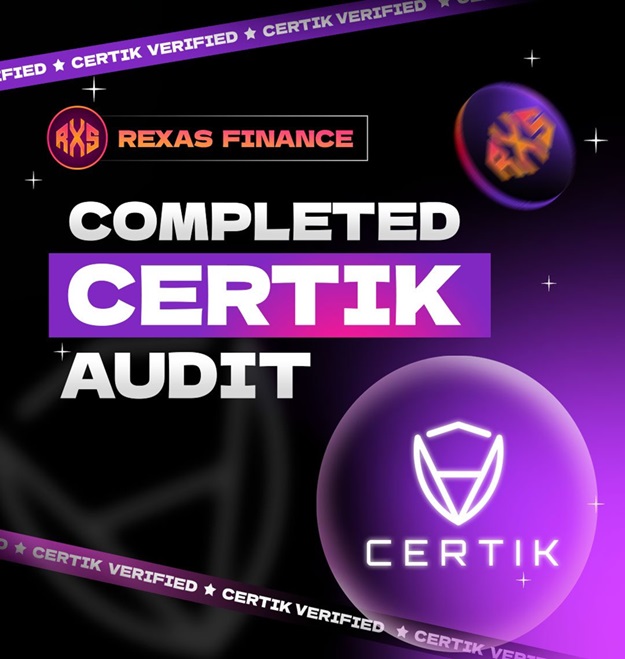
Rexas Finance (RXS) leads the cryptocurrency market, focusing on Real World Assets (RWA). RXS appears on CoinMarketCap and CoinGecko platforms, while Certik conducted an audit that improved its reliability. RXS sets an aggressive 12334% growth target to generate significant returns for its investors. The company bases its future projection on its distinctive method of converting tangible assets into tokens.

The distinctive feature of RXS is its primary focus on utilizing real-world assets. Transforming assets, including real estate, gold, and artwork, enables more investors to access them through tokenization. The connection RXS creates between conventional investment opportunities and cryptocurrency assets allows it to reach abundant market potential. Through its unique asset tokenization strategy, the platform enables cryptocurrency investors to expand their portfolio options, making inaccessible assets available for trading.

Stage 12 marks the final stage of Rexas Finance presale, where investors have already reached 89.75% of their funding goal. The price of 1 RXS stands at $0.200 during Stage 12. The fundraising has exceeded $45,754,060 while attracting investors to purchase 448,768,012 tokens with a total issue of 500,000,000. The planned listing date for RXS is June 19th, 2025, and its initial exchange price is $0.25. The ongoing presale provides investors with a short-term opening to buy RXS tokens before their exchange listing date. Since more than 85% of the funding target has already met its goal, investors must move swiftly to participate in this final funding round.

Conclusion

With the current market trend, having Shiba Inu, Dogecoin, and RXS in your portfolio positions you for better gains with  Shiba Inu’s 390% target and Dogecoin’s 244%, a total of almost 6X on any investment in both. In comparison, RXS, with its focus on real-world assets and a projected 12334% jump, should have a more significant percentage in your portfolio, and to do this, savvy investors are encouraged to head to the RXS website and buy into the final presale stage 12 with top analyst predicting all this to take place before the end of this bull run.


Website: https://rexas.com

Whitepaper: https://rexas.com/rexas-whitepaper.pdf

Twitter/X: https://x.com/rexasfinance

Telegram: https://t.me/rexasfinance

Bybit Declares War on “Notorious” Lazarus Group After $1.4B Hack, Offers $140m Reward

0

Bybit, a leading crypto exchange, has declared war on “notorious” Lazarus group, a hacker group made up of an unknown number of individuals, alleged to be run by the government of North Korea.

This is coming after the crypto exchange experienced a security breach resulting in the unauthorized transfer of over $1.4 billion in liquid-staked Ether (ETH) and MegaETH (mETH). The exchange reported unauthorized access to one of its Ethereum cold wallets on February 21, 2025.

Following the hack, Blockchain security firms, including Arkham Intelligence, identified North Korea’s Lazarus Group as the likely culprit behind the hack. This has spurred Bybit to declare war on the group, offering a $140M bounty reward.

Announcing this move, Bybit CEO Ben Zhou announced on X the launch of the first bounty site that shows full transparency on the money laundering activities of the sanctioned Lazarus Group dubbed Lazarusbounty.com.

He wrote,

“Join us on war against Lazarus. Industry-first bounty site that shows aggregated full transparency on the sanctioned Lazarus money laundering activities. V1 includes:

– Becoming a bounty hunter by connecting your wallet and help tracing the fund, when your submitted bounty leads to freeze, bounty is paid upfront upon instantly at freezing.

-All freezer gets 5% of the bounty, exchange, mixers, and all.

– live ranking of good and bad actor and their response time to deal with the sanctioned Lazarus group transactions. You don’t want to end up on the bad actor list, it’s a record of you helping to facilitate sanctioned transactions.

– Live API wallet address update for exchange, Chainanalysis”.

Zhou added that the exchange has assigned a team dedicated to maintaining and updating the website, stating that the hunt will not stop until Lazarus group or bad actors in the industry are eliminated.

Several users on X commended the initiative with others expressing the desire to provide necessary information to ensure that the perpetrators of the hack are exposed.

Here are some reactions;

@tallmetommy wrote,

“This is a game-changer for the industry. Transparency, accountability, and real-time action finally, a bounty system that incentivizes cleaning up the space while putting pressure on bad actors.”

@henlomeme wrote,

“Unity wins! The whole Web3 fam stands strong with ByBit to take down Lazarus and all da bad actors. Let’s keep our space clean, decentralized, and fair for ALL.”

@dcryptodragons wrote,

“Now this has become interesting. We will witness the first ever live hunt of thieves where the people from the whole world will take part to catch them”.

@HIVFOREVER wrote,

“Just when you thought cyber warfare couldn’t get any wilder. A ‘war’ on Lazarus, huh? I love how this industry’s first bounty site is all about transparency and accountability. It’s like the crypto community finally saying, ‘Hey, we’re not just a bunch of rebels – we’re team players!’ And that 5% cut for freezers? That’s some creative incentivization right there. But seriously, can’t help but wonder what kind of resources will be needed to take down these bad actors. Anyone have any ideas or expertise they’d like to share?”

@Derichio wrote,

“Good to see the transparency on your end @benbybit I And by involving the crypto community you have for sure a higher chance at succeeding! It is time to send a clear message: Even if you succeed in stealing tokens, you will not be able to use them. This should be rolled out!”

Bybit $1.4 Billion Hack

Bybit, announced Friday that a hack attack related to a cold wallet caused a loss of 401,346 Ethereum ($1.4 billion). Chief Executive and co-founder Ben Zhou announced on X that the theft is only related to Ethereum cold wallet, “warm wallet and all other cold wallets are fine.”

Bybit immediately sought to reassure its customers that their cryptocurrency holdings were safe, while its chief executive said on social media that Bybit would refund all those affected, even if the hacked currency was not returned.

“Bybit is solvent even if this hack loss is not recovered, all of clients assets are 1 to 1 backed, we can cover the loss,” Ben Zhou, Bybit’s co-founder and chief executive said.

He added that the company held $20bn in customer assets and would be able to cover any unrecovered funds itself or through loans from partners. Bybit, which has more than 60 million users worldwide and is the world’s second-largest cryptocurrency exchange by trading volume, said news of the hack had led to a surge in withdrawal requests.

In a positive development, the exchange disclosed that it recovered its $1.46 billion stolen, through a combination of loans, whale deposits, and Ethereum (ETH) purchases, according to Lookonchain data.

On Monday 24, 2025, Bybit CEO Ben Zhou announced on X that Bybit has already fully closed the ETH gap, noting that a new audited POR report will be published very soon to show that the crypto exchange is again Back to 100% 1:1 on client assets through Merkle Tree.

Notorious Lazarus Group

The Lazarus Group is a notorious cybercrime organization widely believed to be backed by the North Korean government. Active since at least 2009, they are known for carrying out sophisticated cyberattacks targeting a variety of sectors, including financial institutions, cryptocurrency platforms, and critical infrastructure worldwide. Experts link them to North Korea’s Reconnaissance General Bureau, a key intelligence agency, suggesting their operations serve both financial and geopolitical goals, such as funding the regime and gathering intelligence.

They first gained attention with attacks like “Operation Troy” (2009-2012), a cyber-espionage campaign using basic denial-of-service tactics against South Korea. Over time, their methods evolved significantly. High-profile incidents include the 2014 Sony Pictures hack, which exposed sensitive data in retaliation for a film mocking North Korea’s leader, and the 2016 Bangladesh Bank heist, where they stole $81 million through fraudulent SWIFT transactions. They’re also tied to the 2017 WannaCry ransomware attack, which disrupted systems globally using an NSA exploit.

The group’s focus has shifted in recent years toward cryptocurrency theft, reflecting North Korea’s need for foreign currency under sanctions. Notable crypto heists include the $625 million Axie Infinity hack in 2022 and a staggering $1.46 billion Ethereum theft from Bybit in 2025, showcasing their growing expertise in exploiting digital finance. They often use social engineering—like fake job offers or phishing emails—and custom malware to infiltrate systems, adapting tactics to evade detection.

While their exact membership is unknown, estimates suggest subgroups like Bluenoroff, with around 1,700 members, specialize in financial crimes, and their total network could involve thousands of operatives. Despite their sophistication, occasional operational slip-ups, like exposing infrastructure in 2023, reveal they’re not infallible. Their persistence and adaptability make them one of the most significant cyber threats today, with losses attributed to them exceeding $2 billion by some accounts.

Moving Forward

The crypto space, with its billions in custodial assets have become a prime target for increasingly creative and well-resourced attackers. The Bybit hack, which occurred on February 21, 2025, stands as a stark reminder of the vulnerabilities that persist in the cryptocurrency space, even among major exchanges.

The sophistication of recent attacks, such as leveraging advanced phishing, social engineering, and user interface manipulation highlights the urgent need for equally sophisticated security measures to protect digital assets.