DD
MM
YYYY

PAGES

DD
MM
YYYY

spot_img

PAGES

Home Blog Page 216

Trump on Nigeria: Big Issue, Big Polarised Interest

0

When former U.S. President Donald Trump declared that he would invade Nigeria because of what he called a genocide against Christians, the statement sent shockwaves across the country. It was not only a diplomatic controversy but also a moment that revealed how deeply global politics and local realities can intertwine. Within hours, Nigerians turned to Google, searching for “Trump,” “genocide,” “terrorists,” and “invasion.”  Our analyst notes searches between November 2 and November 4, 2025 indicate a powerful story about curiosity, fear, faith, and division in the country.

Across most Nigerian states, search interest in Trump’s name soared. This was more than mere fascination with a foreign leader. It showed how global figures can command attention when their words strike at the heart of local concerns. Trump’s name carried emotional weight—admiration for some, anger and disbelief for others. In a country already marked by political and religious divides, his statement became a spark that reignited old conversations about identity, insecurity, and international perception. Nigerians were not just watching global news; they were reacting to it through the lens of their lived experiences.
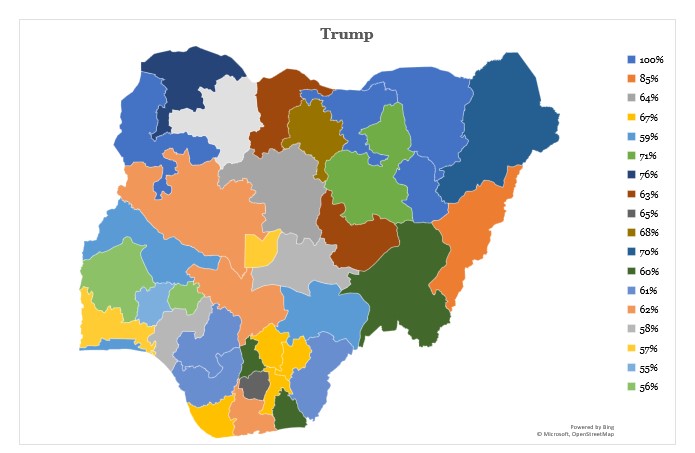
The data reveal that interest in Trump was high even in states far from the country’s traditional power centers. This suggests that Nigerians are keenly aware of global political developments, especially when those developments seem to validate or challenge their beliefs. The internet has made the world smaller, but it has also made emotions bigger. Trump’s comments transformed from foreign rhetoric into local debate, pulling global politics into Nigerian living rooms, churches, and WhatsApp groups.

But the more revealing story lies in “genocide,” “terrorists,” and “invasion.” These terms appeared in clusters, especially in states that have lived through violence and insecurity. Kaduna, Benue, and Plateau, for example, recorded heightened search interest. These are states that have faced recurring communal and religious conflicts. For people living there, Trump’s words were not abstract political talk; they touched raw nerves. Searching for those terms may have been an attempt to make sense of personal or community trauma. It was a digital way of asking: “Is the world finally paying attention to what we are going through?”

These searches reveal something important about how Nigerians use technology in moments of uncertainty. The internet becomes both a window and a mirror, a space to see how others perceive them and a tool to reflect on their own realities. When citizens in conflict-prone areas searched for “genocide,” they were not simply echoing Trump’s language. They were seeking recognition, understanding, and perhaps validation for their pain.
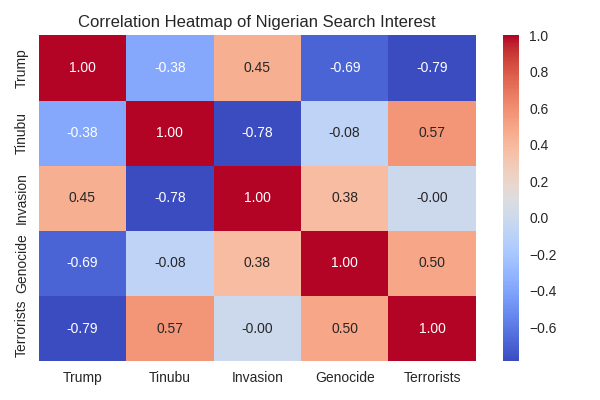
Interestingly, the term “invasion” did not attract much attention. While Trump’s threat was dramatic, Nigerians seemed more concerned with the moral and emotional implications than the political theater. This focus shows that public interest was driven by issues of justice and belonging, not by fear of an actual military intervention. People were less interested in whether Trump could invade and more interested in why he made such a claim and what it said about Nigeria’s reputation.
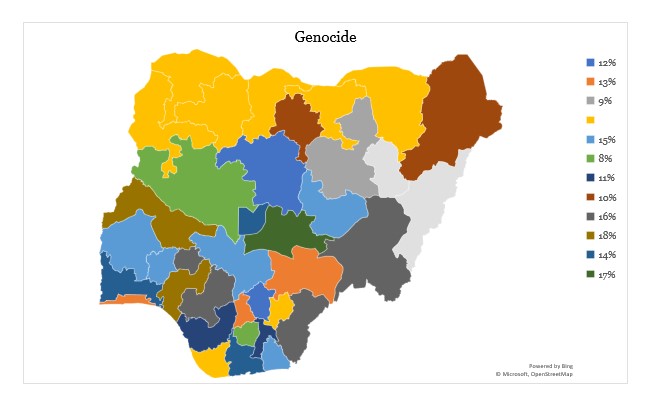
The event also highlights how emotions shape online engagement. Trump is a polarising figure globally, and in Nigeria, his comments deepened existing divides. Some viewed him as a truth-teller who finally acknowledged Christian suffering. Others saw his words as reckless and offensive, a reminder of how outsiders often oversimplify Nigeria’s complex security challenges. In this way, the digital reaction reflected a nation emotionally split, united in attention, but divided in interpretation.

This moment offers lessons about how Nigerians interact with both local and global politics. It shows that the country’s citizens are not passive consumers of international news. They actively seek information, context, and meaning. It also reminds leaders that statements made abroad can have powerful emotional consequences at home.

Pony AI Sets Final Hong Kong Listing Price at HK$139 per Share, to Raise $864m

0

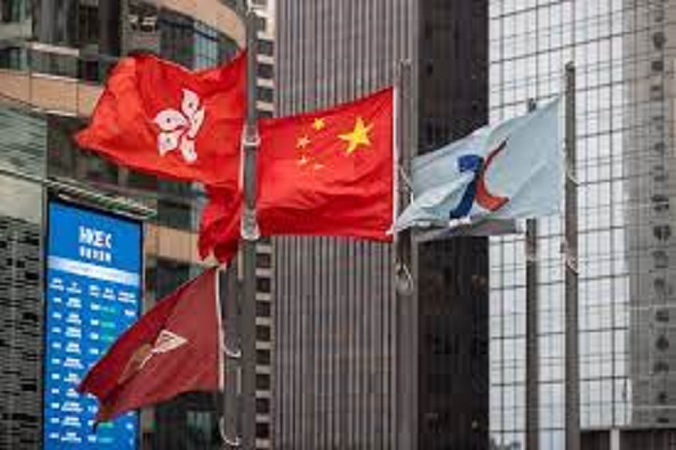
Chinese autonomous driving startup Pony AI has finalized the pricing for its Hong Kong secondary listing at HK$139 ($17.90) per share, according to a filing with the Hong Kong Stock Exchange on Monday.

The move marks a key step for the company as it strengthens its footing in both U.S. and Chinese capital markets amid accelerating global interest in self-driving technologies.

The offering price, which had been earlier reported by Reuters, citing sources familiar with the matter, represents a 4.2 percent discount to Pony AI’s Friday close of $18.68 per share on the Nasdaq. The company’s dual listing underscores its strategy to attract a broader investor base and increase liquidity for its shares, as Chinese technology firms continue to balance listings between U.S. and Hong Kong exchanges due to regulatory complexities.

Pony AI confirmed in the filing that it had exercised an option to allot and issue an additional 6.3 million new shares, expanding the size of the offering. In total, the company expects to raise gross proceeds of about HK$6.71 billion ($863.86 million). The listing involves roughly 42 million shares, priced well below the maximum offer price of HK$180 indicated in the firm’s earlier prospectus.

Trading in Pony AI’s shares on the Hong Kong Stock Exchange is scheduled to commence on November 6, marking one of the most closely watched tech listings in Asia this quarter. The listing also comes at a time when Hong Kong’s capital markets are seeing a revival of large technology offerings, following a period of subdued investor sentiment due to global economic uncertainty.

Founded in 2016 by former Baidu and Google engineers, Pony AI has emerged as one of China’s leading autonomous vehicle developers, competing with rivals such as Baidu’s Apollo Go and AutoX. The company, backed by Toyota Motor Corporation, is developing Level 4 autonomous driving systems — technology capable of operating vehicles without human intervention under specific conditions.

Pony AI has already conducted extensive trials of its self-driving cars in major Chinese cities, including Beijing, Guangzhou, and Shanghai, as well as in parts of California. Earlier this year, the company announced that it had received a permit to operate fully driverless robotaxis in Beijing’s Yizhuang district, making it one of the first firms to achieve this milestone.

In its prospectus, Pony AI said the proceeds from the Hong Kong listing will be used to advance research and development, expand its commercial robotaxi fleet, and accelerate deployment of its autonomous driving technology in logistics and ride-hailing services.

The listing also reflects the growing investor appetite for artificial intelligence and autonomous mobility firms, as global automakers and technology companies race to commercialize self-driving technology. According to Pony AI’s filing, the company sees its technology as “the foundation for the next generation of intelligent transportation systems,” positioning itself as a key player in China’s push toward smart mobility infrastructure.

Pony AI’s decision to list in Hong Kong mirrors similar moves by other Chinese AI and electric vehicle startups that are seeking to hedge against geopolitical and regulatory risks tied to their U.S. listings. Analysts say the Hong Kong debut could help stabilize the company’s valuation while allowing more Chinese investors to participate in its growth story.

With trading set to begin on November 6, Pony AI’s Hong Kong listing will be a major test of market confidence in the autonomous driving sector. The sector has been both highly promising and capital-intensive, as firms navigate the path to commercialization through technological, regulatory, and safety hurdles.

TikTok to Host First U.S. Awards Show as Washington Clears Path for Its Sale — A Signal That Its Troubles May Be Over

0

TikTok is taking a major step toward solidifying its cultural and corporate comeback with the announcement of its first-ever U.S. awards show — a move that comes just days after the U.S. government confirmed it has received formal approval from Beijing for the company’s sale to new American investors.

The upcoming TikTok Awards — scheduled for December 18 at the Hollywood Palladium in Los Angeles — marks the first time the Chinese-owned short-form video platform will host a large-scale entertainment event on U.S. soil. The ceremony will feature a red carpet, live performances, and a live audience of hundreds of creators, as well as a livestream on TikTok and Tubi, with the recorded show available on demand the following day.

For months, TikTok had faced an existential threat in the United States as the government pressed for its divestment from Chinese parent company ByteDance, citing national security concerns over user data. President Joe Biden signed legislation late last year, giving TikTok 90 days to finalize a sale or face an outright ban. Treasury Secretary Scott Bessent confirmed last week that the U.S. government has now received the approval from Beijing for TikTok’s sale, paving the way for a resolution that may finally end years of uncertainty surrounding the app’s operations in America.

Hosting an elaborate awards ceremony in Hollywood — the epicenter of global entertainment — is widely seen as TikTok’s way of signaling that its troubles in Washington are easing and that it is ready to fully reclaim its position as a dominant force in U.S. pop culture.

The awards show will celebrate TikTok’s most influential creators and cultural moments of the year, with categories including “Creator of the Year,” “Video of the Year,” “Muse of the Year,” “Storyteller of the Year,” and “Breakthrough Artist of the Year.”

Nominees for Creator of the Year include adamw, alixearle, brookemonk_, keith_lee125, and kristy.sarah, while Breakthrough Artist of the Year nominees are Alex Warren, katseyeworld, laufey, ravynlenae, and sombr.

Voting for fans opens November 18, with TikTok introducing a dedicated in-app portal where users can cast their votes.

TikTok said in its announcement that the awards will “celebrate the creators defining this new era of culture encompassing many areas, including fashion, beauty, sports, TV and film, and new forms of entertainment.” The company added that the trophies will “beam a colorful glow upon the creators shaping culture.”

This is not TikTok’s first awards show globally — it has hosted similar events in Germany, Mexico, and South Korea — but it is the first time it will stage one in the United States, its largest market and cultural nerve center.

The decision to launch a glitzy, high-profile show in Los Angeles just after the U.S. approved its ownership restructuring is being viewed by analysts as an attempt by the company to reassure users, creators, and advertisers that its future in the U.S. is secure.

For much of the past two years, TikTok has been under intense scrutiny from U.S. lawmakers, who accused it of allowing Beijing access to Americans’ personal data — a claim the company has repeatedly denied. TikTok CEO Shou Zi Chew testified before Congress earlier this year, pledging that the platform’s U.S. operations would be run independently and that user data would be stored on domestic servers under “Project Texas,” a security partnership with Oracle.

With the recent approval of its sale to a consortium of U.S.-based investors, a move designed to ensure American control over TikTok’s data and operations, analysts say the company is now poised to move forward without the cloud of regulatory threat that once hung over it.

A New Chapter for the Platform That Redefined Entertainment

TikTok’s entry into the U.S. awards circuit also underscores how much the app has transformed the entertainment landscape. The platform has been the launchpad for viral music hits, career-making moments for influencers, and countless trends that shape modern culture.

The move follows Instagram’s recent launch of its “Ring Awards” program, which honors its top creators. But unlike Instagram’s online-only approach, TikTok’s decision to hold a live, red-carpet event demonstrates its ambition to merge the digital creator economy with mainstream entertainment.

After years of political battles, investigations, and threats of a ban, TikTok is stepping back into the U.S. spotlight not as a company on the defensive — but as one ready to celebrate its influence on global culture.

BioNTech Boosts 2025 Outlook as Cancer Drug Alliance with Bristol Myers Squibb Takes Aim at Merck’s Keytruda

0

Germany’s BioNTech SE has raised its 2025 revenue outlook after receiving the first tranche of payments from its new multi-billion-dollar partnership with Bristol Myers Squibb, a move that marks a major step in its strategic pivot from COVID-19 vaccines to oncology.

The Mainz-based biotechnology company, which rose to global prominence for co-developing the Pfizer-BioNTech COVID-19 vaccine, said it now expects total revenue of between €2.6 billion and €2.8 billion ($3.03 billion) for 2025, up from an earlier projection of €1.7 billion to €2.2 billion. The upgrade comes as BioNTech begins to realize early financial benefits from its alliance with Bristol Myers Squibb, announced earlier this year.

Under the deal, Bristol Myers agreed to pay as much as $11.1 billion to BioNTech in a series of upfront, milestone, and potential future payments tied to the development and commercialization of cancer immunotherapies. The first payments have already been received, reflecting progress on the partnership’s flagship candidate, pumitamig, a next-generation T-cell receptor (TCR) therapy designed to target specific cancer mutations.

BioNTech confirmed on Monday that the partners have expanded their clinical trial program for pumitamig and are planning to launch additional studies next year. The company said it aims to evaluate the therapy’s potential across a broader range of solid tumors, indicating its ambition to challenge Merck’s best-selling immunotherapy, Keytruda, which dominates the market with annual sales exceeding $25 billion.

The company’s third-quarter financials also reflected the early momentum of this transition. BioNTech reported a 22% year-on-year increase in third-quarter revenue to €1.52 billion, buoyed by milestone receipts and early licensing revenue from its oncology collaborations. While its COVID-19 vaccine sales continue to decline as global demand fades, the firm is steadily building a new growth engine centered on cancer treatments and next-generation mRNA-based therapies.

Chief Executive Officer Ugur Sahin said in a June that the partnership with Bristol Myers is central to BioNTech’s long-term strategy of leveraging its mRNA and immune-oncology expertise to develop treatments that can teach the immune system to recognize and attack cancer. Sahin added that the alliance expands the firm’s capacity to bring transformative therapies to patients faster and strengthens our position as a global leader in cancer immunotherapy.

Analysts have described the collaboration as a pivotal inflection point for BioNTech, with some noting that the company is now entering the second phase of its evolution — from a pandemic-driven vaccine company to a diversified oncology powerhouse. The partnership with Bristol Myers is expected to give BionTech access to a broader clinical infrastructure and commercialization network that could significantly accelerate the rollout of its cancer drugs once approved.

Others see BioNTech’s pivot as a reflection of a broader shift among pandemic-era biotech leaders. With vaccine revenues falling sharply from their 2021 peaks, companies such as BioNTech and Moderna are reinvesting in oncology, rare diseases, and personalized medicine as they seek to sustain long-term growth.

BioNTech’s post-pandemic repositioning has been supported by its deep cash reserves, estimated at more than €17 billion at the end of 2024, giving it the financial strength to expand its research and clinical portfolio. In addition to pumitamig, BioNTech is advancing several other cancer immunotherapy candidates, including personalized neoantigen vaccines and cell therapies aimed at solid tumors.

The company’s growing partnership network now includes collaborations with major pharmaceutical players such as Regeneron, Genentech, and now Bristol Myers. Each alliance is designed to accelerate drug discovery and streamline regulatory approval timelines across multiple oncology indications.

While BioNTech’s transformation is still underway, early signs suggest the company is successfully repositioning itself as one of the leading forces in cancer immunotherapy.

With clinical expansions planned for 2025 and new partnerships emerging, BioNTech’s bet on oncology could define its trajectory for the next decade. This means potentially setting up one of the most consequential rivalries in modern pharmaceuticals, as it goes head-to-head with Merck’s Keytruda in the immunotherapy market valued at more than $100 billion globally.

Nigerian Stocks Dip as Investors Lock in Profits After Strong October Rally, Analysts Dismiss Trump’s Threat as Driver

0

The Nigerian Exchange (NGX) began the week in negative territory, with the All-Share Index (ASI) dropping by 0.25% to close at 153,739.11 points, wiping off approximately N244.9 billion in market value.

The decline was attributed to profit-taking across medium- and large-cap stocks, particularly in the banking, oil and gas, and consumer goods sectors.

Market capitalization fell from N97.8 trillion to N97.5 trillion, signaling a mild correction after weeks of strong gains. This comes on the heels of a robust October rally, during which the market gained nearly 8%, its second-best monthly performance of the year after July.

Although some traders initially tied the downturn to geopolitical tension — particularly a viral post by U.S. President Donald Trump, who threatened to “send troops” to Nigeria over alleged religious killings — analysts quickly dismissed this as a major factor behind Monday’s decline.

The Nigerian stock market has historically shown a high degree of non-reaction to global political headlines, especially those perceived as external or short-term. Despite media reports claiming that “Naira assets tumbled” in response to Trump’s remarks, data did not support any unusual market movement.

The modest pullback is believed to be purely a case of investors taking profits after a strong month, as analysts note that there’s no evidence of panic or foreign flight.

Indeed, trading data published by NairaMetrics reflected stability rather than turmoil. While the ASI slipped slightly, trading volume rose by 18%, reaching 627 million units valued at N25.1 billion, suggesting continued market participation. UBA Plc dominated both volume and value charts, exchanging 136 million shares worth N5.53 billion, reinforcing investor confidence in the banking sector.

Market breadth remained negative, with 24 gainers and 39 losers, led by Honeywell Flour Mills Plc (-10.00%) and Northern Nigeria Flour Mills Plc (-9.98%) on the laggard side. On the flip side, Union Dicon Salt Plc (+9.93%) and Omatek Ventures Plc (+9.92%) topped the gainers’ list.

Despite the brief downturn, the broader sentiment on the NGX remains positive. Some analysts noted that the market’s resilience in the face of global headlines highlights its increasing maturity and internal drivers — including strong corporate earnings, stabilizing foreign exchange rates, and improved liquidity.

Meanwhile, in the currency market, the naira weakened slightly to N1,438/$1 at the official window from N1,422.2/$1 recorded last Friday. Still, the local currency remains on one of its strongest runs in over 18 months, maintaining momentum after its stellar performance in October.

Financial analysts emphasized that the NGX’s “habit of non-reaction” has become a defining feature of the Nigerian equities landscape. Despite global political noise — from U.S. election rhetoric to regional security developments — the market tends to move more in response to local economic fundamentals such as interest rate decisions, inflation data, and company earnings.

It is believed that the Nigerian market has matured beyond knee-jerk reactions, and it’s becoming increasingly earnings-driven, and that’s a positive sign for investors seeking long-term value rather than short-term speculation.

With year-end positioning already underway, most experts expect the market to resume its upward trend, supported by stable corporate performance and continued investor optimism. Monday’s decline, they say, was nothing more than a healthy breather after a sustained rally — not a reaction to political posturing from abroad.