DD
MM
YYYY

PAGES

DD
MM
YYYY

spot_img

PAGES

Home Blog Page 219

The Acquisition of Republic Will Bolster TRUMP Crypto Tokenized Goods

0

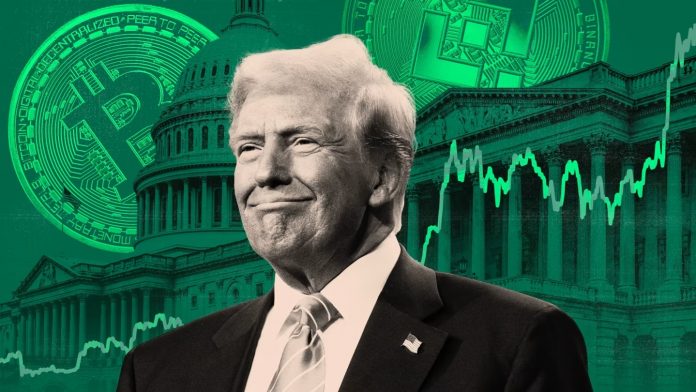
Fight Fight Fight LLC—the company behind the $TRUMP memecoin—is in advanced discussions to acquire the U.S. operations of Republic, a prominent crowdfunding platform.

This potential deal, first reported by Bloomberg could bridge memecoins with traditional startup funding, allowing $TRUMP to be used for investments, grants, and platform fees on Republic.

The news has sparked a 40%+ surge in $TRUMP’s price over the past week, pushing its market cap to around $1.6 billion after a 90% drop from its $9 billion peak earlier this year.

Republic has facilitated over 3,000 fundraising campaigns for startups and real-world assets (RWAs), serving both retail and accredited investors. Its backers include Galaxy Digital and Binance Labs, adding credibility to the platform.

If completed, this acquisition would mark a shift for $TRUMP from speculative hype to practical utility in the crypto economy, especially amid a pro-crypto regulatory environment under the Trump administration.

Parties Involved

The buyer is Fight Fight Fight LLC issuer of $TRUMP memecoin, launched January 2025. The seller is Republic U.S. operations only; international arm unaffected. Fight Fight Fight and CIC Digital hold ~80% of $TRUMP supply.

Users could fund startups, pay fees, or receive grants in the token. It’s boosts crypto startups’ access to capital; aligns with RWA tokenization trends (e.g., equity, funds).

$TRUMP up 40-46% in a week; whale accumulation reported like the $1.5M profit on one trade recorded onchain. Talks are ongoing and private; Republic is engaging multiple partners. No final terms or timeline disclosed; both companies declined comment.

Fight Fight Fight is raising $200M for a digital asset treasury to buy back $TRUMP and stabilize it. This Follows Coinbase’s $375M acquisition of on-chain platform Echo, signaling U.S. crypto fundraising boom.

Recent pardon of Binance’s CZ Changpeng Zhao has fueled speculation on conflicts of interest. This move comes as Trump-linked crypto projects such as World Liberty Financial’s WLFI token face scrutiny for blending politics and finance, with Democrats raising corruption concerns.

Analysts speculate on $TRUMP’s revival, with posts highlighting utility in crowdfunding and RWA plays. Crypto media echoes this, noting it could “transform $TRUMP from hype to functional asset.”

What is RWA Tokenization?

Real-World Asset (RWA) tokenization is the process of converting ownership rights in physical or traditional financial assets—such as real estate, bonds, art, commodities, private equity, or invoices—into digital tokens on a blockchain.

These tokens represent fractional or full ownership and can be traded, transferred, or used as collateral in DeFi (decentralized finance) protocols. Core Idea: Bring illiquid, high-barrier assets onto blockchain rails to enable 24/7 trading, fractional ownership, instant settlement, and global access.

Banks, asset managers, and governments are launching tokenized funds, bonds, and treasuries.  BlackRock: BUIDL tokenized money market fund hit $500M+ AUM in 6 months (2024).

JPMorga’s Onyx platform tokenized $1B+ in assets (2025). Short-term T-bills are the #1 tokenized RWA due to yield + stability. Ondo Finance $ONDO tokenized T-bills ? $300M+ TVL.

Backed.fi issues bIB01 tokenized T-bills on 10+ chains. Total tokenized treasuries hits ~$2.1B on Oct 2025, per RWA.xyz. Tokenized private loans and credit funds offer 8–15% yields with DeFi composability.

Centrifuge: $500M+ in tokenized invoices & credit. Maple Finance relaunched with tokenized senior debt pools. High-value properties split into tradable tokens for retail investors. On Lofty 100+ properties tokenized; daily rental yield payouts. KYC/AML built into smart contracts; licensed issuers dominate.

Securitize: SEC-registered transfer agent; powers BlackRock BUIDL. While Republic Crypto tokenizes startup equity under Reg CF/D. In Europe, MiCA framework enables tokenized funds (e.g., SG Forge).

RWAs moving to high-throughput chains for lower fees and speed. Base, Arbitrum, Polygon, Solana host 60%+ of RWA volume. Chainlink CCIP enables cross-chain RWA transfers. Tokenized assets used as collateral in lending, derivatives, and yield farming.

Aave accepts tokenized treasuries (e.g., BUIDL) as collateral. Pendle splits RWA yield into PT/YT tokens for fixed-income trading. Morpho Blue optimized lending markets for RWAs.

Fed rates at 4.5–5% ? T-bill yields (4.8%) attract crypto natives seeking “safe” returns. Institutions want blockchain efficiency; crypto users want real yield. Oracles (Chainlink), KYC-on-chain (Civic, Lit Protocol), and L2 scaling solve earlier hurdles.

From hype to InfrastructureRWA tokenization is no longer experimental—it’s becoming core financial infrastructure. Full tradFi integration via BlackRock, JPMorgan, Republic. The $TRUMP memecoin team’s potential acquisition of Republic fits perfectly.

Use $TRUMP to invest in tokenized startups under Reg CF. Pay platform fees in memecoin. Grant allocations to community holders This is memeculture meeting institutional RWA rails—a microcosm of 2025’s biggest trend.

While no deal is finalized, this positions $TRUMP at the intersection of memecoins, DeFi, and TradFi—potentially a game-changer if regulatory hurdles clear.
Fidelity Submits Pre-Effective Amendment to Its S-1 Solana ETF

0

Fidelity Investments submitted a pre-effective amendment to its S-1 registration statement with the U.S. Securities and Exchange Commission (SEC) for a proposed spot Solana ETF, advancing the product toward potential automatic effectiveness.

This update removes the previously included “delaying amendment” under Rule 473, which had allowed the SEC to control the timing of approval. As a result, the registration could become effective automatically after the statutory 20-day review period, potentially enabling a launch as early as mid-November 2025 if no objections arise.

The Filing Staking Strategy

The ETF plans to stake nearly 100% of its Solana (SOL) holdings through institutional custodians like Coinbase and BitGo. This aims to generate approximately 7% annual yield for investors, exceeding the fund’s benchmark (Fidelity Solana Reference Rate).

Staking addresses regulatory concerns by using vetted validators and maintaining a small liquid SOL reserve for daily operations. A management fee of 0.25% is proposed, with a waiver for the first six months or until the fund reaches $1 billion in assets under management (AUM), whichever comes first.

The fund will track SOL’s spot price using a proprietary index, emphasizing Solana’s high throughput up to 65,000 transactions per second and low fees fractions of a cent per transaction compared to Bitcoin with 250 TPS, ~50 cents and Ethereum with 800 TPS, ~50 cents.

Fidelity warns of potential SEC classification of SOL as a security, which could impact operations, alongside ongoing concerns over market manipulation and custody.

This filing follows an SEC acknowledgment of Fidelity’s initial proposal in April 2025 and a Cboe 19b-4 listing application in March 2025. It aligns with a broader wave of altcoin ETF momentum, spurred by an August 2025 SEC ruling clarifying that staking does not constitute a securities offering.

The U.S. spot Solana ETF market kicked off on October 28, 2025, with three products debuting and capturing over $81 million in combined first-day inflows.

Bloomberg Intelligence estimates Solana ETFs could attract over $3 billion in inflows within the first year, mirroring Bitcoin and Ethereum trends. Fidelity’s entry, with its aggressive staking and low fees, positions it to challenge leaders like Bitwise.

Other firms, including VanEck and Franklin Templeton, have also updated filings to include staking. SOL dipped ~6% on October 30 amid broader market volatility but remains up significantly YTD.

X discussions highlight optimism around institutional inflows, with users noting the filing as “rocket fuel” for SOL’s price toward $400. However, regulatory hurdles persist, and approval isn’t guaranteed. This development underscores Wall Street’s deepening crypto integration, potentially boosting Solana’s liquidity and accessibility for retail and institutional investors.

Solana uses proof-of-history + Tower BFT; slashing is rare and only for egregious faults. Validators can lose staked SOL if they sign conflicting blocks or go offline too long. ETF uses institutional validators with 99.9%+ uptime and redundancy. No investor-level slashing.

Only ~0.0003% of staked SOL has ever been slashed per Solana Foundation. If Coinbase or BitGo is breached, staked SOL could be stolen. Fidelity holds insurance up to $320M via Coinbase plus cold storage. Still, not 100% guaranteed.

Smart contract bugs in staking pools. Third-party staking protocols (e.g., Marinade, Jito) can have exploits. Fidelity bypasses DeFi pools — stakes directly via trusted validators. Lower code risk. 2022–2023 saw $2B+ in DeFi hacks; institutional staking avoids most of this.

Staked SOL cannot be sold instantly. During a price crash, you’re locked in. ETF shares trade intraday on exchange, but underlying SOL is locked. In extreme sell-off, ETF may trade at discount to NAV (e.g., -5% or more).

During June 2025 dip, staked SOL holders couldn’t exit; ETF would’ve allowed share sales at a potential discount. Staked SOL earns ~6–8% APY but can’t be used in DeFi lending, liquidity pools. Solana’s inflation is ~5.4% annually (2025), gradually decreasing. Staking yield partially offsets this, but not fully if price stagnates.

Net real yield: ~2–3% after inflation assuming 7% staking APY. If SEC declares SOL a security could force ETF to halt staking or liquidate. Fidelity’s S-1 warns: “If SOL is deemed a security, the Trust may need to cease operations.”

Staking rewards currently taxed as income. Future laws could worsen. ETF investors receive no direct rewards — yield is reinvested, taxed only on capital gains when selling shares.

Solana has had 7+ major outages since 2021 longest: 17 hours in Sep 2021. Staking continues, but rewards pause during downtime. ~33% of stake controlled by top 19 validators. Theoretical 51% attack risk. Fidelity mitigates by diversifying across multiple top-tier validators.

Staking risk is dramatically reduced vs. DIY staking — but not zero. Biggest residual risks: ETF trading at discount/premium during volatility. Treat Solana ETF staking like a high-yield bond with crypto volatility — not a risk-free 7% cash equivalent.

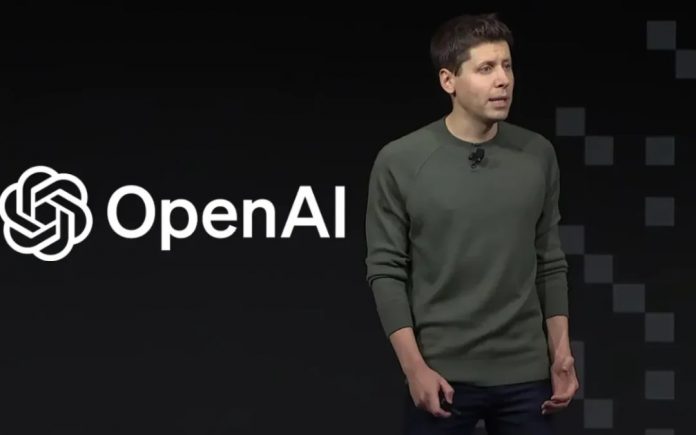
How Realistic is OpenAI’s $1 trillion Valuation?

0

Reports indicate that OpenAI is actively preparing for an initial public offering (IPO) that could value the AI powerhouse at up to $1 trillion—potentially making it one of the largest debuts in history, second only to Saudi Aramco’s $29 billion raise in 2019.

This news, first broken by Reuters yesterday, has sparked widespread discussion on Wall Street and X (formerly Twitter), blending excitement over AI’s growth with skepticism about the frothy valuation. OpenAI has not confirmed a firm timeline, emphasizing its focus on advancing artificial general intelligence (AGI), but insiders suggest momentum is building.

OpenAI could file IPO paperwork with the U.S. Securities and Exchange Commission (SEC) as early as the second half of 2026, with a potential listing by late 2026 or 2027. CFO Sarah Friar has reportedly told associates to expect a 2027 debut, though advisers believe market conditions could accelerate it.

Fundraise Size: The offering might raise around $60 billion, aimed at fueling massive AI infrastructure investments, including data centers and computing power to reduce reliance on partners like Microsoft.

OpenAI is already the world’s most valuable private company at about $500 billion, following a recent secondary share sale. Microsoft holds a 27% stake valued at $135 billion after $13 billion in investments, while backers like SoftBank, Thrive Capital, and Abu Dhabi’s MGX stand to benefit.

The company is projected to hit $20 billion in annualized revenue by year-end 2025, up from $4.3 billion earlier this year, but it’s burning cash fast—losing $13.5 billion in the first half of 2025 alone. A $1 trillion valuation would imply a price-to-sales multiple of around 50x forward revenue, drawing comparisons to Nvidia’s explosive growth.

This shift follows OpenAI’s recent restructuring into a public benefit corporation, which lifts prior caps on capital raising and aligns its nonprofit roots with for-profit ambitions.

The timing aligns with a red-hot AI sector driving public market gains: AI-related stocks like Nvidia recently hit a $5 trillion market cap, while cloud provider CoreWeave IPO’d at $23 billion earlier this year and has tripled since.

OpenAI’s ChatGPT and models like GPT-5 have cemented its lead, but competition from Google, Meta, and open-source alternatives (e.g., DeepSeek, Qwen) is intensifying. An IPO would provide liquidity for acquisitions and talent wars.

On X, the buzz is immediate and polarized. Influential accounts like Kobeissi Letter highlighted the historic scale, warning it could signal an AI “bubble” akin to the dot-com era, while traders like zerohedge reposted analyses questioning profitability.

Skeptics point to OpenAI’s $5 billion burn rate in 2024 and the need for $50–100 billion in annual revenue to justify $1 trillion. Is $1 Trillion Realistic? Pros, Cons, and Expert Takes on Yahoo Finance analysts debated this today, comparing OpenAI to Nvidia profitable, hardware-focused and CoreWeave.

$20B ARR by EOY 2025; ads and enterprise deals could explode to $100B+ by 2027. Still unprofitable; GPU costs and data center amortization could eat 50%+ of revenue. Dominant in generative AI; Microsoft partnership ensures scale.

Free open-source rivals outperform on benchmarks; regulatory scrutiny on AGI ethics looms. Nvidia at $5T; AI could surpass cloud computing ($105B for MSFT’s segment). Dot-com echoes—Alibaba’s 2014 IPO ($26B raise) later crashed 80%; $1T pre-profit is “wild.”

Enables trillion-dollar infra buildout for AGI. Broader market pullback (e.g., Nvidia down 50% in a correction) tanks sentiment. Crossmark’s Victoria Fernandez suggested a more grounded $70–100 billion valuation initially, viewing Microsoft as the safer AI proxy for now.

Reddit threads (e.g., r/investing, r/stocks) echo this, with users calling it a “black hole for investors” unless margins improve. In short, while OpenAI’s IPO could redefine tech debuts, it’s a high-stakes bet on AI’s trillion-dollar promise amid mounting losses and hype.

Watch for SEC filings in 2026—the real test will be execution, not just valuation dreams. If you’re eyeing exposure, consider indirect plays like MSFT or NVDA for now.

ASTER Loses $1 Support, Toncoin Sinks, and BlockDAG’s $435M Presale Redefines Market Confidence Before Listing

0

The crypto market is buzzing again, but not every project is riding the wave. Toncoin (TON) and ASTER are both facing serious challenges as traders re-evaluate which networks can sustain growth in the face of heavy competition and token unlock pressures.

Toncoin, despite its strong ties to Telegram, has slipped below key support levels, while ASTER’s price crash has triggered caution among retail holders. These setbacks are prompting investors to ask: where is the next big move coming from?

The answer, many analysts argue, might just be BlockDAG (BDAG). This project has raised almost $435M in presale, built a global user base of 3.5M mobile miners, and sold 27B+ coins before its official launch.

Why Everyone’s Talking About BlockDAG’s $435M Presale

The numbers behind BlockDAG’s rise are impressive, but the story goes deeper than fundraising. The project’s momentum is fueled by what analysts are calling its “Utility-Scarcity Flywheel.”

Here’s how it works. The BDAG coin serves as the mandatory utility and gas token for every transaction on its high-speed Layer-1 network. That means every dApp, every smart contract, every on-chain interaction must use BDAG. As adoption grows, the demand for BDAG rises continuously, while supply remains capped.

This dynamic creates a scarcity cycle that’s hard to ignore. It’s not driven by speculation or hype; it’s built into the network’s DNA. As more decentralized apps migrate to BlockDAG, demand for BDAG will increase automatically, creating an ongoing supply squeeze that strengthens long-term value.

The results are already visible. Over 312,000 holders have joined the ecosystem, purchasing BDAG in the Batch 32 presale at $0.005 ,ahead of the planned $0.05 listing on February 10, 2026.

BlockDAG’s infrastructure is also backed by real-world validation. More than 20,200 X Series hardware miners have been shipped globally, and its X1 mobile app has surpassed 3.5 million users. This level of participation before launch is nearly unheard of in presale history, which explains why so many analysts have started referring to BDAG as the top bullish crypto to watch in 2025.

Toncoin Faces Pressure as Token Unlock Nears

For Toncoin (TON), the market sentiment has shifted rapidly. The token recently fell below the $2.50 support zone, now trading near $2.12–$2.20, signaling short-term weakness. The immediate cause? A massive 80 million token unlock scheduled for late October 2025, representing about 3.2% of the circulating supply.

Historically, large unlocks tend to trigger increased selling, especially when market liquidity is thin. On-chain data shows a rise in whale outflows as traders brace for potential volatility. This has created a near-term bearish environment for TON.

Yet, long-term fundamentals remain solid. Institutional investors are still backing the network heavily. Coinbase Ventures recently reaffirmed its holdings, and Verb Technology (TON Strategy Co.), a Nasdaq-listed firm, confirmed a $558 million private placement dedicated to accumulating TON as a strategic asset.

With TON integrated into Telegram’s billion-user ecosystem, analysts believe it still holds enormous potential for mainstream adoption, just not without turbulence in the short term.

ASTER’s Breakdown Below $1 Sparks Concern

The situation for ASTER has been even more dramatic. The token has dropped over 57% from its September high of $2.41, now trading between $0.95 and $1.02. Technical charts paint a challenging picture, with the MACD confirming a bearish crossover and RSI levels suggesting oversold conditions without recovery yet in sight.

Much of this decline stems from internal and competitive pressures. A delayed airdrop and concerns over a potential supply overhang have made investors cautious. On top of that, new rivals are entering the decentralized exchange space, adding fresh competition.

To counter the slide, ASTER launched its Rocket Launch Program on October 23, designed to boost liquidity for emerging projects. It also rolled out the Vibe Trading Arena, an AI-powered developer competition that aims to attract builders and community engagement. While these moves show promise, the market remains skeptical until ASTER can reclaim its critical $1.10 resistance level and prove it can rebuild momentum.

Why BlockDAG Is Dominating the Conversation

The current market paints a picture of contrast. Toncoin faces pressure from unlock events despite strong institutional backing. ASTER struggles to hold key levels as competition intensifies. Yet amid this uncertainty, BlockDAG is quietly building a complete ecosystem backed by transparency, scalability, and real-world usage.

With almost $435 million raised, 27 billion coins sold, and 3.5 million engaged users, BlockDAG isn’t just promising results; it’s delivering them before launch. For investors searching for the next defining success story in crypto, the choice seems clear.

In a market driven by hype, BlockDAG is standing on fundamentals, technology, and verifiable progress. As the February 10, 2026 listing approaches, the question isn’t whether it will rise, it’s how high it will go once it does.

Presale: https://purchase.blockdag.network

Website: https://blockdag.network

Telegram: https://t.me/blockDAGnetworkOfficial

Discord: https://discord.gg/Q7BxghMVyu

Uber Picks San Francisco for Debut of New Robotaxi Fleet with Lucid and Nuro in Challenge to Waymo

0

Uber has chosen San Francisco as the launch site for its long-anticipated robotaxi service, developed in partnership with electric vehicle maker Lucid Motors and autonomous driving company Nuro.

The announcement marks the first major milestone in a deal that aims to roll out 20,000 self-driving vehicles across the United States over the next six years — a move seen as one of Uber’s most ambitious steps back into autonomous mobility since winding down its own self-driving division in 2020.

The companies confirmed that on-road testing has already begun following the delivery of the first Lucid Gravity SUV prototypes, each retrofitted with Nuro’s latest self-driving hardware and software stack. These vehicles will form the foundation of Uber’s next-generation robotaxi fleet.

However, before commercial operations begin, the companies will need to secure the necessary driverless operational permits from the California Department of Motor Vehicles (DMV) and ride-hailing authorization from the California Public Utilities Commission (CPUC) — two key regulatory hurdles that stand between testing and passenger deployment.

In a joint statement, Uber, Lucid, and Nuro said they have been in “regular communication with policymakers and regulators at every level” to ensure compliance and transparency throughout the testing process.

Uber’s Chief Product Officer, Sachin Kansal, described the city’s choice as both symbolic and strategic.

“The Bay Area has long been the birthplace of transformative technology, and it’s only fitting that Uber’s next-generation robotaxi program with Lucid and Nuro will begin here – launching to the public next year,” Kansal said.

Prototype Fleet and Testing Phase

Lucid confirmed that it has delivered several engineering prototypes of its all-electric Gravity SUV to Nuro, which has since equipped them with a complete suite of autonomous technologies — including lidar, radar, cameras, and redundant safety systems designed for driverless operation. The companies plan to expand this phase rapidly, targeting “over 100 robotaxis” in their engineering fleet over the coming months.

According to the companies, Nuro will lead all validation and testing activities, which include advanced simulations, closed-course trials, and controlled on-road testing with human safety drivers still behind the wheel. The goal is to refine the vehicles’ navigation, obstacle detection, and passenger handling systems before removing human oversight.

California remains one of the most competitive markets for autonomous mobility, but it also has the most stringent regulatory framework. Uber and its partners must obtain two separate permits before launching commercially — a driverless testing permit from the DMV and a drivered or driverless deployment permit from the CPUC to carry paying passengers.

The choice of San Francisco brings Uber into direct competition with Waymo, the Alphabet-owned company that has become a dominant force in the local robotaxi market. Waymo removed its waitlist in 2024, opening its service to the general public and quickly capturing a significant share of the city’s autonomous ride-hailing demand.

An analysis of credit card transaction data from December 2024 found that Waymo’s market share in San Francisco had reached parity with Lyft’s, though only within its approved operating zones. That data underscores the rising consumer adoption of driverless services — and the challenge Uber faces in reclaiming a portion of the market it once sought to dominate.

The new collaboration effectively signals Uber’s re-entry into the autonomous vehicle race, years after selling off its self-driving research unit, Advanced Technologies Group (ATG), to Aurora Innovation in 2020. By partnering with Lucid and Nuro — companies with established strengths in electric vehicle manufacturing and robotic delivery — Uber is betting on a hardware-software partnership model rather than in-house development.

The fleet will be owned either by Uber directly or by third-party fleet management partners, with Nuro providing the self-driving systems and Lucid supplying the electric SUVs.

Uber’s decision to return to self-driving is believed to align with its long-term goal of reducing driver-related operating costs while expanding mobility access in dense urban areas. Pending regulatory approval, the San Francisco rollout could serve as a blueprint for deployment in other major U.S. cities, potentially beginning with Los Angeles, Miami, and Dallas, which have been under consideration for future expansion.

Cooperation and Competition with Waymo

While Uber prepares to go head-to-head with Waymo in San Francisco, the two companies are simultaneously collaborating in other cities. In Austin, Atlanta, and Phoenix, Waymo’s driverless vehicles are already available through the Uber app, allowing users to hail a Waymo robotaxi just as they would a traditional ride.

But that partnership, born out of a reconciliation between two former rivals, could face new tensions as Uber launches its own autonomous service.