DD
MM
YYYY

PAGES

DD
MM
YYYY

spot_img

PAGES

Home Blog Page 22

BOJ Signals Confidence in Gradual Recovery, but Flags China Tensions and Yen Volatility as Emerging Risks

0

The Bank of Japan on Thursday struck an increasingly confident tone on the state of the economy, saying regional conditions were improving gradually and that many companies see the need to keep raising wages.

This is seen as a key signal that the central bank believes the foundations for further interest rate hikes are steadily falling into place.

In its quarterly assessment based on reports from regional branch managers, the BOJ maintained its economic view for all nine regions, unchanged from three months earlier, describing them as either “picking up” or “recovering gradually.” The findings reinforce the bank’s view that Japan is moving closer to a durable cycle of rising wages and prices, even as external risks mount.

At the same time, central bank officials cautioned that escalating tensions with China could become a new drag on Japan’s still-fragile recovery, particularly given the deep supply chain ties between the two economies. While the impact has so far been limited, some executives warned it could begin to spread across industries.

“We haven’t heard of any severe damage so far. But a wide range of manufacturers and non-manufacturers say the impact could appear ahead,” said Hiroshi Kamiguchi, head of the BOJ’s Nagoya branch, which oversees a region anchored by Toyota and its extensive supplier network. He added that some firms were increasingly wary of China’s export restrictions and how they might ripple through production and procurement.

Kamiguchi also warned that excessively volatile moves in the yen could hurt business sentiment and economic activity, echoing concerns within the BOJ that currency weakness can fuel import-driven inflation while squeezing households and smaller firms.

Overall, however, the tone of the regional survey was one of cautious optimism. The BOJ said many companies plan to raise wages in the 2026 fiscal year at roughly the same pace as in 2025, reflecting robust corporate profits and a persistently tight labor market. This continuity in wage-setting is particularly significant for policymakers, who have long argued that sustained pay growth is essential for normalizing monetary policy after decades of ultra-loose conditions.

The survey also showed that firms across many regions continue to pass higher costs onto consumers. Companies cited rising input prices, labor costs, and distribution expenses, with some noting they were considering further price hikes to reflect the impact of the yen’s recent declines. This suggests inflationary pressures remain embedded in the economy, even as global growth slows.

The assessment underlines the BOJ’s growing confidence that Japan can withstand headwinds from higher U.S. tariffs. While some regions reported weaker exports and output due to tariff effects and tougher competition from Asian rivals, others pointed to solid demand, particularly for artificial intelligence-related products, which is helping support factory orders and investment.

“While some regions said exports and output were weakening due to the impact of U.S. tariffs and intensifying competition from Asian companies, others said firms were enjoying solid orders reflecting increasing global demand mainly for AI-related goods,” the BOJ said in its summary.

Developments in China remain a key area of watch. Several regions reported that restrictions on travel to Japan following diplomatic tensions had so far had only a limited impact on domestic demand. Kazuhiro Masaki, head of the BOJ’s Osaka branch, said some hotels and retailers had seen sales decline due to fewer Chinese group tourists, but that the shortfall was largely offset by steady inflows from other countries. Still, some firms fear the negative effects could widen if tensions persist.

The regional reports will feed directly into the BOJ board’s review of its quarterly growth and inflation outlook at its next policy meeting on January 22–23. Many analysts expect the central bank to keep rates unchanged this month, but the underlying message from the regions supports the case for further tightening later this year.

The BOJ recently raised its policy rate to 0.75% from 0.5%, the highest level in three decades, marking another step away from years of extraordinary monetary support. Even after that move, real interest rates remain deeply negative, with consumer inflation having exceeded the BOJ’s 2% target for nearly four years.

Minutes from the BOJ’s December meeting showed some board members growing uneasy about the inflationary effects of a weak yen, which raises the cost of imports and weighs on household purchasing power. Masaki said companies in western Japan appeared to be taking higher borrowing costs in stride, seeing them as a natural consequence of sustained wage gains and rising prices.

“The situation has changed dramatically from the time Japan was suffering from deflation, and had seen wages or prices barely rise,” he said.

However, the BOJ’s challenge now is balancing its increasing confidence in domestic momentum with mounting geopolitical and external risks. While the recovery appears to be broadening, officials are acutely aware that shocks from China, currency markets, or global trade could still test Japan’s long-awaited exit from its era of ultra-loose monetary policy.

Trump Highlights Plans to Restrict Large Institutional Investors from Purchases of Single Family Homes

0

President Donald Trump announced plans to restrict large institutional investors such as private equity firms and Wall Street-backed companies like Blackstone and Invitation Homes from purchasing additional single-family homes.

He aims to improve housing affordability for individual Americans by prioritizing people over corporations in home ownership. In a Truth Social post, Trump stated: “I am immediately taking steps to ban large institutional investors from buying more single-family homes, and I will be calling on Congress to codify it. People live in homes, not corporations.”

He plans to elaborate on this and other housing proposals at the World Economic Forum in Davos later in January. This proposal targets corporate bulk buying, which critics argue drives up prices and rents in certain markets e.g., higher concentrations in Sun Belt states.

However, experts note institutional investors own only a small share of U.S. single-family homes—estimates around 0.5–4%, so the impact on overall prices may be limited, potentially shifting purchases to smaller investors instead of first-time buyers.Stocks of affected companies, Blackstone down ~5–9%, Invitation Homes down ~6% and homebuilders dipped following the announcement.

Separately, on the same day, Trump issued an executive order targeting defense contractors. He prohibited dividends and stock buybacks for underperforming firms until they improve production speed, on-time delivery, and investment in facilities.

The order criticizes companies for prioritizing shareholder returns over military needs, directs Defense Secretary Pete Hegseth to identify underperformers, ties future contracts to performance not buyback-driven metrics, and suggests executive pay caps, around $5 million.

Trump posted: “I will not permit Dividends or Stock Buybacks for Defense Companies until such time as these problems are rectified — Likewise, for Salaries and Executive Compensation.”

This led to declines in defense stocks like RTX, Lockheed Martin. These are recent populist-leaning announcements addressing affordability and military efficiency, though implementation details especially for the housing ban, which may require legislation remain unclear.

President Trump’s January 7, 2026, proposal to ban large institutional investors (e.g., private equity firms like Blackstone, Invitation Homes) from purchasing additional single-family homes targets housing affordability, with potential effects most felt in the Sun Belt states like Florida, Georgia, Texas, Arizona, North Carolina.

Institutional Investor Concentration in the Sun Belt

Institutional investors expanded significantly after the 2008 foreclosure crisis, focusing on high-growth Sun Belt markets with strong population influx and rental demand.

Large investors owning 1,000+ homes hold 45% of their portfolios in just six Sun Belt metros (Atlanta, Phoenix, Dallas, Charlotte, Houston, Tampa). Local shares are higher than national averages: Atlanta ? ~4.2%, Dallas ? ~2.6%, Houston ? ~2.2%. Some markets (e.g., Atlanta, Jacksonville, Charlotte) ? >15% of single-family home sales influenced by large investors as of 2022 data.

Nationally, these investors own only ~3-4% of single-family rentals or ~0.5-2% of all single-family homes, but concentration in specific Sun Belt neighborhoods often lower- and middle-income areas amplifies their local impact.

Potential Positive Impacts on Sun Belt Housing

Reduced competition for buyers — Removing institutional cash buyers who often outbid individuals could make it easier for first-time and individual buyers to purchase homes, potentially slowing price growth in concentrated areas.

Lower rents long-term — Less corporate bulk buying might ease upward pressure on rents, as studies like the 2024 GAO report link high institutional concentrations to higher rents and home prices in affected geographies.

More inventory for owner-occupants — If the ban forces sell-offs of existing portfolios, it could temporarily increase supply in Sun Belt neighborhoods, adding downward pressure on prices—many of these markets e.g., Phoenix, Austin, Tampa already see price corrections from post-pandemic overbuilding and cooling demand.

Experts widely agree the overall effect on affordability would be modest, as institutional investors represent a small slice of the market: Purchases have declined ~90% since 2022 peaks due to high interest rates.

The core issue is chronic undersupply (U.S. needs 3-4 million more homes) from low construction, zoning restrictions, and locked-in low mortgages—not corporate buying. Critics note risks: Shift to smaller investors ? “Mom-and-pop” landlords (owning <10 homes) dominate ~85-90% of investor activity and could fill the void, providing little net gain for individual buyers.

Reduced new construction ? Institutional build-to-rent (BTR) communities account for ~8% of recent single-family starts; banning them could slow overall homebuilding in fast-growing Sun Belt areas, worsening supply shortages long-term by 2027-2029.

Forced sell-offs might displace renters or discourage professional management, while loopholes via smaller entities could undermine enforcement. The proposal remains in early stages, executive action planned, but likely needs Congressional legislation for permanence.

Stocks of affected firms like Blackstone, Invitation Homes dropped 5-9% on announcement day, signaling market concern, but broader Sun Belt housing trends like softening prices in overbuilt areas continue to be driven more by interest rates and supply dynamics than this policy alone. Trump plans to detail further housing proposals at Davos later in January.

Japan’s Chip-Chemical Champions Feel the Heat as China Opens Anti-Dumping Probe, Fueling Rally in Domestic Rivals

0

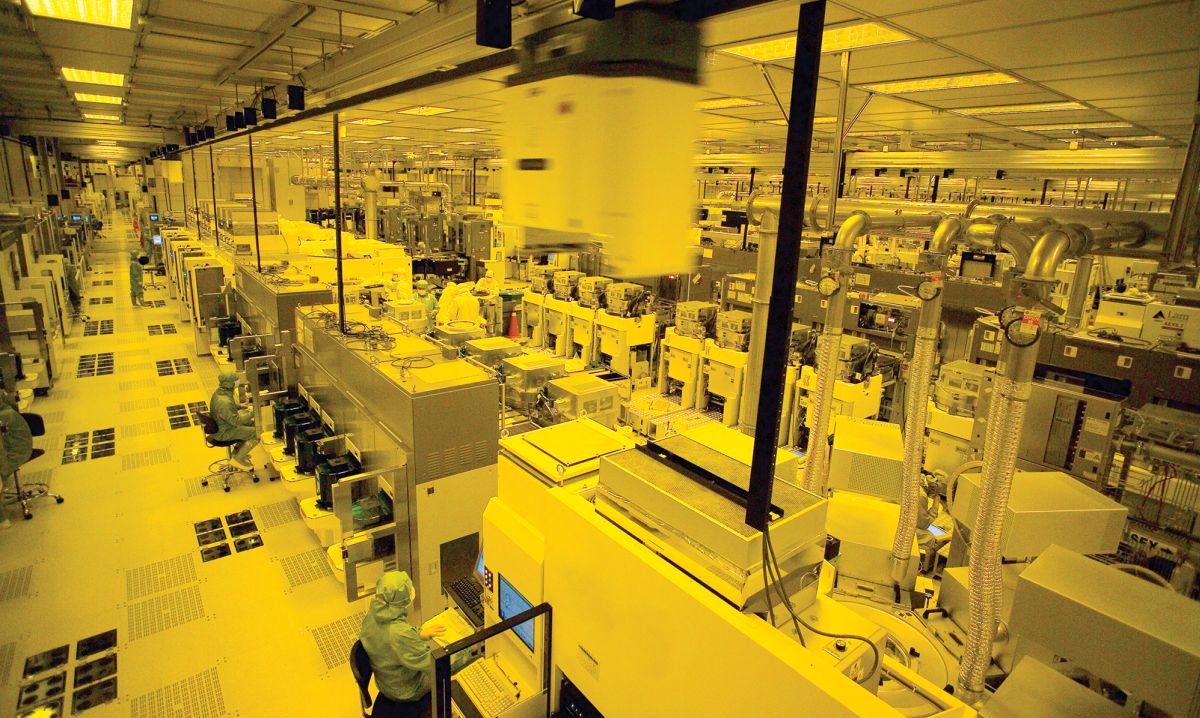
Shares of Japan’s leading chemical manufacturers slid on Thursday after China’s commerce ministry announced an anti-dumping investigation into imports of key chipmaking chemicals from Japan, a move that rattled investors and sent Chinese rivals sharply higher.

The market reaction underscored both the strategic importance of semiconductor materials and the growing role of geopolitics in shaping winners and losers across Asia’s technology supply chain.

In Tokyo, Shin-Etsu Chemical fell 3.4%, marking one of its sharpest single-day declines in recent months. Mitsubishi Chemical slipped 0.5%, broadly tracking the Topix index but still under pressure amid uncertainty over potential fallout from the probe.

A spokesperson for Shin-Etsu said the company was investigating the issue and stressed that any impact on revenue or expenditure was unlikely to be significant.

Japanese firms have long dominated the global market for high-purity materials used in semiconductor manufacturing, including specialty gases, silicon wafers, and advanced precursor chemicals. Their strength lies not in volume, but in precision, reliability, and decades of accumulated process know-how. For chipmakers, especially at advanced nodes, consistency in materials such as dichlorosilane is critical, as even minor impurities can affect yields and performance.

That dominance is precisely what China has been trying to erode as it seeks to build a more self-sufficient semiconductor ecosystem. Beijing’s decision to open an anti-dumping probe into dichlorosilane imports fits squarely into that strategy. Dichlorosilane is a key precursor used in thin-film deposition processes, an essential step in producing semiconductors for logic, memory, and power devices.

According to China’s commerce ministry, the investigation was launched following complaints from domestic producers. These companies argue that imports from Japan rose steadily between 2022 and 2024, while prices fell by a cumulative 31%, undercutting local suppliers and harming their operations. If the probe ultimately results in duties or other restrictions, it could tilt the competitive landscape in favor of Chinese manufacturers, at least in the domestic market.

Investors moved quickly to price in that possibility. In mainland China, shares of Tangshan Sunfar Silicon Industries surged by their daily limit of 10%. Hubei Heyuan Gas, which produces silicon-based functional materials used in chipmaking, also jumped 10%. Jiangsu Nata Opto-Electronic Material gained 3%, extending a broader rally in stocks linked to semiconductor self-sufficiency.

The sharp divergence in share price performance highlights how trade actions are increasingly being read not just as regulatory measures, but as industrial policy signals. For Chinese materials makers, the probe reinforces expectations of policy support and reduced foreign competition, while it introduces another layer of risk for Japanese exporters in a market that has been both lucrative and strategically sensitive.

The investigation comes amid visibly strained relations between China and Japan, and at a moment when technology, security, and trade issues are becoming ever more intertwined. Earlier this week, Beijing announced a ban on exports of certain dual-use items to Japan, further heightening tensions. While Chinese authorities frame the dichlorosilane probe as a standard trade remedy case, markets are clearly viewing it through a geopolitical lens.

Political frictions have intensified since Japanese Prime Minister Sanae Takaichi said in November that a Chinese attack on Taiwan threatening Japan’s survival could trigger a military response. Beijing condemned the remarks as “provocative,” and relations have since cooled. Against that backdrop, trade actions affecting strategically important sectors such as semiconductors are unlikely to be seen as isolated events.

For Japan’s chemical giants, the immediate financial impact may be limited, particularly given their diversified global customer base and strong pricing power at the high end of the market. Analysts note that replacing Japanese suppliers entirely would be difficult for many chipmakers, given the stringent quality requirements involved. Still, the probe raises longer-term questions about market access and the pace at which Chinese competitors could close the technology gap with policy backing.

More broadly, the episode illustrates the shifting fault lines in the global semiconductor supply chain. As China accelerates efforts to localize critical inputs and reduce dependence on foreign suppliers, companies that once seemed insulated by technical complexity are finding themselves exposed to trade and political risk. The development sends a clear message to investors in the chip industry that materials are no longer just a niche segment of the value chain, but a frontline in economic and strategic competition.

SABIC Sells European Petrochemical and Engineering Thermoplastics Units for $950m as Prolonged Industry Slump Forces Strategic Reset

0

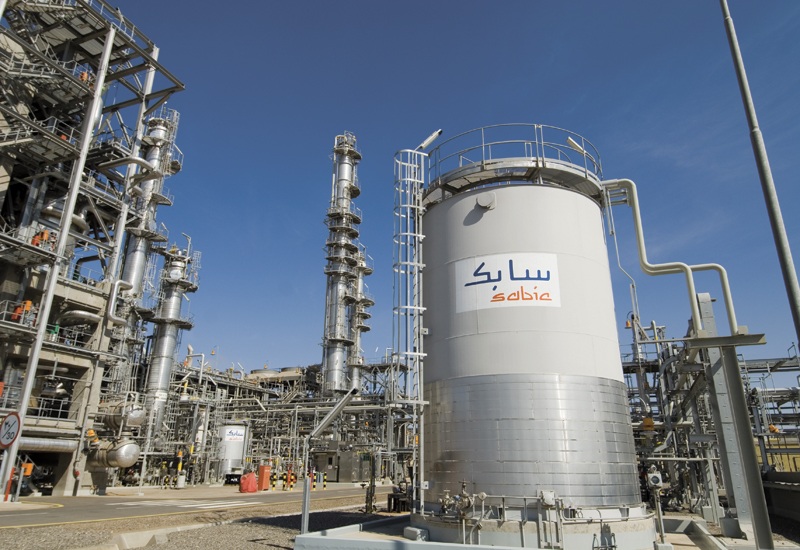
Saudi Arabia’s SABIC has agreed to sell its European petrochemical business and its Engineering Thermoplastics operations across Europe and the Americas for a combined enterprise value of $950 million, stepping up a restructuring effort as the global chemicals industry struggles with weak demand, compressed margins and persistent overcapacity.

The announcement triggered a sharp market reaction. SABIC shares slid as much as 4.8% to 48.2 riyals ($12.85) in early trading in Riyadh on Thursday, touching their lowest level in nearly 17 years. The stock has lost about 26.4% over the past 12 months, marking investor anxiety over the company’s earnings outlook and the depth of the downturn facing petrochemical producers worldwide.

Under the transactions, SABIC will divest its European petrochemical (EP) business to Munich-based investment firm AEQUITA for an enterprise value of $500 million. The unit includes manufacturing assets in the United Kingdom and Germany and is exposed to some of the most challenging operating conditions in the global chemicals market, including high energy costs, tighter environmental regulations, and subdued industrial demand.

Separately, SABIC will sell its Engineering Thermoplastics (ETP) business in Europe and the Americas to German holding company Mutares for $450 million. That business operates production sites in Canada, the United States, Brazil, and Spain, supplying specialty plastics used in sectors such as automotive, electronics, and industrial applications. While engineering plastics typically offer higher margins than basic chemicals, the segment has also faced demand softness and pricing pressure as global manufacturing activity slowed.

The divestments form part of a wider restructuring as the chemicals industry contends with one of its most prolonged slowdowns in years. Demand from key end markets such as construction, automotive, and consumer goods has remained weak, particularly in Europe and China, while years of aggressive capacity expansion — especially in Asia and the Middle East — have left the market oversupplied. This has squeezed margins and forced producers to reassess asset portfolios and capital allocation.

SABIC said it is divesting lower-return operations to focus more tightly on its core chemical businesses, where it believes it can generate more resilient margins and stronger cash flows over the cycle.

“These transactions represent a continuation of our portfolio optimization program, which started in 2022 and included previous actions, such as the divestment of Functional Forms, Hadeed and Alba,” chief executive Abdulrahman Al-Fageeh said.

The moves also reflect broader pressures from SABIC’s majority shareholder. The company is 70% owned by Saudi oil giant Aramco, which has been pursuing cost discipline and selective asset sales as it balances capital expenditure plans with lower oil prices and large shareholder distributions. Analysts say Aramco’s emphasis on returns and cash generation has sharpened the focus on SABIC’s underperforming assets, particularly those exposed to Europe’s structurally higher costs.

SABIC said the latest disposals are expected to improve overall core profit margins and enhance free cash flow generation over time, even though they reduce the company’s international footprint. The group added that it is committed to ensuring a seamless separation of the businesses and minimizing disruption to customers, employees, and ongoing operations — a key concern given the complexity of carving out integrated manufacturing assets.

The transactions also fit into a broader strategic review underway at SABIC. Last year, the company said it was exploring strategic options for its National Industrial Gases Company, including a potential initial public offering, signaling that further portfolio changes remain possible as management reshapes the group for a more challenging operating environment.

From the buyers’ perspective, the deals highlight continued interest from European investment firms in acquiring industrial assets at depressed valuations during the downturn. Firms such as AEQUITA and Mutares often specialize in carve-outs and turnarounds, betting that operational improvements, restructuring, or an eventual recovery in demand can unlock value over the medium term.

Advisory roles were split across the transactions. Goldman Sachs advised SABIC on the sale of the European petrochemical business, while J.P. Morgan advised on the Engineering Thermoplastics deal. Lazard acted as an independent financial adviser on both transactions.

Despite the strategic rationale, the sharp fall in SABIC’s share price suggests investors remain cautious. Markets appear concerned that asset sales alone may not be enough to offset weak global demand, rising competition, and structural challenges in petrochemicals.

With earnings under pressure and the industry recovery still uncertain, SABIC’s ability to stabilize profits and restore investor confidence will likely depend on both disciplined execution of its restructuring plan and a broader upturn in the global chemicals cycle.

Nvidia Demands Full Upfront Payment for H200 Chips as China Approval Uncertainty Shifts Risk to Buyers

0

Nvidia has tightened its sales terms for Chinese customers seeking its H200 artificial intelligence chips, requiring full upfront payment as the U.S. chipmaker moves to shield itself from regulatory uncertainty surrounding Beijing’s approval of the shipments, according to two people briefed on the matter who spoke to Reuters.

Under the new conditions, Chinese buyers must pay the entire order value in advance, with no option to cancel, seek refunds, or change chip configurations after orders are placed. In limited cases, customers may substitute cash payments with commercial insurance or asset-backed collateral, one of the people said. The sources spoke on condition of anonymity because the policy is not public.

While Nvidia has long required advance payments from Chinese clients, the H200 terms mark a sharp tightening. Previously, some customers were allowed to secure orders with deposits rather than full payment. For the H200, Nvidia has enforced stricter conditions due to uncertainty over whether Chinese regulators will ultimately approve the imports, one of the people said.

The tougher stance comes as demand in China for the H200 has surged. Chinese technology firms have placed orders for more than 2 million of the chips, priced at about $27,000 each, according to a Reuters report last month. That volume far exceeds Nvidia’s current inventory of roughly 700,000 units, highlighting the scale of unmet demand.

The H200 has become a focal point for Chinese companies racing to build and train large AI models. Domestic alternatives, including Huawei’s Ascend 910C, have made progress, but their performance still trails Nvidia’s H200 in large-scale AI training tasks, making Nvidia’s hardware highly sought after among China’s internet and technology giants.

Regulatory uncertainty on the Chinese side remains a key obstacle. Bloomberg reported on Thursday that Beijing plans to approve some H200 imports as early as this quarter, allowing purchases for selected commercial uses while barring the military, sensitive government agencies, critical infrastructure operators, and state-owned enterprises due to security concerns. In the meantime, Chinese regulators have asked some tech firms to temporarily pause H200 orders while officials determine how many domestically produced chips each buyer must purchase alongside each Nvidia order, one of the sources said. The Information first reported that pause earlier this week.

Nvidia’s payment structure effectively transfers the risk of regulatory delays or rejections from the seller to the buyer. Chinese customers are being asked to commit significant capital without certainty that approvals will be granted or that the chips can be deployed as planned. For large orders, that can mean billions of dollars tied up while regulators deliberate.

The company’s caution is shaped by recent experience. Last year, Nvidia wrote down $5.5 billion in inventory after the Trump administration abruptly banned sales of its H20 chip to China, then the most powerful product it was permitted to sell there. Although that U.S. restriction was later reversed, China subsequently banned H20 shipments, leaving Nvidia exposed. That episode appears to have informed the company’s decision to harden its commercial terms for the H200.

The policy shift also unfolds against a rapidly changing geopolitical backdrop. The Biden administration had imposed sweeping restrictions on advanced AI chip exports to China. President Donald Trump reversed that stance last month, allowing H200 sales to China subject to a 25% fee payable to the U.S. government. While that opened the door for renewed trade, it left final approval squarely in Beijing’s hands.

Nvidia chief executive Jensen Huang said on Tuesday that demand for the H200 was “quite high” and that the company had “fired up our supply chain” to increase output. Huang added that he did not expect China’s government to issue a formal declaration approving the chips.

“If the purchase orders come, it’s because they’re able to place purchase orders,” he said, underscoring the informal nature of the approval process.

The company plans to fulfil initial Chinese orders from existing stock, with the first batch of H200 chips expected to arrive before the Lunar New Year holiday in mid-February, Reuters reported previously. Nvidia has also approached Taiwan Semiconductor Manufacturing Co about ramping up H200 production, with additional manufacturing expected to begin in the second quarter of 2026 to meet Chinese demand.

Expanding capacity, however, is not straightforward. Nvidia is in the midst of transitioning from its current flagship Blackwell architecture to the more advanced Rubin platform, while competing with customers such as Alphabet’s Google for cutting-edge production slots at TSMC. That competition for manufacturing capacity adds another layer of complexity as Nvidia tries to balance global demand with political and regulatory risk.

Currently, Nvidia’s strict upfront payment requirement signals its determination to pursue Chinese sales while insulating itself from sudden policy reversals.