DD
MM
YYYY

PAGES

DD
MM
YYYY

spot_img

PAGES

Home Blog Page 2220

Following a $4M Breakthrough, Sui Investors Are Pouring into the FX Guys Presale

0

With the way the crypto market has been performing lately, investors are moving fast to secure holdings in what could be the next big opportunity. Sui (SUI) has been one of the more exciting blockchain projects of the past year, but recent price action has left many holders searching for better alternatives. Now, with FXGuys ($FXG) breaking past $4 million in its presale, many Sui investors are redirecting their funds toward what could be the best DeFi crypto project of the year.

Whale activity and retail investor sentiment often indicate where the market is heading, and the latest trends suggest a clear shift toward FXGuys. While Sui is still among high-potential altcoins, the explosive demand for $FXG tokens proves investors believe in its potential. With the FX Guys platform offering multiple profìt-generating features, its presale gives investors a taste of what it’s capable of.

>>>JOIN FXGUYS HERE<<<

Sui’s Price Struggles Push Investors to Explore New Opportunities

SUI has experienced a turbulent market performance recently, with its price struggling to maintain upward momentum. Despite a strong start to 2025, the token has faced increased selling pressure, leading to a 17.5% decline in the past month. This downturn has raised concerns among investors, who are now looking for high-potential altcoins to safeguard their portfolios.

Sui’s recent struggles are partly because of shifting sentiment in the market. While the project has high scalability and low transaction fees, its price action has not reflected its fundamentals. With competition increasing and alternative investments offering better gains, some holders have started reallocating their capital elsewhere.

Despite the recent sell-offs, Sui’s long-term potential remains intact, backed by its advanced blockchain technology and active developer ecosystem. However, with investor confìdence shaken, the project faces challenges in regaining momentum. Unless a strong catalyst emerges to drive demand, SUI may continue to see capital outflows as traders seek more profìtable opportunities.

FXGuys Presale Heats Up as Investors Chase the Best Crypto Coin To Buy

FXGuys has been building momentum at a pace few expected, sending a clear message with its recent achievement of over $4 million during its presale. This is because investors are now redirecting their capital towards FXGuys thanks to its innovative approach to DeFi trading. The platform’s ability to merge prop trading and decentralized fìnance is why investors are switching sides, realizing that FXGuys is the best crypto coin to buy during this current market condition.

One thing that has made FXGuys really interested is the Trader Funding Program, which gives traders up to $500,000 in capital to trade across multiple markets. FXGuys puts traders fìrst, offering them a risk-free way to boost their earnings. On top of that, the Trade2Earn model rewards traders with $FXG tokens for every trade, meaning traders get an extra stream of income instead of only depending on just market gains.

Staking is another reason why FXGuys is the best DeFi crypto project to invest in. Holders who stake $FXG tokens earn a share of 20% of the platform’s revenue, giving them steady income even when they’re not actively trading. Right now, the presale price is just $0.05, with a guaranteed increase to $0.10 upon listing, creating a built-in 100% gain for early adopters. The way things are going, it’s no surprise that former Sui holders are making the switch— the FXGuys platform simply offers more ways to win.

>>>JOIN FXGUYS HERE<<<

Conclusion

The shift from Sui to FXGuys is just another example of how quickly investors move toward the next big thing in crypto. Sui had its moment, but traders are always looking for tokens with bigger upside potential. With FXGuys pulling in over $4 million in presale and offering game-changing trading benefìts, FXGuys could be the best crypto coin to buy for life-changing gains.


To find out more about FXGuys follow the links below:

Presale | Website | Whitepaper | Socials | Audit
X to Pay Trump $10m to Settle Censorship Lawsuit Amid Strengthening Ties Between Musk and Trump

0

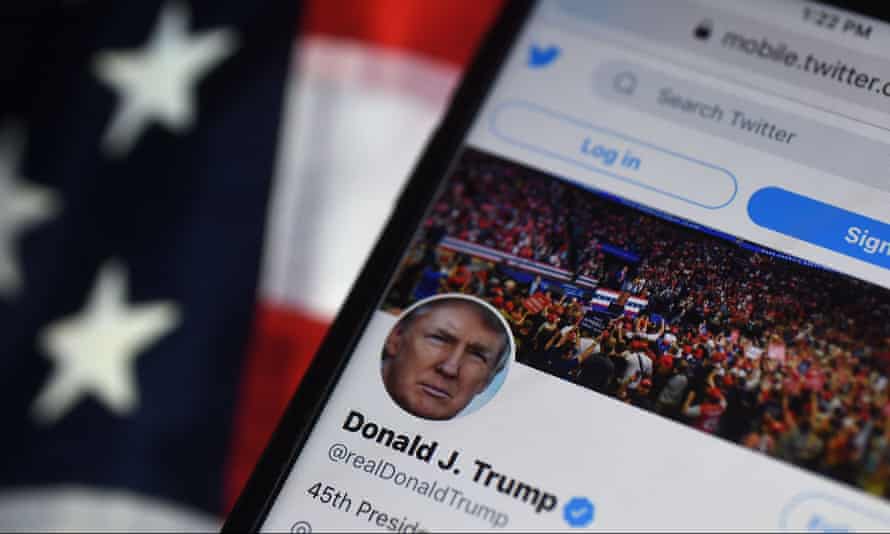
Elon Musk’s X, formerly known as Twitter, has agreed to pay $10 million to settle a lawsuit brought by U.S. President Donald Trump, which accused the platform of unlawfully censoring him following the January 6, 2021 Capitol attack.

The settlement, first reported by The Wall Street Journal, marks a significant moment in Trump’s long-running legal battle against major technology companies, including Facebook (now Meta) and Google (now Alphabet), over what he has repeatedly described as politically motivated suppression of conservative voices.

The case originated in 2021 when Twitter, under then-CEO Jack Dorsey, permanently banned Trump’s account following the Capitol riot. The company cited its “glorification of violence” policy, arguing that Trump’s tweets could incite further unrest. Two specific tweets were referenced as the basis for the ban.

In one, Trump referred to his supporters as “American Patriots” and stated they “will not be disrespected or treated unfairly in any way, shape, or form!!!” In another, he announced that he would not attend Joe Biden’s inauguration. Twitter determined that these statements could be interpreted as supporting those who stormed the Capitol or as encouragement for individuals considering violence at the inauguration.

Trump subsequently sued Twitter, Facebook, and Google, arguing that their actions violated his right to free speech and amounted to politically motivated censorship. Although the lawsuit initially sought to challenge the power of social media companies over political discourse, recent developments surrounding Musk’s takeover of Twitter altered the course of the legal battle. According to The Wall Street Journal, Trump’s legal team considered dropping the case altogether, given Musk’s outspoken support for free speech and his decision to reinstate Trump’s Twitter account after acquiring the platform in 2022. However, negotiations ultimately led to a $10 million settlement.

The lawsuit settlement follows a similar case involving Meta, the parent company of Facebook and Instagram, which also suspended Trump’s accounts following the Capitol attack. Last month, Meta agreed to pay $25 million to settle a lawsuit regarding Trump’s censorship claims. The terms of that settlement reportedly included using a significant portion of the funds for Trump’s presidential library, but it remains unclear where the $10 million from X’s settlement will go.

Musk’s decision to settle Trump’s lawsuit underscores the growing alliance between the billionaire and the president. In recent years, Musk has aligned himself politically and financially with Trump, reportedly contributing more than $200 million to Trump’s re-election campaign last year.

This political alignment became even more apparent after Musk accepted a prominent role in Trump’s administration as the head of the newly created Department of Government Efficiency (DOGE). As part of his role, Musk has spearheaded efforts to reduce federal bureaucracy, cut government spending, and restructure several agencies, moves that have already sparked significant legal challenges and political opposition.

Trump’s growing influence over major tech companies has not been limited to his relationship with Musk. While Meta CEO Mark Zuckerberg previously clashed with Trump and supported the restrictions placed on his accounts in 2021, his stance has shifted in recent months.

Following the attempted assassination of Trump last summer, Zuckerberg reportedly referred to Trump as a “badass” and later authorized Meta to donate $1 million to Trump’s inauguration fund. The warming relationship between the two men became even more evident during Trump’s second inauguration last month, where both Musk and Zuckerberg were given prominent seating among other tech executives and political allies.

The settlement between X and Trump represents more than just a financial agreement; it signals a broader shift in the relationship between Silicon Valley and the political landscape. For years, major tech companies were perceived as adversaries to Trump and his movement, frequently accused of suppressing conservative voices. However, with Musk at the helm of X and Zuckerberg gradually moving closer to Trump’s orbit, the dynamics appear to be changing.

Tech billionaires who once distanced themselves from Trump’s rhetoric are now becoming some of his most influential allies.

With Trump now firmly backed by figures like Musk and, to a lesser extent, Zuckerberg, the once-hostile environment between Big Tech and Trump’s political movement is undergoing a dramatic transformation—one that could reshape the internet’s role in politics for years to come.

The Ukraine’s Poison Pill As Deal on 50% of Mineral Reserves Is Presented

0

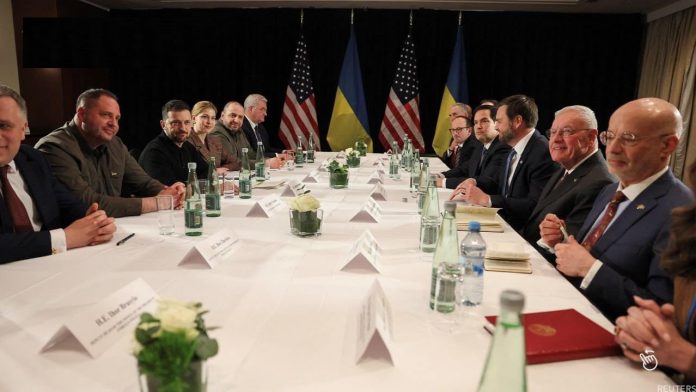
Wars are bad because during wars many bad things happen. We are reading that Ukraine’s leader dodged a huge poison pill that could have wiped Ukraine’s economic future for generations: “During the Munich Security Conference, a U.S. Congressional delegation presented Ukrainian President Volodymyr Zelensky with a document requesting access to 50% of Ukraine’s future mineral reserves. This proposal was made in the context of U.S. military support for Ukraine. President Zelensky declined to sign the agreement, citing no opportunity to review the document and the absence of explicit security guarantees.”

He will likely review it and sign a version later (does he have an option?). During the Biafra War, Nigeria signed a couple of such and continue to pay for the consequences till today. Sudan is signing versions in its war as we write. There are only 3 countries in this world that can wage wars for 24 months without external support, and they are the US, Russia, and China. Those countries have large industrial capacities, raw materials and inputs that can sustain the production of weapons for years. The UK, Germany, Japan and France will operate but will run out of capacity within 18 months.

So, when you read that our African countries are fighting, pay attention as someone has requested for rights to oil wells, minerals, etc.  That is why even when new leaders come, nothing changes because when you see the “agreement”, you become normalized.

It is an illusion to think the world is fair and balanced. In 2015, Britain finished paying off the debt it incurred to cover the payments to slave owners who lost their slaves due to the abolishment law of 1883. Under that law, Britain took a loan from banks and paid those slave owners immediately, and for more than a century has been paying banks for the loans. Understand that no one compensated the victims (yes the slaves).

Indeed, it is what it is: I wish Ukraine good luck as it goes through this paralysis.

US Congressman Scott Perry Accuses USAID of Funding Boko Haram, Other Terrorist Organizations

0

The United States Agency for International Development (USAID) has come under intense scrutiny following allegations by Republican Congressman Scott Perry that the agency has been funneling taxpayer dollars to terrorist organizations, including Boko Haram, ISIS, and Al-Qaeda.

Perry made the claims during the inaugural hearing of the Subcommittee on Delivering on Government Efficiency on Thursday, alleging that USAID has become a conduit for terrorist financing under the guise of humanitarian aid.

During the hearing, titled “The War on Waste: Stamping Out the Scourge of Improper Payments and Fraud,” Perry stated that USAID distributes $697 million annually, with large sums allegedly ending up in the hands of Islamist militants and terrorist training camps.

“Who gets some of that money? Does that name ring a bell to anybody in the room? Because your money—$697 million annually, plus the shipments of cash—funds Madrasas, ISIS, Al-Qaeda, Boko Haram, ISIS Khorasan, terrorist training camps. That’s what it’s funding,” Perry declared.

His accusations have added to long-standing concerns about USAID’s operations, with critics arguing that America’s foreign aid policies have been exploited by corrupt individuals and rogue actors in recipient countries.

Perry also pointed to massive fraud in USAID-funded projects, particularly in Pakistan and Afghanistan, where billions of dollars have reportedly been mismanaged or vanished without accountability.

In Pakistan, Perry noted that $136 million was allocated for the construction of 120 schools, yet there is no evidence that any of them were built.

“But you know what? We doubled down and spent $20 million from USAID to create educational television programs for children unable to attend physical school. Yeah, they can’t attend it, because it doesn’t exist. You paid for it. Somebody else got the money,” Perry said.

In Afghanistan, he highlighted the absurdity of spending $60 million annually on a Women’s Scholarship Endowment, despite the Taliban’s ban on female education and public speaking.


The lack of proper oversight by the US government over USAID’s funding has further fueled speculation that these allegations may hold more truth than fiction. Over the years, despite clear instances of fraud and misappropriation, USAID has continued to pump billions into questionable programs with little accountability.

Nigerian investigative journalist David Hundeyin, in reaction to Trump’s suspension of USAID, raised a pertinent question: “Why does a philanthropic donor watch the people he is donating money to live more lavishly than him, and yet decide to keep giving them more money? He must either be the world’s greatest dumbass, or he has another reason for giving them that money.”

Hundeyin’s comment underscores the growing suspicion among Nigerians that USAID’s funding of terrorism may not be an accident but rather a deliberate policy with ulterior motives.

The Nigerian military has repeatedly accused Non-Governmental Organizations (NGOs) of sponsoring or aiding terrorists in the Northeast, an allegation many did not take seriously until now.

Trump and Musk Move to Shut Down USAID

President Donald Trump, who has long accused USAID of corruption and inefficiency, has suspended its operations, pending an investigation into its alleged funding of terrorism and rogue operations.

Trump’s Department of Government Efficiency (DOGE)—headed by billionaire Elon Musk—is actively working to dismantle government bureaucracy and cut off wasteful expenditures, with USAID being a primary target.

Musk has been particularly vocal, calling USAID “a viper’s nest of radical-left Marxists who hate America” and accusing it of financing bioweapon research, including COVID-19, which he claims killed millions of people.

Trump, in a statement, declared: “We are dismantling USAID and every other agency that has misused taxpayer dollars. No more funding of terrorism, no more corruption. This will send shockwaves through the system.”

Nigerians Expect Terrorist Activities to Decline Following USAID Suspension

With USAID now under investigation and its operations suspended, many Nigerians have expressed hope that terrorist activities, particularly Boko Haram’s attacks, will significantly decline.

For years, Boko Haram has had access to advanced weaponry, large sums of money, and sophisticated logistics, raising questions about who has been funding the group. If Perry’s allegations are accurate, it means that a significant source of Boko Haram’s financing may now be cut off.

Security analysts in Nigeria are now calling for a thorough probe into USAID’s financial dealings in the country, demanding that the government track and trace every dollar that has entered the country under USAID programs.

Crypto Scam Revenue 2024: Pig Butchering Grows Nearly 40% YoY, as AI Enhnaces Scam Sophistication

0

According to a recent crypto crime report by Chainalysis, 2024 saw a decline in overall crypto scam revenue. However, the year still set a record in total scam-related inflows, as the current figures represent lower-bound estimates based on identified scam addresses to date.

Among scam sub-classes, high-yield investment scams (HYIS) and pig butchering scams accounted for the highest shares, receiving 50.2% and 33.2% of total scam-related crypto transactions, respectively.

The Expansion of Pig Butchering Scams

Pig butchering scams, also known as investment or romance scams build relationships with victims, convincing them to invest in fraudulent schemes. Initially concentrated in large scam compounds in Southeast Asia, these scams have reportedly expanded geographically over the past two years. While operations in Southeast Asia remain dominant, newer scams are emerging in different regions.

In addition to traditional long-term cons that involve months or even years of grooming victims before extracting payments, pig butchering scammers have diversified their tactics. A notable shift includes employment and work-from-home scams, which yield smaller but quicker victim deposits.

For example, a fraudulent job platform impersonating a record label funneled crypto funds into addresses linked to pig butchering scams, as confirmed by Proofpoint cybersecurity researchers. Chainalysis further connected these scams through shared on-chain addresses.

Although employment scams accounted for less than 1% of total on-chain scam revenue in 2024, thousands of victims fell for fake job postings, prompting an FBI warning in the U.S. Scam operators are also adapting to the traceability of cryptocurrency, increasingly directing victims to contact “customer service” representatives to obtain crypto payment addresses or even avoiding cryptocurrency payments altogether in favor of alternative financial channels.

In 2024, five scam types experienced growth:

  • Pig butchering
  • Address poisoning
  • Crypto drainers
  • Livestream scams
  • Blackmail and extortion scams

Where scammers send illicit crypto

In the last few years, destinations for scammed funds have remained relatively the same, with most funds going to centralized exchanges (CEXs). But as scams on more blockchains including Ethereum, Tron, and Solana have grown, so too has the use of DeFi protocols.

Since mid-2023, crypto sent from scams to Huione money laundering services has also grown. Money laundering is just one type of illicit activity the Huione Guarantee platform supports, among a host of services that facilitate scams.

Additionally, crypto transactions linked to Huione money laundering services have risen significantly. Huione Guarantee, an online marketplace affiliated with Cambodian conglomerate Huione Group, has been identified as a major enabler of crypto-based scams. Originally offering legitimate financial services such as remittances and insurance, Huione Guarantee has evolved into a hub for illicit cyber activities, processing an estimated $70 billion in crypto transactions since 2021.

Huione Guarantee provides illicit actors with the necessary technology, infrastructure, and resources to conduct scams.

Key offerings include:

  • Targeted data lists
  • Web hosting services
  • Social media account management
  • Al-driven content creation
  • Money laundering services

The Role of Al in Facilitating Crypto Scams

Generative Al is increasingly being leveraged to enhance scam sophistication and efficiency. According to Elad Fouks, head of fraud products at Chainalysis and co-founder of Alterya, Al is amplifying scams by enabling high-fidelity, low-cost fraud that exploits human vulnerabilities.

Al allows fraudsters to do the following:

  • Create synthetic identities to bypass identity verification systems
  • Generate realistic fake websites and listings for investment and purchase scams
  • Enhance authorized push payment (APP) fraud, convincing victims to authorize fraudulent payments

Conclusion

Despite an overall decline in scam revenue, crypto-related fraud remains a pervasive issue in 2024, evolving with technological advancements. The proliferation of Al-driven scams, employment fraud, and money laundering platforms like Huione Guarantee underscores the growing complexity of illicit crypto activity. As scams become more sophisticated and geographically diverse, regulatory and enforcement measures must adapt to counter emerging threats in the crypto landscape.