DD
MM
YYYY

PAGES

DD
MM
YYYY

spot_img

PAGES

Home Blog Page 2274

SHIBI’s Early Investors Are Seeing Massive Growth! Is This The Meme Coin 2025 Has Been Waiting For?

0

Panshibi’s (SHIBI) early investors are already seeing incredible gains as the meme coin takes off. Panshibi (SHIBI) is quickly becoming a favorite in the crypto market with its innovative approach that blends Social-Fi, AI, and community-driven incentives. Rising rapidly during its presale, with over $500k raised in record time, experts predict massive growth as the token nears its official market launch in 2025. Could SHIBI be the meme coin investors have been waiting for? Its potential for exponential returns is drawing attention, making now the perfect time to get involved.

Why Panshibi’s Popularity Continues to Grow

Panshibi (SHIBI) is capturing the attention of crypto investors even before its official launch. This upcoming meme token gem aims to establish one of the most significant communities in the crypto market. This community developed by Panshibi will allow users to earn rewards, build meaningful relationships, and develop connections with similar crypto enthusiasts.

Security combined with transparency are fundamental features developed on Panshibi for the safety of investors and their assets. A blockchain security firm has verified its smart contract, confirming the project’s reliability. The token has also passed a security audit without any delays, strengthening trust among investors.

Investors can stake their Panshibi tokens to earn high APYs of up to 1,200%. Holding this token also grants governance rights, allowing users to participate in key community decisions. Additionally, token holders can access exclusive clubs, including the Bamboo Private VIP Members Club, reserved for select investors.

After its launch, Panshibi will be listed on major exchanges like Uniswap, and there are plans to expand on Binance, KuCoin and Coinbase. The platform’s liquidity pool will remain locked for 10 years, ensuring long-term stability. Token ownership will be renounced, allowing the community to control the project.

The current market conditions, combined with Panshibi’s innovative features and increased market interest, create an ideal opportunity for crypto enthusiasts to become an investor before prices change.

Panshibi Crosses to Stage 3 of Impressive Presale Rounds

Panshibi is in its third presale stage, with a token price of $0.004. The presale consists of 12 more stages—including the current stage—before the official launch. The Panshibi presale will last for another 49 days and has a funding cap of $10 million. As the presale progresses, the token’s value will rise by 1,200%. Once launched, Panshibi could surge by 145,000% in value, offering significant potential for early investors. 1.2 billion tokens have been allocated to the presale, representing 60% of the total supply.

Panshibi is emerging as a major contender in the meme coin sector. Many traders are betting on its potential to help recover losses from other investments. Joining the Panshibi community now could open the door to exciting opportunities within the crypto market.


You can participate in the Panshibi presale here:

Telegram: https://t.me/panshibi 

Twitter: https://x.com/panshibi 

Website: https://panshibi.com

Traders Short XRP and Solana Waiting For Lower Prices; Those Seeking Gains Are Choosing Remittix

0

The cryptocurrency market is experiencing notable fluctuations, as numerous traders are shorting XRP and Solana price trends while they expect additional decreases. Nevertheless, although investors wager on price declines, an increasing number of market participants are redirecting their attention to Remittix crypto profits- an altcoin currently in its presale phase- acknowledging its practical application and future potential. Finding the best altcoin investment of 2025 is not only about massive returns but an ecosystem that provides real world utility. Join the Remittix presale here.

Why are traders shorting XRP and Solana?

Both general market volatility and ongoing regulatory uncertainties have put pressure on the XRP and Solana price trends. Despite its institutional backing and payments sector developments, XRP continues to face legal challenges from the SEC that could significantly impact its regulatory position and cause traders to become uneasy. XRP has dropped 1.37% to $3.02 over the last day, while trading volume has dropped 16.21% to $3.97 billion.

Similarly, investors respond to regulatory issues encountered by initiatives in its Solana’s ecosystem which caused the price to decrease by 2.65% to $22. The Pump.fun lawsuit has increased scrutiny on platforms based on Solana, while its ETF applications with the SEC are still at a standstill. Even with developments, the general market attitude stays wary, prompting numerous traders to short Solana in anticipation of repurchasing at reduced prices.

Remittix – a new opportunity for investors

According to World Bank estimates from 2021, 1.4 billion adults worldwide are unbanked due to a plethora of reasons. As a result of this, they often have to engage the services of intermediaries who could potentially become exploitative. An option has been made possible due to Remittix, which enables consumers to purchase digital assets, convert them into cash, and take their money out using Western Union and other services. Moreover, the recipient would not be aware that the bank transfer originated as a cryptocurrency.

As traders anticipate that XRP and Solana price trends will reach new lows, those seeking genuine profits in 2025 are turning their attention to Remittix crypto gains. In contrast to conventional cryptocurrencies that depend on speculation, Remittix (RTX) is addressing genuine financial issues.

By offering a useful alternative to speculative trading, this feature positions Remittix as one of the best altcoin investments of 2025. Given that Remittix’s presale has already raised over $10.5 million, investors are realising the importance of a trustworthy crypto-to-fiat bridge. Remittix offers a tangible use case that is encouraging early adoption, in contrast to XRP and Solana, whose price trajectories are unpredictable. Join the Remittix presale here.

Why Remittix is outperforming speculative altcoins

Many firms are reluctant to embrace cryptocurrencies due to their price volatility and potential losses. Remittix solves the problem of price and utility changes by offering rapid conversion to fiat, guaranteeing that consumers and merchants get payments on a regular basis. Because of this, Remittix is a more enticing investment than Solana and XRP.

Moreover, conventional remittance services impose significant fees and require several days to complete transactions. In comparison, Remittix enables users to transfer funds worldwide with almost immediate settlements and reduced expenses, rendering it a more feasible option for international transactions. The real-world influence of Remittix crypto gains is drawing in investors interested in sustainable growth rather than short-term investments.

Which investment will win in 2025?

Investors’ choices are smarter as the bitcoin industry develops. Even though market speculation and regulatory changes continue to impact XRP and Solana price trends, Remittix stands itself as a useful financial option. Remittix may become the best altcoin investments of 2025, according to analysts, as more people utilize cryptocurrency for daily transactions rather than just trading.


Discover the future of PayFi with Remittix by checking out their presale here:

Website: https://remittix.io/

Socials: https://linktr.ee/remittix

Global Interest in Trump’s Tariffs Surges as Public Seeks Clarity on Trade War’s Impact

0

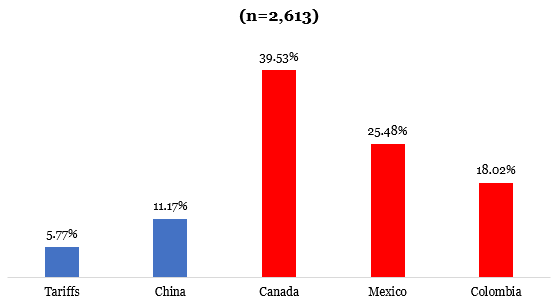
As President Donald Trump’s latest round of tariffs reshapes global trade, public interest in their consequences has surged, reflecting deep concerns across multiple nations. An analysis of search data from January 20 to February 2, 2025, reveals that citizens worldwide are actively seeking information on the implications of U.S. tariffs on China, Canada, Mexico, and Colombia.

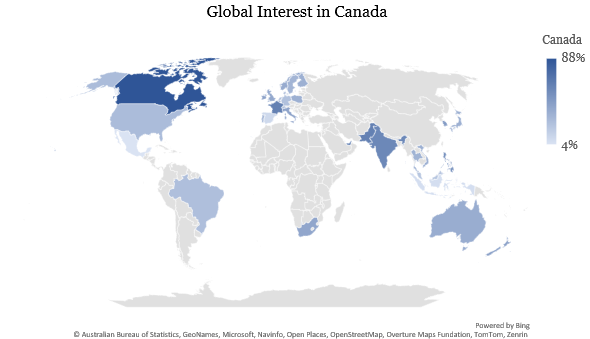
The data, compiled from global search trends, indicates that Canada is the most-searched country in the context of tariffs, drawing 88% of interest from within Canada and significant attention from the United States (27%) and Europe (35-43%). The intense focus stems from Canada’s role as one of America’s largest trading partners and a primary target of the administration’s latest trade policies.

Exhibit 1: Global total search volume between January 20 and February 2, 2025

Source: Google Trends, 2025; Infoprations Analysis, 2025

Canada: A Trade War Frontline

Canada, facing 25% tariffs on steel and aluminium exports and new levies on dairy and timber, has emerged as the most-discussed country in global trade circles. Domestic searches show that nearly nine out of ten Canadians (88%) are actively looking up information about Trump’s tariffs, reflecting widespread concern over economic consequences.

Prime Minister Justin Trudeau has vowed retaliatory measures, prompting a surge in U.S. searches (27%) about Canada’s response. The tariffs have already strained U.S.-Canada relations, with businesses on both sides of the border bracing for disruptions in supply chains and increased consumer prices.

Source: Google Trends, 2025; Infoprations Analysis, 2025

Mexico: The New Flashpoint

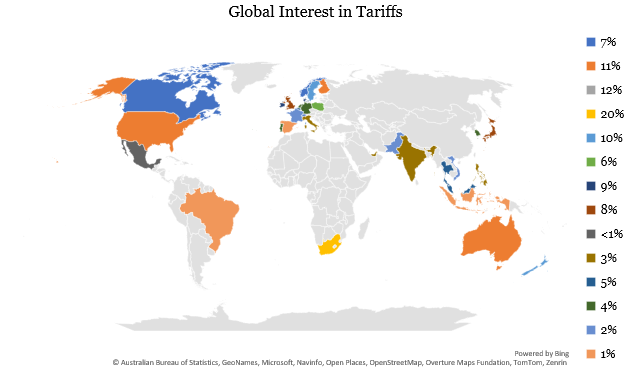
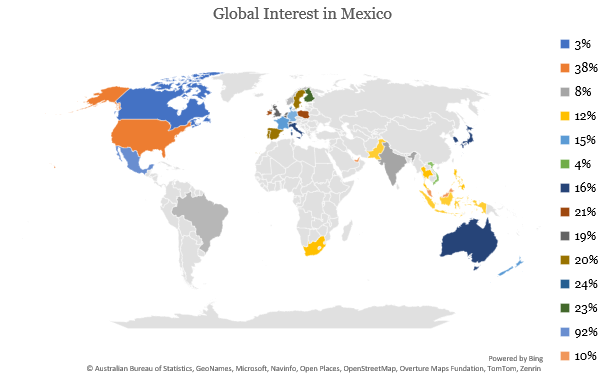
In Mexico, where 92% of tariff-related searches focus on U.S. trade policies, public interest reflects both concern and defiance. Trump’s decision to impose tariffs on automobile parts, avocados, and textiles has sparked widespread discussions in Mexico about potential countermeasures.

Source: Google Trends, 2025; Infoprations Analysis, 2025

The tariffs have also fueled political rhetoric. Mexican officials are considering reciprocal duties on American corn and beef exports, a move that could escalate tensions. The data also shows that 38% of Americans are searching about tariffs on Mexico, indicating that concerns about rising consumer costs are taking hold among U.S. citizens.

China: Renewed Trade War Concerns

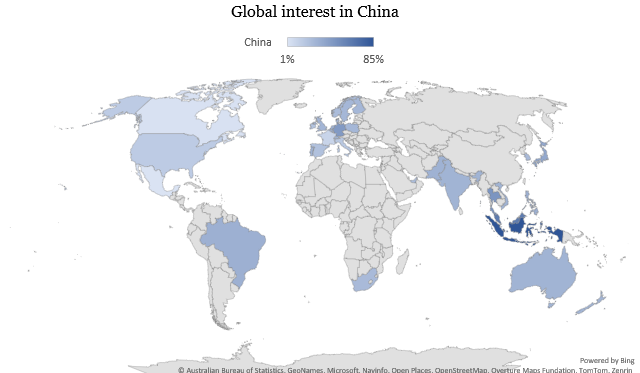
While China has historically been a major target of Trump’s tariffs, search interest on the topic remains high but more evenly distributed across nations. In Singapore (57%), Malaysia (62%), and Hong Kong (61%), public searches reflect regional anxieties over supply chain disruptions and trade route adjustments.

Source: Google Trends, 2025; Infoprations Analysis, 2025

Search data from Germany (44%) and Thailand (47%) suggests that Europe and Asia remain deeply invested in how China responds. Beijing has already announced a new round of counter-tariffs on American technology and agricultural goods, signalling a renewed trade war.

Colombia: The Outlier in the Trade Debate

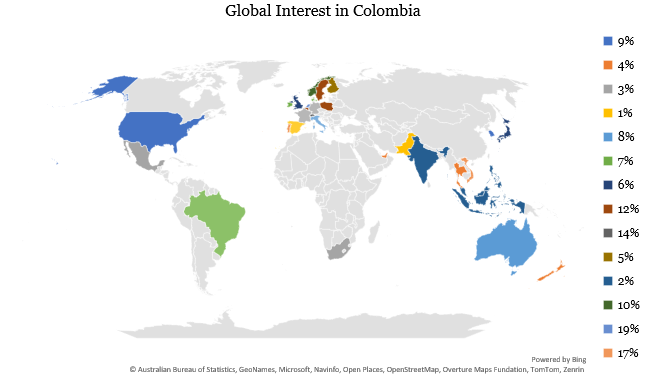
Unlike other nations under scrutiny, Colombia has attracted the least global search interest related to tariffs. Only 3% of Mexican searches and 1% of Canadian searches focus on Colombia, reflecting its relatively small role in the trade disputes. However, with new tariffs on Colombian coffee and textiles, analysts predict that public interest may rise as industries adjust to shifting trade policies.

Source: Google Trends, 2025; Infoprations Analysis, 2025

Shifting Global Alliances

The geopolitical implications of Trump’s tariffs are becoming clearer. The European Union, already critical of U.S. trade policies, is aligning with Canada and Mexico in challenging Washington’s approach. Retaliatory tariffs from Canada (25% on U.S. steel) and Mexico (tariffs on key U.S. agricultural exports) suggest that America’s closest allies are no longer backing down.

Source: Google Trends, 2025; Infoprations Analysis, 2025

In Asia, countries such as Vietnam (29%), India (29%), and South Korea (25%) show moderate search interest, reflecting growing concern over U.S. trade strategy and its impact on global markets.

Crypto Traders Predict Yeti Ouro To Have Same Phenomenon As Trumps Coin

0

The cryptocurrency market in 2025 shows a notable shift as traders draw parallels between Yeti Ouro (YETIO) as well as Trump’s Coin (TRUMP). A resemblance exists in how Trump’s Coin rose through political support or social media buzz. The Play-to-Earn (P2E) gaming model of Yeti Ouro together with its token structure, leads experts to predict success at a similar scale.

Yeti Ouro: A Game-Changer In Crypto Gaming

Yeti Ouro stands out in the crypto space through its Play-to-Earn (P2E) game Yeti Go which runs on the Unreal Engine. A player can earn YETIO tokens by racing or winning in this new gaming system. The platform connects blockchain features for a decentralized setup where users own their assets which adds value to the token.

The financial plan behind Yeti Ouro shows promise with its token design. A total supply of 1 billion tokens exists along with a 5% burn rate, to create less supply over time. The presale shows good results in Stage 2 with tokens at $0.017 as well as a 10% reward for new buyers. The presale has already sold over 152,000,000 tokens. These numbers point to solid market trust. The presale has also gone through a thorough audit by SolidProof, a reputable company, further strengthened investors confidence.

The setup rewards early buyers but also creates a base for long-term success. This makes YETIO an option worth looking at for people who want to join the growing P2E market. Due to global recognition and Yeti Ouro presale success, YETIO has become an important element in the GameFi and DeFi space.

Trump’s Coin (TRUMP): The Political Meme Coin Surge

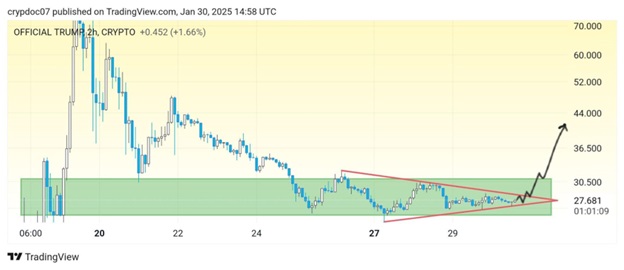
Trump’s Coin became a notable part of political backing and internet culture during Donald Trump’s campaign for re-election. The price increased from public figures’ support along with social media attention as well as its political story. The coin reached a $13 billion market value because of trading patterns plus a loyal group of followers. Yet price shifts occurred often because of the link between political news and public opinion.

  Source X

The coin’s financial appeal connected to politics with its price changes tied to Trump’s decisions, election news or public remarks. A large base of followers proved how a token could gain value through shared beliefs. But this also showed risks in assets that depend on one person or election results. A key lesson emerged for investors about high profits next to the random nature of internet-based tokens.

YETIO vs. TRUMP: Financial Dynamics

The comparison between YETIO and TRUMP Coin shows distinct financial patterns. TRUMP Coin based its value on politics and public excitement as YETIO builds its worth through a gaming system. Yetio enables investors to join an expanding gaming field where the token gains value from actual gameplay instead of speculation alone. The presale offers along with the Chinese New Year bonus add quick financial rewards for early buyers.

The mix of games and blockchain use in Yeti Ouro points to steadier growth compared to TRUMP Coin’s sharp price changes. YETIO lets people invest in game entertainment as well as blockchain development. The project offers quick profits from presale benefits next to potential future gains as the system expands.

Conclusion

While Trump’s Coin was a product of its time, fueled by political and meme culture, Yeti Ouro is positioning itself as a forward-looking investment in the Play-to-Earn gaming sector. If YETIO can capture the market’s imagination the way TRUMP Coin did, but with the added benefit of tangible utility, it might indeed replicate that phenomenon, providing investors with substantial financial opportunities in 2025.

With predictions for a 1000% return on investment, Yeti Ouro may be a life-changing opportunity investors are after. It is a standout option in the crypto – gaming  sector because of an advanced pairing and strategic market positioning.


Join the Yeti Ouro Community

Website: https://yetiouro.io/

X (Formerly Twitter): https://x.com/yetiouro

Telegram: https://t.me/yetiouroofficial

Discord: https://discord.gg/YtUsEZ2ZrV

How Global Media Leverage Trump’s Tariffs to Shape Geopolitical Decision-Making

0

Trade policies have always shaped the global economy. Still, few moments have garnered as much media frenzy as President Donald Trump’s tariff decisions on Canada, Mexico, China, and the European Union. The framing of Trump’s tariffs not only shaped public perception but also altered geopolitical relations, creating a self-perpetuating cycle of economic and diplomatic tensions. To provide insights that are relevant to new geopolitical developments, our analyst analyzes 20 news articles from international news outlets regarding the tariff trade war between the United States of America and other countries, particularly the CMC nations previously mentioned.

The Role of Moral Panic in Framing Trump’s Tariffs

Moral panic follows a specific trajectory, often beginning with the identification of a folk devil, an individual or group held responsible for a societal threat. In this case, the media positioned Trump and his tariffs as the central disruptors of global trade stability. Headlines such as “Trump says tariff ‘pain’ worth it for US as Canada and Mexico retaliate” and “Trump tariffs: which countries are affected and what does this mean?” illustrate how the narrative was framed as a global crisis rather than a standard economic policy decision.

Through exaggeration and sensationalism, media outlets amplified the perception of tariffs as a direct economic assault rather than a strategic policy manoeuvre. For instance, phrases like “Global alarm, condemnation as Trump tariffs hit Mexico, Canada and China” and “With tariffs and threats, Trump turns on America’s closest allies” evoke fear and instability. The media’s emphasis on pain, fallout, alarm, condemnation, and threats, the media shaped public perception makes the tariffs seem catastrophic rather than a routine element of trade negotiations.

From Economic Policy to Diplomatic Warfare

The media’s construction of moral panic around Trump’s tariffs had direct implications for geopolitics. It transformed what could have been measured trade disputes into diplomatic confrontations. The reciprocal tariffs from Canada and Mexico were framed as acts of resistance against an aggressor rather than economic countermeasures. Consider the framing in “Canada, Mexico announce retaliatory tariffs on US” and “Canada tariffs: Trudeau hits back against Trump with 25% levy”.

This adversarial narrative played a critical role in reinforcing nationalistic sentiments within affected countries. Canadian Prime Minister Justin Trudeau, for example, was portrayed as a leader rallying his country against economic aggression. The headline “Trump tariffs booed in Canada as Trudeau calls for national unity” suggests that tariffs were not just economic instruments but catalysts for political unity and defiance against perceived external threats.

Similarly, the European Union’s response was depicted as inevitable and justified. The headline “Trump says EU tariffs will ‘definitely happen’ as Mexico, Canada and China retaliate” presents retaliation as an unavoidable consequence rather than a negotiable policy response. This media-driven escalation further strained diplomatic relations and reinforced divisions between the US and its traditional allies.

The Lasting Impact on Global Trade and Alliances

The long-term consequences of media-driven moral panic around Trump’s tariffs extend far beyond his presidency. Countries now view trade disputes through a more adversarial lens, making compromise and negotiation more challenging. The rhetoric of economic nationalism, once amplified by media narratives, continues to influence protectionist policies worldwide.

Moreover, the media’s role in framing trade policies as crises has set a precedent for future economic reporting. Policymakers must now navigate a highly reactive media landscape, where trade decisions are instantly scrutinized and sensationalized. This creates a more volatile environment for global trade, where perception often outweighs economic realities.

As trade policies continue to evolve in a post-Trump world, leaders must be mindful of how media discourse influences public opinion and policy responses. In an era where perception is often more influential than reality, understanding the power of media-driven moral panics is essential for navigating the complexities of international trade and diplomacy.