DD
MM
YYYY

PAGES

DD
MM
YYYY

spot_img

PAGES

Home Blog Page 228

Nvidia Becomes First Company to Hit $5tn Valuation as AI Boom Drives Record Market Rally

0

Nvidia on Wednesday became the first company in history to cross the $5 trillion market capitalization threshold, capping a meteoric rise that underscores its central role in the artificial intelligence revolution and its dominance in the global semiconductor industry.

Shares of the Santa Clara-based tech giant surged more than 4% during trading, extending gains from Tuesday when the stock closed up 5%. Nvidia’s valuation milestone marks another high point in a rally that has already lifted its shares more than 50% year-to-date, making it the world’s most valuable company and the biggest beneficiary of the ongoing AI investment wave.

The company’s remarkable ascent—from a maker of graphics processors for video games to the undisputed leader in AI computing—has reshaped global markets and investor sentiment. Nvidia’s chips now power everything from OpenAI’s large language models to supercomputers used in scientific research, defense, and autonomous driving.

The latest rally came shortly after CEO Jensen Huang revealed that Nvidia expects to receive $500 billion in AI chip orders, an outlook that further boosted investor optimism about long-term demand. Huang also announced that the company will build seven new supercomputers for the U.S. government, strengthening its leadership in the race for advanced AI infrastructure.

Separately, Nvidia disclosed a major new investment, taking a $1 billion stake in Nokia as part of a strategic partnership to develop next-generation 6G cellular technology. The collaboration will focus on integrating AI into future telecommunications systems, signaling Nvidia’s intention to extend its reach beyond data centers and cloud computing into core network infrastructure.

The company’s $5 trillion milestone also comes amid a broader surge across the U.S. stock market, largely fueled by AI-related optimism. On Tuesday, all three major indexes closed at record highs, driven by gains in technology stocks. Apple and Microsoft each topped the $4 trillion valuation mark, joining Nvidia in a record-setting trio that now dominates global equity markets.

The extraordinary rally, however, has raised concerns among economists and regulators about the sustainability of current valuations. Both the International Monetary Fund (IMF) and the Bank of England recently warned that global stock markets could face sharp corrections if investor appetite for AI-driven assets begins to cool.

Even amid those warnings, leading investors remain bullish on AI’s long-term potential. Cathie Wood, CEO of Ark Invest, acknowledged the possibility of a short-term “reality check” but dismissed fears of an AI bubble. Speaking to CNBC on the sidelines of the Future Investment Initiative (FII) summit in Riyadh on Tuesday, Wood said: “If our expectations for AI are correct, we are at the very beginning of a technology revolution.”

Some analysts believe Nvidia’s ascent to $5 trillion represents more than just a symbolic milestone—it reflects a structural shift in the global economy, where artificial intelligence, semiconductors, and computing infrastructure have become the new cornerstones of growth and innovation.

With demand for AI chips still accelerating, Nvidia’s next challenge will be to maintain its technological lead amid intensifying competition from rivals such as AMD, Intel, and a growing list of AI-focused startups. But for now, its record valuation stands as the clearest testament to the scale of the AI-driven transformation sweeping across global markets.

What Does Refresh Rate Mean on a Monitor? 60Hz vs 144Hz vs 240Hz Explained

0

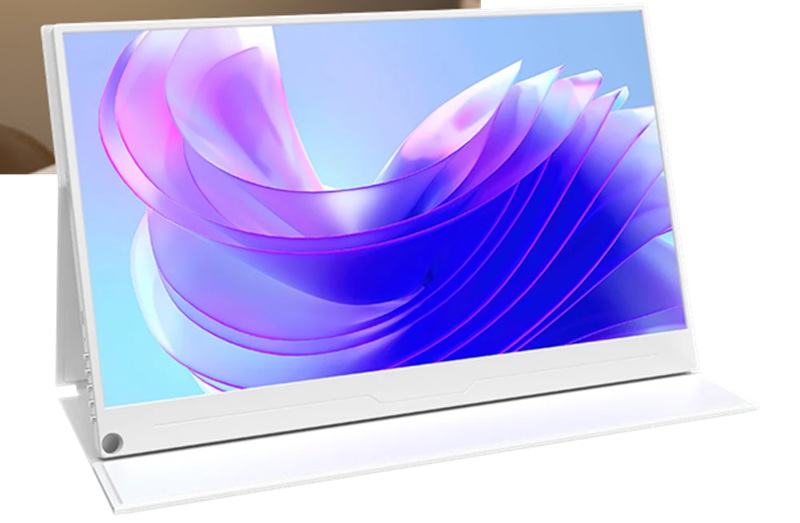
Throughout your quest to buy a new monitor, you would probably have been hearing about the “refresh rate” quite a lot. If you are a casual user, a hardcore gamer, or a professional creative, understanding what refresh rate is and how it will affect you is definitely worth your time. Portable Monitors are offered with 60Hz, 144Hz, and even 240Hz capabilities, but what do these numbers mean to you? And which ones do you require?

Here in this Uperfect article, we will demystify what refresh rate is, how it impacts your monitor’s performance, and assist you in deciding between 60Hz, 144Hz, or 240Hz.

What Is Refresh Rate?

Refresh rate refers to the number of times your display renders the image on the screen in a single second, that is, in Hertz (Hz).

  • 60Hz means that the entire screen image gets refreshed every 60 seconds.
  • A 144Hz monitor updates 144 times per second
  • A 240Hz monitor does 240 per second

Suppose you are the one holding the flipbook: the more update pages per second, the smoother an animation appears.

Why Refresh Rate Matters

Higher refresh rate is more responsive, more fluid—most especially in fast-moving materials, such as:

  • Gaming (first-person shooter, car racing, and eSports)
  • Video editing or motion graphics design
  • View high-frame-rate videos

Smooth Motion

As for 240Hz monitors, they are much smoother than their 60Hz counterparts. You may hardly notice any difference while just about the internet or working in an office. But in fast-paced gaming, a higher refresh rate will tend to help in reducing motion blur and smooth gaming.

Power Input Lag

Input lag is how long it takes from a button press to being perceived on-screen. Monitors with high refresh rates reduce the input lag enough to be the difference between winning and losing in a tight game.

Enhanced Visual Experience

Even outside of game use, navigation within the operating system or web page scrolling feels more immersive on higher refresh rate screens. Therefore, the smoother the motion, the less hard it gets on the eyes, and that allows them to be used longer.

Understanding Numbers: 60Hz compared to 144Hz compared to 240Hz

Moving further to understand the basics of the refresh rates.

60Hz: The Standard

Suitable for:

  • White-collar labor
  • Internet browsing
  • Video streaming
  • Casual gaming

60Hz was the norm for years. It’s fine for everyone except the most critical users with ultra-smooth motion needs. Movie viewing, report typing, or web surfing are all acceptable at 60Hz.

But for gaming, especially fast-paced or competitive games, 60Hz can comparatively appear jerky or sluggish at times versus higher refresh rates.

144Hz: The Sweet Spot

Good for:

  • Gamers (especially competitive and FPS games)
  • Visionary minds
  • Everyone is moving up from 60Hz

144Hz is the best price-performance ratio. It is an improvement over 60Hz with noticeably smoother motion and responsiveness. It’s a first pick for hardcore gamers and for those who require a more immersive experience.

Among the mobile monitors of Uperfect are some that utilize 144Hz panels, a seamless combination of high performance and portability for gamers and mobile content creators.

240Hz: A Cutting Edge

Recommended for:

  • Competitive or professional gamers
  • eSports
  • High-FPS gaming players like CS: GO, Valorant, Fortnite

If 144Hz is clearly superior to 60Hz, 240Hz is the next step. It’s utilized mostly by hard-gamering guys who need each millisecond of advantage. There, it is not so noticeable, but hard-gamering guys can sense it and make use of it.

Don’t forget: to actually benefit from a 240Hz monitor, your graphics card (GPU) must be capable of outputting frame rates of nearly 240 FPS. Otherwise, the added refresh rate isn’t utilized.

Refresh Rate vs Frame Rate: Are They the Same?

  • Everyone mixes up refresh rate (Hz) with frame rate (FPS – frames per second), but they’re not.
  • Refresh rate (Hz) is how fast the monitor can refresh the image.
  • Frame rate (FPS) is a measure of how many frames your GPU is currently outputting to the screen.

So, in order to get the best, you must have your FPS at least or more than the monitor refresh rate. You are playing games on a 144Hz monitor and a 144 FPS GPU, and you will get extremely smooth action. But if your game only caps at 60 FPS, you cannot take advantage of a 144Hz or 240Hz monitor.

Do You Need a High Refresh Rate Monitor?

Let’s dissect it by user category:

Non-Regular Users

If you spend most of your time at the office, watching videos, or surfing the web, 60Hz will do. You won’t even perceive a difference to such activities at higher refresh rates.

Gamers

That is where refresh rate comes into play. For an RPG or single-player game, 60Hz or 75Hz will do. But for competitive multiplayer games:

  • 144Hz is definitely better than 60Hz
  • 240Hz can provide high-end gamers with the edge

Creators & Experts

When it comes to editors, animators, and UI/UX designers, it means they can edit more fluidly. Especially while editing motion graphics, what really fits is 144Hz or higher.

Other Things to Consider

Panel Type

Various panel technologies (VA, TN, IPS) influence the contribution of the refresh rate to image quality.

  • IPS panels provide superior color and viewing angles, but perhaps slightly inferior response times.
  • TN panels are faster but have more color and angle-compromised.
  • VA panels are somewhere in between; their contrast is usually larger.

We in Uperfect use the highest quality IPS panels in most of our monitors to provide the utmost color accuracy and silky smooth performance.

GPU Capability

Your screen is only as good as your graphics card. If your GPU cannot provide you with a high enough frame rate, then you are not going to see a difference with high refresh rates.

Make sure your setup can continuously output 144 FPS or 240 FPS before you go and buy one that can.

Adaptive Sync Technology

Synchronization technology: NVIDIA G-SYNC and AMD FreeSync make it possible for a monitor to synchronize its refresh with the frame output by the GPU, minimizing screen tearing and stuttering. Uperfect Monitors usually come with Adaptive Sync support to ensure tear-free performance with silky smooth moving images, particularly gaming.

Uperfect’s Take: Which Refresh Rate Should You Choose?

We at Uperfect.com stock the whole line of laptop screens and desktop screens to satisfy all specifications—beginner screens to the cream of the crop, lightning-fast screens. This is how we recommend that you make your decision:

Use Case Recommended Refresh Rate Uperfect Suggestion
Office & General Use 60HZ Portable lightweight monitors
Casual Gaming & Media 75Hz–100Hz Mid-range gaming portable monitors
Competitive Gaming 144HZ Uperfect 144hz portable monitor gaming series
eSports & Pro Gaming 240HZ Premium 240Hz desktop versions

Final Thoughts

Refresh rate matters while selecting the suitable monitor for your application since it makes for a smooth experience and better response capabilities in fast-paced activities such as gaming and video editing.

  • 60Hz is sufficient for everyday consumers.
  • 144Hz is suitable for the majority of content creators and gamers.
  • 240Hz is suitable for extreme gamers who require the best performance.

Nigeria’s SoftTalk Is Challenging the Global Tech Order

1

Africa’s digital ecosystem is entering a decisive moment. The growth of smartphones, expanding broadband access and a youthful content hungry population are reshaping how communication platforms operate on the continent. For years global platforms have dominated attention and monetization opportunities. African creators have often played by rules written in Silicon Valley and have struggled with barriers to payment, content visibility and unfair revenue shares.

A recent development signals a shift. SoftTalk Messenger, a Nigerian grown messaging and community platform, has introduced a creator monetization model that gives one hundred percent of revenue to creators who drive engagement on its groups and communities. For many creators in emerging markets the promise of full revenue share feels like a revolution. More important is what this means for global platforms that rely on creator content to maintain dominance.

Local innovation is starting to rewrite the script. SoftTalk is designed with African user behavior and market frictions in mind. The platform allows users to engage in communities without revealing phone numbers. It integrates commerce such as airtime and bill payment. It understands that messaging is not just chat in Nigeria. It is also business and social exchange. By bringing together communication and local economic activity, SoftTalk is positioning itself as more than a global replica. It is building around needs that foreign platforms have often overlooked.

Many African creators have long expressed frustration with the terms imposed by global platforms. Payment thresholds can be high. Some payout systems do not support local banks or currencies. Content moderation often lacks contextual understanding. Revenue shares can heavily favor the platform. The result is widespread participation with limited earning potential. When a Nigerian platform removes the middle layer and promises the creator total ownership of revenue, it resonates with a community that has frequently felt undervalued.

However, the test ahead is tough. A generous revenue share does not guarantee success. What determines a creator’s income is scale, engagement and reliability of payment. Global platforms retain powerful network effects. Billions of users, advanced distribution algorithms and long established reputation give foreign players strong defense against challengers. SoftTalk must attract large and active communities if earnings are to be meaningful.

There are reputational and operational hurdles too. Any platform offering financial rewards must maintain trust. Security, fraud control, transparency of monetization rules and content moderation become critical. A generous incentive without these safeguards risks attracting low quality content or harmful behavior. Sustaining a business while giving creators every revenue unit raises another concern. The platform must find alternative income streams without eroding its creator friendly promise.

Despite these challenges, the SoftTalk move is important. It signals to global platforms that Africa is no longer satisfied with being treated as a secondary market. A wave of local competitors could emerge with more localized payout channels, cultural understanding and creator ownership. This forces international platforms to rethink strategies that have been heavily centralized and uniform.

Foreign platforms will need to respond thoughtfully. They may be pushed to improve revenue shares. They may be pressured to build stronger partnerships with local financial institutions for easier payouts. They may need to support community based monetization rather than limiting monetization to broadcast influencers alone. They may need to decentralize product decisions and adopt features that speak to local identities and local economies.

Creators now have more choice. When creators explore platforms that take their economic power seriously, loyalty can shift. Even if SoftTalk does not immediately displace the giants, it amplifies a new expectation among African users. Platforms must reward the value created on African soil in a way that feels fair and accessible.

The future of Africa’s creator economy will be shaped by those who recognize the power of local insight. The rise of SoftTalk Messenger is a reminder that innovation can come from Lagos as much as from San Francisco. Foreign platforms seeking to retain relevance in Africa must move from a global only mindset to a global and local strategy. The race is no longer only about reach. It is about respect for creators and the communities that make platforms thrive.

Truth Social and Crypto.com Announce Prediction Markets Partnership

0

Trump Media & Technology Group (TMTG), the parent company of Truth Social, revealed an exclusive partnership with Crypto.com’s U.S.-registered derivatives arm, Crypto.com Derivatives North America (CDNA), to launch Truth Predict—the world’s first social media-integrated prediction market platform.

This move embeds federally compliant event contracts directly into the Truth Social app, allowing users to trade on outcomes in politics, economics, finance, sports, and more, while fostering social discussions around predictions.

Features of Truth Predict Trading Contracts

Users can buy and sell prediction contracts on real-time events, such as election results, interest rate changes, commodity prices (e.g., gold or oil), and major sports leagues. Prices update live, enabling instant reactions to news.

Truth Social and Truth+ users earn “Truth gems” through platform interactions (e.g., posting, streaming). These can be converted to Crypto.com’s native Cronos (CRO) token for purchasing contracts. TMTG already holds nearly 700 million CRO tokens as part of this ecosystem.

Unlike standalone platforms, Truth Predict blends betting with community engagement—users can debate and share forecasts in-app, turning “free speech into actionable foresight,” per TMTG CEO Devin Nunes.

Limited rollout for select U.S. users to test functionality and CRO conversions. Nationwide availability via CDNA’s CFTC-regulated exchange. Rollout to international markets after regulatory approvals.

This timeline positions Truth Predict to capitalize on the post-2024 election surge in prediction markets, where competitors like Polymarket and Kalshi hit $1.44 billion in monthly volume.

Crypto.com CEO Kris Marszalek called prediction markets a “multi-deca-billion dollar industry” and praised the tie-up for merging social media’s community-driven “truth-seeking” with financial tools.

The partnership builds on TMTG’s prior CRO integration for rewards and aligns with the Trump administration’s push for U.S. leadership in crypto and digital banking. With Truth Social’s 6.3 million users and TMTG’s $3 billion+ in assets, this could drive mass adoption, though some lawmakers have flagged potential conflicts due to the Trump family’s crypto interests.

This launch cements Truth Social’s evolution from a niche social app to a hybrid social-finance hub, potentially reshaping how everyday users engage with markets.

A prediction market is a financial marketplace where participants buy and sell contracts whose final payout depends on the outcome of a future event. Think of it as betting with prices that reflect collective probability.

Instead of fixed odds like traditional sportsbooks, prices float freely based on supply and demand, creating a real-time probability estimate. Contract price = Market’s estimated % chance the event will happen.

A simple example event: “Will Donald Trump win the 2028 U.S. Presidential Election?” Contract Type YES $0.62, 62% chance Trump wins. NO $0.38 38% chance he loses. Each contract pays $1 if correct, $0 if wrong.

You can buy YES at $0.62 ? If Trump wins, you get $1 ? Profit $0.38. You can buy NO at $0.38 ? If he loses, you get $1 ? Profit $0.62. Prices adjust instantly as news breaks, new polls drop, or traders react.

Automatic at event resolution via oracle or regulator. Prediction Markets are so Accurate because they aggregate dispersed information better than polls or experts.The “Wisdom of Crowds” + Incentives = AccuracyFactor

Traders bet real money ? only confident forecasts survive. Insiders, analysts, enthusiasts all contribute unique info. Prices react faster than polls (e.g., to leaks, debates). Wrong beliefs lose money ? market punishes bias.

Intrade (2008–2012) predicted Obama’s win within 1% in key states. Polymarket in 2024 Called Trump’s victory weeks before polls, with $3.7B+ volume. Kalshi beat Nate Silver in 2024 Senate races.

Information edge you know a scandal is about to break ? buy NO contracts early ? profit when price crashes. One market says 70% chance, another says 55% ? buy low, sell high across platforms.

A campaign manager buys NO on their candidate to offset reputational risk. Bet on longshots (e.g., “Will Taylor Swift run for office?” at $0.02). Social layer: debate + bet in same feed. Example Flow: Post: “Kamala will NOT run in 2028”. Attach a NO contract at $0.75

Friends buy/sell in comments. Earn gems ? convert to CRO ? trade more. This turns conversation into capital. Whales can pump prices temporarily. Gamified interface may encourage over-trading.

Only CFTC-approved platforms can offer event contracts to U.S. users. Kalshi (2023): First to win full approval. Crypto.com Derivatives now second ? enables Truth Predict. Companies use internal markets to predict sales. Reporters check markets before publishing odds.

Governments consider markets for disaster prep. Turns passive scrolling into active forecasting. Trade contracts on future events Price = Probability, $0.01 ? 1%, $0.99 ? 99% often beats polls/experts.

Social media + betting + crypto rewards. Mass adoption via apps, Web3, AI oracles. Prediction markets turn opinions into investments—and collective greed into collective intelligence.

With Truth Social + Crypto.com, we’re about to see 6 million+ users go from posting hot takes to putting money behind them—potentially creating the most liquid, social, and transparent forecasting engine the world has ever seen.

MetaMask Token Launch Odds on Polymarket

0

Speculation around a potential MetaMask token often referred to as $MASK has intensified in late October 2025, driven by the registration of new domains like claim.metamask.io and gift.metamask.io, which many interpret as precursors to an airdrop or claim portal.

These developments, first reported on October 27, triggered a sharp rally in betting activity on Polymarket’s prediction market: “Will MetaMask launch a token in 2025?”

The market resolves “Yes” if MetaMask officially launches a publicly transferable and tradable token by December 31, 2025, 11:59 PM ET. Announcements alone do not qualify; resolution relies on official MetaMask statements or credible reporting consensus.

Polymarket, the leading decentralized prediction market platform, hosts a dedicated category for crypto-related events, focusing on price movements, token launches, network upgrades, and industry milestones. These markets allow users to bet on binary (Yes/No) or multi-outcome events using USDC on the Polygon network.

As of October 29, 2025, the crypto section features over 50 active markets, with total volume exceeding $500 million in the category this month alone—driven by Bitcoin’s rally and hype around short-term price bets.

A standout innovation is the recent launch of 15-minute “up/down” markets for major assets like BTC, ETH, and SOL, powered by Chainlink oracles for real-time settlement. These enable high-frequency trading on short-term price directions, appealing to day traders.Crypto markets on Polymarket are categorized loosely by asset.

Volumes are surging amid Polymarket’s U.S. relaunch preparations and a $2B investment from Intercontinental Exchange (ICE), valuing the platform at $9B. Crypto markets account for ~25% of Polymarket’s $7.5B YTD volume, trailing politics but leading sports.

Expect spikes with U.S. relaunch in November, adding sports-crypto crossovers. Markets resolve via oracles (e.g., Chainlink, UMA) for transparency, but disputes are rare (~1%). Start small; use limit orders for better entries.

 Odds Evolution: Pre-October 27: Around 11-18%. Peak on October 27-28: Surged as high as 47%, with multiple spikes above 40% amid domain news and airdrop hype. Currently stabilized around 32%, though some sources note brief touches near 44-46% during intraday trading. Volume has exceeded $2 million, reflecting strong trader interest.

Consensys CEO Joe Lubin has teased a token since 2021, with recent confirmations suggesting it’s “sooner than expected” for decentralization. This aligns with MetaMask’s new features like Perps trading and Polymarket integration. However, no official launch date has been announced, and odds remain volatile.

While the user’s noted 44% figure aligns closely with peak trading levels, the market’s current implied probability hovers lower but could fluctuate rapidly with new developments.

Japan’s Nikkei 225 Hits New All-Time High Over 50,000

Japan’s benchmark stock index, the Nikkei 225, has indeed achieved a historic milestone in late October 2025, surpassing 50,000 for the first time and continuing its upward trajectory amid global optimism and domestic policy shifts.

October 27, 2025: Closed at 50,512.32, up 2.46% from the prior session, marking the first breach of 50,000 and a year-to-date gain of 26.6%.

October 28: Dipped slightly to 50,315 down 0.39% but remained above the threshold, up 29.33% year-over-year.

October 29: Broke through 51,000 for another record, underscoring sustained momentum just two days after the 50K milestone.

The Topix also hit a record close of 3,325.05 on October 27, up 19.4% YTD. New Prime Minister Sanae Takaichi’s “fiscal dove” approach, elected mid-October, promises aggressive stimulus potentially over 13.9 trillion yen focused on inflation relief, growth sectors, and security.

Her October 24 speech emphasized “building a strong economy,” fueling a post-election rally from 49,185 on October 20. Easing U.S.-China trade tensions, strong Wall Street gains like Dow above 47,000, and a tech sector surge SoftBank Group, with ~10% index weight, leading gains.

The Nikkei took 34 years to recover its 1989 Bubble Era peak around 39,000 in 2024 terms, but 2025’s rally—up from 45,000 in September—signals a dramatic turnaround.

Analysts project further upside to 50,860–51,030 if Q3 earnings and stimulus details deliver, though volatility persists from yen fluctuations and global risks. This surge positions the Nikkei as one of the world’s top-performing indices in 2025.