DD
MM
YYYY

PAGES

DD
MM
YYYY

spot_img

PAGES

Home Blog Page 2286

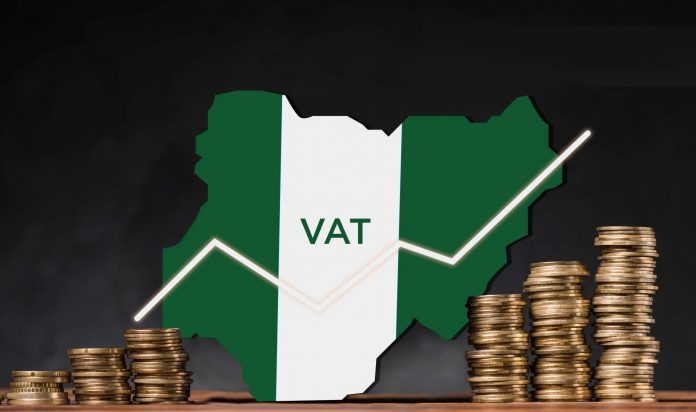
Nigeria’s VAT Collection Surges to N6.72tn in 2024 Amid Economic Struggles and Tax Expansion

0

Tax Revenues Reach Historic Highs as Non-Oil Contributions Dominate
The Federal Inland Revenue Service (FIRS) has announced that Nigeria’s Value Added Tax (VAT) collections surged to N6.72 trillion in 2024, marking a remarkable 84.62% year-on-year increase from the N3.64 trillion recorded in 2023.

This unprecedented rise highlights the growing role of non-oil revenue in Nigeria’s fiscal strategy, as the federal government aggressively broadens its tax base to reduce dependency on oil earnings. The figures were disclosed at the 2025 FIRS Management Retreat, where tax officials reviewed the agency’s revenue performance and outlined projections for the coming year.

The surge in VAT collection underlines not just improved tax administration and enforcement but also rising consumer spending on essential goods amid soaring inflation.

In addition to VAT, other tax categories recorded significant growth. Non-import VAT, which stood at N2.93 trillion in 2023, rose by 75.09% to N5.13 trillion in 2024. Import VAT more than doubled, increasing from N715 billion to N1.59 trillion, reflecting a 122.38% growth. The depreciation of the naira played a major role in this surge, as imported goods became more expensive, increasing the amount of VAT collected on them.

Company Income Tax (CIT) also saw a substantial rise, growing by 102.5% from N3.35 trillion in 2023 to N6.78 trillion in 2024. This increase was driven by inflationary pricing, which boosted nominal corporate earnings and, in turn, raised taxable income.

Petroleum Profit Tax (PPT), Hydrocarbon Tax (HT), and Upstream CIT recorded a 35.2% growth, increasing from N4.26 trillion to N5.76 trillion. However, this segment failed to meet internal revenue projections due to lower-than-expected crude oil production, which averaged 1.55 million barrels per day (mbpd) instead of the projected 1.78 mbpd.

Education Tax (EDT) posted the highest year-on-year percentage growth, surging by 127.8% from N719 billion in 2023 to N1.64 trillion in 2024. The government’s intensified efforts to enforce tax compliance among businesses contributed significantly to this increase. Overall, non-oil tax revenue rose by 97% compared to 2023, reflecting the government’s push to diversify revenue sources amid declining oil income.

Oil Revenue Falls Short Despite Gains in Other Sectors

Despite strong growth in tax revenues across the board, oil-related tax revenue fell short of expectations. The Petroleum Profit Tax, Hydrocarbon Tax, and Upstream CIT segment, projected to generate N7 trillion, only delivered N5.76 trillion, achieving 82.3% of its target. This shortfall was attributed to lower-than-expected crude oil production, hindered by ongoing challenges such as oil theft, underinvestment in production infrastructure, and OPEC-imposed production quotas.

To mitigate the impact of the shortfall, FIRS intensified its debt collection efforts, recovering outstanding tax liabilities from oil companies and other corporations. While these measures helped cushion the revenue gap, the underperformance in oil tax collections underscores Nigeria’s vulnerability to fluctuations in the global oil market and production challenges.

VAT and CIT Collections Surpass Projections

VAT and CIT collections exceeded initial projections, highlighting the growing role of domestic taxation in Nigeria’s revenue framework. Import VAT, initially projected at N1.1 trillion, significantly outperformed expectations, reaching N1.59 trillion and achieving 144.3% of its target. Non-import VAT also surpassed expectations, reaching N5.13 trillion instead of the projected N4.25 trillion, exceeding the target by 20.7%.

Company Income Tax collections followed a similar trend, outperforming projections by a wide margin. The tax, expected to generate N5.7 trillion, closed the year at N6.78 trillion, achieving 118.9% of its target. The increase in CIT collections reflects improved enforcement of tax compliance, as well as the impact of inflation on corporate revenues.

2025 Revenue Target Set at N25.2 Trillion Amid VAT Sharing Dispute

Following the strong revenue performance in 2024, FIRS has set an ambitious target of N25.2 trillion for 2025, representing a significant increase from the N21.6 trillion collected in 2024. However, this target comes at a time of intense debate over the sharing formula for VAT revenue, as state governments push for a larger share of the tax proceeds.

Under the current VAT Act, revenue is allocated as follows: 15% to the Federal Government, 50% to States and the Federal Capital Territory (FCT), and 35% to Local Governments. Additionally, 4% of VAT collections are allocated to FIRS as a collection fee, while 2% goes to the Nigeria Customs Service for import VAT collection.

The Nigeria Governors’ Forum (NGF) has endorsed a revised VAT-sharing formula that would allocate 50% of VAT revenue based on equality among states, 30% based on derivation (i.e., the amount generated by each state), and 20% based on population. The governors argue that this formula would ensure a more equitable distribution of resources, particularly for states that contribute significantly to VAT revenue. However, economic experts warn that such a revision could create disparities between wealthier and poorer states, potentially leading to new fiscal tensions.

While the federal government celebrates the record-breaking tax collections, many believe that higher VAT revenue means a greater tax burden on Nigerian consumers. With inflation worsening and the cost of living soaring, many households and businesses are feeling the strain of increased taxation.

The government maintains that expanding the tax base is necessary to reduce Nigeria’s reliance on borrowing, but there are concerns that aggressive tax policies could stifle economic growth and worsen poverty.

FIRS Chairman Zacch Adedeji has reassured Nigerians that the agency will continue to improve tax compliance while avoiding excessive tax increases. However, as Nigeria targets N25.2 trillion in tax revenue for 2025, the challenge will be to sustain revenue growth without exacerbating economic hardship.
Oando Plc Reports N47.7bn Pre-Tax Profit in 2024 as Revenue Surges to N4.1tn

0

Oando Plc, Nigeria’s leading integrated energy company, has reported a pre-tax profit of N47.7 billion for the 2024 financial year, according to its unaudited financial statement released on the Nigerian Exchange on January 30, 2025.

This represents a 53.6% decline from the N102.9 billion pre-tax profit recorded in 2023. However, the company posted a remarkable Q4 2024 recovery, reporting a pre-tax profit of N16.6 billion, bouncing back from a N29.5 billion loss in the same quarter of 2023.

Despite the decline in pre-tax profit, Oando recorded a 44.86% year-over-year revenue surge, reaching N4.1 trillion, up from N2.8 trillion in 2023. This performance was largely driven by its Supply and Trading segment, which contributed 89.73% of total earnings through crude oil, refined petroleum, and unrefined petroleum product sales. The company’s financial performance reflects a period of rapid revenue growth, asset expansion, and operational resilience, despite the volatile global energy market and increasing costs.

Financial Performance and Key Figures

Oando’s total revenue soared to N4.1 trillion, reflecting a strong 44.86% year-over-year growth. The cost of sales increased by 39.09% to N3.8 trillion, driven by inflation and currency devaluation, but gross profit surged by 232.31% to N282.5 billion, demonstrating improved operational efficiency. Other operating income declined slightly by 12.56% to N349.7 billion, with foreign exchange gains contributing 91.04%.

Administrative expenses rose by 54.08% to N402.6 billion, indicating higher operational costs. Finance costs also soared by 74.04% to N232.1 billion, driven by high interest rates and debt servicing obligations. However, finance income jumped by 245.77% to N58.4 billion, helping to offset some of the pressure from rising costs. The company’s post-tax profit for 2024 stood at N65.4 billion, representing an 8.65% increase from the N60.2 billion recorded in 2023.

Q4 2024 Recovery and Growth Trajectory

Oando’s performance in the fourth quarter of 2024 was a major turnaround, posting an N16.6 billion pre-tax profit, compared to a N29.5 billion loss in Q4 2023. This recovery was driven by higher crude oil prices, increased trading volumes, and improved foreign exchange management.

The company’s total assets expanded significantly, rising from N2.6 trillion in 2023 to N7.5 trillion in 2024. Non-current assets grew from N1.8 trillion to N3.8 trillion, with property, plant, and equipment comprising 53.13% of total non-current assets. Intangible assets accounted for 33.18%, while total current assets increased to N3.6 trillion, up from N815.5 billion in 2023.

The company’s revenue dominance continues to be fueled by its Supply & Trading business, which accounted for nearly 90% of total earnings. Oando is actively expanding its trading footprint across Africa, positioning itself as a leader in petroleum product distribution.

Its Exploration & Production segment, which generated N414.1 billion, remains a key driver of future profitability, with the company focusing on high-margin oilfields to maximize returns. The company is also working on reducing its debt burden and optimizing costs to improve cash flow efficiency while exploring strategic refinancing to lower finance costs.

In line with global trends, Oando is also investing in renewable energy and sustainability projects, particularly in gas infrastructure and clean energy. These investments are expected to position the company for long-term growth as the global energy industry evolves.

Can Oando Sustain Its Rapid Growth?

Oando’s 2024 financial results highlight a company in expansion mode, with record-breaking revenue, strong asset growth, and a Q4 turnaround. However, rising administrative expenses, finance costs, and market uncertainties remain challenges.

Moving forward, analysts expect the company’s performance to depend on crude oil price fluctuations, Nigeria’s foreign exchange policies, and its ability to restructure debt and expand its market presence.

Again, Trump Threatens Trade War Against BRICS Nations Over De-Dollarization Push

0

The United States is escalating tensions with the BRICS economic alliance, with President Donald Trump issuing a stern warning against the bloc’s efforts to create an alternative global currency.

In a statement posted on Truth Social, Trump threatened 100% tariffs and restricted market access for BRICS nations if they continued their push to move away from the U.S. dollar in global trade.

“The idea that the BRICS countries are trying to move away from the dollar, while we stand by and watch, is over,” Trump declared, vowing retaliation against what he described as “seemingly hostile countries.”

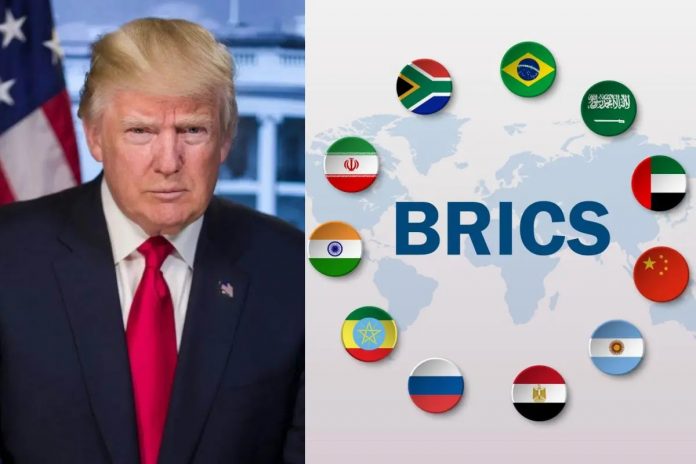
His remarks, nearly identical to a statement he made on November 30, highlight growing U.S. anxiety over BRICS’ increasing economic influence. The bloc—originally formed by Brazil, Russia, India, China, and South Africa—has since expanded to Egypt, Ethiopia, Iran, and the United Arab Emirates. Several more nations, including Turkey, Azerbaijan, and Malaysia, have applied for membership, underlining a shift in global economic power away from Western dominance.

Trump issued a direct challenge to BRICS, demanding that member nations abandon their plans for a new currency or risk severe trade penalties.

“We are going to require a commitment from these seemingly hostile countries that they will neither create a new BRICS currency, nor back any other currency to replace the mighty U.S. dollar or they will face 100 percent tariffs, and should expect to say goodbye to selling into the wonderful U.S. economy.”

He doubled down on his stance, emphasizing that any country supporting an alternative to the U.S. dollar would be shut out of American markets.

“They can go find another sucker Nation. There is no chance that BRICS will replace the U.S. dollar in international trade, or anywhere else, and any country that tries should say hello to tariffs, and goodbye to America!”

Why the U.S. Feels Threatened by BRICS

For decades, the U.S. dollar has dominated international trade, global finance, and commodity pricing, giving the U.S. immense economic leverage over other nations. However, BRICS has been actively challenging this dominance, particularly in response to Washington’s use of financial sanctions as a geopolitical weapon.

The U.S. has long used the dollar’s dominance to impose economic restrictions on nations like Russia, Iran, and China, freezing assets and limiting their ability to trade globally. BRICS has responded by promoting trade in local currencies and advancing plans for a new BRICS reserve currency, backed by a basket of member states’ national currencies. With more countries expressing interest in BRICS membership, Washington fears that a growing bloc could significantly weaken the dollar’s role in global transactions.

At a BRICS summit last October, Russian President Vladimir Putin directly accused the U.S. of “weaponizing” the dollar, calling Washington’s policies a “big mistake.”

“It’s not us who refuse to use the dollar,” Putin said. “But if they don’t let us work, what can we do? We are forced to search for alternatives.”

China, the largest economy within BRICS, has already signed multiple trade agreements with Russia, Brazil, and Saudi Arabia to conduct trade in yuan. Meanwhile, India has expanded rupee-based transactions with several BRICS nations, though Reserve Bank of India (RBI) Governor Shaktikanta Das recently stated that India has taken no formal steps to de-dollarize its economy.

BRICS’ Growing Power and Expansion

BRICS was originally formed in 2009 as an informal grouping of emerging market economies aiming to counterbalance Western-led institutions like the International Monetary Fund (IMF) and the World Bank. Over the years, its economic weight has grown significantly.

The bloc now represents over 40% of the global population and accounts for approximately 30% of the world’s GDP. It controls some of the largest energy reserves in the world, with Russia, Iran, and the UAE as major oil and gas producers. China and India, the world’s most populous nations, drive industrial production and emerging technology markets.

With Egypt, Ethiopia, and the UAE joining, BRICS is expanding its influence into Africa and the Middle East, increasing its access to key global trade routes. More countries—including Saudi Arabia, Indonesia, Argentina, and Nigeria—have expressed interest in membership, which could further strengthen the alliance against U.S. economic pressure.

Trump’s Trade War Strategy: A Return to Protectionism?

Trump’s latest threats align with his longstanding protectionist trade policies, which emphasize using tariffs and economic restrictions to defend U.S. industry.

During his first term, Trump imposed tariffs on over $360 billion worth of Chinese goods, sparking a trade war between Washington and Beijing. He also levied duties on steel and aluminum imports, even against allied nations like Canada and the EU. In addition, he withdrew from global trade agreements, arguing that they harmed American workers.

Now, as President once again, Trump has vowed to reintroduce high tariffs and establish an External Revenue Service to collect trade-related taxes.

“We will tariff and tax foreign countries to enrich our citizens,” he said.

If Trump follows through on his 100% tariff threat against BRICS nations, it could trigger a global trade war, raising costs for American consumers and businesses. It could also accelerate BRICS de-dollarization efforts, as countries seek alternatives to U.S. financial dominance.

There is also the possibility of retaliation from China and India, two of the U.S.’s largest trade partners. Some analysts believe that the U.S. risks increasing its own economic isolation as BRICS nations deepen economic ties with Europe, Africa, and Latin America.

98% of Organizations Report Some Level of AI Usage in Cybersecurity – Sophos Report

0

Al has become a cornerstone of modern cybersecurity. Vendors across the cybersecurity spectrum emphasize Al-driven features in their products and services, reinforcing the message that Al is now an essential component of effective cyber defense.

Sophos, a British security software and hardware company in its latest report titled, “Beyond the Hype: The Business Reality of AI for Cybersecurity”, explores the use of AI in cybersecurity, with a particular focus on generative AI. The report provides insights into AI adoption, desired benefits, and levels of risk awareness based on findings from a survey of 400 IT and cybersecurity leaders working in small and mid-sized organizations.

In the report, a vast majority of organizations, specifically 98%, disclosed that they have integrated some form of Artificial Intelligence (AI) into their cybersecurity strategies. This widespread adoption highlights the increasing recognition of Al’s crucial role in safeguarding digital assets in today’s complex threat landscape.

73% use cybersecurity solutions that include deep learning models, 65% use cybersecurity solutions that include GenAI capabilities, and 34% use GenAI in-house to elevate their cybersecurity. Sophos noted that AI adoption is likely to become near universal within a short time frame, with AI capabilities now on the requirements list of 99% of organizations when selecting cybersecurity platforms.

The survey reveals that organizations seek a variety of benefits from GenAl, with the most common objectives being improved cyber protection and enhanced business performance (both financial and operational). Additionally, organizations believe that incorporating GenAl in cybersecurity solutions provides peace of mind, ensuring they remain equipped with the latest defense mechanisms.

Interestingly, reduction in employee burnout ranked lowest among desired benefits, despite the well-documented shortage of cybersecurity professionals. However, smaller organizations (50-99 employees) view burnout reduction as a top priority, likely due to their limited workforce, which makes staff absences more disruptive. Meanwhile, mid-sized organizations (100-249 employees) prioritize better returns on cybersecurity investments, and larger organizations (1,000-3,000 employees) place the highest value on improved protection against cyber threats.

As Al adoption nears universal levels, the report noted that organizations must prioritize understanding its risks and the necessary mitigation strategies to enhance their security posture effectively.

Defense Risk: The Pitfalls of Poor Al Implementation

With cyber threat mitigation being a primary driver for GenAl adoption, organizations recognize the risks posed by low-quality or poorly implemented Al models. Alarmingly, 89% of IT and cybersecurity professionals’ express concerns over potential flaws in Al-driven security tools, with 43% being extremely concerned and 46% somewhat concerned.

In response, nearly all organizations (99%) assess the security processes behind GenAl-enabled cybersecurity solutions before adoption. However, despite high confidence in these assessments, the report suggests that many organizations have a critical blind spot. Evaluating GenAl development processes requires transparency from vendors and expertise in Al assessment, both of which are often lacking. This knowledge gap means many organizations may not fully understand what they do not know about Al security risks.

Organizations expect GenAl to enhance cybersecurity while reducing overall costs. However, the development and maintenance of high-caliber GenAl capabilities come at a significant expense. Notably, 80% of IT and cybersecurity leaders anticipate a rise in cybersecurity product costs due to GenAl integration. Despite this, 87% of organizations believe that the savings generated by GenAl-powered cybersecurity solutions will outweigh their costs.

This confidence in positive RI increases with company revenue, with organizations earning $500M+ being 48% more likely to strongly agree that GenAl costs will be offset by savings compared to those with revenues below $10M. However, tracking Al expenditures remains a challenge, as GenAl costs are often embedded within broader cybersecurity budgets. A staggering 75% of respondents find these costs difficult to quantify, with organizations earning $500M+ being 40% more likely to struggle with this issue compared to those earning less than $10M.

Operational Risk: Over-Reliance on Al

Al’s growing presence in cybersecurity may lead to an overdependence on automated systems, potentially reducing human oversight and accountability.

Most organizations acknowledge these risks:

84% express concern about Al-driven pressure to reduce cybersecurity workforce numbers (42% extremely concerned, 41% somewhat concerned).

87% worry about diminished accountability in cybersecurity operations due to over-reliance on Al (37% extremely concerned, 50% somewhat concerned).

Conclusion

The report underscores the growing reliance on Al-powered solutions to combat evolving cyber threats, automate security processes, and enhance overall cybersecurity posture. As cyberattacks become more sophisticated and frequent, organizations are turning to Al to augment their defenses and stay ahead of potential breaches.

While Al, particularly GenAl, presents significant opportunities for enhancing cybersecurity, organizations must be vigilant about its risks.

Experts Predict 1Fuel To Lead The Upcoming Bull-Run with XRP and Dogecoin This February

0

The crypto market is gearing up for a massive February bull run, and experts are pointing to three key players that will dominate the rally. Dogecoin (DOGE) and Ripple (XRP) are already making waves, but there’s a fresh contender on the block, 1Fuel (OFT).

With its groundbreaking cross-chain transaction functionality, low-fee structure, and revolutionary features, 1Fuel is set to challenge the giants. Analysts are predicting over 100x gains ahead. Let’s find out why experts are bullish on this project.

The bullish setup: Can DOGE reach $1 in 2025?

Dogecoin (DOGE) is a hit cryptocurrency to invest in because of its retail and memetic appeal. Even though Dogecoin (DOGE) is trading 5% below its peak for the week and is selling for about $0.33, it is still one of the best cryptocurrencies to buy before it climbs.

Technical indicators suggest a positive recovery in the price of Dogecoin, particularly the Williams Percent Range (14), and the Stochastic RSI Fast.

At the same time, analysts are equally confident. Startupily, a leading X analyst, has boldly predicted that Dogecoin (DOGE) will be 10x by the middle of February. Meanwhile, CryptoWizardd has set $1.4 as their first goal, with higher upswings expected.

While DOGE’s bullish momentum gives hope to investors, 1Fuel (OFT) is leading the race with its cross-chain functionality coupled with massive returns.

XRP’s big gains: How Ripple is dominating the crypto space

XRP has been among the top-performing coins recently, particularly in the last two months when it had some of its largest gains in years. While XRP’s bullish momentum suggests that it will soon surpass the current all-time high (ATH) of $3.40, the growing number of Central Bank Digital Currencies (CBDCs) partnerships will help it reach even higher levels.

Currently, Ripple has partnerships with over ten global institutions, including MoneyGram, American Express (AMEX), and Santander, to mention a few.  However, over 80% of the institutions expected to use XRP this year, Ripple Labs has announced its expansion to Japan.

According to renowned cryptocurrency analyst Dark Defender, XRP is expected to hit the $6 mark this year, particularly given these significant network expansions. However, 1Fuel (OFT) has appeared as a surprising project in the race, all set to leave veterans like XRP behind. This is credited to its revolutionary technology and high returns.

Why 1Fuel is positioned to lead the upcoming bull run

While experts predict a bullish February for XRP and DOGE, they have also added another name to the list which has surprised the crypto market. They claim that 1Fuel (OFT) is the third project that will lead this February bull run, owing to its revolutionary offerings.

1Fuel is a soon-to-be-launched cryptocurrency wallet that is all set to change our perspective of DeFi. It sets itself apart from the heavy competition in the market through its cross-chain functionality. It offers its users a one-click cross-chain transaction option making once-feared cross-transactions an easy feat. One just needs to select the tokens they want to swap, click, and let the 1Fuel handle the complexities that go on behind the scenes.

It not only makes this process easier but economical as well by executing these transactions at the lowest possible fees, since cross-chain transactions have always been heavy on pocket traditionally.

Invest now or miss out: 1Fuel’s rapid presale momentum

1Fuel (OFT) is currently available to investors and traders all around the globe in its presale phase. The presale has proved itself to be one of the leading ICOs in recent times, raising over $1.7 million in funding. Currently, it is in its 3rd round, and only 37% of the OFT token supply for this round is left, before it progresses to round 4.

Each OFT token is priced at $0.017 which is anticipated to rise with every round. Analysts anticipate over 500% presale gains alone for its early backers. They further forecast that OFT upon its tier-1 exchange listing will yield over 100x returns, making it one the best investments to make right now. Get in now and be part of the next big wave in crypto.

To Find Out More About The 1Fuel Presale Use The Links Below:

Website: https://1fuel.io/

Telegram: https://t.me/Portal_1Fuel

Twitter / X – https://x.com/1Fuel_