DD
MM
YYYY

PAGES

DD
MM
YYYY

spot_img

PAGES

Home Blog Page 2297

Short Sellers Reap Record $6.6bn Profits On Bets Against Nvidia As DeepSeek’s AI Shakes Wall Street

0

Short sellers of artificial intelligence (AI)-related stocks reaped massive profits after the debut of low-cost AI models from China’s DeepSeek sent shockwaves through Wall Street.

The sharp market reaction saw traders betting against AI giant Nvidia walk away with record profits exceeding $6 billion, while other AI-linked stocks also suffered steep declines.

According to data analytics firm Ortex, short sellers of Nvidia raked in about $6.6 billion in profits—the biggest single-day gain ever recorded on a single stock. This came after Nvidia’s market capitalization plummeted by an unprecedented $593 billion on Monday, marking the largest single-session loss for any company in history.

The massive selloff was triggered by DeepSeek’s launch of AI models that it claimed were on par with or superior to the industry-leading models in the U.S., but available at a fraction of the cost.

The fallout extended beyond Nvidia, with short sellers of chipmaker Broadcom also securing more than $2 billion in profits. AI-related stocks such as Super Micro, a server manufacturer, data-center operator Equinix, and energy provider Vistra also suffered significant losses. Investors who bet against these firms reportedly earned a combined profit of more than $900 million, according to Ortex.

The stunning market reaction underscores the growing competition in the AI sector, particularly as Chinese firms seek to challenge U.S. dominance in AI technology. DeepSeek’s low-cost AI models have raised fresh concerns about pricing pressures and competition in the semiconductor and AI hardware industries, leading to a wave of selloffs among investors.

The shocking debut of DeepSeek’s AI models, which the company claims match or even surpass leading U.S. models at a fraction of the cost, sent panic through Wall Street, forcing investors to reassess their long-term bets on AI dominance by U.S. firms like Nvidia, Broadcom, and Super Micro Computer.

The stock market rout wasn’t confined to Nvidia. Other AI-heavy firms suffered massive losses, with Broadcom losing more than $200 billion in market value. The AI-driven tech selloff extended to Super Micro Computer (SMCI), data-center operator Equinix, and power provider Vistra, causing further losses.

DeepSeek’s Threat to US’ AI Dominance

The Chinese startup, backed by state-linked investors and prominent tech firms, introduced an advanced large language model (LLM) that reportedly rivals, if not outperforms, top-tier AI models from OpenAI, Google DeepMind, and Meta. What stunned the market, however, was the ultra-low cost of DeepSeek’s AI solutions—a direct threat to the high-margin business models of Nvidia and other AI chipmakers that have dominated the market.

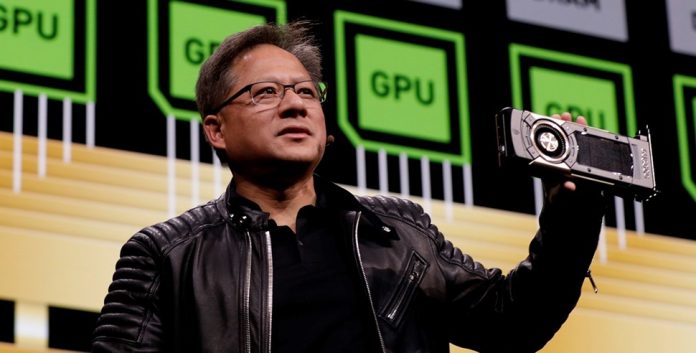
For years, Nvidia’s cutting-edge graphics processing units (GPUs) have been the backbone of AI computing, with tech giants like Microsoft, Amazon, and Google heavily investing in Nvidia’s chips to power their AI ambitions. DeepSeek’s launch has now sparked fears that China is rapidly closing the gap in AI development, potentially reducing demand for Nvidia’s GPUs and challenging the U.S.’s dominance in the sector.

The DeepSeek-induced panic has led to urgent discussions among analysts about whether this signals a longer-term shift in the AI market. Wall Street analysts are now warning that pricing pressures and rising competition from China could drastically alter the AI investment landscape, forcing companies like Nvidia, Broadcom, and Google to adjust their strategies.

Tech analyst Dan Ives of Wedbush Securities described the market reaction as a “gut-punch to the AI hype cycle.”

He said: “The stunning collapse of Nvidia’s stock and the broader tech market shows just how fragile the AI boom is. If China can produce competitive AI at a fraction of the cost, the entire AI supply chain—especially chipmakers like Nvidia—faces a serious long-term threat.”

Similarly, David Sacks, a former Trump administration tech adviser, told Fox News that the situation was a wake-up call for U.S. AI firms, warning that companies like OpenAI and Nvidia must act fast to counter China’s rapid advancements.

The dramatic market reaction to DeepSeek’s AI debut highlights growing anxieties about U.S.-China competition in AI and semiconductor technology. The White House is reportedly closely monitoring the implications of DeepSeek’s technology, with the National Security Council (NSC) now reviewing its potential impact on national security and U.S. tech leadership.

Meanwhile, industry giants like Nvidia, Microsoft, and Google are expected to respond swiftly to mitigate the competitive threat posed by DeepSeek. Some analysts predict that U.S. AI firms may ramp up lobbying for stricter regulations on Chinese AI technology or push for new government subsidies to maintain their edge.


Congo DRC VaultyPay Receives Central Bank License for Agency Banking

0

First, Tekedia Capital wishes for immediate PEACE in Congo DRC. Peace must reign in our great continent. For whatever, we do not need wars. That said, I want to congratulate our portfolio company, VaultPay (YC S23), for its FULL license approval by the country’s central bank to deploy agency banking in the cash-rich country.  Francophone Africa, something amazing is coming. This is huge….

Shiba Inu to $1 Might Never Happen, But Don’t Miss the Ride of DTX From $0.16 to $10 This Year

0

While the dream of Shiba Inu hitting $1 may never materialize, there’s another opportunity on the horizon that could deliver substantial returns. DTX, currently priced at $0.16, is attracting massive attention due to its innovative approach and the potential for significant growth.

With ambitious goals and a growing community, DTX is predicted to surge to $10 this year. In this article, we will discuss how DTX could outperform expectations and why it might be the next big thing in crypto.

Shiba Inu’s Price Challenges and Potential

Shiba Inu Price could potentially reach price targets like $0.001 or $0.01 if its team carries out certain strategies.

Many Shiba Inu investors have voiced concerns on social media about the token’s recent performance. According to data from CoinMarketCap, SHIB has dropped by 5.4% since the start of the year. The token has also seen significant declines in the 7-day and 30-day charts, falling by 12.01% and 8.49%, respectively.

As of now, Shiba Inu is trading at $0.00002008, with a market cap of $11.82 billion, making it the 17th largest cryptocurrency globally. While 50.2% of SHIB holders are in profit, 2.2% are at breakeven.

DTX: From $0.16 to $10 – Don’t Miss the Opportunity!

Shiba Inu reaching $1 may never happen, but don’t miss the chance to be part of DTX’s journey from $0.16 to $10 this year.

DTX Exchange is currently in its presale phase, with each token priced at only $0.16. Early investors have already seen returns of over 500%. As the platform gets ready to launch in Q1 2025, its value is expected to increase a lot.

Shiba Inu’s Path to $0.001: Expert Predictions and Hopeful Outlook

Despite some frustration from SHIB holders, others remain hopeful, especially due to positive forecasts. Experts believe that Shiba Inu could still reach targets of $0.001 or even $0.01.

For SHIB to reach $0.001, it would need to rise by 4,880%, pushing its market cap to $589.25 billion. While this is a huge increase, some experts still believe it’s possible. In October, crypto analyst Crypto Sheriff predicted that Shiba Inu could reach $0.001 after spotting a potential price breakout.

Similarly, expert LuckSide believes that factors like growing whale activity and reduced retail interest are setting SHIB up for a big price jump.

DTX Exchange : The Future of Trading

DTX Exchange (DTX) is a new kind of trading platform that offers over 120,000 trading pairs. It is powered by a layer-1 blockchain that connects traditional and digital assets. This platform uses the VulcanX Exchange, and its testnet recently showed it can handle 200,000 transactions per second (TPS), much faster than other top platforms.

With over $13.2 million in investment and more than 500,000 registered users on its Phoenix Wallet, DTX Exchange is changing the way people trade. Its innovative hybrid approach could make it a strong competitor in the decentralized exchange (DEX) industry, possibly even surpassing SHIB and other altcoins.

DTX Exchange also offers traders 1,000X leverage and solves many common trading problems with its unique hybrid model. The platform’s liquidity pools ensure top-tier execution prices, making it a promising project for the future.

Security and transparency are key priorities for DTX Exchange. It has passed strict security audits and is KYC-verified. The platform’s team plans to further improve security with quantum-proofing.


Find out more information about DTX Exchange (DTX) by visiting the links below:

Buy Presale

Visit the DTX Website

Join the DTX Community

Ganusi and the Politics of Opportunism

0

The controversy surrounding King Wasiu Ayinde (K1) and his remarks on Islamic clerics attending his mother’s fidau prayer uninvited, called Ganusi, has ignited a complex debate across social media. The discourse is more than just a fleeting celebrity-religious spat; it reflects deeper tensions in Nigerian society regarding the intersection of culture, religion, and social opportunism.

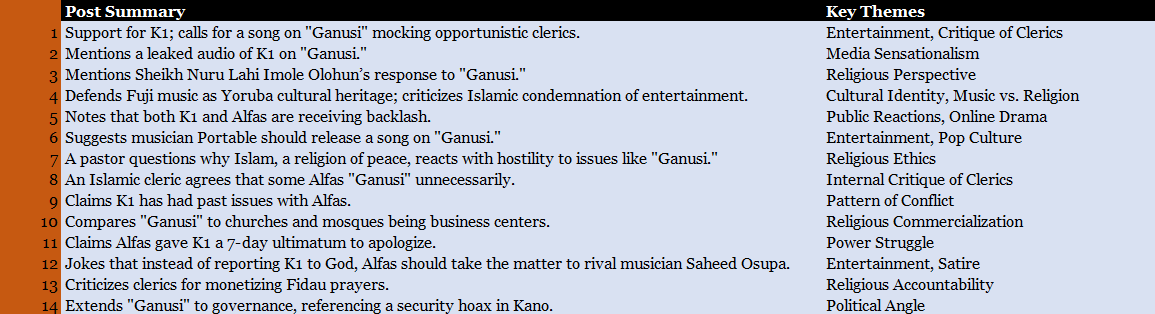
Our analyst, who examined 14 posts on Facebook and X, notes that while K1’s statement has drawn criticism from Islamic clerics, it has also resonated with those who see a pattern of religious figures leveraging ceremonies for personal gain. On the flip side, others argue that the musician’s stance undermines the role of religious leaders in communal life. However, beyond the surface-level reactions, the Ganusi controversy exposes fundamental issues that need urgent attention: the commercialization of faith, the resilience of Yoruba cultural expressions, and the evolving power dynamics between entertainers and religious figures.

The Rise of Religious Opportunism: The “Ganusi” Phenomenon

While some Islamic leaders view their presence as an extension of spiritual duty, critics argue that many exploit social gatherings for material gain. A recurring sentiment among supporters of K1’s stance is that Ganusi is emblematic of a larger issue: the monetization of religious roles. In some cases, clerics turn Fidau prayers, naming ceremonies, and even funerals into opportunities for personal financial gain, expecting gifts, donations, and favours from hosts. A viral social media post [see exhibit 1] humorously describes how clerics arrive early at events, enjoy the benefits of the gathering (such as air-conditioned comfort and elaborate meals), and often leave with monetary offerings without rendering significant spiritual service.

The backlash against these clerics suggests a growing frustration with religious opportunism. The sentiment is not exclusive to Islam—similar critiques have been directed at Christian pastors who charge exorbitant fees for officiating ceremonies. In this sense, Ganusi is not just about Islamic clerics; it is a broader critique of the ways religious institutions operate within Nigeria’s socio-economic landscape.

Exhibit 1: Select Facebook and X’s posts, 2025

Source: Select Facebook and X’s posts, 2025

Fuji Music vs. Religious Authority: A Clash of Cultural Values

Another layer of this controversy is the long-standing tension between Fuji musicians and Islamic clerics. Fuji, a genre deeply rooted in Yoruba culture, has often been at odds with religious purists who perceive it as indulgent or inappropriate for devout Muslims. Critics of K1 labelled him Alágbe lásán, a mere beggar, suggesting that musicians rely on patronage much like the clerics they criticize. However, this comparison dismisses the role of Fuji music as an enduring cultural form that predates the influence of Islam in Yoruba society.

A strong defense of Fuji music has emerged in response. Advocates argue that music is not just entertainment but a form of historical preservation, storytelling, and communal bonding. Another post notes that Yoruba ancestors had their own entertainment culture before the advent of Islam and that religious condemnation of music is largely a product of foreign influences.

This debate is not new. Historically, religious leaders have attempted to regulate or outright condemn indigenous musical forms, from Fuji to Apala and Juju. The Ganusi saga has reignited these tensions, forcing a reassessment of the place of music in Yoruba identity and how religious orthodoxy seeks to shape cultural expression.

The Power Dynamics Between Religious and Cultural Figures

The call for K1 to apologize to Islamic clerics and his refusal to do so signals a shift in power dynamics between religious institutions and cultural figures. Traditionally, entertainers have often deferred to religious leaders, recognizing their authority within society. However, K1’s defiance suggests that this influence is waning.

This is not an isolated case. Across Nigeria, there is a noticeable shift where entertainers, influencers, and public figures increasingly challenge the authority of religious institutions. This can be seen in the ways comedians, musicians, and even politicians critique religious bodies on issues of corruption, wealth accumulation, and moral inconsistencies.

The response from some clerics, demanding an apology within seven days, reflects an attempt to reassert control. Yet, public sentiment indicates that many Nigerians, particularly younger generations, are no longer willing to blindly accept religious dictates without scrutiny. Instead, they are questioning whether clerics are genuinely serving their spiritual roles or simply leveraging religion for economic survival.

The Bigger Picture: Commercialization of Religion and Governance

While Ganusi started as a localized controversy between a musician and Islamic clerics, the debate has extended into broader discussions about governance and public institutions. Some commentators have drawn parallels between Ganusi and political opportunism, where individuals or institutions position themselves in strategic situations to gain financial or political advantage.

One social media post likens religious leaders to business operators, arguing that both mosques and churches function as profit-driven entities. Another ties the Ganusi phenomenon to governance, citing an alleged security hoax in Kano where authorities reportedly raised false alarms about a terrorist attack. The implication is that Ganusi, as a form of opportunism, is not limited to religious clerics but is symptomatic of a larger cultural and institutional problem.

Self-Reflection and Reform

The Ganusi controversy should not just be seen as a social media spectacle. It presents an opportunity for religious bodies to engage in self-reflection. If faith leaders are to retain moral authority, they must address the growing perception that religious practices are being commodified. Likewise, cultural figures like K1 must recognize their influential roles in shaping societal discourse and be mindful of how their words can reinforce or dismantle stereotypes.

These 5 Altcoins Could 10x Before Ethereum Explodes

0

As Ethereum (ETH) keeps expanding, various difficulties block its development pace. In response to Ethereum’s growth expectations, investors seek alternative coins that might grow 10x faster. Investors interested in popular altcoins target Bitcoin Cash (BCH), TRON (TRX), Aave (AAVE),  Avalanche (AVAX) and FXGuys ($FXG.

Investors increasingly select $FXG as their preferred altcoin alternative. This top DeFi token has seen substantial market growth in Stage 2 of its ongoing public presale at $0.04. $FXG stands to gain value as more crypto investors join the presale process.

Let’s dive into why these five cryptocurrencies are set to 10x before Ethereum explodes

>>>JOIN FXGUYS HERE<<<

Ethereum (ETH): Pioneering Innovations in Crypto and Decentralized Applications

Ethereum works to advance crypto platforms through its innovative digital solutions. Ethereum launched DeFi and NFT through its smart contract technology. When Ethereum became 2.0 it moved away from proof-of-work to proof-of-stake because this updated approach boosted system speed and saved energy.

The Ethereum platform enables many decentralized apps to deliver business services across multiple market sectors. Users need Ethereum’s platform to process any crypto-related service they use. Both new and experienced traders can benefit from this platform.

Bitcoin Cash (BCH): Enhancing Speed and Usability in Everyday Crypto Transactions

The Bitcoin Cash team created a new platform that uses Bitcoin’s existing technology foundation. Bitcoin Cash fixes Bitcoin issues by speeding up transactions and lowering payment costs. This system delivers efficient transaction handling through its big block units which users and companies value.

Bitcoin Cash lets users handle their own transactions while processing payments instantly without delays. We enhance current crypto payment tools to process daily transactions through standard payment networks. People benefit from Bitcoin Cash daily while using it for their regular transactions.

Aave (AAVE): New Updates and Undervalued Potential Signal Growth Ahead

The platform Aave just rolled out version 3.2, offering “Liquid eMode” as a new addition. This functionality enhances user control while reducing transaction expenses. People in the community supported the updates and showed excitement for next year’s version 4.

Aave will remain a top token if you want to invest in the crypto markets. Expert analysis suggests AAVE may increase in value because it’s currently underutilized TVL ratio is low. This indicates undervaluation. As such, AAVE could surge to $330 soon.

Avalanche (AVAX): Driving Blockchain Innovation with DeFi and RWA Tokenization

Avalanche leads the blockchain industry as a major provider of Layer 1 services. Avalanche proved itself with good production qualities in the case of decentralized finance and tokenization services of real-world assets. The platform excels in its association with financial biggies BlackRock and JPMorgan together with global biggies Deloitte and AWS.

Top financial institutions that collaborated with Avalanche affirm the potential growth of the system as a go-to blockchain system for companies. The performance of Avalanche grew better when it used AVAX9000 alongside Real-world Asset integration in its marketplace. The RWA tokenization market will grow exponentially in 2025 since companies will shift to blockchain platforms to increase cryptocurrency funding.

TRON (TRX): Poised for Growth with Strong Market Support and dApp Demand

TRX expands its place on the list of blockchain cryptocurrency leaders. The TRON network maintains $19.38 billion market capitalization due to its 86.17 billion active TRX tokens. Many developers choose the trusted TRON blockchain system to create their dApps which drives up TRX usage.

TRX experienced stronger market decline than competing cryptocurrencies while market activity continued. TRON TRX token analysis from experts shows prices will first level off at $0.2 then jump to $0.3 in the next few weeks. The steady growth in TRX trading shows it will reach $0.3 in weekly pricing.

FXGuys ($FXG): Revolutionizing Web3 Forex Trading with Trade2Earn and Rewards

Users believe Fxguys is the most promising crypto project that can provide substantial crypto profits before Ethereum achieves its full potential.  As the first Web3 Prop trading system it delivers forex trading tools designed to help traders achieve success. The finance program attracted many users who now consider FXguys the top crypto platform for professional traders.

The Trade2Earn feature on this platform works differently from trading options available on competing crypto platforms. You get $FXG tokens just for using this platform regardless of your trading results. Their focus is to build a broader international user base by growing platform activity.

The top DeFi token differs from others by offering multiple paths for traders who want new ways to earn money. Users can start with 500,000 trading funds to compete in challenges. The trading system splits your profits 80/20 so you can invest heavily in the market without using your own resources.

>>>JOIN FXGUYS HERE<<<

Conclusion

Five altcoins Bitcoin Cash, Aave, TRON, Avalanche and FXGuys show potential to increase 10x in value before Ethereum reaches its market maximum. The FX Guys project leads the crypto trading market because it offers funding programs and generates income through staking. Investors must act now to be part of the most promising crypto platform available in the market.


To find out more about FXGuys follow the links below:

Presale | Website | Whitepaper | Socials | Audit