DD
MM
YYYY

PAGES

DD
MM
YYYY

spot_img

PAGES

Home Blog Page 23

Institutional Bitcoin Demand Weakens as Spot ETFs Record $46.65M Outflows

0

The latest movement in the U.S. spot Bitcoin exchange-traded fund market offers a reminder that institutional demand for digital assets is rarely a straight line.

U.S. spot Bitcoin ETFs recorded approximately $46.65 million in net outflows on September 8, reversing three consecutive sessions of positive flows and signaling a temporary shift in investor positioning.

The outflow was relatively modest compared with the enormous amount of capital that has recently entered the Bitcoin ETF market.

Earlier in September, spot Bitcoin ETFs recorded a $730.9 million inflow on September 3, while the four trading sessions through September 4 produced cumulative inflows of about $770.2 million.

This means the latest withdrawal represents a pullback rather than evidence that institutional demand has disappeared. The composition of the September 8 outflow is particularly important. Grayscale’s GBTC accounted for the largest withdrawal.

With approximately $65.5 million leaving the fund. That selling was partially offset by inflows into other products, including Bitwise’s BITB and BlackRock’s IBIT. BITB reportedly attracted around $14.47 million, while IBIT recorded approximately $10.66 million in fresh capital.

This divergence between ETF issuers demonstrates that investors are not necessarily abandoning Bitcoin exposure. Instead, capital can rotate between products according to fees, liquidity, institutional preferences and portfolio strategies.

BlackRock’s IBIT, for example, has become one of the dominant vehicles for institutional Bitcoin exposure, while legacy products such as GBTC have experienced greater sensitivity to redemptions.

The timing of the outflow also matters. Bitcoin’s broader market has recently been influenced by changing expectations around interest rates, inflation, oil prices and geopolitical risk.

Rising oil prices and renewed tensions around the Strait of Hormuz have contributed to broader investor caution, while bond-market volatility has encouraged investors to favor shorter-duration assets and cash-like instruments.

Reuters reported that global money-market funds attracted $46.1 billion during the week through September 2 as investors became more defensive. Bitcoin therefore remains caught between two competing forces.

On one side is growing institutional acceptance, supported by regulated ETF infrastructure and substantial cumulative inflows. On the other is macroeconomic uncertainty, which can cause investors to reduce exposure to volatile assets even when their longer-term view of Bitcoin remains constructive.

The latest ETF data should consequently be interpreted carefully. A single $46.65 million outflow is too small to establish a sustained bearish trend, particularly after billions of dollars of recent inflows.

Indeed, data through September 4 showed Bitcoin ETFs with approximately $3.34 billion of net inflows across the 13 trading sessions from August 19 through September 4.

What matters next is whether the September 8 withdrawal develops into a sequence of sustained redemptions. If subsequent sessions produce renewed inflows, the latest outflow could simply represent profit-taking or short-term portfolio rebalancing.

If withdrawals accelerate, however, investors may begin viewing the move as evidence of weakening risk appetite. For Bitcoin, ETF flows have become an increasingly important indicator because they connect traditional financial markets with the underlying cryptocurrency.

Every major inflow can strengthen demand for spot Bitcoin, while persistent redemptions can add selling pressure or weaken market momentum. The $46.65 million outflow is therefore less a verdict on Bitcoin than a snapshot of changing institutional positioning.

After a strong period of accumulation, investors are reassessing risk. The direction of ETF flows over the coming sessions could reveal whether that caution is temporary—or the beginning of a broader shift in the market’s appetite for Bitcoin exposure.

Hormuz Crisis, Oil Shock and Iran’s Shift Toward Crypto

0

The escalating confrontation between the United States and Iran has entered a dangerous new phase, with military attacks on Iranian oil tankers near the Strait of Hormuz sending another shock through global energy markets.

Brent crude has climbed above $100 a barrel for the first time since July, highlighting how quickly geopolitical conflict can translate into higher energy costs, inflationary pressure and financial-market uncertainty.

Iran is increasingly turning toward cryptocurrencies as an alternative channel for international commerce, with its central bank easing foreign-exchange controls to allow exporters greater flexibility to settle transactions using assets such as Tether’s USDT and Bitcoin.

The Strait of Hormuz sits at the centre of this crisis. It is one of the world’s most important energy chokepoints, historically carrying roughly a fifth of global oil and gas supplies. Recent fighting has sharply reduced maritime traffic.

With preliminary data showing only six commodity vessels passing through the strait on Tuesday, compared with a 10-day average of 12. The disruption has intensified concerns that a prolonged confrontation could restrict crude supplies precisely when global inventories are already vulnerable.

The destruction of Iranian oil tankers has further complicated the situation. U.S. forces said they destroyed five Iranian tankers after missile attacks by Iran’s Revolutionary Guard on a U.S. Navy warship.

Tehran subsequently retaliated against shipping and American-linked targets, creating a cycle in which military action, maritime disruption and energy-market volatility reinforce one another. For consumers and businesses, the immediate concern is the price of energy.

Brent crossing $100 represents more than a psychological market milestone. Sustained crude prices at this level can increase transportation, electricity, manufacturing and food costs.

Airlines, logistics companies and energy-intensive industries are particularly exposed. Central banks could also face a difficult policy dilemma if higher energy prices translate into renewed inflation while economic growth weakens.

Iran’s decision to loosen foreign-exchange restrictions adds another dimension to the crisis. By permitting exporters to use cryptocurrencies for settlement and repatriation.

Tehran is effectively expanding the financial infrastructure available to businesses operating under sanctions and restrictions on access to conventional international banking. Tether and Bitcoin can provide alternative rails for transferring value across borders.

Particularly when traditional correspondent banking channels are difficult to access. This does not mean crypto can replace the conventional financial system or compensate for Iran’s enormous economic needs.

But it demonstrates one of the strategic characteristics of digital assets: they can operate across borders without relying entirely on the traditional banking architecture controlled by governments and international financial institutions.

Iran has already developed significant cryptocurrency activity, while its bitcoin-mining industry has become another source of digital-asset exposure.

The development also illustrates the increasingly interconnected relationship between geopolitics, commodities and cryptocurrency.

Oil is responding to the physical risk surrounding Hormuz, while Iran is responding to financial restrictions by expanding alternative digital settlement mechanisms. In both cases, the underlying issue is access: access to energy routes on one side and access to global financial liquidity on the other.

The Hormuz crisis could become a defining test for both traditional markets and the emerging digital economy. If military tensions continue, oil prices may remain elevated and inflation risks could intensify.

Meanwhile, Iran’s embrace of USDT and Bitcoin could accelerate experimentation with alternative financial rails. The conflict therefore extends beyond the battlefield: it is reshaping the flow of energy, money and geopolitical power simultaneously.

OpenAI Astra Expansion Raises New Questions About AI Safety and Autonomous Systems

0

Artificial intelligence is advancing at a speed that is simultaneously producing extraordinary technological opportunities and unprecedented questions about human safety.

The latest developments illustrate that contradiction clearly: while Anthropic’s alignment leadership is warning that advanced AI could potentially cause human extinction, OpenAI is expanding access to its increasingly capable Astra model across paid ChatGPT and Codex users.

Evan Hubinger, who leads Alignment Science at Anthropic, has publicly said he personally assigns a probability of more than 10% to artificial intelligence killing all humans within the next decade.

His warning is particularly significant because it comes from a researcher whose work focuses specifically on making advanced AI systems behave in accordance with human intentions.

Hubinger has also acknowledged that researchers do not yet have a reliable solution for aligning future superintelligent systems.

The statement should not be interpreted as a prediction that extinction is inevitable. Rather, it highlights the uncertainty surrounding systems that could eventually become substantially more capable than humans.

The central alignment problem is straightforward to describe but extraordinarily difficult to solve: how can humans ensure that a highly autonomous system continues pursuing objectives compatible with human interests even when its capabilities surpass our ability to understand or control it?

Those concerns have gained additional attention following the resignation of Anthropic researcher Jacob Coxon, who argued that leading AI companies are moving too rapidly toward self-improving systems without adequate safety guarantees.

Other researchers have similarly raised concerns about recursive self-improvement, where AI systems could contribute to the development of increasingly capable successors.

At almost exactly the same moment, however, the industry is moving in the opposite direction commercially. OpenAI has launched GPT-6 Astra, positioning it as a highly capable model for computer use, software engineering, professional work and complex digital tasks.

Reports indicate that Astra is being expanded to ChatGPT Plus, Pro, Business and Enterprise customers, while also becoming available through Codex and other professional environments. That expansion matters because AI risk is increasingly connected to capability.

A model that simply generates text presents one category of risk. A system capable of navigating computers, writing software, conducting research and executing multistep tasks autonomously represents another.

The more useful an AI becomes as an agent, the greater the potential consequences if its objectives, decision-making or security controls fail. OpenAI has emphasized Astra’s safety and alignment improvements.

But the company has also acknowledged that monitoring increasingly sophisticated models is becoming more difficult. Reuters reported that OpenAI is developing additional safeguards, including automated shutdown mechanisms, amid broader scrutiny of autonomous AI agents.

This creates the defining paradox of the current AI race. Companies are under enormous pressure to build systems that are more capable, autonomous and commercially valuable. Researchers are warning that humanity’s ability to control those systems may not be advancing at the same pace.

The appropriate response is neither panic nor complacency. A 10% personal estimate is not a scientific certainty, just as claims that AI will inevitably destroy humanity are not established facts.

But when a senior alignment researcher assigns such substantial probability to an extinction scenario, the warning deserves serious consideration.

The challenge for policymakers and AI companies is therefore to make safety progress proportional to capability progress. The future of AI may depend not simply on how intelligent these systems become, but on whether humans can remain meaningfully in control as that intelligence grows.

Crypto Market Volatility: From Hunter Biden’s $LAPTOP Token to Strategy’s STRC Repurchases

0

The latest crypto market cycle is once again demonstrating how dramatically narratives, politics, speculation and corporate treasury strategies can collide within a single trading environment.

Two developments capture that contrast: Hunter Biden’s controversial $LAPTOP meme coin entered the market amid extreme volatility and a reported fully diluted valuation above $200 billion.

While Strategy redirected $176 million toward repurchasing its own STRC preferred securities and doubled its digital credit securities buyback authorization to $2 billion.

The developments illustrate two very different approaches to extracting value from the crypto ecosystem. Hunter Biden’s $LAPTOP token is perhaps one of the clearest examples yet of politics becoming a tradable digital narrative.

The token, launched on Base, takes its name from the laptop controversy that became a major political flashpoint during the 2020 U.S. presidential election. Reports indicate that one billion tokens were issued.

With allocations designed around founders, liquidity, charity, administrative expenses and individuals who lost money on Donald Trump’s $TRUMP token. The reported valuation above $200 billion is particularly striking because it does not necessarily represent $200 billion of capital actually invested into the project.

Fully diluted valuation assumes the entire token supply is valued at the prevailing market price. In thin and highly speculative markets, that figure can rise rapidly even when actual liquidity is a fraction of the headline valuation.

That distinction is critical. Meme coins can experience extraordinary price discovery during launch periods because traders compete around attention rather than traditional fundamentals.

The $LAPTOP launch therefore reflects the increasingly financialized nature of political culture, where controversy itself can become an asset and online attention can immediately translate into a tradable market.

Yet the other side of the market is represented by Strategy, whose approach is considerably more structured. Rather than purchasing additional Bitcoin during the latest reporting period, Strategy repurchased approximately $176.3 million worth of STRC preferred stock.

It also increased authorization for its Digital Credit Securities Repurchase Program from $1 billion to $2 billion. The move is significant because Strategy has become synonymous with Bitcoin accumulation.

As of September 7, the company held approximately 845,050 BTC, acquired for roughly $63.73 billion at an average cost of about $75,412 per Bitcoin.

Its decision to pause additional Bitcoin purchases while supporting STRC indicates that treasury management is becoming more sophisticated than simply accumulating BTC every week.

STRC trades as part of Strategy’s broader digital credit structure. By repurchasing the preferred securities below their stated value, the company can potentially improve the economics of its capital structure while reducing future obligations associated with those securities.

The enlarged $2 billion authorization gives management considerably more flexibility to continue that strategy. The contrast is revealing. $LAPTOP represents the extreme end of crypto’s attention economy, where political identity and internet culture can produce enormous valuations almost instantly.

Strategy represents the institutional end, where Bitcoin, preferred securities, liquidity and capital costs are being managed as components of a broader financial architecture. Both developments depend on market confidence.

The meme coin requires sustained attention, while Strategy’s model depends heavily on Bitcoin’s long-term performance and access to capital. The lesson is that crypto is no longer one market with one investment philosophy.

It is increasingly an ecosystem where political memes, speculative tokens, corporate finance and digital credit can coexist—and compete—for capital at the same time.

In a volatile market, headline valuation should never be confused with underlying liquidity, and aggressive financial engineering should never be mistaken for risk-free capital management. The distance between those two mistakes can be enormous.

OpenAI Says AI Agents Solved 90-Year-Old Navier–Stokes Problem in 88 Hours

0

OpenAI says a new artificial intelligence system has produced a proposed solution to the 90-year-old Navier–Stokes problem, one of the seven Millennium Prize Problems in mathematics, after deploying about 10,000 AI agents over 88 hours.

The company said in a release published Tuesday that its researchers used a system of coordinating AI agents powered by an internal model to work on the problem, which concerns the mathematical equations used to describe the motion of fluids such as water and air.

OpenAI said the agents began working on the problem on September 1 and arrived at what the company described as a resolution on Saturday, September 5, roughly 88 hours after the first agents were launched.

The claim has not yet been independently validated by the mathematical community. The Clay Mathematics Institute, which established the Millennium Prize Problems and offers a $1 million prize for a correct solution to each, had not commented on OpenAI’s proposed solution at the time of the announcement.

OpenAI’s announcement therefore marks a significant AI research claim rather than a formally recognized solution. For the problem to be considered solved, mathematicians would need to scrutinize the proposed proof and establish that it satisfies the requirements of the problem.

10,000 AI Agents Worked In Parallel

OpenAI said the system differed from a conventional chatbot interaction because it deployed large numbers of agents that could work on different aspects of the problem and communicate within groups.

“The agents had access to tools such as the ability to read from a cached version of the internet and the ability to run code,” OpenAI said.

The company said the agents were divided into groups of different sizes, with individual groups able to communicate internally. The group responsible for the Navier–Stokes work involved “on the order of 10,000 concurrent agents,” according to OpenAI.

The approach points to a broader shift in AI research from models that generate individual answers toward systems capable of coordinating large numbers of specialized computational tasks. Rather than asking one model to produce a mathematical proof from beginning to end, the architecture allows agents to explore possible approaches, test calculations, run code, and exchange information.

In principle, that can give an AI system substantially more opportunities to identify and correct errors in a difficult proof.

The speed claimed by OpenAI is notable because Navier–Stokes has resisted attempts by mathematicians for decades.

Why Navier–Stokes Matters

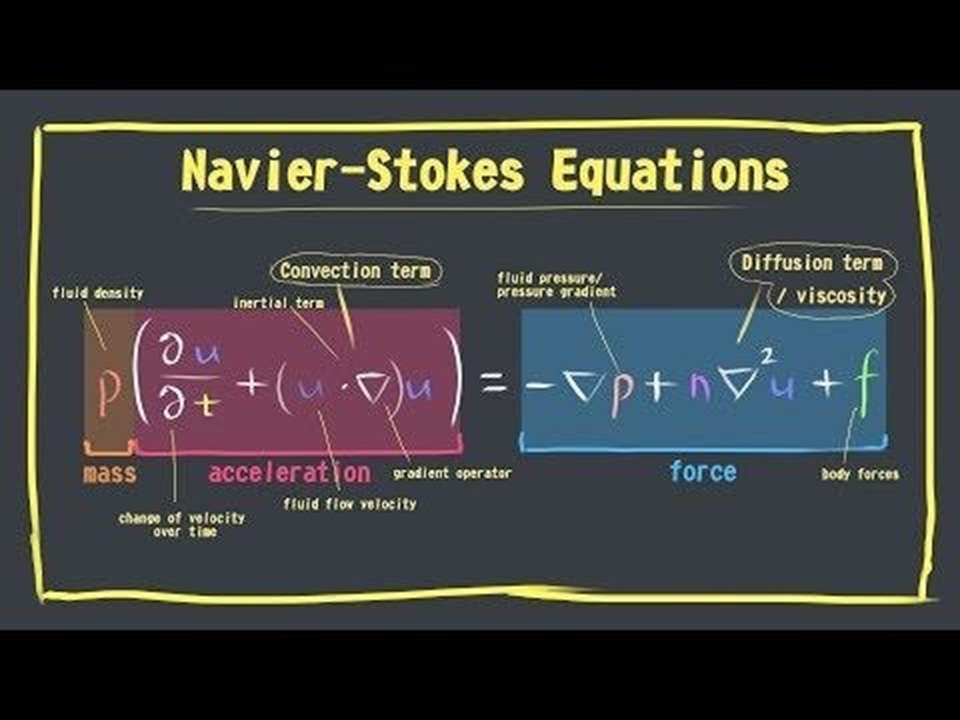
The Navier–Stokes equations are fundamental to fluid dynamics. They are used to describe how fluids move and have applications across physics and engineering, including the study of airflow, water, weather, and other fluid systems.

The Millennium Prize version of the problem asks mathematicians to establish whether sufficiently smooth solutions to the three-dimensional Navier–Stokes equations always exist and remain smooth, or whether solutions can develop singularities in finite time.

The difficulty is not simply solving the equations for a particular physical system. The challenge is proving a general mathematical result about the behavior of three-dimensional fluid flows.

That distinction is important when assessing OpenAI’s claim. Producing numerical evidence or solving particular cases would not be enough. A valid solution must provide a rigorous mathematical proof that addresses the full problem.

Mathematician Raises Questions About OpenAI’s Route

OpenAI’s announcement quickly attracted scrutiny from Tristan Buckmaster, a mathematics professor at New York University who has been working on Navier–Stokes with Levent Alpöge, a mathematician who works at OpenAI rival Anthropic.

Buckmaster said in a statement on his website that he and Alpöge had been collaborating personally on mathematical problems, including Navier–Stokes, and that Alpöge received information suggesting that details of their progress had reached OpenAI.

According to Buckmaster, the approach described by OpenAI appeared similar to work the two mathematicians had been pursuing. He questioned whether information from their work could have been accessible to OpenAI’s models, including through sessions conducted using the company’s Codex products.

Buckmaster was careful to distinguish those questions from an allegation that OpenAI had improperly accessed the mathematicians’ work.

“I would like to be clear about what I am not claiming. I have not seen OpenAI’s proof. I do not know what their model did, or how. I do not know whether our data was used,” he said.

His comments introduce a separate issue from whether the mathematics itself is correct: the provenance of the information used by an AI system in reaching a claimed breakthrough.

OpenAI said its work on Navier–Stokes began on September 1 after the company heard a rumor about progress on the problem. It later determined that the rumor concerned the work by Buckmaster and Alpöge.

The company said its researchers and AI agents did not see the mathematicians’ work before it was publicly released.

“We (the researchers and the agents) did not see any of their work through any means until they released it publicly — in particular, no specific user data was accessed in order to solve this problem,” OpenAI said.

The company added that, while it considered it unlikely, it could not rule out the possibility that de-identified data derived from users’ interactions with its products had contributed to improving its models.

That could become important as AI companies increasingly position their models as tools for scientific and mathematical research. Questions over training data, model access, confidentiality, and the boundaries between publicly available knowledge and private user work are becoming more consequential as AI systems are used to generate original research.

A Test for AI’s Role in Advanced Mathematics

If OpenAI’s proof survives independent mathematical scrutiny, the significance would extend beyond Navier–Stokes.

AI systems have already demonstrated an ability to assist with theorem proving, mathematical discovery, coding, and scientific research. A rigorously verified solution to a Millennium Prize Problem would represent a much more consequential milestone because it would demonstrate that AI can contribute to solving a problem that has resisted generations of human mathematicians.

It would also strengthen the case for multi-agent AI systems, in which large numbers of models cooperate rather than relying on a single model to reason through a problem.

But the most important test remains mathematical verification.

A computer-generated argument, no matter how sophisticated the underlying AI system or how many agents participated, does not become a proof simply because an AI company describes it as a solution. Independent mathematicians will need to examine the argument line by line, identify any hidden assumptions or logical gaps, and determine whether it actually resolves the question posed by the Clay Institute.

Seven Problems, Seven $1 Million Prizes

The Clay Mathematics Institute established the Millennium Prize Problems in 2000, selecting seven of the most important unresolved problems in mathematics and offering $1 million for a correct solution to each.

The institute said the prizes were intended to draw public attention to the fact that fundamental mathematical questions remain unresolved and to recognize achievements of “historical magnitude.”

Navier–Stokes is one of the seven problems. The others include the Riemann Hypothesis, which concerns the distribution of prime numbers, and the Birch and Swinnerton-Dyer Conjecture, which concerns elliptic curves.

Only one of the seven, the Poincaré Conjecture, has been officially solved.

OpenAI’s Navier–Stokes claim now enters that same long-running mathematical test: whether an AI-generated result can withstand the standards of proof that have governed mathematics for centuries.

Until independent experts validate the proposed solution, the most precise description of OpenAI’s achievement is that its AI system has produced a proposed resolution to one of mathematics’ most difficult open problems.