DD
MM
YYYY

PAGES

DD
MM
YYYY

spot_img

PAGES

Home Blog Page 2311

Banks Offload Nearly All of Musk’s $13bn Twitter Buyout Debt, With Only $1.3bn Left as Investors Bet on X’s Future

0

Banks led by Morgan Stanley have offloaded another major chunk of the $13 billion debt that financed Elon Musk’s controversial $44 billion acquisition of Twitter (now X) in 2022, Reuters has reported, citing sources.

The latest sale, completed on Thursday, involved $4.74 billion in secured loans that will mature in October 2029, marking a near-complete exit for banks that had been forced to hold onto the debt for nearly two years—a highly unusual situation in corporate financing.

With this sale, banks including Bank of America, Barclays, Mitsubishi UFJ, BNP Paribas, Mizuho, and Société Générale have now successfully offloaded almost all of the debt, leaving only $1.3 billion in unsecured loans on their books. The timing of that final sale remains uncertain, according to the sources.

The latest batch of loans was priced at par (100 cents to the dollar) and paid a fixed yield of 9.5%, reflecting strong demand from institutional investors. Initially, banks had planned to sell $2.97 billion in secured loans, but the overwhelming interest led them to increase the offering to $4.74 billion.

This sale follows a $5.5 billion term loan sale in early February, which came after a $1 billion private sale of the same loans. The February deal was priced with a floating interest rate, at 97 cents to the dollar, yielding 11%. The fact that those loans were later bid higher by investors appears to have paved the way for the latest round of sales.

Unlike previous tranches, the latest loan sale involved fixed-rate debt, making it a rare transaction in leveraged financing. According to the International Financing Review (IFR), this was the largest-ever fixed-rate loan sale in the leveraged loan market.

Why Investors Are Now Betting on X

Banks typically sell such debt shortly after financing a deal, but the Twitter/X loans had become a major liability, forcing lenders to hold onto them far longer than usual. The reasons behind this delay were tied to X’s financial struggles, including a mass exodus of advertisers, ongoing losses, and Musk’s chaotic leadership. These factors made X’s future revenue potential uncertain and discouraged investors from purchasing the debt at favorable terms.

However, two key factors have shifted investor sentiment and made X a more attractive bet.

One major factor is Donald Trump’s election victory in November. Musk, who has positioned himself as a close ally of the former president, is seen as someone who could benefit from a Trump presidency. Investors are anticipating that Trump’s return to the White House will open the door for more conservative advertisers, potentially reversing the revenue losses X suffered when major brands pulled their ads due to content moderation concerns. This political dynamic is giving investors confidence that X’s financial outlook could improve under a new administration.

Another key selling point for investors is the exposure to Musk’s artificial intelligence startup, xAI. While X itself remains a struggling social media platform, Musk has increasingly linked it to his broader AI ambitions. Investors see xAI as a promising venture that could give X a strategic edge in the artificial intelligence space. By purchasing the debt, investors are also gaining indirect exposure to xAI’s growth potential, making the investment more appealing.

The Last Remaining Challenge: The $1.3 Billion in Unsecured Debt

Despite the successful sale of most of the debt, $1.3 billion in unsecured loans remains on bank balance sheets. These loans carry higher risk and lower priority for repayment, making them a much harder sell to investors. Sources say the banks have yet to determine the best timing or strategy for selling off the remaining portion of the debt.

The prolonged struggle to offload X’s debt has been one of the most challenging financing deals in recent history. Musk’s leveraged buyout of Twitter was one of the most expensive in history, and the financing structure turned into a historic headache for banks when X’s revenue declined sharply.

Now, with a political shift in the U.S. and Musk’s broader technology ambitions, institutional investors appear more willing to take a chance on X’s uncertain future. The latest sales have given banks a long-awaited opportunity to free themselves from a financial burden that had lingered far longer than expected.
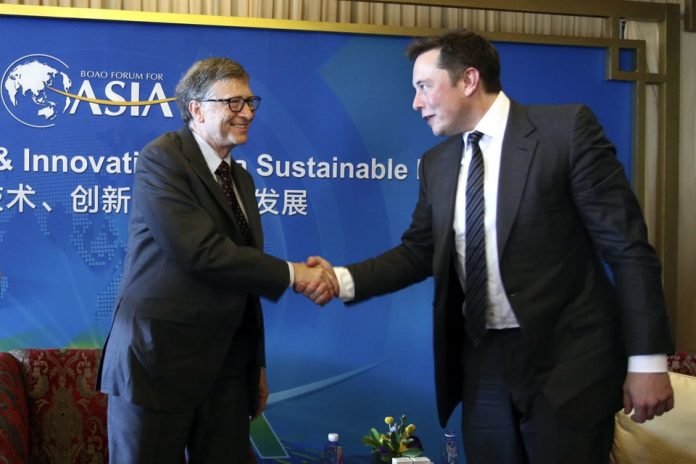
Bill Gates Criticizes Elon Musk’s Involvement in Foreign Politics, Calls it ‘Insane’

1

Billionaire philanthropist Bill Gates has raised concerns over Elon Musk’s growing political influence across multiple countries, calling it “insane” that the Tesla and SpaceX CEO has the power to destabilize political situations globally.

In an interview with The Times UK, Gates criticized Musk’s recent interventions in British and German politics, arguing that super-rich foreigners should not be able to manipulate elections.

“It’s really insane that he can destabilize the political situations in countries,” Gates said.

Musk has made waves in British politics by publicly calling for the removal of UK Prime Minister Keir Starmer. The billionaire accused Starmer of failing to prevent the rape of young girls when he served as Britain’s chief prosecutor from 2008 to 2013, a claim that sparked outrage and was dismissed as misleading and inflammatory by political analysts.

In Germany, Musk has thrown his support behind the far-right party Alternative for Germany (AfD). On Saturday, he spoke virtually at an AfD campaign rally, backing their platform ahead of the country’s February national elections.

In December, Musk penned an op-ed in Welt am Sonntag, a major German newspaper, praising AfD as “the last spark of hope for this country” and endorsing their hardline stance on immigration—a key issue in Germany’s political landscape.

South America Too

But Musk’s political footprint is not limited to Europe—he has increasingly been shaping political discourse in South America as well, siding with right-wing governments and challenging leftist leaders.

In Brazil, Musk has clashed with leftist President Luiz Inácio Lula da Silva, accusing him of censorship and authoritarianism.

Lula’s government has been investigating fake news and disinformation spread on social media, prompting Musk to accuse him of trying to silence political opponents.

In April 2024, Musk publicly defied Brazil’s Supreme Court, refusing to comply with a ruling that ordered the removal of accounts accused of spreading misinformation and extremist content. Musk took to X, calling the court’s actions a violation of free speech, and openly stated that he would not obey the orders.

Musk’s defiance fueled tensions between Brazil’s judiciary and his company, with Justice Alexandre de Moraes slamming a ban and fine on X.

Musk has also emerged as a strong supporter of Argentina’s new right-wing president, Javier Milei, who was elected in 2023.

Milei, a self-proclaimed libertarian and staunch opponent of socialism, has drawn comparisons to U.S. President Donald Trump. He pledged to dismantle Argentina’s welfare state, slash government spending, and implement radical free-market reforms—an agenda that aligns with Musk’s views on government intervention.

Shortly after Milei’s election, Musk praised him on X, calling his victory “a big win for the people of Argentina”. Musk also met with Milei’s team, reportedly discussing economic policies and the potential for Tesla to expand operations in Argentina, a country rich in lithium reserves—a critical component for Tesla’s electric vehicle batteries.

Musk’s endorsement of Milei has been seen as part of his broader support for right-wing populist movements worldwide, particularly those who advocate for deregulation, free markets, and a hard stance against leftist governance.

Gates Calls for Stricter Safeguards Against Foreign Billionaire Influence

Against this backdrop, Gates told The Times that Musk’s growing political involvement is deeply concerning, urging governments to adopt stronger safeguards against foreign billionaires influencing elections.

“I think in the US, foreigners aren’t allowed to give money,” Gates said. “Other countries maybe should adopt safeguards to make sure super-rich foreigners aren’t distorting their elections.”

Musk’s political maneuvering has drawn comparisons to media moguls like Rupert Murdoch, who have used their influence to shape political outcomes globally.

Musk’s increasing engagement in global politics has been amplified by his growing alliance with Trump.

After Trump’s re-election victory in November, Musk became an informal adviser, participating in calls with world leaders, including Turkish President Tayyip Erdogan. He has also been appointed to lead Trump’s new Department of Government Efficiency (DOGE), a commission designed to slash government spending and eliminate regulations.

Musk was a major financial backer of Trump’s campaign, reportedly spending at least $277 million supporting Trump and other Republican candidates in 2024. His financial and ideological alignment with right-wing populist movements across different countries suggests a coordinated effort to shift global politics toward deregulation, nationalism, and limited government oversight.

Musk Remains Unapologetic as Global Political Tensions Rise

While Bill Gates has expressed alarm at Musk’s growing political influence, Musk has shown no signs of backing down.

From challenging left-wing leaders in South America to endorsing right-wing movements in Europe and the United States, Musk has positioned himself as a political disruptor—leveraging his vast wealth, social media platform, and influence over emerging industries to reshape global politics.

His critics argue that his interventions are reckless and self-serving, designed to protect his business interests while advancing a political ideology that benefits billionaires and corporate elites.

“I thought the rules of the game were you picked a finite number of things to spout about that you cared for, focused on a few critical things, rather than telling people who they should vote for,” Gates said.

“If someone is super smart, and he is, they should think how they can help out. But this is populist stirring,” Gates added.

Supporters, however, see him as a champion of free speech and deregulation, unafraid to challenge the status quo.

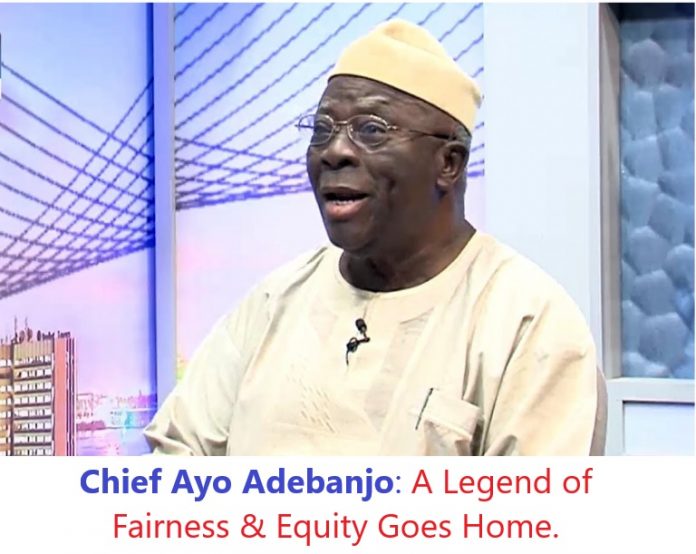
Chief Ayo Adebanjo: A Legend of Fairness and Equity Goes Home

0

I just read that one of Nigeria’s finest leaders has passed to glory. Chief Ayo Adebanjo lived with honour, decency and values. When he led Afenifere, a pan-Yoruba cultural organization, he built pillars of philosophical fairness, equity and unalloyed justice. He did not twist things because it would favour the other side of the aisle; I admired his uncommon fairness and boldness.

With this passing, Nigeria loses one of the remaining builders of the nation. Yes, men and women who came together on a national project to build a greater country. Chief lived long – 96 years – and served his nation, but he did not see the Nigeria he had imagined.

A leader for the West, North, East, South and everywhere, Chief Ayo Adebanjo was thoughtful, fair and provided balanced views on critical national issues. For him, fairness and inclusion would remain the critical enablers to recruit all Nigerians to build a Great nation. One Team powered by shared fairness and equity, for all tribes and all people.

As he touches the face of heaven being welcomed by angels in ecclesiastical  cymbals, tapestries and flutes,  I ask you to join me to honour one of the last true builders of Nigeria. He was a man of immense wisdom, and will leave behind a generational conscience void to a nation lost in winning tribal battles, over wars of economic stagnation and mass underdevelopment, and thereby denying itself all resources for a greater nation.

Chief: We celebrate you and pray that the Nigeria you dreamt will emerge one day. Tell Awolowo, Azikiwe,  Bello, etc that things have since fallen apart that the National Spirit has disintegrated into tribal spirits with devastating consequences on the soul of the nation. A legend, RIP!

Meta’s CTO Tells Employees to Quit If They’re Not OK With Company’s Policy Shift

0

Meta’s Chief Technology Officer, Andrew Bosworth, has taken a hard stance against employee dissent, telling workers who oppose company policies to either accept the changes or leave.

His comments, made in response to criticism on Meta’s internal Workplace forum, underscore a widening divide between leadership and employees over controversial shifts in policy, including the company’s handling of diversity, equity, and inclusion (DEI), LGBTQ+ issues, and internal free speech.

The backlash against Meta’s leadership reflects a broader trend in the American tech industry, where major firms have been steadily reversing progressive initiatives under growing political pressure and economic restructuring.

However, Meta is not alone. Other tech giants, including Google, have made similar moves, scaling back DEI programs, altering their approach to content moderation, and defying internal dissent.

Bosworth’s Hardline Response to Internal Criticism

Per BI Africa, the controversy erupted on January 30 when Bosworth shared an article from The Verge in a Workplace group called “Let’s Fix Meta,” which has nearly 12,000 members. The article covered CEO Mark Zuckerberg’s comments during an all-hands meeting that day, which had been leaked in full to the press.

Bosworth, addressing the leak, expressed his frustration, writing: “As predicted, the entirety of today’s Q&A leaked. It sounds like someone just gave the entire audio feed to a journalist. I saw all the angry/sad reactions about the change to the format and I share a sense of loss about it, but I think this makes it clear it was the right call.”

His post drew sharp criticism from employees, with one accusing the company of systematically targeting marginalized communities and eroding internal free speech.

“Company changes policies to specifically target the LGBTQ community, cuts its own data-backed DEI programs, leadership goes on a far-right podcast to explain changes instead of addressing employees, limits free speech internally—and there’s surprise?” the employee wrote.

In response, Bosworth dismissed the concerns, asserting that employees should either accept the company’s decisions or leave.

“If your view is ‘everyone has to like all the policies we have and if they don’t it is appropriate to leak,’ then I think you should consider working elsewhere.”

The exchange escalated when another employee pushed back against the company’s increasingly closed-door approach.

“Blaming leaks for why Mark’s policy decisions cannot even be discussed, much less appealed, is a slap in the face. We’re all here because when we were hired, we were the best candidate for the job,” the employee wrote.

Bosworth doubled down: “You should quit if you feel that way, I mean it.”

His remarks have only fueled existing frustrations among employees who believe Meta is becoming a hostile work environment, one where critical discussions are stifled and workers are expected to fall in line or leave.

Much of the internal frustration at Meta stems from the company’s broader retreat from DEI initiatives and its perceived shift toward appeasing conservative critics.

Zuckerberg’s leadership has overseen cuts to key DEI programs that were previously touted as essential for fostering an inclusive workplace. Additionally, changes to content moderation policies have led to concerns among employees about how the company handles discussions around LGBTQ+ issues, racial justice, and other social topics.

Meta has also altered its internal communication policies, restricting employees from freely discussing controversial subjects. Ahead of the January all-hands meeting, the company’s vice president of internal communications announced that Meta would be limiting the types of questions employees could ask in Q&A sessions.

“We will skip questions that we expect might be unproductive if they leak or things like People related questions that have already been answered,” the executive wrote.

To many employees, this move underlined an attempt to curtail open dialogue. Some also accused the company of actively removing internal Workplace posts that were critical of the leadership, with one employee calling it a “free speech issue.”

Tech’s Rightward Shift

Meta’s crackdown on internal dissent is not an isolated case. In recent months, other major tech companies have also moved to dismantle DEI programs, shift their approach to LGBTQ+ policies, and rein in employee speech.

For instance, Google has significantly scaled back its DEI efforts over the past year, quietly disbanding internal initiatives aimed at promoting workplace diversity. Employees at the company have reported a chilling effect on internal discussions about race, gender, and social justice, with management discouraging activism and external political engagement.

The reversal of DEI and LGBTQ+ policies across the tech industry comes at a time when companies are facing mounting political pressure from conservative lawmakers and business leaders. The Republican Party, led by former and now-current President Donald Trump, has been vocal in its opposition to what it calls “woke capitalism.” Right-wing politicians have increasingly targeted tech companies for their progressive policies, accusing them of pushing liberal agendas.

At the same time, economic conditions have forced tech firms to tighten their budgets, with DEI programs among the first to be cut. Companies that once championed diversity efforts are now shifting their focus back to financial performance, innovation, and market dominance.

Republican Senators Introduce Bills to Roll Back EV Incentives, Threatening Tesla’s Growth and U.S. EV Adoption

0

In an escalation of Republican opposition to electric vehicle (EV) prone policies, two new Senate bills seek to eliminate key incentives that have fueled EV adoption in the U.S. If passed, the legislation would not only raise the price of electric cars for American consumers but also stifle the growth of automakers like Tesla, whose largest market remains the United States.

The proposed laws—one sponsored by Sen. John Barrasso (R-Wyo.) and another by Sen. Deb Fischer (R-Neb.)—align with the broader efforts of President Donald Trump and his allies to roll back the Biden administration’s clean energy initiatives. While Tesla CEO Elon Musk has frequently positioned himself as a right-wing ally, his vocal support for conservative causes has not deterred the Republican Party from aggressively pursuing policies that could severely damage Tesla’s growth and hinder the transition to electric mobility in the U.S.

A Legislative Assault on EVs: What’s in the Bills?

The first bill, Barrasso’s Eliminating Lavish Incentives to Electric (ELITE) Vehicles Act (S. 541), proposes the most sweeping changes, aiming to eliminate all federal tax credits for EV purchases, used EVs, and EV charging infrastructure. The second bill, sponsored by Fischer, seeks to impose a $1,000 tax on the purchase of every new electric vehicle.

Barrasso’s bill would eliminate the $7,500 federal EV tax credit, a crucial driver of adoption that has helped offset the higher upfront cost of electric vehicles. Without this credit, EVs would immediately become more expensive, making them less competitive with gasoline-powered cars. The bill also seeks to abolish the $4,000 used EV tax credit, which has played an essential role in making electric cars more accessible to lower-income buyers. Without this incentive, the used EV market could shrink, making affordable electric cars harder to find.

Another major target is the federal investment tax credit for EV charging stations, which has helped expand the U.S. charging network. If the bill is passed, funding for new charging infrastructure would dry up, slowing the growth of charging stations and reinforcing concerns over range anxiety—one of the biggest barriers to mass EV adoption. Additionally, loophole incentives for leased EVs, which have allowed many consumers to take advantage of EV subsidies, would be closed under the proposed legislation.

Fischer’s bill goes a step further by actively penalizing EV buyers with a $1,000 tax on every new EV purchase. This move is designed to discourage consumers from choosing electric vehicles altogether, tilting the playing field back in favor of gasoline-powered cars.

How the Legislation Threatens Tesla and the U.S. EV Market

The U.S. is Tesla’s most important market, accounting for a significant share of its sales. By raising the cost of EVs and disincentivizing purchases, these bills could slow Tesla’s growth and hurt the broader EV industry in several ways.

Without federal incentives, consumer demand for EVs could drop, particularly for Tesla’s vehicles, which are priced at a premium. Tesla has relied on tax credits to make its cars more affordable for middle-class buyers, and the removal of these incentives would make its models less attractive compared to gasoline-powered alternatives.

The expansion of Tesla’s Supercharger network, which has been crucial in making EV ownership viable, could also slow down if incentives for charging infrastructure are removed. Tesla’s ability to invest in and expand its charging network has been bolstered by federal tax credits, and without these incentives, the company may struggle to continue its rapid growth in charging coverage.

Tesla’s dominant position in the U.S. EV market is also under pressure from increasing competition. Legacy automakers such as Ford, General Motors, and Hyundai have been ramping up their EV production, with some of their models qualifying for federal tax credits. If Tesla loses access to these incentives while competitors continue to benefit from them, the company could face a growing competitive disadvantage.

Investor confidence in Tesla is another factor at risk. Tesla’s stock is highly sensitive to policy changes that affect EV adoption, and any sign that government support for EVs is weakening could lead to increased market volatility. If these bills gain traction, Tesla’s share price could take a hit as investors reassess the company’s long-term growth prospects.

Elon Musk’s Right-Wing Leanings Offer No Protection from Republican Anti-Green Policies

Despite his outspoken support for right-wing political figures and policies, Musk has found himself at odds with Republican lawmakers who remain hostile to EVs and green energy initiatives.

Over the past few years, Musk has positioned himself as an ally of conservative causes, repeatedly attacking the Biden administration, opposing labor unions, criticizing environmental regulations, and promoting Republican narratives about government overreach. He has also courted Trump supporters and frequently uses his social media platform, X (formerly Twitter), to amplify right-wing talking points.

Yet, this has not shielded him or Tesla from the Republican Party’s aggressive efforts to dismantle EV-friendly policies. Trump and his allies remain closely aligned with the fossil fuel industry, which sees the rise of electric vehicles as a direct threat to its dominance. While Musk may be a favored figure among conservatives for his opposition to the Democratic Party, that favoritism does not translate into Republican support for Tesla’s long-term business interests.

Trump, in particular, has taken an explicitly anti-EV stance, falsely claiming that the Biden administration was “forcing” Americans to buy electric cars and vowing to reverse all EV incentives if re-elected. His rhetoric appeals to industries that have traditionally backed the Republican Party, including oil companies and auto manufacturers that remain dependent on internal combustion engine production.

In this political climate, Musk’s attempts to align himself with conservative ideology have proven ineffective in protecting Tesla from the broader GOP agenda. The Republican war on EVs is not about Musk—it’s about preserving the dominance of fossil fuels and slowing the transition to cleaner transportation.