
DD
MM
YYYY

PAGES

DD
MM
YYYY

spot_img

PAGES

Home Blog Page 2318

Best Cloud Mining Services for American Investors in 2025

0

Donald Trump has shown strong support for cryptocurrency and is eager to promote its growth. Since taking office as U.S. president last month, investor confidence has risen significantly. Many are now turning to cloud mining as a hassle-free way to invest in Bitcoin and other cryptocurrencies.

In this article, we’ll explore the best cloud mining platforms for American investors in 2025, highlighting their features, benefits, and what makes them stand out. Whether you’re an experienced crypto trader or just starting, these platforms offer a convenient way to mine digital assets. Find the best cloud mining platform below for investment!

  1. ICOMiner – The Ultimate Choice for Hassle-Free Bitcoin Cloud Mining

Supported Cryptocurrencies: Bitcoin, Ethereum, Litecoin, Dogecoin and more

Minimum Investment: $200

Launched in 2013, ICOMiner has quickly risen to prominence as one of the top cloud mining platforms for investors worldwide. Offering a comprehensive and beginner-friendly approach to Bitcoin cloud mining, ICOMiner stands out for its high returns on investment (ROI), user-centric design, and seamless mining experience. The platform eliminates the complexity of traditional mining by allowing users to simply rent mining power from large data centres without the need for expensive hardware or technical expertise.

ICOMiner best for US Investors:

  • Daily Payouts from high-yield mining plans
  • High Return on Investment- Earn $15000 Quickly
  • Instant Mining Activation – No setup is required
  • Scalable Investment Plans to match your financial goals
  • Robust Security – SSL encryption & cold wallet storage
  • Fully Automated Mining – No manual work needed
  • Real-Time Profit Tracking via an intuitive dashboard
  • No Maintenance Fees – ICOMiner handles everything
  • Free Trial Plan – Start mining risk-free
  • 24/7 Customer Support– Queries Resolves within seconds

ICOMiner Cloud Mining Plans

Investment Plans Contract Price Contract Term Daily Rebate Profit
FREE Trial $50.00 1 Day $1.00 $1.00
Dogecoin $200.00 1 Day $6.00 $6.00
Ethereum Classic $600.00 3 Days $10.20 $30.60
Litecoin $1,200.00 5 Days $22.80 $114.00
Dogecoin $3,800.00 7 Days $83.60 $585.20
Bitcoin $8,800.00 10 Days $220.00 $2,200.00
Alephium $16,000.00 12 Days $432.00 $5,184.00
Litecoin $33,000.00 15 Days $990.00 $14,850.00
Bitcoin $66,000.00 8 Days $2,178.00 $17,424.00


How to Start Mining with ICOMiner

  1. Create an Account – Sign up on the ICOMiner website.
  2. Choose a Plan – Select an investment plan based on your budget.
  3. Activate Mining – Your mining starts instantly.
  4. Monitor Earnings – Track profits in real time.
  5. Withdraw or Reinvest – Withdraw earnings or reinvest for higher returns.

ICOMiner also offers a $50 free trial for cloud mining. Just register and claim your bonus!

  1. Binance Cloud Mining

Supported Cryptocurrencies: Bitcoin, Ethereum, Litecoin

Starting from: $23.0400 (Min. 1TH/s)

Binance Cloud Mining offers a trusted and robust cloud mining solution for those looking to mine Bitcoin and other cryptocurrencies. As part of Binance, the world’s largest cryptocurrency exchange, Binance Cloud Mining is well-integrated into Binance’s vast ecosystem. This allows users to seamlessly transfer their earnings into their Binance trading account for further investment opportunities.

With flexible contracts and competitive payouts, Binance Cloud Mining enables users to earn passive income without the need to manage hardware. Users can also leverage their mining profits by using them in Binance’s ecosystem for trading or staking. For investors looking for high security, this platform offers strong encryption and full compliance with regulatory standards, ensuring that funds are safely stored and transactions are secure.

  1. ECOS

Supported Cryptocurrencies: Bitcoin

Minimum Investment: $99

ECOS offers a government-backed, secure cloud mining platform based in Armenia’s Free Economic Zone. This makes ECOS one of the most trusted and transparent platforms for cryptocurrency mining. It offers a range of mining contracts tailored to different investment levels, allowing users to mine Bitcoin and other cryptocurrencies with ease.

ECOS stands out for its commitment to sustainability and energy-efficient mining practices. The platform also provides a profitability calculator to help users assess the potential returns on their investments. With no hidden fees and easy-to-track real-time earnings, ECOS is a great choice for both beginners and experienced miners.

  1. Kryptex

Supported Cryptocurrencies: Bitcoin and Ethereum

Kryptex is a versatile cloud mining platform that enables users to mine Bitcoin and other cryptocurrencies through cloud mining or by utilizing their own PC hardware. This flexibility makes Kryptex an ideal option for both beginners who want to start with cloud mining and advanced users who wish to combine cloud mining with their own computing power.

The platform supports multiple cryptocurrencies and offers real-time profit tracking. Kryptex is known for its ease of use and low withdrawal minimums, making it accessible to a wide range of users. Whether you are looking for passive income or a more hands-on approach, Kryptex provides the tools needed to succeed in the mining space.

  1. BitFuFu

Supported Cryptocurrencies: Bitcoin, Litecoin and Ethereum

Minimum Investment: $60

BitFuFu partners with Bitmain, one of the world’s largest mining hardware producers, to provide users with top-tier cloud mining services. This collaboration ensures that BitFuFu offers high-performance mining contracts with the best possible hardware, resulting in more efficient and profitable mining.

BitFuFu’s flexible contract options allow users to choose from short-term, mid-term, and long-term contracts based on their goals and investment capacity. The platform also provides real-time mining performance tracking, giving users full transparency over their investments. With strong security and reliable infrastructure, BitFuFu remains a popular choice for high-volume investors looking for consistent returns.

  1. NiceHash

Supported Cryptocurrencies: Bitcoin, Ethereum, Litecoin, and Dogecoin

NiceHash is operating as a marketplace where users can rent and sell hash power, providing a unique twist on traditional cloud mining. Instead of offering fixed mining contracts, NiceHash allows users to rent mining power based on market demand. This provides a great deal of flexibility for miners and investors alike.

The platform supports several cryptocurrencies and offers competitive earnings based on current market conditions. NiceHash’s transparency in pricing and earnings, combined with its user-friendly interface, makes it a strong option for casual miners and more serious investors.

Final Thoughts

In conclusion, cloud mining in 2025 offers an excellent opportunity for beginners and experienced investors to profit from Bitcoin and other cryptocurrencies without the need for expensive hardware or technical knowledge. Platforms like ICOMiner offer flexible plans, high daily payouts, and robust security, making it an ideal choice for anyone looking to the start or scale their cloud mining journey.

With its transparent contracts, real-time profit tracking, and no maintenance hassles, ICOMiner is undoubtedly one of the best options. Whether you’re just starting or aiming for higher returns, ICOMiner provides everything you need to succeed in cloud mining.

Don’t miss out on this chance to grow your crypto portfolio. Start mining today with ICOMiner and experience secure, reliable, and profitable cloud mining!

Shiba Inu Uncertainty Spurs As Whales Invest In Yeti Ouro With Their 25% Bonus Offer

0

Amid recent market volatility, many Shiba Inu (SHIB) investors are reevaluating their positions, with whales moving towards more secure opportunities like Yeti Ouro (YETIO). As SHIB’s price declines and uncertainty grows, large holders are seeking alternative investments that offer stability and potential for gains, contributing to a noticeable shift in investment patterns.

Yeti Ouro is set to enter Stage 3 in just a couple of days, and early investors are already securing their YETIO holdings before the big price increase. The project is thrilled to offer a limited-time 25% bonus on all purchases as Stage 3 nears its final countdown. This exclusive opportunity is available until midnight on Sunday, giving investors the perfect chance to maximize their returns before the next price increase.

Shiba Inu Price Prediction: SHIB Struggles Amid Market Challenges

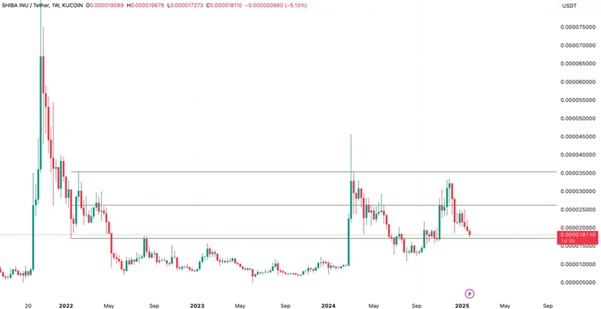
Shiba Inu price has soared by over 5% and is currently trading at $0.00001560 after a general market rebound and a higher burn rate was noted. However, the meme coin is still 34% off the highs of the month, which indicates a lack of strong positive sentiment. The burn rate increased by 500%, but still, this fact has no significant reflection on the price movement of SHIB as large sales led to fluctuations in the markets.

On-chain data shows that whale trading activity, which has in the past fueled volatility, has declined but large transaction volumes indicate that institutional investors are accumulating more SHIB. If Shiba Inu price manages to sustain itself above the $0.000015 mark, the next level of resistance is likely $0.000018.

Source X

However, Shiba Inu price struggles also stem from controversy surrounding its lead developer, Shytoshi Kusama, and his involvement with external projects like the SHY token. The community remains divided, further contributing to the uncertainty surrounding SHIB’s future price movements.

Yeti Ouro: A Stable Investment Alternative Amid Crypto Uncertainty

Yeti Ouro (YETIO) is emerging as an attractive investment since it is relatively more stable than the cryptocurrency market. Due to its systematic design and clear tokenomics, it provides certainty for the long term to large investors. A key selling point is the fully audited smart contract by SOLIDProof.  Currently, 74.5% of Stage 2 tokens have been sold and the presale will move into Stage 3 in a couple of days with a significant price increase. The team has announced to reward their investors with a 25% bonus offer until Sunday midnight UTC.

Yeti Ouro also supports its ecosystem with significant passive revenue generation through staking yields of as much as 1,200% APY and potential price increases. GameFi gives it more utility over the average meme coin, thereby making it a more progressive asset. Investors are particularly drawn to Yeti Ouro’s focus on sustainable growth and long-term value. The upcoming Play-to-Earn game, Yeti Go, has generated increasing interest too within the crypto community. The game developers have collaborated with creative talents behind Call of Duty, Spider-Man, Dead Space, and The Witcher to bring character assets to life, while the audio composition is crafted by industry experts with Grammy-nominated experience, having worked on projects for Major Lazer, Vybz Kartel, and Kabaka Pyramid.

The presale has progressed rapidly, with 175,091,763 tokens sold so far, and investors are eager to secure their stake before the opportunity ends. With a commitment to long-term stability, Yeti Ouro presents an attractive option for those diversifying away from meme coins and seeking a more secure investment in the crypto space.


Join The Yeti Ouro Community

Website: https://yetiouro.io/

X (Formally Twitter): https://x.com/yetiouro

Telegram: https://t.me/yetiouroofficial

Discord: https://discord.gg/YtUsEZ2Zr

While Cardano Plummets Amid Whale Selloffs, FXGuys Breaks $3M in Presale

0

FXGuys Surges While Cardano Faces Uncertainty

The crypto market is witnessing a significant shift as FXGuys continues its meteoric rise while Cardano struggles under heavy whale selloffs. With FXGuys reaching over $4 million in its Stage 3 presale, investors are taking notice of its strong ecosystem, positioning it as a Top PropFi Project in the industry.

Cardano, once considered a major player among top defi coins, has seen sharp declines as large holders offload their positions, triggering market uncertainty. The contrasting fortunes of these two projects highlight a growing trend: investors are actively seeking high potential altcoins with real utility and profitability, and FXGuys is leading the charge.

>>>JOIN FXGUYS HERE<<<

FXGuys Captures Investor Attention with Strong Fundamentals

Unlike Cardano, which has been struggling with price volatility, FXGuys has built a foundation that is attracting traders and investors alike. One of its biggest draws is its Trade2Earn program, which rewards traders with $FXG tokens for every trade executed. This model not only increases trading volume but also ensures that FXGuys remains an active and liquid platform.

Additionally, FXGuys offers an attractive staking mechanism, where token holders can access a 20% profit and revenue share from broker trading volume. This benefit provides passive income, making FXGuys one of the most appealing options for those looking to generate returns beyond simple price speculation.

For traders seeking the best proprietary trading firms, FXGuys presents a compelling opportunity through its prop trading funding program. Unlike traditional platforms, FXGuys gives top retail traders the chance to access a funded account with up to $500,000 in trading capital, allowing them to profit from the market without risking their personal funds.

Cardano’s Struggles Highlight the Shift to FXGuys

Cardano’s recent price drop is largely attributed to massive whale selloffs, raising concerns about long-term investor confidence. While its ecosystem has seen adoption in various sectors, the lack of strong financial incentives for traders and investors has contributed to the growing uncertainty.

In contrast, FXGuys provides instant funding prop firm opportunities, enabling traders to scale their strategies without capital constraints. This approach has positioned FXGuys as a smart prop trader platform, attracting those who seek direct access to capital and high-frequency trading benefits.

Another key advantage is FXGuys’ no buy or sell tax policy, ensuring users can trade without additional fees. This stands out against many projects that impose taxes on transactions, discouraging active trading. Moreover, FXGuys supports same-day fiat and crypto deposits and withdrawals, making it one of the most accessible and trader-friendly platforms available.

FXGuys: The Future of Decentralized Trading

The FXGuys ecosystem is designed for long-term growth, offering more than just a speculative asset. Its broker-backed crypto prop firm structure provides traders with multiple options, including its custom FXGuys Trader platform, alongside integrations with MT5, Match-Trader, cTrader, and DXtrade, depending on location.

With no KYC decentralized trading, FXGuys offers a high level of privacy and security, making it appealing for traders who value anonymity. This feature, combined with the ability to earn from staking and the Trade2Earn model, ensures that FXGuys remains at the forefront of the top defi coins category.

>>>JOIN FXGUYS HERE<<<

FXGuys Continues to Outshine Traditional Altcoins

As FXGuys enters the next phase of its presale, investor interest continues to climb, contrasting sharply with the struggles faced by Cardano. The project’s ability to raise over $4 million while maintaining strong user incentives demonstrates its long-term viability in the crypto market.

For those looking to be part of a high potential altcoin with real financial benefits, FXGuys offers an unparalleled opportunity. With staking rewards, trader funding, and a thriving trading ecosystem, FXGuys is redefining what it means to invest in decentralized finance.


To find out more about FXGuys follow the links below:

Presale | Website | Whitepaper | Socials | Audit

Nigeria’s Oil Production Surges to 1.53mbpd, Reaching OPEC’s 2024 Quota

0

Nigeria’s crude oil production surged to 1.53 million barrels per day (bpd) in January, marking a significant milestone as the country met its Organization of Petroleum Exporting Countries (OPEC) production quota for the first time since it was set at 1.5 million bpd for the 2024 period.

The production target, established at OPEC’s ministerial meeting on November 30, 2023, had remained elusive for over a year, prompting concerns over Nigeria’s ability to sustain output levels amid persistent challenges in the sector.

OPEC’s latest monthly oil market report, released on Wednesday, cited figures from direct communication with Nigerian authorities confirming the increase in production. The report indicated that January’s crude output represents a 54,000 bpd or 3.6 percent increase from the 1.48 million bpd recorded in December 2024. This development cements Nigeria’s position as Africa’s largest oil producer, surpassing Algeria, which recorded an output of 907,000 bpd in the same period. Congo, with an output of 251,000 bpd, ranked as the third-largest producer on the continent.

OPEC also noted that secondary sources, such as energy intelligence platforms, reported a slight decline in Nigeria’s crude production. According to these alternative estimates, production fell by 2 percent to 1.49 million bpd in January, down from 1.52 million bpd in December 2024. This discrepancy between data sources is not uncommon in oil reporting and underscores ongoing concerns over production transparency and the reliability of figures.

Beyond Nigeria, the broader OPEC-12 crude oil production saw a marginal decline, averaging 40.62 million barrels per day in January 2025, which represents a 118,000 bpd decrease compared to the previous month. While Libya, Congo, and Gabon recorded increased output, production levels in Nigeria, the United Arab Emirates (UAE), and Venezuela declined. Additionally, non-OPEC+ crude production averaged 13.94 million bpd, with notable increases from Kazakhstan, while Russian production declined.

Oil Revenue and Nigeria’s Increasing Budget Deficit Concerns

The surge in Nigeria’s oil production comes at a critical time as President Bola Tinubu recently submitted a revised 2025 budget to the National Assembly, increasing it from N49.7 trillion to N54.2 trillion. The latest adjustment, which the President attributed to additional revenue projections from key government agencies, has raised concerns among economic analysts and political observers that Nigeria may be heading toward another significant budget deficit.

With Nigeria’s debt profile already a growing concern, the increase in government spending, combined with the fluctuating performance of key revenue sources, has sparked debates about how the administration plans to finance the new budget without further deepening the country’s fiscal crisis. Nigeria has struggled with revenue generation, with oil remaining the country’s primary source of foreign exchange earnings despite ongoing efforts to diversify the economy.

Thus, the latest oil production increase is expected to positively impact government revenue if sustained, offering the administration a much-needed boost to fund the expanded budget. Crude oil accounts for over 80 percent of Nigeria’s foreign exchange earnings.

However, economic analysts warn that while increased oil production is a positive development, Nigeria’s ability to fully capitalize on rising output will depend on global oil prices, production stability, and efficient revenue management. If crude prices remain strong and Nigeria maintains or exceeds the 1.5 million bpd quota, it could partially offset the budgetary strain and reduce the country’s reliance on external borrowing. However, if production levels fluctuate due to oil theft, vandalism, or regulatory challenges, the expected financial relief may not materialize.

Dangote Refinery’s Role in Strengthening Nigeria’s Oil Sector

OPEC’s report also highlighted expectations that Nigeria’s crude oil production would rise further in the coming months, thanks to the Dangote Refinery’s progress toward full operational capacity. The refinery, Africa’s largest, is set to transform Nigeria’s energy sector by reducing dependency on imported petroleum products while creating a reliable domestic market for locally produced crude.

“The oil sector remains central to the economy, and the Dangote Refinery reaching full production capacity should help stabilize the petroleum product supply and possibly lower petrol prices,” OPEC noted in the report.

Edwin Devakumar, vice president of Dangote Industries Limited (DIL), recently stated that the refinery is expected to reach full capacity within 30 days. At peak operation, the facility will process approximately 650,000 barrels of crude per day, an output level experts believe is more than sufficient to meet Nigeria’s domestic demand for petroleum products while allowing surplus refining for export.

Can Nigeria Reach 3 Million Bpd by 2025?

Following the positive momentum, the federal government has set an even more ambitious target of achieving 3 million bpd by 2025, according to Heineken Lokpobiri, Minister of State for Petroleum Resources (Oil). However, this goal remains challenging, given the persistent issues of oil theft, pipeline vandalism, underinvestment in exploration, and an aging infrastructure.

Security concerns play a major role in output fluctuations. The Niger Delta, Nigeria’s oil-producing region, has long been plagued by pipeline sabotage and oil theft, with billions of dollars lost annually to illicit activities. The government’s ongoing security interventions have yielded mixed results, and industry experts warn that without a lasting solution, maintaining steady production above 1.5 million bpd will remain a struggle.

Moreover, while the Dangote Refinery promises to ease Nigeria’s dependence on imported refined petroleum products, it also presents a new dynamic for the country’s crude oil market. If the refinery sources the majority of its feedstock domestically, it could alter Nigeria’s export patterns and impact government revenues.

Apple Partners with Alibaba for AI-Powered iPhones in China in A New Approach to Beat China-US Restrictions

0

Apple has announced a partnership with Alibaba to bring artificial intelligence (AI) features to iPhones in China, marking a crucial shift in its strategy to revive smartphone sales in the world’s largest smartphone market.

The move comes as Apple Intelligence, the company’s new suite of AI-powered features, remains unavailable in China, a major disadvantage against domestic rivals like Huawei and Xiaomi, which have aggressively integrated AI into their latest devices.

Speaking on the partnership, Alibaba chairman Joseph Tsai expressed his company’s enthusiasm for collaborating with Apple. He stated that Apple had spoken to several companies in China before ultimately deciding to partner with Alibaba, as they wanted to use its AI to power their phones.

“They talked to a number of companies in China. In the end they chose to do business with us. They want to use our AI to power their phones,” Alibaba chairman Joseph Tsai said. “We feel extremely honoured to do business with a great company like Apple.”

While Apple’s deal with Alibaba is a strategic move to address its competitive struggles in China, it also represents a new approach by global tech companies caught in the escalating tech and trade war between Beijing and Washington. As both countries increase restrictions on AI and advanced semiconductor technologies, American and Chinese companies are turning inward, forming domestic partnerships to stay competitive while avoiding regulatory pitfalls.

AI breakthroughs from China, such as DeepSeek, are already being blocked from entering the US as Washington ramps up national security measures to curb China’s progress in artificial intelligence. Meanwhile, American AI models—including OpenAI’s ChatGPT—are not available in China due to Beijing’s strict regulatory framework on foreign AI companies.

With neither side willing to allow foreign AI dominance within their borders, a new pattern of domestic AI partnerships is emerging. In the US, companies like Apple, Microsoft, and Google are building AI ecosystems around homegrown AI labs, avoiding reliance on Chinese advancements. In China, tech giants such as Alibaba, Baidu, and Tencent are stepping in to fill the void left by restricted access to American AI models.

Apple’s partnership with Alibaba aligns with this new reality. Instead of relying on OpenAI’s ChatGPT, which powers Apple Intelligence outside China, Apple is turning to a Chinese company to provide AI capabilities within the country—ensuring it remains compliant with Beijing’s rules while keeping up with domestic competition.

China has implemented strict AI regulations that require all generative AI models to be registered and approved by the government before they can be made available to the public. Companies must ensure their AI outputs align with government guidelines on censorship and security. These restrictions have made it impossible for Apple to simply bring its AI model from the US into China, forcing it to rely on local partners like Alibaba.

According to a report from The Information, Apple is also working with Baidu on an AI-powered search feature capable of handling both images and text, alongside planned upgrades to the Chinese version of Siri.

While the Alibaba deal is significant, it is unclear whether Apple will also partner with Tencent, ByteDance, or DeepSeek, all of whom were initially evaluated for their AI capabilities. Apple and Alibaba have already submitted materials to Chinese regulators for approval of their AI-powered features, underscoring the company’s careful navigation of China’s regulatory landscape.

Apple’s AI rollout in China is not just about compliance—it is a matter of survival in an increasingly difficult market. The company has been losing ground to domestic competitors, with iPhone sales experiencing a significant decline in 2024. In the fourth quarter of 2024, Apple dropped to third place in China’s smartphone market, trailing behind Huawei and Xiaomi.

Analysts attribute Apple’s decline in China to several factors. Chinese consumers are rapidly embracing AI-powered smartphones, and Apple’s failure to introduce AI in China has put it at a disadvantage. With the return of Huawei’s 5G smartphones, powered by homegrown Kirin chips, many former iPhone users have switched to Huawei. Apple’s premium pricing strategy is also becoming harder to justify in China, where brands like Xiaomi offer flagship AI-powered phones at lower prices.

Apple’s reliance on Alibaba for AI in China is a clear sign that the tech war between the US and China is leading to a complete decoupling of AI ecosystems. In the US, former President Joe Biden’s administration intensified efforts to restrict China’s AI progress, banning the export of advanced Nvidia chips used for AI model training. Washington is also considering new regulations that would prevent US companies from investing in Chinese AI startups.

In China, authorities are tightening data security and AI regulations, ensuring that all AI models comply with government policies before deployment.

This means that Chinese AI models like DeepSeek will never be allowed into the US, just as ChatGPT and other US-developed AI tools are banned in China. The result is that American companies must rely on US AI models and Chinese companies must rely on domestic AI models, leading to a world where AI innovation is increasingly divided along geopolitical lines.

With Apple’s smartphone sales declining in China, the company is under pressure to adapt to the country’s AI-driven smartphone revolution. Analysts believe that if Apple successfully integrates Alibaba’s AI into iPhones, it may win back some market share. However, time will tell the extent of the partnership and whether Alibaba’s AI capabilities can match the competition from Huawei and Xiaomi.