DD
MM
YYYY

PAGES

DD
MM
YYYY

spot_img

PAGES

Home Blog Page 232

TikTok to Host First U.S. Awards Show as Washington Clears Path for Its Sale — A Signal That Its Troubles May Be Over

0

TikTok is taking a major step toward solidifying its cultural and corporate comeback with the announcement of its first-ever U.S. awards show — a move that comes just days after the U.S. government confirmed it has received formal approval from Beijing for the company’s sale to new American investors.

The upcoming TikTok Awards — scheduled for December 18 at the Hollywood Palladium in Los Angeles — marks the first time the Chinese-owned short-form video platform will host a large-scale entertainment event on U.S. soil. The ceremony will feature a red carpet, live performances, and a live audience of hundreds of creators, as well as a livestream on TikTok and Tubi, with the recorded show available on demand the following day.

For months, TikTok had faced an existential threat in the United States as the government pressed for its divestment from Chinese parent company ByteDance, citing national security concerns over user data. President Joe Biden signed legislation late last year, giving TikTok 90 days to finalize a sale or face an outright ban. Treasury Secretary Scott Bessent confirmed last week that the U.S. government has now received the approval from Beijing for TikTok’s sale, paving the way for a resolution that may finally end years of uncertainty surrounding the app’s operations in America.

Hosting an elaborate awards ceremony in Hollywood — the epicenter of global entertainment — is widely seen as TikTok’s way of signaling that its troubles in Washington are easing and that it is ready to fully reclaim its position as a dominant force in U.S. pop culture.

The awards show will celebrate TikTok’s most influential creators and cultural moments of the year, with categories including “Creator of the Year,” “Video of the Year,” “Muse of the Year,” “Storyteller of the Year,” and “Breakthrough Artist of the Year.”

Nominees for Creator of the Year include adamw, alixearle, brookemonk_, keith_lee125, and kristy.sarah, while Breakthrough Artist of the Year nominees are Alex Warren, katseyeworld, laufey, ravynlenae, and sombr.

Voting for fans opens November 18, with TikTok introducing a dedicated in-app portal where users can cast their votes.

TikTok said in its announcement that the awards will “celebrate the creators defining this new era of culture encompassing many areas, including fashion, beauty, sports, TV and film, and new forms of entertainment.” The company added that the trophies will “beam a colorful glow upon the creators shaping culture.”

This is not TikTok’s first awards show globally — it has hosted similar events in Germany, Mexico, and South Korea — but it is the first time it will stage one in the United States, its largest market and cultural nerve center.

The decision to launch a glitzy, high-profile show in Los Angeles just after the U.S. approved its ownership restructuring is being viewed by analysts as an attempt by the company to reassure users, creators, and advertisers that its future in the U.S. is secure.

For much of the past two years, TikTok has been under intense scrutiny from U.S. lawmakers, who accused it of allowing Beijing access to Americans’ personal data — a claim the company has repeatedly denied. TikTok CEO Shou Zi Chew testified before Congress earlier this year, pledging that the platform’s U.S. operations would be run independently and that user data would be stored on domestic servers under “Project Texas,” a security partnership with Oracle.

With the recent approval of its sale to a consortium of U.S.-based investors, a move designed to ensure American control over TikTok’s data and operations, analysts say the company is now poised to move forward without the cloud of regulatory threat that once hung over it.

A New Chapter for the Platform That Redefined Entertainment

TikTok’s entry into the U.S. awards circuit also underscores how much the app has transformed the entertainment landscape. The platform has been the launchpad for viral music hits, career-making moments for influencers, and countless trends that shape modern culture.

The move follows Instagram’s recent launch of its “Ring Awards” program, which honors its top creators. But unlike Instagram’s online-only approach, TikTok’s decision to hold a live, red-carpet event demonstrates its ambition to merge the digital creator economy with mainstream entertainment.

After years of political battles, investigations, and threats of a ban, TikTok is stepping back into the U.S. spotlight not as a company on the defensive — but as one ready to celebrate its influence on global culture.
BioNTech Boosts 2025 Outlook as Cancer Drug Alliance with Bristol Myers Squibb Takes Aim at Merck’s Keytruda

0

Germany’s BioNTech SE has raised its 2025 revenue outlook after receiving the first tranche of payments from its new multi-billion-dollar partnership with Bristol Myers Squibb, a move that marks a major step in its strategic pivot from COVID-19 vaccines to oncology.

The Mainz-based biotechnology company, which rose to global prominence for co-developing the Pfizer-BioNTech COVID-19 vaccine, said it now expects total revenue of between €2.6 billion and €2.8 billion ($3.03 billion) for 2025, up from an earlier projection of €1.7 billion to €2.2 billion. The upgrade comes as BioNTech begins to realize early financial benefits from its alliance with Bristol Myers Squibb, announced earlier this year.

Under the deal, Bristol Myers agreed to pay as much as $11.1 billion to BioNTech in a series of upfront, milestone, and potential future payments tied to the development and commercialization of cancer immunotherapies. The first payments have already been received, reflecting progress on the partnership’s flagship candidate, pumitamig, a next-generation T-cell receptor (TCR) therapy designed to target specific cancer mutations.

BioNTech confirmed on Monday that the partners have expanded their clinical trial program for pumitamig and are planning to launch additional studies next year. The company said it aims to evaluate the therapy’s potential across a broader range of solid tumors, indicating its ambition to challenge Merck’s best-selling immunotherapy, Keytruda, which dominates the market with annual sales exceeding $25 billion.

The company’s third-quarter financials also reflected the early momentum of this transition. BioNTech reported a 22% year-on-year increase in third-quarter revenue to €1.52 billion, buoyed by milestone receipts and early licensing revenue from its oncology collaborations. While its COVID-19 vaccine sales continue to decline as global demand fades, the firm is steadily building a new growth engine centered on cancer treatments and next-generation mRNA-based therapies.

Chief Executive Officer Ugur Sahin said in a June that the partnership with Bristol Myers is central to BioNTech’s long-term strategy of leveraging its mRNA and immune-oncology expertise to develop treatments that can teach the immune system to recognize and attack cancer. Sahin added that the alliance expands the firm’s capacity to bring transformative therapies to patients faster and strengthens our position as a global leader in cancer immunotherapy.

Analysts have described the collaboration as a pivotal inflection point for BioNTech, with some noting that the company is now entering the second phase of its evolution — from a pandemic-driven vaccine company to a diversified oncology powerhouse. The partnership with Bristol Myers is expected to give BionTech access to a broader clinical infrastructure and commercialization network that could significantly accelerate the rollout of its cancer drugs once approved.

Others see BioNTech’s pivot as a reflection of a broader shift among pandemic-era biotech leaders. With vaccine revenues falling sharply from their 2021 peaks, companies such as BioNTech and Moderna are reinvesting in oncology, rare diseases, and personalized medicine as they seek to sustain long-term growth.

BioNTech’s post-pandemic repositioning has been supported by its deep cash reserves, estimated at more than €17 billion at the end of 2024, giving it the financial strength to expand its research and clinical portfolio. In addition to pumitamig, BioNTech is advancing several other cancer immunotherapy candidates, including personalized neoantigen vaccines and cell therapies aimed at solid tumors.

The company’s growing partnership network now includes collaborations with major pharmaceutical players such as Regeneron, Genentech, and now Bristol Myers. Each alliance is designed to accelerate drug discovery and streamline regulatory approval timelines across multiple oncology indications.

While BioNTech’s transformation is still underway, early signs suggest the company is successfully repositioning itself as one of the leading forces in cancer immunotherapy.

With clinical expansions planned for 2025 and new partnerships emerging, BioNTech’s bet on oncology could define its trajectory for the next decade. This means potentially setting up one of the most consequential rivalries in modern pharmaceuticals, as it goes head-to-head with Merck’s Keytruda in the immunotherapy market valued at more than $100 billion globally.

Nigerian Stocks Dip as Investors Lock in Profits After Strong October Rally, Analysts Dismiss Trump’s Threat as Driver

0

The Nigerian Exchange (NGX) began the week in negative territory, with the All-Share Index (ASI) dropping by 0.25% to close at 153,739.11 points, wiping off approximately N244.9 billion in market value.

The decline was attributed to profit-taking across medium- and large-cap stocks, particularly in the banking, oil and gas, and consumer goods sectors.

Market capitalization fell from N97.8 trillion to N97.5 trillion, signaling a mild correction after weeks of strong gains. This comes on the heels of a robust October rally, during which the market gained nearly 8%, its second-best monthly performance of the year after July.

Although some traders initially tied the downturn to geopolitical tension — particularly a viral post by U.S. President Donald Trump, who threatened to “send troops” to Nigeria over alleged religious killings — analysts quickly dismissed this as a major factor behind Monday’s decline.

The Nigerian stock market has historically shown a high degree of non-reaction to global political headlines, especially those perceived as external or short-term. Despite media reports claiming that “Naira assets tumbled” in response to Trump’s remarks, data did not support any unusual market movement.

The modest pullback is believed to be purely a case of investors taking profits after a strong month, as analysts note that there’s no evidence of panic or foreign flight.

Indeed, trading data published by NairaMetrics reflected stability rather than turmoil. While the ASI slipped slightly, trading volume rose by 18%, reaching 627 million units valued at N25.1 billion, suggesting continued market participation. UBA Plc dominated both volume and value charts, exchanging 136 million shares worth N5.53 billion, reinforcing investor confidence in the banking sector.

Market breadth remained negative, with 24 gainers and 39 losers, led by Honeywell Flour Mills Plc (-10.00%) and Northern Nigeria Flour Mills Plc (-9.98%) on the laggard side. On the flip side, Union Dicon Salt Plc (+9.93%) and Omatek Ventures Plc (+9.92%) topped the gainers’ list.

Despite the brief downturn, the broader sentiment on the NGX remains positive. Some analysts noted that the market’s resilience in the face of global headlines highlights its increasing maturity and internal drivers — including strong corporate earnings, stabilizing foreign exchange rates, and improved liquidity.

Meanwhile, in the currency market, the naira weakened slightly to N1,438/$1 at the official window from N1,422.2/$1 recorded last Friday. Still, the local currency remains on one of its strongest runs in over 18 months, maintaining momentum after its stellar performance in October.

Financial analysts emphasized that the NGX’s “habit of non-reaction” has become a defining feature of the Nigerian equities landscape. Despite global political noise — from U.S. election rhetoric to regional security developments — the market tends to move more in response to local economic fundamentals such as interest rate decisions, inflation data, and company earnings.

It is believed that the Nigerian market has matured beyond knee-jerk reactions, and it’s becoming increasingly earnings-driven, and that’s a positive sign for investors seeking long-term value rather than short-term speculation.

With year-end positioning already underway, most experts expect the market to resume its upward trend, supported by stable corporate performance and continued investor optimism. Monday’s decline, they say, was nothing more than a healthy breather after a sustained rally — not a reaction to political posturing from abroad.

Microsoft to Invest Over $15bn in UAE as Trump Administration Clears Nvidia Chip Exports for AI Expansion

0

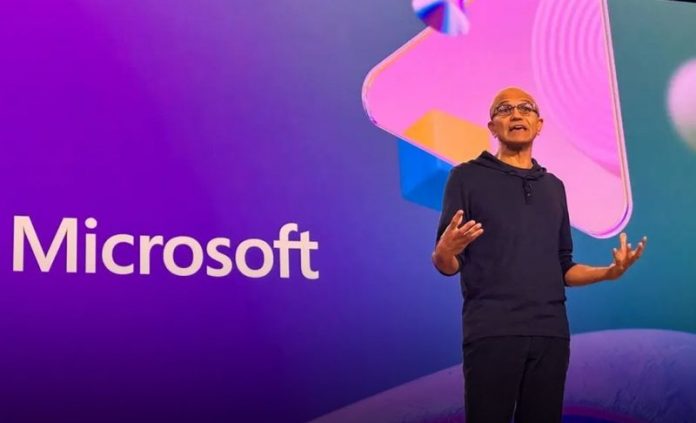
Microsoft has announced plans to invest more than $15 billion in the United Arab Emirates by 2029, marking one of the biggest foreign technology commitments in the Gulf nation’s growing push to become a global artificial intelligence hub.

The investment, confirmed by Microsoft Vice Chair and President Brad Smith, includes a sweeping expansion of the company’s AI and cloud infrastructure across the UAE. The move comes alongside fresh approval from the Trump administration for the export of advanced Nvidia graphics processing units (GPUs) — chips critical for training large AI models — to support Microsoft’s data center operations in the region.

“The biggest share of the investment, by far, both looking back and looking forward, is the expansion of AI data centers across the UAE,” Reuters quoted Smith as saying on the sidelines of the ADIPEC energy conference in Abu Dhabi. “From our perspective, it’s an investment that is critical to meet the demand here for the use of AI.”

The UAE, a nation already synonymous with rapid technological transformation, has been spending heavily to attract global AI companies and researchers. It has also strengthened ties with Washington to secure access to high-performance computing technologies that are otherwise restricted under U.S. export controls, especially to countries with close relations to China.

According to Smith, the Trump White House recently approved the export of an amount equivalent to 60,400 Nvidia A100 GPUs, involving the company’s newest GB300 AI accelerators, after revising technology safeguards to prevent unauthorized transfer to third parties. These approvals follow earlier export licenses under the Biden administration, which allowed Microsoft to deploy roughly 21,500 Nvidia A100, H100, and H200 chips in the UAE.

While the latest chips have not yet been shipped, Smith said deliveries would begin “in a matter of months,” emphasizing that they will be used exclusively within Microsoft’s own data centers to support AI model training and cloud computing operations.

Partnership with G42 and U.S. Oversight

Microsoft’s deepening relationship with G42, Abu Dhabi’s flagship artificial intelligence firm, remains central to its regional ambitions. The tech giant took a $1.5 billion minority stake in G42 last year, gaining a board seat now held by Smith.

However, G42’s historic ties to China have attracted scrutiny in Washington, amid growing U.S. concerns that advanced American chips could indirectly reach Beijing through third-party nations. Smith sought to allay such fears, noting that G42 has made “enormous progress” in aligning with U.S. compliance requirements. I think direct access to the most advanced U.S. chips will be part of G42’s future, he said.

G42 has repeatedly stated that it is working closely with U.S. partners and the Emirati government to ensure full compliance with American export laws and standards on AI development and deployment.

According to Smith’s blog post on Monday, Microsoft will have invested $7.3 billion in the UAE between 2023 and the end of this year, while another $7.9 billion is slated for spending from 2025 to 2029. The funds will primarily go toward expanding Microsoft’s cloud and AI infrastructure to meet surging demand from businesses, government agencies, and startups adopting generative AI tools.

Notably, none of the $15.2 billion investment disclosed on Monday will fund Stargate UAE, the first phase of what is planned to become one of the world’s largest AI data center hubs. That massive project, located in Abu Dhabi, was unveiled during President Donald Trump’s visit to the Gulf in May, and will serve as a separate multibillion-dollar initiative jointly backed by the U.S. and the UAE.

A New AI Frontier in the Gulf

It is believed that Microsoft’s UAE investment underscores how the AI arms race is reshaping global technology alliances. As nations compete for computing power, data, and skilled talent, Gulf countries like the UAE — with abundant capital, pro-innovation regulations, and strategic geopolitical positioning — are emerging as pivotal players.

The deal for Washington is believed to represent a balancing act of supporting American tech dominance in friendly regions while keeping critical chip technology out of China’s reach. It also helps Microsoft to cement a key foothold in the Middle East’s rapidly expanding AI economy, ensuring it remains a dominant force as global demand for generative AI and cloud computing continues to surge.

Shiba Inu’s (SHIB) 1,000% ROI Goal Looks Achievable by 2026, But Pepe (PEPE) and This Other Ethereum Meme Coin Will Beat it There

0

A few communities in crypto have the kind of energy Shiba Inu, Pepe Coin, and Little Pepe (LILPEPE) have built. Shiba Inu may aim to achieve a 1,000% return on investment by 2026. However, PEPE and his little pepe might beat them to the target as the presale is continuing and halfway through stage 13, which might hit 2,109% before SHIB hits its 1,000% target.

Shiba Inu (SHIB): Still the King of Meme Culture

At the time of this writing, SHIB’s price is near $0.00001226 with a total market cap near $7.2 billion according to CoinGecko. Since 2021, the project has continued to attract a following, and the community has been burning or removing tokens in an effort to increase the value of the remaining tokens. Long-term growth plans for SHIB’s layer two, Shibarium network, and its metaverse expansion remain in place as of now. SHIB could hit its 1,000% target by 2026 if the crypto market remains bullish.

Pepe Coin (PEPE): Momentum and Market Buzz

Although it is a meme coin, serious investors have speculated that it could be the “next Dogecoin” because its high trading volume and core community may enable PEPE to outperform SHIB in the years leading up to its target year of 2026. As of the time of writing, Pepe Coin trades at $0.00000667 and is set to outperform SHIB’s 1,000% ROI goal in the next few months.

Little Pepe (LILPEPE): The Smart Meme Coin on Ethereum

Little Pepe (LILPEPE) is not just another meme project. It’s built on an Ethereum Layer 2 network that focuses on low fees and faster transactions. It blends meme culture with real blockchain performance. At the time of writing, Little Pepe is priced at $0.0022 in presale stage 13, with over $27.3 million raised out of the $28.77 million goal. According to the official site, 96.32% of this stage is already filled. Early buyers from stage 1 are already up by 120%, while those entering now still have a potential 36.36% gain when the token lists at $0.0030. Little Pepe is also listed on CoinMarketCap and has completed a full CertiK audit. Additionally, the project is offering a massive $777K giveaway and a Mega Giveaway worth over 15 ETH for top presale buyers from stages 12 to 17.

Final Thoughts

It seems fair to say SHIB’s 1,000% ROI goal looks realistic if the market holds strong. PEPE could reach that point sooner, thanks to its volatility and cult following. However, Little Pepe (LILPEPE) feels like the next significant chapter in the meme coin space. With a working ecosystem, presale traction, and an engaged community, it could beat both SHIB and PEPE to the next major run. Currently, Little Pepe is still available for $0.0022, and with the presale almost fully subscribed, the window for early entry is closing quickly. If the projected 2,109% potential plays out, investors joining now could be part of one of the most impressive meme coin stories yet.

For more information about Little Pepe (LILPEPE) visit the links below:

Website: https://littlepepe.com

Whitepaper: https://littlepepe.com/whitepaper.pdf

Telegram: https://t.me/littlepepetoken

Twitter/X: https://x.com/littlepepetoken

 $777k Giveaway: https://littlepepe.com/777k-giveaway/