DD
MM
YYYY

PAGES

DD
MM
YYYY

spot_img

PAGES

Home Blog Page 2369

As Companies Hike Prices in Nigeria, The Citizens Now Know The Real Payers of Subsidies Removal

0

The Nigerian telcos got a great new year present even as the Nigeria Labour Congress condemned the 50% hike “The Nigeria Labour Congress (NLC) has fiercely condemned the recent 50% tariff hike approved by the Nigerian Communications Commission (NCC) for telecommunications operators, calling it an “assault on the welfare of Nigerians.”’

But no matter how you see it, the telcos deserve this increase because those equipment are not fabricated in Umuahia, Sokoto, Jos or Ibadan. Yes, they are imported into Nigeria with USD dollars, and not Naira. With the fading of Naira, this recalibration makes sense! Sure, expect court cases as many will disagree with me.

But this price hike will not end with the telcos; expect online streamers, cinemas, and everyone to “top and collect”, because that is where things are right now. Nigeria’s Federal Competition and Consumer Protection Commission (FCCPC)  is aligned that prices should increase, even though it expects the companies to offer improved services. Lol.

NCC which sees the operating logs and books of these companies saw the increase as a ‘The NCC, in its defense, described the hike as a “rationalized adjustment” meant to address the surging operational costs faced by telecom operators due to inflation, foreign exchange volatility, and insecurity. It argued that the 50% increase was more measured than the over 100% initially proposed by operators.’

And there lies the confession I was expecting because a bird which flies from the ground only to perch on the ant-hill is still very much on the ground. The federal government of Nigeria is no longer absorbing subsidy costs, foreign exchange costs, etc, but that does not mean those costs have gone. Do you know what happened? The costs moved from the public purses to corporate purses, and after adjustments, those companies will ask you to pay up!

Yes, these costs cannot be eliminated by moving them from the government to companies. You only take them out by providing practical alternatives or substitutes. Otherwise, nothing is changing. In short, it is even more effective if the government absorbs these costs as it could be more optimized unlike where companies are applying the rules in any way they like. As the debate continues, MTN, Glo, Airtel, etc don top and collect? And if you sell things, you dey top and collect also. Now, you know who is paying for subsidies!

Meta Offers $5,000 Incentives to Lure Creators Amid TikTok Uncertainty

0

As TikTok navigates a precarious regulatory environment in the United States, Meta has seized the opportunity to strengthen its position in the social media industry by introducing a lucrative incentive program aimed at creators.

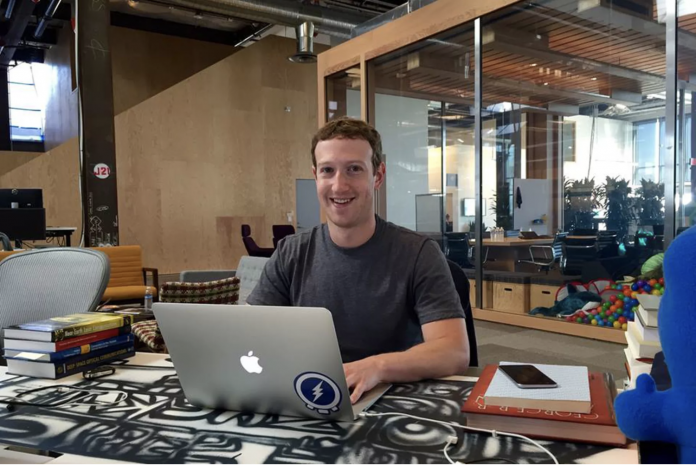
The company is offering up to $5,000 in bonuses for content creators who commit to producing original Reels for Instagram and Facebook, hoping to lure them away from the embattled TikTok. This move demonstrates Meta CEO Mark Zuckerberg’s aggressive strategy to capitalize on TikTok’s vulnerabilities.

The program dubbed the “breakthrough bonus program,” is designed to attract creators with active followings on other platforms. Creators who qualify must post a specific number of Reels on both Facebook and Instagram within a stipulated timeframe, ensuring consistent engagement across Meta’s platforms.

Creators who participate will earn bonuses over 90 days by sharing at least 20 Reels on Facebook and 10 on Instagram. Posts must be spaced across a minimum of 10 different days and must be uploaded exclusively via mobile devices, eliminating the possibility of desktop uploads. The content must also be original and not cross-posted across the two platforms.

This offer targets mid-tier creators rather than major TikTok stars. Meta reportedly offers top creators as much as $50,000 per month to prioritize Reels content, but the new bonus program aims to build momentum among everyday creators, a critical demographic for fostering consistent user engagement.

A Tale of Two Tech Titans

Meta’s aggressive tactics contrast sharply with the stance of X (formerly Twitter) owner Elon Musk. Musk recently expressed his opposition to banning TikTok in the U.S., despite acknowledging that such a ban might benefit his platform.

In a public statement, Musk said: “In my opinion, TikTok should not be banned in the USA, even though such a ban may benefit the ? platform. Doing so would be contrary to freedom of speech and expression. It is not what America stands for.”

Musk’s statement emphasizes principles of free speech and individual choice, positioning himself as a defender of these ideals. Zuckerberg, on the other hand, has taken a more calculated approach, using TikTok’s legal troubles to bolster Meta’s own platforms. Zuckerberg aims to chip away at TikTok’s dominance in the short-form video space while expanding Instagram and Facebook’s user-generated content ecosystem, by offering financial incentives to creators.

TikTok has faced mounting regulatory scrutiny in the United States, with lawmakers raising concerns about national security risks linked to its Chinese ownership. Earlier this week, the platform experienced a temporary blackout, highlighting its uncertain future. Although an executive order has given TikTok 75 days to secure a U.S.-based buyer, the specter of a potential ban looms large, creating instability for creators who depend on the platform.

Meta’s bonus program comes at a time when creators are exploring alternatives, wary of TikTok’s long-term viability. This uncertainty presents an opening for Meta to attract creators seeking stability, resources, and a large, established user base.

However, Meta’s move underscores Zuckerberg’s larger ambition to dominate the short-form video market, an area where TikTok has led with innovation and cultural relevance. Reels, Meta’s answer to TikTok, has steadily gained traction but still lags behind in terms of user engagement and unique content.

While TikTok has successfully cultivated a strong Gen Z following, Meta’s platforms benefit from their longevity and expansive reach. Meta not only seeks to build a richer content library but also aims to diversify its audience demographics, ensuring relevance across multiple age groups.

Samsung Unveils Galaxy S25 Series With Advanced AI Features, Intensifies Battle With Apple

0

Samsung Electronics has announced the launch of its latest smartphone device, the Galaxy S25 series, featuring enhanced Artificial Intelligence (AI) capabilities and a custom processor designed to deliver top-tier performance.

The Galaxy S25 series comprises three models, Galaxy S25, S25+, and S25 Ultra, continuing the tradition of multiple variants for its flagship launches.

Announcing the launch of the S25 series, Samsung wrote on its website,

“Introducing multimodal Al agents, the Galaxy $25 series is the first step in Samsung’s vision to change the way users interact with their phone and with their world. A first-of-its-kind customized Snapdragon 8 Elite Mobile Platform for Galaxy chipset delivers greater on-device processing power for Galaxy Al’ and superior camera range and control with Galaxy’s next-gen ProVisual Engine.

The greatest innovations are a reflection of their users, which is why we evolved Galaxy Al to help everyone interact with their devices more naturally and effortlessly while trusting that their privacy is secured,” said TM Roh, President and Head of Mobile eXperience Business at Samsung Electronics. “Galaxy $25 series opens the door to an Al-integrated OS that fundamentally shifts how we use technology and how we live our lives.”

The highlight of the Galaxy S25 series is its expanded Galaxy Al suite, which builds on the features introduced with the S24. Samsung’s Al applications aim to transform the phone into a digital personal assistant. These new capabilities allow users to perform tasks across multiple apps seamlessly.

With Galaxy S25 series, users can perform actionable searches with context-aware suggestions for the next steps. The tech giant introduced Al agents with multimodal capabilities that enable the Galaxy S25 to interpret text, speech, images, and videos for interactions that feel natural. Also, the latest smartphone represents a breakthrough in natural language understanding, making everyday interactions easier. Plus, Galaxy S25 makes it frictionless to switch between apps for quick follow-up actions, like sharing a GIF or saving event details, as well as keeping calls organized with call Transcript+ and summary.

In the era of Al, personalization goes hand-in-hand with privacy. On Galaxy S25, the Personal Data Engine powers personalized Al features by safely analyzing users data on-device to deliver highly tailored experiences that reflect their preferences and usage patterns. These insights enable tailored experiences such as searching for an old photo in the Gallery using natural language.

Combined with seven generations of OS upgrades and seven years of security updates, the Galaxy S25 series ensures a reliable and optimized performance over a longer lifespan.

Following the launch of an Artificial Intelligence-powered phone, Samsung’s focus on Al reflects a broader industry trend as tech giants like Apple also push to integrate advanced Al features into their devices. Ben Wood, chief of research at CCS Insight, noted that Samsung is leveraging Al to differentiate its products in a market where hardware innovations have become increasingly incremental.

Notably, Samsung’s deep integration of AI into its mobile devices has no doubt intensified competition with Apple. Recall that last year April, Apple lost ground to Samsung in the smartphone market. While Apple faces challenges in maintaining its position in the smartphone market, the Cupertino giant is integrating AI-powered tools into its product.

Apple CEO Tim Cook sees the introduction of AI to Apple’s suite of products as a transformative leap for the company, which has had a late start in the AI race.

Transcorp Power Plc Shines, Reports 115.27% Growth, Proposes N3.5 Dividend for FY 2024

0

In a year marked by widespread economic uncertainty in Nigeria, Transcorp Power Plc has emerged as a beacon of resilience and growth. The company, a subsidiary of Transnational Corporation Plc, demonstrated remarkable financial performance in its fiscal year 2024, defying the economic downturn that has gripped many sectors of the Nigerian economy.

Transcorp Power reported an impressive 115.27% year-on-year (YoY) increase in revenue, which soared to N305.9 billion. Profit before tax also experienced significant growth, rising by 114.71% YoY to reach N113.287 billion.

This performance is seen as an indication of Transcorp Power’s role as one of Nigeria’s most formidable energy operators. It contributes over 20% of the country’s installed electricity capacity through its gas-fired power plants in Ughelli and Afam, with a combined capacity nearing 2,000 megawatts.

Demonstrating its commitment to rewarding shareholders, the Board of Directors proposed a final dividend of N3.50 per share. When added to the interim dividend of N1.50 per share declared at mid-year, this brings the total dividend for the 2024 fiscal year to N5.00 per share.

The company’s growth story is even more significant when viewed through the radar of Nigeria’s current economic realities, where businesses have been grappling with rising costs, inflation, and currency volatility.

Drivers of Growth

Transcorp Power’s revenue growth was driven by increased energy deliveries, which accounted for over 67% of total revenue. This surge in energy sales, coupled with operational efficiencies, allowed the company to maintain robust profitability despite facing a 145.48% YoY increase in the cost of sales, primarily due to rising natural gas and fuel expenses.

The company also reported a significant improvement in its financial stability. Following the full repayment of its USD loan, its gearing ratio dropped from 64.48% in 2023 to 29.70% in 2024. This substantial reduction in leverage not only strengthens the company’s balance sheet but also positions it for future growth and investment opportunities.

Return on assets increased from 13.53% in FY 2023 to 20.17% in FY 2024, while return on equity rose from 52.25% to 63.19%. These metrics highlight Transcorp Power’s efficiency in utilizing its resources to generate income, reinforcing its reputation as a well-managed entity in a turbulent economy.

Chairman Emmanuel N. Nnorom lauded the company’s resilience and its role in addressing Nigeria’s energy challenges. He said, “Transcorp Power has become one of Nigeria’s most formidable power operators, committed to bridging the energy gap in the country and contributing to the nation’s economic growth. This financial performance reflects our unwavering commitment to our shareholders and stakeholders. We remain steadfast in our pursuit of value creation and assure our investors of continued robust returns.”

Chief Executive Officer Peter Ikenga attributed the company’s success to its strategic investments and disciplined approach to operations.

“Transcorp Power is dedicated to financial discipline and delivering unparalleled value to our stakeholders. Since our public listing, we have maintained consistent growth across all financial metrics, aligning with our mission to deliver value. We are confident in our ability to sustain this trajectory of success,” he stated.

Defying Economic Headwinds

Transcorp Power’s achievements stand out in a year when many companies in Nigeria have struggled under the weight of economic pressures. The company has not only weathered the storms but has also expanded its footprint and strengthened its financial position.

The company has remarkably focused on enhancing electricity supply, driving economic growth, and creating value for Nigeria. This reflects a growth strategy that aligns with the country’s urgent need for reliable energy infrastructure.

Some analysts note that Transcorp Power Plc’s success in FY 2024 is not just a financial milestone but also a symbol of hope in a difficult economic landscape, demonstrating that with the right strategies, companies can thrive even in the most challenging times.

Nigeria Labour Congress, SERAP Oppose Proposed Telecom Tariff Hike, Threaten Action

0

The Nigeria Labour Congress (NLC) has fiercely condemned the recent 50% tariff hike approved by the Nigerian Communications Commission (NCC) for telecommunications operators, calling it an “assault on the welfare of Nigerians.”

Similarly, the Socio-Economic Rights and Accountability Project (SERAP) has issued a stern warning to the federal government, threatening legal action if the hike is not reversed.

The approval, which raises call rates from N12 to N18 per minute, SMS charges from N4 to N6, and data costs from N300 to over N400 per gigabyte, has sparked intense debate among stakeholders, consumer advocacy groups, and ordinary Nigerians. The NLC and SERAP argue that the increase further burdens already overstretched consumers, many of whom are grappling with declining purchasing power amid the country’s severe economic challenges.

In a statement signed by NLC President Joe Ajaero, the labor movement described the hike as “ill-advised,” urging the federal government, NCC, and the National Assembly to halt its implementation. Ajaero noted that the increase disproportionately affects the average Nigerian worker, who already spends approximately 10% of their wages on telecommunication services.

“For a worker earning the current minimum wage of N70,000, this means an increase from N7,000 to N10,500 per month—15% of their salary—a cost that is unsustainable,” the NLC stated.

The union accused the government of prioritizing corporate profits over citizens’ welfare, highlighting the rapid approval of the tariff hike in contrast to the delay in approving the new minimum wage.

“This hike exemplifies the government’s apparent ease in siding with corporate interests rather than addressing the needs of its citizens. We call on Nigerian workers to prepare for collective action, including the possibility of a nationwide boycott of telecommunication services, to compel a reversal of this punitive increase,” the NLC added.

SERAP Threatens Legal Action

The Socio-Economic Rights and Accountability Project (SERAP) has also voiced strong opposition, warning the government to reverse the increase or face a lawsuit.

“The Tinubu administration and telcos must immediately reverse the unlawful increase in calls and data costs. We’ll see in court if the 50% tariff hike is not reversed within 48 hours,” SERAP declared in a statement.

FCCPC and NCC Defend the Hike

In response to the backlash, the Federal Competition and Consumer Protection Commission (FCCPC) stressed the importance of ensuring the tariff increase leads to tangible service improvements.

“Consumers can expect a mandatory disclosure table from their service providers, enabling them to make informed decisions without worrying about unexpected charges,” said Ondaje Ijagwu, FCCPC Director of Corporate Affairs.

The NCC, in its defense, described the hike as a “rationalized adjustment” meant to address the surging operational costs faced by telecom operators due to inflation, foreign exchange volatility, and insecurity. It argued that the 50% increase was more measured than the over 100% initially proposed by operators.

Telcos Caught in the Middle

The development is a reflection of the precarious situation of Nigeria’s telecommunications operators, caught between consumers’ dwindling purchasing power and operational losses. Industry proponents argue that inflation, which has surged from 9% a decade ago to over 30% today, alongside high diesel costs and insecurity, has made business unsustainable.

Speaking on the issue, President of the Association of Telecommunications, Information Technology, Cable Satellite Network Operators and Allied Services Employers’ of Nigeria (ATICEN), Adede John Williams, emphasized the sector’s significant contributions to Nigeria’s economy.

“The telecommunications sector plays a pivotal role in driving foreign direct investment and GDP growth. Collaborative efforts between consumers and operators are essential to ensure sustainable development in the sector,” Williams said.

A legal expert, Frank Tietie, criticized the NCC for failing to hold public inquiries as stipulated under Sections 57 and 58 of the NCC Act.

“There must be public hearings where consumers can represent their grievances and demand accountability. Nigerians deserve a platform to question poor service quality and the lack of investment in sustainable energy alternatives like solar power,” Tietie said.

He dismissed the reliance on diesel as outdated, urging operators to explore green energy solutions. He also pointed to unresolved systemic issues, such as debts between telecom operators and banks over USSD charges, as inefficiencies being unfairly transferred to consumers.