DD
MM
YYYY

PAGES

DD
MM
YYYY

spot_img

PAGES

Home Blog Page 24

West China Cement targets AfriSam in latest Chinese push into Africa’s cement market

0

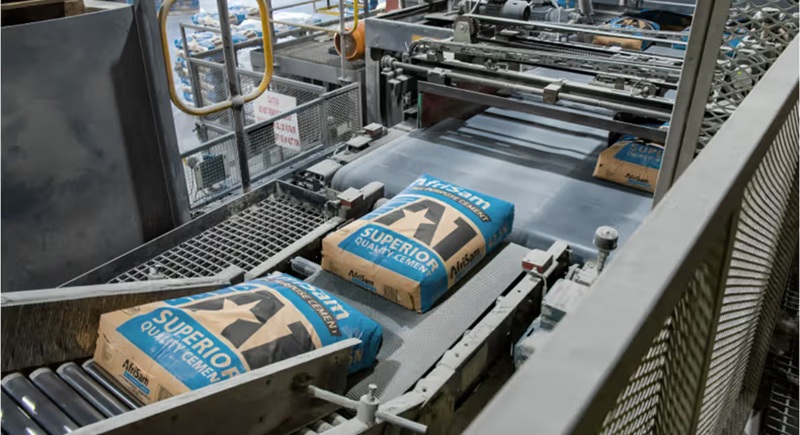
Chinese cement producer West China Cement has moved to acquire South Africa’s AfriSam, highlighting the accelerating drive by Chinese industrial groups to expand across African markets as construction demand weakens at home.

Details of the proposed transaction surfaced in a notice published on December 18 by Botswana’s Competition and Consumer Authority, which invited stakeholders to submit comments “for or against the proposed merger.” The consultation window is expected to close within ten days, potentially paving the way for regulatory assessments across the region. Financial terms of the deal were not disclosed.

According to BI, the proposed buyer is West International New Building Materials, a subsidiary of West China Cement, which is listed on the Hong Kong Stock Exchange. The group is among a growing number of Chinese cement producers seeking overseas growth as China’s prolonged property slump continues to weigh on domestic cement consumption, capacity utilization, and pricing.

China’s cement industry, the world’s largest, has been under pressure from falling housing starts, slowing infrastructure investment, and tighter financial conditions for developers. Against this backdrop, Africa has emerged as an attractive alternative, offering long-term population growth, urbanization, and infrastructure needs that underpin demand for building materials.

The continent has already seen a wave of Chinese investment in the sector. Huaxin Cement last year paid about $1 billion to acquire a controlling stake in Lafarge Africa from Holcim, marking one of the largest Chinese cement deals on the continent. West China Cement itself is no stranger to Africa, with ongoing cement plant developments in Ethiopia and Uganda, signaling a strategy of building scale across multiple markets.

For Chinese groups, acquiring established African assets offers a faster route to market than greenfield projects, providing access to existing distribution networks, limestone reserves, and local expertise.

The Move could reshape Africa’s cement market and intensify pressure on Dangote Cement

The West China Cement’s move is emerging as more than a regional deal, with analysts saying a successful takeover could alter competitive dynamics across Africa’s cement market and, over time, challenge the dominance of Dangote Cement, the continent’s largest producer.

Dangote Cement, controlled by Africa’s richest man, Aliko Dangote, has long faced criticism in Nigeria over the high cost of cement, with consumers, builders, and labor groups accusing the company of market power and pricing that worsens housing affordability.

Dangote has sought to justify domestic pricing by pointing to Nigeria’s heavy tax burden on manufacturers, arguing that it makes locally sold cement more expensive than exports.

“When you look at my invoice, the cement I export is cheaper than the one I’m selling domestically, because that’s how exports work,” Dangote said earlier this month. “In export I’m saving a lot of money. I’m not paying 30% income tax, I’m not paying 2% education, I’m not paying 1% health, I’m not paying 7.5% VAT, and I’m not paying 10% withholding tax.”

Those explanations, however, have done little to ease public anger, particularly as cement prices have climbed alongside broader inflation and currency weakness. Critics argue that limited competition allows dominant producers to pass rising costs onto consumers with little restraint.

West China Cement’s African expansion, including a potential foothold in South Africa through AfriSam, is seen by some industry watchers as part of a longer-term trend that could introduce more aggressive pricing and capacity competition across the continent. Chinese producers, backed by scale, state-linked financing, and experience operating in highly competitive domestic markets, may be willing to accept thinner margins to gain market share.

AfriSam itself is a major but unlisted South African cement producer, with interests spanning cement, aggregates, and ready-mix concrete. Its shareholders include some of South Africa’s most influential financial institutions, among them the Public Investment Corporation, Nedbank, Standard Bank, FirstRand, and Absa, following years of restructuring. These investors have been exploring exit options, creating an opening for a foreign buyer.

South Africa’s cement market is already crowded, with JSE-listed PPC as the largest domestic producer, alongside Lafarge South Africa, owned by Afrimat, and Sephaku Cement, a subsidiary of Dangote Cement. Persistent oversupply, imports, and subdued construction activity have weighed on profitability, making consolidation increasingly attractive.

The timing of the proposed AfriSam deal also aligns with South Africa’s policy ambitions. President Cyril Ramaphosa has repeatedly outlined plans to position the country as a major construction and infrastructure hub, with increased spending on roads, housing, energy, and logistics expected to support cement demand over the medium term.

If regulators approve the acquisition, West China Cement would gain an established platform in one of Africa’s most industrialized economies. Over the longer term, its expanding African footprint is expected intensify competition with incumbents such as Dangote Cement.
U.S. Stock Index Futures Steady after Christmas as Rate-cut Hopes and Earnings Optimism Keep Stocks Near Record Highs

0

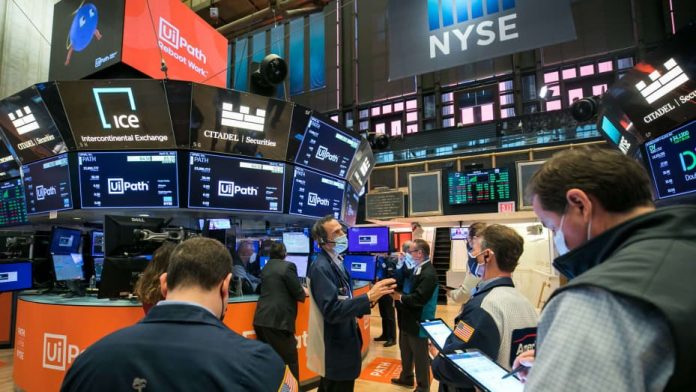
U.S. stock index futures traded quietly in a thin post-Christmas session on Friday, as investors largely stayed on the sidelines while maintaining a broadly optimistic outlook for the year ahead, driven by expectations of interest rate cuts and continued strength in corporate earnings.

The subdued tone followed a strong pre-holiday performance. Both the benchmark S&P 500 and the Dow Jones Industrial Average ended Wednesday’s holiday-shortened session at record highs, capping a rally that has gathered momentum toward the end of the year after months of uneven trading marked by sharp rotations and valuation-driven pullbacks.

By 6:13 a.m. ET on Friday, S&P 500 E-minis were down 2 points, or 0.03 percent. Nasdaq 100 E-minis edged up 6 points, or 0.02 percent, while Dow E-minis fell 55 points, or 0.11 percent. Trading volumes were expected to remain muted, with many institutional investors still away from the market following the Christmas break.

Recent gains have come after a volatile stretch earlier in the year, when stocks, particularly those tied to artificial intelligence, came under pressure amid concerns that soaring valuations and heavy capital spending could squeeze profit margins. Those worries triggered intermittent selloffs and raised questions about whether the AI-driven rally had run too far, too fast.

Sentiment has since improved. Economic data pointing to continued resilience in the U.S. economy, coupled with growing market expectations of a more accommodative monetary stance next year under a new Federal Reserve chair, have helped steady investor nerves. That shift, alongside renewed interest in AI-linked stocks, has lifted all three major indexes—the S&P 500, the Dow, and the Nasdaq Composite—putting them on track for a third straight year of gains.

The S&P 500 has risen more than 17 percent so far in 2025. While megacap technology stocks powered much of that advance earlier in the year, recent sessions have seen the rally broaden, with investors rotating into more economically sensitive sectors such as financials and materials. Market participants often view such broadening as a sign that confidence is spreading beyond a narrow group of high-growth names.

Traders are also watching closely to see whether the market delivers a so-called “Santa Claus rally,” a seasonal pattern in which the S&P 500 tends to gain during the final five trading days of the year and the first two sessions of January, according to the Stock Trader’s Almanac. That period began on Wednesday and will run through January 5, offering a brief window to test whether seasonal optimism carries through to the start of the new year.

In premarket trading, Nvidia shares rose 0.7 percent after the AI chip designer said it would license chip technology from startup Groq and hire its chief executive officer, underscoring the intense competition for both technology and talent in the AI sector. Micron Technology added 2 percent, extending its strong run this month. The stock is up nearly 22 percent in December, buoyed by upbeat earnings forecasts and expectations of robust demand for memory chips used in AI and data centre applications.

Elsewhere, Biohaven shares fell 13.4 percent after the company said its experimental depression drug failed to meet the main goal of a mid-stage trial, deepening a difficult year marked by multiple clinical and commercial setbacks. Coupang, by contrast, jumped 6.2 percent after the online retailer said all customer information leaked from its South Korean operations had been deleted by the suspect, easing investor concerns over potential regulatory or reputational damage.

Precious metal miners also advanced, tracking fresh record highs in gold and silver prices. U.S.-listed shares of companies such as First Majestic, Coeur Mining, and Endeavour Silver rose between 2.8 percent and 4.4 percent, as falling interest rate expectations continued to support demand for bullion and related equities.

With the year drawing to a close, markets appear caught between caution and optimism. Thin holiday trading has kept price moves contained, but the broader narrative remains intact: investors are increasingly betting that easing monetary policy, steady economic growth, and solid earnings will extend Wall Street’s rally into 2026, even as questions around valuations and sector leadership linger beneath the surface.

Syria to Begin Replacing Assad-Era Banknotes in 2026 as New Government Tries to Stabilize Currency

0

Syria will begin swapping old banknotes for newly issued ones from January 1, 2026, in a major currency overhaul aimed at stabilizing the Syrian pound and signaling a clean break from the Assad era, Central Bank Governor Abdelkader Husrieh said on Thursday.

The move is part of a broader effort by Syria’s new government, led by President Ahmed al-Sharaa, to overhaul state institutions and chart a new economic course after more than a decade of war, sanctions, and international isolation left the country’s finances in deep distress.

“The central bank has been given authority to decide the deadline for the swap and its locations,” Husrieh said, adding that the bank would issue detailed instructions to guide the public through the process.

People familiar with the plan told Reuters in August that Syria intends to introduce redesigned banknotes that remove two zeros from the currency, a redenomination aimed at restoring confidence in a pound that has been severely devalued. The currency has been weakened by years of conflict, the collapse of domestic production, shrinking foreign reserves, and tight sanctions imposed during Bashar al-Assad’s rule.

The redesign would also carry strong symbolic weight. Assad fled Syria in December 2024 for Russia after rebel forces seized Damascus in an eight-day offensive, ending six decades of his family’s rule. His downfall came more than 13 years after an uprising spiraled into a devastating civil war that fractured the country and crippled its economy.

Since then, Syria’s new leadership has sought to distance itself from the political and economic legacy of the Assad era. Officials have spoken openly about reshaping governance, restoring credibility to public institutions, and pursuing policies meant to stabilize prices and revive trade.

Earlier this month, Syrians marked the first anniversary of Assad’s overthrow with celebrations in major cities, reflecting cautious optimism that the country may finally be turning a page after years of hardship.

The currency swap is unfolding alongside diplomatic efforts to reposition Syria internationally. The new government has moved to rekindle ties with the United States after years of hostility, viewing improved relations with Washington as critical to easing sanctions, attracting investment, and reconnecting Syria to the global financial system. While sanctions relief remains limited and conditional, officials see institutional reforms, including changes to the monetary system, as necessary steps toward rebuilding trust abroad.

The central bank governor said concerns raised by some bankers and economists about the potential inflationary impact of issuing new notes were being taken seriously. Critics have warned that redenomination, if poorly executed, could worsen inflation and further erode purchasing power for Syrians already struggling with high prices and low wages.

Husrieh said the operation would be carried out in a “smooth and orderly” manner, stressing that it is designed as a technical exchange rather than a devaluation. He said a press conference will be held on December 27 to “explain all the details of the replacement process and deadlines,” in an effort to avoid confusion or panic.

Syria’s pound has lost most of its value over the past decade, forcing daily transactions to be conducted with large volumes of low-denomination notes and undermining confidence in the currency. Removing zeros would simplify accounting and cash transactions, but economists say the long-term impact will depend on whether the government can address deeper structural problems, such as weak output, scarce foreign currency, and limited access to international markets.

Replacing Assad-era banknotes is both an economic measure and a political statement for the new government in power. It underscores an attempt to redefine Syria’s leadership and economic trajectory while aligning domestic reforms with a cautious reopening to the outside world, including the United States.

U.S. Launches Strikes on Terrorists in Northwest Nigeria, Trump Says

0

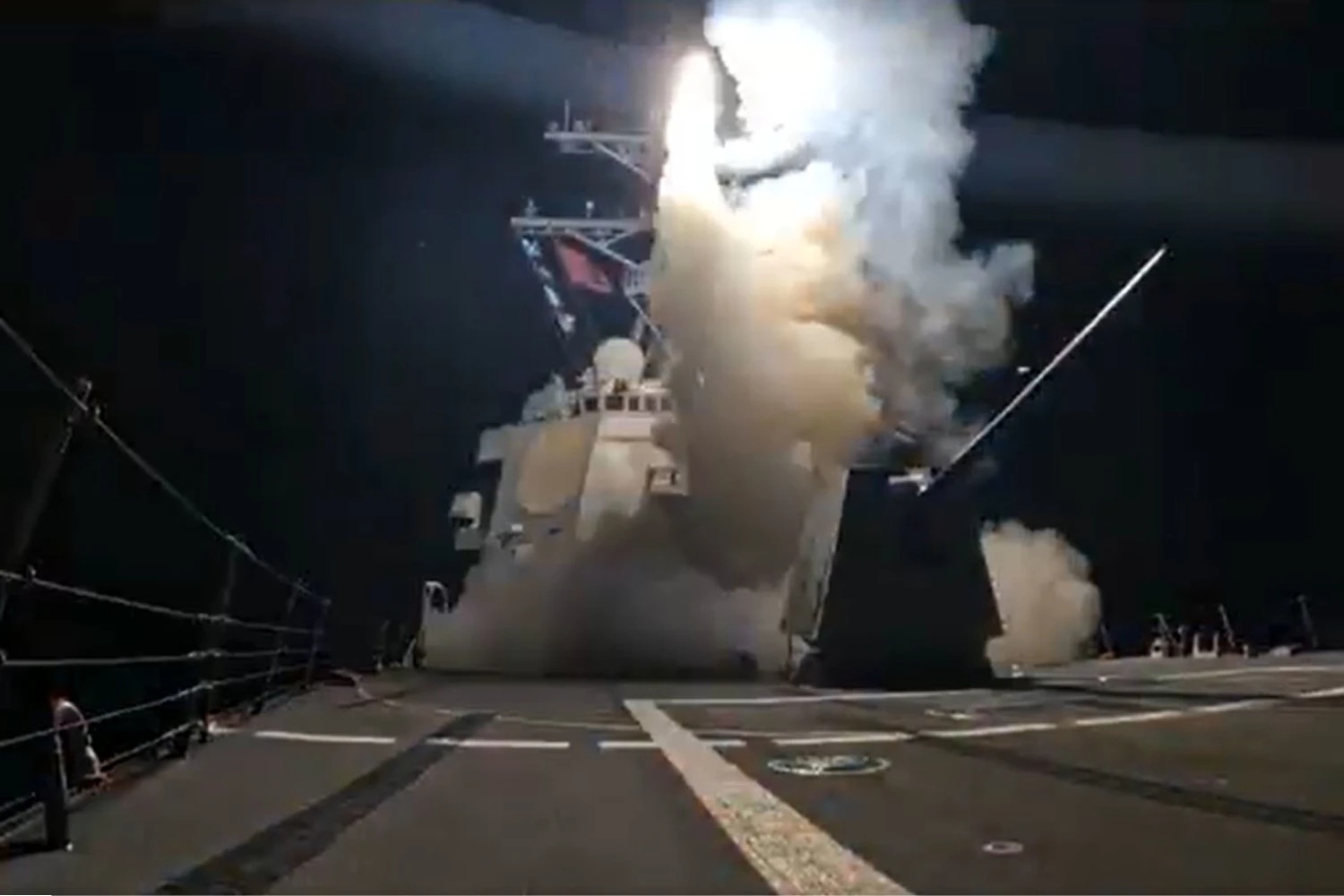
The United States has carried out a military strike targeting Islamic terrorists in northwest Nigeria, President Donald Trump said on Thursday, marking a rare publicly acknowledged U.S. military action in that part of the country and sharpening Washington’s focus on Nigeria’s security crisis.

“Tonight, at my direction as Commander in Chief, the United States launched a powerful and deadly strike against ISIS Terrorist Scum in Northwest Nigeria,” Trump said in a post on his Truth Social platform.

He said the fighters had “targeted and viciously” killed civilians, adding that the victims were “primarily, innocent Christians,” and claimed the scale of the killings had not been seen “for many years, and even Centuries!”

Trump framed the strike as a response to earlier warnings he said he had issued to the group.

“I have previously warned these Terrorists that if they did not stop the slaughtering of Christians, there would be hell to pay, and tonight, there was,” he said.

The U.S. military’s Africa Command (AFRICOM), which oversees American operations on the continent, confirmed the strike in a separate statement on X. AFRICOM said the operation was carried out at the request of Nigerian authorities and resulted in the deaths of “multiple ISIS terrorists.” It did not provide further details on the exact location, the number of casualties, or the assets used in the strike.

The operation follows comments made by Trump weeks earlier, when he said he had ordered the Pentagon to begin planning for possible military action in Nigeria. Those remarks were linked to his administration’s public emphasis on alleged persecution of Christians in parts of the country, an issue Trump has repeatedly highlighted in statements and online posts.

In Washington, the issue of violence against Christians in Nigeria has been the subject of sustained discussion on Capitol Hill. Over the past months, U.S. lawmakers have held hearings and briefings examining reports of mass killings in central and northern Nigeria. This has led to the U.S. designating Nigeria as a “country of particular concern.”

Lawmakers have cited repeated attacks in rural communities, particularly in Plateau and Benue states, where armed groups have carried out raids that local leaders and church officials say have disproportionately affected Christian farming communities.

Nigeria’s government has pushed back against that framing, saying violence across the country is driven by a complex mix of insurgency, banditry and communal conflict, and that armed groups attack both Muslim and Christian communities. Nigerian officials have also said U.S. assertions focusing narrowly on Christian persecution overlook ongoing efforts by security forces to restore stability and protect freedom of worship in affected regions.

The U.S. strike also comes amid a tougher diplomatic posture from Washington. The U.S. State Department recently announced visa restrictions on Nigerians, adding to earlier restrictions imposed on those found to be involved in mass killings or violence against Christians, a move that underscored the administration’s willingness to pair security cooperation with targeted sanctions.

While U.S. forces have long supported Nigeria through intelligence sharing, training and limited counterterrorism assistance, direct American strikes inside the country are uncommon and politically sensitive. AFRICOM’s statement that the operation was conducted at Nigeria’s request suggests close coordination between the two governments, even as public narratives around the causes of violence continue to diverge.

The Nigeria government says President Bola Tinubu approved the US strikes. Foreign Affairs Minister, Yusuf Tuggar, said on Friday on Channels Television’s Sunrise Daily, that it was Nigeria that provided intelligence for the US.

“We spoke with US Secretary of State Marco Rubio twice: once 19 minutes before the strike and another time 5 minutes before it went on,” he said.

He explained that as a multi-religious country, Nigeria is working with partners like the US to fight terrorism and safeguard the lives and properties of Nigerians.

“Now that the US is cooperating, we would do it jointly, and we would ensure, just as the President emphasized yesterday before he gave the go-ahead, that it must be made clear that it is a joint operation, and it is not targeting any religion nor simply in the name of one religion or the other,” the minister added.

However, the U.S. strike has sparked debate over sovereignty. Some Nigerians have sounded alarm about the precedent set by foreign military action on Nigerian soil, even when carried out with Abuja’s consent. But others have countered that Nigeria itself has recently taken similar cross-border security actions. Early this month, Nigeria launched air strikes in neighboring Benin Republic, targeting coup plotters who attempted to take over government.

Foxtron Launches Bria EV in Taiwan, Marking Island’s First Globally Exported Electric Model

0

Foxtron Vehicle Technologies, the electric vehicle joint venture between iPhone assembler Hon Hai Precision Industry (Foxconn) and Taiwanese automaker Yulon Motor, officially unveiled its Bria electric crossover on Thursday, positioning it as Taiwan’s first domestically produced EV designed for global export.

The launch event in Taipei highlighted the model’s role in elevating Taiwan’s automotive industry on the world stage, leveraging the island’s strengths in electronics and manufacturing to challenge established players in the booming EV market. The Bria, a rebranded and refined version of Foxtron’s earlier Model B concept, will launch with three variants priced between NT$938,000 ($28,600) and NT$1.198 million ($36,540), targeting the compact SUV segment dominated by models like the Tesla Model Y and Hyundai Ioniq 5.

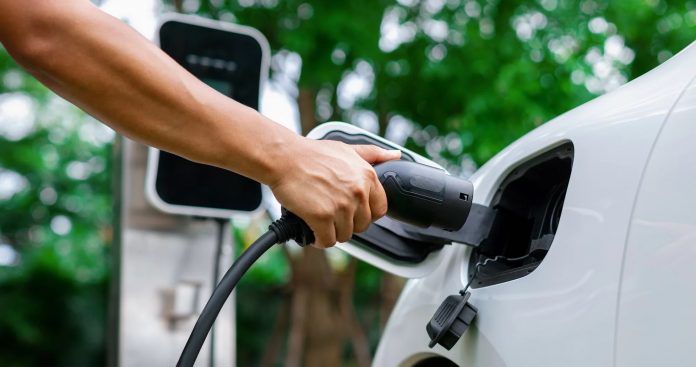
All three models utilize a 57.7-kilowatt-hour lithium iron phosphate battery pack, offering a maximum range of up to 516 kilometers under the Worldwide Harmonized Light Vehicles Test Procedure (WLTP). Deliveries in Taiwan are scheduled to begin in the first half of 2026, with export markets—including Southeast Asia, Europe, and select emerging regions—to follow pending regulatory homologation and certification processes. The Bria features a modern, aerodynamic design with a closed grille, slim LED headlights, and a sleek profile optimized for efficiency.

Built on Foxtron’s proprietary MIH (Mobility in Harmony) open-source platform, a modular EV architecture developed since 2021, the vehicle incorporates advanced driver assistance systems, fast charging capabilities (supporting 30-80% in about 30 minutes via DC fast chargers), and integrated infotainment drawing from Foxconn’s electronics expertise. Interior highlights include a spacious cabin for five passengers, a 15-inch central touchscreen, and customizable ambient lighting, with emphasis on premium materials and user-centric tech like over-the-air updates.

The launch coincides with Foxtron’s acquisition of Yulon Motor’s struggling Luxgen passenger-car brand for NT$787.6 million ($24.95 million), announced last week. The deal transfers 100% ownership of Luxgen, encompassing its five sales subsidiaries, a nationwide network of over 100 dealerships, service centers, and associated employees, totaling around 1,200 staff. Foxtron will integrate Luxgen’s infrastructure to establish a comprehensive EV ecosystem in Taiwan, covering research and development, manufacturing at its Kaohsiung facility, sales channels, and after-sales services, including warranty and parts distribution.

Foxtron aims to build a more complete electric vehicle value chain in Taiwan, the company stated in a press release, emphasizing vertical integration to accelerate local EV adoption and support export ambitions.

The acquisition also provides Foxtron with Luxgen’s established brand recognition in Taiwan, where it has sold over 500,000 vehicles since 2009, despite recent sales declines due to competition from imports.

Foxconn holds a 45.6% stake in Foxtron, Yulon 43.8%, with the remainder distributed among minority investors like Foxconn affiliates and strategic partners. The venture operates a contract manufacturing model under the MIH platform, designing and producing EVs for third-party brands while developing proprietary models.

Beyond Bria, Foxtron’s lineup includes the Model C (seven-seater SUV), Model T (electric bus, already deployed in Taiwan’s public transit), and Model E (luxury sedan prototype). The company has secured contracts with international clients, including a paused deal with Fisker and prior work with Lordstown Motors, but Bria marks its first consumer-branded push into global markets.

Foxtron’s strategy aligns with Taiwan’s national goals to become an EV hub, supported by government incentives like the NT$7,000-9,000 per kWh battery subsidies and targets for 100% EV sales by 2040. The island’s semiconductor prowess—home to TSMC—positions it for strengths in EV chips and batteries, with Foxtron collaborating on solid-state battery tech.

Market Context

Taiwan’s EV market remains nascent, with penetration at around 3-4% in 2025 (up from 1% in 2023), dominated by imports from Tesla, market leader with ~40% share, BMW, Mercedes, and emerging Chinese brands like BYD. Domestic production has been limited, with Luxgen’s earlier EVs like the n7 struggling due to range anxiety and charging infrastructure gaps. There are only about 5,000 public stations nationwide.

Bria’s launch, backed by Luxgen’s dealerships and Foxconn’s supply chain, which sources batteries from CATL and components globally, aims to boost local adoption while targeting exports to markets like Thailand, Indonesia, and the EU, where demand for affordable, tech-laden EVs is surging. The move comes amid global EV transitions, with Taiwan exporting $1.2 billion in auto parts in 2025 but minimal complete vehicles.

Analysts project Bria sales of 10,000-15,000 units in its debut year, potentially expanding to 50,000 annually by 2028 with overseas assembly partnerships.

Shares in Foxtron rose 2.1% on the announcement, closing at NT$45.60, while Foxconn gained 1.4% to NT$188 and Yulon 0.8% to NT$72.50 in Taipei trading. The acquisition and launch are seen as catalysts for Foxconn’s diversification beyond Apple, which accounts for 50% of revenue, targeting 10% of global EV contract manufacturing by 2030 amid slowing smartphone growth.