
DD
MM
YYYY

PAGES

DD
MM
YYYY

spot_img

PAGES

Home Blog Page 24

Saylor’s Strategy Swings From Billions in Losses to Profit as Bitcoin Reclaims $80K

0

Michael Saylor’s Bitcoin strategy has moved dramatically back into positive territory, highlighting both the enormous upside and extraordinary volatility attached to Strategy’s aggressive digital-asset accumulation.

According to Lookonchain data, Strategy swung from more than $9.5 billion in unrealized losses to over $4.7 billion in unrealized profit within a single week, as Bitcoin’s powerful rally lifted the value of its holdings.

The reversal is a striking example of how quickly Bitcoin’s price movements can reshape the financial position of one of the world’s most prominent corporate Bitcoin holders.

Strategy, formerly known as MicroStrategy, has spent years accumulating Bitcoin and positioning the cryptocurrency as its primary treasury reserve asset.

That strategy has produced spectacular gains during Bitcoin’s strongest rallies, but it has also exposed the company to substantial paper losses whenever the market turns lower. The latest move demonstrates the other side of that equation.

As Bitcoin recovered sharply and pushed above the $80,000 level, the value of Strategy’s enormous Bitcoin holdings increased rapidly. A position that had recently appeared deeply underwater suddenly moved into billions of dollars of unrealized profit.

The development represents more than a temporary improvement in a corporate balance sheet. It reinforces his long-standing argument that Bitcoin should be viewed as a scarce digital asset capable of appreciating significantly over long periods.

Strategy’s approach has effectively transformed the company into a publicly traded vehicle with substantial sensitivity to Bitcoin’s price. However, the size of the recent swing also illustrates the risks involved.

A movement from a $9.5 billion paper loss to a $4.7 billion gain in just one week represents a swing of more than $14 billion. That magnitude demonstrates how quickly market sentiment and cryptocurrency prices can alter Strategy’s financial position.

The key question now is whether Bitcoin can maintain its footing above $80,000. If the cryptocurrency continues climbing, Strategy’s unrealized gains could expand considerably, strengthening the narrative surrounding its Bitcoin treasury strategy.

Higher Bitcoin prices could improve investor confidence in the company and potentially increase its ability to raise capital for additional acquisitions.

The opposite scenario would be equally significant. A sustained decline below $80,000 could quickly reduce the cushion created by the recent rally.

Because Strategy’s exposure to Bitcoin is so large, even relatively modest percentage declines in the cryptocurrency can translate into billions of dollars in changes to the value of its holdings.

This makes Strategy an important barometer for the broader institutional Bitcoin trade. Its experience shows that corporate Bitcoin adoption can generate extraordinary returns, but those returns come with equally extraordinary volatility.

Unrealized profits are not the same as realized cash gains. Strategy’s improved position provides a valuation cushion, but that cushion remains tied to Bitcoin’s price. Until holdings are sold, the reported profit can expand or disappear as quickly as markets change.

Saylor’s return from billions in paper losses to billions in profit is a reminder that Bitcoin’s market cycles can move with remarkable speed. The turnaround may strengthen Strategy’s conviction, but it does not eliminate the underlying risk or its exposure to volatility.

For now, the company is back in the green. Whether that cushion becomes a durable advantage or another temporary milestone will depend heavily on Bitcoin’s ability to remain above $80,000 and sustain its broader upward trajectory.

X Plans Crypto Buy and Sell Features, Opening Direct Trading to 600M+ Users

0

Elon Musk-owned social media platform X is moving closer to letting users trade cryptocurrencies without leaving the app.

On August 25, 2026, Nikita Bier, the former head of product at X who now serves in an advisory role, confirmed that trade buttons will soon be added to the platform’s Cashtags feature.

Bier made the remarks while responding to accusations that he had limited the visibility of crypto-related accounts. In his reply, he highlighted the tools he helped introduce for traders.

“I literally built Cashtags, allowing people to add Solana and Ethereum charts directly into posts, with trade buttons coming soon,” he wrote. “You can even paste contract addresses for newly minted tokens. There wasn’t a single feature on X for crypto traders until I joined.”

Cashtags first launched on X in April 2026 for iPhone users in the United States and Canada. The feature lets users embed live price charts for Solana and Ethereum directly into posts.

Tapping a cashtag or a contract address displays the chart alongside related discussions on the platform, so users no longer need to switch apps to check prices or context. Support for pasting new token contract addresses has already made it easier to verify and discuss freshly launched assets.

The planned trade buttons represent the next step. Once available, users would be able to initiate buys or sells from within a post or chart view. X has previously clarified that it does not plan to act as a brokerage or execute trades itself.

Instead, the buttons are expected to connect users to external partners or existing financial tools while keeping the experience inside the X app.

This is not the first time the idea has surfaced. Bier and the X team have discussed integrated trading options multiple times since early 2026, starting with “Smart Cashtags” announcements in January and February.

What ultimately shipped in April focused on charts and data rather than full trading functionality. The latest statement has renewed interest among users who want a more seamless path from discovering a token on their timeline to acting on it.

Some users joked that the feature could see millions of people quickly experience the volatility of crypto markets. In contrast, others suggested that its arrival signals a broader shift toward mainstream cryptocurrency adoption.

Several other users emphasized the move’s potential significance for crypto adoption, describing the integration as a major step that could bring digital-asset trading to a much broader audience.

Notably, this feature fits directly into Elon Musk’s long-standing ambition to transform X from a social media platform into an “everything app”—a vision he highlighted when he acquired Twitter for $44 billion in 2022.

Recall that Musk described the acquisition as an “accelerant” toward building X, with the broader concept modeled partly on China’s WeChat, where users can communicate, make payments, shop, and access financial services within one platform.

The planned crypto trading buttons represent another step in that direction. By allowing users to buy and sell digital assets directly from Cashtags and their timelines, X would move beyond simply providing financial information and into facilitating transactions.

The move also follows X’s broader expansion into financial services. The platform has introduced X Money, which provides features such as peer-to-peer transfers and a Visa debit card, reinforcing Musk’s goal of making X a platform where users can manage more aspects of their financial lives.

In this context, crypto trading could become an important component of X’s evolution. Rather than forcing users to leave the platform to access an exchange, X could eventually combine social discussions, real-time market information, payments, and trading within the same ecosystem.

No exact launch date or full list of supported assets has been announced. Coverage of Cashtags remains limited to certain markets and devices for now, so any trading feature would likely expand in stages.

Still, Bier’s comments have drawn attention across crypto circles, with many viewing the update as a logical extension of the tools already in place.

As X continues refining its financial features, the combination of charts, contract lookups, and eventual trade buttons could make the platform a more complete environment for following and acting on crypto markets in real time.

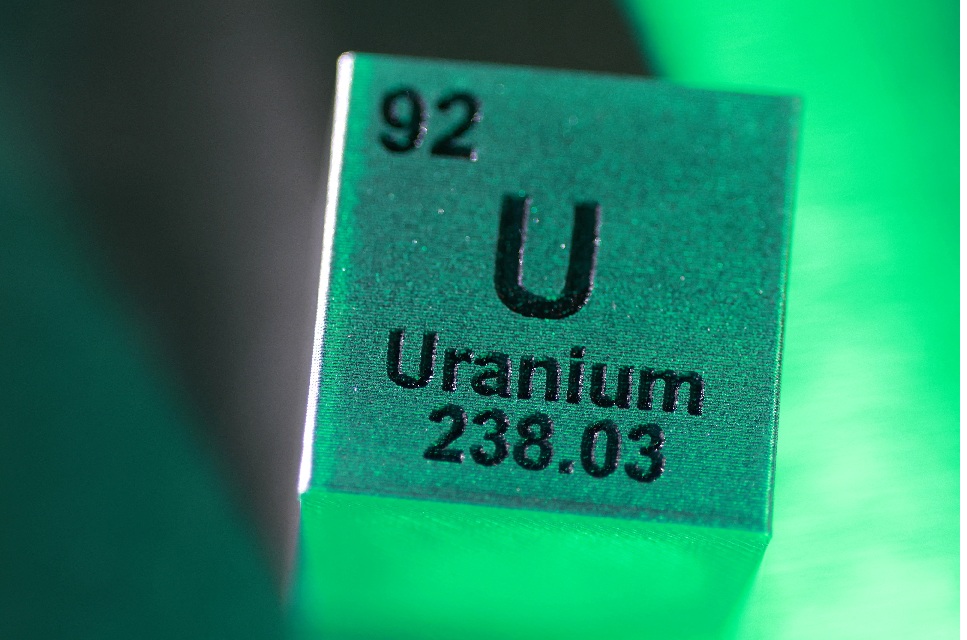
Uranium Hits Seven-Month Highs as Nuclear Demand Gains Momentum

0

Uranium prices are climbing toward their strongest levels in months, highlighting renewed investor interest in nuclear energy as governments, utilities and technology companies search for reliable sources of electricity.

The rally reflects a combination of tightening supply expectations, growing nuclear ambitions and rapidly rising power demand from artificial intelligence infrastructure.

Uranium traded around $88.85 per pound on August 21, 2026, representing a 3.62% increase over the previous month and nearly 20% growth from the same period a year earlier. Futures also reached roughly $89.40 per pound in August, reinforcing the strength of the recent recovery.

The latest move is particularly significant because uranium has experienced considerable volatility this year. Prices briefly moved above $100 per pound in January before retreating.

The renewed advance suggests that the fundamental investment story surrounding nuclear fuel remains intact despite periodic corrections. One of the most important forces supporting uranium demand is the global expansion of artificial intelligence.

Data centers require enormous quantities of electricity and, unlike many conventional computing facilities, AI infrastructure needs dependable power around the clock. This has increased interest in nuclear generation, which can provide large-scale baseload electricity without the intermittency associated with wind and solar power.

Technology companies are increasingly becoming participants in the nuclear-energy market. Major corporations have pursued long-term electricity agreements, supported reactor restarts and invested in advanced nuclear technologies.

These developments create a potential bridge between the AI boom and uranium demand because every additional reactor requires nuclear fuel. Supply concerns are another major factor. Uranium production cannot be expanded quickly.

Developing a new mine, securing financing, obtaining regulatory approval and constructing the necessary infrastructure can take many years. This creates an unusual dynamic in which rising demand today can create price pressure long before additional supply reaches the market.

Long-term uranium contracting is also providing an important signal. Industry indicators show long-term prices around the mid-to-high $90s per pound, above spot prices near $88.

The premium suggests that utilities are willing to pay more to secure future supplies, reflecting concerns about the availability of sufficient uranium over the coming years.

The geopolitical dimension further complicates the market. Uranium supply chains remain concentrated among a relatively small number of major producers, while governments increasingly view nuclear fuel as a strategic commodity.

Energy security concerns following disruptions in global commodity markets have encouraged countries to diversify supply and strengthen domestic nuclear capabilities.

For investors, the uranium rally extends beyond the commodity itself. Higher uranium prices can improve the economics of mining companies, exploration firms and developers, particularly those holding high-grade deposits.

The Athabasca Basin in Canada, for example, has attracted renewed attention as companies advance projects designed to supply future nuclear demand.

The rally is not without risks. Uranium prices can be volatile, nuclear projects often face regulatory and construction delays, and higher prices could eventually incentivize additional production. Investors must also distinguish between short-term speculative momentum and the longer-term fundamentals of nuclear fuel demand.

Uranium’s move toward seven-month highs illustrates how dramatically the energy landscape is changing. AI is increasing electricity consumption, governments are reconsidering nuclear power and utilities are competing for secure fuel supplies.

If these trends continue, uranium could remain one of the most closely watched commodities in the global energy market, positioning nuclear fuel at the intersection of technology, energy security and the next phase of industrial growth.

Stanley Druckenmiller Challenges Treasury’s Bond Buyback Strategy

0

Stanley Druckenmiller has publicly challenged his former protégé, Treasury Secretary Scott Bessent, over the US government’s decision to significantly expand its bond buyback program.

In a Wall Street Journal op-ed, the veteran investor argued that governments struggle when they attempt to override market fundamentals, warning that efforts to suppress long-term borrowing costs could weaken one of the most important forms of fiscal discipline.

The Treasury plans to increase the maximum size of individual bond buyback operations from $2 billion to $4 billion beginning September 9. The move comes as financial markets confront growing concerns about the scale of US government borrowing.

The 30-year Treasury yield recently reached its highest level in nearly two decades, while America’s national debt has surpassed $40 trillion. For Bessent, larger buybacks can provide the Treasury with greater flexibility in managing the government’s enormous debt portfolio.

By purchasing existing securities, the department can potentially improve market liquidity and adjust the maturity structure of outstanding debt. The policy is therefore being presented as a tool for more effective debt management rather than a direct attempt to control interest rates.

Druckenmiller sees a broader danger. His argument rests on the idea that long-term Treasury yields perform an important economic function: they act as a market-based constraint on government spending and borrowing. When investors demand higher yields to compensate for inflation.

Fiscal deficits or rising debt risks, those higher borrowing costs send a signal to policymakers. Interfering with that signal, Druckenmiller argues, could create more problems than it solves. If government actions successfully push yields lower without addressing the underlying fiscal pressures.

Policymakers may receive less pressure from financial markets to confront America’s debt trajectory. The result could be weaker fiscal discipline at precisely the moment when debt sustainability is becoming a greater concern.

The market’s initial response appears to have reinforced some of these questions. Treasury yields declined following the buyback announcement, but the effect quickly faded as yields climbed again.

That reaction suggests that investors remain focused on the fundamental forces driving long-term rates, including inflation expectations, government borrowing requirements and the future path of monetary policy.

The disagreement is particularly notable because Druckenmiller and Bessent share a history. Druckenmiller was an influential mentor to Bessent during his career in finance, making the public criticism more significant than an ordinary disagreement between market participants.

It also highlights a wider debate confronting Washington: whether policymakers should actively manage market pressures or allow financial markets to impose their own discipline.

Attention is now turning toward the Federal Reserve and Kevin Warsh’s expected remarks at Jackson Hole. His comments could provide important clues about the direction of monetary policy, inflation risks and the Fed’s assessment of long-term interest rates.

The bond-buyback debate is about more than the size of Treasury operations. It reflects a fundamental question about the relationship between government policy and financial markets. As US debt continues to expand.

Investors may become increasingly unwilling to accept policies that appear to suppress market signals without addressing the underlying fiscal imbalance. Druckenmiller’s warning therefore reaches beyond the immediate buyback program: markets may tolerate intervention temporarily, but fundamentals tend to reassert themselves.

SEC Scrutiny and Warsh’s Jackson Hole Test: Markets Face a New Risk Crossroads

0

Financial markets are entering a consequential week as regulatory scrutiny of the nearly failed Situational Awareness hedge fund collides with intense anticipation surrounding Federal Reserve Chair Kevin Warsh’s first major speech at the Jackson Hole Economic Policy Symposium.

The two developments are different in nature, but together they highlight growing concerns about financial stability, leverage, monetary policy and the increasingly complicated relationship between technology and capital markets.

The U.S. Securities and Exchange Commission has reportedly subpoenaed major Wall Street banks over their dealings with Situational Awareness, an artificial-intelligence-focused hedge fund that suffered a dramatic collapse in July.

Goldman Sachs, JPMorgan Chase, Citigroup and Bank of America are among the institutions facing requests for information concerning the fund’s trading activities, leverage and communications.

Situational Awareness reportedly lost about 67% of its portfolio value during July as a sharp selloff in semiconductor and artificial-intelligence-related stocks exposed the risks associated with concentrated positions and leverage.

The fund subsequently had to liquidate substantial public-equity holdings. The SEC investigation does not necessarily imply wrongdoing by the fund or the banks involved, but regulators are clearly interested in understanding how the trades were financed, how margin calls developed and whether the institutions properly managed their exposure.

The episode carries broader implications for markets. AI has become one of the strongest investment narratives of the current cycle, attracting enormous amounts of institutional capital. A highly leveraged fund suffering such a rapid deterioration demonstrates how quickly a market correction can move from falling asset prices to forced selling, margin pressure and counterparty risk.

Investors are turning toward Jackson Hole, where Warsh is scheduled to deliver his first major address as Fed chair later this week. The symposium runs from August 27 to 29, with Warsh’s keynote expected to receive exceptional attention because markets are searching for clearer guidance on the Federal Reserve’s policy direction.

The central question is whether Warsh will provide greater clarity about inflation, interest rates and the Fed’s approach to financial conditions. Bond markets have already experienced significant anxiety, with longer-term Treasury yields under pressure as investors weigh persistent inflation, government borrowing and uncertainty surrounding monetary policy.

Markets will therefore scrutinize every aspect of Warsh’s message. A firm commitment to controlling inflation could support the dollar and Treasury yields while putting pressure on equities and other risk assets. Conversely, signals that the Fed is prepared to become more accommodative could strengthen stocks, cryptocurrencies and other assets sensitive to liquidity.

The timing is particularly important. Investors are attempting to price the Federal Reserve’s next policy decision while simultaneously dealing with concerns about stretched valuations, AI-related concentration and broader financial-market leverage.

The SEC’s investigation and Warsh’s Jackson Hole speech represent two sides of the same market challenge. Regulators are examining what happens when leverage and concentrated bets fail, while investors are waiting to discover how monetary policy will shape the environment in which those risks develop.

This week could therefore become an important test for market confidence. The SEC’s scrutiny may reveal vulnerabilities beneath the AI investment boom, while Warsh’s speech could determine whether investors perceive the broader financial environment as becoming safer or more uncertain.

For markets already balancing inflation, debt, technology valuations and monetary-policy expectations, both stories deserve close attention.