

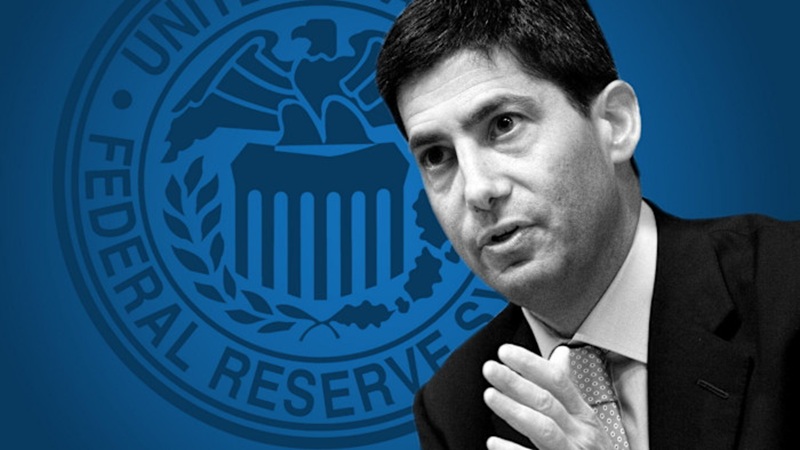
Stanley Druckenmiller has publicly challenged his former protégé, Treasury Secretary Scott Bessent, over the US government’s decision to significantly expand its bond buyback program.
In a Wall Street Journal op-ed, the veteran investor argued that governments struggle when they attempt to override market fundamentals, warning that efforts to suppress long-term borrowing costs could weaken one of the most important forms of fiscal discipline.
The Treasury plans to increase the maximum size of individual bond buyback operations from $2 billion to $4 billion beginning September 9. The move comes as financial markets confront growing concerns about the scale of US government borrowing.
Register for the next Tekedia Mini-MBA.
Register for Tekedia AI in Business Masterclass.
Join Tekedia Capital Syndicate and co-invest in great global startups.
The 30-year Treasury yield recently reached its highest level in nearly two decades, while America’s national debt has surpassed $40 trillion. For Bessent, larger buybacks can provide the Treasury with greater flexibility in managing the government’s enormous debt portfolio.
By purchasing existing securities, the department can potentially improve market liquidity and adjust the maturity structure of outstanding debt. The policy is therefore being presented as a tool for more effective debt management rather than a direct attempt to control interest rates.
Druckenmiller sees a broader danger. His argument rests on the idea that long-term Treasury yields perform an important economic function: they act as a market-based constraint on government spending and borrowing. When investors demand higher yields to compensate for inflation.
Fiscal deficits or rising debt risks, those higher borrowing costs send a signal to policymakers. Interfering with that signal, Druckenmiller argues, could create more problems than it solves. If government actions successfully push yields lower without addressing the underlying fiscal pressures.

Policymakers may receive less pressure from financial markets to confront America’s debt trajectory. The result could be weaker fiscal discipline at precisely the moment when debt sustainability is becoming a greater concern.
The market’s initial response appears to have reinforced some of these questions. Treasury yields declined following the buyback announcement, but the effect quickly faded as yields climbed again.
That reaction suggests that investors remain focused on the fundamental forces driving long-term rates, including inflation expectations, government borrowing requirements and the future path of monetary policy.

The disagreement is particularly notable because Druckenmiller and Bessent share a history. Druckenmiller was an influential mentor to Bessent during his career in finance, making the public criticism more significant than an ordinary disagreement between market participants.
It also highlights a wider debate confronting Washington: whether policymakers should actively manage market pressures or allow financial markets to impose their own discipline.
Attention is now turning toward the Federal Reserve and Kevin Warsh’s expected remarks at Jackson Hole. His comments could provide important clues about the direction of monetary policy, inflation risks and the Fed’s assessment of long-term interest rates.
The bond-buyback debate is about more than the size of Treasury operations. It reflects a fundamental question about the relationship between government policy and financial markets. As US debt continues to expand.
Investors may become increasingly unwilling to accept policies that appear to suppress market signals without addressing the underlying fiscal imbalance. Druckenmiller’s warning therefore reaches beyond the immediate buyback program: markets may tolerate intervention temporarily, but fundamentals tend to reassert themselves.