

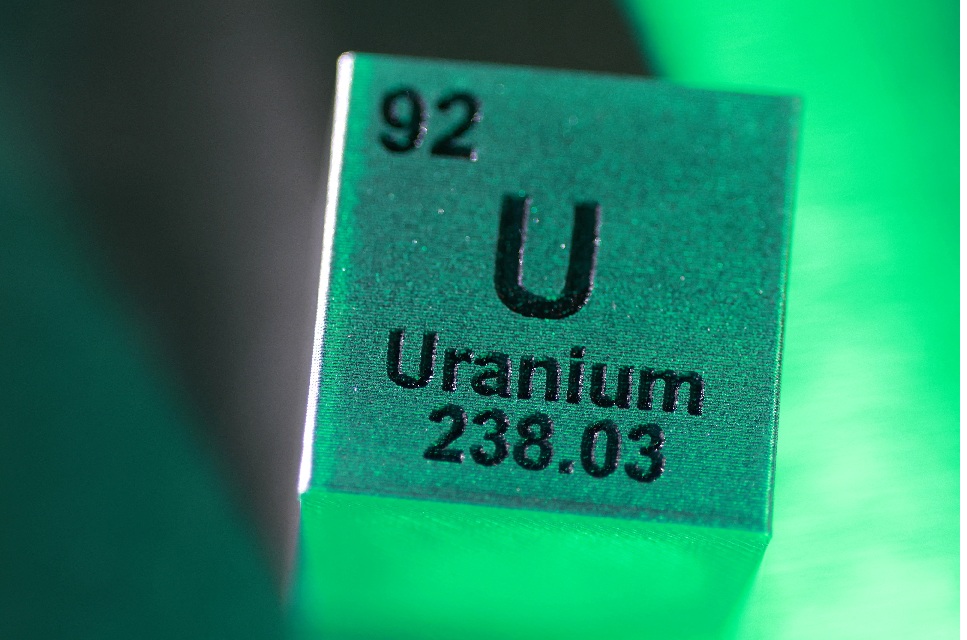
Uranium prices are climbing toward their strongest levels in months, highlighting renewed investor interest in nuclear energy as governments, utilities and technology companies search for reliable sources of electricity.
The rally reflects a combination of tightening supply expectations, growing nuclear ambitions and rapidly rising power demand from artificial intelligence infrastructure.
Uranium traded around $88.85 per pound on August 21, 2026, representing a 3.62% increase over the previous month and nearly 20% growth from the same period a year earlier. Futures also reached roughly $89.40 per pound in August, reinforcing the strength of the recent recovery.
The latest move is particularly significant because uranium has experienced considerable volatility this year. Prices briefly moved above $100 per pound in January before retreating.
Register for the next Tekedia Mini-MBA.
Register for Tekedia AI in Business Masterclass.
Join Tekedia Capital Syndicate and co-invest in great global startups.
The renewed advance suggests that the fundamental investment story surrounding nuclear fuel remains intact despite periodic corrections. One of the most important forces supporting uranium demand is the global expansion of artificial intelligence.
Data centers require enormous quantities of electricity and, unlike many conventional computing facilities, AI infrastructure needs dependable power around the clock. This has increased interest in nuclear generation, which can provide large-scale baseload electricity without the intermittency associated with wind and solar power.
Technology companies are increasingly becoming participants in the nuclear-energy market. Major corporations have pursued long-term electricity agreements, supported reactor restarts and invested in advanced nuclear technologies.

These developments create a potential bridge between the AI boom and uranium demand because every additional reactor requires nuclear fuel. Supply concerns are another major factor. Uranium production cannot be expanded quickly.
Developing a new mine, securing financing, obtaining regulatory approval and constructing the necessary infrastructure can take many years. This creates an unusual dynamic in which rising demand today can create price pressure long before additional supply reaches the market.
Long-term uranium contracting is also providing an important signal. Industry indicators show long-term prices around the mid-to-high $90s per pound, above spot prices near $88.

The premium suggests that utilities are willing to pay more to secure future supplies, reflecting concerns about the availability of sufficient uranium over the coming years.
The geopolitical dimension further complicates the market. Uranium supply chains remain concentrated among a relatively small number of major producers, while governments increasingly view nuclear fuel as a strategic commodity.
Energy security concerns following disruptions in global commodity markets have encouraged countries to diversify supply and strengthen domestic nuclear capabilities.
For investors, the uranium rally extends beyond the commodity itself. Higher uranium prices can improve the economics of mining companies, exploration firms and developers, particularly those holding high-grade deposits.
The Athabasca Basin in Canada, for example, has attracted renewed attention as companies advance projects designed to supply future nuclear demand.
The rally is not without risks. Uranium prices can be volatile, nuclear projects often face regulatory and construction delays, and higher prices could eventually incentivize additional production. Investors must also distinguish between short-term speculative momentum and the longer-term fundamentals of nuclear fuel demand.
Uranium’s move toward seven-month highs illustrates how dramatically the energy landscape is changing. AI is increasing electricity consumption, governments are reconsidering nuclear power and utilities are competing for secure fuel supplies.
If these trends continue, uranium could remain one of the most closely watched commodities in the global energy market, positioning nuclear fuel at the intersection of technology, energy security and the next phase of industrial growth.