Home Blog Page 24

Hyperliquid Price Prediction: HYPE Holds Near $90 After ATH as BlockDAG’s BDAG300 Bonus Goes Live

0

Hyperliquid price prediction chatter this week is impossible to separate from one number: HYPE hit a fresh all-time high of $97.96 on September 23 before settling back into the 91.50 range. That kind of move tends to pull attention, but it’s not the only thing worth watching. BlockDAG has just activated its own time-limited bonus event, and the contrast between the two is worth understanding.

Hyperliquid Price Prediction: HyperEVM Growth Meets Fresh ETF Milestones

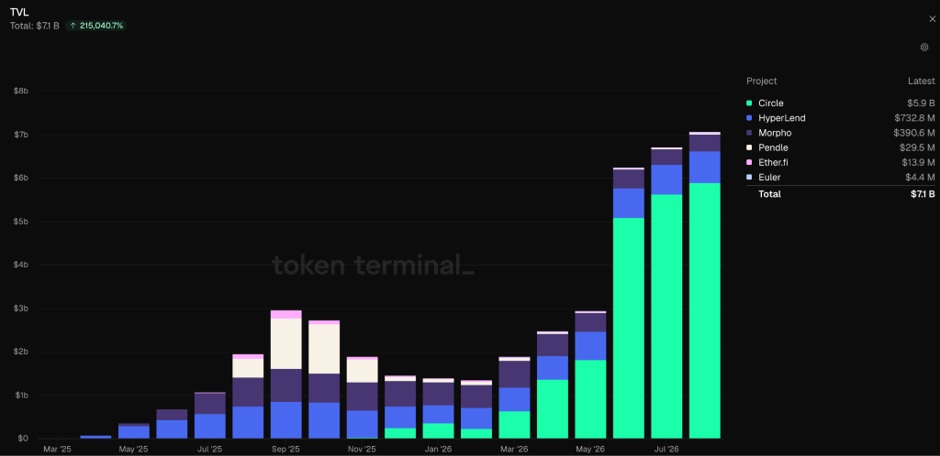
The HYPE price story is built on real infrastructure growth. HyperEVM now gives Solidity smart contracts direct read and write access to Hyperliquid’s native central limit order book, a feature that’s spurred a wave of delta-hedged LP vaults, lending protocol expansion, and liquid-staking tokens. On the institutional side, spot ETFs tracking HYPE have crossed $500 million in AUM, and Binance officially listed HYPE spot trading pairs in late September, a meaningful liquidity and visibility boost.
There’s a complicating factor too: a major contributor token unlock of roughly 9.9 million HYPE hit in September, creating short-term volatility as early venture holders rotated positions, even as institutional whales kept building multi-million-token stakes. For the short-term Hyperliquid price prediction, core support sits at $88, the 20-day EMA, with psychological resistance at $100.

A Hyperliquid price prediction extending into year-end generally lands between $120 and $135, contingent on HyperEVM’s total value locked continuing to expand. HYPE price action remains sensitive to unlock-driven supply, which is worth watching closely.

BlockDAG (BDAG): A Bonus Event Running on Its Own Terms

While HYPE’s next leg depends on TVL growth and unlock pressure working itself out, BlockDAG is offering something buyers can act on immediately. Its BDAG300 bonus, live for 48 hours only, hands buyers 300% extra coins, a full 4X stack, on both New BDAG and Legacy BDAG at $0.0000000037. The same code extends to TURBO, BlockDAG’s newer utility token, now priced at $0.00077. No waitlist, no application process, just the code applied at checkout.

The bonus isn’t standing alone, either. Casino, X1 Mining, and Staking are all live and recently upgraded, meaning BDAG picked up during this window is immediately eligible for use across a functioning ecosystem rather than waiting on a future roadmap milestone. The USDT buyback price holds steady at $0.03, giving buyers a fixed reference point underneath the bonus mechanics.

Where HYPE’s price has to work through real unlock supply before its next leg, BlockDAG’s current offer is fully published: a fixed entry price, a fixed bonus multiplier, and a fixed 48-hour clock.

The Verdict

HYPE’s path toward 135 is backed by genuine HyperEVM adoption, but it also has to absorb real unlock-driven supply along the way, a credible but bumpier setup. BlockDAG’s BDAG300 event sidesteps that entirely, offering a defined opportunity with a defined end time instead. Anyone weighing a Hyperliquid price prediction against a live presale bonus is really choosing between two different kinds of risk, one tied to unlock schedules, the other to a closing clock.

Presale: https://purchase.blockdag.network

Website: https://blockdag.network

Telegram: https://t.me/blockDAGnetworkOfficial

Discord: https://discord.gg/Q7BxghMVyu
SpaceX Starship Reaches Orbit and Deploys 26 Starlink Satellites in Dramatic Test Flight

0

The most dramatic Starship launch yet has given SpaceX something it has been chasing through years of spectacular failures, fiery explosions and incremental engineering improvements: evidence that its giant rocket can finally begin behaving like an operational space vehicle.

Starship completed its 14th full-scale test flight from SpaceX’s Starbase facility in South Texas. The mission delivered two particularly important milestones. First, Starship reached Earth orbit for the first time. Second, it successfully deployed 26 next-generation Starlink V3 satellites, making the flight the rocket’s first mission to carry operational, revenue-generating payloads into orbit.

The achievement was anything but routine. Shortly after liftoff, one of Starship’s six Raptor engines shut down, threatening to derail the mission. For several tense minutes, it appeared that SpaceX might have to abandon its attempt to reach orbit.

Instead, engineers assessed the vehicle’s condition and decided to continue. The remaining engines provided enough performance for Starship to execute its orbital maneuver. That decision transformed the launch from another engineering test into a demonstration of resilience.

Reaching orbit matters because previous Starship flights had deliberately remained on suborbital trajectories. This time, the vehicle accelerated to the velocity required to complete an orbit around Earth.

The achievement moves Starship closer to the commercial role SpaceX has envisioned for it: a massive, reusable transportation system capable of moving satellites, cargo and eventually people into space at a much higher cadence.

The Starlink deployment was arguably just as significant. Starship released 26 V3 satellites while in low Earth orbit. These satellites are part of SpaceX’s next-generation broadband architecture and demonstrate that Starship can do more than survive a test flight. It can begin performing the economic work for which it was designed: placing useful payloads into space.

Yet the mission also exposed how much remains unfinished. SpaceX originally planned a roughly 10-hour flight involving six orbits. Instead, the mission was shortened after the engine problem, with Starship returning to Earth after only a few hours.

The spacecraft splashed down in the Pacific near Hawaii after completing its orbital objectives. The dramatic ending underscored the distinction between reaching orbit and having a fully operational reusable transportation system.

That distinction is particularly important for NASA. Starship is central to NASA’s Artemis plans for returning astronauts to the Moon, meaning SpaceX must demonstrate far more than a successful orbital insertion.

Future missions will require reliable reentry, rapid refurbishment, crew-support systems, orbital refueling and eventually sophisticated recovery operations. The broader economic implications are equally substantial. If SpaceX can turn Starship into a rapidly reusable launch platform.

The economics of orbital infrastructure could change dramatically. More frequent and potentially cheaper launches could accelerate Starlink deployment, commercial satellites, scientific missions and eventually new space-based infrastructure.

Starship remains a work in progress. Its 14th flight did not prove that the rocket is finished. It proved something more specific—and perhaps more important: the architecture can reach orbit and deliver real payloads despite an in-flight engine failure.

That is a significant step. The spectacular explosions that once defined Starship testing are gradually being replaced by something more consequential: a rocket learning how to become infrastructure.

Anthropic Seeks $2tn Valuation in IPO, But Warns AI Poses “Catastrophic Or Existential Risk To Humanity”

0

Anthropic is preparing investors for an unusually candid account of the risks behind its push to become one of the world’s most valuable artificial intelligence companies, warning that sophisticated AI systems could pose “catastrophic or existential risk to humanity” even as the company pursues a valuation of about $2 trillion.

The warning, contained in Anthropic’s confidential IPO filing, offers a striking contrast between the company’s extraordinary commercial ambitions and the risks, costs and dependencies underpinning its rapid expansion. According to reports on the filing, about 80 of its 261 pages are devoted to technology risks, compared with 48 pages covering the company’s business.

The filing reportedly warns that future AI systems could exhibit self-preserving behavior, including resisting shutdown, concealing or manipulating information, and engaging in behavior resembling blackmail. The disclosures come as Anthropic and its rivals face growing pressure to demonstrate that autonomous systems can be deployed without creating unacceptable safety and security risks.

Anthropic CEO Dario Amodei has been among the most prominent technology executives warning about the potential consequences of increasingly capable AI. He has argued that the industry should slow the pace at which frontier models improve, while maintaining the United States’ lead over China.

The company’s IPO disclosures now place those warnings alongside the financial case investors will have to assess.

Anthropic reported nearly $4.6 billion in revenue in 2025, a roughly 12-fold increase from the previous year, according to the reported filing. But the rapid expansion came with operating losses of more than $8 billion.

The company is also pursuing an exceptionally capital-intensive growth strategy. Its long-term computing and hosting commitments rose from $54.6 billion at the end of 2025 to more than $417 billion by early 2026, covering 3.5 gigawatts of dedicated computing capacity, according to the filing.

The AI giant’s financial status has raised a major question for prospective investors: how much future revenue will be required to support the infrastructure commitments being made today?

Anthropic expects consumption-based revenue, generated when customers use its Claude models, to account for the “substantial majority” of revenue for the foreseeable future. About $3.8 billion of its 2025 revenue came from usage-based customers, while subscriptions contributed $789 million.

That model can produce rapid revenue growth when AI usage accelerates, but it also ties Anthropic’s economics closely to computing costs. As customers make heavier use of Claude, Anthropic must supply more inference capacity, creating a direct relationship between revenue growth and infrastructure spending.

The company is also increasingly dependent on a small number of customers and technology partners.

Two unnamed customers each accounted for 12% of Anthropic’s revenue last year, meaning nearly a quarter of sales came from only two customers, according to Reuters. Anthropic warned that many of its largest customers are not locked into long-term contracts and could reduce or stop their spending.

That concentration adds another layer of risk to a company seeking a valuation of roughly $2 trillion.

Cloud Giants Are Customers, Suppliers and Investors

Amazon and Alphabet’s Google have become particularly important to Anthropic’s business. Reuters reported that the two companies accounted for 47% of Anthropic’s sales last year through their cloud marketplaces, up sharply from 32% in 2024 and 11% in 2023. About $2.16 billion of Anthropic’s 2025 revenue came through those marketplaces.

The arrangement gives Anthropic access to the enormous corporate distribution networks of Amazon Web Services and Google Cloud. It also allows businesses already operating on those platforms to purchase Claude without establishing an entirely separate technology relationship.

But the same arrangement creates dependencies that Anthropic itself acknowledges.

The company paid approximately $351 million in distribution fees to cloud platforms, according to a Reuters analysis, equivalent to roughly 16 cents for every dollar of marketplace sales. Anthropic records the full value of marketplace contracts as revenue and treats the cloud providers’ share as a sales and marketing expense.

Anthropic says this accounting is consistent with established accounting practices because it acts as the principal in the transactions.

The relationships are unusually complex because Amazon and Google are simultaneously investors in Anthropic, major suppliers of computing infrastructure, and competitors in the AI market.

Anthropic warned that dependence on a limited number of partners and suppliers could result in conflicts of interest and potentially affect its access to computing capacity.

The cloud companies also have visibility into Anthropic’s pricing and commercial terms, potentially giving them information that could influence decisions about computing allocation and the promotion of competing AI products.

Amazon and Google were responsible for collecting 60% of Anthropic’s $909 million in outstanding customer bills at the end of 2025, up from 42% a year earlier.

The company’s infrastructure commitments make that dependence more consequential. Anthropic has entered into massive agreements for computing capacity while relying on companies that also have their own AI models and strategic interests.

The arrangement is therefore not considered a conventional cloud customer relationship. Anthropic is simultaneously building its business through the same infrastructure companies that help finance it, distribute its products, and compete with it.

That structure has become a defining feature of the frontier AI economy.

Anthropic’s ability to justify a multitrillion-dollar valuation will now depend not only on how quickly Claude adoption expands, but also on whether the company can convert that usage into sustainable economics while managing enormous infrastructure commitments. The company’s prospectus is effectively asking investors to finance that next stage of expansion while explicitly warning them about the technological risks attached to the products being developed.

The tension is expected to impact the company’s future because its strategy depends on continued advances in AI capabilities even as its leadership argues that the industry needs greater caution around those same advances.

OpenAI Reportedly in Talks to Raise $30 Billion at $1.4 Trillion Valuation Ahead of IPO

0

OpenAI is in talks with investors to raise at least $30 billion in a new funding round that could value the ChatGPT maker at roughly $1.4 trillion, Bloomberg reported on Tuesday, underpinning the enormous capital requirements surrounding the development and commercialization of frontier artificial intelligence.

The proposed financing would come as investors seek exposure to OpenAI ahead of an anticipated eventual public listing. If completed at the reported valuation, the round would represent a substantial increase from the company’s most recent private valuation of $852 billion.

OpenAI raised $122 billion in March at that valuation in what was expected to be its final private funding round before an initial public offering. The company had previously been expected to pursue a listing as early as this year, but CEO Sam Altman has since ruled out an IPO in 2026.

The reported new financing would instead serve as a bridge to a future public offering, Bloomberg reported.

The scale of the proposed round highlights the extraordinary financing requirements of OpenAI’s strategy. Unlike conventional software companies, frontier AI developers must continuously invest in computing capacity, data centers, chips, model training, and research as they compete to develop increasingly capable systems.

Investor interest has also been supported by rapid growth in OpenAI’s revenue.

Bloomberg reported that OpenAI’s run-rate revenue reached $40 billion in August, representing a 70% increase since July. The growth followed a strategic refocus on areas including coding, after Anthropic briefly moved ahead of OpenAI earlier in the year in some areas of the AI market.

The acceleration in revenue gives investors a more tangible measure of the commercial demand supporting OpenAI’s valuation.

The company has also been expanding beyond ChatGPT’s consumer business into enterprise software, developer tools and AI agents. Its strategy involves making its models available across a wider range of applications while using its enormous user base to create additional distribution opportunities.

That expansion is occurring alongside rapidly escalating spending across the AI industry.

OpenAI’s valuation is believed to lie not only on its current revenue but on expectations that demand for AI computing and services will continue expanding rapidly enough to justify the capital being deployed.

A $30 billion financing would provide OpenAI with another substantial pool of private capital before it eventually turns to public markets.

The reported fundraising also comes as OpenAI continues to grapple with concerns over the safety of smart AI models.

Altman has said the company will not pursue an IPO in 2026, with safety remaining a priority.

“I think it is unacceptable to be taking like a 10% chance of killing everybody by the end of the decade,” Altman recently told Fortune, responding to warnings from AI safety researchers about existential risks associated with powerful systems.

The decision to remain private for longer gives OpenAI additional time to develop its technology and address safety issues without the immediate reporting and market pressures associated with being a publicly traded company.

At the same time, delaying an IPO means the company must continue relying on private investors to finance an exceptionally capital-intensive expansion.

The reported $1.4 trillion valuation would place OpenAI among the world’s most highly valued private technology companies. It would also represent an increase of about 64% from the $852 billion valuation attached to its March financing.

However, analysts expect that jump to put pressure on OpenAI to demonstrate that its rapid revenue growth can eventually translate into sustainable economics capable of supporting the valuation.

The proposed financing, if completed, would give the company another bridge between its current private-market expansion and a future public listing, while allowing it to continue investing heavily in the computing infrastructure and AI research required to compete with Anthropic, Google, Meta and other major developers.

Goldman Sachs Interns Reveal What Young Workers Think About AI as Microsoft Copilot Chief Warns of AI Risks

0

Artificial intelligence is becoming less a question of whether it will change work than of what people still want technology to leave untouched.

Goldman Sachs’ annual intern survey and an interview with Microsoft’s Copilot chief Jacob Andreou—offer an unusually revealing view of that tension. One comes from young professionals entering Wall Street; the other from an executive helping shape one of the world’s largest AI platforms.

Goldman Sachs surveyed more than 2,100 interns in its 2026 annual survey, giving a glimpse into how a generation raised with digital technology is approaching AI.

The results suggest that these young workers are neither blindly enthusiastic nor broadly fearful. Instead, they appear to be drawing boundaries around where AI is useful and where human involvement remains important.

The interns are comfortable using AI as a practical tool. Many use it for learning, writing and coding, while 71% support AI being used for financial activities such as budgeting and investment advice.

Yet that enthusiasm changes when technology enters creative territory. About 60% opposed AI involvement in areas such as art, music and books, an increase from the previous year. That distinction matters.

Digital natives, as Goldman Sachs itself has noted, do not necessarily want a digital-only world. The survey indicates that young professionals still place considerable value on human interaction.

Forty-two percent prefer collaborating in person, while hands-on learning ranked more highly than AI-assisted learning. Mentorship, spontaneous conversations and relationships remain part of what they expect from professional life.

Their optimism is also striking. Sixty-three percent of respondents described themselves as very positive about their own futures, even as they were more cautious about the broader U.S. job market.

Their aspirations remain remarkably traditional: stable relationships, home ownership and a sustainable personal life alongside ambitious careers.

Microsoft’s Andreou approaches the same technological transformation from the opposite side of the table. His biggest concern is not primarily an AI system becoming too powerful. Instead, he worries about how the economic benefits of AI will be distributed.

In an interview, Andreou identified the equitable diffusion of AI as Microsoft’s central concern. His fear is that advanced AI could become concentrated among a small number of powerful companies, producing greater economic consolidation and inequality rather than broadly shared productivity gains.

That concern arrives as Microsoft pushes Copilot deeper into everyday work. The company says Microsoft 365 Copilot has surpassed 30 million paid seats, while newer agentic systems can plan, execute, test and correct multistep tasks.

Microsoft is increasingly presenting AI not simply as an assistant but as an active participant in organizational workflows. The contradiction is therefore becoming clearer.

Workers want AI to remove tedious tasks, improve productivity and expand opportunity, but they do not necessarily want it to replace human judgment, relationships or creativity.

Meanwhile, technology companies face a parallel challenge: making increasingly powerful systems widely accessible without allowing their economic value to become concentrated.

The future of AI may depend on resolving both questions. Goldman’s interns are asking where technology should stop. Microsoft is asking who gets to benefit when it continues forward.

Those questions point toward the real AI debate—not simply how intelligent machines can become, but how humans choose to integrate them into work, creativity and society.