DD
MM
YYYY

PAGES

DD
MM
YYYY

spot_img

PAGES

Home Blog Page 2411

Nigeria’s Own Goal on the Recent GDP Computation

0

If criminals are expected to pay taxes from proceeds of crime, the implication is that what they do could be used to model the GDPs of nations, some posit. It does seem like Nigeria is going after that playbook: “…the National Bureau of Statistics (NBS) announced plans to include illegal and hidden activities, such as drug trafficking and prostitution, in the calculation of Nigeria’s Gross Domestic Product (GDP).”

This is very intriguing considering that it could be a poison pill where in order to boost GDP numbers, you suddenly tell the world how large some vices are flourishing and growing in your ecosystems. This is where the national GDP will break with state GDP composites since most state governors will not like to have any record for some of those lines.

Personally, I do not think it is necessary because we will not want these components to grow. It is better we discount them, or model them indirectly, but giving them a full recognition may not send the right message for our core national values.

Sure – the smarter people run this show. But it may be hard to push for GDP growth if doing that will mean growing components like drug trafficking, kidnapping, prostitution, etc. I mean, where do you stop?

Nigeria’s National Bureau of Statistics to Include Prostitution, Drug Trafficking, and Other Illegal Activities in GDP Calculation

Nigeria’s National Bureau of Statistics to Include Prostitution, Drug Trafficking, and Other Illegal Activities in GDP Calculation

0

In a controversial move that has drawn mixed reactions, the National Bureau of Statistics (NBS) announced plans to include illegal and hidden activities, such as drug trafficking and prostitution, in the calculation of Nigeria’s Gross Domestic Product (GDP).

This decision, announced at a sensitization workshop organized in collaboration with the Nigerian Economic Summit Group (NESG), has sparked widespread debate, with critics accusing the agency of attempting to whitewash the current administration’s economic performance.

The rebasing exercise, which also proposes 2019 as the new GDP base year and 2024 as the new base year for Consumer Price Index (CPI) computation, is said to align Nigeria’s economic metrics with global best practices. The Statistician-General of the Federation, Prince Adeyemi Adeniran, described the move as vital to ensure that the country’s economic indicators reflect current realities.

Global Standards or Local Politics?

The inclusion of illegal and hidden activities in GDP computation is in line with the System of National Accounts (SNA) 2008, a global framework that recommends capturing all economic activities, regardless of their legality, to provide a comprehensive picture of an economy.

Dr. Baba Madu, Head of National Accounts at the NBS, explained the rationale behind the move: “If you are into, for instance, drugs, there are some countries, it is this drug that is driving their economy. It is illegal here because there is no legal backing. Also, prostitution. They also earn income. Some even live bigger than those in the formal sector. The SNA does not say no to these, it is we. But the challenge is the legal backing and how we get the data.

“And then, of course, the hidden economy. If I ask you, how much do you earn in a month, you will lower your income. Or if somebody is selling provision in a store, and before you know it he started selling India hemp. Those are the things we are seeing. There are challenges all over the world. But the beauty is that they are less than 3.0 to 3.5% of the GDP,” he said.

Dr. Tayo Aduloju, Chief Executive Officer of NESG, highlighted the potential benefits of GDP rebasing, such as improving Nigeria’s creditworthiness and attracting foreign investment. However, he cautioned that credibility is key.

“Accurate data enhances credibility. Our debt-to-GDP ratio, a critical indicator of fiscal health, dropped from 19% to 11% after the 2014 rebasing,” he said.

“This improved Nigeria’s creditworthiness, making us a more attractive destination for foreign direct investment. Investors are drawn to transparency and growth potential, and rebasing sends a clear message: we understand our economy, and we are open for business.

“Second, rebasing sharpens policymaking. It provides a detailed map of our economic terrain, enabling governments to identify high-growth sectors for scaling and low-growth sectors that require targeted interventions to drive impactful and balanced development. For example, after Ghana’s 2010 rebasing—which resulted in a 60% GDP increase—its policymakers could better plan for infrastructure and social investments, fueling sustained growth.”

However, the timing and approach of the initiative have fueled suspicions about its underlying motives.

Accusations of Whitewashing

Observers argue that the inclusion of illegal activities in GDP calculation is part of an ongoing effort by the agency to portray the government in a favorable light, even at the expense of statistical integrity. This isn’t the first time the NBS has come under scrutiny.

Last year, the agency faced criticism when it revised its definition of employment in a manner that included anyone who worked for at least one hour per week and received compensation. This change, seen as an attempt to downplay Nigeria’s unemployment crisis, was widely criticized by economists and policy experts, who warned that such manipulations could undermine effective policymaking. They warned that without accurate data, the government risks implementing policies that fail to address the country’s real economic challenges.

The NBS has also reportedly been under immense pressure from the current administration to alter data in ways that paint a rosier picture of the country’s economic and security situation. A striking example of this came after the agency published a damning report on Nigeria’s worsening security challenges. The report led to the head of the NBS being summoned by the Nigerian secret service, raising concerns about political interference in the agency’s operations.

Shortly after, the NBS claimed its website had been hacked—a development many saw as an attempt to deflect attention from the controversy surrounding its findings. The website has remained inaccessible for months, further eroding public confidence in the agency’s transparency.

Against this backdrop, the NBS faces a growing trust deficit among Nigerians. The agency’s past controversies, coupled with suspicions of political influence, have cast a shadow over its latest initiatives.

TikTok Says It Will Shut Down US Operation If Supreme Court Upholds Ban

0

In one of the most consequential cases of the social media age, the Supreme Court is set to hear arguments on Friday regarding the future of TikTok in the United States. TikTok said it would abide by the outcome, which could determine whether the wildly popular platform, used by approximately 170 million Americans monthly, remains accessible or faces a shutdown starting January 19, 2025.

The case brings free speech concerns into direct conflict with national security arguments, creating a legal and political battleground that could have far-reaching implications for technology regulation and user rights.

The TikTok Controversy

The controversy centers on a law aimed at forcing TikTok’s parent company, the China-based ByteDance, to sell its U.S. operations or face a nationwide ban. Signed into law by President Joe Biden in April after receiving bipartisan congressional support, the legislation reflects growing fears that TikTok could be exploited by the Chinese government for data harvesting or propaganda purposes.

Officials defending the law argue that ByteDance’s ownership poses a “grave threat” to U.S. national security. However, TikTok and its advocates assert that there is no evidence of Chinese interference to date and that the law represents a dramatic overreach, violating First Amendment protections.

“Rarely if ever has the court confronted a free-speech case that matters to so many people,” lawyers for TikTok users and content creators wrote in a legal filing.

TikTok said the law, if allowed to take effect, will effectively shut down its operations in the U.S., preventing users from downloading or updating the app. This would disrupt the platform’s creators, advertisers, and millions of fans, leading to significant economic and social consequences.

However, President-elect Donald Trump has requested a temporary pause on implementing the law. Trump, who previously supported banning TikTok during his first administration, now argues for a “political resolution” that would allow time to address both national security concerns and public demand for the app.

“President Trump alone possesses the consummate dealmaking expertise, the electoral mandate, and the political will to negotiate a resolution to save the platform while addressing the national security concerns,” his legal team wrote.

Free Speech Versus National Security

The central issue before the Supreme Court is whether the TikTok ban violates the Constitution’s free speech guarantees. Content creators and users argue that the platform serves as a vital space for expression, innovation, and economic opportunity. They urge the court to apply strict scrutiny—the highest standard of judicial review—to strike down the law.

TikTok’s defenders contend that limits on speech cannot be justified by speculative fears. “No one can seriously dispute that TikTok has transformed the digital landscape and empowered millions to share their voices,” lawyers for ByteDance wrote.

However, the Biden administration and supporters of the ban cite precedent, pointing to restrictions on foreign ownership in industries like radio and telecommunications. They argue that regulating TikTok aligns with existing efforts to limit undue foreign influence in U.S. markets.

Potential Pathways to Avoid a Ban

Experts who spoke to CBS note that TikTok has options to avoid a ban even without a favorable Supreme Court ruling. The incoming Trump administration could direct the Justice Department not to enforce the law or pursue a delayed implementation. Trump could also use his authority to issue a 90-day extension to facilitate progress toward a divestiture.

Nonetheless, a shutdown—even temporary—would likely have devastating effects on TikTok’s user base and advertising revenue. ByteDance estimates that losing access to the U.S. market for just one month could result in a loss of one-third of its daily active users.

The Supreme Court session, set to last over two hours, will feature arguments from some of the nation’s top legal minds. Solicitor General Elizabeth Prelogar will defend the Biden administration’s position, while former Trump Solicitor General Noel Francisco will represent TikTok and ByteDance. Stanford Law professor Jeffrey Fisher will advocate on behalf of content creators and users.

The high-stakes nature of the case reflects the court’s struggle to balance competing interests in the digital age. Despite their pivotal role, justices have acknowledged limited familiarity with the technologies and platforms they are tasked with regulating.

The case has sparked intense debate about government overreach, free speech, and the future of digital platforms in the U.S. Many argue that shutting down TikTok would set a dangerous precedent for restricting platforms based on speculative national security concerns.

Adding to the intrigue, comparisons have been drawn to historical efforts to limit foreign influence, such as the establishment of foreign ownership caps in critical sectors. However, TikTok’s defenders question whether such analogies hold in an era defined by globalized digital networks.

A ruling is expected within days, determining the platform’s fate and offering clarity on the broader tensions between free speech and national security in the modern era. Millions of TikTok users now anxiously await a court’s decision that could reshape their digital lives.

Court of Appeal Reinstates Emir Sanusi II, Nullifies Kano High Court’s Judgment

0

In a landmark ruling, the Court of Appeal has reinstated Muhammadu Sanusi II as the Emir of Kano, overturning a controversial decision by the Federal High Court in Kano that had nullified his appointment.

Justice Gabriel Omoniyi Kolawole, delivering the judgment, declared that the Federal High Court lacked jurisdiction over matters rooted in chieftaincy disputes governed by Kano State Emirate Council Law, deeming its earlier ruling invalid.

The appellate court’s decision not only restores the status of Emir Sanusi II but also raises questions about judicial overreach and procedural adherence in Nigeria’s legal system.

A Tussle Rooted in Tradition and Politics

The emirship tussle dates back to 2014, when Muhammadu Sanusi II, former Governor of the Central Bank of Nigeria, was appointed as the Emir of Kano after the death of his predecessor, Ado Bayero. His ascension was met with mixed reactions, including significant political opposition. Known for his vocal criticism of government policies, Sanusi became a polarizing figure during his reign, drawing both admiration and criticism.

In March 2020, under the administration of Governor Abdullahi Ganduje, Sanusi was controversially dethroned and exiled to Nasarawa State on allegations of insubordination. This act was widely perceived as politically motivated, further deepening the division within the Kano Emirate.

However, following the defeat of the APC government in Kano, the governor, Abba Kabir Yusuf of the New Nigeria People’s Party (NNPP), reinstated Sanusi. The current case began when Aminu Baba-Dan’Agundi, a former member of the Kano Emirate Council, challenged Sanusi’s initial appointment, citing procedural irregularities and alleged violations of the Kano State Emirate Council Law.

In May 2024, Justice S. A. Amobeda of the Federal High Court sitting in Kano issued an order for the eviction of the reinstated Emir of Kano, Muhammadu Sanusi II, from the Emir’s Palace.

The court also directed the police to ensure that all rights and privileges due to the 15th Fulani Emir of Kano, Aminu Bayero, are upheld.

Appeal Court’s Landmark Ruling

The Court of Appeal’s decision hinged on Section 251 of the Nigerian Constitution, which limits the jurisdiction of Federal High Courts in chieftaincy matters to those within the Federal Capital Territory (FCT). Justice Kolawole emphasized that the Federal High Court had no authority to entertain the case, as it involved state law.

Drawing parallels with the Supreme Court decision in Tukur v. Governor of Gongola State, the appellate court reinforced that the lower court erred in treating a chieftaincy dispute as a fundamental rights case.

Justice Kolawole ruled: “The trial court was wrong to have held that the case in Tukur is not similar to the 1st Respondent’s case. Appeal is hereby allowed.”

The judgment also invalidated the Federal High Court’s order to maintain the status quo, declaring it issued without jurisdiction.

Calls for Accountability

The judgment has sparked outrage against the Federal High Court judge who nullified Emir Sanusi II’s appointment. Prominent voices have called for disciplinary action by the National Judicial Council (NJC).

Former Kaduna State Governor, Mallam Nasir El-Rufai, was particularly vocal, writing:

“Congratulations to my dear friend and brother, His Highness, Emir Muhammadu Sanusi II, for this judgment. The Federal High Court has no business dabbling into chieftaincy matters outside of the FCT, and the erring judge ought to be disciplined by the NJC for the intentionally erroneous and disgraceful judgment.”

This sentiment echoes broader concerns over judicial accountability, with legal experts arguing that decisions perceived as politically motivated or procedurally flawed undermine public trust in the judiciary.

As the dust settles, attention shifts to the NJC and its potential response to the calls for disciplinary action, which may set a precedent for judicial accountability in Nigeria.

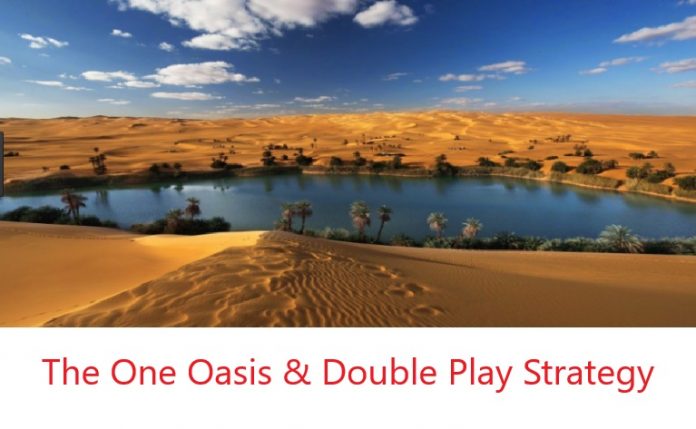
What is the one oasis and double play strategy?

0

Drop this question with Google: “what is the one oasis and double play strategy?”

You could receive this response: The “One Oasis and Double Play Strategy” is a business concept developed by Ndubuisi Ekekwe, which suggests identifying a single, high-quality product or service within a company (the “One Oasis”) that holds significant market value, and then strategically leveraging that product to gain an advantage in other related markets through a “Double Play” approach, essentially using the strength of one offering to bolster another, maximizing overall competitive positioning.

Key points about the strategy:

“One Oasis”: This refers to identifying the one standout product or service within a company that is considered superior in its market, like a vital oasis in a desert, providing exceptional value to customers.

“Double Play”: This involves using the reputation and success of the “One Oasis” product to strategically enter or enhance other related markets, potentially even competing with established players in those markets, while still maintaining a strong core offering.

Go here and read the One Oasis & Double Play Strategy which I have postulated on the pages of Harvard Business Review. Use the strategy to capture value in your business.