DD
MM
YYYY

PAGES

DD
MM
YYYY

spot_img

PAGES

Home Blog Page 2478

Ethereum Classic (ETC) and Bitcoin Cash (BCH) Holders Turn To Rollblock For Explosive Returns

0

Savvy traders are taking their easy gains from Ethereum Classic (ETC) and Bitcoin Cash (BCH) and pivoting into Rollblock (RBLK). This top altcoin is looking at the potential for explosive returns at the conclusion of its crypto presale. Rollblock’s crypto casino was recently listed on CoinMarketCap ahead of its imminent ICO, which pushed its top growth estimates to over 100x on launch.

CoinMarketCap Listing Puts Rollblock Center Stage

Rollblock already had a dedicated community of supporters, with more than 35,000 users signed up to its crypto presale. Now, this top altcoin has been exposed to millions of new potential investors thanks to its fresh listing on CoinMarketCap.

CoinMarketCap is the leading platform for crypto investors to research tokens and build diversified portfolios for complex trading strategies. This means that RBLK will now be included in the portfolios of tens of thousands of additional investors.

Rollblock offers unique exposure to the $500 billion gambling industry as the leading token in the crypto gambling sector. No other crypto gambling token can compete with Rollblock’s offering of global sports betting and more than 7,000 casino games.

Rollblock also has a unique gambling token that is used to return up to 30% of the casino’s weekly revenue to holders. This is achieved through a system of buybacks that are either burned to generate value or returned as staking rewards.

As the undisputed leader of the rapidly expanding crypto gambling sector, RBLK tokens are likely to be featured prominently in most crypto portfolios in 2025 and beyond.

Inevitable Reversal for Bitcoin Cash Begins and Traders Exit

Rollblock’s rise comes just as savvy investors are cashing in their easy gains on aging tokens like Bitcoin Cash. Bitcoin Cash inevitably rises in the early stages of a bull cycle but is one of the first tokens to reverse when momentum slows.

The rally for the Bitcoin Cash price peaked slightly below $650 in early December. Now, the Bitcoin Cash price is down almost 20% from these highs, including a 5% drop today.

Bitcoin Cash erased all of its gains from the previous bull cycle in only a few months, so savvy investors are quickly cashing in their gains now at the top.

Ethereum Classic Investors Race for Door as Decline Accelerates

The Ethereum Classic price demonstrates a similar pattern of being one of the first tokens to fall when a bull cycle loses its initial momentum. The Ethereum Classic price actually fell into the red after the last bull cycle, with only this fresh bull cycle pulling it back into the green for the year.

Ethereum Classic is currently down exactly 20% from its peak of this current bull cycle.

This decline for Ethereum Classic is accelerating with a 4% drop for the day. Therefore, savvy investors are particularly eager to exit their Ethereum Classic positions.

Rollblock Crypto Presale Accelerates Under Portfolio Shuffle

This dash to exit Ethereum Classic and Bitcoin Cash is occurring just as the recent CoinMarketCap listing pushed Rollblock’s post-ICO growth estimates to over 100x. However, analysts warn that this major shuffling of portfolios is likely to accelerate this top altcoin’s crypto presale, which means that its current stage nine price of $0.0415 will not last long.


Discover the Exciting Opportunities of the Rollblock (RBLK) Presale Today!

Website: https://presale.rollblock.io/

Socials: https://linktr.ee/rollblockcasino

Solana Vs Cardano, But ChatGPT Reveals New Hidden Gem Yeti Ouro As Highest Potential Buy

0

Solana (SOL) and Cardano (ADA) are two names always at the top of conversations around top blockchain networks. Both are powerhouse competitors in the fight for innovative system architecture and scalability. But now, a new token has burst onto the scene: Yeti Ouro (YETIO) YETIO combines blockchain utility, gaming, and functionality into one asset, quite unlike traditional coins — making it an ideal option for investors looking for the next major opportunity.

Solana Price Analysis: Speed And Scalability

Solana is known for its high transaction speed and low fees. It’s often called the “Ethereum killer” due to its ability to handle over 65,000 transactions per second. Solana powers many decentralized applications (DApps), making it a favourite among developers.

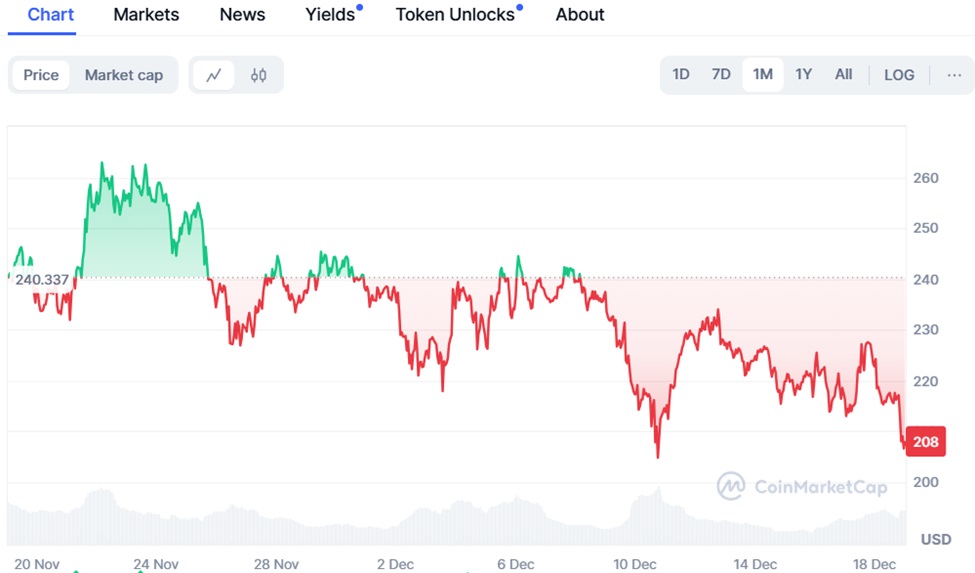
1-month Solana price chart- source: CoinMarketCap

But Solana does have its drawbacks. That has spooked investors, and the network has experienced several outages in 2023 and 2024. While SOL price at $225, has significant upside, whether it is reliable for the long term is still unknown.

Cardano Price Prediction: Sustainability And Research

Cardano is built off of an unavoidable scientific approach. This sets it apart from other networks and gives it a specific focus on sustainability and scalability. Cardano’s eco-friendly proof-of-stake mechanism and recent updates, including Hydra have allowed it to develop its scalability.

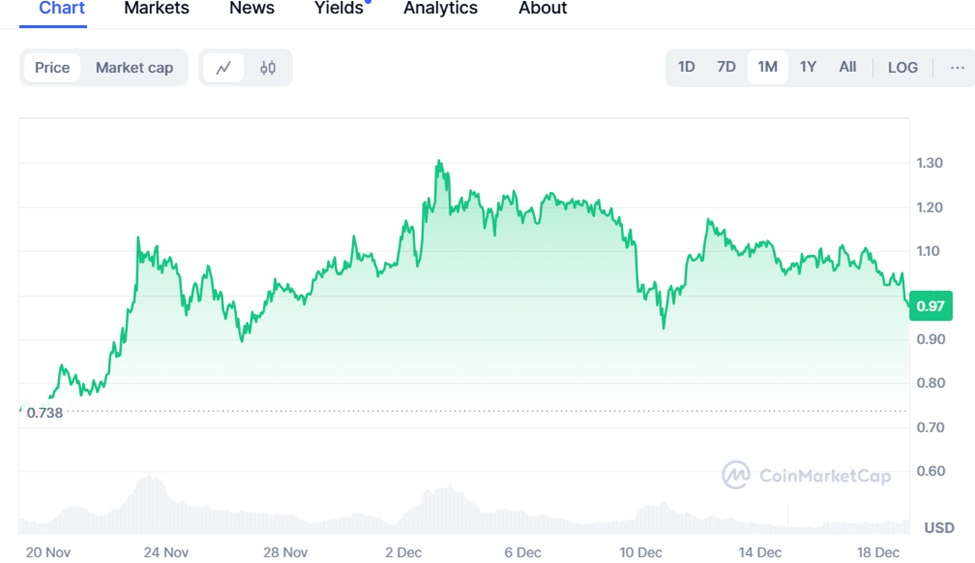
1-month Cardano price chart- source: CoinMarketCap

Compared to Solana, ADA price is much cheaper, while the latter trades at $0.97. Although its ecosystem is expanding, development has been glacial, leading to investor impatience. The reputation of Cardano as a security and sustainability-based blockchain matters and keeps it in the race.

Introducing Yeti Ouro: The Note-Worthy

While Solana vs Cardano attracts attention, Yeti Ouro is attracting attention behind the scenes. It is a utility token geared toward the gaming industry, and it powers the Yeti Go Play-to-Earn (P2E) game. Its unique methodology distinguishes it from the pack of other altcoins.

What Makes Yeti Ouro Special?

  • Strong Presale Performance: YETIO has already secured over $1.27 million in its presale, with huge investor demand.
  • Gaming-Focused Utility: Next to speculative tokens, YETIO fuels a gaming ecosystem with staking, token burns and in-game goodies.
  • Affordable Entry Point: Priced below $1, YETIO offers high growth potential for early investors.
  • Community-Driven Ecosystem: The rapid adoption of Yeti Ouro is driven by its powerful community and vigorous development team.
  • Future-Proof Growth: YETIO is set to benefit from the increasingly significant growth of blockchain gaming.

Yeti Ouro – Why It is Better Than SOL And ADA

Solana and Cardano are established projects, but Yeti Ouro focuses on the fast-growing niche of blockchain gaming. The market is projected to reach $50 billion by 2025, opening up an enormous scope of growth for YETIO. The token is much more versatile than normal blockchains by being both utility and entertainment.

Yeti Go’s gameplay also features staking rewards, token burns, and a player-driven marketplace, creating a sustainable ecosystem. Investors view this as a rare opportunity to get in on the ground floor of the blockchain’s future.

ChatGPT’s Suggestion: Yeti Ouro

AI models like ChatGPT analyze business market trends to find new opportunities. Yeti Ouro sits at the top of our December 2024 high-potential investments list due to its innovation, low cost, and rapidly expanding community.

YETIO is breaking new ground in an unexplored and promising market, unlike Solana and Cardano, which face challenges of scalability and progress.

Takeaway: A Good Bet For 2024

While Solana and Cardano rival in the blockchain world, Yeti Ouro has a distinctive value proposition. It offers an exciting investment opportunity with a focus on blockchain gaming, robust presale performance, and a low price tag. While SOL and ADA are still working on their ecosystems, YETIO is already making moves in a high-growth industry.

Yeti Ouro offers an interesting case for crypto portfolio diversification. As blockchain gaming continues to pick up steam, this sleeper could be the year’s best potential buy.

Yeti Ouro has recently announced a meme contest! The top prize is $2,000 for first place, $1,000 for second place, and $500 for third place. To enter, unleash your creativity by crafting engaging Yeti-themed memes and sharing them on X. Be sure to tag @yetiouro and include the hashtag #YetiMeme in your post. For more details, visit the official Yeti Ouro X channel.


Join the Yeti Ouro Community

Website: https://yetiouro.io/

X (Formerly Twitter): https://x.com/yetiouro

Telegram: https://t.me/yetiouroofficial

Discord: https://discord.gg/YtUsEZ2ZrV

SSV Network is a Crucial Building Block for Truly Decentralized Applications

0

SSV Network is a decentralized staking infrastructure designed to enhance the security and resilience of Ethereum validators. SSV Network is a crucial building block for truly decentralized Ethereum staking applications, providing a robust and secure infrastructure for validators.

Upon my interview with Alon Muroch Founder of SSV Labs (Core contributor to SSV Network), he posits that SSV will make major run in 2025 as it looks outwards for multichain features on other blockchains. More so, hosting secured Validator features on Ethereum was a success and our drive is to cater for more enhanced Validator security technologies for other blockchain infrastructures

In 2024, Distributed Validator Technology (DVT) hit its stride, with major players like Lido, EtherFi, Puffer, and P2P all integrating DVT into their operations. Additionally, over 1,100 permissionless node operators joined the network, ranging from enterprise-level to solo stakers. This shift didn’t just improve validator performance; it made the whole ecosystem more robust and decentralized. For reference, within one year, an entire ecosystem (80+ projects) of DVT-powered staking applications has gone live.

Layer 1 blockchains form the foundational architecture of blockchain networks. They are responsible for validating and recording transactions, ensuring security, and maintaining decentralization. Within the first year of going live on mainnet, SSV Network has become a vital component of Ethereum’s staking ecosystem, improving validator performance, security, and redundancy.

With 1.8 million ETH in total value locked (TVL) out of 34 million ETH pledged on the Beacon Chain (not including other DVT projects), SSV Network now secures roughly 5% (4.7%) of the total ETH staked. As for 2025, Alon has several predictions but most notably he believes there will be a considerable shake of things in the staking space.

Alon believes that Light clients and Beam Chain are set to democratize validation, as it will be possible to run a validator with just 1 ETH and basic hardware, this will remove significant barriers to entry to validation. As a result, Alon believes community-led staking initiatives will grow, fueled by lower hardware requirements and new educational campaigns on decentralized staking.

This milestone was achieved by extending grants to developers for building staking and restaking applications directly on SSV infrastructure. The result? A vibrant ecosystem of 80+ ecosystem partners spanning major platforms like Lido, Ether.fi, StakeWise, P2P.org, Renzo, and many more.

Top-tier node operators also utilize SSV to provide more secure, robust staking solutions. The network’s ability to eliminate the need for coordination between nodes has created a seamless new revenue stream for node operators, who earn rewards in SSV for their contributions.

Distributed Validator Technology (DVT): SSV Network uses DVT to distribute validator duties across multiple, trust-minimized node operators. This increases the resilience, uptime, and liveness of the network. The impact of DVT extends beyond these figures. By decentralizing Ethereum validators, SSV Network has enabled faster bootstrapping for staking and restaking applications.

Fault Tolerance: By distributing validator operations, SSV Network ensures that the failure of a single node does not compromise the entire system. In the future, validators will take on more responsibilities while earning higher rewards, ensuring that Ethereum’s security remains based and decentralized.

Non-Custodial: Validators retain full control of their keys, which are encrypted and distributed for security.

Decentralization: SSV Network aligns with Ethereum’s principles of decentralization, fostering an open and permissionless ecosystem.

Here are some key aspects:

Consensus Mechanisms: Layer 1 blockchains use consensus mechanisms like Proof of Work (PoW) and Proof of Stake (PoS) to validate transactions. These mechanisms are crucial for maintaining the security and integrity of the network.

Scalability and Security: Layer 1 blockchains face the challenge of balancing scalability, security, and decentralization. Innovations in consensus mechanisms and network protocols aim to address these challenges.

Decentralization: A key feature of Layer 1 blockchains is their decentralized nature, which ensures that no single entity has control over the entire network.

Transparency and Immutability: Transactions on Layer 1 blockchains are transparent and immutable, providing a high level of trust and reliability. These technologies are at the forefront of ensuring robust and secure blockchain networks, paving the way for more resilient and decentralized applications.

Shiba Inu Price Blowout: Ethereum Price Surge To $5,000 To Drive SHIB To $0.000087 And This Al Altcoin To $8 From $0.02

0

As the crypto market anticipates the Ethereum price surge to $5,000, analysts are forecasting a cascading effect that could send Shiba Inu price soaring to $0.000087. However, the real breakout star is WallitIQ (WLTQ), an emerging AI altcoin that’s already turning heads. With its presale price of just $0.0243, this AI altcoin is projected to rally to $8, offering presale participants a potential 40,000x return on investment.

As the Ethereum price marches toward $5,000, the WallitIQ (WLTQ) presale offers an opportunity for potential gains that surpass what the Shiba Inu price can deliver. However, with the price set to rise by nearly 100% in the next presale stage, the best time to purchase WallitIQ’s (WLTQ) AI altcoin is now. Head to the presale page to get started.

Cascading Gains: The Ethereum Price Impact On The Shiba Inu Price Future

Currently valued at around $3,910, the Ethereum price is gearing up for a potential surge toward $5,000, a move that could drive the Shiba Inu price to $0.000087. This ripple effect highlights the power of Ethereum price momentum, but Shiba Inu (SHIB) is not the only altcoin in line to benefit.

WallitIQ (WLTQ), an AI altcoin currently on presale at a low price of $0.0243, is predicted to skyrocket by a staggering 40,000%, potentially reaching $8, far surpassing the Shiba Inu price target. With the Ethereum price rise fueling a market-wide rally, the ongoing WallitIQ (WLTQ) presale stands out as a rare opportunity for an exceptional ROI boost.

From $0.02 To $8: WallitIQ (WLTQ) Is The Real Winner In The Ethereum-Fueled Crypto Rally

As the Ethereum price edges closer to $5,000, the crypto market is experiencing a surge of optimism, with the Shiba Inu price projected to climb to $0.000087. However, while the Shiba Inu price potential captures headlines, a quieter revolution is brewing with WallitIQ (WLTQ), the AI altcoin poised to outperform its peers.

With predictions of a 40,000% rally to $8, the ongoing WallitIQ (WLTQ) presale presents an unparalleled opportunity for investors to ride the Ethereum-fueled wave toward massive returns.

This presale has already achieved remarkable milestones, raising over $3 million and selling more than 150 million tokens. The first stage sold out at lightning speed, delivering an impressive 100x ROI to early investors. With the current price set at $0.0243 and projected to climb to $0.0420 in the next stage, those who act now have a golden opportunity to secure substantial returns yet again.

Adding to its appeal, WallitIQ (WLTQ) rewards early participants with exclusive benefits, including referral bonuses, monthly airdrops, discounted transaction fees, and governance rights for its AI altcoin holders.

Furthermore, investors can maximize their earning potential through yield farming and staking opportunities, with rewards of up to 180% APY. The platform also provides advanced trading features such as predictive analysis, sentiment analysis, and risk management tools. Together, these tools give users a competitive edge in the ever-evolving and opportunistic crypto market.

WallitIQ (WLTQ) provides early investors with a secure trading environment, backed by comprehensive audits conducted by SolidProof. The platform employs advanced AES and ECC encryption along with real-time anomaly detection to protect users’ wallets. With the integration of P2D technology and Escrow Connect, WallitIQ (WLTQ) offers a safe trading experience.

Ride the Wave: WallitIQ’s (WLTQ) Path To $8 And Beyond

As the Ethereum price aims for $5,000 and the Shiba Inu price potential movements reignite excitement in the crypto market, the ongoing WallitIQ (WLTQ) presale is quickly emerging as a top investment choice.

This presale is more than just a chance to buy low; it gives access to a platform that delivers personalized investment strategies to early adopters as they position themselves for maximum returns.

With its presale nearing the next price increase and predictions of a meteoric rise to $8, the window to secure this promising AI altcoin at a discounted rate is closing fast. Don’t miss your chance to invest in WallitIQ (WLTQ) before it skyrockets. Act now to secure your stake and stay ahead of the next millionaire-making crypto wave.

Join the WallitIQ (WLTQ) presale and community:

Join WallitIQ (WLTQ) Presale

Join the WallitIQ (WLTQ) Community

Court of Appeal Rules Against Nigeria Customs Service’s Confiscating Foreign Rice in Open Markets, Expressways

1

In a landmark judgment, the Court of Appeal sitting in Kaduna has issued a stern warning to the Nigeria Customs Service (NCS) against confiscating foreign rice and other goods in open markets and expressways, declaring such actions outside the legal purview of the agency.

This ruling was delivered on Wednesday by a three-member panel of justices, led by Justice Ntong Ntong, in response to an appeal by the NCS against the decision of the Federal High Court in Kaduna. The lower court had previously discharged and acquitted Suleiman Mohammed, a businessman, of charges related to the importation of foreign goods.

Case Background

Suleiman Mohammed, a 37-year-old businessman, was arrested on June 14, 2019, on the Kaduna-Zaria Expressway by Customs officers, who confiscated 613 bags of foreign rice, 80 bags of millet, and a truck allegedly used to transport the goods. The items, worth approximately N200 million, were impounded on the grounds of violating the federal government’s ban on foreign rice imports.

Mohammed, however, argued that he was merely a purchaser of the goods from the Central Market in Gusau, Zamfara State, and not an importer. He presented a receipt of purchase as evidence during the trial.

Court of Appeal’s Ruling

In a unanimous decision, the appellate court upheld the earlier ruling of the Federal High Court, emphasizing that the Kaduna-Zaria Expressway is not a designated land border and, therefore, does not fall within the jurisdiction of the Customs Service for enforcement of the importation ban.

Justice Ntong, delivering the judgment, stated: “Kaduna-Zaria Expressway is not a land border, and the Nigeria Customs Service has no right to patrol it or any highway for the sole purpose of arresting and confiscating foreign rice. The confiscation of goods on this highway is outside the contemplation or application of the law banning the importation of foreign rice.”

The court also pointed out that the NCS should focus its enforcement activities at land borders, which are their primary jurisdiction, rather than targeting petty traders and consumers who buy goods in the open market.

Justice Ntong criticized the Customs Service for failing to target actual importers and smugglers, instead choosing to pursue smaller players in the supply chain.

Drawing on an Annang idiom, he remarked: “How can a fowl, instead of attacking the person who killed it, pursue the person who is de-feathering it?”

The court further rebuked Customs officials for conducting what it described as “shoddy investigations” from the comfort of their offices, failing to trace the origin of the goods or identify the actual importers.

In its judgment, the court ordered the immediate release of the confiscated goods and truck. However, it acknowledged the possibility that returning the items may no longer be feasible. In such cases, the NCS was instructed to compensate Suleiman Mohammed with an amount equivalent to the current market value of the confiscated goods and truck.

This ruling sets a significant precedent, reinforcing the limitations of the Nigeria Customs Service’s enforcement powers. Legal experts and trade analysts believe this judgment could encourage more traders to challenge similar confiscations in court.

A Longstanding Culture of Raiding

The ruling also brings to light the inefficiencies in Customs operations, particularly in tackling the inflow of contraband goods at Nigeria’s borders.

The court’s judgment sheds light on a controversial practice by the NCS: raiding stores, markets, and even trucks on highways to seize contraband goods. For years, traders across Nigeria have decried these actions as heavy-handed and unlawful. The confiscated goods most times end up in the possession of customs officers or their relatives. The Nigerian customs officers’ wives are reportedly the largest dealers in foreign rice and other contraband goods in the country.

This deeply entrenched culture of raids, which often targets small-scale traders and consumers, ultimately culminated in the lawsuit filed by Suleiman Mohammed.

The Scourge of Corruption Within Customs

Beyond these raids, the NCS has long been accused of enabling the very smuggling it claims to combat. Bribery and corruption within the agency are believed to have allowed contraband goods to flood Nigerian markets. A prime example of this was exposed by the investigative work of Fisayo Soyombo, a renowned Nigerian journalist.

Through his now-famous “Good Morning Nigeria Customs” social media posts, Soyombo exposed the systemic corruption within the NCS, highlighting how thousands of metric tons of foreign rice and other goods enter the country illegally each day.

“Good morning, @customsNG. Over the night, your men in Ogun State let in more than 3,000 cars containing smuggled rice from Owode-Apa and Seme into Badagry via Gbaji Bridge for onward transfer to Lagos,” he said in his November 25, 2024 tweet. “More than 3,000 cars! That’s at least 9,750,000 kg of rice (3,000 multiplied by 65 bags multiplied by 50kg) through the backdoor.”

Soyombo’s reports revealed that smugglers routinely bribe Customs officials to bypass checks at Nigeria’s borders, a practice that has undermined the nation’s import restrictions.

Despite the public uproar sparked by Soyombo’s revelations, the NCS has failed to take significant action to address the corruption within its ranks. Many believe that the agency’s focus on raiding small traders and consumers diverts attention from the real culprits—smugglers and corrupt Customs officials facilitating illegal imports.

The NCS’s failures have fueled widespread public frustration, with many Nigerians calling for an overhaul of the agency. It is now public knowledge that while the Customs Service spends resources patrolling highways and markets, smugglers continue to operate freely at the borders due to bribery and lax enforcement.