
DD
MM
YYYY

PAGES

DD
MM
YYYY

spot_img

PAGES

Home Blog Page 25

Big Four Giant PwC Expands Cryptocurrency Services Amid Regulatory Shift

0

As global regulators move from outright caution to clearer frameworks for digital assets, traditional financial institutions are stepping decisively into the crypto space.

PricewaterhouseCoopers (PwC), one of the Big Four accounting giants, is expanding its cryptocurrency and digital asset services, signaling growing institutional confidence in the sector.

The move reflects a broader shift in regulatory attitudes toward crypto, as firms seek to help clients navigate compliance, risk management, and innovation in an increasingly structured digital-asset ecosystem.

PwC’s U.S. Senior Partner and CEO, Paul Griggs, stated in a recent interview with the Financial Times that the accounting firm is significantly expanding its cryptocurrency-related services after years of caution. He attributed this shift to improved U.S. regulatory clarity, particularly the passage of the GENIUS Act (a stablecoin framework signed in 2025) and a broader pro-crypto regulatory environment.

He said,

“The GENIUS Act and the regulatory rulemaking around stablecoin I expect will create more conviction around leaning into that product and that asset class. The tokenization of things will certainly continue to evolve. PwC has to be in that ecosystem.”

“PwC feels a responsibility to be hyper-engaged in both auditing and consulting for crypto clients, as we see more and more opportunities coming our way. We are never going to lean into a business that we haven’t equipped ourselves to deliver, noting that over the past 10-12 months, PwC has bolstered its resources (including rehiring digital asset specialist Cheryl Lesnik) to handle increased demand”, Griggs added.

PwC is now actively advising clients on using stablecoins for efficient payments, expanding into tokenization of real-world assets, and providing full services in audit, tax, and advisory for crypto entities. The firm already audits clients like Bitcoin miner MARA Holdings.

The accounting firm plans to grow its crypto audit, compliance, and advisory offerings for exchanges, stablecoin issuers, blockchain startups, and tokenization platforms.

This move aligns with similar expansions by other Big Four firms (KPMG, Deloitte, and Ernst & Young) amid growing institutional interest in digital assets.

KPMG has developed a comprehensive suite of digital?asset and blockchain capabilities that span audit, tax, risk, and advisory services. Its offerings help clients navigate regulatory compliance, risk assessment, controls, cybersecurity, and blockchain strategy across the full crypto lifecycle.

Deloitte has long been active in the blockchain space and offers blockchain strategy, implementation, and consulting services to clients. This includes helping organizations define blockchain goals, build prototypes, and integrate distributed ledger technology into business processes.

Ernst & Young (EY) has been particularly proactive in developing crypto and blockchain software tools for auditing and compliance. Notably, platforms like EY Blockchain Analyzer aggregate transaction data across ledgers to support audits, tax reporting, and transaction monitoring — helping clients meet regulatory and reporting requirements in the digital?asset space.

Before the GENIUS Act, stablecoins and many crypto products existed in regulatory gray areas that made institutions wary of legal risk. By establishing a clear, federal framework for payment stablecoins — including licensing, reserve requirements, and compliance standards — the Act eliminated a major barrier to institutional participation.

With clearer rules, firms can confidently offer stablecoin issuance support, compliance consulting, reserve auditing, treasury strategy, and risk advisory services. Accounting and consulting firms — including the Big Four — are now able to package crypto practices into mainstream service lines without fear of legal backlash or uncertain enforcement.

While the GENIUS Act is a U.S. statute, its emergence has coincided with other regulatory efforts globally (like the EU’s MiCA framework). This convergence toward structured, rules-based crypto regulation gives multinational corporations and service firms a consistent basis to develop cross-border crypto offerings, bolstering confidence to invest in digital-asset teams, products, and partnerships.

In summary, the GENIUS Act’s passage, combined with a broader pro-crypto shift in regulatory environments, has reduced legal ambiguity, aligned digital assets with traditional financial norms, unlocked new product and service opportunities — and ultimately empowered companies to seriously explore and scale crypto-related offerings rather than treat them as speculative side projects.
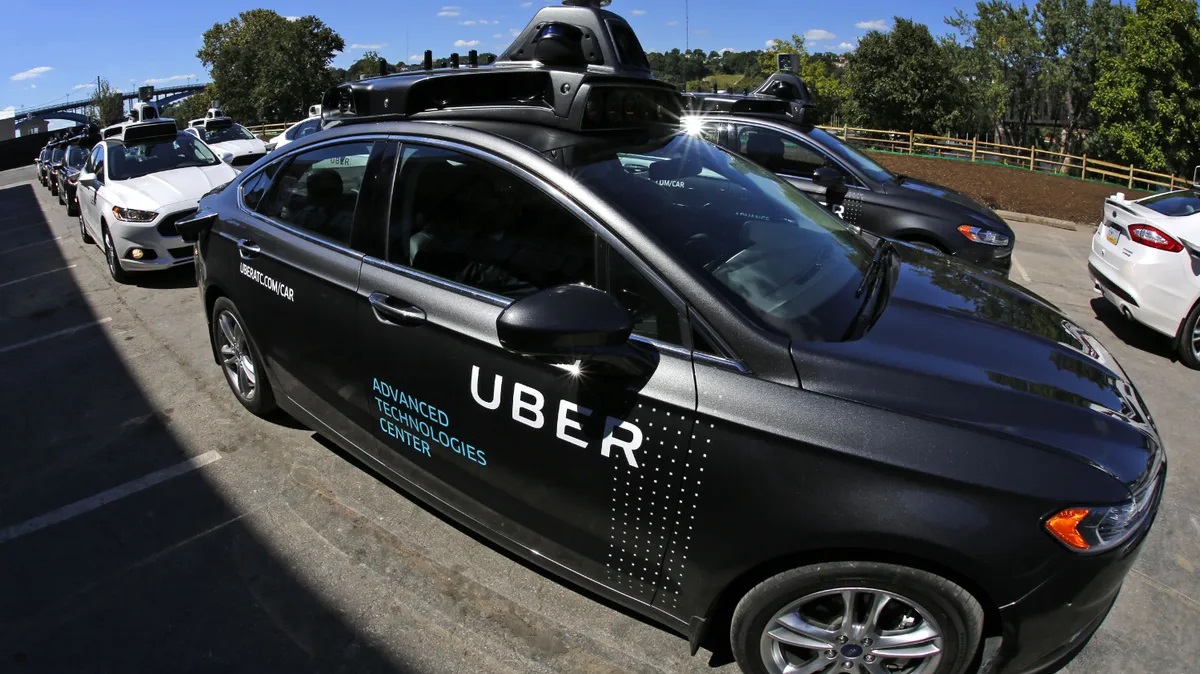

Uber, Lucid, and Nuro Unveil Production-Intent Robotaxi at CES, Fueling Escalation in Premium Autonomous Ride-Hailing Race

0

Uber, Lucid Motors, and autonomous driving startup Nuro have lifted the curtain on the production-intent version of their long-anticipated robotaxi, offering the clearest signal yet that Uber plans to play a central role in the next phase of commercial autonomous ride-hailing.

Revealed at the 2026 Consumer Electronics Show, the vehicle is the most tangible outcome so far of a partnership announced more than six months ago, when Uber committed $300 million to Lucid and agreed to purchase 20,000 of the automaker’s electric vehicles. The companies said the robotaxi is already undergoing testing on public roads, ahead of a planned commercial rollout in the San Francisco Bay Area later this year.

The robotaxi is built on Lucid’s Gravity SUV platform and is positioned as a premium autonomous vehicle, a deliberate contrast to the more utilitarian designs that have dominated early driverless deployments. Integrated into the body and a roof-mounted “halo” are high-resolution cameras, solid-state lidar sensors, and radar systems, all powered by Nvidia’s Drive AGX Thor computing platform.

That halo also features LED lighting designed to help riders identify their vehicle, echoing a now-familiar approach used by competitors such as Waymo. Unlike Waymo, however, the Uber-Lucid-Nuro vehicle is being assembled with its autonomous hardware already integrated at Lucid’s Casa Grande, Arizona, factory. This removes the need for costly post-production retrofitting, a step that Waymo currently undertakes by dismantling and reassembling Jaguar I-Pace SUVs.

Industry analysts see this as a meaningful operational advantage. Embedding autonomy hardware during manufacturing can shorten deployment timelines, reduce labor costs, and improve long-term scalability — all issues that have weighed heavily on the economics of robotaxi services.

Visually, the CES version is a more refined iteration of the test vehicles that have appeared in press images over the past seven months. The most notable additions relate to the rider experience, an area where Uber is seeking to leverage its consumer-facing strengths.

The robotaxi features an exterior screen on the halo that greets riders on arrival, as well as multiple interior displays designed to guide passengers through the trip. The rear passenger screen shows an isometric map of the vehicle navigating city streets, complete with visual representations of nearby cars and pedestrians — a design that will feel familiar to anyone who has ridden in a Waymo vehicle.

While the software was not yet interactive at the CES preview, Uber said the interface is being built to display estimated arrival times, remaining journey duration, climate and music controls, and access to rider support. A dedicated control allows passengers to request a pull-over, an increasingly standard feature aimed at improving trust and comfort in autonomous vehicles.

The front passenger screen mirrors much of this information on a larger central touchscreen, with elements also extending to Lucid Gravity’s sweeping 34-inch curved OLED display behind the steering wheel. The emphasis on screens and visual feedback reflects a broader industry consensus that transparency — showing passengers what the vehicle “sees” and “thinks” — is critical to user acceptance of driverless rides.

Uber’s decision to anchor this service around the Gravity underscores its intent to differentiate on comfort and perceived quality. The SUV’s spacious interior, particularly in the two-row configuration showcased at CES, positions the service closer to a premium ride-hailing tier rather than a low-cost mass transit substitute. Uber said a three-row version will also be offered, potentially broadening appeal to families and group travelers.

Still, the choice is not without risk. Lucid’s first full year of Gravity production was marked by software challenges as the company ramped up manufacturing. Those issues became significant enough that interim CEO Marc Winterhoff sent an apology email to customers in December, acknowledging the “frustrations” they faced.

Lucid has since said it has stabilized production and software performance, announcing on Monday that it doubled 2024 production and achieved record sales. Whether the robotaxi variant avoids similar software growing pains remains an open question, particularly given the added complexity of autonomous systems layered on top of vehicle controls.

From a strategic standpoint, the partnership highlights Uber’s evolving approach to autonomy. After exiting its own self-driving unit in 2020, Uber has repositioned itself as a platform partner, investing selectively while leaving vehicle engineering and autonomy stacks to specialists. Nuro, which provides the autonomous driving technology, brings experience from both delivery robots and passenger vehicle autonomy, while Lucid supplies a high-end EV platform that aligns with Uber’s premium ambitions.

Once final validation is complete later this year, the companies said true production versions of the robotaxi will begin rolling off Lucid’s Arizona assembly lines. No firm production or deployment timeline was disclosed, underscoring the cautious tone that continues to surround commercial autonomy even as public testing expands.

However, the CES reveal marks a notable escalation in the autonomous ride-hailing race. While Waymo remains the clear leader in deployed robotaxi miles, Uber’s re-entry through partnerships — and its bet on a premium, factory-integrated vehicle — signals a more assertive attempt to shape how autonomous rides are delivered, branded, and monetized in the years ahead.

Nigeria’s Next Vital Journey: From Money to Capital

1

Nigeria is operating far below its productive potential. If the country were anywhere near optimal efficiency, its GDP should be closer to $3 trillion, not the roughly $400 billion we see today. That gap tells a simple story: Nigeria requires at least a 7× economic expansion to approach equilibrium.

Yet, nearly 90% of existing companies are structurally incapable of delivering that kind of scalable growth even. Yes, even with effort and goodwill, many are anchored to outdated assumptions, weak foundations, and legacy business models that cannot be redesigned for exponential leverage.

Only new species of companies, built on fresh business models, enabled by smarter policies, and energized by modern technology, can unlock that growth. That reality explains why insurance penetration remains below 2%, why electricity companies deliver more darkness than light, why access to clean potable water is still elusive, and why we deploy nearly 65% of our workforce yet still struggle with hunger and low productivity. You can add many more items to that list.

It is tempting to blame customers, but history teaches us otherwise. Recall the 1990s, when new-generation banks emerged and convinced Nigerians, many for the first time, that banking services could be trusted and valuable. That same level of redesign is now required in insurance, power, water, education, healthcare, and beyond. The companies capable of driving those transformations are still too few.

I noted recently that South Africa runs a national budget about $100 billion larger than Nigeria’s, despite having less than 30% of Nigeria’s population. That is not magic; it is the outcome of productivity, structure, and effective enterprises. Their stock market is worth at least $1 trillion more than Nigeria’s. That is not luck; it is a translation of an economy from money to capital. Nigeria needs that to happen; move from money and capitalize the economy!

Get it: Money is a subset of capital, and nations which allow money to dominate their thinking inevitably underperform. In Nigeria, we are excessively focused on money. But until Nigerian policymakers reorient our priorities toward capital formation and evolution, our economic struggles will persist, because without capital, money only scales poverty!

MiniMax IPO Caps Breakout Moment for China’s AI Sector as Investor Frenzy Sweeps Hong Kong Market

0

MiniMax Group’s plan to price its Hong Kong initial public offering at the top end of its marketing range is fast becoming a defining moment for China’s artificial intelligence sector. It is believed to pinpoint how aggressively investors are chasing exposure to domestic AI champions as geopolitical tensions reshape global technology markets.

The Beijing-based startup is expected to raise about $538 million by pricing shares at up to HK$165 apiece, valuing the company at roughly $6.5 billion, according to people familiar with the deal quoted by Reuters. Bookbuilding, which began on December 31, has attracted demand multiple times the shares on offer, the sources said, pointing to a strong institutional appetite despite lingering concerns over global market volatility and China’s slowing economy.

If completed as planned, MiniMax’s listing will be one of the largest AI-focused IPOs in Hong Kong in recent months and part of a tightly packed calendar that will see at least six Chinese companies debut in the city this week alone. Trading in MiniMax shares is scheduled to begin on January 9, following pricing on January 6, with one source saying the institutional tranche could close as early as Monday afternoon.

Founded in early 2022 by Yan Junjie, a former senior executive at SenseTime, MiniMax has positioned itself as a developer of so-called multimodal AI models, capable of processing and generating content across text, images, audio, video, and music. Its products, including MiniMax M1, Hailuo-02, Speech-02, and Music-01, place it in direct competition with a growing cohort of Chinese startups racing to build broad-based AI systems that can be deployed across consumer apps, enterprise services, and creative industries.

The enthusiasm around the deal reflects more than just confidence in MiniMax’s technology. It also highlights how capital markets are responding to Beijing’s push to accelerate domestic innovation in response to U.S. restrictions on advanced chip exports and other sensitive technologies. For many investors, Chinese AI firms are increasingly viewed not just as growth stories, but as strategic assets likely to receive long-term policy support.

Recent listings have reinforced that view. AI chip designer Shanghai Biren Technology surged 76% on its Hong Kong debut earlier this month and remains more than 70% above its IPO price. Similar gains have been recorded by other technology names, helping to revive sentiment in a market that struggled for much of the past two years with weak deal flow and cautious investors.

MiniMax’s closest rival, Zhipu AI, which is also listing in Hong Kong this week, fixed its offer price at HK$116.20 per share to raise HK$4.3 billion, according to its prospectus. The clustering of AI listings has created a rare moment of momentum for the exchange, with bankers and advisers betting that strong aftermarket performance could encourage more Chinese technology firms to follow.

Professional services firms share that optimism. PwC Hong Kong Capital Markets Leader Eddie Wong said the city’s IPO market is expected to remain vibrant, with funds raised potentially reaching HK$350 billion in 2026. He noted that listings of high-end manufacturing and technology companies are likely to drive that growth, as Chinese firms continue to seek offshore capital and global visibility.

Exchange filings point to a steady pipeline. Seventeen companies have already submitted listing applications this year, while Chinese internet giant Baidu confirmed that its AI chip unit Kunlunxin has filed for a Hong Kong IPO, adding to expectations that semiconductors and AI will dominate the market narrative.

However, public-market scrutiny is expected to bring new pressures to MiniMax alongside fresh capital. As competition intensifies among China’s AI developers, investors are expected to focus closely on how quickly the company can turn advanced models into sustainable revenue, manage computing costs, and differentiate itself in a crowded field that includes well-funded rivals and tech giants.

Still, the willingness of investors to back MiniMax at a premium valuation suggests that, for now, confidence in China’s AI trajectory outweighs those concerns. The IPO is shaping up as both a test of market depth and a signal that Hong Kong is regaining its role as the preferred listing venue for Chinese technology firms navigating an increasingly fragmented global tech landscape.

Microsoft CEO Satya Nadella Wants Everyone to Stop Calling AI Slop

0

Satya Nadella chose his moment carefully. Just weeks after Merriam-Webster crowned “slop” its word of the year — a shorthand for the flood of low-effort, AI-generated content clogging feeds and search results — the Microsoft chief executive stepped in with a counter-narrative for 2026.

His message was not delivered through a keynote or earnings call, but through a reflective blog post that sought to reframe how the public, policymakers, and the tech industry itself should think about artificial intelligence.

Nadella urged readers to abandon the idea of AI as slop and instead see it as “bicycles for the mind,” borrowing and extending Steve Jobs’ famous metaphor for personal computing. In his telling, AI should not be framed as a replacement for human capability, but as scaffolding that amplifies it.

“A new concept that evolves ‘bicycles for the mind’ such that we always think of AI as a scaffolding for human potential vs a substitute,” he wrote, before calling for a new equilibrium in how humans relate to one another when equipped with “cognitive amplifier tools.”

Strip away the philosophical language, and Nadella’s core argument is that he wants the debate to move away from whether AI output is crude or sophisticated, and away from the more existential fear that machines are here to replace people. Instead, he is pushing the idea of AI as a productivity companion — a tool that works with humans, not instead of them.

The problem is that this framing sits uneasily with how AI is being sold, deployed, and discussed elsewhere in the industry. Much of the marketing around AI agents and automation tools leans heavily on the promise of replacing human labor. That promise is not just rhetorical; it is central to how these tools are priced and how companies justify the cost of deploying them at scale. Savings are often calculated in headcount terms, not in abstract notions of “human potential.”

At the same time, some of the most influential voices in AI have been sounding increasingly stark warnings about job losses. In May, Anthropic chief executive Dario Amodei said AI could wipe out half of all entry-level white-collar jobs within five years, potentially pushing unemployment to between 10% and 20%. He reiterated that concern in a subsequent interview on CBS’s 60 Minutes. Such statements have helped entrench the idea that AI is not just a helper, but an imminent labor-market disruptor.

Yet the empirical picture remains far murkier than the rhetoric suggests. As Nadella implicitly acknowledges, most AI tools today are not replacing workers outright. They are being used by workers — often cautiously, and usually with a human still responsible for checking accuracy, tone, and judgement. The fear is loud; the evidence is mixed.

One of the most frequently cited attempts to quantify AI’s impact is MIT’s ongoing Project Iceberg, which tracks how much of human labor can be offloaded to machines. The project estimates that AI is currently capable of performing about 11.7% of paid human labor. That figure has often been interpreted, and reported, as meaning AI can replace nearly 12% of jobs.

The researchers themselves stress that this is not what the number represents. What they are measuring is the share of tasks within jobs that can be automated, and then attaching wages to those tasks. Their examples — automated paperwork for nurses, or AI-generated code assisting programmers — are less about replacement and more about redistribution of effort within roles.

That nuance is often lost in public debate, particularly as some professions do feel sharper pain than others. Corporate graphic designers and marketing bloggers have seen demand erode as companies turn to generative tools, according to analysis from the Substack Blood in the Machine. New-graduate junior programmers are also facing a tougher market, with fewer entry-level roles and higher expectations. These are real pressures, not abstract fears.

At the same time, evidence is emerging that those who already have strong skills often become more productive — and more valuable — when they use AI effectively. Highly skilled writers, artists, and programmers consistently outperform less experienced peers when armed with AI tools. For now, creativity, judgement, and context still belong firmly to humans, even if machines can accelerate parts of the process.

This helps explain a striking finding in Vanguard’s 2026 economic outlook. The investment firm reported that the roughly 100 occupations most exposed to AI automation are actually outperforming the rest of the labor market in both job growth and real wage increases. In other words, the jobs most often cited as “at risk” are, so far, doing better than average. Vanguard bluntly concluded that workers who master AI are making themselves more valuable, not obsolete.

There is an irony here that Nadella cannot entirely escape. Microsoft itself played a role in fueling the AI-jobs anxiety he is now trying to soften. The company laid off more than 15,000 employees in 2025, even as it posted record revenues and profits for its fiscal year ending in June. AI success was cited as part of the broader context. Nadella later wrote a public memo acknowledging the layoffs, saying Microsoft needed to “reimagine our mission for a new era,” with AI transformation named alongside security and quality as a core strategic pillar.

He did not explicitly say that internal AI efficiency caused the job cuts. Still, the juxtaposition of mass layoffs and booming AI investment was hard to miss, and it reinforced the perception that automation was directly displacing workers.

The reality, as Vanguard and other analysts point out, is more prosaic. Many of the layoffs attributed to AI in 2025 had less to do with machines replacing people and more to do with familiar corporate behavior: cutting back on slower-growing businesses to redeploy capital into areas with higher expected returns. AI was the destination for that capital, but not necessarily the direct cause of each job lost.

Microsoft was far from alone. Challenger, Gray & Christmas estimated that AI was linked to nearly 55,000 layoffs in the United States in 2025, a figure cited by CNBC. The cuts spanned much of big tech, including Amazon, Salesforce, and Microsoft itself, as companies reshaped their workforces to chase growth in AI-related businesses.

Against that backdrop, Nadella’s plea to stop calling AI “slop” reads as both aspirational and defensive. He is trying to steer the conversation toward augmentation at a moment when public trust is being tested by layoffs, misinformation, and a deluge of low-quality content. And yet, even as he argues for a higher-minded view of AI, the internet continues to embrace slop in its own way.

Memes, absurdist videos, and intentionally low-effort AI creations remain wildly popular, suggesting that, for better or worse, slop is also one of AI’s most entertaining outputs.