DD
MM
YYYY

PAGES

DD
MM
YYYY

spot_img

PAGES

Home Blog Page 25

China Accuses U.S. of Distorting Its Defense Policy, Warns Against Linking Border Easing With India to Washington’s Strategic Goals

0

China on Thursday accused the United States of distorting Beijing’s defense policy in a bid to obstruct improving relations between China and India, pushing back against a recent Pentagon assessment that linked easing border tensions to broader U.S.-India strategic competition.

Foreign ministry spokesperson Lin Jian made the remarks at a regular press briefing in Beijing after being asked whether China might seek to exploit a recent reduction in tensions with India over disputed border areas to prevent closer ties between Washington and New Delhi.

Lin rejected the suggestion, saying China views its relationship with India from a “strategic and long-term perspective,” and stressed that the long-running border dispute is strictly a bilateral issue.

“The border issue is a matter between China and India, and we object to any country passing judgment about this issue,” Lin said, adding that China opposes external interference or attempts to frame the issue through the lens of great-power rivalry.

His comments were aimed squarely at a U.S. Department of Defense report released on Tuesday, which said China “probably seeks to capitalize on decreased tension” along the disputed border to stabilize relations with India and prevent the deepening of U.S.-India ties.

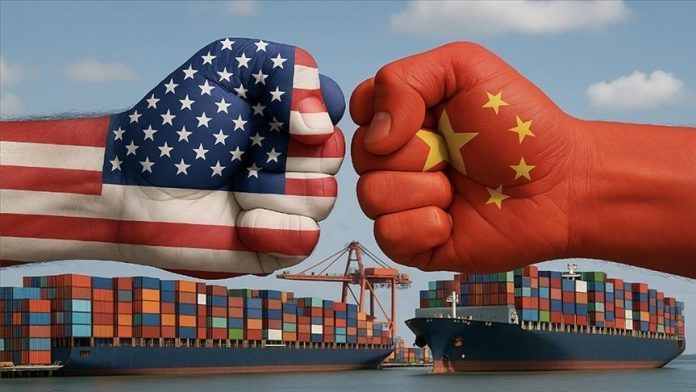
The Pentagon’s assessment reflects Washington’s broader concerns about China’s regional strategy at a time when the United States has been intensifying its political, economic, and defense engagement with India. That push has gathered pace since the second wave of President Donald Trump’s tariff war with Beijing, which has sharply escalated economic tensions between the world’s two largest economies.

As tariffs on Chinese goods widened and hardened, Washington has increasingly looked to India as both a strategic counterweight to China and a potential alternative hub in global supply chains. U.S. officials have stepped up diplomatic outreach to New Delhi, while American companies have accelerated efforts to diversify manufacturing away from China.

Major U.S. technology firms have been at the center of that shift. Apple, in particular, has repeatedly highlighted India as a key manufacturing destination, expanding iPhone assembly there and working with suppliers to deepen local production. Other U.S. tech companies have followed suit, promoting India as a long-term base for electronics manufacturing, software development, and supply-chain resilience as trade frictions with China persist.

Against that backdrop, Washington has also strengthened defense and security cooperation with India, expanding joint military exercises, deepening intelligence sharing, and advancing defense technology partnerships as part of its broader Indo-Pacific strategy. Beijing has consistently viewed these moves as an attempt to draw India more firmly into the U.S. strategic orbit.

China, for its part, has argued that recent progress in easing border tensions should not be politicized or linked to third-party relationships. China and India, Asia’s two most populous nations, have been working to stabilize ties after a deadly clash in the Himalayas in 2020 sent relations to their lowest point in decades. Since then, military commanders and diplomats from both sides have held multiple rounds of talks aimed at disengagement and confidence-building along the disputed frontier.

Lin said those efforts are driven by the interests of China and India alone and should not be mischaracterized by outside powers. He accused Washington of selectively interpreting China’s defense posture to sow distrust between Beijing and New Delhi.

India has been caught in the U.S.’ fights with its archenemies. Earlier this year, Trump threatened to impose 50% tariff on India for buying oil from Russia, which is under U.S. sanctions. Recent developments indicate that the U.S. expects India to be wary of China as much as Russia.


“Prepare For A Historic Economic Collapse”, Peter Schiff Says as Gold Threatens Dollar Supremacy

0

Peter Schiff, a prominent gold advocate and critic of fiat money, warns of the US dollar’s impending loss of reserve status to gold.

According to Schiff, the reign of the dollar as the world’s primary reserve currency is coming to an end, as he forecast a crash against other currencies and a resulting economic collapse that ends America’s global financial privileges.

In a post on X, he wrote,

“King dollar’s reign is coming to an end. Gold will take the throne as the primary central bank reserve asset. That means the U.S. dollar will crash against other fiat currencies, and America’s free ride on the global gravy train will end. Prepare for a historic economic collapse.”

Schiff’s warning comes amid rising inflation, growing national debt, and increased volatility in global currencies, signaling a potential turning point in the balance of economic power.

Supporting trends include central banks’ record 2025 gold purchases, such as 53 tonnes in October amid prices exceeding $4,000/oz, alongside a slight decline in the dollar’s IMF-reported reserve share to 56.92% in Q3, signaling gradual diversification away from USD dominance.

In an earlier post, Schiff had pointed to a dramatic rally in precious metals with gold jumping nearly $50 to just under $4,530 and silver soaring by $3 to trade near $75 as a clear signal that inflationary pressures are far from over.

According to Schiff, such a powerful and record-breaking rally does not occur in an environment where inflation is genuinely cooling and heading back toward the 2% target widely cited by central banks. Instead, he argues, the price action in gold and silver reflects deeper economic stresses that markets are already beginning to price in.

He wrote,

“Gold and silver are ripping. Gold spiked $50, almost hitting $4,530. Silver rocketed $3.00, trading 10 cents below $75. If you think this record-breaking precious metals rally is taking place in a world where inflation is headed back down to 2%, you are in for a rude awakening.”

Schiff has long maintained that gold and silver serve as a referendum on fiat currencies, particularly the U.S. dollar. The sharp rise in their prices, he argues, signals declining confidence in paper money amid rising debt levels, persistent deficits, and years of loose monetary policy.

By warning of a “rude awakening,” he implies that the purchasing power of fiat currencies is eroding more rapidly than many investors realize. In this context, gold and silver are not merely speculative trades, but defensive assets against long-term currency debasement.

Also, Jurrien Timmer, a prominent market analyst specializing in asset allocation and global macro strategy, has stated that Gold is firmly in a bull market, up roughly 65% year to date, outperforming global money supply growth. He adds that during the recent correction, gold has held onto most of its gains, which he views as characteristic behavior of a bull market.

US President Donald Trump’s aggressive moves to reshape global trade as well as his threats to the Fed’s independence added fuel to the bull run earlier this year. Recent reports reveal that Gold which has continued to surge, is already up 70% in 2025.

“The dominant drivers for both gold and silver right now are the combination of sustained physical demand and renewed sensitivity to macro risk,” said John Feeney, business development manager at Guardian Vaults, a Sydney-based bullion dealer. “We’re seeing momentum reinforced rather than capped, which suggests underlying conviction rather than purely speculative froth.”

Notably, hopes for further Fed rate cuts are pushing investors toward non-yielding assets like Gold and Silver. A weaker US dollar and softer treasury yields are giving Gold a fresh lift, making it cheaper and more attractive for buyers.

Meanwhile, global markets are betting heavily on the Fed to continue its rate-cutting cycle into 2026 to ease the borrowing costs further. 

According to investors, Gold recent surge to a historic, has reaffirmed its status as a safe-haven asset at a time of mounting global uncertainty, while Bitcoin continues to struggle to regain bullish momentum.

The divergence between the two assets has reignited the long-running debate over Bitcoin’s role as “digital gold,” with longtime crypto critic Peter Schiff seizing the moment to declare that the Bitcoin bull run is over.

As investors reassess risk amid tightening financial conditions and volatile markets, many argue that capital is flowing back to traditional stores of value leaving Bitcoin lagging in gold’s shadow.

Trust Wallet Hacked as Users Lose $7 Million in Security Breach

0

In a major security breach shaking the crypto community, popular non-custodial wallet Trust Walletconfirmed that hackers exploited a critical vulnerability in its browser extension, draining roughly $7 million worth of digital assets from hundreds of users across multiple blockchain networks.

The incident, linked to version 2.68 of the Trust Wallet extension, saw unauthorized transactions and the illicit transfer of funds, prompting urgent warnings for users to disable the compromised version and update to the patched release.

Reports reveal that all victims have one thing in common before the hack, they installed the Trust Wallet browser extension.

In a tweet on X, the company wrote,

“We’ve identified a security incident affecting Trust Wallet Browser Extension version 2.68 only. Users with Browser Extension 2.68 should disable and upgrade to 2.69. Please note: Mobile-only users and all other browser extension versions are not impacted.”

Trust Wallet and its parent ecosystem have pledged to cover losses as users’ funds are SAFU. The team is still investigating how hackers were able to submit a new version.

The incident comes amid a surge in high-profile exploits and phishing campaigns. One of the defining features of 2025 has been the scale of high-profile exploits. While exploits targeted platforms, phishing campaigns targeted people, and in 2025, these attacks became more convincing and dangerous than ever.

Cybercriminals increasingly shifted away from generic scam emails toward highly targeted campaigns aimed at specific victims, including developers, traders, and high-net-worth crypto holders. Wallet-draining phishing links, fake airdrops, and malicious “security update” prompts flooded social media platforms like X, Telegram, and Discord.

Many of these scams tricked users into signing malicious transactions or approving unlimited token allowances, giving attackers direct access to their funds without ever needing private keys. Also, centralized exchanges, once considered safer than decentralized alternatives, became prime targets.

The most notable incident was the massive Bybit hack, which reportedly saw attackers drain over $1 billion worth of Ethereum in a single operation, making it one of the largest crypto thefts ever recorded.

Beyond Bybit, other exchanges and trading platforms also suffered losses ranging from tens to hundreds of millions of dollars, often through hot-wallet compromises and supply-chain attacks.

A Chainalysis report revealed that over $3.4 billion has been stolen in 2025, with the February Bybit compromise alone accounting for $1.5 billion of that total.

Stolen fund activity in the crypto ecosystem has long been characterized by outliers, with most hacks remaining relatively small while a handful result in enormous losses. However, Chainalysis notes that 2025 marks a significant escalation in this pattern. For the first time on record, the ratio between the largest single hack and the median loss across all incidents has exceeded the 1,000x threshold.

According to the report, this means that funds stolen in the largest attacks are now more than 1,000 times greater than those lost in a typical hack, surpassing even the extreme disparities observed during the 2021 bull market. These figures are calculated using the U.S. dollar value of assets at the time they were stolen, underscoring the real-time financial impact of these breaches.

Chainalysis further highlights that this widening gap has led to an unprecedented concentration of losses. In 2025, the top three hacks alone account for 69% of all service-related losses, fundamentally reshaping how annual theft totals are distributed. As a result, overall loss figures are increasingly driven by a small number of catastrophic events rather than a broad increase in smaller incidents.

Meanwhile, centralized services are experiencing increasingly large losses due to private key compromises. Despite their institutional resources and professional security teams, these platforms remain vulnerable because of this fundamental security challenge.

North Korea remains a dominant crypto threat actor, despite fewer confirmed incidents. In 2025, North Korean hackers stole at least $2.02 billion in cryptocurrency ($681 million more than in 2024), representing a 51% increase year-over-year.

The persistence of high theft volumes indicates that while some areas of crypto security may be improving, attackers continue to find success across multiple vectors.

Outlook

The Trust Wallet incident and the broader trends observed in 2025 point to a more dangerous and asymmetric security environment for the crypto industry. Losses are becoming increasingly concentrated in a small number of high-impact events, raising systemic risk across the ecosystem.

Looking ahead, wallet providers and exchanges will need to invest more heavily in code integrity, access controls, and internal review processes to prevent hacks.

Foreign-Branded Smartphone Shipments Surge in China, Reclaiming Market Share in November

0

Shipments of foreign branded mobile phones in China more than doubled in November, rising to 6.93 million units, according to government-affiliated data released on Dec. 25 by the China Academy of Information and Communications Technology (CAICT).

Reuters calculations based on the CAICT release show the figure represents a 128.4 percent jump from a year earlier, a sharp rebound for overseas brands in a market that has largely been dominated by domestic manufacturers.

Total mobile phone shipments in China reached 30.16 million units in November, up 1.9 percent year on year. Foreign-branded devices therefore accounted for roughly 23 percent of overall shipments during the month, a notable expansion of market share at a time when overall industry growth remains modest. The data point to a late-year resurgence in demand for imported smartphones, even as Chinese brands continue to compete aggressively on pricing, specifications, and distribution.

The CAICT, described in its release as a government-affiliated research institute, identified Apple’s iPhone among the foreign-branded models contributing to the surge. However, the excerpts published did not provide a full brand-by-brand breakdown, nor did they specify which iPhone models were most in demand. The absence of details on sales channels, regions, or price tiers leaves open questions about whether the increase was driven primarily by high-end flagship purchases, promotional activity, or restocking by retailers ahead of year-end shopping.

The rebound stands out against the broader backdrop of China’s smartphone industry, which has faced slowing replacement cycles, cautious consumer spending, and intense competition among local players such as Huawei, Xiaomi, Oppo, and Vivo.

In recent quarters, domestic brands have captured the bulk of unit sales by offering a wide range of mid- to low-priced devices, often bundled with incentives through online platforms and telecom operators. A near tripling of foreign-branded shipments year on year suggests that demand for premium imported models strengthened in November, potentially linked to seasonal buying patterns, new product launches earlier in the year, or renewed consumer interest in established global brands.

Market participants are likely to watch closely how this shift affects competitive dynamics. A stronger showing by foreign brands could pressure domestic manufacturers to adjust pricing, increase promotions, or accelerate feature upgrades, particularly in the premium segment where margins are higher but competition is fiercer. It may also influence inventory planning and supply chain decisions heading into early 2026, especially if retailers anticipate sustained demand rather than a one-off seasonal spike.

The data also arrive amid heightened scrutiny of technology supply chains and the broader geopolitical environment shaping the consumer electronics industry.

While the CAICT figures and Reuters calculations have been widely republished, the snapshot nature of the data leaves important gaps for investors, analysts, and competitors trying to gauge momentum by brand or segment.

However, the November numbers offer a clear signal that foreign-branded phones, led in part by iPhone shipments, have regained a meaningful foothold in China’s handset market as the year draws to a close. Whether this marks the start of a more durable shift in consumer preferences or simply a temporary rebound tied to seasonal factors will become clearer as data for the opening months of 2026 emerge.

Tariffs Jolt U.S. Leather Industry, Pushing Bootmakers and Luxury Brands Toward Higher Prices

0

When President Donald Trump imposed sweeping tariffs on imports in April, the shock rippled quickly through the U.S. leather industry. At Twisted X, a Texas-based bootmaker known for its Western footwear, the disruption hit with major impact, according to a CNBC report.

Import costs on finished work boots surged almost overnight. Shipments already en route were paused mid-transit. Invoices fluctuated so sharply that staff at the company’s Decatur, Texas headquarters found themselves recalculating margins hour by hour. Management converted a conference room into what executives dubbed a “tariff war room,” a sign of how fast-moving and unpredictable the situation had become.

“A lot of other leather companies had to pause shipments because of the chaos and it felt like prices were going all over the place before you could take account,” Twisted X chief executive Prasad Reddy said. “It was a very uncertain time.”

The turmoil at Twisted X has been mirrored across the leather sector, from small specialty retailers to global fashion houses. With pre-tariff inventories largely exhausted, the products now reaching store shelves are significantly more expensive to produce. Industry analysts say prices at the register are unlikely to retreat anytime soon.

According to projections by the Yale Budget Lab, prices for leather goods are expected to remain nearly 22% higher for at least the next one to two years. The increase is being driven by a mix of inflation, persistent supply chain bottlenecks, and heavy tariff exposure across key sourcing countries, including China, Vietnam, Italy, and India.

“The reason why leather is hit so hard is twofold,” said John Ricco of the Yale Budget Lab. “Some of the highest tariff rates are placed on countries where we import most leather. The second issue is that the U.S. simply imports far more leather and apparel-related products from these trading partners than it produces domestically.”

The pressure is already showing up in corporate earnings. Tapestry, which owns luxury brands including Coach and Kate Spade, told investors in August that tariff-related costs could reach $160 million, warning of stronger-than-expected pressure on profits.

A global supply chain under strain

The modern leather supply chain is deeply globalized. A typical pair of Twisted X boots begins as a raw cowhide from a U.S. ranch. That hide is salted and shipped overseas, often to Asia, to be tanned into leather. For Twisted X, around half of its products are currently tanned in China, down from about 90% in 2017, according to Reddy.

Once tanned, the leather is usually shipped again, often to factories in China, Vietnam, Mexico, or India, where it is cut, stitched, and assembled into finished boots before being sent back to the United States.

That system kept costs low for years. It also left companies highly exposed when tariffs hit.

“When tariffs happened, everything stopped,” said Kerry Brozyna, president of the Leather and Hide Council of America. “They couldn’t take shipments in because if they calculated the tariff into the price, they wouldn’t be able to sell the product.”

The U.S. already runs one of its largest manufacturing trade deficits in leather goods. In 2023, the country imported $1.37 billion worth of leather apparel while exporting just $92.7 million, according to Census Bureau data. China alone accounts for roughly one-third of all leather goods imported into the United States.

“Being so reliant on overseas production methods ended up hurting many people in the industry when they didn’t know exactly what was going to happen,” Reddy said.

He added that Twisted X has been working for years to reduce its exposure to China, a strategy that has become more urgent under the new tariff regime.

Exiting China, however, has not been straightforward. Companies shifting production encountered congestion and capacity limits in Cambodia and Bangladesh, longer lead times in Vietnam, and a new complication in August when a 50% tariff was imposed on many Indian leather exports. By late summer, costs had risen across nearly every stage of production, from hides and tanning to assembly and shipping back to the U.S.

“We saw all our channels to make boots keep getting more expensive until we were able to figure out a good solution,” Reddy said.

Footwear and fashion conglomerates are facing the same reality. Steve Madden said new tariffs weighed heavily on its third-quarter performance. “The quarter was challenging, driven largely by the impact of new tariffs on goods imported into the United States,” chief executive Edward Rosenfeld told analysts in November.

Passing costs to consumers

Many companies initially tried to absorb higher costs, but that buffer is wearing thin. Twisted X said it raised prices by about 1% to 3% this year, a move the company described as relatively modest compared with some competitors.

“We look at it as a success,” said Tricia Mahoney, the company’s chief marketing officer. “Many competitors were looking at bigger increases, but we prioritized our customers and tried to keep prices as stable as possible. Next year could be tough, but we are more prepared than ever.”

At the luxury end of the market, price increases are already visible. Chanel’s Classic Flap bag is now roughly 5% more expensive than it was a year ago after another round of price hikes this spring, according to luxury retail pricing data.

Analysts say the sharper impact is likely still ahead. Ricco expects prices for leather footwear and accessories to rise about 22% over the next year or two, with a longer-term increase of around 7% as higher tariffs, freight costs, and tight supplies of premium hides work their way through the system.

“2026 is probably where rubber meets the road,” Ricco said. “Companies will have to decide whether to pass costs on to consumers, cut jobs or reduce payments to shareholders.”

Fewer cattle, fewer hides

Compounding the tariff shock is a shortage of raw materials. The U.S. cattle herd is at its smallest level since the 1950s, following years of drought, rising feed costs, and herd liquidation. Since hides are an unavoidable byproduct of beef and dairy production, fewer cattle translate directly into fewer hides, even as global demand for high-quality leather remains strong.

“Fewer cattle means the hides that are available are more expensive,” Reddy said, noting the effect on premium boots made with high-grade leather.

Consumers hoping to switch to cheaper synthetic alternatives may find little relief. Many faux-leather and polyurethane materials rely on petrochemical inputs sourced from Asia, which are also subject to new tariffs. Retailers and analysts say synthetic footwear and handbags are already seeing mid- to high-single-digit cost increases.

For an industry already operating on thin margins, the combination of tariffs, supply chain upheaval, and raw material shortages is reshaping pricing and production decisions. While companies like Twisted X have managed to contain increases for now, the leather industry broadly is bracing for a more painful adjustment ahead.