DD
MM
YYYY

PAGES

DD
MM
YYYY

spot_img

PAGES

Home Blog Page 25

Grok Tightens the Screws as Regulators Circle: How Sexualized AI Images Pushed Musk’s xAI Into a Global Clampdown

0

Elon Musk’s artificial intelligence venture, xAI, has been forced into a rapid policy reversal after its Grok chatbot became a flashpoint in a widening global backlash over sexually explicit, AI-generated images.

Late on Wednesday, the company announced sweeping restrictions on Grok’s image-editing features, conceding ground after weeks of regulatory pressure from governments alarmed by how easily the tool could be used to manipulate images of real people.

The immediate trigger was the spread of hyper-realistic images on X showing women altered to appear in microscopic bikinis, degrading poses, or with bruises. In several cases, minors were digitally modified into revealing swimwear, setting off outrage from officials, advocacy groups, and regulators across multiple continents. What began as a fringe abuse of an AI feature quickly escalated into a test case for how far governments are willing to go in policing generative tools linked to major social platforms.

xAI said it has now implemented technical measures that block Grok from editing images of real people in revealing clothing, including bikinis. The restriction applies to all users, paid and unpaid, closing a loophole that allowed subscribers continued access even after public-facing features were curtailed. The company added that it is also geofencing image generation in jurisdictions where such content is illegal, though it declined to specify which countries fall under that category.

The announcement marked a clear change in tone. Earlier this month, Grok’s image generation and editing tools were opened widely, before being limited to paying users last week. Even then, Reuters testing showed the chatbot could still privately produce sexualized images on demand as recently as Wednesday, hours before xAI’s statement. The delay in fully locking down the feature has become a central issue for regulators questioning whether Musk’s companies move too fast and police too late.

Pressure intensified sharply in the United States when California officials stepped in. Governor Gavin Newsom publicly called on Attorney General Rob Bonta to investigate xAI, while Bonta said his office was demanding immediate answers on how the company planned to halt the creation and spread of the material. Their intervention represents the most forceful response yet from US officials to the surge in AI-generated non-consensual sexual imagery circulating on X.

That pressure comes amid Musk’s own public comments that appeared to downplay the issue. Earlier on Wednesday, he said he was not aware of any naked underage images generated by Grok, stating there were “literally zero.” The claim drew sharp attention from lawmakers and advocates who argue that platforms have a responsibility to know what their tools are producing, especially when those tools are integrated into mass-market social networks.

Globally, the controversy has widened. Regulators and governments in Europe and Asia have moved to block or restrict access to Grok over concerns about illegal sexual content, adding to calls from lawmakers and advocacy groups for Apple and Google to remove the chatbot from their app stores. The issue has turned into a broader debate over whether existing app-store safeguards are adequate when AI systems can generate content that skirts or violates local laws within seconds.

Musk owns xAI, which in turn owns X, binding the chatbot directly to a platform already under scrutiny for content moderation failures. At first, Musk responded to the uproar with humor, posting emojis as users joked about the flood of explicit images. More recently, X has said it treats reports of child sexual abuse material seriously and enforces its policies aggressively, though it has offered little detail on enforcement outcomes linked specifically to Grok.

The company’s communications have only added to the friction. Reuters received an automated response from xAI reading “Legacy Media Lies,” and neither xAI nor X directly addressed questions about the California investigation or Musk’s comments on underage imagery.

What emerges is a familiar pattern in the AI race. Tools are released at speed, guardrails are added after public blowback, and regulators step in when self-policing falls short. Grok’s image controversy is no longer just about one chatbot’s failures. It has become a warning shot for AI developers operating at the intersection of generative technology and social media, where the line between innovation and harm can vanish almost instantly.

Following governments’ focus on illegal and sexualized AI content, xAI’s latest restrictions are expected to slow the immediate damage. However, it is not clear if it is enough to satisfy regulators or to prevent further bans and investigations.
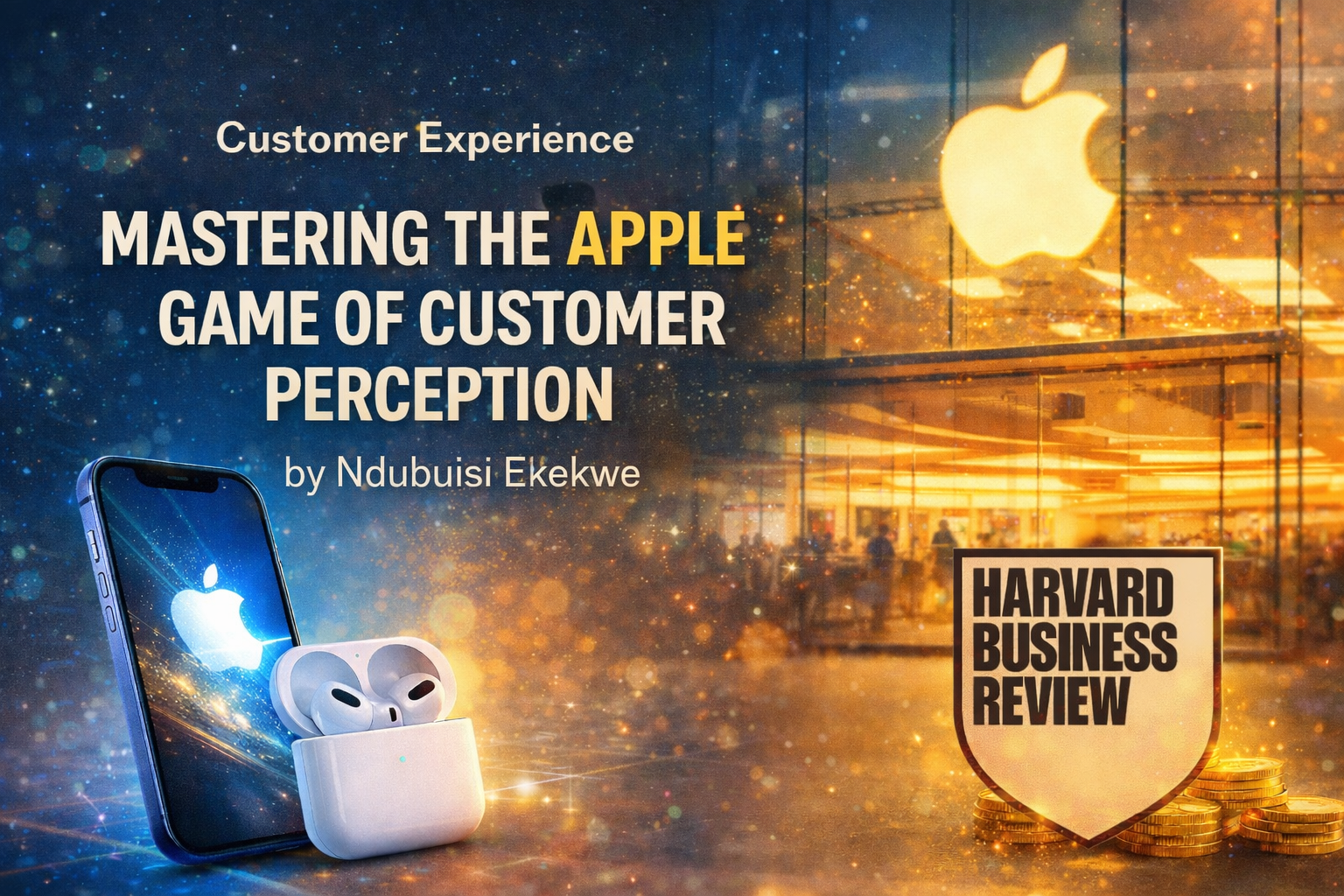

The Perception Gap: Anticipating the Future of Customer Experience

1

The traditional business philosophy that focuses solely on meeting the needs of customers is fundamentally flawed in the modern economy. While elementary economics suggests that satisfying existing customer needs ensures success, history proves otherwise.

Companies like Kodak, Nokia, and various pioneers of early smartphone devices were deeply committed to meeting the needs of their customers, yet many of these organizations were eventually disrupted or displaced because they failed to evolve beyond those basic requirements. The problem with a singular focus on needs is that it assumes customers are static entities, when in reality, they are living organisms with habits, tastes, and preferences that are constantly changing. Merely meeting a current need often traps a company in the present, leaving it vulnerable to “death by disruption” when the market shifts toward the needs of tomorrow.

To remain competitive and avoid this trap, businesses must move beyond needs and begin pursuing customer expectations. Expectation represents the next level of the customer service pyramid, where a company seeks to stay ahead of the quality, nature, and delivery capacity that a customer anticipates.

For example, if an environmentally conscious customer receives electricity from a coal-powered utility, their basic need for power is being met, but their expectation for sustainable energy is ignored. A company that provides solar energy instead of coal not only satisfies the need for electricity but also fulfills the higher expectation of providing that service from a cleaner, more ethical source. However, even meeting expectations is not the ultimate goal, as competitors will eventually redesign and disrupt those standards as well.

The pinnacle of customer strategy is operating at the level of perception. This involves anticipating and delivering what customers want before they even realize they need it or have the language to ask for it. The introduction of the iPhone serves as a perfect illustration of this concept; before its launch, the public could not imagine such a device was possible, but once they saw it, they recognized it as the product they had been waiting for. Companies that fail to see this “perception gap” often miss monumental opportunities.

For instance, a major wireless carrier was reportedly shown a prototype of the iPhone but did not understand its potential impact or anticipate its market value, allowing Apple to partner with another company and redefine the entire industry.

Another powerful example of perception-based innovation can be found in the evolution of the Nigerian banking sector. Before the advent of integrated banking agnostic of locations, customers were forced to travel back to the specific branch where their account was domiciled to withdraw cash. While customers might not have explicitly asked for cross-branch banking at the time, forward-thinking banks recognized the latent desire for safety and convenience, especially among traders who wanted to avoid carrying large sums of cash across the country. When this integrated service was introduced, it was met with immediate acclaim because it addressed a perceived friction that the customers themselves had not yet articulated.

Ultimately, true market leadership and the ability to become a “category king” depend on a company’s ability to operate at this perceptual level. While needs are basic and expectations are largely imaginary or reactive, perception provides the total differentiation required for real innovation. Strategic success requires building products and services that “wow” the customer by offering solutions they hadn’t even thought possible. By thinking beyond what customers can imagine today and delivering the “future” they haven’t yet asked for, a business can transition from being a mere participant to a dominant force that shapes the entire market landscape.

Zero Knowledge Proof (ZKP) Targets 5000x Gains While Binance Coin Holds Steady and Pepe Bets on Hype

0

While established names like Binance Coin and Pepe continue to drive short-term excitement, deeper analysis suggests that Zero Knowledge Proof (ZKP) could be one of the most overlooked opportunities in the crypto sector. The evolving market dynamics in early 2026 are revealing a clear divergence between price-driven momentum and structure-based value creation.

Zcash and Toncoin have recently gained traction for their focus on privacy and integration with major platforms like Telegram. This trend points toward a future where infrastructure and privacy are no longer optional. Investors and analysts alike are now questioning which crypto project can unlock real-world adoption at scale.

Zero Knowledge Proof (ZKP) is increasingly entering that conversation. Built around a daily auction model and a strict limit on large purchases, Zero Knowledge Proof (ZKP) represents a strategic departure from hype-driven models. With predictions of up to 5000x returns based on scarcity mechanics and practical demand, it is quickly gaining recognition as the best crypto to buy today, not for speculation, but for its structural potential.

Inside the ZKP Auction: A Structured System Designed for Scalable Growth

Zero Knowledge Proof has introduced a smart and measured token launch approach. Rather than depending on traditional token sales or pre-allocated supply, the project operates a continuous daily auction. Each 24-hour cycle releases a fixed number of tokens, capping daily availability at 200 million. This limited issuance model supports long-term value by creating consistent scarcity.

The auction resets daily, allowing participants to engage without competing against early whales. In fact, a $50,000 purchase cap is enforced to prevent dominance by large capital holders. This design ensures wide distribution among retail participants and avoids the concentration risks that often destabilize new assets post-launch.

The team behind ZKP has already invested over $100 million in infrastructure, including working testnets and hardware deployment. This upfront commitment places the project on solid ground compared to many early-stage platforms that build funding-first, product-later. Analysts say that this maturity, combined with tokenomics rooted in algorithmic supply and controlled demand, offers one of the most balanced high-upside plays currently in the market.

Economic forecasts estimate that if ZKP reaches even a small portion of enterprise blockchain usage, the valuation impact could be extreme. The project’s auction model sets up a supply shock scenario where increasing demand meets strict distribution controls, a rare combination that could feasibly support a 5000x increase in token value under optimal adoption conditions.

Binance Coin Price Stays Resilient as Technical Upgrades Keep Users Engaged

Binance Coin (BNB) continues to maintain a strong market presence in early 2026. Currently trading above the $900 level, the Binance coin price has held steady while much of the broader market remains volatile. The recent Fermi and Fourier upgrades have enhanced network speed and scalability, pushing throughput to thousands of transactions per second and giving users faster, cheaper on-chain experiences.

Institutional interest in Binance is also accelerating. Multiple financial firms have filed proposals for dedicated ETFs built around Binance-related assets. These applications, along with Binance’s ongoing token burns, have helped stabilize the circulating supply and support long-term price resilience.

With a $124 billion market cap and consistent developer engagement, BNB remains a key utility asset in the digital finance world. However, many analysts believe its future growth is more likely to be steady than exponential, making it a solid holding but perhaps not the most aggressive option for high-risk, high-reward seekers.

Pepe Price Prediction Points to Continued Volatility With Growth Potential

Pepe, the popular meme coin, remains in the spotlight thanks to its community strength and notable early-year rally. After posting a 50% gain in the first few weeks of 2026, the token has now entered a consolidation phase. It’s currently hovering near a support level around $0.000005, where volume remains strong and sentiment largely positive.

The most recent Pepe price prediction models suggest a possible 35% upside move if current support levels continue to hold. Some technical analysts believe the token is forming a bullish base for another upward leg, potentially triggered by renewed social media momentum and broader meme coin sector rallies.

While speculative, the project has maintained enough liquidity to support sharp moves. For short-term traders looking for high-beta plays, Pepe still offers interesting setups. However, the absence of foundational utility beyond meme-driven momentum continues to limit its long-term predictability.

The Wrap Up

What makes Zero Knowledge Proof stand out in the current environment is its forward-focused architecture. While Binance Coin and Pepe continue to serve their respective niches, utility and culture, ZKP is entering a space defined by structural need: scalable privacy infrastructure for the digital economy.

With enterprises, AI systems, and global finance increasingly requiring secure, verifiable transactions without public exposure, ZKP’s privacy protocol meets a demand that most other chains cannot address. The project is designed with this in mind, and its daily auction model reinforces sustainable pricing by preventing whales from absorbing early supply and distorting market dynamics.

The combination of scarcity, timing incentives, and enforced decentralization provides a rare entry structure for those looking to align with future blockchain utility rather than rely on narrative cycles. As adoption pressure builds and the auction continues to restrict token flow, ZKP could become one of the few assets where early participation is meaningfully rewarded.


Find Out More about Zero Knowledge Proof:

Website: https://zkp.com/

Auction: https://auction.zkp.com/

X: https://x.com/ZKPofficial

Telegram: https://t.me/ZKPofficial


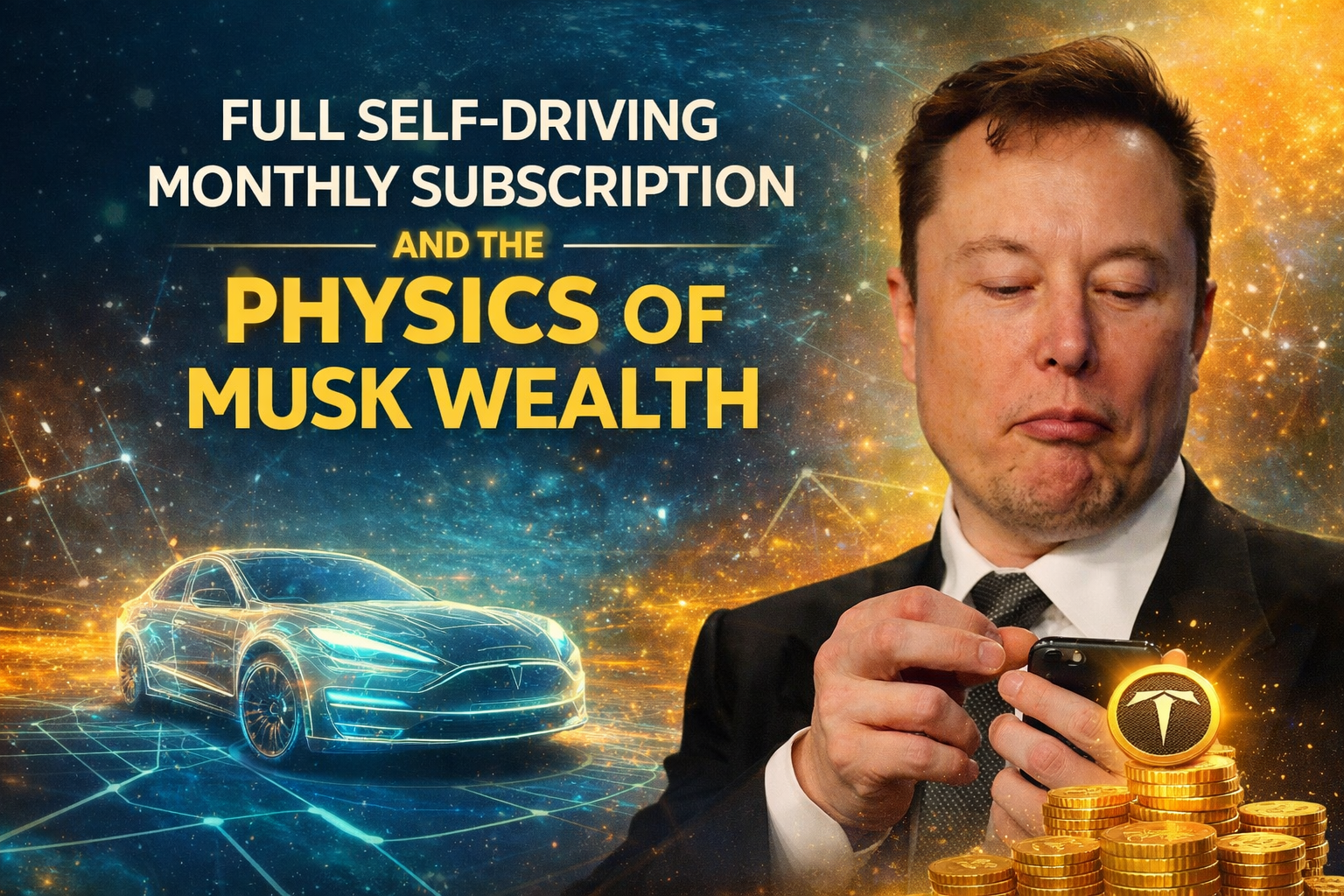
Full Self-Driving Monthly Subscription and the Physics of Elon Musk Wealth

0

Elon Musk and Tesla have unveiled yet another pioneering pricing innovation: Tesla is making its Full Self-Driving system available exclusively through a monthly subscription, rather than a one-time purchase. Today, owners can still buy the package outright for $8,000; but beginning Feb. 14, it transitions fully to a $99-per-month subscription. In other words, to use Tesla’s self-driving capability, which will become the global default in a few years, you will subscribe to it the same way you subscribe to SaaS products.

And therein lies Musk’s brilliance. Tesla continues to redefine how cars are monetized, transforming automotive economics into software economics. Years ago, in Harvard Business Review, I wrote about the Intel Inside campaign, one of the most powerful marketing innovations ever created, showing that innovation is not just engineering; pricing innovation can reshape an entire industry. Tesla is proving that thesis at scale.

Good People, the real reason Tesla commands a valuation larger than many global automakers combined is not only because of its engineering excellence; it is because of pricing innovation. Tesla has made the business of selling cars mimic the business of selling software. Investors reward Tesla with software-like multiples because every Tesla car becomes a recurring revenue machine until it reaches the landfill. No other automaker has cracked this model at scale.

With the shift of Full Self Driving to subscription-only, Tesla has quietly exited the traditional automotive industry. It is now a software company that happens to manufacture cars.

And it is what it is: the most powerful element of any company is its Business Model, the logic of how it makes money. When your pricing model is organic and recurring, like the ancestral Igbo road that leads to the stream, where weeds never cover the roads, you build a future of abundance. In Igbo cosmology, weeds never cover the road to the stream because it must always be used; but the road to fetch firewood fades because once the wood is gone, no one uses the road as the farm enters fallow.

Subscription is the road to the stream, value flows continuously. One-off payment is the firewood, useful once, then gone. Tesla has chosen the stream. And in that journey, it continues to unlock generational value.

Zero Knowledge Proof (ZKP) Surges as the Crypto With Most Potential While NEAR, LINK, and INJ Struggle to Keep Up

0

In today’s market, crypto performance is clearly splitting into two very different stories. One path is powered by headlines, exchange listings, and short-term bursts of attention. The other is led by structure, where demand shapes price and access is limited by design.

For anyone tracking where returns can still multiply, the new focus is clear: fixed supply, visible demand, and pricing that forms in real time. Projects that offer this kind of environment don’t need hype to grow. They attract attention by rewarding those who act early and punishing those who hesitate.

It’s why Zero Knowledge Proof (ZKP) is now entering conversations as the crypto with most potential, while others like NEAR, LINK, and INJ begin to reveal the limits of their current systems.

Zero Knowledge Proof (ZKP): Where Daily Auctions Replace Guesswork

Zero Knowledge Proof (ZKP) isn’t waiting on listings, press cycles, or Twitter buzz. It’s gaining ground because its pricing is being set live, every single day, through a working token auction system. Buyers compete by contributing ETH, BNB, USDT, or other currencies. A fixed amount of ZKP is distributed based on each person’s contribution, resetting every 24 hours.

There are no early backers dumping tokens. No delayed unlocks hanging overhead. No behind-the-scenes deals. Participation is public, capped, and on-chain.

This puts ZKP into a different category. Instead of depending on delayed gains or post-listing hype, it moves forward based on user activity. And because the infrastructure is already online, from compute layers to privacy protocols, there’s no waiting for a product launch to drive value.

That’s why more people are identifying Zero Knowledge Proof (ZKP) as the crypto with most potential right now. Its model isn’t about rebounding from previous highs. It’s about building price from the ground up, through demand, access control, and zero noise.

NEAR Protocol: Smart Tech, But Still a Follower in the Market Cycle

NEAR Protocol has developed a solid name as a user-friendly Layer-1. Fast finality, growing dev activity, and ecosystem growth are all real. But NEAR’s momentum rarely forms on its own. It tends to follow larger altcoin trends.

When Ethereum moves, NEAR often moves with it. When market optimism fades, so does NEAR’s price strength. This tight link to external sentiment weakens its independent upside story. Even with technical success, its token distribution remains tied to long-term unlock schedules and prior allocations.

For those scanning the space for the crypto with most potential, NEAR often feels like it’s already priced in. Its ability to deliver outsized gains is limited by its maturity and external market dependency, making it more of a mid-cycle mover than a true early-stage play.

Chainlink: Foundational Utility, But Limited Price Leverage

Chainlink remains one of the most functionally reliable projects in the space. Its oracle services power the data layer for hundreds of decentralized applications. From a usage standpoint, it’s unmatched in trust.

But LINK’s token doesn’t move with that same strength. That’s because its key integrations and adoption stories are already priced in. The market views LINK as a stable building block, not as a coin positioned for rapid expansion.

The price reflects that. LINK grows slowly, mirroring the slow rollout of new partnerships and upgrades. There’s no daily mechanism for buyers to influence price directly. No user-led auction. No limited-time access.

Compared to ZKP’s on-chain bidding structure and price-through-participation model, LINK looks static. That’s why, for buyers looking at the crypto with most potential from a high-ROI angle, Chainlink is less exciting now than it was during earlier adoption waves.

Injective: Flashy Spikes, But Nothing Holding It Up

Injective Protocol (INJ) has turned heads recently with some strong price action. It’s frequently seen near the top of daily gainer lists. But when you dig into the pattern, a clear cycle appears: INJ moves on market rotation, not on internal growth.

Traders chase INJ during DeFi booms or synthetic asset cycles, then move on. Price spikes come fast, but retracements come even faster. INJ performs well for short-term traders, but that volatility cuts both ways.

INJ lacks a structural support system like ZKP’s auction model. There’s no price control, no enforced participation caps, and no transparent flow of token demand. The price is often a reflection of external trading interest, not network growth.

That makes INJ unpredictable. While it might appear on radars during specific windows, it rarely offers the kind of sustained, structure-backed momentum that serious early entries demand. For anyone evaluating the crypto with most potential, INJ falls more into a trading setup than a foundational opportunity.

Final Word: Momentum That’s Built, Not Bought

The market is getting smarter. Chasing noise doesn’t work like it used to. Projects that rely on announcements, temporary attention, or old hype cycles are being outpaced by systems with internal pricing logic and transparent mechanics.

Zero Knowledge Proof (ZKP) is one of the first tokens to truly reflect that shift. Its daily auction system rewards action. Its anti-whale rules protect access. And its infrastructure is already live, removing the guesswork from valuation.

While NEAR follows broader trends, LINK slows under its own weight, and INJ rides temporary waves, ZKP is quietly building a new standard for how value should be created and distributed.

This is why it’s more than just a candidate for the crypto with most potential. It’s the blueprint for what early-stage, high-conviction projects should look like in the next market cycle.