DD
MM
YYYY

PAGES

DD
MM
YYYY

spot_img

PAGES

Home Blog Page 2530

Next Crypto to Explode: Which Cryptos Will Skyrocket in Q1 2025? The Answers Are Here

0

Investors are preparing strategically for perfect returns looking for the next crypto to explode.  The next crypto bull run is nearing as it is anticipated to take place in Q1 of 2025, becoming essential to identify early high-potential projects to yield high gains. This guide features six promising cryptocurrencies with strong growth potential in Q1 of 2025. We’ll explore each project’s technology, market potential, and strategic position. These factors may make them the next crypto to explode, with Aureal One(DLUME) leading the pack. Understanding these dynamics will help you make informed decisions, marking your portfolio for the next major crypto surge. Let’s dive into these innovative projects that are next to explode.

Next Crypto To Explode

  1. Aureal One (DLUME)
  2. DexBoss (DEBO)
  3. yPredict (YPRED)
  4. Sei (SEI)
  5. Dogecoin (DOGE)
  6. Hedera (HBAR)

Each project has different technological advancements and strategic market positions, making them very well-placed for the next crypto to explode. As Q1 of 2025 approaches, these cryptocurrencies are bound to grow much more. Let’s look at each one of them in detail to understand why they are the major building blocks of your investment strategy.

1.  Aureal One (DLUME)

Aureal One’s approach to innovative blockchain gaming and metaverse positions it to be the next crypto to explode. The $250 billion gaming industry is supported through ZK-Rollups for low fees and scalability. The potential for Aureal One is thousands of transactions per second for seamless user experiences. This would comprise its ecosystem, housing Darklume and Clash of Tiles, two projects featuring high-speed, decentralized gaming. Early investors can get into the presale at $0.00428082 per token for a possible 1000X return. This high-performance transaction capability can attract gamers and investors, emerging as a contender in the next crypto to explode in Q1 of 2025.

Click here to know more about Aureal One

2.  DexBoss (DEBO)

DexBoss is an emerging crypto space player gunning for a billion-dollar market capitalization. It makes DeFi simple for every user, not just large investors. The platform’s native token, $DEBO, is introduced at a presale price of $0.01 with a listing price of $0.15. Thus, it will offer early investors huge returns in the Q1 of 2025.

DexBoss has some things you might want from a full-featured exchange, including high-leverage trading, margin trading, and advanced charting for new and professional traders. The platform also provides fiat on-ramps to easily onboard new users into its ecosystem. It lists over 2,000 cryptocurrencies, including popular meme coins becoming contenders in the next crypto bull run. With its strong product-market fit and innovative features, DexBoss’s presale is among the next crypto to watch for 3500x gains. With a $50 million presale fundraising goal, DexBoss plans major exchange listings and platform launches in 2025. As its ecosystem grows, token value and liquidity should skyrocket, making DexBoss the next crypto to explode.

3.  yPredict (YPRED)

yPredict applies AI to predictive analytics, providing an accurate market signal and forecast to help traders make superior decisions. While its way is innovative, due to focusing on market analytics, it isn’t as widely used for different use cases as Aureal One. Still, one wouldn’t overlook its growth potential; thus, it is indeed a top contender for any investor seeking the next crypto to explode. yPredict has a current market capitalization of $500 million, trading at $0.25 per token, making this token a hot candidate for the next to explode with its AI-driven analytics.

4.  Sei (SEI)

Sei is a low-cap altcoin that has attracted investors looking for the next crypto to explode. Its price surged 12% recently, approaching the $1 mark. This rise is due to increased network activity and new use cases. Currently, the token oscillates between $0.51 and $0.65, with signs of substantial growth in Q1 of 2025.

Analysts believe it is currently undervalued. Overcoming resistance levels could propel its price up by 10x, offering huge profits. Traders are paying close attention to Sei’s rapid transaction speeds and efficient blockchain, which might propel the SEI token for massive gains in the next altcoin season.

5.  Dogecoin (DOGE)

Dogecoin, the leading meme coin by market cap, has recently been making headlines as it eyes the $1 mark. Despite the slight pullback following a broader market downturn led by Bitcoin, the Dogecoin price shows signs of bullish momentum. With Elon Musk’s enthusiastic backing, the Dogecoin price gains a spot amongst the next crypto to explode in 2025. Analysts predict that the Q1 of 2025 could see DOGE easily surpass 2021’s highs to $3. This indicates that  DOGE investment may double, yielding high returns in 2025. Many market enthusiasts and investors expect the meme coin to surpass the $ 1 mark to above the $3 milestone.

6.  Hedera (HBAR)

Hedera is among the fastest-growing blockchains by TVL, with a 262% monthly increase. While Hedera’s current TVL of $172M is significantly lower than Sui’s, it may soon outpace competitors if it maintains such a pace.

The reason for Hedera’s growth is its energy efficiency, high degree of decentralization, and security, which are ensured by the Hashgraph consensus algorithm.

Hedera’s native token HBAR surged 502% last month and hit $0.2905, 49% below its all-time high of $0.5701 recorded in 2021. However, the token has high odds of regaining its prime in this market cycle.

Our Top Choice

All these selected projects have strong growth potential for eye-catching paybacks in the Q1 of 2025. However, with a robust wagering game ecosystem and solid technical footing, Aureal One rises to the top as a standout opportunity. Now is an opportune time to explore these early-stage offerings and capitalize on their potential huge returns before 2025.


Tekedia Mini-MBA Edition 15 Graduates, Your Certificates Are Now Ready

0

Congratulations, Tekedia Institute Mini-MBA edition 15 graduates. This is just to update that all the certificates are now ready. Admin has started sending them out . You will get a link, follow the instructions. As always, every certificate issued by our Institute is auto-verifiable using the unique code on the certificate.

Celebrate your achievement and let the world know that you are an alumnus of our amazing Institution. Update your LinkedIn profile as follows:

-Go to Education section in your LinkedIn profile:

-School: Tekedia Institute

-Degree: Mini-MBA

-Field of Study: Business Administration Management, General.

And most importantly, the real value of Tekedia Mini-MBA is in the application. Go and WIN in the markets, and advance the wealth in communities. Thanks for co-learning with us. And return for other programs.

By February, we are launching an operating system for entrepreneurial capitalism and business systems. We will let you know, because whatever your vision is, in a new company, in an established company, in a multinational company, in a public sector institution, in an NGO, and more, Tekedia Institute has the tools to propel you to win.

Tekedia Capital welcomes Pulse AI

0

Tekedia Capital welcomes Pulse AI (runpulse.com) to our portfolio. The team is on a mission and has accomplished some great stuff in the technical space on document extraction: “We first developed this API for a very specific use case in the supply chain and got it to work across various unstructured documents used in the field. We were simply unable to find another solution on the market that worked well. Our original plan was to keep it in-house, but we soon started getting requests from dozens of companies to use this API on their own.”

Simply, Pulse AI is an inference layer that automates and analyzes data from legacy supply chain systems with AI, making sure yesterday, today and tomorrow’s data are used in the organization.

Indeed, the future of LLM-applications lies in the ability to process and understand raw data. Pulse AI extraction models perform SOTA extraction and intelligent chunking, enabling application’s “brain” to synthesize information better than ever. To utilize the data of old to drive businesses of the future, Pulse AI provides foundational tools for enterprises. RunPulse.

Tekedia Capital (capital.tekedia.com) funds great ideas globally.

TikTok Seeks Emergency Injunction to Delay Ban in Wait of Trump and Supreme Court

0

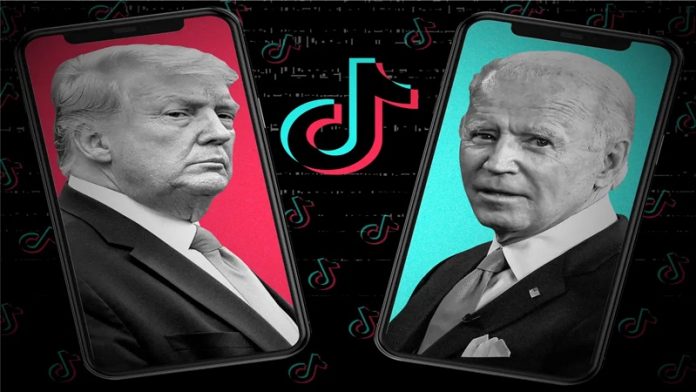
TikTok, the popular short-form video app owned by Chinese tech firm ByteDance, has filed an emergency motion in a U.S. federal court to block a looming ban scheduled to take effect next month.

The filing, made late Sunday, seeks an injunction to provide the U.S. Supreme Court adequate time to review the case and allow the incoming administration of Donald Trump to evaluate the implications of the ban.

In the court filing, TikTok and ByteDance stressed the importance of this case for public interest, stating: “The public interest favors providing sufficient time for the Supreme Court to conduct an orderly review process, and for the incoming Administration to evaluate this exceptionally important case.”

The legal maneuver appears as a last resort for the embattled app as the deadline to implement the federal appeals court ruling that upheld the government’s order for ByteDance to divest TikTok’s U.S. operations nears. Tekedia earlier reported that this ruling left TikTok with two stark options: escalate the case to the Supreme Court or rely on President Donald Trump to delay or overturn the ban.

With the emergency motion, TikTok appears to be pursuing both paths, though it remains unclear if Trump will indeed “save” the app, as he previously indicated.

Background of the Ban on National Security Concerns

In 2020, the Trump administration pursued a ban on TikTok  over concerns that its ownership by ByteDance poses a national security threat. Officials allege that the Chinese government could exploit the platform to access sensitive data on millions of American users, a claim TikTok has denied. In response, the administration issued executive orders to ban the app unless ByteDance divests TikTok’s U.S. operations.

To comply, ByteDance entered negotiations with American companies, including Oracle and Walmart, to create a U.S.-based entity, TikTok Global. While a preliminary agreement was reached in late 2020, the deal was never finalized until Trump left office.

In 2022, US lawmakers initiated legislation that will force TikTok to sell its US operations to American companies. In April 2024, The U.S. Senate passed the bill mandating ByteDance, the parent company of the popular social media platform, to divest its ownership within 270 days or risk losing access to the lucrative U.S. market.

The bill, christened the “Protecting Americans From Foreign Adversary Controlled Applications Act,” sailed through the Senate with a resounding 79-18 vote, reflecting bipartisan concern over potential national security risks posed by Chinese-owned technology companies operating within U.S. borders. It was swiftly signed by President Joe Biden, who retains the prerogative to extend the divestiture deadline by up to 90 days if significant progress toward a sale is underway.

Fighting for survival, TikTok went to court. TikTok users also went to court to challenge the government’s move, citing the First Amendment.

Court of Appeal upheld the Judgment to Sell

On Friday, the U.S. Court of Appeals for the District of Columbia upheld the government’s divestiture mandate, rejecting TikTok’s argument that the move violated constitutional protections, including freedom of speech. The ruling effectively left TikTok with two choices: appeal to the Supreme Court or await intervention from Trump.

While TikTok is moving forward with its Supreme Court strategy, the company’s reliance on Trump is believed to be a calculated gamble. Although the president-elect had signaled a willingness to “save TikTok,” saying, “I’m for TikTok because you need competition”, the Court of Appeal ruling has significantly minimized what he can do to save the app.

Experts speculate that Trump may adopt a less adversarial approach, focusing on regulatory oversight rather than an outright ban. However, any such action would require time and the court’s backing or possible amendment of the law that legitimatized the ban.

Some analysts suggest that TikTok could get a reprieve if Trump considers it as a bargaining chip in broader U.S.-China trade negotiations.

However, while TikTok’s emergency motion aims to buy time, the company is operating under a tight deadline. Should the Supreme Court decline to hear the case or Trump fail to intervene, ByteDance may be forced to divest its U.S. operations, a move that could drastically alter the app’s trajectory.

China Probes Nvidia of Violating Anti-Monopoly Law, Amid Escalating US-China Tech Tensions

0

China’s State Administration for Market Regulation (SAMR) has accused US giant chipmaker Nvidia of violating its anti-monopoly law.

Nvidia is under investigation for allegedly breaching commitments tied to its 2020 acquisition of Mellanox Technologies, a global supplier of computer networking equipment. The acquisition was approved by China on the condition that Nvidia would not discriminate against Chinese firms.

Responding to the anti-monopoly probe, Nvidia expressed willingness to cooperate with regulators, stating that the company is happy to answer any questions regulators have about its business.

Nvidia said,

“Nvidia wins on merit, as reflected in our benchmark results and value to customers, and customers can choose whatever solution is best for them. We work hard to provide the best products we can in every region and honor our commitments everywhere we do business”.

Despite the company’s assurance, its stock experienced a 3% drop following the market opening on Monday, adding to a pre-market decline of nearly 2%. This minor setback comes after a remarkable year where Nvidia’s stock soared by almost 200%, fueled by an AI boom that has pushed the company’s market value to over $3 trillion, closely behind Apple.

The recent probe into Nvidia adds a new layer to the intensifying US-China tech rivalry. The probe comes as China attempts to strengthen its domestic semiconductor industry, aiming to wean itself from dependence on foreign technology and, ultimately, to compete with the United States and its allies for technological dominance.

Also, last week, in a bid to block China from acquiring cutting-edge technology that would accelerate Beijing’s military modernization, the Biden administration imposed a third round of export controls on semiconductors. The U.S. Commerce Department justified these restrictions as necessary to curb China’s Al advancements, citing potential military applications. Industry experts have noted that these measures could significantly slow China’s development of Al technologies.

China responded to these restrictions by accusing the U.S. of “bullying and hypocrisy” and has implemented counter-embargoes on critical materials destined for the U.S. The Asian country’s investigation into Nvidia could be seen as a strategic move in this tit-for-tat economic struggle, marking a new phase in the battle for dominance in the global tech industry.

Notably, China’s probe of Nvidia comes after EU antitrust regulators asked rivals and customers if the US artificial intelligence chipmaker bundles its products which may give it an unfair advantage, in a move that may lead to a formal investigation.

Responding to the EU probe, Nvidia said

“We support customer choice and compete on merit across the board. Our products are best-in-class and able to stand on their own. We support open industry standards, enabling our partners and customers to use our products in a wide variety of configurations and system designs.”

Nvidia, which has a near-monopoly with an 84% market share, far ahead of rivals Intel has in recent years attracted regulatory scrutiny from regulators in the European Union, the United States, the UK, China, and South Korea.

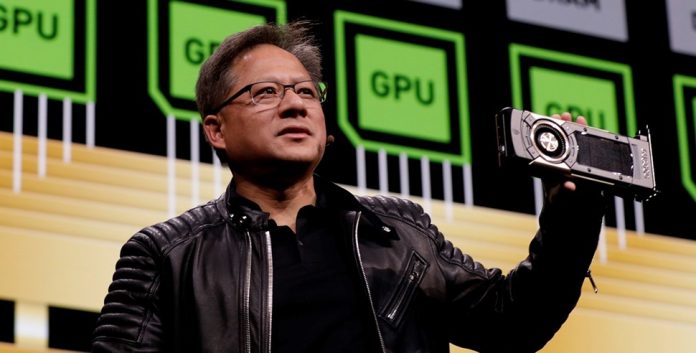
The company has seen high demand from customers involved in generative AI and accelerated computing for its chips. In October 2024, Nvidia’s CEO Jensen Huang described demand for the company’s AI chips as “insane”, showing the rising interest in artificial intelligence technology.

It is understood that as corporations rush to build out their AI infrastructure, Nvidia has emerged as the dominant provider of AI hardware, particularly its graphics processing units (GPUs), which are essential for AI applications.

The company’s recent investigation by China highlights the increasing vulnerability of global tech giants operating in both the U.S. and China amid escalating trade tensions. As both countries ramp up retaliatory measures, the broader implications for the tech industry, supply chains, and international trade remain uncertain.