DD
MM
YYYY

PAGES

DD
MM
YYYY

spot_img

PAGES

Home Blog Page 2559

Netflix Denies Claims of Nigerian Market Exit, Reaffirms Commitment to Local Content

0

Global streaming platform Netflix has refuted rumors suggesting it is exiting the Nigerian market, reaffirming its commitment to investing in Nigerian content despite growing concerns about its long-term viability in the country, according to TechCabal.

The speculation arose from comments made by celebrated Nigerian filmmaker Kunle Afolayan at the 2024 Zuma International Film Festival, where he disclosed that Netflix had canceled several films previously commissioned from other Nigerian filmmakers.

Afolayan, who has been a key partner in Netflix’s push to amplify Nigerian storytelling, expressed gratitude that seasons two and three of his series Anikulapo had already been produced. However, he hinted at Netflix’s dissatisfaction with the financial returns from the Nigerian market, despite the global success of its locally produced content.

“Three years ago, when we signed the three-film deal with Netflix, it was really exciting,” Afolayan said. “Thank God we had shot seasons two and three [of Anikulapo] because all the other people that were commissioned with us at the same time were canceled.”

Although Afolayan did not explicitly state that Netflix was withdrawing from Nigeria, his remarks, coupled with Netflix’s challenges in a market plagued by economic constraints, fueled speculation about the company’s future in the country.

Netflix Responds to Speculation

In a statement to TechCabal on Wednesday, Netflix dismissed the rumors, stating, “We are not exiting Nigeria. We will continue to invest in Nigerian stories to delight our audience.”

The company, however, did not address the reported cancellations of Nigerian projects, leaving questions about its broader strategy unanswered. The reassurance from Netflix comes as the platform faces mounting pressure from local competitors and an economy that has eroded consumers’ spending power.

A Common Challenge for Businesses

Netflix’s struggle in Nigeria mirrors the challenges faced by many businesses operating in the country. Nigeria’s high inflation rate, compounded by the depreciation of the naira, has drastically reduced disposable incomes, forcing households to cut back on non-essential expenses such as entertainment subscriptions.

With a standard plan priced at N7,000 ($4) per month, Netflix is considered a luxury by many Nigerians, especially as inflation has surged to record levels in recent years. This economic squeeze has made it difficult for the streaming giant to compete with more affordable alternatives, such as Showmax, which offers a similar service at lower prices tailored to Nigeria’s income demographics.

The financial strain is part of a broader economic challenge that has also impacted multinational companies, with some, like Amazon Prime Video, pulling out of Nigeria altogether. Amazon Prime exited the market earlier in 2024, just one year after launching a slate of original Nigerian productions and undertaking a major marketing campaign, citing profitability concerns.

Netflix’s Commitment to Nigeria’s Film Industry

Since its entry into Nigeria in 2016, Netflix has invested over $23 million in the local film industry, licensing more than 250 titles, including blockbuster hits like Lionheart, The Wedding Party 2, and King of Boys. The platform’s collaborations with industry heavyweights such as Mo Abudu of EbonyLife Productions and Kunle Afolayan have elevated Nollywood’s profile on the global stage.

Netflix’s original productions, co-productions, and licensing agreements have created a pipeline for Nigerian content to reach international audiences. Its deal with Kunle Afolayan, for instance, resulted in a three-film contract, including the acclaimed Anikulapo, which was celebrated globally for its storytelling and production quality.

Despite its contributions, Netflix has struggled to capture a significant share of Nigeria’s competitive streaming market. This backdrop has also been attributed to Nigeria’s unreliable electricity supply and high data costs, which have created additional barriers for consumers, limiting the potential audience for streaming platforms.

Netflix’s pricing, while competitive on a global scale, places it beyond the reach of many Nigerians. This pricing dilemma, combined with reduced consumer spending power due to inflation, has significantly constrained the platform’s growth.

Inflation in Nigeria, currently at 33.8%, has soared in recent years, driven by rising food prices, foreign exchange shortages, and the government’s removal of fuel subsidies. As disposable incomes dwindle, many Nigerians have deprioritized luxury expenses, affecting businesses reliant on consumer spending.

For Netflix, this has translated into declining subscription numbers and growing competition from low-cost alternatives. Analysts have noted that while Netflix’s investment in high-quality Nigerian content is commendable, the streaming platform’s premium pricing strategy makes it less accessible in a country where everyone is fighting for food.

Polkadot’s Bull Run Breaks $10 and NEAR Innovates—Qubetics Surpasses 266 Million $TICS Tokens Sold—Is This the Best Crypto to Invest In?

0

The world of crypto is brimming with opportunities, but picking the best crypto to invest in is often tricky. As the market evolves, new milestones and innovative platforms keep shaking things up. With big updates from industry veterans and a fresh presale stirring excitement, investors are spoiled for choice.

Polkadot has shattered records with skyrocketing transactions, and Near Protocol continues to strengthen its foundation. But the real star? Qubetics ($TICS) is turning heads with its cutting-edge tokenisation platform and a presale that’s promising jaw-dropping returns. This article dives into all three coins, exploring why they deserve your attention, especially Qubetics.

Qubetics: Revolutionizing Ownership with Tokenised Assets

Qubetics is rewriting the rules of asset ownership through its innovative tokenised assets marketplace. By harnessing advanced blockchain technology, Qubetics simplifies converting physical and digital assets into tradable digital tokens. This fractionalisation approach makes high-value investments accessible to a global audience.

Imagine owning a slice of a luxury apartment, rare commodities, or intellectual property, all through seamless digital tokens. That’s the kind of democratisation Qubetics is delivering. This marketplace diversifies investment options and enhances liquidity and transparency—two critical pain points in traditional markets.

The Qubetics platform is designed as a bustling hub for traders and investors alike, with an array of tokenised assets tailored to different risk appetites. Whether you’re after real estate’s stability or intellectual property innovation, Qubetics offers something for everyone.

Recently, Qubetics hosted a highly engaging AMA session, shedding light on its game-changing roadmap. With its groundbreaking features, Qubetics is easily positioned as the best crypto to invest in.

Polkadot’s Transaction Surge: A New High for the Blockchain

Polkadot has been on a roll, hitting a massive milestone with 60 million monthly transactions. That’s a threefold increase from the 20 million transactions seen at the start of the year—a testament to its growing adoption and usage.

The excitement doesn’t stop there. DOT’s price recently crossed the $10 mark, and the metrics remain bullish. Analysts are now wondering: is Polkadot’s road to $22 clear? With rising activity and robust network health, the future looks promising for Polkadot enthusiasts.

Near Protocol: Strengthening Its Foundation

While it hasn’t made headlines this week, Near Protocol remains a strong contender in the blockchain space. Known for its developer-friendly design and scalability, Near has consistently attracted projects that value efficiency and innovation. Its proof-of-stake model and focus on decentralisation make it a solid choice for long-term investors. As the market matures, Near could very well emerge as one of the best cryptos to invest in.

Qubetics Presale: The Best Crypto to Invest In

Qubetics is currently in Presale Phase 11, and things are heating up fast. Here’s why this presale is creating so much excitement: every week, the token price rises by 10%, with the final stage seeing a 20% increase. Right now, $TICS tokens are priced at $0.028, and over $4.3M has already been raised.

Let’s break it down. A $100 investment at this stage gets you around 3,534.49 $TICS tokens. Analysts are buzzing about its potential. If $TICS hits $10, your $100 investment could skyrocket to $35,344.90, delivering an ROI of over 35,244.90%. And if it climbs to $15? You’d be sitting on a cool $53,017.35, with an ROI of 52,917.35%.

With numbers like these, it’s no wonder Qubetics is stealing the spotlight. As the presale continues to gain momentum, this might just be the best crypto to invest in right now. Don’t sleep on it—opportunities like this don’t come around often.

Conclusion: The Future Is Bright for These Cryptos

The crypto market is brimming with opportunities, and Qubetics, Polkadot, and Near Protocol each bring something unique to the table. Polkadot’s transaction milestones highlight its potential to scale, while Near Protocol’s strong foundation continues to draw steady interest.

But suppose you’re chasing the best crypto to invest in for explosive growth. In that case, Qubetics stands out with its groundbreaking tokenisation platform and a presale that’s shaping up to be a once-in-a-lifetime opportunity. With the presale in full swing, now’s the perfect time to jump in and secure your stake in this revolutionary platform. Don’t wait—Qubetics isn’t just a coin; it’s a movement.

For More Information:

Qubetics: https://qubetics.com

Telegram: https://t.me/qubetics

Twitter: https://x.com/qubetics

Coinbase Integrates Onramp Crypto Purchase’s with Apple Pay

0

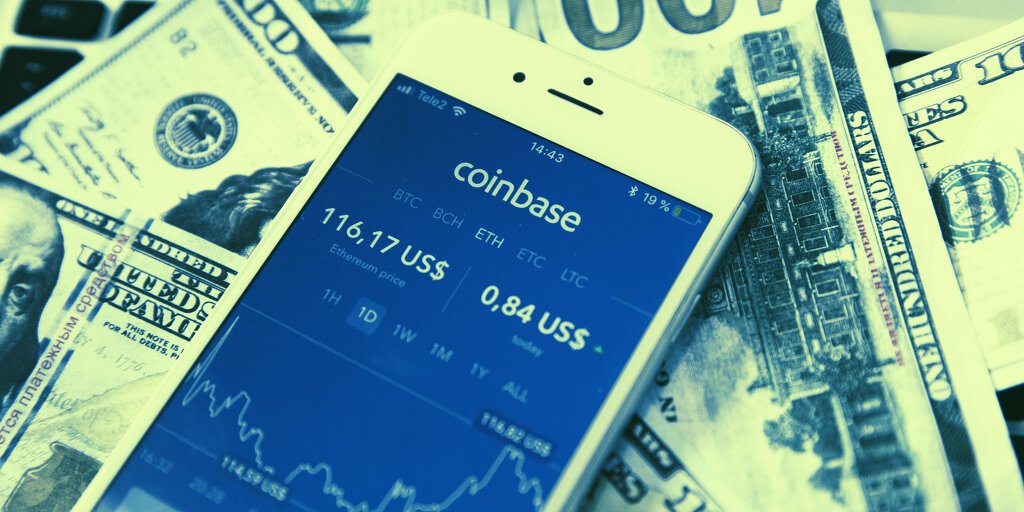
Coinbase has integrated Apple Pay into its Onramp service, allowing users to purchase cryptocurrency through Apple’s payment system. This integration aims to make cryptocurrency purchases more accessible and convenient for everyday users by leveraging Apple Pay’s widespread adoption.

With over 1.5 billion active Apple devices globally, this integration has the potential to significantly expand the reach of Coinbase’s services. This broader market reach can drive increased adoption of cryptocurrencies in regions where Apple Pay is popular.

Here are a few interesting points about this integration:

Seamless Experience: Users can now buy cryptocurrencies like Bitcoin and Dogecoin directly through Apple Pay without needing to navigate multiple apps or websites.

Streamlined KYC Process: The integration features a simplified Know Your Customer (KYC) process, reducing the traditional barriers to entry in cryptocurrency investment.

Zero Transaction Fees for USDC: Users who purchase the USDC stablecoin with Apple Pay through Coinbase Onramp will have zero transaction fees.

Broader Audience: This move allows Coinbase to reach a broader audience of potential cryptocurrency investors who already use Apple’s payment service in their daily lives.

The integration taps into Apple Pay’s massive user base, which includes more than 60 million active users in the United States and extends to over 500 million users worldwide as of 2023. This move allows Coinbase to reach a broader audience of potential cryptocurrency investors who already use Apple’s payment service in their daily lives.

By allowing users to purchase cryptocurrencies directly through Apple Pay, Coinbase is making it easier for a broader audience to enter the crypto market. This increased accessibility can lead to higher transaction volumes and greater adoption of cryptocurrencies

Coinbase Onramp, the company’s tool for integrating crypto purchases into various apps and websites, aims to simplify the process of buying cryptocurrency. The service features a streamlined Know Your Customer (KYC) process for eligible users, reducing the traditional barriers to entry in cryptocurrency investment.

Apple Pay is known for its robust security features, including biometric authentication and tokenization. Integrating these features with Coinbase can enhance the security of cryptocurrency transactions, making them more appealing to users concerned about fraud and theft.

For developers who have already implemented Coinbase Onramp in their applications, the integration requires no additional work. The Apple Pay option will appear automatically when users make eligible purchases, creating a seamless experience for both developers and end users.

These developments come at a time when cryptocurrency prices are rising, suggesting renewed interest from retail investors. Companies across the industry are responding by implementing features that make it easier to invest in and use cryptocurrency. The trend extends beyond payment options, as cryptocurrency platforms are also expanding their token offerings.

Robinhood, a popular trading platform, has recently added four new cryptocurrencies to its platform, including the memecoin PEPE. Coinbase itself is planning to increase its memecoin listings in the coming year, aiming to attract more retail trading activity. This strategy reflects the platform’s efforts to diversify its offerings while maintaining accessibility for users.

It’s a significant step towards making cryptocurrency more mainstream and user-friendly. What do you think about this integration?

Nigerian Senate Suspends Tax Reform Bills Amid Northern Opposition, Constitutes Ad-Hoc Committee for Resolution

0

The Nigerian Senate has halted legislative action on the contentious tax reform bills, citing the need for extensive stakeholder engagement to resolve disputes. The decision comes amidst strong opposition from northern politicians, who argue that the proposed reforms could disproportionately harm their region.

Deputy Senate President Barau Jibrin, who presided over Wednesday’s plenary session, announced the formation of an ad-hoc committee to address the contentious aspects of the bills. The committee will collaborate with the federal government and other stakeholders, including the Attorney General of the Federation, to ensure all interests are adequately considered.

The Contentiousness of the Tax Reform Bills

The tax reform bills, part of a broader fiscal strategy to increase government revenue, have faced significant pushback, particularly from northern lawmakers. Many politicians from the North argue that the reforms could deepen economic inequality across Nigeria’s regions, with the northern part of the country—already grappling with poverty and underdevelopment—being the hardest hit.

One of the most vocal opponents, Senator Ali Ndume, representing Borno North Central Senatorial District, has repeatedly expressed concern over the potential consequences of the bills. Speaking at an earlier Senate session, Ndume warned that the reforms, if implemented, could exacerbate economic challenges in the north. He asked for the bill to be withdrawn pending consultations.

“This is not the first time such a thing [withdrawal of bill] has been done; some good examples include the water resource bill when our friends from the South raised concerns and it was withdrawn. We had the Petroleum Industry Bill (PIB), which was withdrawn on several occasions in the House of Representatives and the Senate before it was finally passed after more than ten years.

“As I said before and I will repeat it, why the hurry? This is something that should be done after wide consultation because it requires the buy-in of all stakeholders,he said.

Ndume’s sentiment has been echoed by other northern politicians and interest groups, who argue that the reforms do not adequately account for the unique economic realities of the region, which relies heavily on agriculture and informal trade rather than industrial or high-value economic activities.

Senate’s Decision to Suspend Action

Deputy Senate President Jibrin emphasized the importance of addressing these concerns through dialogue. He announced that the Senate would pause all legislative processes related to the bills, including public hearings until a consensus is reached.

“It has been agreed by the executive and also by us that there should be a forum where we will sit with the Attorney General of the Federation so that we can look at all the areas of disagreement and resolve them in the interest of this nation,Jibrin said.

He further explained that an ad-hoc committee had been constituted to spearhead the resolution process, emphasizing inclusivity and regional representation in its composition.

The committee, chaired by Senate Minority Leader Abba Morro, includes prominent lawmakers from Nigeria’s six geopolitical zones and key Senate leaders:

  • Mohamed Tahiri Mongono (North-East)
  • Adamu Aleiro (North-West)
  • Oji Uzor Kalu (South-East)
  • Deriake Dickson (South-South)
  • Titus Zam (North-Central)
  • Abdullahi Yahaya, Chairman of the Senate Committee on National Planning
  • Adeola Solomon, Chairman of the Senate Committee on Appropriations
  • Sani Musa, Chairman of the Senate Committee on Finance
  • Tokunbo Abiru, Chairman of the Senate Committee on Banking

This diverse composition reflects the Senate’s intention to address regional disparities and ensure balanced representation in the discussions.

However, the pushback underscores a deeper challenge in Nigeria’s fiscal policy-making: the difficulty of implementing nationwide reforms in a country with stark regional disparities.

The ad-hoc committee is expected to convene its first stakeholder forum imminently, with participation from the Attorney General of the Federation, state governors, industry leaders, and civil society organizations. The outcome of these discussions will likely influence the future of the tax reform bills and set a precedent for addressing regional concerns in national policymaking.

The tax reforms are part of broader efforts by the federal government to address fiscal imbalances and reduce reliance on oil revenue. However, as seen in this case, such initiatives often encounter resistance due to the uneven economic development across Nigeria’s regions.

Binance Partners AltSchool Africa, Offers Scholarships For Young Africans to address Africa’s Digital Skills Gap

0

Binance, a global leader in cryptocurrency exchange, has announced a partnership with AltSchool Africa to provide full-tuition scholarships to 500 young Africans.

Kicking off in January 2025 to 31 December, this collaboration is aimed at addressing the digital skills gap in Africa by offering access to specialized education in fields such as software engineering, cybersecurity, sales and content creation, empowering learners with skills that are essential in today’s rapidly evolving job market.

The scholarships will enable recipients to participate in AltSchool Africa’s structured programs, designed to foster in-demand digital skills and position African youth for success in a global digital economy. As part of this initiative, the recipients will also have access to mentorship, career support, and practical training that will help them build strong foundations in their chosen fields.

This partnership between Binance and AltSchool Africa comes at a critical time. According to the International Finance Corporation (IFC), by 2030, 230 million jobs in Sub-Saharan Africa will require digital skills, yet only 2% of the workforce currently possesses them. By offering these scholarships, Binance and AltSchool Africa aim to close this gap and equip young Africans with the expertise needed for the future digital economy.

“Through this partnership with AltSchool Africa, we are excited to provide opportunities that will help shape the future of many young students across the continent,” said Samantha Fuller, Spokeswoman for Binance. “Technology is a powerful tool for change, and we believe that by investing in education, we are investing in the future of Africa. Our goal is to empower students to become innovators and leaders in the tech space.”

Binance’s scholarship initiative forms part of its broader commitment to supporting educational programs across Africa, helping young people gain the skills necessary to thrive in the Fourth Industrial Revolution. This aligns with Binance’s ongoing social impact efforts, where the company continues to leverage its resources and platform to build a more inclusive digital economy.

AltSchool Africa, an education platform tailored to developing digital skills across Africa, is proud to collaborate with Binance on this initiative. “With this partnership, we are able to reach more young Africans passionate about building a career in the digital economy, offering them a variety of our diploma programs and short courses,” said Nifemi Akinwamide, Head of Global Operations, AltSchool Africa. ”We laud Binance for this incredible initiative which will positively impact the lives of hundreds of Africans across the continent.”

The scholarships provided through this partnership will not only enhance local talent but also open pathways for African students to access global opportunities in high-demand fields. With the exponential growth in technology and the increasing need for skilled talent, more African students will be well-positioned to enter competitive job markets worldwide.