DD
MM
YYYY

PAGES

DD
MM
YYYY

spot_img

PAGES

Home Blog Page 256

U.S. Secures Trade Deals Across S-East Asia, Reaches Framework Trade Deal with China As Trump, Xi Set for High-Stakes Meeting

0

Top economic officials from the United States and China have agreed on a framework for a new trade agreement, signaling a possible easing of tensions between the world’s two largest economies ahead of a highly anticipated meeting between President Donald Trump and Chinese President Xi Jinping.

The agreement, reached on the sidelines of the ASEAN Summit in Kuala Lumpur, marks the fifth round of in-person discussions between both sides since May. U.S. Treasury Secretary Scott Bessent and Trade Representative Jamieson Greer met with Chinese Vice Premier He Lifeng and top negotiator Li Chenggang to finalize key components of the deal.

“I think we have a very successful framework for the leaders to discuss on Thursday,” Bessent told reporters, confirming that the upcoming Trump–Xi talks would aim to finalize the deal.

Framework Aims to Defer Tariffs and Ease Export Curbs

Bessent told NBC’s Meet the Press that the framework would defer China’s expanded export controls on rare earth minerals and magnets while also avoiding a new 100% U.S. tariff on Chinese goods threatened by Trump.

According to the U.S. Treasury Secretary, the deal would include commitments on soybean and agricultural purchases from American farmers, more balanced trade flows, and steps toward resolving the U.S. fentanyl crisis, which was the basis of Washington’s earlier 20% tariffs on Chinese goods.

Chinese negotiator Li Chenggang said both sides had reached a “preliminary consensus” and would now move through internal approval processes.

“The U.S. position has been tough,” Li admitted. “We have experienced very intense consultations and engaged in constructive exchanges in exploring solutions and arrangements to address these concerns.”

President Trump, who arrived in Malaysia on Sunday at the start of a five-day Asia tour, struck an optimistic tone.

“I think we’re going to have a deal with China,” he said. The tour will culminate in a face-to-face meeting with Xi in South Korea on October 30.

The negotiations come as both sides race to prevent an escalation of their trade war, with the current trade truce set to expire on November 10. Trump has threatened to reimpose sweeping 100% tariffs on Chinese goods starting November 1 if no agreement is reached, in retaliation for Beijing’s recent export curbs on rare earths.

Under the current truce, both countries rolled back triple-digit tariffs on each other’s goods earlier this year following a Geneva agreement in May, which was later extended in August.

Officials confirmed that discussions covered a broad range of issues, including trade expansion, fentanyl controls, port entrance fees, rare earth exports, and TikTok’s data policies.

Bessent said the trade truce could be extended, pending the president’s decision, marking what would be the second extension since May.

“These are very substantial negotiations,” he added.

Trump’s Talking Points: Taiwan, Hong Kong, and Russia

While the White House has confirmed the Trump–Xi meeting, Beijing has yet to officially announce it. On the sidelines of the ASEAN summit, Trump hinted at future meetings in both China and the United States, possibly in Washington or Mar-a-Lago.

Among Trump’s talking points for the Xi meeting are China’s purchases of U.S. soybeans, the status of Taiwan, and the release of Hong Kong media tycoon Jimmy Lai, who remains imprisoned for pro-democracy activism. The case has drawn international condemnation as a symbol of Beijing’s crackdown on dissent in Hong Kong.

Trump also said he would seek China’s cooperation on Washington’s dealings with Russia, as the war in Ukraine drags on, underscoring Beijing’s growing geopolitical influence.

Despite the framework agreement, tensions remain fragile. China’s expanded controls on rare earth exports — critical for manufacturing semiconductors, electric vehicles, and defense technologies — have triggered global shortages. In response, the Trump administration has considered restricting software-powered exports to China, ranging from laptops to jet engines, according to Reuters.

Washington’s strategy now involves diversifying critical minerals supply chains and reducing dependence on Chinese refining and processing.

U.S. Signs New Trade Deals Across Southeast Asia

In a separate development, President Trump signed a series of reciprocal trade and minerals cooperation deals with four Southeast Asian nations — Malaysia, Cambodia, Thailand, and Vietnam — during the Kuala Lumpur summit. The agreements aim to rebalance trade, eliminate tariff barriers, and expand access to critical minerals vital to U.S. industries.

Under the new deals, Washington will maintain a 19% tariff on exports from Malaysia, Cambodia, and Thailand, which will gradually fall to zero for select products. A similar framework was reached with Vietnam, currently facing a 20% tariff on its exports to the U.S.

Vietnam, which recorded a $123 billion trade surplus with the U.S. last year, has pledged to boost imports of U.S. goods, especially agricultural and energy products, to reduce its trade imbalance.

Malaysia’s Rare Earth Pledge and Trade Incentives

Malaysia, which holds an estimated 16.1 million tonnes of rare earth deposits, agreed to refrain from banning or imposing quotas on exports of critical minerals or rare earth elements to the U.S.

The joint statement did not specify whether the pledge applied to raw or processed materials. Malaysia has maintained a ban on raw rare earth exports to protect domestic resources while promoting its downstream refining sector.

Malaysian Trade Minister Tengku Zafrul Aziz said the country had secured tariff exemptions for aerospace and pharmaceutical exports, alongside key commodities such as palm oil, cacao, and rubber. He also noted streamlined halal certification processes for U.S. cosmetics and pharmaceutical goods.

Thailand and Vietnam Secure Major U.S. Trade Wins

Thailand announced it would eliminate tariffs on 99% of U.S. goods and ease foreign ownership restrictions in telecommunications, while committing to purchase 80 U.S. aircraft worth $18.8 billion and energy products totaling $5.4 billion annually.

In addition, Thailand will buy agricultural products, including feed corn and soybean meal, worth about $2.6 billion per year.

Vietnam, meanwhile, will participate in a framework that supports digital trade, labour rights, and environmental standards, signaling closer economic cooperation with Washington amid broader Indo-Pacific supply chain realignments.

A Balancing Act Between Diplomacy and Economics

The U.S.-China framework deal and Washington’s flurry of new trade agreements in Southeast Asia underpin a delicate balancing act — one that mixes geoeconomic strategy with diplomatic outreach.

While Trump’s administration seeks to secure concessions from Beijing on tariffs and export curbs, it is simultaneously building economic partnerships across ASEAN to counter China’s dominance in regional trade.

The coming Trump–Xi summit in South Korea may determine whether this fragile détente evolves into a sustainable trade peace — or collapses into yet another round of retaliatory tariffs that could reverberate across global markets already strained by inflation and supply disruptions.

Canal+ Takeover to Culminate in MultiChoice Delisting from Johannesburg Stock Exchange on December 10

0

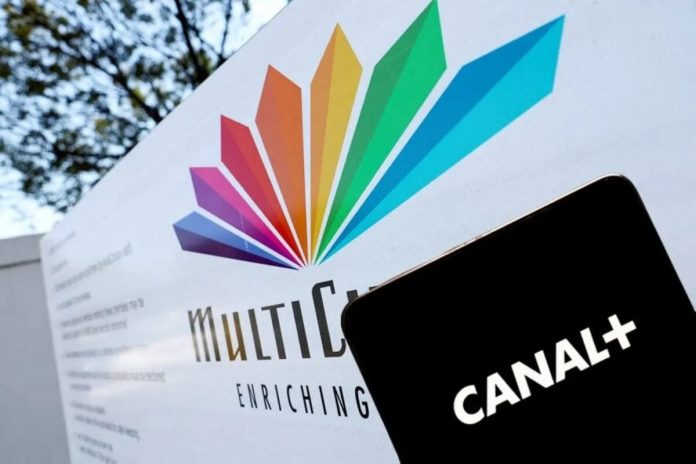
African entertainment powerhouse MultiChoice Group will officially delist from the Johannesburg Stock Exchange (JSE) on December 10, 2025, marking the end of its six-year run as a publicly traded company.

The decision follows French media giant Canal+ securing over 90 percent control of MultiChoice, effectively completing a full takeover that will fold the South African pay-TV operator into one of the world’s largest media conglomerates.

In a notice to shareholders released Friday, MultiChoice confirmed that trading of its shares on both the JSE and A2X Markets will be suspended starting October 27, 2025, pending final regulatory approval from the JSE, A2X, and the Financial Surveillance Department of the South African Reserve Bank.

The company said the delisting will proceed once all procedural requirements are fulfilled and regulatory consents obtained. The move marks the latest stage in Canal+’s multi-year strategy to consolidate its holdings in MultiChoice, a process that began in early 2024 and culminated this year with the French group crossing the 90 percent ownership threshold required for a compulsory acquisition.

Canal+ invokes compulsory acquisition rights

By reaching 90 percent control, Canal+ triggered Section 124(1) of South Africa’s Companies Act, allowing it to compulsorily acquire all remaining MultiChoice shares from minority shareholders who did not accept its initial takeover offer. The acquisition will occur on the same terms and offer price presented during the original bid.

“The Remaining MultiChoice Shareholders are reminded of their rights to apply to a court of competent jurisdiction within 30 business days after receiving the Notice in terms of section 124(2) of the Companies Act (‘Section 124(2) Rights’),” the company stated.

If no legal objections arise within the 30-day window, Canal+ will finalize the compulsory acquisition approximately six weeks after the notice date, officially transforming MultiChoice into a wholly owned subsidiary of the French media conglomerate.

The delisting represents the closing chapter of MultiChoice’s public trading journey, which began in 2019 after its spin-off from Naspers, South Africa’s largest technology investor. The company grew into Africa’s dominant pay-TV provider, serving over 20 million subscribers across 50 countries through platforms such as DStv, GOtv, and Showmax.

Canal+ eyes secondary inward listing on JSE

While MultiChoice exits the local exchange, Canal+ has announced plans to maintain a significant presence in South Africa’s capital markets. Earlier this month, the French company confirmed that it will pursue a secondary inward listing on the JSE following the completion of the MultiChoice acquisition.

The move, Canal+ said, aligns with its broader strategy to expand its African footprint by leveraging MultiChoice’s strong subscriber base, regional distribution networks, and deep understanding of local content markets. Through the secondary listing, South African investors will be able to hold shares directly in the enlarged Canal+ Group, which now commands one of the world’s most extensive pay-TV and streaming portfolios.

Canal+ executives have described the acquisition as “transformational,” combining MultiChoice’s market leadership in African entertainment with Canal+’s production, distribution, and global streaming capabilities. According to Bloomberg, the combined entity will rival the world’s top media conglomerates in scale, with a footprint spanning Europe, Africa, and parts of Asia.

Realignment under new ownership

In September, MultiChoice’s board approved a sweeping restructuring plan to align with Canal+’s corporate structure. The overhaul included major board changes and a shift in the company’s financial year-end, a signal of the full operational integration underway. The $3 billion transaction—Canal+’s largest to date—has also triggered consolidation in content production, sports broadcasting, and digital streaming strategies across the continent.

Under Canal+, MultiChoice is expected to expand its investment in local content creation and streaming innovation through Showmax, its flagship digital platform. The streaming service is viewed as a key pillar of Canal+’s Africa growth strategy and is expected to compete more directly with Netflix, Amazon Prime Video, and other international streaming services seeking to capture African audiences.

Industry implications and market outlook

The delisting marks a fresh episode of foreign consolidation in Africa’s media landscape, where capital-intensive pay-TV and streaming operations are increasingly merging with global players for survival and scale. Canal+’s acquisition grants it access to over 50 African markets, a growing youth demographic, and an expanding broadband infrastructure that will be vital for its long-term streaming ambitions.

For South Africa’s capital markets, the exit of MultiChoice represents the loss of one of the JSE’s largest consumer entertainment stocks. However, the planned Canal+ inward listing may help offset that impact by allowing local investors to maintain exposure to Africa’s most valuable entertainment brand through an international structure.

Market analysts view the move as a consolidation of control rather than a retreat from the region. “Canal+’s full acquisition of MultiChoice marks the end of an era for South Africa’s pay-TV independence, but it also represents a new phase of capital inflow and global integration,” said one Johannesburg-based investment strategist familiar with the deal.

Pending regulatory clearance, MultiChoice’s December 10 delisting will officially complete one of Africa’s most significant media mergers to date—cementing Canal+’s position as the dominant pay-TV and streaming operator across the continent.

This Token Under $0.003 Could Deliver 45x Profit Before Ethereum (ETH) Price Reaches $8,000

0

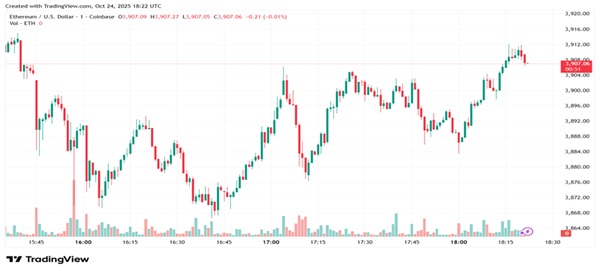
Ethereum is worth around $3,880 now, but there’s a gem under $0.003 that has taken the space by storm. Some experts even think LILPEPE could deliver gains of up to 45x before Ethereum reaches its expected $8,000 level. How could something like LILPEPE, still well under a cent, hold that kind of upside? In this piece, we’ll look at what makes Little Pepe stand out and how it might grow into a key part of the crypto world.

Ethereum’s Road to $8,000 Has Some Bumps Ahead

ETH is now trading for around $3,880. Despite an overall positive narrative, there are still signs that this $8,000 figure won’t come in immediately. Since then, it has remained within the 3,950 range, down 0.5% over the past 24 hours.

A couple of things add to the questions about Ethereum’s near-term path:

  • Chart Challenges: Ethereum hits substantial barriers around $4,277. A drop below $3,950 could lead to declines, and a fall to $2,879 is possible if support levels fail. Short-term investors should be cautious.
  • Significant Player Shifts: A recent $390 million move from DeFi spot Aave to Binance has raised eyebrows. It suggests big holders are playing it safe, bracing for wider market dips. Bearish market activities like this could slow Ethereum’s push to new highs.

With these in play, Ethereum’s climb to $8,000 might take longer than some expect, opening the door for smaller tokens—especially those with innovative plans—to pull ahead in the meantime.

Meet Little Pepe (LILPEPE): A Meme Coin with Real Aim

Data on Ethereum’s Layer-2 world builds a strong case overall. With yearly trade volume set to top $10 trillion by 2027, ways to capture value in scalable, affordable networks matter a lot. In this setup, a fresh project like Little Pepe ($LILPEPE) shows numbers worth noting, making it a possible standout in the high-payoff meme coin space.

Main Features of LILPEPE:

  • Affordable Trades: While Ethereum faces high gas costs, LILPEPE offers a lower-cost alternative. This works well for small payments and frequent deals, which are key in meme-driven spaces.
  • Starting Point for New Meme Efforts: LILPEPE brings its own launchpad—PEPE’s Pump Pad—to help grow fresh meme projects. This additional role underscores the need for LILPEPE as the primary token for launching and backing new ideas.
  • No-Tax Trades: LILPEPE cuts out taxes on transfers, a snag for many meme tokens. Dropping these costs lets buyers move in and out easily, leading to better flow and steadier prices.
  • Growth from Community: A considerable strength for LILPEPE is its group of supporters. With over 44,000 holders and more than 39,000 Telegram members, it has a firm base of involved folks driving its progress.

Tokenomics: Thoughtful Path to Value Growth

LILPEPE’s tokenomics aim to build not just quick hype but steady, lasting advance. Here’s a look at the main parts of its model:

  • Overall Supply: LILPEPE caps at 100 billion tokens, a significant number that keeps it accessible while leaving room for major upside.
  • Presale Wins: The presale did $27.2+ million in sales, higher than expected. With a price increase from $0.0010 to $0.0022 in a presale, active buyers are already doing their job.
  • Staking & Vesting: High staking rewards up to 782% APY, which is offered to reward long-term holders whilst preventing the need to sell tokens. In addition, 10% of staking rewards will be made available during the TGE to prevent sudden supply floods and create demand.
  • Release Plans: LILPEPE uses a careful vesting timeline with a 3-month cliff for presale folks, then 5% unlocks each month. This prevents messy big sell-offs, a common issue for new tokens.

The 45x Play: A Thought-Out Shot

At $0.0022 now, a 45x jump would put LILPEPE around $0.099. That might sound bold, but with its tokenomics, community backing, and spot in the expanding meme world, it’s within reach. For context, 45x would mean a market cap of nearly $1.98 billion based on the initial 20 billion tokens in circulation. It’s a big step up, but reasonable given the market scale and LILPEPE’s focus on real use.

Final: A Worthwhile Bet with Upside

Ethereum’s climb to $8,000 might hit pauses, but Little Pepe (LILPEPE) gives a strong option for those after better potential payoffs. Under $0.003, LILPEPE’s fresh take—Layer-2 scaling, low costs, no-tax trades, and community-led growth—makes it a meme token with practical applications in a fast-changing field. If you’re after a token with big growth room and a building network, Little Pepe (LILPEPE) might turn out to be the next standout in meme coins.


For more information about Little Pepe (LILPEPE) visit the links below:

Website: https://littlepepe.com

Whitepaper: https://littlepepe.com/whitepaper.pdf

Telegram: https://t.me/littlepepetoken

 Twitter/X: https://x.com/littlepepetoken

$777k Giveaway: https://littlepepe.com/777k-giveaway/

Shiba Inu Price Predictions Are Rising, but Ozak AI Could Outshine Every Meme Coin

0

Shiba Inu is gaining bullish momentum as rising price predictions and key support around the $0.0000080 point to a potential breakout, but many traders believe Ozak AI could be the real game changer of the next bull run. While SHIB thrives on meme coin hype and community strength, Ozak AI pairs an early-stage entry with real AI and blockchain infrastructure, integrating 700,000+ AI nodes through partnerships with Perceptron Network and SINT.

In its 6th presale stage at $0.012, with over $4.1M raised and 975M+ tokens sold, Ozak AI is listed on CoinMarketCap and CoinGecko and has passed security audits from CertiK and Sherlock. With whales accumulating early, many see it as a 100x project capable of outshining even the biggest meme coins in 2025. 

Shiba Inu Is Fueling Meme Coin Hype Once Again

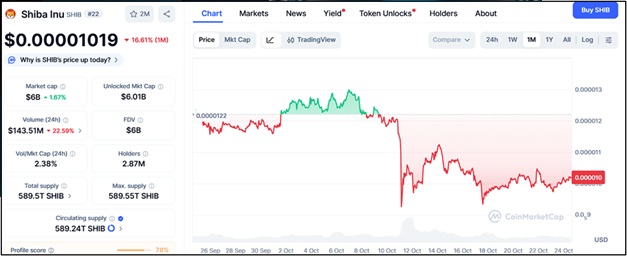
Shiba Inu is once again making waves in the crypto market as bullish forecasts point to a major rally ahead. Currently trading around $0.00001019, SHIB has support levels at $0.0000080, $0.0000065, and $0.0000052, while resistance levels are set at $0.000012, $0.000016, and $0.000022. This structure suggests that the meme coin is positioned for a potential breakout, especially as retail participation picks up and social media sentiment strengthens.

Shiba Inu’s incredible history—turning small early investments into life-changing gains—continues to attract both new and experienced traders. However, as meme coins become more saturated and their upside starts to shrink compared to earlier cycles, many investors are shifting focus toward new high-upside narratives. This is where Ozak AI enters the spotlight.

Why Investors Are Rotating Beyond Meme Coins

Meme coins like SHIB thrive on community strength and viral momentum, but their massive market caps make it increasingly difficult to deliver the kind of 50x or 100x returns seen in their early days. Smart money that once flowed into SHIB is now seeking projects with early-stage entry, strong narratives, and real utility. In the 2025 cycle, the most powerful narrative emerging isn’t meme coins—it’s AI + blockchain.

Ozak AI has positioned itself right at the center of this narrative, capturing early whale and retail interest alike.

Ozak AI Brings Real Infrastructure to the AI Narrative

Unlike meme coins that depend purely on hype, Ozak AI combines a powerful narrative with tangible technology. Currently in its 6th OZ presale stage at $0.012, the project has already raised over $4.1 million and sold more than 975 million tokens. Through partnerships with Perceptron Network and SINT, Ozak AI integrates over 700,000 AI nodes that enable predictive analytics, real-time signal processing, and agent-based intelligence systems.

The project is also listed on CoinMarketCap and CoinGecko and has completed security audits by CertiK and Sherlock, boosting its credibility among serious investors. This makes it more than just another presale token—it’s a fundamentally strong early-stage opportunity.

Whale Accumulation Is a Major Bullish Signal

Whales have a track record of identifying breakout narratives before retail investors. They accumulated Ethereum before the DeFi boom, Solana before its parabolic run, and SHIB before it went viral. The same pattern is now appearing with Ozak AI, as whales accumulate early during its presale.

This quiet accumulation often precedes massive price discovery once a token lists on major exchanges and retail interest surges—setting the stage for exponential gains.

Ozak AI Could Outshine SHIB in the 2025 Bull Run

While SHIB’s rising price predictions and strong community make it a solid meme coin play, Ozak AI offers something meme tokens can’t: a powerful narrative backed by real utility. Its early entry point, whale accumulation, AI-driven infrastructure, and presale momentum give it the potential to deliver 100x returns, far outpacing meme coin rallies.

For traders looking to capture the next major breakout story, Ozak AI stands out as a project that could outshine every meme coin in the 2025 bull run. SHIB may rally, but Ozak AI could lead the narrative.


About Ozak AI

Ozak AI is a blockchain-based crypto project that provides a technology platform that specializes in predictive AI and advanced data analytics for financial markets. Through machine learning algorithms and decentralized network technologies, Ozak AI enables real-time, accurate, and actionable insights to help crypto enthusiasts and businesses make the correct decisions.


For more, visit:

Website: https://ozak.ai/

Telegram: https://t.me/OzakAGI

Twitter: https://x.com/ozakagi

Afreximbank to Launch Special Financing for Mineral Processing Projects as George Elombi Targets End to Raw Exports

0

The African Export-Import Bank (Afreximbank) is setting a bold new direction under its new president, George Elombi, who has announced the creation of a special financing window dedicated to processing Africa’s raw minerals into semi-finished and finished products.

The initiative, revealed during his swearing-in ceremony in Cairo on Saturday, marks one of the most ambitious industrialization drives in the bank’s history and a significant step toward reshaping Africa’s place in the global economic value chain.

Elombi declared that his administration would no longer tolerate the unprocessed export of Africa’s mineral wealth — a practice that has historically deprived the continent of industrial growth, skilled jobs, and economic resilience.

“No more Nigerian bauxite, or Gabonese manganese, or Cameroonian bauxite, or South African bauxite, raw. We are not interested,” he said. “We will focus on domestic processing. This has numerous benefits.”

He explained that the bank’s new strategic direction would center on building value chains that retain a greater share of Africa’s mineral wealth at home, stimulating local industries, and promoting technological advancement.

“Afreximbank will therefore create a new high-impact financing window, specifically for projects that process raw minerals into semi-finished goods or finished goods,” Elombi said.

Elombi also announced plans to launch a Strategic Minerals Development Programme, which will provide financing for the entire value chain — from extraction and refining to manufacturing. The programme, he explained, will prioritize cross-border projects that connect mining hubs with regional industrial zones.

He noted that historically, less than 20 percent of total investment in Africa’s mineral sector goes into actual mining operations, while more than 80 percent is channeled into supportive infrastructure like railways, ports, and power stations. The new Afreximbank initiative, he said, would focus on harmonizing these investments to deliver stronger industrial outcomes.

“Afreximbank will accelerate investments in critical trade-enabling infrastructure projects that directly connect African markets to one another,” Elombi added.

He indicated that the bank will also invest in modernizing seaports, highways, railways, pipelines, and logistics hubs, with priority given to infrastructure linking industrial and production centers with regional and global markets.

A Broader Economic Vision

Elombi’s remarks come on the back of a growing consensus among African policymakers and economists that the continent must break its long-standing dependence on raw commodity exports. For decades, Africa’s mineral wealth — including cobalt, lithium, copper, and bauxite — has been extracted and exported for processing abroad, leaving the continent with limited industrial output and minimal value capture.

According to the Office of the U.S. Trade Representative, Africa’s contribution to global manufacturing remains under 2%, while its share of global trade stands below 3%, despite being one of the most resource-rich regions on earth.

The Afreximbank president’s declaration aligns with repeated calls from some of Africa’s leading economic voices — including WTO Director-General Ngozi Okonjo-Iweala and former African Development Bank (AfDB) President Dr. Akinwumi Adesina — for the continent to transition from exporting raw materials to refining and processing them locally.

Okonjo-Iweala has consistently argued that Africa must move beyond the traditional commodity-based model if it is to achieve sustainable growth. She has said that without value addition, African economies will remain vulnerable to global commodity price shocks and external dependence.

“We need to develop our processing industries to create jobs, boost intra-continental trade, and ensure we stop exporting raw materials without value addition,” she stated early this year.

Similarly, Adesina has warned that continued export of raw materials is “the door to poverty,” while value-added exports are “the highway to wealth.” Speaking in April, he said: “Africa must end the exports of its raw materials. The export of raw materials is the door to poverty. The export of value-added products is the highway to wealth. And Africa is tired of being poor.”

Economists say both leaders’ positions reflect the urgent need for Africa to capture more of the value from its resources — particularly as global demand for critical minerals surges due to the clean energy transition. With countries worldwide competing for cobalt, lithium, nickel, and rare earth elements to power electric vehicles and renewable energy systems, Africa’s ability to process these minerals locally could redefine its role in the global economy.

Afreximbank’s proposed financing window is expected to support industrial plants, refineries, and midstream processing facilities that can transform raw materials into higher-value exports. The bank also intends to leverage public-private partnerships to mobilize funds for regional infrastructure, which Elombi said remains one of the continent’s biggest bottlenecks to intra-African trade.

By directly linking resource-rich regions with industrial zones, the initiative could also help expand the African Continental Free Trade Area (AfCFTA), which aims to create a unified African market of 1.4 billion people. Economists believe that boosting intra-African trade through industrial integration could help the continent capture greater value from its resources and reduce dependence on foreign markets.

Shifting the Continental Economic Paradigm

Experts view Elombi’s industrialization agenda as a continuation of Afreximbank’s recent efforts to transform Africa’s trade ecosystem. The bank has been a key player in supporting the AfCFTA’s Pan-African Payment and Settlement System (PAPSS), designed to simplify cross-border transactions and reduce reliance on the U.S. dollar in African trade.

If successfully implemented, Afreximbank’s new mineral processing fund could serve as a catalyst for a broader industrial renaissance, creating jobs, stimulating technological transfer, and positioning African nations as competitive players in the global supply chain.

However, analysts caution that the success of this vision will depend on strong policy coordination, political stability, and technological investment.