DD
MM
YYYY

PAGES

DD
MM
YYYY

spot_img

PAGES

Home Blog Page 2564

OpenAl Launches ChatGPT Pro Tier With Advanced Reasoning Capabilities

0

Artificial Intelligence company OpenAl, has unveiled ChatGPT Pro, a premium subscription tier offering unlimited access to its most advanced artificial intelligence features.

As AI becomes more advanced, OpenAI has taken it significantly to enhance its product with more enhanced capabilities. The ChatGPT Pro tier is priced at $200 (N150,000) per month and targets users who require enhanced Al capabilities. The model introduces significant upgrades designed to perform complex reasoning tasks with human-like precision. OpenAl highlighted that the Pro tier incorporates an expanded version of its cutting-edge reasoning model, referred to as o1.

Announcing the launch of ChatGPTPro, OpenAI wrote on its website,

“Today, we’re adding ChatGPT Pro, a $200 monthly plan that enables scaled access to the best of OpenAl’s models and tools. This plan includes unlimited access to our smartest model, OpenAl o1, as well as to o1-mini, GPT-40, and Advanced Voice. It also includes o1 pro mode, a version of o1 that uses more compute to think harder and provide even better answers to the hardest problems. In the future, we expect to add more powerful, compute intensive productivity features to this plan.”

The ChatGPT Pro provides a way for researchers, engineers, and other individuals who use research-grade intelligence daily to accelerate their productivity and be at the cutting edge of advancements in AI. Furthermore, ChatGPT Pro provides access to a version of OpenAI’s most intelligent model that thinks longer for the most reliable responses. In evaluations from external expert testers, o1 pro mode produces more reliably accurate and comprehensive responses, especially in areas like data science, programming, and case law analysis. Compared to both o1 and o1-preview, o1 pro mode performs better on challenging ML benchmarks across math, science, and coding.

The launch of OpenAI ChatGPT Pro builds on the success of OpenAl’s existing ChatGPT Plus subscription, launched in 2023, which is pegged at $20 (N15,000) per month. The ChatGPT plus enabled users’ General access to ChatGPT even during peak times, faster response times and priority access to new features and improvements.

As part of OpenAI ChatGPT Pro is the OpenAI o1 which is out in preview on ChatGPT. The newly upgraded model now supports image uploads, allowing it to apply reasoning to visuals for more detailed & useful responses. Notably, OpenAI o1 is more concise in its thinking, resulting in faster response times than o1-preview.

Testing shows that o1 outperforms o1-preview, reducing major errors on difficult real-world questions by 34%. The updated OpenAI o1 system card builds on prior safety work, detailing robustness evals, red teaming insights, and safety improvements using Instruction Hierarchy. It maintains a “medium” risk rating based on testing with an expanded suite of evaluations, reflecting it is safe to deploy. OpenAI o1 is fully rolled out to 100% of ChatGPT Plus, Team, and Pro users.

OpenAI’s code-name “Strawberry” is ready to be picked — for $200 a month. The artificial intelligence startup’s “reasoning” model is out of preview mode, with the full version of o1 now part of a top-tier $200 monthly plan called ChatGPT Pro. The subscription, aimed at researchers and engineers, includes an exclusive “o1 pro mode” which “uses more compute to think harder and provide even better answers to the hardest problems,” along with unlimited access to o1, GPT-4o and Advanced Voice. Some ChatGPT Plus users are balking at Pro’s price point, since it’s 10 times higher than Plus.

The release of ChatGPT Pro comes as OpenAl seeks to secure additional funding amid intense competition in the Al industry. Companies like Google and Anthropic are also racing to develop advanced Al systems capable of performing complex reasoning tasks. These enhanced reasoning capabilities aim to improve the performance of Al models, addressing challenges faced by developers in achieving consistent advancements. OpenAl emphasized that its Pro tier offers value for customers and businesses willing to invest in premium Al software to access state-of-the-art technology.

As the demand for sophisticated Al systems grows, OpenAl’s efforts to combine innovation with monetization represent a critical strategy in maintaining its leadership within the evolving artificial intelligence landscape. The company has announced plans to add more capabilities to Pro over time, to unlock more compute-intensive tasks.
UK’s Regulatory Hammer Hits PumpDotFun

0

The UK’s Financial Conduct Authority (FCA) has issued a warning against Pump.fun, a Solana-based memecoin launchpad, stating that it is not authorized to operate in the country. “This firm is not authorized by us and is targeting people in the UK,” the FCA said in the warning. “Based upon information we hold; we believe it is carrying on regulated activities which require authorization.”

The FCA highlighted that PumpDotFun may be targeting people in the UK without proper authorization, which puts investors at greater risk. The regulator advised the public to avoid dealing with this firm and to be cautious of potential scams.

The FCA outlined its timeline for shaping the regulations. By the end of 2024, the agency plans to publish discussion papers on market abuse and disclosure standards. Early next year, it will release papers covering stablecoins, trading platforms, staking, crypto lending, and prudential exposure. Final policy statements are expected to pave the way for the regime to go live in 2026.

The situation with PumpDotFun has indeed sparked several contentious issues:

Regulatory Concerns: The UK’s Financial Conduct Authority (FCA) has issued a warning against Pump.fun, stating that it is not authorized to operate in the country. This has led to the platform being blocked in the UK.

Exploitation Incident: There was a significant exploit involving a former employee of Pump.fun, who allegedly used their position to steal $1.9 million from the platform. This individual was arrested in the UK and is currently out on bail.

Community Trust: The combination of regulatory actions and the exploitation incident has severely impacted community trust in PumpDotFun Many users are concerned about the platform’s security and the ethical practices of its management.

Operational Challenges: Following the exploit and regulatory scrutiny, PumpDotFun has faced operational challenges, including pausing its live streaming feature due to a wave of abusive content.

Earlier in May, a former Pump.fun employee claimed he was arrested and subsequently released on bail in the United Kingdom following a $1.9 million exploit on the platform. Pump.fun alleged that Jarett Dunn used a “privileged position” to access a “withdraw authority,” compromising the protocol’s systems.

Dunn confirmed the allegations in a series of X posts, stating that he “spent overnight in custody” and was charged with “theft from employer” for $2 million and conspiracy to steal an additional $80 million. He added that he was “released on bail and mental health sectioned.”

The UK Government intends to clarify the legal status of staking, which allows users to lock up tokens to support blockchain operations and earn rewards. Siddiq indicated that the government supports industry calls for staking to be treated as a technology service rather than a collective investment scheme, which would subject it to stricter financial regulations.

This move is part of the FCA’s broader efforts to regulate the growing cryptocurrency market and protect consumers from unregistered and potentially fraudulent activities. These issues highlight the complexities and risks associated with emerging crypto platforms, especially those that operate without proper regulatory oversight.

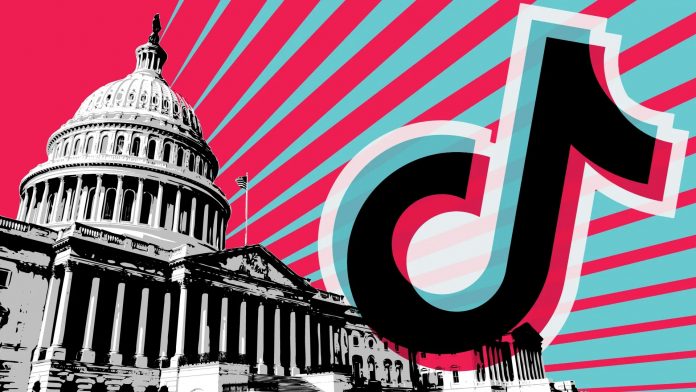
TikTok Is In Trouble in America As The Appeal Court Rules Against It

0

Where things stand: “A federal appeals court on Friday upheld a law requiring China-based ByteDance to divest ownership of TikTok, citing national security concerns. The ruling, handed down unanimously by a three-judge panel of the U.S. Court of Appeals in Washington, D.C., mandates that TikTok be sold by January 19, 2025, or face an effective ban in the United States. This decision puts the app’s future in jeopardy and leaves its parent company with only two viable options: appealing to the U.S. Supreme Court or seeking intervention from President-elect Donald Trump.”

My April 2024 call remains: “It is now the law of the land: TikTok must either be in the hands of the natives or exit America… I posit that ByteDance, the owner of TikTok, will not sell, but after some legal challenges, will count its losses and exit the United States. Why? China will not allow it to ship the AI to the Americans – and without the AI, the ingredients of the soup which make TikTok amazing will not be complete. The worst-case scenario is to ship the users with the trademark while the AI code remains with the company in China. That will mark the valuation of TikTok down by more than 70%.”

Simply, TikTok should not expect an American court to rule against its Congress when the case is anchored on national security. So, I do not expect any help from the Supreme Court for TikTok if it wants to keep wasting time.  This is not an executive order; this is an American law, and any justice that rules otherwise is lost in the legal ocean.

Then, lessons for all: For companies like Temu, Shein and other Chinese online companies operating in the US, this is the moment of truth! Geopolitics is now the risk vector, well ahead of the typical competition. But we will see how China responds to the clipping of TikTok, and you should expect the typical: nothing will happen because TikTok is not in semiconductors and microelectronics which are core priorities for the communist party.

As spectators in this era, other nations do hope that China and US will both continue to rise in peace.

Comment on Feed

Comment: Bitcoin is decentralized

My Response: How is crypto decentralized? The top 10 BTC miners control more than 90% of the market. The top 10 exchanges control more than 90% of the volume. All those companies need bank accounts and they are under the control of governments. Your decentralization is an illusion as the US can shut down Coinbase tomorrow if it wants and can sanction Binance tomorrow if it desires. You can tell me that crypto is technologically decentralized but that does not mean it is economically not centralized. BTC is fully under the control of governments now. All the shadow exchanges have gone.

Federal Appeals Court Upholds TikTok Ban, Leaving ByteDance with Two Options

0

A federal appeals court on Friday upheld a law requiring China-based ByteDance to divest ownership of TikTok, citing national security concerns.

The ruling, handed down unanimously by a three-judge panel of the U.S. Court of Appeals in Washington, D.C., mandates that TikTok be sold by January 19, 2025, or face an effective ban in the United States. This decision puts the app’s future in jeopardy and leaves its parent company with only two viable options: appealing to the U.S. Supreme Court or seeking intervention from President-elect Donald Trump.

The contested law, signed by President Joe Biden in April 2024, requires ByteDance to sell TikTok or risk being barred from app stores and internet hosting platforms. The law was a response to bipartisan concerns over TikTok’s alleged ties to the Chinese government, with lawmakers claiming the app poses a significant national security threat.

Attorney General Merrick Garland praised the court’s ruling, calling it a critical step in protecting U.S. interests.

“Today’s decision is an important step in blocking the Chinese government from weaponizing TikTok to collect sensitive information about millions of Americans, covertly manipulate content, and undermine our national security,” Garland said.

Judge Douglas Ginsburg, writing for the court, described the law as carefully crafted to address national security threats while respecting constitutional boundaries.

“The U.S. government provided persuasive evidence demonstrating that the Act protects national security in a manner consistent with the Constitution,” Ginsburg wrote.

The court found no merit in TikTok’s claims that the law violates the First Amendment, the Fifth Amendment, or protections against unlawful takings and bills of attainder.

TikTok has long been under scrutiny for its data practices and alleged links to Beijing. While the app denies sharing data with the Chinese government, critics argue that its parent company’s location in China makes it subject to the country’s stringent surveillance laws.

Congressional Republicans and Democrats have repeatedly expressed alarm. Rep. Troy Balderson (R-Ohio) earlier described TikTok as a tool for espionage.

“TikTok is a surveillance tool used by the Chinese Communist Party to spy on Americans and harvest highly personal data,” he said.

The court’s ruling further noted that TikTok has never categorically denied accusations of content manipulation at the direction of Chinese authorities.

TikTok’s Fight and Constitutional Concerns

TikTok has vowed to continue its legal battle, describing the ban as an unconstitutional restriction on free speech. The platform, which has 170 million active users in the U.S., asserts that banning it would silence millions of voices.

“The Supreme Court has an established historical record of protecting Americans’ right to free speech, and we expect they will do just that on this important constitutional issue,” TikTok spokesperson Michael Hughes said.

The American Civil Liberties Union (ACLU) echoed TikTok’s concerns. Patrick Toomey, deputy director of the ACLU’s National Security Project, criticized the ruling.

“Banning TikTok blatantly violates the First Amendment rights of millions of Americans who use this app to express themselves and communicate globally. The government cannot shut down an entire communications platform without concrete evidence of imminent harm,” he said.

TikTok has announced plans to file an appeal with the U.S. Supreme Court. However, there is no guarantee the court will agree to hear the case.

Turning To Trump

As ByteDance faces a ticking clock, attention has turned to President-elect Donald Trump. While his stance on TikTok has fluctuated, Trump has options to delay the ban or offer a solution to ease national security concerns.

During his first administration, Trump pushed for TikTok’s divestment but softened his rhetoric after meeting billionaire Jeff Yass, a Republican donor and investor in ByteDance. Yass’s trading firm, Susquehanna International Group, holds a 15% stake in ByteDance, creating speculation about Trump’s intentions.

Trump could grant ByteDance a 90-day extension, provided the company demonstrates significant progress toward divestiture. Alternatively, he could explore other solutions to address security concerns, such as adopting stronger data protection measures under ByteDance’s proposed Project Texas initiative.

However, Trump’s position remains uncertain. While campaigning, he criticized the Biden administration’s push to ban TikTok, urging voters to support his presidency to save the app.

“If you like TikTok, go out and vote for Trump,” he said in a September post on Truth Social.

Racing Against Time

If ByteDance fails to sell TikTok by January 19, 2025, app store companies such as Apple and Google will be required to remove TikTok from their platforms. Additionally, internet hosting providers will be barred from supporting the app, effectively rendering it unusable in the United States.

The ruling emphasizes that TikTok users will bear the consequences of Beijing’s hybrid commercial threats to U.S. national security.

“This decision has significant implications for TikTok and its users,” the court wrote. “But this conclusion is supported by ample evidence that the Act is the least restrictive means of advancing the Government’s compelling national security interests.”

The outcome of this case could redefine how the U.S. government regulates foreign-owned platforms, particularly those deemed security risks. If the Supreme Court declines to hear the case or rules against TikTok, the app’s departure from the U.S. market will leave a significant void for its users and influencers.

Moove Partners Waymo to Launch Groundbreaking Autonomous Fleet Collaboration

0

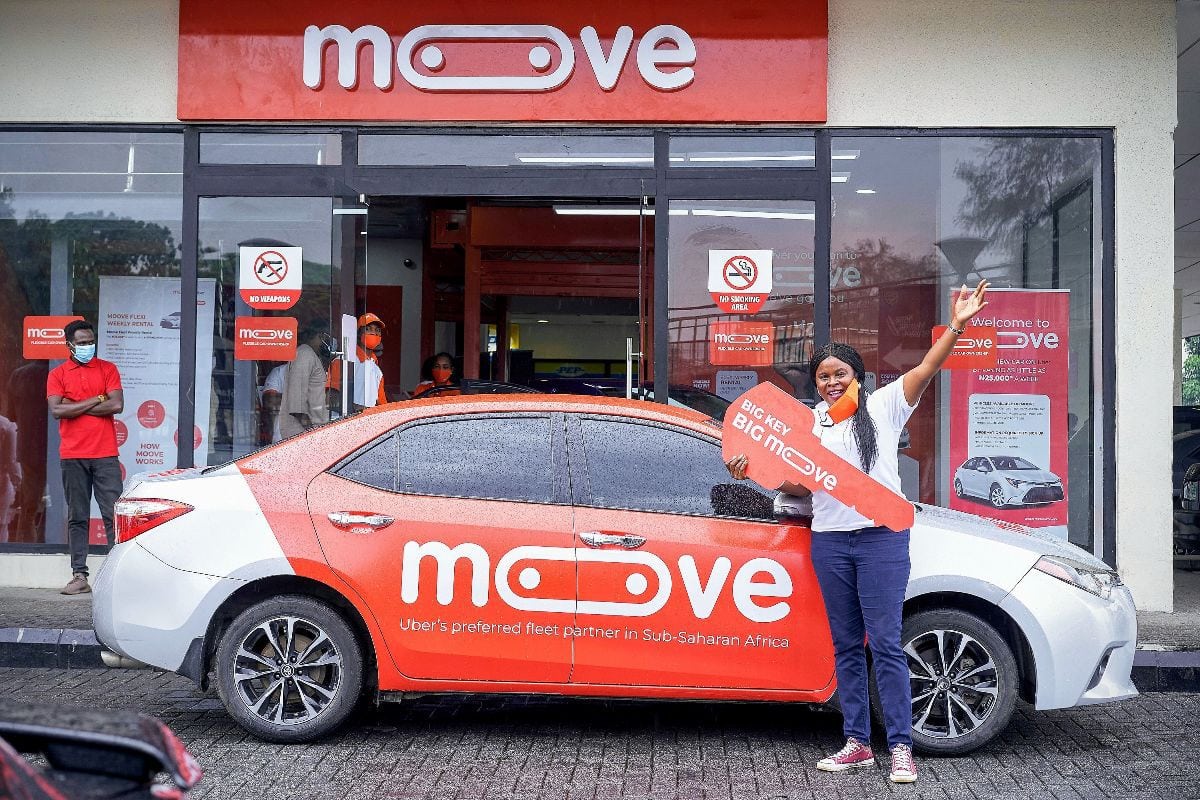
Moove, a global leader in innovative mobility solutions, has announced a pioneering fleet partnership with American autonomous driving technology company Waymo. This collaboration represents the first commercial partnership of its kind on the Waymo one app.

Under the agreement, Moove will oversee the management and dispatch of Waymo’s fully autonomous electric vehicle (EV) fleet, beginning operations in Phoenix in 2025 and expanding to Miami in 2026. Move will handle all aspects of fleet operations, including facilities and charging infrastructure, ensuring smooth functionality. Meanwhile, Waymo will continue to operate its Waymo One app and focus on validating and advancing its autonomous driving technology, the Waymo Driver.

Commenting on the partnership Vice President of Operations at Waymo, Ryan McNamara said,

“We are excited to partner with Moove in Phoenix and later Miami, bringing together their mobility-focused fleet management experience with our growing Waymo One service. Together, we will provide safe, seamless trips for riders, and scale faster and more cost-effectively over time, with safety continuing to lead the way.”

While this partnership signals Moove’s entry into the autonomous vehicle (AV) market, the company remains committed to its core mission of empowering underserved mobility entrepreneurs. Through its flagship Drive-to-Own (DO) product, Moove will continue democratizing access to vehicle ownership, enabling thousands of mobility entrepreneurs in emerging markets to succeed.

Autonomous vehicles have the potential to revolutionize mobility by addressing inefficiencies, enhancing safety, and promoting environmental sustainability. According to the World Health Organization, road traffic crashes account for approximately 1.19 million fatalities annually, ranking among the leading causes of death worldwide. Shared AV solutions, like those powered by Waymo and managed by Moove, offer opportunities to reduce urban congestion, improve road safety, and foster sustainable cities.

Also commenting on the partnership, Co-founder and Co-CEO of Moove Ladi Delano said,

“Ride-hailing has transformed urban mobility over the past 15 years, yet the core experience has largely remained unchanged. Waymo’s safe, reliable, and convenient Waymo One service leads in autonomous technology, and together, we’re driving a major shift in urban mobility. We’re proud to partner with Waymo, bringing our operational expertise to make this transformation possible. We understand that mobility isn’t a ‘one size fits all’. While we’re expanding into AVs in the U.S, we remain deeply committed to serving our customers around the world where we will continue to provide our unique financing solutions to underserved mobility entrepreneurs”.

Founded in 2020 by Ladi Delano and Jose Odunsi, Moove provides customers with access to vehicle financing, as well as a range of financial services that were previously inaccessible to them and their families, helping them to be more productive and successful.

Moove’s partnership with Waymo comes a few months after it officially launched its vehicle financing operations in Mexico in October. This is part of its broader goal to meet the rising demand for ride-hailing services in Latin America. With operations spanning 12 markets across Africa, the Middle East, Europe, Asia, and Latin America, Moove has supported over 30,000 mobility entrepreneurs.

The company’s entry into the U.S. market aligns with its broader ambition to build the world’s largest fleet and cutting-edge technologies for powering mobility platforms. Notably, its rapid global growth is supported by its partnership with Uber and backing from prominent investors.