DD
MM
YYYY

PAGES

DD
MM
YYYY

spot_img

PAGES

Home Blog Page 2572

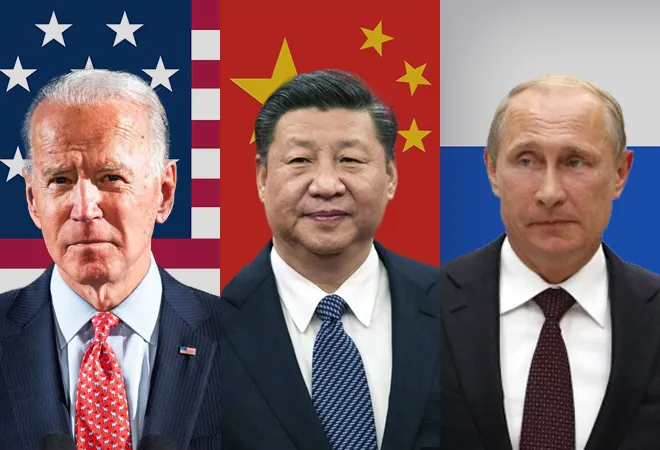
Contending issues among Ukraine, Russia, China, Germany and USA in 2024

0

According to reports, the crew of a Russian ship in the Baltic Sea fired signal ammunition at a German military helicopter during a reconnaissance mission. German Foreign Minister Annalena Baerbock mentioned the incident briefly during a NATO meeting in Brussels, highlighting the ongoing tensions and the need for increased surveillance in the region.

Baerbock announced on social media platform X that surveillance of pipelines and data cables in the Baltic Sea would be stepped up as hybrid threats from Russia and its supporters were on the rise. The use of signaling ammunition is only permitted in emergencies. “Putin is attacking our peace order with hybrid attacks,” the minister wrote.

Last month, damage to two sets of communication cables in the Baltic Sea — linking Finland and Germany and Sweden and Lithuania — in less than a day has drawn the authorities’ attention to possible subterfuge.

German Defence Minister Boris Pistorius declared the severing of a communication cable between Germany and Finland an act of “sabotage” and implied that “hybrid actors” were behind the attack. However, the reason for the attack was not yet known, Pistorius added. Sweden, Germany and Lithuania all launched investigations last week, looking into the role the Chinese vessel Yi Peng 3 played in the incident, as it was in the vicinity of the damaged cables at the time.

Several European governments and NATO’s Secretary-General have accused Russia of ramping up hybrid attacks on Western nations since it launched its full-scale invasion of Ukraine in February 2022. Moscow has repeatedly denied responsibility for such attacks. Hybrid warfare typically refers to activities designed to destabilize nations through non-traditional and diverse means, including cyberattacks, infrastructure sabotage and misinformation campaigns.

The ongoing war between Ukraine and Russia continues to be a major point of contention. Russia’s invasion of Ukraine has led to significant geopolitical tensions, with NATO and Western countries, including the USA and Germany, providing support to Ukraine. The conflict has also disrupted global trade routes and caused economic instability.

China and Russia have strengthened their alliance, conducted joint military exercises and increased economic cooperation. This partnership has raised concerns among Western nations about a potential new Cold War scenario.

The USA and China are engaged in a strategic rivalry, with issues ranging from trade disputes to military posturing in the South China Sea. China’s support for Russia in the Ukraine conflict has further strained relations with the USA.

Germany’s Role: Germany, as a key member of the European Union and NATO, has been actively involved in supporting Ukraine and imposing sanctions on Russia. Germany’s economic ties with China also add a layer of complexity to its foreign policy decisions.

Global Security Concerns: The interconnectedness of these issues has led to broader security concerns. For example, Russia’s partnerships with countries like North Korea and Iran have implications for global stability and the security of the USA and its allies

These tactics often aim to weaken states without provoking direct military conflict, these issues highlight the intricate web of alliances and conflicts shaping the global political landscape in 2024. The geopolitical landscape in 2024 is quite complex, with several key issues involving Ukraine, Russia, China, Germany, and the USA.

OECD Lowers Economic Growth Forecast in further warnings for Germany

0

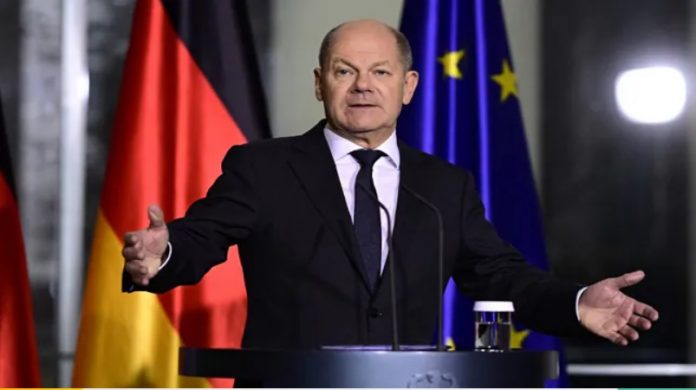
The Organization for Economic Cooperation and Development (OECD) has once again lowered its economic forecast for Germany. The OECD now predicts that Germany’s gross domestic product (GDP) will grow by only 0.7% in 2025, down from a previous forecast of 1.1%. The OECD has lowered its economic forecast for Germany, predicting a slower growth rate compared to the global economy, which is expected to grow by 3.3% next year.

Several factors contribute to this revised forecast:

High Uncertainty: Concerns about financing and implementing climate-friendly production have lowered confidence among investors and consumers in Germany.

Weak Foreign Demand: Economic activity has been weighed down by weak demand from key trading partners.

Slow Recovery in Exports: Although exports are slowly recovering, they have not yet reached levels that would significantly boost economic growth.

According to OECD reports, low inflation and rising wages will support real incomes and private consumption. Private investment will gradually pick up, supported by high corporate savings and slowly declining interest rates, but policy uncertainty will continue to weigh on investor confidence. Exports will slowly recover as demand in key trading partners strengthens.

Increasing public spending efficiency, reducing environmentally harmful tax expenditures, and enhancing tax enforcement should be combined with more flexibility in the national fiscal rules to create fiscal space to address a large infrastructure backlog and support green and digital investments.

Continuing to reduce the administrative burden, digitalize the public administration and improve infrastructure implementation capacity, particularly at the municipal level, can do much to support a pick-up in public and private investment. Skilled labour shortages can be addressed by strengthening the work incentives of women, older workers and low-income earners, as well as improving education, training and adult learning policies.

After GDP had decreased by 1.1% (annualized rate) in the second quarter 2024, it picked up by 0.4% in the third quarter driven by private and public consumption. High uncertainty about the financing and design of measures to support the green transition is weighing on investor and consumer confidence. Industrial production was 4.6% lower in September than a year earlier.

Despite falling energy prices, output of energy- intensive industries was 2% lower in September than a year earlier and volatile car production declined after a strong increase in August. However, incoming manufacturing orders have significantly picked up in September (+4.2%). Annual headline inflation increased to 2.4% in October, up from 1.8% in September, mainly driven by increases in food as well as services prices.

Core inflation remains sticky at 3.3% in October, up from 3.0% in September, due to strong services price inflation of 4.8% in October. Nominal wages per employee increased by 5.1% in the third quarter of 2024 from a year earlier, pushing up real wages and supporting a recovery in retail sales volumes from July to September. Although labour markets show some signals of cooling, they remain robust with a stable unemployment rate and high vacancies relative to historical norms, still signalling strong labour shortages.

After increasing in both July and August, export values declined in September by 1.7%. Exports to non-EU countries declined further in October and remain 6.5% below the level in October 2023, mainly due to weak exports to China and the United States. However, export orders have rebounded in recent months due to a broader recovery in global demand.

Despite these challenges, the OECD expects growth to rebound to 1.2% in 2026. The organization also highlights that low inflation, and rising wages will support real incomes and private consumption, which could help stabilize the economy.

A Russian ship in the Baltic Sea reportedly shot signal ammunition at a German military helicopter, highlighting ongoing tensions in the region. Former German Chancellor Angela Merkel mentioned that Russian President Vladimir Putin’s actions regarding Crimea were a turning point in her perception of him.

There is an ongoing international police operation targeting people smugglers transporting migrants to the UK via France, with raids taking place in western Germany. German companies operating in China are facing a slump in business confidence due to economic challenges and operational hurdles.

Bitcoin Soars Past $100k Amid Potential Friendly Crypto Policy Under Trump’s Presidency

0

For the first time in history, the price of Bitcoin has surged past the $100,000 mark, driven by optimism surrounding a potential crypto-friendly regulatory environment under Donald Trump’s incoming presidency.

The flagship cryptocurrency climbed 7.2% in the last 24 hours, reaching a record high of $103,670 and pushing its market capitalization to an unprecedented $2 trillion. This latest milestone marks Bitcoin’s new all-time high (ATH) as it gained momentum, fueled by institutional demand and improved sentiment in traditional financial circles.

However, the price of BTC has since cooled, as investors locked in profits, with the crypto asset currently trading at $102,807, as at the time of writing this report. Several analysts noted that BTC surging past the $100,000 price was inevitable. Although analysis suggests that a temporary sell-off is expected.

Bitcoin is on track to surge to $120,000 as early as the first quarter of next year. The crypto asset upward trajectory has been nothing short of extraordinary. Doubling from its 2024 low of $38,505, it has soared by 45% in just two weeks, driven by increased institutional inflows, rising ETF adoption, and growing confidence in its role as a hedge against inflation.

In addition to the price rally, Bitcoin’s market dominance reached 56.79%, although it retraced slightly from 60%, reflecting a surge in altcoins. The 24-hour trading volume stands at an impressive $106.7 billion, showcasing robust activity across the network. It is interesting to note that Michael Saylor’s Microstrategy (MSTR), has emerged as one of the biggest winners of the bull run. The company’s stock surged by 10% in overnight trading as Bitcoin hits $100,000. Additionallly, reports reveal that the tremendous surge saw the American-based investment firm Bitcoin position exceed $40 billion for the first time.

Notably, the optimism surrounding Bitcoin has been amplified by expectations of favorable policies under Trump’s administration. During this year’s election campaign, the former US president promised to make to make the U.S. “the crypto capital of the planet” by bringing in friendly regulators and ending the types of tough enforcement actions taken against the sector under President Biden. Investors are betting on reduced regulatory hurdles and increased support for blockchain innovation.

“Trump’s likely pro-crypto stance will accelerate the adoption of digital assets within mainstream financial systems,” said Green, adding that structural changes in the regulatory landscape are already underway.

Also, Trump’s nomination of Paul Atkins, a known crypto advocate, for SEC Chairman has further bolstered market sentiment. Atkins has the backing of industry leaders, with his appointment is seen as a potential game-changer for U.S. crypto regulation.

Atkins served as an SEC commissioner from 2002 to 2008 and is known for his pro-business stance. He is also known as a strong backer of cryptocurrencies, and could help shape key regulations for an industry Trump has avidly courted.

Bullish Projections Market analysts and institutions are now setting ambitious price targets for Bitcoin. Bernstein Research recently revised its 2025 forecast from $150,000 to $200,000, citing increased institutional appetite and growing global demand.

As Bitcoin continues to rewrite financial history, its role as a cornerstone of the global financial system becomes ever more apparent. The road ahead looks promising, with projections suggesting the cryptocurrency could reach $500,000 in the coming years, cementing its position as a revolutionary asset class.

The Call to Business Execution

0

This is Tekedia Mini-MBA Graduation Week. In our live session today, I will deliver a message titled “The Call to Business Execution”. Largely, it is ACTION time and we need to go to markets, and apply all that we have mastered in this 12-week program. Yes, until it is done, it has not been done! #DoIT.  Remember: nothing great has been accomplished until someone takes ACTION. Zoom link in the board

Hawk Token by Haliey Welch Crashes After Hitting Close to $500M

0

The launch of the HAWK token by Haliey Welch, also known as the “Hawk Tuah girl,” has indeed caused quite a stir. The controversy erupted when it was revealed that 97% of the token supply was initially held back, leading to accusations of insider trading and market manipulation.

Welch teased the launch in late November, mentioning possibly launching a memecoin on her podcast when interviewing businessman Mark Cuban, and sharing a thread on X (formerly Twitter) from a company called overHere, who said it was launching the token on her behalf.

$HAWK isn’t just a Meme Coin, it’s a part of the culture,” reads the token’s description on overHere’s site. “Haliey is using her meme to unite her entire community. From: TikTok, Talk Tuah podcast listeners, merchandise buyers, and even her charity supporters. Hundreds of thousands of non-crypto users will be onboarded by $HAWK because Haliey is making it easy, fun, and engaging. If you love Haliey, you love memes. And $HAWK is where it all comes together.

Here are some key points:

Initial Surge and Crash: The HAWK token saw a meteoric rise to a market cap of nearly $500 million shortly after its launch, only to crash by over 90% within hours.

Community Outrage: Many investors felt misled and accused Welch and her team of unethical practices, including holding back a significant portion of the token supply. Shortly after $HAWK launched; Welch’s X post was quickly hit with a Community Note warning that 96 percent of the token’s supply appeared to be owned by just 10 connected wallets. Wallets are anonymous (at least to an extent), but when such a large percentage of one token is owned by so few, the risks are obvious — if these people start selling, the token’s value can plummet.

Denials and Defense: Welch has denied any wrongdoing, stating that her team did not sell any tokens and blaming the crash on “snipers” who exploited the launch. Many investors felt misled and accused Welch and her team of unethical practices, including holding back a significant portion of the token supply.

On the same day, Redditor [u/ViscountBurrito posted a screenshot from X to the r/BrandNewSentence Subreddit, writing the peculiar phrase “I am a huge fan of Hawk Tuah, but you took my life savings” inside the X user’s tweet about losing $35,000 of their life savings to the $HAWK token. The post had 9,200 upvotes and 1,100 comments in a day.

Critics allege that Welch and her team held back 97% of the token supply and started selling immediately upon launch, which contributed to the rapid decline in value, the incident has led to significant backlash from the community, with many investors feeling misled and accusing Welch of unethical practices.

The $HAWK token’s launch sparked outrage online, especially on X and Reddit, where netizens who had purchased the meme coin posted about their losses over the coin’s liquidity. For instance, on December 4th, 2024, X user @ashrobinqt posted a video commenting on the $HAWK rug pull scandal, writing “I’m down around $20,000 right now on the $HAWK token.” The video received more than 406,000 plays and 1,400 likes in a day.

The incident has sparked a broader discussion about the risks and ethics of meme coins and influencer-led crypto projects. What are your thoughts on this situation?