DD
MM
YYYY

PAGES

DD
MM
YYYY

spot_img

PAGES

Home Blog Page 259

Canada’s Carney Vows Openness to U.S. Talks as Trump Cuts Off Negotiations Over Ontario Ad

0

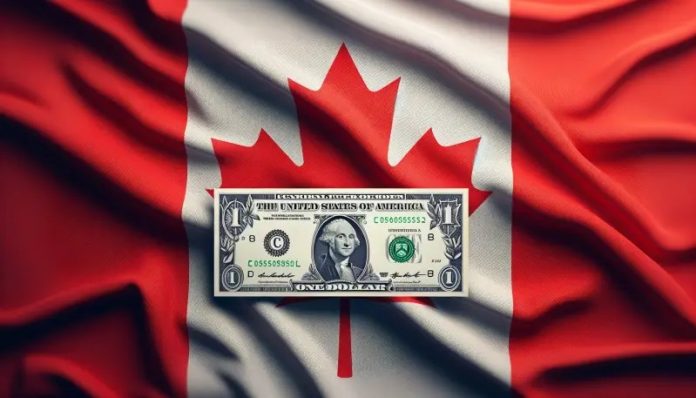
Canadian Prime Minister Mark Carney said Friday that his country remains ready to resume trade negotiations with the United States whenever Washington is willing, after President Donald Trump abruptly terminated talks over a political advertisement aired by the province of Ontario.

“My colleagues have been working with their American colleagues on detailed constructive negotiations, discussions on specific sectors — steel, aluminum and energy,” Carney told reporters in Ottawa before departing for Kuala Lumpur, Malaysia, for his first official visit to Asia. “We stand ready to pick up on that progress.”

Carney added that Canada could not control the course of U.S. trade policy but would continue to pursue “new partnerships and opportunities, including with the economic giants of Asia,” signaling a shift in focus toward strengthening ties in the Indo-Pacific region.

The rift began when Ontario aired an ad in U.S. markets featuring former Republican President Ronald Reagan warning that tariffs spark trade wars and lead to economic disasters. The commercial, which ran during the Major League Baseball playoffs, angered Trump, who on Thursday declared that “trade talks with Canada are over.” The U.S. president accused Ottawa of attempting to influence the Supreme Court as it prepares to rule on his global tariff agenda.

White House economic adviser Kevin Hassett said Friday that the president’s frustration with Canada “has built up over time.” He told reporters that “the Canadians have been very difficult to negotiate with,” blaming a “lack of flexibility” for the breakdown in discussions.

“The fact is that the negotiations with the Canadians have not been very collegial,” Hassett told Fox News. “They’ve not been going well. I think the president’s very frustrated. He wants a great deal with Canada, just like he wants a great deal with Mexico.”

Carney’s government had earlier removed most of the retaliatory tariffs on U.S. imports that were imposed by his predecessor, signaling an effort to ease tensions and rebuild trust with Washington. The two sides had been working on a framework covering the steel and aluminum sectors before the talks were suspended.

Ontario Premier Doug Ford later said he would pause the controversial ads after the weekend “so that trade talks can resume.” Ford said he spoke with Carney before making the decision.

“Our intention was always to initiate a conversation about the kind of economy that Americans want to build and the impact of tariffs on workers and businesses,” Ford said. “We’ve achieved our goal, having reached U.S. audiences at the highest levels.”

The Ronald Reagan Presidential Foundation and Institute had earlier criticized Ontario’s use of Reagan’s 1987 radio address, saying the ad “misrepresents his speech” and was edited without permission.

While Carney reiterated that Canada remains committed to “constructive and fair” trade relations with the United States, analysts say his handling of Trump’s aggressive tariff strategy has exposed Ottawa’s lack of a clear long-term approach. Some economists argue that Canada has been too reactive — alternating between conciliatory and confrontational tactics — instead of developing a coherent counter-strategy.

Mexico, meanwhile, has quietly taken a different route. Several trade watchers describe the Mexican government’s stance as a “rope-a-dope” strategy: avoiding direct confrontation with Washington while absorbing short-term pressure to survive the next four years of Trump’s presidency. The approach appears to be working. Mexico’s tariffs, which were originally expected to take effect alongside Canada’s, have been postponed following a series of low-profile backchannel negotiations.

Canada, by contrast, has a prime minister determined to project toughness in the face of Trump’s populist economic nationalism. Twice now, Carney has had to retreat after direct showdowns with Washington — the latest being the Ontario ad controversy, which forced him to pull back and reaffirm his commitment to dialogue.

Critics say that while Carney’s instinct to stand firm is politically understandable, it risks playing directly into Trump’s narrative of dominance over America’s trading partners. The U.S. president’s rhetoric — including past suggestions that Canada should become a “State” — has been widely condemned by trade experts as an affront to national sovereignty.

The standoff now leaves one of the world’s most integrated economic relationships at a crossroads. Trade between the two nations exceeds $900 billion annually, supporting millions of jobs on both sides of the border. But the personal and political friction between the two leaders threatens to undermine that stability.

Aradel Expands Stake in ND Western, Strengthens Grip on Nigeria’s Upstream Oil and Gas Sector

0

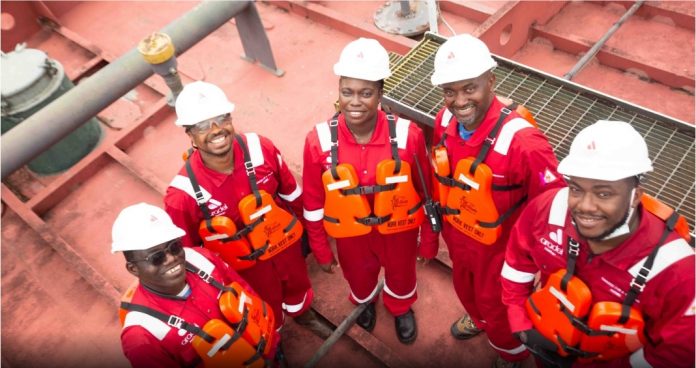
Aradel Holdings Plc has announced a binding agreement to acquire an additional 40% equity stake in ND Western Limited from Petrolin Trading Ltd, a move that positions the indigenous energy group for greater dominance in Nigeria’s upstream oil and gas industry.

A corporate disclosure filed with the Nigerian Exchange (NGX) on Friday revealed that the deal will be executed through Aradel’s wholly owned subsidiary, Aradel Energy Limited, reinforcing the company’s influence across the Western Niger Delta. The agreement marks one of the most significant transactions in Nigeria’s energy sector this year, consolidating local ownership of key hydrocarbon assets.

Aradel Energy, which already holds a 41.67% stake in ND Western, will see its ownership rise substantially upon completion of the acquisition. The move effectively gives Aradel a controlling influence in ND Western, granting it greater leverage over operations and strategic decision-making.

ND Western itself commands a 45% participating interest in Oil Mining Lease (OML) 34, one of Nigeria’s most prolific onshore assets. OML 34 is renowned for its large reserves of crude oil and associated gas and plays a dual role in Nigeria’s energy ecosystem—supporting both export revenues and domestic gas supply.

The block is also a crucial component of Nigeria’s power generation value chain, feeding major electricity plants through the Utorogu Gas Plant, one of the country’s largest. With approximately 3 trillion cubic feet (Tcf) of gas reserves, OML 34 is pivotal to Nigeria’s ongoing transition towards cleaner, gas-based energy solutions.

Through this deal, Aradel is not only boosting its production portfolio but also reinforcing Nigeria’s broader drive toward indigenous participation in upstream assets, a central goal of the Petroleum Industry Act (PIA).

Strengthening Nigeria’s Local Energy Footprint

The acquisition underscores Aradel’s long-term strategy of securing high-value, cash-generating assets that underpin national energy security.

“The transaction aligns fully with Aradel’s corporate vision for sustained portfolio optimisation, value enhancement, and national energy advancement,” said Chief Financial Officer Adegbola Adesina, who signed the disclosure.

Energy analysts believe the move reflects a new phase in Nigeria’s oil and gas evolution, where indigenous firms are increasingly stepping into roles once dominated by international oil companies. The withdrawal of majors like Shell, ExxonMobil, and TotalEnergies from onshore operations has opened opportunities for local players to take control of assets critical to domestic energy supply.

ND Western also holds 50% ownership of Renaissance Africa Energy Holding Company Limited, which oversees Renaissance Africa Energy Company Limited—operator of the Renaissance Joint Venture (JV). This joint venture is fast emerging as one of Nigeria’s most dynamic indigenous energy alliances, providing a platform for operational expansion, technology exchange, and investment attraction.

The Renaissance JV, comprising ND Western, Aradel Holdings, Waltersmith Petroman Oil, FIRST Exploration & Petroleum Development Company (First E&P), and Petrolin, represents a shift toward cooperative indigenous control of Nigeria’s hydrocarbon resources. The alliance is viewed as a blueprint for future collaboration among local operators, promoting efficiency, shared expertise, and local value retention.

Market analysts believe that consolidating ND Western’s equity gives Aradel a stronger foothold within the Renaissance network, enhancing its access to upstream and midstream growth opportunities. The acquisition is expected to accelerate Aradel’s involvement in Nigeria’s gas monetization agenda, especially as global investors pivot toward cleaner fuels.

Completion of the transaction remains subject to regulatory approvals from the Nigerian Upstream Petroleum Regulatory Commission (NUPRC), the Federal Competition and Consumer Protection Commission (FCCPC), and the Minister of Petroleum Resources.

Aradel has expressed confidence in obtaining these approvals, emphasizing that it is adhering to all statutory and competition requirements. Regulatory experts say such approvals are crucial to ensuring transparency, fair competition, and alignment with Nigeria’s broader energy transition framework.

Listed on the NGX in 2024, Aradel Holdings is one of Nigeria’s few fully integrated indigenous energy companies, with operations spanning exploration, refining, and gas processing. The company currently produces around 18,000 barrels of oil per day and operates a 100 million standard cubic feet per day (scf/d) gas plant. Its 11,000 bbl/d modular refinery produces diesel, kerosene, and naphtha, reinforcing its position as a domestic energy provider amid Nigeria’s recurring fuel import challenges.

The acquisition further strengthens Aradel’s refining and upstream integration, giving it end-to-end control over the production, processing, and marketing of hydrocarbons. Industry experts note that Aradel’s steady capital discipline and investment in refining capacity make it a model for other indigenous firms seeking to compete globally.

The Consortium and Its Broader Impact

ND Western was incorporated in 2011 as a Special Purpose Vehicle (SPV) to acquire Shell’s divested interest in OML 34. It is jointly owned by Aradel Holdings, Petrolin Trading, FIRST E&P, and Waltersmith Petroman Oil.

Each member of the consortium contributes unique strengths to the group’s operations. Waltersmith, a pioneer in modular refining, operates the Ibigwe Field (OML 16) and produces multiple refined products. In contrast, First E&P, which operates OMLs 83 and 85, produces about 57,000 barrels of oil per day and has exported over 50 million barrels since inception. Petrolin, based in Switzerland, produces around 17,000 barrels of oil equivalent per day across Africa and the Middle East and invests heavily in infrastructure and mining.

Together, these companies have become a cornerstone of Nigeria’s indigenous energy strategy, promoting local content, employment creation, and energy diversification. Their joint ownership of assets like OML 34 ensures that a significant portion of Nigeria’s oil and gas wealth remains within the domestic economy.

Aradel’s acquisition also coincides with a global realignment in energy investment. As international majors pivot toward renewables and divest from mature oil assets, Nigerian independents have been expanding their footprint through strategic acquisitions.

Analysts note that Aradel’s bold move reflects growing investor confidence in Nigeria’s petroleum reforms under the PIA, which seeks to provide fiscal stability and promote indigenous ownership. With Nigeria’s proven gas reserves estimated at over 200 Tcf, the emphasis on gas production and processing represents a major opportunity for local operators like Aradel to lead the next phase of growth.

4 Cheap Crypto Coins ChatGPT Says Will See a Face-Dogecoin (DOGE), Cardano (ADA), and 3 Other Top Cryptos Under $1 That Could Triple Your Capital

0

With the market warming up ahead of the next Fed rate cut and altcoins breaking out of long consolidations, savvy investors are scanning for the best under $1 cryptos to buy before the next 3x wave.  Dogecoin and Cardano are two popular choices amid the ongoing ETF approval buzz. However, these three tokens also flash powerful setups for a massive year-end rally.

Little Pepe (LILPEPE): The Meme Chain Built to Lead the Next Bull Run

Little Pepe has quietly evolved from a meme presale into one of crypto’s most promising Layer 2 ecosystems. Little Pepe introduces unique features to the hype-only sector. It’s the fastest meme Layer 2 chain, fully sniper-bot resistant, with zero buy/sell tax and near-zero trading fees. The project also hosts a meme-only Launchpad, giving creators a native space to launch their own tokens, a move that strengthens demand for $LILPEPE long-term. With a CertiK audit and a strict vesting schedule, it stands out as one of the few meme tokens with anti-pump-and-dump protection. Add a high-staking APY and growing liquidity ahead of CEX listings, and you have a meme coin with fundamentals rare in this category. The Mega Giveaway, worth 15 ETH for the top buyer, drives Stage 12–17 FOMO, while the $777k community giveaway keeps engagement high. This dual-prize campaign has boosted visibility and buy pressure, perfect timing as meme markets heat up again. This virality and utility combination has attracted significant investors’ interest. In Stage 13 at $0.0022, the project has seen over $27.2 million in capital inflows, selling over 16.5 billion tokens. The buzz gets louder as buyers pile in before the $0.003 launch. Analysts project that Little Pepe could rally 50x to 100x post-launch, targeting $0.1–$0.2 by year-end if current demand sustains. For investors looking for asymmetric returns under $1, LILPEPE leads the pack. Buy Little Pepe Now ?

Ethena Smart Money’s Quietly Accumulate

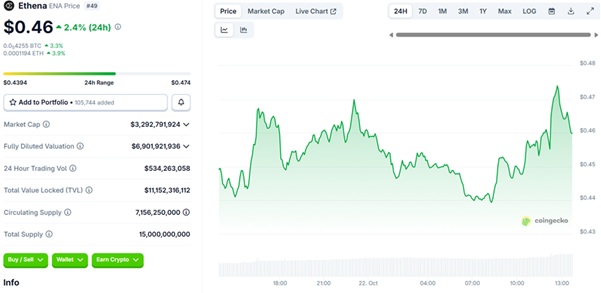
While the market drifted sideways, Ethena (ENA) surged in the past week, outperforming most top-100 assets. The big story? Co-founder Guy Young bought $25 million worth of ENA, signaling deep confidence and likely insider awareness of upcoming catalysts.

Ethena Price Chart | Source: CoinGecko

ENA’s hybrid yield model and synthetic dollar (USDe) give it a strong real-world foundation, positioning it as one of the best altcoins under $1 with scalable DeFi utility. The setup mirrors early Curve and Maker cycles, where consistent yield demand triggered exponential moves. Traders target $1.25–$2.60 as medium-term levels and $5 as a full-cycle top. With institutions turning bullish on stablecoin infrastructure, Ethena’s low price and high upside potential could easily translate into a 5x return by early 2026.

Algorand Transaction Surge Prepares for a Comeback

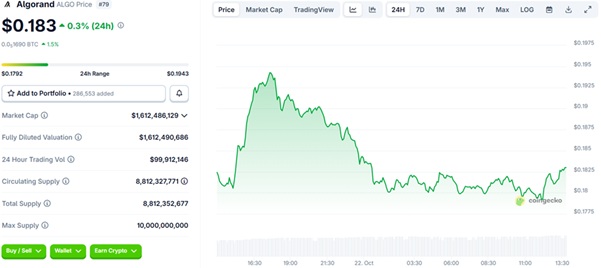
Algorand’s fundamentals are quietly improving: transactions are up 32%, active addresses are at 375k, and developer activity is hitting record highs. The token remains below its yearly high, stuck around $0.18.

Algorand Price Chart | Source: CoinGecko

While its DeFi TVL has dipped, Algorand’s scalability and strong institutional framework remain intact. The pullback has mostly been accumulation, and a breakout could be in store if liquidity returns. Analysts target $0.45-0.60 by year-end, which would be a 3x-5x run from here if the macro environment remains the same.  With solid fundamentals and an ultra-low entry point, ALGO looks like a patient investor’s play for Q4 recovery.

Dogecoin ETF Tailwind Arrives

Dogecoin is quietly reloading for its next big run. The upcoming 21Shares DOGE ETF (ticker: TDOG), now in an amended S-1 filing with the SEC, could be a game-changer. Once approved, DOGE will join Bitcoin and Ethereum in the regulated ETF club, opening the floodgates for institutional inflows.

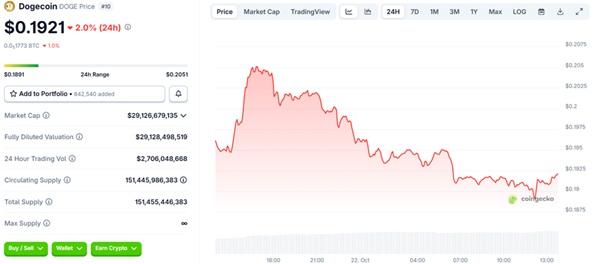
Dogecoin Price Chart | Source: CoinGecko

The chart setup screams accumulation. DOGE is forming a classic Cup and Handle pattern, signaling a massive breakout toward $0.49–$0.50, up over 150% from its current $0.19 level. Analysts highlight $0.155–$0.18 as the “golden buy zone” for long-term holders. As retail momentum returns and ETF headlines hit, DOGE could easily triple from current levels. If history repeats, this setup mirrors its 2021 pre-rally structure, and that ended in fireworks.

Cardano Institutional Access Sparks Bullish Setup

Grayscale’s launch of the Cardano Trust ETF (GADA) on the NYSE Arca has sparked market momentum. This fund offers investors an opportunity to trade ADA in a regulated manner.

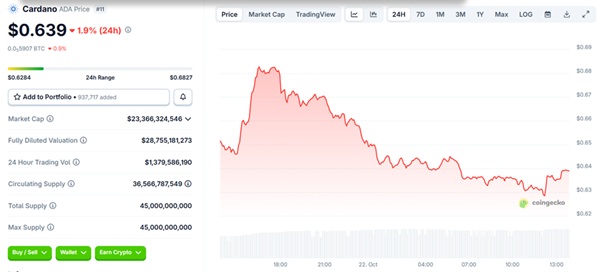
Technical indicators show ADA coiling up in a symmetrical triangle pattern around the $0.62 level, targeting almost $1.90. Momentum indicators are turning up, and less leverage could sustain the move. If ADA breaks the $0.70 resistance cleanly, a 3–5x surge to the upper Fibonacci targets looks increasingly likely. If the ETF narrative is combined with renewed institutional interest, ADA could be one of Q4’s strongest under-$1 performers.

Final Take: Sub-$1, Supercharged Potential

From Little Pepe’s meme revolution to the ETF-fueled momentum of Dogecoin and Cardano, the sub-$1 range is loaded with opportunity. Ethena and Algorand share a group that blends innovation, resilience, and raw upside. Although each of these tokens trades below a dollar today, they could define the next 3x cycle of crypto growth in a few months. Join the Little Pepe Presale ?

For more information about Little Pepe (LILPEPE) visit the links below:

Website: https://littlepepe.com

Whitepaper: https://littlepepe.com/whitepaper.pdf

Telegram: https://t.me/littlepepetoken

Twitter/X: https://x.com/littlepepetoken

$777k Giveaway: https://littlepepe.com/777k-giveaway/

Ozak AI Emerges As The Top Alternative: $4.08M Raised While Bitcoin and Ethereum Tumble

0

Ozak AI, the AI-powered crypto project, has emerged as a better alternative to BTC and ETH. This can be looked into from two different perspectives. One is technical, wherein the Ozak AI ecosystem has been able to bring together the fusion of AI tools, decentralized infrastructure, and tokenized growth. Another is financial, wherein its utility token, $OZ, has been able to mark significant upticks in offer value during the presale process.

While BTC and ETH hovered within a confined range, $OZ noted a stride from $0.001 to $0.012 throughout Phase 1 and Phase 6, up 1100% from the initial value. Upcoming presale stages are estimated to take the utility token closer to the target price of $1.

$OZ Presale and Its Emergence as the Top Alternative

The utility token of Ozak AI, $OZ, is in its 6th presale phase. The ecosystem has raised $4.08 million by selling 973 million tokens. The offer value of $OZ is $0.012, up 1100% from the Phase 1 value of $0.001. This reflects a growth of 12 times, which will soon be followed by a growth to $0.014 when the presale enters the 7th phase.

The target price is $1, and Ozak AI is more than determined to revise the price and achieve the milestone. A growth to $1 would bring out the multiplier of 1,000 from the initial value.

BTC and ETH, on the other hand, don’t bring out that opportunity anytime soon. BTC is currently listed at $113,010.84, and it is estimated to rise by around 3.55% only in the next 1 month. Similarly, ETH is exchanging hands at $4,097.99, and it is estimated to surge by 11.60% in the next 30 days. $OZ, in a stark contrast, is estimated to grow by over 116% during the transition to the next phase.

The Ozak AI ecosystem has allocated 30% of the total supply of 1 billion tokens to the presale stage. It has allocated 30% to Ecosystem & Community as well. The remaining portion of the supply is allocated among Future Reserve (20%), Team (10%), and Liquidity & Listings (10%).

Technicals Supporting the Emergence of Ozak AI ($OZ)

In addition to tokenomics and financials, the technical specifications of Ozak AI are also supporting its emergence as the top alternative to Bitcoin and Ethereum. For starters, cross-chain functionality supports operations across multiple blockchain ecosystems. The AI-powered infrastructure facilitates optimization, smart analytics, and automation.

Security and transparency are backed by Certik and Sherlock. They deploy advanced tools to identify and address smart contract vulnerabilities at the starting point. Frequent audits by Certik and Sherlock instill a sense of confidence among everyone, especially in the minds of new investors. DePIN design leverages blockchain technology and IPFS nodes. The objective is to reduce the chances of data loss and tampering by distributing it across a network of nodes.

The utility of $OZ includes the power to participate in governance and staking. Holders of the token also gain exclusive access to AI Agents and a real-time analytics feed. $OZ utility expands beyond the horizons of Ozak AI because members holding the token also get the opportunity to expand the ecosystem.

Key Developments of Ozak AI

Ozak AI, most recently, announced the launch of Ozak Streaming Network, also known as OSN. This development strengthens the ecosystem’s position as the top alternative by fueling live data to its platform. Defined as the central hub, OSN has been designed to capture information from every major source and present it post-processing without any delay.

A partnership with Meganet entails the creation of an efficient and distributed computing capability to fetch real-time financial insights. The collaboration with Meganet is one of the crucial developments for Ozak AI. It further covers undertaking joint community projects and saving costs on AI processing.

Conclusion

Ozak AI has raised over $4.08 million, and it will continue to raise funds as the $OZ presale process continues. The nearest revision is of $0.014, scheduled to go into effect in Phase 7. Constant growth and strong technicals have made Ozak AI a top alternative to Bitcoin and Ethereum.


For more information about Ozak AI, visit the links below:

Website: https://ozak.ai/

Twitter/X: https://x.com/OzakAGI

Telegram: https://t.me/OzakAGI


Consumer Marketing in the FMCG Sector | Tekedia Mini-MBA

0

In the bustling corridors of Africa’s markets, from the open stalls of Aba to the shelves of Lagos malls, Fast-Moving Consumer Goods (FMCGs) power the rhythm of daily living. These are the products that meet the essential, the routine, the predictable needs of citizens. Soap, beverages, toothpaste, seasoning, snacks, and items with short usage cycles and immediate replacement demand.

But behind these everyday products is an intense battlefield of branding, positioning, logistics, pricing and emotional storytelling. In FMCG, the competition is not only to be purchased; the competition is to be remembered, and to be purchased again and again. Consumer loyalty is not inherited; it is earned daily.

The FMCG sector is fundamentally downstream in nature. It does not wait for demand, rather, it stimulates demand. A bottle of beverage is not bought only because one is thirsty; it is bought because a brand has convinced the consumer that this particular drink is the meaning of refreshment. That is why FMCG companies invest in massive consumer insights, listening to how people live, eat, celebrate, and socialize. The real marketplace is not the supermarket shelf; the real marketplace is the consumer mind. And that mind is shaped by trust, familiarity, habit, peer influence, and cultural connection. The winning FMCG brands become part of daily rituals.

But consumer marketing in FMCG is evolving. The days when radio jingles and roadside billboards dominated persuasion have given way to digital communities, influencer economies, and micro-engagement. Today, a TikTok dance challenge for a soft drink may deliver more brand equity than a one-minute expensive television commercial. We are in an era where the consumer is also the marketer. The brand no longer speaks to the market; it speaks with the market. Modern FMCG marketing requires presence, not just messaging, and participation, not just broadcasting. A brand must show up where the consumer is emotionally and digitally located.

Yet, for all the innovation, one ancient truth remains unchanged: in FMCG, distribution is king. The most loved product loses its glory if it cannot be found when needed. That is why logistics, last-mile distribution, partnerships with small retailers, and deep market penetration remain the cornerstones of enduring advantage. FMCG brands that win are those that sync the science of brand storytelling with the engineering of operational excellence.

Good People, the lesson is clear: to win in FMCG consumer markets, build trust, understand culture, tell unforgettable brand stories, and never, ever, fail on product availability. Join us at Tekedia Mini-MBA today as the zen-master of consumer marketing teaches.

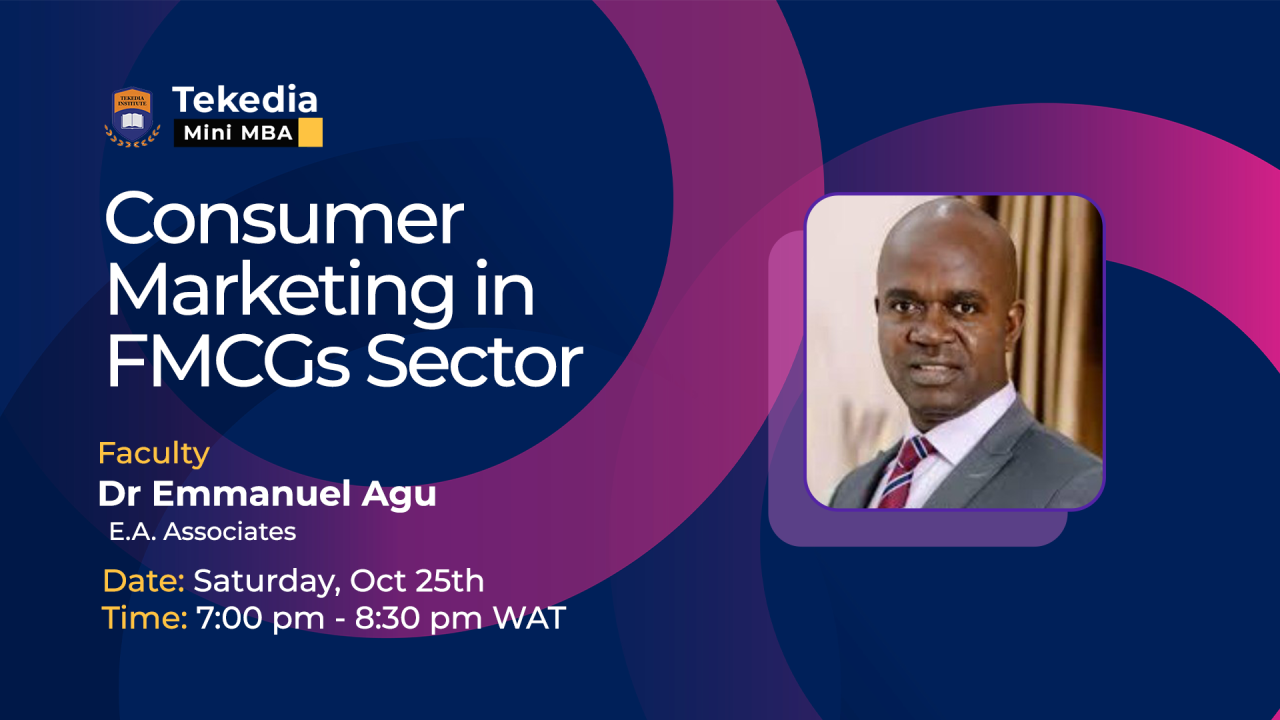
  • Sat, Oct 25 | 7pm-8.30pm WAT | Consumer Marketing in FMCGs Sector –Dr Emmanuel Agu, E.A. Associates | Zoom link