DD
MM
YYYY

PAGES

DD
MM
YYYY

spot_img

PAGES

Home Blog Page 2609

Next Crypto to Explode: Top Picks Ready to Dethrone Bitcoin and Ethereum in 2025

0

For several years Bitcoin and Ethereum have been retaining their top positions in the crypto market. However, as the crypto world continues to evolve unpredictably, several cryptocurrencies are emerging as strong competitors. Thus, many investors wonder which crypto has the potential to dethrone Ethereum and Bitcoin in 2025. Wondering about the same?

In this article, we’ve listed some top picks that could be the next crypto to explode in 2025. The curated list includes promising projects, led by Aureal One (DLUME) – innovative blockchain technology, DexBoss (DEBO), 5thScape (5SCAPE) and others. Explore them in detail, and depose the crypto kings.

Next Crypto to Explode

  1. Aureal One (DLUME)
  2. DexBoss (DEBO)
  3. 5thScape (5SCAPE)
  4. Flokerz (FLOCK)
  5. Qubetic (TICS)

Cryptocurrency investments require extensive research. Figuring out the next crypto to explode in 2025 might be a challenging task for new investors and seasonal traders. Here are some of our top picks that will guide you along the way. Focus on each listed project’s potential and make a profitable move.

1.   Aureal One ( DLUME)

Empower the future of gaming and metaverse with Aureal One’s DLUME token. Aureal One is the first metaverse blockchain network, the next crypto to explode in 2025. Day by day the gaming industry is booming rapidly in the digital world. Integration of games into the blockchain network provides opportunities for gamers to delight in transparency. Other blockchains that are in the market leave the investors behind to suffer from low-speed performance and high transaction fees. To overcome these hindrances, Aureal One is designed with dedicated blockchain technology.

Click here to know more about Aureal One

Scalability always matters in crypto. Aureal One is designed with the powerful Zero-Knowledge Rollups technology. It is a cutting-edge layer 2 scaling design, offering near-zero transaction fees, thousands of transactions per second, and instant transactions with robust security. What’s special in Aureal One? Aureal One includes two ravishing ecosystems in its lineup. Darklume and Clash of Tiles. Darklume is a metaverse platform where you can create, interact, and trade your assets fully in a decentralized environment. Clash of Tiles is a strategic game of Aureal One. Here, you can deploy your cryptocurrencies and stock up on the virtual tiles for massive gains in the future. An array of projects are set to come soon within the ecosystem. Stay tuned.

The initial presale phase of Aureal One is Live. Purchase DLUME tokens at a low cost in the initial phase and gain huge returns in the nearing year. The price per DLUME token in the presale is $0.00428082. Upon listing on the exchanges, it may rise to $0.01. Early adopters can join the hands.

2.   DexBoss (DEBO)

Every industry trend has a massive rise in the crypto market. Decentralized Finance is not an exception. However, the existing DeFi platform has enormous hurdles like complexity, high transaction fees, limited crypto supply, liquidity, and slow performance. To overcome all these mind-blocking barriers, DexBoss comes into the play.

DexBoss is one of the top crypto projects that might be the next crypto to explode in the market. It is an advanced Decentralized Finance (DeFi) platform that addresses the existing lags in the market and is enhanced accordingly. It bridges the gap between the traditional and decentralized crypto networks. The native token of DexBoss is DEBO. The initial presale phase of the DEBO coin starts at $0.01 and is expected with  massive gains of 15x return upon listing. Thanks to the deflationary mechanism for increasing the holders’ token value.

3.   5thScape (5SCAPE)

5thScape is the top next crypto to explode in our list. Are you a gamer? Enjoy the visual treat with 5thScape. 5thScape is the gateway for the VR world. This dynamic blockchain technology is designed with unique attributes and key features to interact with digital content like premium VR games.

It is a decentralized blockchain technology that supports secure and transparent digital transactions within the VR gaming environment. This cutting-edge VR gaming platform bundles 3D VR games like MMA, Thrust Hunter, and more. Enjoy the wide range of 3D games with VR headsets and VR chairs for comfort gaming. But to get more access, you need to purchase 5thScape’s native token 5SCAPE. It’s the key to entering the VR gaming world. The presale phase of the 5SCAPE token is live in the market. The token value starts at $0.00433. The market capitalization of 52.11 million. Upon listing on the exchanges, the value may rise to $0.01 per token. Plot your seat to dive into the VR world.

4.   Flokerz (FLOCK)

Flokerz is one of the top picks for the next crypto to explode in 2025. This crypto project has set a unique spot in the crypto market. It is a vote-to-earn meme coin platform, where you can cast your vote to earn more FLOCK tokens. It is a redefined decentralized platform, offering power to the coin holders to shape the project. Active participants will be rewarded with more tokens in the future.

The native currency of Flokerz is FLOCK. The presale phase of the FLOCK token is live in the market. The presale value per token is $0.0058394, eventually it will increase upon listing on the exchanges. Currently, it has reached over $ 2.5 million milestones.

5.   Qubetics (TICS)

Qubetics, a groundbreaking blockchain platform, integrates the QubeQode Development environment. This enables the users to create and deploy applications in the crypto environment. To develop a streamlined process, it leverages AI-driven components. It is the first crypto environment that features a decentralized VPN to enhance privacy, security, and accessibility to unrestricted internet. The peer-to-peer network leverages blockchain technology, offering unparalleled transparency, and resistance to its censorship.

TICS is the native currency of Qubetics. Currently, the token is in the presale phase 9 pricing at $0.023. Upon listing, there will be potential gains for the investors.

Conclusion

As the crypto market is ready for the bull run, several crypto projects are building their winning momentum. Based on our market research, the above-mentioned cryptocurrencies will be the next cryptos to explode in 2025. Though each project has a unique blockchain technology, Aureal One takes the crown due to its substantial growth, strong roadmap, and low token value. Currently, Aureal One’s DLUME token is priced at $0.00428082. Don’t miss out on your chance.  Investors who are looking for huge returns must opt for Aureal One. Invest in and get multiple rewards, massive gains are ahead of the year.
It Will Take Years to Address AI Hallucination – Nvidia CEO Jensen Huang

0

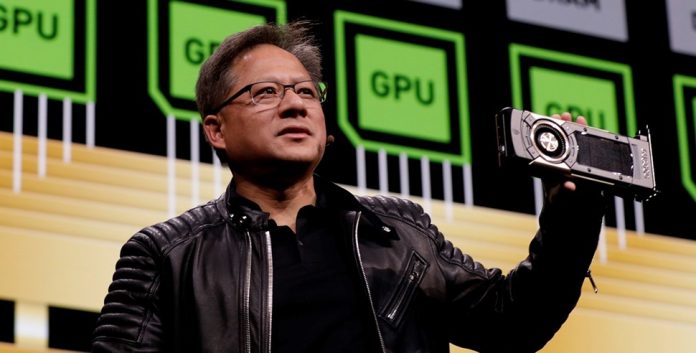
In a recent interview at the Hong Kong University of Science and Technology, Nvidia CEO Jensen Huang shared candid insights into the state of artificial intelligence (AI) and Nvidia’s contributions to its development.

Huang discussed the persistent issue of AI hallucinations, explained key advancements in AI development, and reflected on his career journey, including personal anecdotes about how he set high expectations for himself from an early age.

AI hallucinations, a notable challenge in artificial intelligence, occur when models like chatbots or generative AI systems produce outputs that sound plausible but are factually incorrect or entirely fabricated. It often stems from incomplete or biased training data, poor model architecture, and overfitting or underfitting during development.

These errors, distinct from AI biases or simple mistakes, have real-world implications across various domains.

Addressing the phenomenon—Huang was forthright about the challenges involved. He stated that resolving this issue would likely take several years, despite the progress in AI technologies.

“Today, the answers that we have are the best that we can provide,” Huang explained. However, he emphasized that current systems require users to evaluate whether an AI-generated answer is sensible or fabricated. He noted, “We need to get to a point where the answer that you get, you largely trust,” but acknowledged this milestone is still years away.

During the interview, Huang outlined three critical areas of AI development. The first stage is pre-training, which he likened to a college education, where the AI ingests vast datasets to build foundational knowledge. Next is post-training, which involves refining the AI’s capabilities in specialized tasks through techniques like reinforcement learning, synthetic data generation, and multipath learning.

The final stage, Test Time Scaling, represents what Huang described as “thinking.” Here, AI systems break down problems step by step, iterating and simulating outcomes to enhance solution quality.

“Today, the answers that we have are the best that we can, but we need to get to a point where the answer that you get is not the best that we can provide, and somewhat you still have to decide whether is this hallucinated or not hallucinated, does this make sense, is it sensible or not sensible? We have to get to a point where the answer that you get, you largely trust.”

He also added, “I think that we’re several years away from being able to do that, and in the meantime, we have to keep increasing our computation.”

Despite the challenges, Huang expressed optimism about the role Nvidia has played in AI’s evolution. He highlighted that Nvidia’s groundbreaking work has drastically reduced the cost of computation by a factor of a million. This, according to Huang, has fundamentally altered researchers’ habits, enabling exhaustive data analysis without hesitation.

“What Nvidia has contributed is that we’ve taken the marginal cost of computing and reduced it by a million times.” He said, “When the cost of something reduces by a million times, your habits fundamentally change…that is the single greatest contribution Nvidia ever made, that we made it so that using a machine to learn exhaustively an enormous amount of data is something that researchers wouldn’t even think twice to do. That’s why machine learning has taken off.”

The conversation also touched on Nvidia’s skyrocketing demand and the increasing need for computing power in AI. Huang refrained from predicting whether AI computing demands would continue to multiply at the same exponential rate over the next decade but acknowledged the trend’s transformative implications.

A host at the event highlighted that the demand for AI computing has grown fourfold annually, translating into a million-fold increase over a decade, a trajectory that has underpinned Nvidia’s meteoric stock performance.

Responding to critiques about the high price of Nvidia’s AI GPUs, Huang defended the costs by emphasizing the massive discount Nvidia has effectively offered over the past decade.

“It’d be a million times more expensive if Nvidia didn’t exist,” he quipped. “I gave you a million times discount in the last 10 years. It’s practically free!”

On a personal note, Huang recounted how he wooed his wife by promising he would become a CEO by the age of 30—a goal he achieved. The anecdote added a lighter, more human touch to a discussion largely focused on the technical and economic dimensions of AI development.

Strategies like using diverse datasets, refining training methods, and employing cross-verification tools like Nvidia’s NeMo Guardrails have been recommended to mitigate AI hallucination risks?.

Port Harcourt Refinery Commences Crude Oil Processing, NNPCL Announces

0

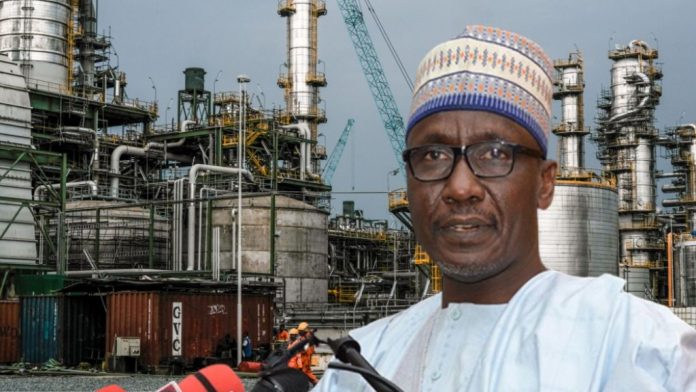
The Port Harcourt Refining Company (PHRC) in Rivers State has commenced crude oil processing, marking a significant milestone for Nigeria’s energy sector.

This development, confirmed by the Chief Corporate Communications Officer of the Nigerian National Petroleum Company Limited (NNPCL), Femi Soneye, on Tuesday, is expected to foster competition in the refining industry, potentially leading to more affordable petroleum products for Nigerians.

“Today marks a monumental achievement for Nigeria as the Port Harcourt Refinery officially commences crude oil processing. This groundbreaking milestone signifies a new era of energy independence and economic growth for our nation,” Soneye declared.

He also commended President Bola Ahmed Tinubu, the NNPCL board, and Group Chief Executive Officer (GCEO) Mele Kyari for their dedication to this transformative project.

Background of the Port Harcourt Refinery

The Port Harcourt refinery, one of Nigeria’s largest, was shut down in 2019 due to a lack of functionality. In 2021, the Federal Government approved $1.5 billion for its rehabilitation, a project that has faced numerous delays over the years.

Initial promises by the Minister of State for Petroleum Resources (Oil), Heineken Lokpobiri, placed the refinery’s start date in September 2023, later postponed to December. In March 2024, GCEO Mele Kyari further adjusted expectations, projecting an April launch date.

Despite these missed deadlines, Kyari reiterated in August 2024 that the refinery was a critical part of efforts to restore Nigeria’s refining capacity.

A Shift in Nigeria’s Energy Sector

The refinery’s reopening is a significant step toward reducing Nigeria’s reliance on imported petroleum products. Although the country is a major crude oil producer, it has long struggled with inadequate refining capacity, leading to a dependency on costly fuel imports. This situation was worsened by Nigeria’s crude-for-petrol swaps and years of fuel subsidies, which drained foreign exchange reserves.

The commencement of operations at the Port Harcourt refinery comes shortly after the Dangote Refinery began producing diesel and aviation fuel in September 2024. The Dangote Refinery hailed as the largest single-train refinery in the world, represents another key milestone in Nigeria’s efforts to meet domestic fuel demand.

With both the Port Harcourt and Dangote refineries operational, Nigerians hope for relief from the soaring fuel prices that followed the removal of subsidies earlier in 2024. The cost of petrol skyrocketed from approximately N200 per liter to over N1,000 per liter, contributing to widespread economic hardship.

NNPCL has also announced plans to expedite the restoration of the Warri Refinery to further bolster domestic production capacity. Mele Kyari expressed optimism that these efforts will enable Nigeria to become a net exporter of petroleum products by 2024.

“We are focused on delivering this rehabilitation project, our two other refineries, and all other investments towards revamping the nation’s refining capacity,” Kyari stated during a visit to the Port Harcourt Refinery in August 2024.

Fostering Competition

The resumption of operations at the Port Harcourt refinery introduces competition in Nigeria’s refining sector, which has long been dominated by imports due to insufficient local capacity. With the Dangote Refinery already operational, producing diesel and aviation fuel since September 2024, the Port Harcourt facility is expected to challenge market monopolies, improve supply dynamics, and stabilize prices.

NNPCL has also announced plans to privatize the Port Harcourt refinery for better efficiency and profitability. The privatization effort aligns with the government’s broader strategy to restructure the oil and gas sector, attract private investment, and reduce operational inefficiencies that have plagued state-owned refineries.

Regional Benefits

While the Port Harcourt refinery’s production capacity is significantly lower than that of the Dangote Refinery—designed as the world’s largest single-train refinery—its strategic location is expected to offer unique advantages. The refinery will serve consumers in Nigeria’s eastern region, where the high cost of logistics associated with transporting petroleum products from other parts of the country has driven up prices.

The resumption of operations at the Port Harcourt refinery, coupled with Dangote Refinery’s contributions, underlines a shift in Nigeria’s energy landscape. These developments are expected also to reduce the country’s reliance on costly fuel imports, alleviate foreign exchange pressures, and provide a buffer against global oil price volatility. For ordinary Nigerians, the hope remains that these changes will translate into more accessible and affordable energy.

The refinery’s reopening and the broader push for efficiency through privatization reflect a significant step forward. However, energy analysts believe that the ultimate test will be how these reforms impact consumers, the economy, and the long-term sustainability of the oil refining sector.

Dangote Refinery Reaches a Six Month Deal with Marketers to Supply 28m Liters of Fuel

0

The Dangote Refinery, Nigeria’s $20 billion investment in energy infrastructure, has entered a new phase of operations by securing a critical agreement with oil marketers to supply a minimum of 28 million liters of petrol daily for the next six months.

The deal, struck during a weekend stakeholders’ meeting in Abuja, is aimed at ensuring consistent supply for domestic consumption while addressing long-standing challenges in the petroleum sector.

This agreement, confirmed by the Petroleum Products Retail Outlets Owners Association of Nigeria (PETROAN), signals a shift in Nigeria’s fuel supply dynamics. PETROAN, alongside key stakeholders such as the Nigerian Midstream and Downstream Petroleum Regulatory Authority (NMDPRA), the Nigerian National Petroleum Company Limited (NNPC), and independent refiners like Waltersmith, Edo, and Aradel refineries, agreed to prioritize sourcing petroleum products from Dangote Refinery.

The resolution requires oil marketers to cease importing products unless Dangote Refinery is unable to meet demand.

Dr. Joseph Obele, PETROAN’s spokesperson, described the agreement as a major step toward stabilizing Nigeria’s downstream sector. He emphasized its potential to address price fluctuations, ensure steady supply, and foster stakeholder collaboration.

PETROAN’s National President, Dr. Billy Gillis-Harry, expressed optimism about the deal’s impact, saying, “The resolution will bring succour to the downstream sector and improve the Nigerian economy.”

As part of this agreement, Dangote Refinery also announced a reduction in the ex-depot petrol price from N990 per liter to N970 per liter. This price adjustment, according to the refinery’s Group Chief Branding and Communications Officer, Anthony Chiejina, was made to express gratitude to Nigerians for their support.

“As the year comes to an end, this is our way of appreciating the good people of Nigeria for their unwavering support in making the refinery a dream come true. In addition, this is to thank the government for their support as this will complement the measures put in place to encourage domestic enterprise for our collective wellbeing,” he said.

He added that the refinery remains committed to delivering high-quality, environmentally sustainable products to meet domestic needs and alleviate fears of supply shortages.

“While the refinery would not compromise on the quality of its petroleum products, we assure you of the best quality products that are environmentally friendly and sustainable.

“We are determined to keep ramping up production to meet and surpass our domestic fuel consumption, thus dispelling any fear of a shortfall in supply,” he said.

The resolution includes additional provisions for aviation fuel and diesel supplies from domestic refineries. According to the agreement, the NMDPRA will assess domestic production capacities to determine any necessary importation volumes, ensuring shortfalls are covered.

Furthermore, oil marketing companies will negotiate directly with refiners on a “willing buyer, willing seller” basis to streamline supply and pricing mechanisms.

This follows the report of an earlier agreement that will see the refinery supply 60 million liters of fuel each week to IPMAN.

While this development has been largely welcomed, it comes after significant skepticism from industry players about Dangote Refinery’s capacity to reliably supply Nigeria’s vast fuel market. Concerns were previously raised about its prices, production scale, and logistical readiness to meet fluctuating domestic demand. These doubts now appear to be fading, with stakeholders expressing confidence in the refinery’s operational capabilities.

Beyond domestic supply, the Dangote Refinery is also ramping up its international footprint. A report by S&P Global Commodity Insights revealed that the refinery has successfully exported jet fuel to various international destinations, including South Korea, Iceland, Tenerife, and Heathrow Airport in London.

From January to October 2024, the facility delivered substantial volumes of products to West African nations such as Ghana and to the transshipment hub in Lome, Togo. South Korea emerged as the largest single export destination, receiving 23,000 barrels per day (bpd) of naphtha. The report predicts that by 2026, Nigeria could triple its gasoil exports, positioning itself as a significant player in the global fuel market.

S&P Global noted, “For the first time in history, Nigerian-made jet fuel has found its way to airports ranging from Iceland to Tenerife and London’s Heathrow.”

The report highlighted that as Dangote Refinery reaches full operational capacity, at least eight African countries are preparing to import its products, marking Nigeria’s transformation into a net exporter of refined petroleum products.

The refinery’s enhanced production capacity and export activities are seen as pivotal in reshaping Nigeria’s energy industry. This transition is expected to stabilize prices and strengthen the economy, though stakeholders emphasize the need for continued investment in infrastructure and logistical systems to support these goals.

The agreement to prioritize Dangote Refinery’s products and the facility’s increasing export volumes is seen as a turning point in Nigeria’s energy sector. Economists believe that with sustained collaboration among key players and strategic policy implementation, the country stands to achieve greater self-sufficiency in petroleum product supply, alongside economic growth and global competitiveness.

Elon Musk Al Ambition Soars as ×Al Valuation Reaches $50B After $5 Billion Funding Round

0

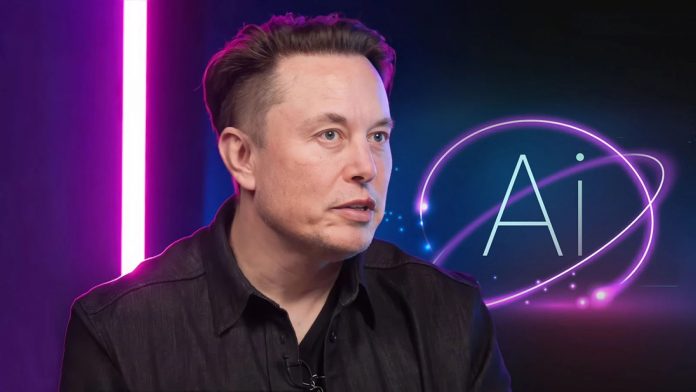
Elon Musk’s Al ambitions have reached new heights with ×Al, his artificial intelligence startup, securing a $5 billion funding round that catapulted its valuation to a staggering $50 billion.

This recent development underscores Musk’s unwavering commitment to pushing the boundaries of Al technology and solidifies ×Al’s position as a major player in the rapidly evolving Al landscape.

According to the Wall Street Journal, this latest financial investment, brings xAl’s total funding this year to $11 billion, with key backers including the Qatar Investment Authority, Andreessen Horowitz, Valor Equity Partners, and Sequoia Capital. This new valuation is more than double the company’s previous estimate.

Recall that in May 2024, xAI raised $6 billion in series B funding, reaching a post-money valuation of $24 billion as investors bet big on on the company, intensifying the AI race. The company announced that the money will be used to take its first products to market, build advanced infrastructure and accelerate research and development of future technologies.

With the recent funds raised, XAl plans to use part of its new capital to acquire an additional 100,000 Nvidia chips to further develop its Al models, underscoring its ambition to lead in the artificial intelligence space. The $50 billion valuation notably surpasses the $44 billion Musk paid to acquire Twitter, now rebranded as X, in October 2022. Despite significant changes and innovations on the platform, including a monetization model for content creators, Fidelity recently slashed its valuation of X to $9.4 billion, a stark drop from Musk’s initial investment.

The meteoric rise of ×Al highlights the growing importance of artificial intelligence in transforming industries and Musk’s continued ability to attract substantial investor interest in cutting-edge technologies. Launched in July 2023, xAI was developed with a mission to understand the true nature of the universe.

“If it tried to understand the true nature of the universe, that’s actually the best thing that I can come up with from an Al safety standpoint. I think it is going to be pro-humanity from the standpoint that humanity is just much more interesting than not-humanity”, Musk said speaking on ×Al capability.

Also, the AI startup was established as Musk’s counter to OpenAi, the Al powerhouse he co-founded in 2015 with Sam Altman. Their split in 2019 has since escalated into a bitter rivalry, marked by public disputes and legal challenges. ×Al’s aspires to quickly dominate the Al market, where it faces direct competition from OpenAl maker of popular chatbot ChatGPT. The company’s first major product, the Grok chatbot, released last

November, is a testament to its rapid progress. Notably, Musk who has been a strong advocate for safer Al, disclosed via a space on X that rather than explicitly programming morality into its Al, ×Al will seek to create a “maximally curious”.

Recall that Musk has warned regularly that unrestrained development of AI broadly, computer systems performing tasks that typically require human intelligence, could be catastrophic for humanity. Last year, he was one of more than 30,000 signatories to a letter calling for a pause in work on powertul Al technology.

As ×Al continues its rapid ascent, the company’s valuation reflects not only the potential of artificial intelligence but also Musk’s enduring influence in shaping the future of technology.