DD
MM
YYYY

PAGES

DD
MM
YYYY

spot_img

PAGES

Home Blog Page 2621

Orange Teams up With OpenAI And Meta to Develop AI Models For African Languages

0

French telecom giant Orange has announced a partnership with OpenAl, backed by Microsoft, and Meta, the parent company of Facebook, to create advanced artificial intelligence models that better understand African languages.

Orange will leverage OpenAl’s Whisper and Meta’s Llama-open-source Al platforms that can be customized to address the lack of support for West African languages in existing Al systems. These new models aim to bridge a significant gap, as most current Al systems are trained predominantly on U.S sourced data, overlooking cultural and linguistic nuances from regions like Africa.

Speaking on this, Steve Jarrett, Chief Al Officer at Orange said,

“Having an open model, you’re able to do what’s called fine-tuning, where you introduce additional information to the model that wasn’t included when it was first trained. We’re adding the recognition of West African regional languages that are not understood today by any Al.”

This innovative project aims to develop custom-Al models capable of allowing customers to communicate naturally in their local languages with Orange for customer support and sales. These open-source Al models will also be provided externally by Orange with a free license for non-commercial use such as for public health, public education, and many other services. Orange intends to help drive Al innovation in these regional languages by collaborating on these new Al models with local startups and other technology companies, and by doing so, to mitigate the growing digital divide faced by people all across the African continent.

The initiative’s first phase, set for early 2025, will incorporate two widely spoken West African languages Wolof and Pulaar. Wolof is spoken by around 16 million people in Senegal, the Gambia, and southern Mauritania, while Pulaar is spoken by six million people, primarily in Senegal. The custom Al models will be shared externally under a free license for non-commercial applications, including in education and public health. Orange also plans to expand this initiative across all 18 West African countries where it operates.

In its contact centers, Orange has encountered challenges with Al systems failing to recognize or process regional languages. This project aims to address those limitations, improving customer interactions and communication. By fine-tuning leading AI models such as OpenAI’s ‘Whisper’ speech model and Meta’s ‘Llama’ text model with diverse examples of these languages, we will enable them to better understand these regional languages. Orange’s vision is to make AI and other related advances accessible to all, including illiterate populations, who are currently unable to benefit from the potential of artificial intelligence. The initiative is a blueprint for how AI can be used to benefit those currently excluded.

Orange’s initiative seeks to fill this gap, paving the way for more inclusive and culturally relevant Al systems. The company is focused on delivering ‘Responsible AI’, where it carefully chooses the most appropriate and simplest solution for each AI use case.


Equity Investing: Cap Table, Valuation, MFN And SAFE – Ndubuisi Ekekwe

0

Join us at Tekedia Mini-MBA tomorrow as we discuss equity investing, focusing on cap table, company valuation, MFN (most favoured nation) and SAFE (Simple Agreement for Future Equity). Yes, I want you to understand the mechanics behind investing in early stage companies and startups. Why? This is a business school! That no one taught you that in your university does not mean Tekedia Institute does not offer a business manual here.

And more: this will help you understand what needs to happen if you do plan to also raise funds. We have discussed that process already. But I am going to go deeper into the cap table. With this, you can confidently create a model on the worth of your business, and from that build a cap table, and allocate the company shares, considering monetary investments, efforts with co-founders, etc.

Thur, Nov 28 | 7pm-8pm WAT | Equity Investing: Cap Table, Valuation, MFN And SAFE – Ndubuisi Ekekwe, Tekedia Capital| Zoom link

We’re the best school. Zoom link in the Board and register for the next edition of Tekedia Mini-MBA here.

Central Bank of Nigeria (CBN) Introduces New Guidelines for Interbank FX Trading via EFEMS

0

The Central Bank of Nigeria (CBN) has unveiled fresh guidelines for interbank foreign exchange (FX) trading through its Electronic Foreign Exchange Matching System (EFEMS), effective November 25, 2024.

The directive, signed by Dr. Omolara Duke, Director of the Financial Markets Department, seeks to enhance market transparency, improve trading efficiency, and ensure compliance within Nigeria’s FX market.

Key Provisions of the Guidelines

Minimum Trade Value and Incremental Clip Sizes

The guidelines mandate a minimum trade value of $100,000 for all interbank FX transactions. Participants must also adhere to incremental clip sizes of $50,000, aimed at standardizing trade sizes and minimizing counterparty risks.

Platform and Trading Hours

The CBN has designated Bloomberg’s BMatch as the official order-matching platform for FX transactions. Trading hours will run from 9:00 AM to 4:00 PM West Africa Time (WAT) on business days.

Scope of Transactions

Initially, EFEMS will only support spot FX transactions between the Nigerian naira (NGN) and the US dollar (USD). However, the CBN reserves the right to introduce additional currency pairs if necessary.

Binding Trades and Compliance

All trades executed on the EFEMS platform are binding, except when canceled by mutual agreement of both parties with prior written approval from the CBN. Participants are required to:

  1. Set Credit and Settlement Limits: Counterparty credit and settlement limits must be predefined. Transactions exceeding these limits will not be executed.
  2. Adhere to Regulations: Participants must comply with the Nigerian Foreign Exchange Code and other relevant CBN regulations.
  3. Report and Log Transactions: Transactions outside prescribed parameters or exceeding limits must be reported and logged on the FX blotter within 10 minutes.

Trades on EFEMS will remain anonymous until matched. Counterparty details will only be disclosed post-transaction in line with settlement protocols.

Participation Criteria and Withdrawal Rules

Eligibility

Participation is restricted to authorized dealer banks licensed by the CBN. Other financial institutions must obtain the CBN’s prior approval to join the platform.

Participants are required to:

  • Execute agreements with the CBN-approved platform provider.
  • Maintain accurate profiles.
  • Operate within prescribed credit and settlement limits.

Participants wishing to exit the platform must submit a 30-day notice and resolve all outstanding obligations before withdrawal.

The CBN has emphasized strict monitoring of all EFEMS trades to ensure compliance and market integrity. Daily reporting of trade volumes, settlement statuses, and counterparties is mandatory.

Non-compliance with the guidelines may result in severe penalties, including the possible publication of aggregate or individual trade data for market analysis, subject to confidentiality agreements.

Bloomberg BMatch Platform to Launch on December 2, 2024

The CBN has confirmed that the Bloomberg BMatch system will officially go live on December 2, 2024. This platform is expected to enhance operational efficiency and transparency in the FX market, allowing seamless trading among participants and improving the CBN’s oversight capabilities.

The CBN has urged all authorized dealers and banks to collaborate with Bloomberg representatives to ensure a smooth onboarding process and resolve technical challenges.

Implications for Nigeria’s FX Market

The introduction of EFEMS and the associated guidelines mark a significant step towards modernizing Nigeria’s FX market. By enforcing standardized trading practices and leveraging advanced technology through Bloomberg’s BMatch, the CBN aims to create a more transparent and orderly market.

However, the mandatory $100,000 minimum trade size may restrict participation, potentially excluding smaller players from interbank FX trading. While the move aligns with global standards, market participants will need to adapt to the stringent compliance requirements.

These changes reflect the CBN’s broader strategy to stabilize the FX market amid ongoing economic challenges. The central bank aims to restore confidence and improve the overall efficiency of Nigeria’s FX ecosystem by streamlining trading processes and enhancing oversight.

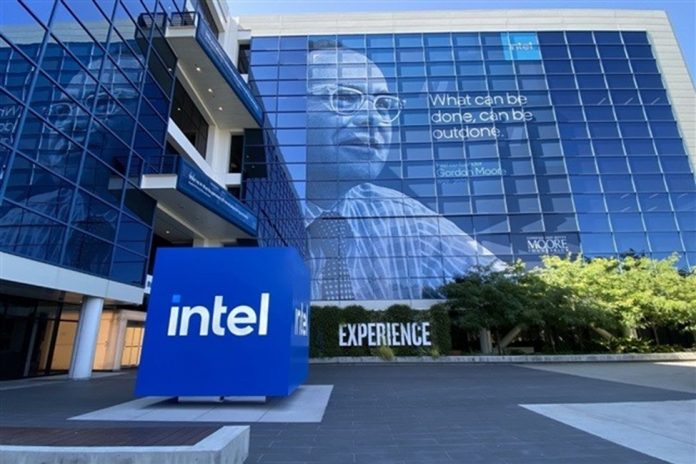
Intel Secures $7.865 Billion in CHIPS Act Funding as US Ramps Up Semiconductor Production

0

The Biden administration has awarded Intel $7.865 billion under the CHIPS and Science Act, marking the largest allocation to date from the $39 billion set aside to bolster domestic semiconductor manufacturing.

While slightly less than the $8.5 billion initially earmarked for Intel earlier this year, the funding underscores the White House’s commitment to reshoring critical supply chains and fostering job creation across the United States.

“Today’s award marks another key step in implementing President Biden’s CHIPS and Science Act and the Investing in America agenda to reshore manufacturing, create thousands of good-paying jobs, and strengthen our economy,” said White House Deputy Chief of Staff Natalie Quillian in a statement announcing the grant.

Intel plans to use the funds to expand its semiconductor fabrication facilities in Arizona, New Mexico, Ohio, and Oregon. These projects are expected to create up to 30,000 jobs across all four states, including direct employment at the facilities and indirect roles in construction and supply chain services.

The funding also comes with conditions aimed at ensuring Intel prioritizes innovation and manufacturing over shareholder payouts. The company has pledged to avoid stock buybacks for five years—a measure likely intended to align with the CHIPS Act’s goal of strengthening the US semiconductor ecosystem.

Intel’s final funding amount was reduced due to a mix of factors, including delays in some of its project timelines and a separate $3 billion contract awarded in September to develop semiconductors for national security and military applications. Additionally, some of Intel’s expanded plans now extend beyond the CHIPS Act’s 2030 project deadline, prompting adjustments in the allocated amount.

Intel Scales Back Ambitions Amid Financial Struggles

The funding arrives at a challenging time for Intel, which has faced significant setbacks over the past year. The company recently reported a staggering $16.6 billion quarterly loss—its largest since its founding in 1968—and laid off over 15,000 employees.

Intel has also revised its growth strategy to reflect its financial realities. The company has reduced its planned US manufacturing investments from $100 billion over the next five years to $90 billion by 2030. Its expansion in Ohio, initially estimated to create 10,000 jobs, has been scaled back to 6,500 roles.

Despite these struggles, Intel remains a critical player in the US semiconductor industry. Its efforts to advance 18A process technology—considered vital for next-generation chip manufacturing—are seen as essential to maintaining the country’s technological edge.

CHIPS Act Funding Disbursement Accelerates Amid Looming Deadline

Intel’s award is part of the Commerce Department’s efforts to distribute $19 billion of the total $39 billion in CHIPS Act funding before the Trump administration takes office in January. The incoming administration has expressed plans to scale back the program, potentially reducing the scope of future investments in domestic semiconductor production.

With the Intel deal finalized, the Commerce Department has now reached agreements with six companies under the CHIPS Act, allocating nearly half of the available funding. More announcements are expected in the coming weeks as time runs short to obligate the remaining funds.

Challenges and Opportunities for Intel

The CHIPS Act funding provides a lifeline for Intel as it navigates a turbulent period marked by declining revenues, competitive pressures, and operational challenges. However, the company’s ability to meet its ambitious goals will depend on how effectively it utilizes the funds to regain technological leadership and improve its financial stability.

Reports that Qualcomm considered acquiring Intel further highlight the uncertainty surrounding the chipmaker’s future. While Qualcomm’s interest has reportedly cooled, Intel’s struggles have raised concerns about its long-term competitiveness in a rapidly evolving global semiconductor market.

Reshoring Semiconductor Manufacturing

The Biden administration’s push to reshore semiconductor manufacturing comes amid heightened concerns about US reliance on foreign suppliers, particularly in Taiwan and South Korea. The CHIPS Act is part of a broader strategy to secure critical supply chains and reduce vulnerabilities in the event of geopolitical disruptions.

Intel’s expanded facilities are expected to play a pivotal role in this effort as the US works to strengthen its position in the global semiconductor race.

Bitcoin Retreats Below $100,000 as Investors Lock in Gains

0

The price of Bitcoin has retreated from the highly anticipated $100,000 milestone as investors secure profits following the crypto asset’s strong rally after the US presidential election.

In a push to hit the $100,000 price, Bitcoin traded at $99,665 before dropping more than 4% to $90,999.30, according to Coin Metrics. Also, crypto-related equities felt the pressure, with Coinbase shares falling 6% and Microstrategy dropping 12%.

As Bitcoin approaches a $2 trillion market cap, large investors, such as pension funds and central banks, are starting to pay attention. Several analysts reveal that there is a lot of liquidity around the $100,000 mark, which may lead to more consolidation before any breakout. This according to them could cause a short squeeze if Bitcoin breaks above this level, potentially pushing prices higher.

Matt Mena, a crypto research strategist at 21Shares, explained that the $100,000 level serves as a psychological selling point for investors who have held onto Bitcoin since its last bull run. He told Business Insider that token holders likely anticipated declines around the price point and chose to sell some holdings to lock in gains. The same behavior can be traced back to previous highs in bitcoin’s price, he said.

With Bitcoin’s recent record-breaking performance, reports reveal that it has prompted long-term holders to increasingly sell their assets in large amounts. The selling pressure has been offset to some extent by institutional inflows, including purchases by MicroStrategy and bitcoin exchange-traded funds (ETFs). However, ETFs experienced $438 million in outflows on Monday, ending a five-day streak of inflows.

Traders have been cashing in for a second conseçutive day following bitcoin’s post-election surge, fueled by optimism about President-elect Donald Trump’s pro-crypto policies.

While Bitcoin has lately been experiencing some form of pullback, currently trading at 93,965 at the time of writing this report, several analysts suggest that the price of BTC will hit the $100,000 price.

“Bitcoin has been on a tear since Election Day with very few pullbacks, but the $100,000 mark remains a formidable psychological barrier. While breaking through now would be a major bullish signal, a brief pullback may be needed to gather momentum before the next attempt”, Mati Greenspan, founder, and CEO of Quantum Economics, told CNBC by email.

Brett Reeves from BitGo explained that new all-time highs often lead to consolidation periods before the next price rally. “With new institutional money entering the space and rising retail activity via ETFs and exchanges, coupled with positive macroeconomic and regulatory developments, we may see a rapid recovery in price activity,” Reeves told CNBC.

Despite the recent pullback, bitcoin remains up over 30% since the U.S. election and has gained an impressive 114% year-to-date, signaling strong long-term momentum in the cryptocurrency market.