DD
MM
YYYY

PAGES

DD
MM
YYYY

spot_img

PAGES

Home Blog Page 2623

Lightchain Protocol AI Presale Sparks Buying Frenzy—Could LCAI Be the Next Big Crypto Opportunity?

0

The cryptocurrency market is heating up as Lightchain Protocol AI’s presale ignites a wave of investor excitement. With its groundbreaking combination of artificial intelligence (AI) and blockchain technology, the platform is quickly becoming a focal point for savvy investors. The LCAI token presale has already shown strong momentum, raising questions about whether it could become the next big breakout crypto project.

Lightchain Protocol AI is not just riding the hype; it’s addressing real-world problems with innovative solutions, positioning LCAI as a token with immense growth potential.

What’s Behind the Buying Frenzy?

Unlike many speculative tokens, Lightchain Protocol AI offers practical utility and solves critical challenges in AI and blockchain systems. Investors are drawn to the project’s unique features and its potential to transform industries ranging from healthcare to logistics.

  • Key Features Driving LCAI’s Popularity:
    1. Proof of Intelligence (PoI): A consensus mechanism rewarding nodes for AI computations, replacing traditional mining with energy-efficient and meaningful contributions.
    2. Artificial Intelligence Virtual Machine (AIVM): A secure, scalable environment for real-time AI processing, offering unprecedented computational efficiency.
    3. Governance Participation: LCAI token holders play a direct role in shaping platform decisions, ensuring a community-driven approach.
    4. Incentives for Developers: Contributors to the ecosystem are rewarded with LCAI tokens, fostering innovation and long-term engagement.

These features make Lightchain Protocol AI a practical and scalable solution, drawing comparisons to early-stage projects that achieved meteoric growth.

Could LCAI Be the Next Big Crypto?

Speculation is mounting over LCAI’s potential to deliver exponential returns. While comparisons to the likes of Bitcoin’s early days or Ethereum’s ICO may seem ambitious, the unique value proposition of Lightchain Protocol AI justifies the excitement. The platform’s ability to seamlessly merge blockchain with AI places it at the forefront of decentralized intelligence, an area poised for massive growth.

As adoption accelerates, analysts predict that demand for LCAI tokens will rise, driven by its utility in accessing AI services, governance, and ecosystem rewards.

The Presale Advantage

The ongoing LCAI token presale offers early investors an opportunity to secure tokens at a discounted rate before broader adoption increases demand. Contributions are accepted in ETH and ERC-20 USDT, ensuring accessibility for global participants. With its initial stages seeing strong participation, the presale is expected to sell out quickly.

By getting in early, investors can position themselves for significant potential gains as Lightchain Protocol AI scales and expands its ecosystem.

Join the Movement Today

Lightchain Protocol AI’s presale success highlights its potential to become a leading force in the crypto and AI space. Whether or not it reaches the heights of early Bitcoin or Ethereum, the platform is undeniably shaping the future of decentralized technology. For those looking to invest in a project with real-world utility and high growth potential, now is the time to act.

Visit https://lightchain.ai to secure your LCAI tokens during the presale and be part of a transformative project redefining blockchain and AI integration.

Website: https://lightchain.ai
Whitepaper: https://lightchain.ai/lightchain-whitepaper.pdf
Twitter/X: https://x.com/lightchainai
Telegram: https://t.me/LightchainProtocol

Best Crypto To Invest In 2024? Chainlink Price Surges 10%, Experts Believe Dogecoin And New Defi ERC-20 Token Will Be Next To Surge

0

Chainlink has not been one of the best performers with the current bull run, however, the asset has managed to gain as high as 10% in the past day. Dogecoin on the other hand has had a good month. Pundits are confident the veteran meme coin and the new DeFi ERC-20 Token Yeti Ouro (YETIO) are headed for a major rally.

Chainlink (LINK): The Oracle Giant Continues Its Climb

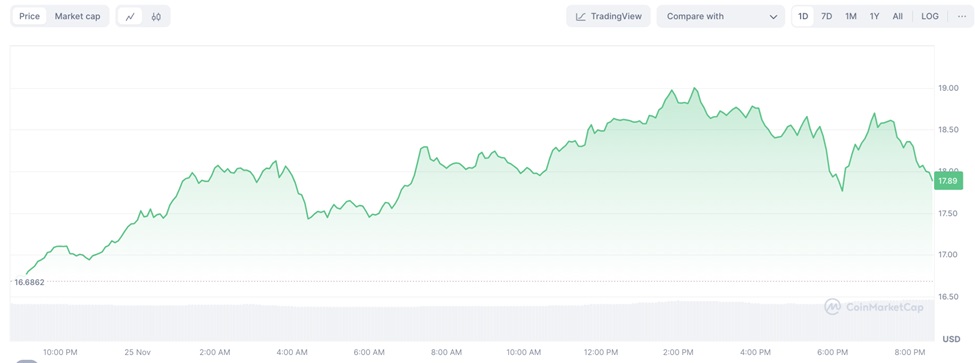
Chainlink has been on an upward trajectory, now trading at $17.99, with an 8.10% increase in the last 24 hours. Over the past week, LINK has climbed 16%, most of which was from today. Chainlink’s decentralized technology is critical for enabling smart contracts to interact with real-world data securely.

Chainlink price chart: source CoinMarketCap

Over the past month, LiINK has delivered a massive 63% gain, solidifying its position as a leading oracle solution in the DeFi ecosystem. The asset is continuing to solidify its place in the top 20 currently being among the best gainers of top cryptocurrencies in the last day.

Dogecoin (DOGE)

Dogecoin has been in the headlines a lot recently as one of the best-performing coins. Currently trading at $0.4 Dogecoin is proving its resilience in the cryptocurrency space. While its price dipped 2.61% in the last 24 hours, DOGE remained profitable in the last week, up 8% and a staggering 192% up over the last month.

Dogecoin’s vast community, combined with endorsements from figures like Elon Musk, keeps it relevant and thriving. The coin has also benefited from the rising popularity of other memecoins, diversifying the ecosystem.

Yeti Ouro (YETIO): The DeFi ERC-20 Token Investors Are Watching

As the market embraces DeFi solutions, Yeti Ouro is stepping up to fill the gap. The project is an emerging meme coin that combines meme coin appeal with real-world utility. Built on the Ethereum blockchain the project is building a strong community as it powers its unique Play-to-Earn (P2E) ecosystem.

Yeti Ouro is currently in stage one of presale and has so far raised over $533,000 in just a short period of time since launch. As the community continues to grow, the Yeti Ouro team has released a behind-the-scenes video as they prepare to launch Yeti Go, the P2P racing game.

With DeFi innovation and gaming utility, YETIO is being touted as the next 100x opportunity. The supply is capped at 1 billion tokens 50% of which have been allocated to early investors. The remaining 50% is allocated as: 5% to burning, 5% to Liquidity, 5% to marketing, the team & advisors are allocated 5% while the remaining 30% is split in half between P2E and rewards.


Join The Yeti Ouro Community

Website: https://yetiouro.io/

X (Formally Twitter): https://x.com/yetiouro

Telegram: https://t.me/yetiouroofficial

Discord: https://discord.gg/YtUsEZ2ZrV

Airtel Africa Names Dinesh Balsingh as CEO of Airtel Nigeria

0

Airtel Africa has named Dinesh Balsingh the new Managing Director and Chief Executive Officer of Airtel Nigeria, effective November 1, 2024.

Balsingh also becomes a member of Airtel Africa Group’s Executive Council, denoting his importance within the multinational’s leadership. He replaces Carl Cruz, who stepped down in October after 17 months in the role to return to his home country, the Philippines.

His appointment comes at a time when the Nigerian economy is grappling with significant challenges, posing both risks and opportunities for the telecommunications sector.

Balsingh is no stranger to Airtel Nigeria. He previously served as Chief Commercial Officer (CCO) of Airtel Nigeria before assuming the role of Managing Director and CEO of Airtel Tanzania in 2022. During his tenure in Tanzania, Balsingh led the company to record-breaking growth by implementing innovative pricing strategies, enhancing product offerings, and maintaining disciplined execution.

“During his tenure in Tanzania, Balsingh led the company to record-breaking growth, leveraging innovative pricing strategies, enhanced product offerings, and disciplined execution. His leadership resulted in significant gains in Revenue Market Share (RMS) within a highly competitive landscape,” Airtel said in a statement.

Balsingh’s extensive telecommunications experience spans over 24 years, starting with Hutchison Essar in 2000. His career includes pivotal roles at Airtel India, Tata Docomo, and Airtel Nigeria, where he served as Marketing Director in 2013 and advanced to CCO in 2018.

The Challenge of Economic Downturn

Nigeria’s ongoing economic downturn has created a challenging environment for the telecommunications industry, which is often seen as a barometer for broader economic activity. The combination of rising inflation, weakening consumer purchasing power, and foreign exchange constraints has dampened growth prospects in the sector.

The telecom industry, including Airtel Nigeria, faces increased operational costs due to inflationary pressures, supply chain disruptions, and currency volatility. Meanwhile, consumer affordability is declining, limiting the adoption of premium services like 5G, where penetration remains low at just 2.19% as of September 2024, according to the Nigerian Communications Commission (NCC).

Airtel Nigeria, despite being the second-largest telecom operator in the country with 53.7 million active subscriptions and 44.7 million internet customers, has not been immune to these challenges. Sustaining growth in such a volatile economic climate is a daunting task, requiring strategic innovation and operational excellence.

A Leadership Test for Balsingh

Dinesh Balsingh steps into this role at this critical juncture, with expectations to navigate the company through Nigeria’s economic turbulence. He will need to balance the rising costs of doing business with the need to maintain affordability for customers, all while driving the adoption of innovative services such as 5G.

Sunil Taldar, CEO of Airtel Africa, expressed confidence in Balsingh’s leadership capabilities, citing his deep understanding of the Nigerian market and proven track record in driving growth.

“Mr. Balsingh’s deep telecommunications experience and strong operational execution, combined with his knowledge of the Nigerian market, will be instrumental in further supporting our corporate purpose of transforming lives across Nigeria,” Taldar said.

Under his leadership, Airtel Nigeria will aim to enhance its competitive edge by focusing on customer-centric solutions, expanding its network coverage, and leveraging technology to meet evolving consumer demands. Balsingh’s ability to address these multifaceted challenges will determine whether Airtel Nigeria can maintain its growth trajectory in a tough economic climate.

Balsingh’s leadership will be pivotal in ensuring Airtel Nigeria capitalizes on its market position while adapting to the changing economic landscape. His extensive experience, both within Nigeria and other competitive markets, positions him well to steer the company through these challenges.

OpenAI Employees to Cash Out Shares in $1.5 Billion Tender Offer to SoftBank

0

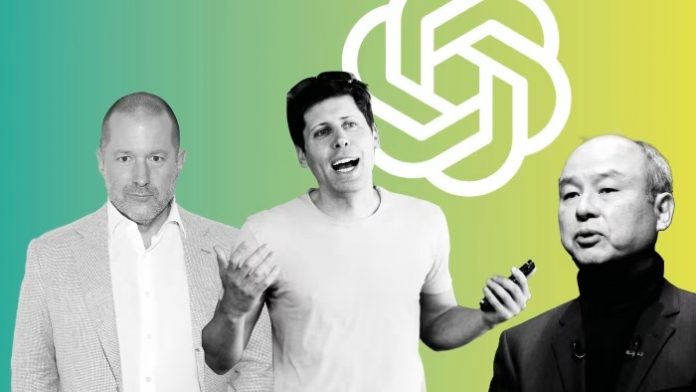
In a significant development for employees and investors, OpenAI is offering a new tender opportunity for current and former employees to sell approximately $1.5 billion worth of shares to SoftBank, CNBC has reported, citing sources familiar with the matter.

This move enables employees to cash out their stakes while granting SoftBank a larger foothold in the AI startup.

This tender offer comes after SoftBank’s $500 million investment in OpenAI during its last funding round. It highlights the persistence of Masayoshi Son, SoftBank’s billionaire founder, in securing a larger slice of the AI market. Known for his investments in transformative technology, Son has signaled his commitment to artificial intelligence, recently stating he is reserving “tens of billions of dollars” for AI ventures.

SoftBank’s interest in OpenAI complements its broader AI strategy, following investments in startups such as Glean, Perplexity, and Poolside through its Vision Fund 2. With assets exceeding $160 billion, SoftBank has made AI a cornerstone of its investment philosophy.

The tender offer is available to OpenAI employees who were granted restricted stock units (RSUs) at least two years ago and have held these shares since then. The unit price for the sale is set at $210, aligning with the company’s recent valuation of $157 billion, which has surged significantly since the launch of ChatGPT two years ago.

This is a marked shift from OpenAI’s previously restrictive policies on secondary share sales. Earlier, the company exercised considerable discretion over which employees could participate in stock sales, creating concerns about liquidity among stakeholders. However, following policy changes this summer, all eligible employees can now participate equally in tender offers.

Why Tender Offers Matter

The tender offer provides liquidity to employees at a time when the initial public offering (IPO) market remains sluggish. With no immediate IPO plans and a valuation that makes acquisition unlikely, OpenAI’s secondary stock sales are crucial for employees to access a portion of their equity wealth.

Similar trends have been observed with companies like Databricks, which recently raised funds to allow employees to cash out while sidestepping public market pressures.

Despite its meteoric rise, OpenAI remains a capital-intensive business. In 2024, the company is projected to incur $5 billion in losses against revenues of $3.7 billion, CNBC confirmed in September. To sustain operations, OpenAI has raised over $13 billion, including substantial contributions from Microsoft, Thrive Capital, Nvidia, and SoftBank. Additionally, it secured a $4 billion revolving credit facility, bringing its total liquidity to over $10 billion.

This funding strategy is essential as OpenAI faces fierce competition from startups like Anthropic and tech giants like Google. As business spending on generative AI surged 500% this year, the market is predicted to generate $1 trillion in revenue within the next decade.

To bolster its competitive edge, OpenAI recently launched a search feature within ChatGPT, positioning it as a challenger to search engines like Google and Microsoft Bing. The move reflects the company’s ambition to expand its offerings in the generative AI space.

SoftBank’s AI Gambit

For SoftBank, this tender offer aligns with its broader vision of capitalizing on AI-driven innovations. With previous successful investments in Arm, Apple, and Alibaba, SoftBank is poised to leverage OpenAI’s market position to fortify its AI portfolio.

What’s Next?

OpenAI’s shift toward accommodating employee liquidity, coupled with SoftBank’s aggressive investment strategy, underlines a significant development in the AI industry. The success of this tender offer will likely influence future funding rounds and solidify OpenAI’s standing in an increasingly competitive industry.

The generative AI market is predicted to top $1 trillion in revenue within a decade, and business spending on generative AI surged 500% this year, according to recent data from Menlo Ventures.

OpenAI has been expanding its services in a bid to grab a larger market share in the face of growing competition. Last month, the company launched its chatbot search service and is understood to have a plan to introduce a web browser.

NNPC Denies the Rehabilitated Port Harcourt Refinery is A Blending Plant

0

The Board and Management of the Nigerian National Petroleum Company Limited (NNPC Ltd.) have issued a statement, denying that the newly launched Port Harcourt Refinery is not producing petroleum products.

The statement signed on Tuesday by the NNPC spokesperson, Olufemi Soneye, said that the 60,000 barrels-per-day Old Port Harcourt Refinery is currently operating at 70%, outlining its products.

“We are, however, aware of unfounded claims by certain individuals suggesting that the refinery is not producing products. For clarity, the Old Port Harcourt Refinery is currently operating at 70% of its installed capacity, with plans to ramp up to 90%,” the statement said.

It explained that the refinery is producing the following daily outputs:
• Straight-Run Gasoline (Naphtha): Blended into 1.4 million liters of Premium Motor Spirit (PMS or petrol)
• Kerosene: 900,000 liters
• Automotive Gas Oil (AGO or Diesel): 1.5 million liters
• Low Pour Fuel Oil (LPFO): 2.1 million liters
• Liquefied Petroleum Gas (LPG): Additional volumes

“It is worth noting that the refinery incorporates crack C5, a blending component from our sister company, Indorama Petrochemicals (formerly Eleme Petrochemicals), to produce gasoline that meets required specifications. Blending is a standard practice in refineries globally, as no single unit can produce gasoline that fully complies with any country’s standards without such processes.

“Additionally, we have made substantial progress on the new Port Harcourt Refinery, which will begin operations soon without prior announcements,” the NNPC said.

The statement was necessitated by a Sahara Reporters report, debunking the announcement of production and trucking at the refinery. Citing sources, the report revealed that the NNPCL instead bought “Cracked C5 petroleum resins” and blended it with other products including Naphtha to sell to the Nigerian public as though the refinery processed it.

Top sources familiar with the activities of the company and the state of the refinery told Sahara Reporters that the claim of trucking out PMS from the reopened refinery was a lie.

The sources were quoted as saying, “The plant is running but it is the old one of 60,000bpd capacity but you can’t get PMS from it except diesel. The part that produces PMS is yet to start.”

“If you hear they are trucking out PMS from the depot, know it is a lie. They bought Crack C5 from Indorama company in Port Harcourt and blended it with Naphtha to sell to the public.”

The source added, “Cracked 5 is modified petroleum resins.”

Indorama Eleme Petrochemicals Limited (IEPL) is a Group Company of Indorama Corporation, a Poly-Olefins producer based in Port Harcourt, Rivers State.

Meanwhile, Naphtha can be produced from a variety of sources, including crude oil, natural-gas condensates, petroleum distillates, coal tar, and peat.

However, Sahara Reporters was reliably informed that the company only bought Cracked C5 petroleum resins from Indorama and blended it with other products including Naphtha to sell to Nigerians.

A large section of Nigerians have echoed this sentiment. Energy analyst Kelvin Emmanuel had earlier hinted that the NNPC is building a blending plant instead of a refinery. It could be recalled that Aliko Dangote, the Chairman of Dangote Refinery, earlier this year accused the NNPC of running a blending plant in Malta to sabotage his refinery.

Emmanuel said the whole idea behind the rehabilitation of the Old Port Harcourt Refinery is to bring the blending plant home.

“After the alarm was raised on ‘Malta’ and ‘Lome’, someone came up with the idea of:

““Shebi we can relocate the blending over a period of time to Nigeria, turn the failed TAM into a blending plant, and claim it’s a refinery, after all, who will check to confirm”

“Then to avoid sanction, we’ll simply use bunkering hub in Central Europe for transshipment to land off-spec RON to Okirika Jetty, and then use intervention stock to continue ‘modified carry agreements’ for financing the offtake of off-spec,” he said earlier this month.

He added that the National Assembly Committees in both houses for mid and downstream know nothing!

The sources who spoke to Sahara Reporters alluded to this claim: “The refinery is in two parts. The old refinery, built in 1965, has a 60,000 barrel capacity, which, when commissioned, will only give you 1 million liters of PMS. You have the new refinery, built in 1989, which has a 150,000 barrels per stream day capacity.

“If commissioned, it will give you 10 million liters of PMS. As of today, when they say Port Harcourt refinery is coming on stream, they are referring to the old one which we have been battling with for months.

“The new one is far from ready. We are looking at 2026 for the new one to be ready. If we finally commission the old one, it will be insignificant because Nigeria will not feel the impact,” the source noted.