DD
MM
YYYY

PAGES

DD
MM
YYYY

spot_img

PAGES

Home Blog Page 2630

Enugu State Governor Peter Mba Proposes N971 Billion Budget for 2025, Allocating N837.9bn for Capital Expenditures

0

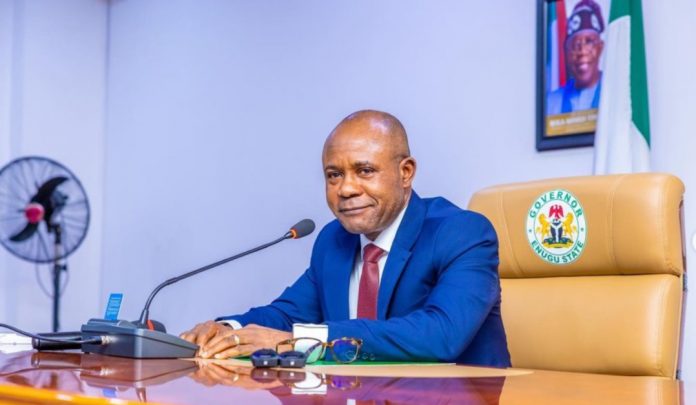
Enugu State governor Peter Mba on Tuesday presented an ambitious N971 billion budget for the 2025 fiscal, marking a giant leap from the 2024’s N521.5 billion budget, with N837.9 billion allocated for capital expenditures.

The governor said in a statement that the budget, titled “Budget of Exponential Growth and Inclusive Prosperity”,  is a tool to elevate Enugu’s socioeconomic status.

While presenting the budget to the Enugu State House of Assembly, he reiterated his administration’s commitment to eradicating poverty and making Enugu one of the top three Nigerian states by GDP.

“This N971 billion budget represents our commitment to transforming Enugu into one of the top three states in Nigeria by GDP while eradicating poverty in our communities. It is a bold and deliberate step towards achieving exponential growth and inclusive prosperity for Ndi Enugu,” he said.

His strategic focus on allocating N837.9 billion, 86% of the budget, to capital expenditure has drawn accolades from policy analysts and stakeholders who view it as a transformative approach to long-term development.

With recurrent spending standing at N133.1 billion (14%), Mba highlighted key allocations of the budget, emphasizing sectors that are critical to human capital development and economic sustainability.

They are as follows:

  • Education: A substantial N320.6 billion (33.2% of the total budget) has been allocated to education, reflecting the governor’s belief in its role as a cornerstone of economic and social development.
  • Healthcare: The sector will receive N45.8 billion to enhance service delivery and improve health outcomes.
  • Infrastructure: With N213.1 billion earmarked, the state plans to upgrade roads, expand public works, and modernize critical infrastructure.
  • Agriculture: To combat food inflation and drive agro-industrialization, N82.3 billion will be invested in agriculture.
  • Transportation: An allocation of N41.1 billion will support key initiatives, including the expansion of Enugu Air with four new aircraft, the concession of Akanu Ibiam International Airport, and the establishment of an international cargo terminal.

Governor Mba’s decision to dedicate 86% of the budget to capital expenditure has been hailed as transformative. Analysts note that this prioritization reflects a commitment to driving infrastructure and economic development, with many describing the budget as a model for other states.

However, concerns have been raised about certain aspects of the budget. Critics have questioned the governor’s inclusion of what they term “white elephant projects,” particularly the decision to float a state-owned airline. While the plan to expand Enugu Air and concession the Akanu Ibiam International Airport is ambitious, some argue that such ventures may divert attention and resources from projects that could have a more immediate and tangible impact on the populace.

Many have noted that a state-owned airline might sound innovative, but in a region grappling with poverty and underdevelopment, the focus should be on initiatives that will lift people out of hardship.

Leadership Reputation in the Southeast

Governor Mba’s performance since assuming office has earned him a reputation as one of the standout governors in Nigeria. Alongside Abia State Governor Alex Otti, he has championed reforms and innovative policies aimed at economic growth and fiscal independence. Enugu State’s Internally Generated Revenue (IGR) growth is a testament to this, rising from N37.4 billion in 2023 to a projected N144.7 billion by September 2024 — a remarkable 286% increase.

This growth reflects Mba’s aggressive economic reforms, which aim to reduce reliance on federal allocations and achieve fiscal independence. His administration has also focused on education, healthcare, and infrastructure.

However, while the budget’s transformative vision has been widely praised, there is a growing call for a stronger emphasis on grassroots development, job creation, and poverty alleviation. The government has been urged to channel resources towards urbanization and strengthening rural economies, rather than luxury projects.
Nigerians Are More Loyal to Ethnic Groups Than To The Nation – Former President Jonathan

0

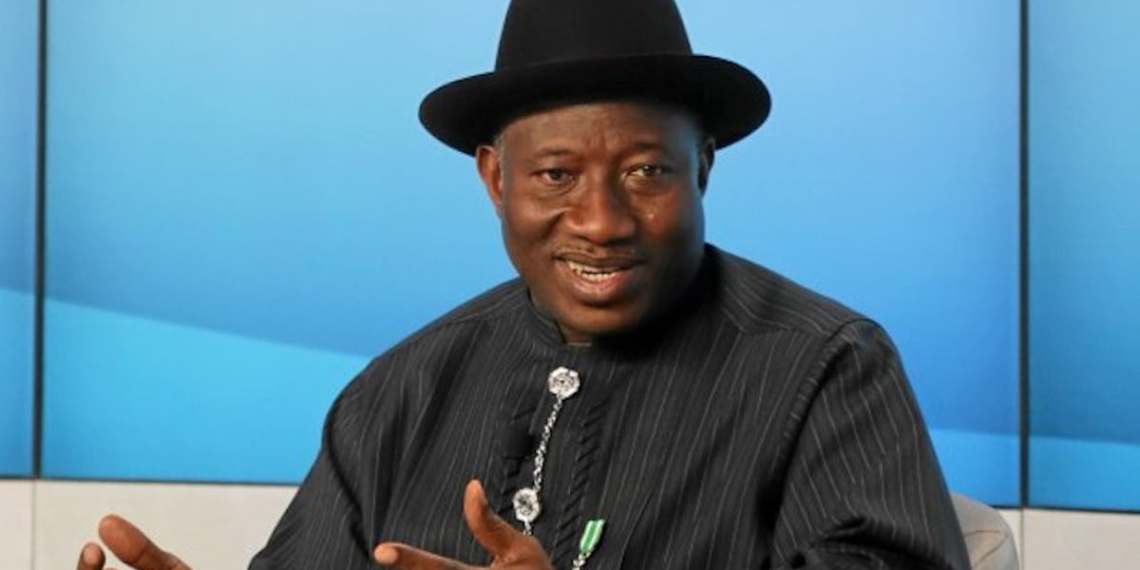
Former Nigerian President Goodluck Jonathan has described ethnic loyalty as a significant barrier to Nigeria’s progress, urging citizens and leaders to adopt a collective vision of unity.

Speaking at a forum in Effurun, Delta State, the former Nigerian leader called for a shift from ethnic and regional biases toward a stronger national identity. Jonathan lamented that, over a century after Nigeria’s amalgamation, loyalty to ethnic and regional identities continues to overshadow allegiance to the nation.

“We are more loyal to our ethnic groups than to the nation. Nigeria, as it stands, is a collection of small ethnic nationalities, each prioritizing its interests. Over time, the divisions between these groups have only deepened,” he said.

He stressed that this division has hindered the country’s ability to function as a unified entity, citing it as a core reason for Nigeria’s struggles with sustainable development and peace.

“Other countries with diverse nationalities have managed to overcome these barriers, evolving into unified nations. Until we achieve this transformation and break down these ethnic boundaries, progress will remain elusive,” Jonathan warned.

Jonathan’s comments resonate with ongoing debates about Nigeria’s political structure, particularly the effectiveness of its current federal system. His emphasis on unity aligns with calls from political leaders, activists, and academics who argue that the centralization of power in Abuja has exacerbated ethnic tensions and slowed regional development.

Many proponents of restructuring believe that returning to a regional government system, akin to the pre-1966 arrangement, could restore balance, promote competition among regions, and foster inclusive governance.

Jonathan’s remarks underscore the need to address these structural issues to prevent the country from further drifting apart.

The former president also challenged federal legislators to view themselves as representatives of the entire nation, not just their states or ethnic groups.

“You are a member of the Nigerian National Assembly, either the Senate or the House of Representatives. You are not a member of the assembly of your people at the state assembly. We must begin to take the whole country as our people if we are to get out of this quagmire,” he stated.

Jonathan emphasized that leadership at all levels must take deliberate steps to bridge the divides between Nigeria’s diverse groups. While acknowledging the constitutional provision for equitable representation—such as appointing ministers from all 36 states—he highlighted the complexities and accusations of favoritism that arise when filling other key positions.

“Under the constitution, it’s straightforward to appoint one minister per state, given there are 36 states. However, it becomes more complex when appointing heads of agencies and parastatals, as this often attracts accusations of favoritism or nepotism,” he said.

He urged leaders to focus on policies and projects that unite the country rather than pandering to sectional interests for short-term political gain.

Jonathan’s speech comes at a critical time when Nigeria faces escalating ethnic tensions, political polarization, and economic instability. His call for unity underlines the enormity of the situation, which was in full display during the 2023 general elections.

However, many believe that Jonathan has brought renewed attention to the need for structural and attitudinal changes by urging Nigerians to move beyond ethnic loyalties and calling on leaders to prioritize national interests.

His message not only underscores the urgency of reform but also reinforces the growing sentiment that Nigeria’s ethnic differences should be factored into its leadership structure if the country is to make progress.

Orange Teams up With OpenAI And Meta to Develop AI Models For African Languages

0

French telecom giant Orange has announced a partnership with OpenAl, backed by Microsoft, and Meta, the parent company of Facebook, to create advanced artificial intelligence models that better understand African languages.

Orange will leverage OpenAl’s Whisper and Meta’s Llama-open-source Al platforms that can be customized to address the lack of support for West African languages in existing Al systems. These new models aim to bridge a significant gap, as most current Al systems are trained predominantly on U.S sourced data, overlooking cultural and linguistic nuances from regions like Africa.

Speaking on this, Steve Jarrett, Chief Al Officer at Orange said,

“Having an open model, you’re able to do what’s called fine-tuning, where you introduce additional information to the model that wasn’t included when it was first trained. We’re adding the recognition of West African regional languages that are not understood today by any Al.”

This innovative project aims to develop custom-Al models capable of allowing customers to communicate naturally in their local languages with Orange for customer support and sales. These open-source Al models will also be provided externally by Orange with a free license for non-commercial use such as for public health, public education, and many other services. Orange intends to help drive Al innovation in these regional languages by collaborating on these new Al models with local startups and other technology companies, and by doing so, to mitigate the growing digital divide faced by people all across the African continent.

The initiative’s first phase, set for early 2025, will incorporate two widely spoken West African languages Wolof and Pulaar. Wolof is spoken by around 16 million people in Senegal, the Gambia, and southern Mauritania, while Pulaar is spoken by six million people, primarily in Senegal. The custom Al models will be shared externally under a free license for non-commercial applications, including in education and public health. Orange also plans to expand this initiative across all 18 West African countries where it operates.

In its contact centers, Orange has encountered challenges with Al systems failing to recognize or process regional languages. This project aims to address those limitations, improving customer interactions and communication. By fine-tuning leading AI models such as OpenAI’s ‘Whisper’ speech model and Meta’s ‘Llama’ text model with diverse examples of these languages, we will enable them to better understand these regional languages. Orange’s vision is to make AI and other related advances accessible to all, including illiterate populations, who are currently unable to benefit from the potential of artificial intelligence. The initiative is a blueprint for how AI can be used to benefit those currently excluded.

Orange’s initiative seeks to fill this gap, paving the way for more inclusive and culturally relevant Al systems. The company is focused on delivering ‘Responsible AI’, where it carefully chooses the most appropriate and simplest solution for each AI use case.

Equity Investing: Cap Table, Valuation, MFN And SAFE – Ndubuisi Ekekwe

0

Join us at Tekedia Mini-MBA tomorrow as we discuss equity investing, focusing on cap table, company valuation, MFN (most favoured nation) and SAFE (Simple Agreement for Future Equity). Yes, I want you to understand the mechanics behind investing in early stage companies and startups. Why? This is a business school! That no one taught you that in your university does not mean Tekedia Institute does not offer a business manual here.

And more: this will help you understand what needs to happen if you do plan to also raise funds. We have discussed that process already. But I am going to go deeper into the cap table. With this, you can confidently create a model on the worth of your business, and from that build a cap table, and allocate the company shares, considering monetary investments, efforts with co-founders, etc.

Thur, Nov 28 | 7pm-8pm WAT | Equity Investing: Cap Table, Valuation, MFN And SAFE – Ndubuisi Ekekwe, Tekedia Capital| Zoom link

We’re the best school. Zoom link in the Board and register for the next edition of Tekedia Mini-MBA here.

Central Bank of Nigeria (CBN) Introduces New Guidelines for Interbank FX Trading via EFEMS

0

The Central Bank of Nigeria (CBN) has unveiled fresh guidelines for interbank foreign exchange (FX) trading through its Electronic Foreign Exchange Matching System (EFEMS), effective November 25, 2024.

The directive, signed by Dr. Omolara Duke, Director of the Financial Markets Department, seeks to enhance market transparency, improve trading efficiency, and ensure compliance within Nigeria’s FX market.

Key Provisions of the Guidelines

Minimum Trade Value and Incremental Clip Sizes

The guidelines mandate a minimum trade value of $100,000 for all interbank FX transactions. Participants must also adhere to incremental clip sizes of $50,000, aimed at standardizing trade sizes and minimizing counterparty risks.

Platform and Trading Hours

The CBN has designated Bloomberg’s BMatch as the official order-matching platform for FX transactions. Trading hours will run from 9:00 AM to 4:00 PM West Africa Time (WAT) on business days.

Scope of Transactions

Initially, EFEMS will only support spot FX transactions between the Nigerian naira (NGN) and the US dollar (USD). However, the CBN reserves the right to introduce additional currency pairs if necessary.

Binding Trades and Compliance

All trades executed on the EFEMS platform are binding, except when canceled by mutual agreement of both parties with prior written approval from the CBN. Participants are required to:

  1. Set Credit and Settlement Limits: Counterparty credit and settlement limits must be predefined. Transactions exceeding these limits will not be executed.
  2. Adhere to Regulations: Participants must comply with the Nigerian Foreign Exchange Code and other relevant CBN regulations.
  3. Report and Log Transactions: Transactions outside prescribed parameters or exceeding limits must be reported and logged on the FX blotter within 10 minutes.

Trades on EFEMS will remain anonymous until matched. Counterparty details will only be disclosed post-transaction in line with settlement protocols.

Participation Criteria and Withdrawal Rules

Eligibility

Participation is restricted to authorized dealer banks licensed by the CBN. Other financial institutions must obtain the CBN’s prior approval to join the platform.

Participants are required to:

  • Execute agreements with the CBN-approved platform provider.
  • Maintain accurate profiles.
  • Operate within prescribed credit and settlement limits.

Participants wishing to exit the platform must submit a 30-day notice and resolve all outstanding obligations before withdrawal.

The CBN has emphasized strict monitoring of all EFEMS trades to ensure compliance and market integrity. Daily reporting of trade volumes, settlement statuses, and counterparties is mandatory.

Non-compliance with the guidelines may result in severe penalties, including the possible publication of aggregate or individual trade data for market analysis, subject to confidentiality agreements.

Bloomberg BMatch Platform to Launch on December 2, 2024

The CBN has confirmed that the Bloomberg BMatch system will officially go live on December 2, 2024. This platform is expected to enhance operational efficiency and transparency in the FX market, allowing seamless trading among participants and improving the CBN’s oversight capabilities.

The CBN has urged all authorized dealers and banks to collaborate with Bloomberg representatives to ensure a smooth onboarding process and resolve technical challenges.

Implications for Nigeria’s FX Market

The introduction of EFEMS and the associated guidelines mark a significant step towards modernizing Nigeria’s FX market. By enforcing standardized trading practices and leveraging advanced technology through Bloomberg’s BMatch, the CBN aims to create a more transparent and orderly market.

However, the mandatory $100,000 minimum trade size may restrict participation, potentially excluding smaller players from interbank FX trading. While the move aligns with global standards, market participants will need to adapt to the stringent compliance requirements.

These changes reflect the CBN’s broader strategy to stabilize the FX market amid ongoing economic challenges. The central bank aims to restore confidence and improve the overall efficiency of Nigeria’s FX ecosystem by streamlining trading processes and enhancing oversight.