DD
MM
YYYY

PAGES

DD
MM
YYYY

spot_img

PAGES

Home Blog Page 2641

Power Infrastructure Investment Tax Credit, a possible solution for Nigeria to attract private capital to the electricity sector?

0

Background: on August 16, 2022, President Joe Biden signed the Inflation Reduction Act into law. This has shaped the growth of renewable energy in the United States through the manufacturing of solar panels, wind turbine blades, battery storage, and other renewable energy investments that qualify for the investment tax credit. With this in mind, other countries worldwide, especially Nigeria, which faces the big challenge of lack of access to electricity for a substantial part of its population, can adopt the energy investment tax credit to attract power infrastructure investment.

Nigeria’s Economic Outlook and Energy Consumption per Capita

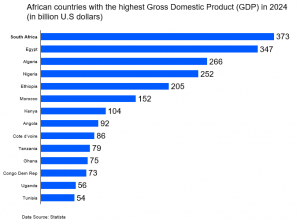
It is no news that Nigeria, the most populous black nation on earth and one of the largest economies in Africa, with a GDP of $252 billion, still lacks an adequate power supply to drive its economic growth and activities (Figure 1).

Figure 1
It is no serendipity that developed countries around the world with the highest GDP per capita are also the countries with the highest electricity consumption Figure 2.

Figure 2
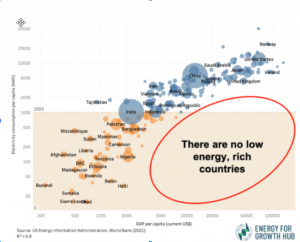
Source: Energy for Growth Hub

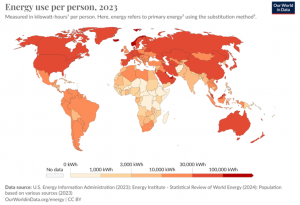
The USA, for example, with a population of ~320 million people and 1.3x Nigeria’s population, has an energy use per person of 30x that of Nigeria (Figure 3).

Figure 3
Therefore, we can conclude that, for Nigeria to reach its full economic potential, and for the private sector to thrive, Nigeria needs to attract investments in power infrastructure, which includes generation, transmission, and distribution. One may argue that the major impediment to Nigeria attracting investments in the power sector is regulation of the sector, or, simply, the power subsidy provided by the government for low-income consumers known as band B to E. Private investors are skeptical that they will be unable to recoup their investments if they invest in Nigeria’s power infrastructure as the current electricity tariff may not be palatable for the desired IRR for most infrastructure investment funds.

Power generation economics and Levelized Cost of Electricity
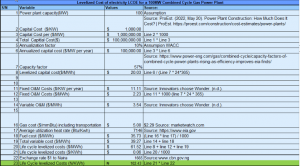
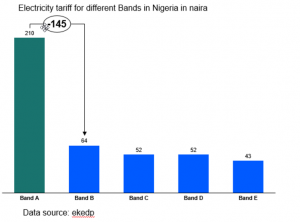
Power generation is expensive everywhere around the world, and for someone unfamiliar with the sector, let’s run a quick calculation on what goes through the mind of an investor willing to invest in a 100 MW combined cycle gas turbine power plant. A combined cycle gas power plant can cost between $800K – $1.8 million per megawatt, depending on the technology, location, and infrastructure the country already has. For simplicity, we can assume that it will cost $1 million per megawatt in Nigeria, which gives us $100 million for 100MW. With the current exchange rate of N1665/$, we are looking at a capital cost of approximately N170 billion. Also, the initial capital cost is not the only variable an investor considers when investing in a power plant. The investor also needs to consider the levelized cost of electricity. The levelized cost of electricity is a metric for measuring the average cost of electricity generation over the useful life of a power-generating asset. Power infrastructure investors use LCOE as a business case to determine the financial viability of an energy infrastructure investment and its pricing to customers. For a 100 MW combined cycle gas power plant, I calculated the LCOE to be ~$0.06/KWh or N102.43 using the current exchange rate of N1665 to 1 USD. Let’s look at the current electricity tariffs in Nigeria, which range from N32-N64 for Band B-E[Figure 4], and the levelized cost of electricity without the cost of distribution and transmission. We can conclude that investing in power generation in Nigeria is not profitable for private investors without any form of subsidy from the government Table 1.

Table 1
However, there is still a way the government can attract private capital to the Nigerian power sector through a power infrastructure investment tax credit. In collaboration with state governments, the federal government of Nigeria can appropriate about $1 billion of power infrastructure tax credits for qualifying power generation, transmission, and distribution projects.

The Investment Tax Credit

The investment “tax credit” can be defined as the dollar-for-dollar amount an investor can subtract from the taxes they owe because they have invested in a qualifying asset or investment stated by the government. These tax credits are intended to encourage investment in certain areas that are of national importance to the country, state, or region that initiates the tax credit. The energy investment tax credit (ITC) can be structured to allow investors to deduct 30% – 40% of the total capital cost from their tax liability. For example, in a 30% ITC,  if an independent power producer (IPP) invests N170 billion in a 100 MW power project, the IPP can get back N51 billion of the capital costs from the government in the form of tax credits, which means the investor can deduct it from their tax liability. 

Figure 4
Source: ekedp.com

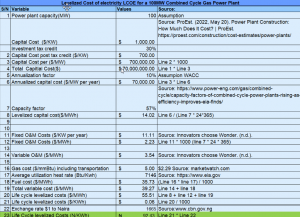
To understand the impact of a 30% ITC, if an Independent power company gets a 30% tax credit for a 100 MW combined cycle power plant, the levelized cost of electricity LCOE will reduce to N92.43/KWh Table 2. Also, if the $1 billion is fully leveraged with the 30% tax credits for power generation alone, it can add up to 3.3GW to Nigeria’s national grid. 

Table 2
As good as the investment tax credit looks and sounds, it comes with its challenges. The challenge is that most power generation developers and independent power producers would not have sufficient tax liability to absorb these tax credits to recoup these power infrastructure investments. The government can make this possible by allowing tax equity financing for these investments.

Tax Equity Partnerships Investments structure

In a tax equity partnership, the tax equity investor, usually a large corporation with a high tax liability, will partner with the developer to build the power plant by providing cash for the transaction in exchange for a large chunk of the tax credits and a small percentage of the cash flow from the project Figure 5. Tax equity partnerships also come with different partnership types. The most common type of tax equity partnership is the partnership flip.

Figure 5
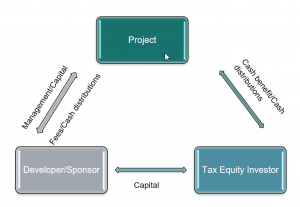
In a partnership flip, a joint venture partnership is formed between a developer and a tax-equity investor. During the partnership’s duration, the distribution of cash flow and tax benefits “flips” between the parties at least once. Through these flip(s), the majority (usually 99%) of the tax benefits can be transferred to the tax equity investor, and the developer can invest alongside the tax equity investor to maintain a residual interest in the project once it starts operation. After the tax investor has utilized all of the tax benefits, the developer can reclaim 100% ownership of the assets at a fair price. The potential impact of the investment tax credit in power generation for Nigeria can not be underestimated. The USA, for instance, has seen companies announcing $133 billion investments in clean energy technology and electric vehicle manufacturing since the IRA was signed into law by President Joe Biden.

Conclusion

In closing, if some of the fuel subsidy gains are channeled into the power generation investment tax credit and properly executed and monitored, it can propel Nigeria to achieve the pipe dream of reliable and sustainable electricity to drive economic growth. This is not to say it’s all-in-all or totally exhaustive, but it can lay the foundation for the country to attract private investors in the power sector.


Appendix
https://www.power-eng.com/gas/combined-cycle/capacity-factors-of-combined-cycle-power-plants-rising-as-efficiency-improves-eia-finds/

Innovators choose Wonder. (n.d.). https://start.askwonder.com/insights/average-natural-gas-power-plant-o-and-m-costs-us-6ed6estyi

Most combined-cycle power plants employ two combustion turbines with one steam turbine – U.S. Energy Information Administration (EIA). (n.d.). https://www.eia.gov/todayinenergy/detail.php

Tax Equity Financing: An Introduction and Policy Considerations. (2019). In CRS Reports. https://www.everycrsreport.com/reports/R45693.html


US Justice Department Goes After Google Chrome, Breaking Alphabet’s Google Moat

2

Before Google Chrome, there was a Google toolbar extension. That toolbar extension which was created when the current CEO of Google was running the growth arm was catalytic to the success of Google, and is also one of the reasons why the current CEO is the boss today. 

Yes, in the digital space, the control of demand is more important than supply, and with the extension, Google was able to live within Firefox and Internet Explorer, and found a solid positioning. Then, over time, they extended that playbook, turning the toolbar into a full browser. The result is industry-shaping as Google controls the yam (the search), the palm oil (the browser) and the plate (humongous cache of the web) where everything is served. Google has already accomplished an unbelievable feat where millions of Google-unpaid SEO engineers do everything in this world so that Google can find their websites and use their contents for “free”.

Nothing bad about this since Google won through innovation. But it got greedy, and started acting like politicians when it paid Apple, Samsung and other device makers to keep its box as the default. Then the government came calling, and Google lost the case. Today, we are reading that the government wants to take Chrome out of the Google empire: “The U.S. Justice Department has decided to ask a federal judge to require Alphabet Inc.’s Google to sell off its Chrome browser.“

The Justice Department plans to ask a court to order Google to divest its Chrome web browser, Bloomberg reports, citing anonymous sources. The department will also petition federal judge Amit Mehta, who in August declared Google’s search engine a monopoly, to mandate actions concerning artificial intelligence and the Android mobile operating system. In his ruling, which Google plans to appeal, Mehta said Google violated antitrust laws related to online search and search text ads. Chrome, the world’s most-used internet browser, commands about 61% of U.S. market share, per StatCounter. Experts believe it could fetch up to $20 billion in a sale.

Google People, that is a very big strike as the government wants to make Google blind. Without Chrome, Google cannot see much. The unification of search, browsing and data works well under Chrome. Chrome is the moat which protects the castle which has the profits of Google.

You will ask me why? Have you noticed that if you are logged into your Chrome browser, Google delivers a 10x better experience for you than when it does not know who is searching? If I type “convert USD to…”, it fills it up with Naira because it knows me. Take that Chrome out, Google will be lost most of the time. That is why disconnecting Chrome from the search box is a big deal.

America giveth, America taketh. What can we say from Nigeria? Ready to consume whoever buys Chrome (I expect Google to appeal if that is the case, and under Trump, it has a chance to pay fines and be forgiven forever after).

Dogecoin Price Prediction: Analyst Says DOGE Will Not Hit $10 This Cycle, But WallitIQ (WLTQ) Will Complete 20,000% Jump To $2

0

Analysts are revising their expectations for the Dogecoin price, with some suggesting that DOGE won’t reach the $10 milestone during this cycle. Despite the excitement surrounding the Dogecoin price, a new player, WallitIQ (WLTQ), is capturing attention with predictions of a massive 20,000% rally. As WLTQ aims to surge to $2, it’s gaining traction among investors looking for the next ample opportunity in the crypto market.

WallitIQ (WLTQ) Set To Explode 20,000% to $2—Whales Dive In For The Next Big Crypto Wallet

Analysts are watching closely as the WallitIQ (WLTQ) presale shows a promising 20,000% surge toward the $2 target, with whale investors jumping in to avoid missing out. This solid interest from whales comes from the standout features WallitIQ (WLTQ) brings to crypto, setting it apart as a secure, innovative wallet choice. While the Dogecoin price might struggle to hit $10, analysts believe the WallitIQ (WLTQ) trajectory is on a path to reach $2 first.

These WallitIQ’s (WLTQ) crypto whales view its advanced security suite, which includes biometric authentication and fraud detection designed to guard against cyber threats. Supported by a smart contract audit from cybersecurity firm SolidProof, WallitIQ (WLTQ) provides users the confidence to trade without worry, knowing their assets are well-protected.

These large investors aren’t just buying into the WallitIQ (WLTQ) presale; they’re backing a wallet that redefines security and convenience. WallitIQ offers a live, multilingual AI chatbot for instant support and an innovative physical-to-digital (P2D) wallet that allows users to convert physical assets into digital tokens.

Beyond the usual capabilities, WallitIQ (WLTQ) simplifies crypto transactions for all levels of investors. With staking options and governance features, users can actively grow their assets, participate in platform decisions, and access exclusive bonuses and discounts. These capabilities make WallitIQ’s (WLTQ) presale an attractive entry point at $0.0171, prompting whales to secure tokens before prices skyrocket to $2.

Following its recent listing on CoinMarketCap and the approach of the $2 mark, more investors are recognizing WallitIQ’s (WLTQ) potential. With its presale gaining momentum, now might be the perfect time to secure a spot and take advantage of a wallet offering a more innovative crypto experience.

As WallitIQ (WLTQ) garners increasing interest from investors, its presale offers an enticing entry point at $0.0171, with projections targeting a surge of 20,000% to reach $2. With features that cater to modern crypto needs, WallitIQ (WLTQ) isn’t just an investment opportunity—it’s a smart choice for anyone looking to stay ahead.

Dogecoin Price Analysis: Signs Of Recovery Amid Decline

According to analysts, Dogecoin, the meme-inspired cryptocurrency that rose to fame in 2020 and 2021, especially among online communities, may not reach the $10 milestone. Currently among the top 10 tokens on CoinMarketCap, Dogecoin’s daily trading volume recently dipped by 26% to around $21 billion.

The Dogecoin price has fallen from its bullish peak, experiencing significant declines. However, the Dogecoin price has shown early signs of recovery, gradually edging back toward positive territory.

Despite not yet reclaiming its yearly high of $0.40, the Dogecoin price has seen strong momentum on weekly and monthly charts.

Presently trading at $0.3981, the Dogecoin price reflects gains of 108% and 253% over the past week and month, respectively, according to CoinMarketCap data. With the Dogecoin price possible rebound, the spotlight is increasingly shifting to WallitIQ (WLTQ), whose presale is projected to spike by 20,000%, potentially reaching $2.

Conclusion

WallitIQ (WLTQ) is rapidly gaining traction as its presale inches toward a 20,000% increase to $2, positioning itself as a unique opportunity in the crypto world. Early investors can buy WallitIQ (WLTQ) tokens at just $0.0171, securing an entry point with significant growth potential as the wallet becomes popular.

This impressive growth outlook for WallitIQ (WLTQ) has caught the attention of investors seeking emerging opportunities in the crypto market.


Join the WallitIQ (WLTQ) presale and community:

Join WallitIQ (WLTQ) Presale

 Join the WallitIQ (WLTQ) Community

NYU Students Turn Their Crypto Luck with PEPE and BOME Into Long-Term Growth with BlockDAG

0

Two students from New York University, Ethan and Maya, embarked on their cryptocurrency journey in early 2023. Initially, they each invested $2,000 in Pepe (PEPE) and later an additional $2,000 in Book of Meme (BOME), driven by the allure of quick profits.

After witnessing the unpredictable nature of these meme coins, they’ve now shifted their focus to a potentially more reliable contender: BlockDAG (BDAG). This switch marks a strategic pivot to pursue sustainable returns.

The Initial Foray into Meme Coins: PEPE’s Temporary Triumph

Ethan and Maya’s adventure began with PEPE in April 2023, each investing $2,000 when the price was merely $0.0000012. The timing was impeccable as the token’s value quickly soared by over 300%, fueled by the excitement surrounding meme coins. This surge increased their investment value to about $6,000 each within a week.

However, the inherent instability of meme coins soon became apparent. By the end of June, the value of their PEPE holdings had declined to $3,500 each, still amounting to a 75% return on their initial investment. Despite the downturn, they held onto their PEPE, hopeful of potential future gains if the meme coin buzz reignited. This experience, however, made them reconsider the stability of such volatile assets.

Exploring BOME: Brief Success and Stability Issues

In early 2024, Ethan and Maya expanded their crypto portfolio by investing $2,000 each in BOME, a token aimed at building a decentralized repository of internet culture. They purchased BOME at $0.0078 per token, anticipating a rise similar to PEPE’s.

Their expectations were met when BOME peaked at $0.02689 in March 2024, pushing their investment to approximately $6,900 each—a 245% return on investment. However, like PEPE, BOME’s value declined over time, stabilizing at about $0.0094 by November 2024. Although their investment remained above their initial outlay, now valued at $2,410 each, the fluctuation underscored the limited stability of meme-driven assets, prompting them to seek a more secure investment.

Strategic Shift: Choosing BlockDAG for Its Stability and Innovation

The fluctuating fortunes of their initial assets led Ethan and Maya to reevaluate their strategy, searching for a crypto asset with a solid technological base and the promise of long-term growth. They found BlockDAG, a project that integrates blockchain with Directed Acyclic Graph (DAG) technology, priced attractively at $0.0234.

BlockDAG appealed to them due to its innovative transaction model, which promises fast, decentralized transactions aimed at improving blockchain efficiency. Their decision was also influenced by BlockDAG’s successful funding, having raised over $123.5 million, indicating robust interest from various participants.

Long-Term Focus: Committing to BlockDAG

They sold some of their PEPE and BOME holdings to put $3,000 each in BDAG, acquiring approximately 136,364 coins each. They saw this move as a calculated approach to diversify their portfolio with a stable growth asset.

Ethan and Maya are optimistic about BDAG’s future, especially with the upcoming completion of its mainnet development and its emphasis on utility, including Ethereum Virtual Machine compatibility and a user-friendly smart contract interface. These features are expected to foster sustained demand within the BDAG ecosystem.

Embarking on a New Journey with BlockDAG

Their cryptocurrency path has evolved from chasing quick wins with meme coins to adopting a more thoughtful, long-term asset strategy. The technical foundation and community support for BlockDAG offer a promising avenue for achieving the stable growth they now prioritize. With their eyes set on future developments, Ethan and Maya are hopeful that their choice will lead to steady, rewarding returns.

Presale: https://purchase.blockdag.network

Website: https://blockdag.network

Telegram: https://t.me/blockDAGnetworkOfficial

Discord: https://discord.gg/Q7BxghMVyu

Wall Street Eyes this RWA Altcoin as Real Estate Market Enters the Blockchain Space, Predicts 10,000x Growth

0

The intersection of blockchain technology and traditional real estate markets is rapidly gaining traction. Wall Street is now setting its sights on a groundbreaking RWA altcoin, PCHAIN, tied to real estate. 

According to a Bloomberg post, Wall Street is warming to the tokenization of assets due to the potential massive profit potential.

As the real estate sector increasingly embraces blockchain innovations, this emerging RWA altcoin is positioned to disrupt the $600 trillion industry by tokenizing real estate assets, providing fractional ownership opportunities, and enhancing liquidity in a traditionally illiquid market.

Wall Street and industry analysts predict that this RWA altcoin could experience exponential growth, with some forecasting a staggering 10,000x increase in value. This monumental shift signifies a pivotal moment for real estate as the industry moves to the blockchain.

What makes this altcoin particularly compelling and draws massive attention from Wall Street is its potential to bridge the gap between decentralized finance (DeFi) and the largest asset class globally, real estate.

Using blockchain’s transparency and efficiency, this altcoin aims to democratize access to high-value properties, reducing barriers for retail investors while streamlining processes for institutional players. Wall Street’s growing interest in this digital asset underscores its transformative and massive potential.

Why is Wall Street growing interested in this RWA Altcoin?

The altcoin’s potential has not gone unnoticed by Wall Street, with major players exploring ways to integrate tokenized real estate into their portfolios. Analysts predict that tokenized real estate could unlock a previously untapped $300+ trillion market, offering massive upside potential for early adopters.

Moreover, as institutional adoption of blockchain gains traction, the real estate-focused altcoin stands to benefit significantly. The prospect of 10,000x growth is rooted in the real estate market’s sheer size and blockchain technology’s scalability, making it a greatly appealing opportunity for Wall Street.

According to some top Wall Street analysts, certain factors are driving the optimism around this RWA altcoin; they include:

  • Rising Institutional Adoption

With firms like BlackRock and JPMorgan exploring blockchain-based solutions, the demand for RWA projects is expected to rise. For Wall Street, this signals the massive potential for the altcoin.

  • Regulatory Clarity

Governments worldwide are beginning to establish frameworks for tokenized assets, paving the way for mainstream adoption. The real estate market already has a regulatory framework, making it easier for investors to have a certain level of clarity regarding regulating this RWA altcoin.

  • Growing Market Demand

The RWA tokenization market is projected to hit $16 trillion in a few years, and real estate is tipped to become the largest type of tokenized asset. This growing market could potentially drive up the value of the token.

  • The Value Proposition of the Parent Project, PropiChain

PropiChain, the parent project of PCHAIN, is a blockchain-powered real estate platform that aims to revolutionize the future of real estate with AI, tokenization technology, the Metaverse, and smart contracts. As PropiChain targets to take at least 1% of the %600 trillion real estate market share, PCHAIN will become the utility token of a potentially $6 trillion ecosystem. This is the primary reason for the token’s Wall Street projection of 10,000x growth.

PropiChain’s Plan to Power the Future of Real Estate

PropiChain is revolutionizing the global real estate market by integrating advanced technologies such as smart contracts, the Metaverse, artificial intelligence (AI), and tokenization.

According to Wall Street analysts, this innovative platform could streamline real estate processes, enhance accessibility, and provide investors with unparalleled insights into real estate opportunities.

The smart contract feature helps users and investors automate essential tasks like property leasing and renewals, eliminating the need for intermediaries such as brokers. This reduces costs and improves efficiency.

The system allows for automated tenant rent payments, enabling direct transfers from their digital wallets to landlords with minimal effort. By integrating the Metaverse, PropiChain redefines how investors explore real estate.

Instead of incurring the expense and logistical challenges of physical property visits, users can access immersive, virtual property tours powered by state-of-the-art 3D visualization.

This innovation enables investors to evaluate potential investments from anywhere in the world, breaking down geographical limitations and making global real estate markets more accessible.

The platform also incorporates AI to transform the investment experience. With AI-powered virtual assistants and chatbots, investors receive 24/7 support and tailored guidance based on their needs.

PropiChain’s AI-based predictive market analysis also utilizes real-time market data to provide investors with actionable insights and trend forecasts, empowering them to make informed, data-driven decisions with high-profit potential.

Tokenization is another cornerstone of PropiChain’s innovation. By digitizing real estate assets on the blockchain, the platform allows investors to enjoy fractional ownership of high-value properties worldwide.

This approach democratizes real estate investment, enabling a broader range of investors to access lucrative markets previously reserved for large institutional players.

Conclusion

This RWA altcoin, PCHAIN, offers a compelling opportunity for investors seeking real estate and blockchain exposure. With Wall Street backing and a growing market, PCHAIN’s prediction of 10,000x could be surpassed.

PCHAIN is listed on CoinMarketCap, signaling the project’s potential for massive things in the real estate and RWA tokenization space. BlockAudit, a leading global blockchain security firm, has audited the smart contract and certified it as secure with zero vulnerability.

Join the ongoing PCHAIN token presale for a low entry price of $0.004, and stand a chance to enjoy a potential 10,000x growth on your portfolio.

For more information about PropiChain presale:

Website: https://propichain.finance/ 

Join Community: https://linktr.ee/propichain