DD
MM
YYYY

PAGES

DD
MM
YYYY

spot_img

PAGES

Home Blog Page 2642

BlockDAG Captivates Market: $123 Million Presale & 100% Bonus Amazes, Rexas Finance Left Behind

0

Selecting a new crypto coin in its early presale stage is always thrilling, but enthusiasts are selective about their choices. A project’s early phase doesn’t necessarily predict a meteoric rise.

While Rexas Finance (RXS) presale is hitting an all-time high in coin value with many pondering its future path, BlockDAG (BDAG) is marking significant achievements and taking full advantage of the crypto market’s upswing with an exciting limited-time offer! Enjoy a 100% bonus and early access to your coins with the promo code: BULLRUN100. 

Rexas Finance Presale Sets New Record

Rexas Finance (RXS), an Ethereum-based cryptocurrency aimed at representing real-world assets, has achieved an important milestone by selling out its fourth presale stage weeks before expected. This fast sellout, which involved 45 million units at $0.06 each, pushed RXS to a new high, now priced at $0.07 in its fifth presale stage.

So far, Rexas Finance has gathered over $5.4 million, showing strong market trust. Nevertheless, as RXS expands, it faces the challenge of navigating RWA-related regulations across different jurisdictions to ensure compliance, which could pose major hurdles for the currency’s progression.

BlockDAG Marks Every Target with Precision

Since its presale kicked off in March, BlockDAG has continuously built momentum, shaping up to be a standout crypto project. It has transitioned from a visionary idea to achieving concrete goals, capturing the interest of the crypto community. Having raised over $123 million and sold 15.3 billion coins, it’s currently at its 26th batch with BDAG priced at $0.0234. Early participants have witnessed a remarkable 2240% ROI, showcasing its potential for substantial growth.

In September, the launch of the testnet brought features like the Blockchain Explorer and Faucet to the forefront, demonstrating BlockDAG’s practical applications to developers. Alongside refreshing its website, the project has strengthened its online presence, facilitating easier access to information for potential participants.

To commemorate its progress and the overall crypto market upswing, BlockDAG has recently unveiled the BULLRUN100 promo code, granting a 100% bonus on acquisitions and early access to the coins for airdrop into digital wallets. As the project marches forward, there is mounting anticipation for the mainnet’s completion, which will begin trials of the technology’s robustness.

BlockDAG’s Presale Success: A Leap in Innovation

BlockDAG distinguishes itself in the crowded presale arena through its adoption of DAG (Directed Acyclic Graph) technology, presenting a fundamentally altered blockchain framework. This technology eschews the traditional single, sequential block connection for a setup where multiple blocks link simultaneously, substantially boosting transaction speed and enhancing network scalability.

This avant-garde configuration allows BlockDAG to execute transactions more swiftly than many well-established blockchains while maintaining strong security and decentralization. Merging blockchain’s reliability with the efficiency of DAG, BlockDAG is emerging as a formidable contender ready to tackle prevalent crypto challenges like transaction delays. With this technical superiority, BlockDAG is well-positioned to secure a durable place in the market, offering viable, enduring solutions to both crypto enthusiasts and developers.

Wrapping Up BlockDAG’s Impact

Crypto presales offer tantalizing prospects, especially when projects launch at prices below $0.01, making them accessible to newcomers.

Rexas Finance stands out with its coin reaching new heights due to robust holder interest. Meanwhile, BlockDAG has not only matched coin sales and exceeded fundraising goals but also captivated the community with fresh incentives like the limited-time bonus, while introducing its DAG technology to the crypto sector. Participants are quickly gravitating towards BlockDAG, eager to capitalize on the latest promotional deal.


Website: https://blockdag.network

Presale: https://purchase.blockdag.network

Telegram: https://t.me/blockDAGnetworkOfficial

Discord: https://discord.gg/Q7BxghMVyu

Will BlockDAG Match the 7,000% Gains of Dogwifhat? Trader Targets Big Returns with BULLRUN100 Bonus

0

The realm of cryptocurrency frequently showcases remarkable stories of profit, with many tales extending beyond popular tokens like Bitcoin or Ethereum. One such tale involves an anonymous participant who converted a $1,000 venture into a stunning $70,000 in just four months—a staggering 7,000% increase.

With the meme coin buzz now normalizing, this individual is turning their focus towards the BlockDAG (BDAG), intrigued by its innovative technology and promising presale bonuses, including the BULLRUN100 code. Their objective? To replicate their previous massive earnings by engaging in early-stage opportunities.

Dogwifhat Success: A Rally from Small Beginnings to a Billion Dollars

Launched on the Solana blockchain towards the end of 2023, Dogwifhat quickly transitioned from a playful meme coin to a major financial phenomenon, amassing a market capitalization in the billions. Initially priced at just $0.07, the coin’s value surged to an impressive $4.85 by March 31, 2024. This remarkable rise was fueled by effective social media campaigns and endorsements from high-profile figures, which drew widespread attention.

An astute trader saw potential early on and invested $1,000 into Dogwifhat. Their timing was impeccable, as they witnessed their investment swell to $70,000 in a matter of months, with the coin’s total market value rocketing to over $4.7 billion. A significant catalyst for this explosive growth was a community-driven fundraising effort that collected $700,000.

These funds were used to feature the Dogwifhat meme on the iconic Las Vegas Sphere, an advertising stunt that tripled the coin’s price in just one month, demonstrating the power of strategic marketing and community support in the volatile world of cryptocurrency.

Switching to BlockDAG — Capitalizing on the BULLRUN100 Bonus

As the wave of Dogwifhat begins to subside, the spotlight shifts to BlockDAG, the next potential big hit. BlockDAG’s state-of-the-art Directed Acyclic Graph (DAG) technology addresses scalability problems, achieving transaction rates of 1,000 transactions per second (TPS)—far surpassing Bitcoin’s 7 TPS and Ethereum’s 30 TPS.

What draws early participants like the Dogwifhat trader is BlockDAG’s ongoing presale, which is in its impressive 26th batch. To enhance the appeal, BlockDAG offers the exclusive BULLRUN100 bonus code, doubling coin bonuses for early presale participants. By leveraging this code, early traders can double their holdings before the price ascends in upcoming batches.

The anonymous trader explained their approach: “Witnessing the success with Dogwifhat, I’m now scouting for platforms that merge technological potential with enticing early-stage benefits. The BULLRUN100 code is pivotal—it’s like receiving free tokens for those who engage early.”

BlockDAG’s presale has successfully amassed over $120.5 million throughout 25 batches, with each phase ensuring a price elevation to benefit early supporters. The BULLRUN100 bonus code is on its last leg now with just 9 more days to go for buyers to gain the golden ticket to the BDAG airdrop.

This method echoes the initial days of Dogwifhat, where presale participants witnessed returns surpassing 1,000% in the initial months after launch. With BlockDAG’s commitment to addressing real-world blockchain issues and its appealing presale perks, the initiative is attracting attention from both casual and serious market players.

Concluding Thoughts

While meme coins like Dogwifhat have proven the influence of community-led expansions, BlockDAG signals a shift towards ventures underscored by technical innovation. For those keen on maximizing early-stage engagements, the fusion of BlockDAG’s advanced DAG structure and presale bonuses, including the BULLRUN100 code, could be pivotal.

Website: https://blockdag.network

Presale: https://purchase.blockdag.network

Telegram: https://t.me/blockDAGnetworkOfficial

Discord: https://discord.gg/Q7BxghMVyu

U.S. Justice Department Moves to Force Google to Sell Chrome Browser

0

The U.S. Justice Department has decided to ask a federal judge to require Alphabet Inc.’s Google to sell off its Chrome browser. This comes as part of a sweeping antitrust crackdown aimed at reshaping the technology giant’s dominance in search, artificial intelligence (AI), and the Android operating system.

The Justice Department’s actions stem from an August ruling by U.S. District Judge Amit Mehta, which found that Google had illegally monopolized the online search market. Bloomberg reports that antitrust officials and state attorneys general plan to recommend additional measures this week, including data licensing requirements and significant changes to Google’s AI and Android operations. If implemented, these remedies could upend Google’s business model and reshape the broader tech landscape.

The Justice Department plans to ask a court to order Google to divest its Chrome web browser, Bloomberg reports, citing anonymous sources. The department will also petition federal judge Amit Mehta, who in August declared Google’s search engine a monopoly, to mandate actions concerning artificial intelligence and the Android mobile operating system. In his ruling, which Google plans to appeal, Mehta said Google violated antitrust laws related to online search and search text ads. Chrome, the world’s most-used internet browser, commands about 61% of U.S. market share, per StatCounter. Experts believe it could fetch up to $20 billion in a sale.

Chrome, A Key Asset in Google’s Empire

The Chrome browser, which dominates approximately 61% of the U.S. market according to StatCounter, is integral to Google’s business. It provides critical access to its search engine, allows the company to collect user data for targeted advertising, and serves as a gateway to its flagship AI product, Gemini.

Forcing Google to divest Chrome would strike at the heart of its ad-driven revenue model, which generated $224 billion in 2022 alone. According to antitrust officials, this move is designed to create a more competitive online ecosystem by breaking Google’s grip on user data and access points.

However, the Justice Department is reportedly leaving room for flexibility. Officials may decide against a Chrome sale if other remedies—such as licensing requirements or uncoupling Android from Google’s other products—prove sufficient to foster competition.

Google’s AI Integration Too

Google’s integration of AI into its search engine has also drawn scrutiny. The company’s AI-based “overviews,” which summarize search results using machine learning, have been criticized by website publishers. Many argue that these summaries divert traffic from their sites, reducing ad revenue and diminishing user engagement.

Websites are caught in a bind: opting out of providing data for AI models risks lower rankings in Google’s search results, potentially alienating their audience. The Justice Department aims to address this imbalance by proposing stricter data licensing rules and syndication requirements, which could give rival search engines and startups access to Google’s search data and infrastructure.

Android Unbundling and Advertising Transparency

The Justice Department also plans to recommend separating Google’s Android operating system from its other products, including its search engine and Google Play Store. Regulators hope to curb Google’s ability to leverage its dominance in one area to stifle competition in others by untethering these services.

Another proposed remedy involves giving advertisers more control over their campaigns. This includes requiring Google to share more data and allowing advertisers to specify where their ads appear, mitigating concerns about monopolistic practices in digital advertising.

A Historic Case with Global Implications

The case against Google is the most aggressive U.S. antitrust action against a tech company since the government’s failed attempt to break up Microsoft in the 1990s. While this case began during the Trump administration, it has gained momentum under President Joe Biden, reflecting bipartisan support for tackling Big Tech’s dominance.

Judge Mehta has scheduled a two-week hearing in April 2025 to determine the specific remedies Google must implement, with a final ruling expected by August 2025.

Challenges to Enforcement

While the proposed measures aim to foster competition, implementing them may face significant hurdles. Selling off Chrome, for instance, would require finding a suitable buyer. Analysts are skeptical, as potential acquirers like Amazon and OpenAI are themselves under regulatory scrutiny.

Mandeep Singh, a Bloomberg Intelligence analyst, expressed doubts about the feasibility of a Chrome divestiture. However, he noted that a buyer like OpenAI could benefit by gaining both a robust distribution channel and an advertising business to complement its AI offerings.

Google’s Defense

Lee-Anne Mulholland, Google’s vice president of regulatory affairs, has sharply criticized the Justice Department’s proposals, calling them “radical” and warning of potential harm to consumers, developers, and American technological leadership.

“Imposing these measures would stifle innovation at a critical time for the tech industry,” she argued, signaling Google’s intention to appeal Judge Mehta’s August ruling.

If Judge Mehta sides with the Justice Department, the proposed remedies could fundamentally alter the tech industry as we know it. From fostering competition in search and AI to creating transparency in digital advertising, these measures could dismantle Google’s monopolistic practices and pave the way for a more equitable online ecosystem.

Nigeria Retains Position as World Bank IDA’s Third-Largest Debtor, Debt Rises to $17.1bn

0

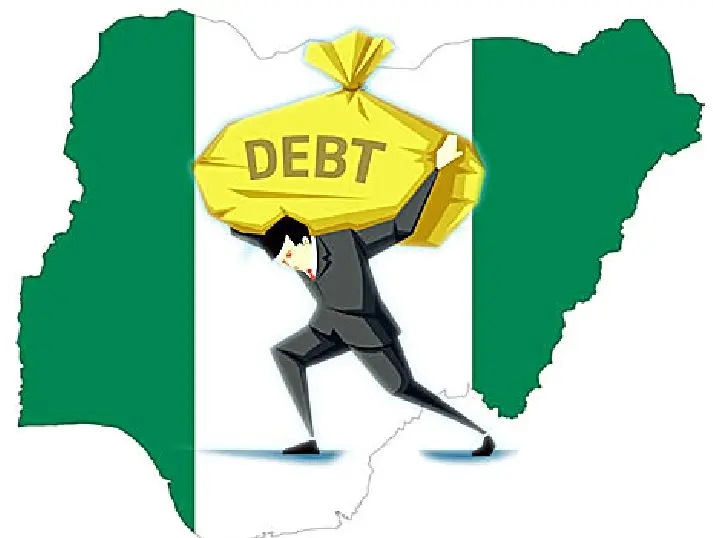
Nigeria has solidified its position as the third-largest debtor to the World Bank’s International Development Association (IDA), with its exposure rising to $17.1 billion as of September 30, 2024.

This marks an increase of $600 million from the $16.5 billion recorded three months earlier in June 2024.

The World Bank’s latest financial statements for the fiscal year up to September 2024 reveal a significant year-on-year debt growth of 14.4%, up from $14.3 billion in June 2023. The fiscal year, which spanned July 2023 to June 2024, saw Nigeria receive an additional $2.2 billion in loans, further cementing its reliance on concessional financing.

For the first time, Nigeria ascended to the top three IDA borrowers in June 2024, surpassing its previous rank of fourth in 2023. Under President Bola Tinubu’s administration, the country has received $2.8 billion in loans from the IDA, maintaining its status as the third-largest debtor behind Bangladesh and Pakistan.

Bangladesh holds the top spot with an exposure of $21 billion, followed by Pakistan at $18.5 billion. India, which was displaced by Nigeria, stands in fourth place with a debt of $15.9 billion, while Ethiopia ranks fifth with $13.1 billion. Other significant borrowers include Kenya ($12.4 billion), Tanzania ($12.2 billion), and Vietnam ($12.2 billion). At the lower end, Ghana and Uganda owe $7 billion and $5 billion, respectively.

Together, these ten countries account for 63% of the IDA’s total exposure, reflecting their heavy dependence on concessional financing.

Nigeria’s rising debt to the IDA underscores its continued reliance on external borrowing to manage its fiscal challenges and implement development programs. The concessional loans, characterized by low interest rates and extended repayment terms, are critical to the country’s funding strategy.

However, the growing debt burden comes at a cost. The Federal Government spent $3.58 billion servicing its foreign debt in the first nine months of 2024, a 39.77% increase from the $2.56 billion spent during the same period in 2023. This surge in debt servicing payments highlights the mounting pressure on Nigeria’s fiscal balance amid persistent economic challenges.

IDA’s Single Borrower Limit

The IDA has set its Single Borrower Limit (SBL) at $47.5 billion for FY2025, representing 25% of its $190.3 billion equity as of June 30, 2024. While Nigeria’s debt remains significant, it is still within this threshold, which the World Bank considers non-restrictive for now.

The World Bank’s financial statement emphasized the importance of monitoring repayment profiles, disbursement trends, and projected new loans to maintain a balanced exposure for the IDA.

Debt Growth Without Development Gains

This rising debt is stirring deep concerns among economists and policymakers, who question whether these loans are being effectively utilized to stimulate economic and developmental growth.

Critics argue that the funds, which are expected to be channeled toward critical infrastructure and poverty alleviation projects, have failed to yield measurable progress in key sectors.

With 56% of Nigerians living below the poverty line, the country faces immense development challenges that require significant investment. However, the reality on the ground tells a different story. Declining oil revenues, which traditionally account for a significant portion of the nation’s income, have left a gaping hole in public finances. Unemployment remains high, public infrastructure is in a deplorable state, and access to quality healthcare and education remains inadequate.

Analysts have repeatedly raised concerns that Nigeria is primarily borrowing for consumption rather than investment. They noted that funds are often used to cover recurrent expenditures such as public salaries, subsidies, and debt servicing, leaving little room for transformative projects that could spur long-term economic growth.

Fiscal Challenges Amid Tinubu’s Economic Reforms

Under President Tinubu, Nigeria has sought to balance the inherited debt obligations with necessary reforms to stabilize the economy. However, the pressure from rising debt servicing costs threatens to derail fiscal consolidation plans.

Economists have warned that without stringent measures to improve revenue generation, curb waste, and ensure effective utilization of borrowed funds, the benefits of these loans may not translate into meaningful development outcomes.

The fundamental issue, they argue, lies in the absence of a clear strategy to ensure that borrowed funds are deployed toward productive sectors. Instead of fueling economic growth, the loans are used to plug budget deficits and finance consumption-driven expenses.

Nigeria’s Budget Too Small to Fund Development, Says Fiscal Policy Expert Taiwo Oyedele

0

Taiwo Oyedele, Chairman of the Presidential Committee on Fiscal Policy and Tax Reforms, has described Nigeria’s budget as grossly inadequate to meet the country’s developmental needs.

Speaking during an interactive session organized by the House of Representatives on tax reform bills, Oyedele noted the severe fiscal challenges facing Nigeria and highlighted the country’s inability to match its population size with appropriate budgetary allocations.

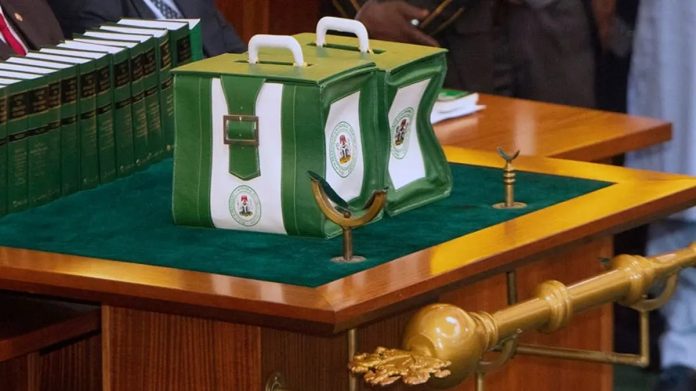
Oyedele revealed that Nigeria’s total budgetary allocation for 2024, including supplementary provisions, stands at approximately $28 billion. This figure includes the federal government’s N35 trillion budget and the combined N15.9 trillion budgets of all 36 states. However, this $28 billion budget comes with a staggering deficit of about $8.4 billion—a gap largely attributed to revenue shortfalls.

“The $28 billion budget is barely equivalent to the budget of Kenya, which has a population of 54 million people,” Oyedele noted. “Meanwhile, South Africa, with just over 60 million people, has a budget of $130 billion. How is it that Nigeria, with over 200 million people, operates on a budget this small?”

The fiscal policy expert emphasized that Nigeria’s budget is inadequate even for single sectors like transportation, let alone the broader developmental needs of the nation. “That budget, if dedicated entirely to transportation—roads, rail, flying—it would still not be enough,” he said.

Deficit Woes and Revenue Shortfalls

Economists believe that the $8.4 billion deficit in the 2024 budget adds insult to the injury of Nigeria’s meager budget. Despite Nigeria being Africa’s largest economy, its fiscal capacity falls short of smaller African economies like Kenya, whose budget matches Nigeria’s, and South Africa, whose budget is more than four times larger. Additionally, Nigeria’s counterparts at the top four largest economies in Africa, have far higher budgets. For instance, Algeria has a $100 billion budget, and Egypt, has $120 billion, even with a much lower population.

“The narrative of our country cannot be changed by increasing the budget by 5 percent or 10 percent,” Oyedele said. “The base is just too small. It cannot fund our development.”

Revenue shortfalls remain a significant challenge, with underperforming oil revenues and limited non-oil revenue sources failing to meet budgetary targets.

Nigeria’s revenue is divided between the federal, state, and local governments. Oyedele outlined that the country has eight major revenue sources, five of which—personal income tax, property tax, stamp duties, VAT, and land revenues—are controlled by states. The federal government shares corporate income tax, customs duties, and petroleum and solid mineral revenues with the states.

This fragmented approach limits revenue mobilization at the national level and hampers efforts to address critical deficits, according to him. He noted also that inefficiencies in tax collection and the lack of enforcement mechanisms reduce Nigeria’s ability to optimize its existing revenue streams.

The Deficit’s Impact on Development

Against the backdrop of the $8.4 billion budget deficit, Nigeria’s ability to implement its 2025 budget effectively, like in the past, has been severely impacted. This means that critical sectors such as infrastructure, healthcare, and education will be severely underfunded. This situation results in borrowing to service existing debt, leaving little room for productive investments.

In 2024, Nigeria’s debt servicing costs have already exceeded projections, particularly for foreign debts, driven by naira depreciation and high borrowing costs. These financial constraints compound the pressure on public finances, leaving the government with limited capacity to address pressing developmental needs.

Oyedele’s remarks reflect the broader call for bold fiscal reforms to expand Nigeria’s revenue base and reduce its reliance on borrowing. Proposed measures include improving tax collection, enforcing compliance, and enabling states to generate more revenue through decentralized fiscal policies.

Oyedele noted that Nigeria’s current fiscal framework is insufficient to address the challenges of its growing population and economic demands.

“The base is too small,” Oyedele concluded. “We must reimagine our fiscal policies and take decisive action to expand our budgetary capacity. Only then can we begin to fund meaningful development and create a better future for Nigerians.”