DD
MM
YYYY

PAGES

DD
MM
YYYY

spot_img

PAGES

Home Blog Page 2730

Republican Arnold Schwarzenegger Endorses Kamala Harris

0

Arnold Schwarzenegger, the former Republican governor of California and a long-time critic of Donald Trump, has issued a rare and surprising endorsement across party lines, backing Democratic presidential candidate Kamala Harris and her running mate, Tim Walz, in the upcoming election.

This move is believed to be motivated in part by Schwarzenegger’s growing frustration with Trump’s politics, particularly following the Capitol insurrection on January 6, 2021, which Schwarzenegger strongly condemned at the time.

In a detailed post on X, Schwarzenegger explained his decision, emphasizing his belief in putting America’s future above partisan loyalty.

“I will always be an American before I am a Republican,” he declared. “That’s why, this week, I am voting for Kamala Harris and Tim Walz. I’m sharing it with all of you because I think there are a lot of you who feel like I do. You don’t recognize our country. And you are right to be furious.”

Schwarzenegger, who served as governor from 2003 to 2011, has rarely endorsed political candidates, and he expressed in the post that he typically avoids the practice and “hates politics” because he “doesn’t trust most politicians.”

However, the former governor felt a moral imperative to back Harris and Walz, noting that the American public is living the consequences of political stagnation while politicians benefit from unfulfilled promises. He criticized leaders across the political spectrum for failing to tackle longstanding issues like national debt and immigration reform, explaining that these have become “talking points” for election campaigns rather than drivers of real, necessary change.

“It is just a game to them. But it is life for my fellow Americans. We should be pissed,” Schwarzenegger wrote, sharing his frustration.

His disdain for Trump’s brand of politics — culminating in the Capitol riots and a polarized nation — has pushed him to look beyond party labels for the good of the country.

“But a candidate who won’t respect your vote unless it is for him, a candidate who will send his followers to storm the Capitol while he watches with a Diet Coke, a candidate who has shown no ability to work to pass any policy besides a tax cut that helped his donors and other rich people like me but helped no one else — that won’t solve our problems,” Schwarzenegger wrote.

Schwarzenegger, who took over as host of The New Celebrity Apprentice following Trump’s exit in 2016, has never shied away from publicly condemning Trump’s behavior. He notably compared the Capitol riots to Kristallnacht, the 1938 Nazi pogrom against Jews, and labeled Trump a “failed leader” destined to be remembered as “the worst president ever.”

In his post, Schwarzenegger returned to this theme, condemning Trump’s unpatriotic rhetoric and his refusal to accept the 2020 election results.

“Rejecting the results of an election is as un-American as it gets,” Schwarzenegger asserted, noting his anger at Trump’s portrayal of America in divisive, negative terms. “To someone like me who talks to people all over the world and still knows America is the shining city on a hill, calling America [a] trash can for the world is so unpatriotic, it makes me furious.”

Warning of the potential consequences of a Trump re-election, Schwarzenegger painted a grim picture of “four more years of bulls**t with no results that makes us angrier and angrier, more divided, and more hateful.”

He argued that Trump’s approach would continue the dysfunction and discord in American society rather than bridge divides.

“We need to close the door on this chapter of American history,” he emphasized, insisting that Trump’s leadership style is incompatible with national healing.

In contrast, Schwarzenegger expressed his support for Harris and Walz as a pragmatic choice, despite ideological differences.

“I want to move forward as a country,” he explained, “and even though I have plenty of disagreements with their platform, I think the only way to do that is with Harris and Walz.”

His endorsement, therefore, is less about shared policies and more about his belief in their ability to prioritize American unity and repair a fractured political landscape.

He urged his followers to reconsider the future direction of the country, saying, “I’m sharing it with all of you because I think there are a lot of you who feel like I do.”

Schwarzenegger’s message resonated with Americans across the political spectrum who may feel disillusioned by recent events, offering an influential perspective capable of swaying undecided voters as the election approaches.
India’s Rise as a Global Tech Titan is Inexorable

0

India’s technological landscape has undergone a remarkable transformation over the past decade, emerging as a formidable force in the global tech arena. The nation’s journey from being an outsourcing hub to a pioneer in technological innovation and development is a testament to its strategic growth and the prowess of its talent pool.

The growth is driven by a surge in AI development and open-source contributions, positioning India as a leader in these domains. The “Octoverse” report by GitHub highlights this growth, noting a 28% increase in the Indian developer base in 2024 alone, making it the fastest-growing developer community globally. India’s contributions to public generative AI projects have placed it second only to the United States, with a staggering 79% growth over the past year.

The Role of Open Source and AI

Open-source projects have become a cornerstone of India’s tech growth, with initiatives like ERPNext and the Open Healthcare Network (OHC) leveraging AI tools like GitHub Copilot to accelerate development and address societal challenges. This symbiosis of open-source and AI is propelling India to the forefront of tech solutions that are not only innovative but also socially impactful.

India’s National Education Policy has played a pivotal role in this growth by integrating coding and AI skills into the curriculum, fostering a new generation of tech-savvy professionals. The country now ranks second globally for GitHub Education users, indicating a bright future for the upcoming workforce.

The economic impact of India’s tech ascension is significant, with the industry’s revenue set to surpass US$254 billion in FY2024, a 3.8% year-on-year growth marking an addition of more than US$9 billion compared with the previous year. This growth is fueled by the rise of Global Capability Centres (GCCs) and a strong focus on Engineering Research and Development (ER&D), which alone added US$2.88 billion to the export revenue.

Looking ahead, India is poised to surpass the US as the largest developer community by 2028, with sustained growth in developer talent and a strong emphasis on AI and open source. As businesses continue to embrace digital transformation, India’s tech industry is expected to grow at a compound annual growth rate (CAGR) of 10.9% between 2024 and 2029.

The Deloitte Tech Trends 2024 report also underscores India’s evolving tech landscape, emphasizing the country’s resilience and adaptability despite global economic uncertainties. It points to India’s increasing ability to meet international tech demands, with over 1,600 GCCs and a market on track to exceed US$100 billion by 2030.

GitHub anticipates that India will surpass the United States as the largest developer community by 2028. With a deep talent pool, a burgeoning start-up ecosystem, and a government that supports digitalization, AI, and electronics manufacturing, India’s tech industry is poised for a robust growth trajectory. This boom is more than just a testament to India’s technical prowess; it’s a narrative of empowerment and global competitiveness. From multinational corporations to startups, the Indian tech community is changing the game, driving GDP growth, and innovating for a better tomorrow.

India’s tech industry’s inexorable rise is a narrative of resilience, strategic planning, and the harnessing of a vast pool of skilled professionals. It is a story of a nation that has embraced the digital revolution and is setting the stage for a future where technology is not just a tool but a catalyst for inclusive and sustainable growth.

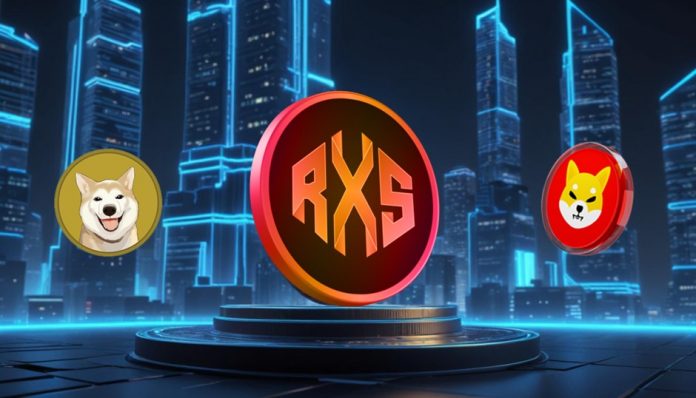
Neiro (NEIRO) and Rexas Finance (RXS) Favored by Millionaire Investors Over Shiba Inu (SHIB), Here’s Why

0

Although meme coins like Shiba Inu (SHIB) became rather popular in the past, a change is underway as astute investors are looking for tokens with more long-term potential and utility. Attractive substitutes to meme-based tokens, Neiro and Rexas Finance are leading the charge with real-world use cases and promised profits. This article looks at why these two tokens are favored by millionaire investors over SHIB and how they will soon take the front stage on the market.

Neiro (NEIRO) – A Niche Powerhouse

Neiro (NEIRO) has attracted notice quickly because of its outstanding performance in the past few weeks. NEIRO is up 1.58% in the last 24 hours and shockingly 111.21% for the past seven days with a live price of $0.001771 and a 24-hour trading volume of $333,776,001.Early investors, especially those with large means searching for attractive assets with strong returns, have drawn attention to this exponential expansion. Operating in a niche market, Neiro presents a special opportunity to investors. Unlike meme coins, which can depend on hype and community-driven momentum, NEIRO’s attractiveness is in its ability to provide first-tier investors with significant returns. For those looking for a coin with more specific use and development possibilities, its creative approach and widening market position make it a wise decision.

Rexas Finance (RXS) – The Future of Asset Management

Another coin that has drawn in millionaire investors is Rexas Finance (RXS). Positioned as a portal to the future of asset management, Rexas Finance enables consumers to tokenize and own almost any real-world asset—from real estate and art to commodities and intellectual property—on a worldwide basis. This groundbreaking idea gives asset management unmatched freedom by allowing the digitization and fractional ownership of physical goods. Rexas Finance distinguishes itself from other tokens by being practically useful. While SHIB and other meme coins live on speculation and community involvement, Rexas Finance provides real value by combining blockchain technology with the conventional asset management space. Nowadays, investors can engage in tokenized ownership of assets from anywhere in the globe, therefore creating a universe of chances for wealth creation and diversification.

At $0.06 a token, Rexas Finance is in its presale stage 4 right now. Over $4.24 million has been raised for the presale, and as more people see its promise, the initiative is gathering steam. Especially, the group behind Rexas Finance has decided to involve the public in what they consider a financial revolution rather than seek venture capital money. Many investors who value the openness and inclusiveness of the initiative have connected with this choice.Apart from that, the $1 million giveaway in progress has drawn over 139,000 people; 20 lucky winners will get RXS tokens valued at $50,000. Together with the long-term possibilities of the project, this advertising campaign has positioned Rexas Finance as a token that billionaire investors would be ready to support.

Why NEIRO and RXS are Favored by Millionaire Investors

The main factors influencing a token purchase for millionaire investors are utility, market potential, and long-term development. Both Neiro and Rexas Finance satisfy these requirements and provide clear uses as well as solid development paths. For those seeking sustainable returns, SHIB’s reliance on social media hype and speculative character make it less appealing. Furthermore, the practical value of Neiro and Rexas Finance offers protection against the volatility sometimes connected with meme-based coins. Investors are moving to initiatives that provide more than just a passing trend as blockchain technology develops. Neiro and Rexas Finance suit this pattern, hence they are strong prospects for those looking for a more steady and profitable future in the crypto market.The growing interest in Neiro and Rexas Finance over Shiba Inu is a clear indication that the market is maturing.

Investors are no longer content with speculative plays but are seeking projects that have real-world impact and long-term value. Neiro, with its niche market strength, and Rexas Finance, with its groundbreaking approach to asset management, are leading the way in this new era of investment. Rexas Finance, in particular, stands out due to its ongoing presale and the potential for massive gains in the coming months. With a projected listing price of $0.20, investors who enter the presale now are guaranteed a 3x return by the time the presale concludes. Top market experts predict that Rexas Finance will experience significant growth, making it an attractive option for those looking to capitalize on the evolving crypto landscape.


For more information about Rexas Finance (RXS) visit the links below:

Website: https://rexas.com

Win $1 Million Giveaway: https://bit.ly/Rexas1M

Whitepaper: https://rexas.com/rexas-whitepaper.pdf

Twitter/X: https://x.com/rexasfinance

Telegram: https://t.me/rexasfinance


Why Organized Retail and B2C Ecommerce Struggle in Nigeria

1

These companies struggled and they are largely retailers which left southern Africa for a voyage in Nigeria. They have since returned or about returning home. Some belong to “organized retail” which represents modern retail stores, such as supermarkets, department stores, and convenience stores, that are structured and have economies of scale.

 In Harvard Business Review, in a piece titled “The Challenges Facing E-Commerce Start-ups in Africa”, I sounded an alarm on the competitive positioning of “open market”, and why that would make running profitable B2C ecommerce businesses in sub-Saharan Africa extremely challenging. I maintain my position, nine years since that piece was published, as the open market still holds the ace to win for a long time. But it is not just ecommerce. Yes, with those markets everywhere in Nigeria, organized retail will continue to struggle. Some reasons below: Here are other reasons why these companies fail:

Product-Market Fit: To a large extent, formal retail in Nigeria remains highly underdeveloped due to infrastructures. While it makes sense to go to a farmer’s market in Cape Town and buy a cow, process it and dump it in your deep freezer for months, large-scale shopping when there is no electricity makes no sense in Nigeria.

The Core Market Segment in Africa – Middle of the Pyramid

Economy:  South Africa has more resources per citizen. Its budget is about $100 billion more than Nigeria’s national budget even though Nigeria is 3x its population. In other words, on average, South Africans are richer; the middle class in Nigeria is very small and the purchasing power for organized retail may be limited.

The product-market fit is not there to run this type of business in Nigeria. Unlike South Africa, Nigeria’s most significant opportunity for B2C operations lies with consumers who earn around $4 – $8 per day, but that spectrum is not a very sweet domain for organized retail. You need at least $15 per day to make it fascinating for the likes of Shoprite and Pnp. So, there is a clear product-market fit dislocation and that has made organized retail challenging in Nigeria (see plot below)

Competition: From daily to weekly open markets, to shop on the street, to traffic sellers, Nigeria is a market. In short, the Igbos were even direct when they said that “uwa bu ahia’ [the world is a marketplace]. To win as an organized retailer, you have to beat those alternatives. But beating them when they do not pay VAT and tax becomes challenging. If margins remain low, issues crop up.  

Good People, running a B2C ecommerce and organized retail in Nigeria must not discount the inherent position of those open markets which are everywhere. Those markets are winning right now even as the middle class shrinks.

The Product-Market Fit Challenge and Why Organized Retail Struggles in Nigeria

0

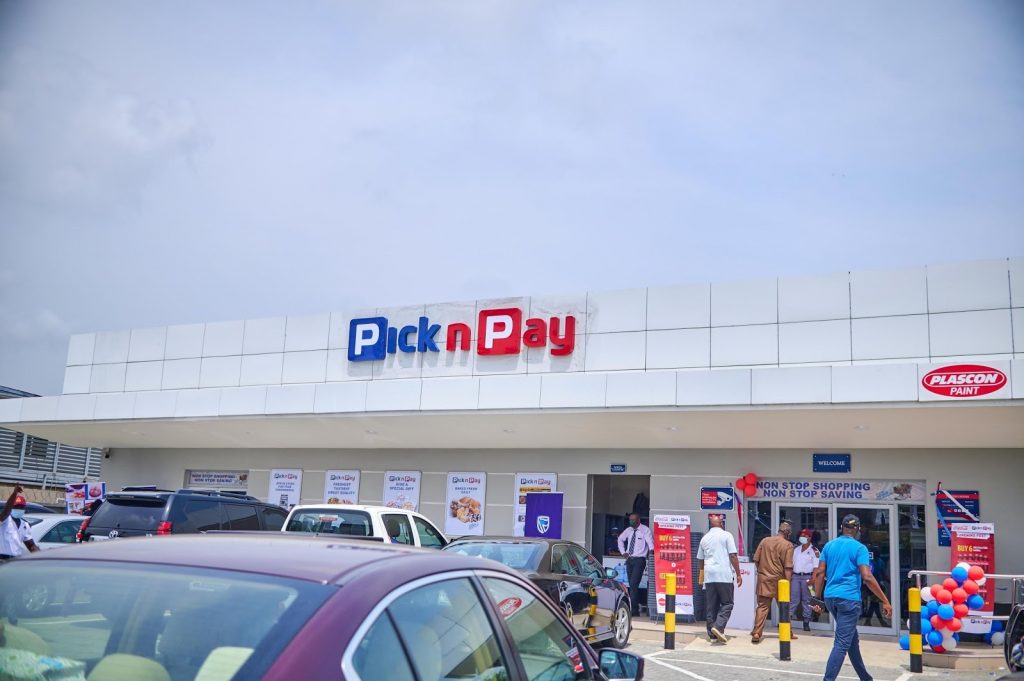
Pick n Pay came to Nigeria, and in 2021, I wrote below in a piece titled “What Is Pick n Pay Playbook in Nigeria?”. From their press release, it was not the Nigeria that I know that they were describing. Today, PnP is gone: “In a strategic move that underscores the dynamic nature of international retail, South African grocery chain Pick n Pay has announced its departure from the Nigerian market.”

From 2021: ‘Shoprite came to Nigeria in Dec 2005 when Naira was about N127 to a dollar; the South African Rand was about 7 rand to a dollar then. Last year when it began the exit process from Nigeria,  one dollar exchanged for N380… Nonetheless, the biggest problem was not the currency deterioration in Nigeria but the fact that the middle class was shrinking, affecting the capacity of Shoprite to capture value with the presence of supermarkets, open markets and even street-sellers as competitors.

‘When that exit was announced, I wrote, “Shoprite may not be doing terribly bad in Naira but struggles in Rand when it reports in South Africa. It is exiting Nigeria even though it makes tons of naira.”

‘But in the midst of this paralysis, another South African retailer is here: Pick ‘n Pay. My question is this: what is the playbook for success in Nigeria considering that Shoprite, Mr Price and Woolworths could not overcome the paltry effective 30 million addressable market in Nigeria? Yes, I model that Nigeria has only 30 million who earn “decent” income and those 30 million support the remaining 180 million citizens.’

Today’s comment: The product-market fit is not there to run this type of business in Nigeria. Unlike South Africa, Nigeria’s most significant opportunity for B2C operations lies with consumers who earn around $4 – $8 per day, but that spectrum is not a very sweet domain for organized retail. You need at least $15 per day to make it fascinating for the likes of Shoprite and Pnp. So, there is a clear product-market fit dislocation and that has made organized retail challenging in Nigeria.

The Pick n Pay’s Exit from Nigeria