DD
MM
YYYY

PAGES

DD
MM
YYYY

spot_img

PAGES

Home Blog Page 2776

Intricacies of the FBI’s Crypto Sting Operation, as Civic Unveils Digital Identity in Blockchain

0

In a groundbreaking move, the Federal Bureau of Investigation (FBI) has recently conducted a sophisticated sting operation targeting the murky waters of cryptocurrency fraud. This operation, which has been making headlines, represents a significant step in the fight against financial crimes in the digital age.

The operation, dubbed “Operation Token Mirrors,” saw federal prosecutors set up a fake company to bust four crypto market makers accused of “wash trading” to artificially inflate token values. Wash trading is a form of market manipulation where sell and buy orders are simultaneously placed on the same asset to create misleading, artificial activity in the marketplace. This deceptive practice can distort the true value of assets and mislead investors.

In an even more audacious move, the FBI created its own cryptocurrency, the NexFundAI Token, as part of the sting. This led to the arrest of 18 individuals by trapping them into trading with the FBI’s fabricated token. The operation’s success hinged on the creation of this token, which was used to expose the fraudulent activities of the accused.

The accused firms, including Gotbit, ZM Quant, CLS Global, and MyTrade, allegedly engaged in schemes to manipulate the market by creating fake trading activity. This not only artificially pumped up the prices of tokens but also misled unsuspecting investors into purchasing these overvalued digital assets.

The sting operation resulted in the seizure of over $25 million in cryptocurrency and marked the first enforcement action of its kind within the digital asset industry. Among those caught in the operation was the CEO of Gotbit, Aleksei Andriunin, who was arrested in Portugal and is awaiting extradition to the United States. Andriunin had previously boasted about his ability to fake trade volumes at crypto exchanges, which is precisely the kind of activity the sting operation aimed to uncover and halt.

The implications of this operation are far-reaching. It sends a clear message that the FBI and other regulatory bodies are actively adapting to the evolving landscape of financial crime. By employing the very tools and technologies that facilitate these crimes, law enforcement agencies are demonstrating their commitment to maintaining market integrity across all asset classes.

This operation also serves as a cautionary tale for those involved in the cryptocurrency market. It underscores the importance of due diligence and the need for investors to remain vigilant. The allure of quick profits should not overshadow the fundamental principles of transparency and honesty in trading practices.

As the digital asset market continues to grow, it is imperative that regulatory frameworks evolve in tandem to protect investors and maintain fair market conditions. “Operation Token Mirrors” is a testament to the innovative approaches being taken to ensure that the cryptocurrency market is not tainted by fraudulent schemes.

The FBI’s operation is a landmark case, setting a precedent for future enforcement actions within the cryptocurrency space. It highlights the need for continuous vigilance and innovation in combating financial crimes in an increasingly digital world. It also serves as a cautionary tale for investors, emphasizing the need for due diligence and awareness of the potential risks involved in crypto investments.

Civic is Pioneering Digital Identity in the Blockchain Space

The integration of blockchain technology into the financial sector has taken a significant leap forward with the advent of tokenized assets on platforms like Solana. Civic, a pioneer in digital identity solutions, is at the forefront of this innovation, leveraging the Solana blockchain’s capabilities to revolutionize how we think about asset ownership and identity verification.

Tokenized assets represent real-world assets in digital form, making them easier to transfer and divide without the need for intermediaries. Solana’s blockchain provides the perfect environment for these assets due to its high throughput and low transaction costs. Civic’s role in this ecosystem is crucial, as they provide the necessary identity verification services that ensure compliance with regulatory standards and enhance trust among participants.

One of the standouts features Civic brings to the table is the use of Civic Passes, a form of Soulbound Tokens (SBTs) that are non-transferable and tied to an individual’s identity. This innovative approach allows for a more secure and reliable representation of one’s identity on the blockchain, which is essential for the management of tokenized assets.

Furthermore, Civic’s collaboration with various organizations, including the launch of the first permissioned decentralized exchange on Solana, showcases the practical applications of their technology in creating a more inclusive and efficient financial ecosystem.

The Civic Pass enables a flexible digital identity layer, allowing for dynamic responses to any breaches in entry rules, such as freezing or revoking access, or even pruning the order book in real-time. Moreover, Civic is also making strides in the Casper and XDC networks. These integrations are part of Civic’s vision to create a multichain identity and access management solution that caters to a diverse range of smart contracts, dApps, and Web2 companies transitioning into the blockchain space.

Moreover, Civic’s innovative Proof of Personhood for dApps on Solana is a groundbreaking development that ensures a wallet belongs to a unique human, not an AI or bot. This feature enhances security and trust within the ecosystem, providing a robust solution for identity verification that is crucial for compliance and regulation as the industry scales.

The Civic Pass is designed to be more than just a compliance tool; it’s a flexible digital identity layer that enhances user privacy while ensuring that dApps can control which wallets are allowed to interact with their services. This approach is akin to the concept of Soulbound tokens, which are non-transferable tokens that represent aspects of a person’s identity on-chain.

In his publication with the World Economic Forum, on Decentralized Identity, VP Go-to-Market at Civic, Titus Capilnean explores the potential of blockchain technology to empower individuals with control over their digital identities. This concept is closely tied to the notion of personhood in the digital age, where identity verification and management are becoming increasingly important.

The dialogue on personhood and technology also extends to the ethical considerations of AI. As machines become more intelligent and autonomous, questions arise about the rights and responsibilities of these entities. Capilnean’s insights provide a framework for understanding how we might navigate these complex issues, ensuring that technology serves humanity’s best interests.

The future of DeFi on Solana, supported by Civic’s KYC processes, looks promising. It stands as a testament to the potential of combining cutting-edge blockchain technology with stringent identity verification processes to create a more secure, compliant, and user-friendly financial ecosystem. As the industry scales, the need for such integrations will only grow, paving the way for a new wave of consumer-first blockchain infrastructure where identity verification is not just an option, but a necessity for business compliance and consumer protection.

Civic’s approach to digital identity on the blockchain is not just about enhancing user experience and accessibility; it’s also about building a more secure and compliant infrastructure for the future of DeFi. As the industry evolves, Civic’s identity verification ecosystem and its integration with Solana are poised to play a pivotal role in shaping the landscape of digital identity and blockchain technology.

The FTX Settlement and Asset Forfeiture

0

The recent developments in the FTX settlement have brought to light the complexities of legal proceedings in the cryptocurrency industry. Caroline Ellison, the former CEO of Alameda Research, is reportedly required to forfeit nearly all of her assets as part of the settlement agreement. This decision comes after her testimony played a pivotal role in the legal actions against FTX’s Sam Bankman-Fried.

The forfeiture of assets is a significant move that underscores the severity of the situation and the legal repercussions of the FTX collapse. The assets in question are set to be distributed among FTX creditors, which marks a substantial step towards addressing the losses incurred by them. The total value of Ellison’s assets has not been disclosed, but it is expected to be a considerable amount, reflecting the scale of the financial dealings within FTX and Alameda Research.

The implications of this settlement are far-reaching. For one, it underscores the importance of corporate governance and the responsibilities of executives in managing company assets and investor funds. It also highlights the potential risks associated with the burgeoning cryptocurrency market, where regulatory frameworks are still catching up with the innovation and expansion of digital assets.

One of the most talked-about cases in the crypto world was the Silk Road marketplace, which operated as a dark web platform allowing users to buy and sell illegal goods, primarily using Bitcoin. The case culminated in the arrest of the marketplace’s founder and the seizure of millions of dollars’ worth of Bitcoin. This case highlighted the potential for cryptocurrencies to be used in illegal activities, prompting calls for stricter regulations.

Another notable case was that of OneCoin, a purported cryptocurrency and investment opportunity that was revealed to be a Ponzi scheme. The co-founder, Karl Sebastian Greenwood, was sentenced to 20 years in prison for his role in defrauding investors worldwide, with the scam collecting over $4 billion in investments for a cryptocurrency that never truly existed.

The US IRS has also been active in pursuing crypto-related crimes, listing four significant cases in its top ten “most prominent and high-profile investigations” of 2023. These included tax evasion, money laundering, and fraudulent practices involving cryptocurrencies.

Moreover, the US Justice Department has charged individuals in several cryptocurrency-related fraud cases, including the largest known Non-Fungible Token (NFT) scheme to date, highlighting the growing concern over the misuse of digital assets. These cases serve as a stark reminder of the risks inherent in the cryptocurrency market. They underscore the need for investors to exercise due diligence and for regulators to develop clear guidelines to protect consumers and maintain the integrity of the financial system.

The FTX Settlement and Asset Forfeiture also highlights the importance of cooperation in ongoing investigations and legal processes. Ellison’s agreement to cooperate with FTX’s investigations and legal proceedings may provide valuable insights and facilitate the recovery of assets for creditors. This cooperation could potentially lead to a more comprehensive understanding of the events that led to the downfall of one of the largest crypto exchanges.

The case of FTX and Caroline Ellison serves as a cautionary tale for the crypto industry, emphasizing the need for transparency, accountability, and robust legal frameworks to protect investors and maintain market integrity. As the legal proceedings continue, the industry will be watching closely to see the outcomes and the implications for the future of cryptocurrency regulation and governance.

Analyst Says RCOF is the Best Crypto to Buy in the US Above Solana and Ethereum Due to 4,000% Looming Rally

0

An analyst has picked RCO Finance (RCOF) as the best crypto to buy in the US because of its expected 4,000% rally. His decision to rate RCOF above Solana (SOL) and Ethereum (ETH) has turned heads, making industry stakeholders pay closer attention.

How will RCOF rise by 4,000%? And how can interested investors benefit from this imminent surge? Let’s find out.

The Best Crypto To Buy In US: RCO Finance Offers Massive Profit Opportunities And Innovative Offerings

This analyst has chosen RCO Finance as the best crypto to buy in the US because of its cutting-edge features and huge potential gains. The platform uses artificial intelligence and machine learning to simplify trading and investment.

The AI Robo Advisor is the protocol’s AI tool, which generates fully customized investment strategies tailored to each user’s financial goals, risk tolerance, and market preferences.

This ensures that even users with minimal financial knowledge can access institutional-level strategies. By continuously monitoring trends and market conditions, the Robo Advisor adapts its recommendations to optimize performance, providing a level of personalization previously unavailable to retail investors.

The Robo Advisor works with the decentralized trading platform, which offers up to 120,000 assets in 12,500 asset classes. These include crypto, ETFs, stocks, bonds, and tokenized real-world assets like real estate and commodities. The range of options allows users to diversify risk and maximize returns across multiple assets.

RCO Finance’s lucrative presale also contributes to its reputation as the best crypto to buy in the US. Investors who buy the RCOF token now will earn a 1,700% profit when it ends. Favorable market conditions could see their profits skyrocket to 4,000%.

Finally, traders can ensure reliable and secure transactions as SolidProof has audited RCO Finance’s smart contracts.

Market Conditions Adversely Affect Solana’s Price

The recent fluctuations have hard hit Solana in the crypto market. Although October has historically been a good month for the crypto market, this year’s reality has changed. Solana has risen as high as $161.62 in the past 30 days but fell to 0.55% below its price a month ago.

Analysts predict that this market uncertainty could continue until after the November US election as investors wait on the government’s macroeconomic direction.

They predict Solana will remain around $140 until a winner is declared. This is why this analyst says Solana might not be the best crypto in the US.

Ethereum Falls Below $2,400 Again

Ethereum has also been affected by the recent fluctuations in the crypto market. The second-largest crypto by market cap is down by 0.40% in the past 30 days after rising above $2,700 at some point.

Analysts say stagnation in investor interest is to blame. On the institutional investor side, Ethereum ETF inflows have been negligible over the past 14 days. Similarly, Open Interest (OI) in Ethereum has remained within a narrow range.

This has led to an unencouraging short-term prediction. Analysts expect Ethereum to remain below $3,000 for the rest of 2024, which has affected the crypto’s ranking in the best crypto to buy in the US list.

Buy RCOF Now And Enjoy Significant Profits And Other Benefits

RCOF is RCO Finance’s native token, with a total supply of 800 million. The token is sold for $0.0343 in Stage 2 of the presale. Investors who buy RCOF now will enjoy a 1,649% profit when the token rises to $0.60 at launch. However, analysts predict a 4,000% gain for early investors.

Additionally, RCOF holders will benefit from significant discounts on trading fees across the platform. The more tokens a user holds, the larger the discount they receive on trades, making it financially advantageous to maintain a balance of RCOF tokens.

They will also be eligible to participate in the decentralized governance model, where they can propose and vote on key platform decisions. These include decisions on platform upgrades, changes to fee structures, new features, and other important updates.

These innovative features, huge profits, and additional perks cement RCOF’s place as the best crypto to buy in the US.

For more information about the RCO Finance Presale:

Visit RCO Finance Presale

Join The RCO Finance Community

MSMEs In Lagos Spend N5.3tn Annually On Petrol And Diesel – SeforALL

0

A recent report by Sustainable Energy for All (SEforALL) has painted a sobering picture of the energy challenges facing micro, small, and medium enterprises (MSMEs) in Lagos State, as they continue to bear the brunt of rising fuel costs.

According to the report, MSMEs in Lagos spend a staggering N5.3 trillion annually on petrol and diesel to power their businesses, primarily through generators, as they struggle with unreliable electricity supply.

The report, produced in collaboration with the Lagos State Government, highlights how this dependence on fossil fuels is stifling economic growth and development. It found that MSMEs in Lagos alone consume 6.6 billion liters of petrol each year, contributing 17.8 million tons of carbon emissions into the environment.

With fuel prices on the rise and the cost of generator maintenance becoming increasingly unsustainable, MSMEs are facing a substantial financial burden, cutting into profits and hindering their growth potential.

Fuel Subsidy Removal, A New Reality for MSMEs

The report further revealed that 79% of industries surveyed have had to reduce their operating hours due to the removal of the federal government’s fuel subsidy. This development, though part of Nigeria’s broader energy reforms, has added pressure on small businesses, forcing them to scale back operations to manage spiraling fuel costs. The subsidy removal has significantly impacted the affordability of petrol and diesel, further complicating the already challenging business environment for MSMEs.

Renewables on the Horizon

However, there is a silver lining. The report reveals a growing awareness of alternative energy sources, particularly solar energy, among Lagos-based businesses. A remarkable 80% of businesses acknowledge the potential benefits of solar power. However, there is still a considerable gap between awareness and actual adoption. While businesses recognize solar as a viable alternative, only 52% of MSMEs are currently open to exploring it.

This lag in adoption is underscored by the fact that just 3% of businesses have made the full transition to using solar energy as their primary power source. This suggests that despite the awareness of solar power’s benefits, several barriers—such as high upfront costs, lack of financing, and inadequate knowledge—prevent a broader transition.

On a more optimistic note, the report indicates that 64% of businesses are showing interest in considering solar power as an alternative to traditional petrol and diesel generators. This growing interest suggests that with the right policies and support systems in place, solar energy adoption could significantly increase in the coming years. Businesses are becoming more open to investing in renewable energy sources, as the long-term savings and environmental benefits outweigh the initial costs.

For Lagos State, the potential for wider adoption of solar energy represents a critical opportunity to reduce its reliance on fossil fuels, cut down on emissions, and support the growth of its vibrant MSME sector. The state government has already made steps toward advancing energy transition efforts. Still, industry experts note that more needs to be done to accelerate the shift from fuel-powered generators to more sustainable alternatives.

Barriers to Solar Adoption

While the interest in renewable energy is growing, several obstacles are preventing wider uptake. High installation costs for solar panels, limited access to affordable financing, and a lack of technical knowledge about solar systems are key factors that deter many MSMEs from transitioning to solar energy.

The report suggests that government incentives, subsidized financing options, and awareness campaigns could help bridge this gap. By reducing the financial barriers to solar adoption and educating business owners on the long-term benefits, MSMEs may be more inclined to make the switch.

The government has been advised to focus on creating a more enabling environment for solar power through regulatory reforms that simplify the process of obtaining permits, as well as investing in public infrastructure that supports the growth of the solar energy market.

Solar as an alternative energy source, presents a unique opportunity to address both the economic and environmental challenges facing MSMEs in Nigeria. It is believed that if the barriers to solar adoption can be overcome, businesses could see a significant reduction in operational costs and, a stable power supply.

Tekedia Capital Congratulates Shoptreo for a New Fundraise

0

Tekedia Capital celebrates many of our startups raising capital. We reported that Winich Farms raised $3 million last week. Tyms joined today. Shoptreo did one a few days ago which skipped me (the US venture capital fund public announcement coming..).

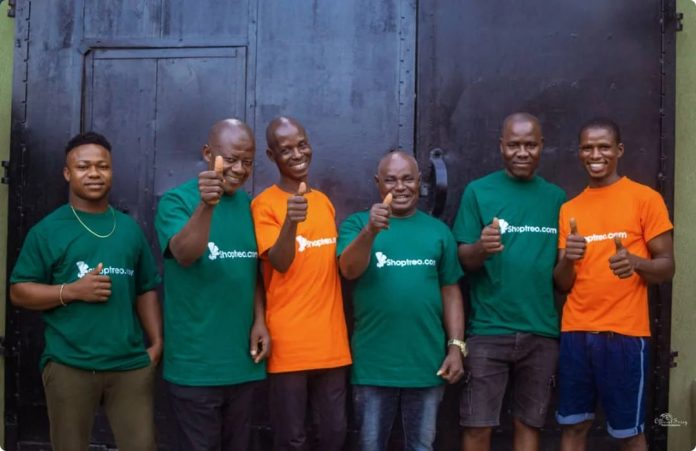
Shoptreo is the largest B2B fashion ecommerce in Nigeria today. Its annual GMV runs into tens of $millions. Tekedia Capital guided the Aba boys, and they have expanded to Ibadan and other markets. They serve bulk buyers of shoes, clothes, and everything fashion, supplying wholesalers from their networks.

Good People, very soon, you will see the Treo clothing/shoe brand because George Uteh and Emmanuel Jacobs are coming with new things.

At Tekedia Capital, we’re building a diversified global investment powerhouse and next week, we will invest in new 15 companies across 4 continents.  Tekedia Capital congratulates our innovators and builders.

Photo: Shoptreo super-designers (shoes), Aba. These men design amazing shoes and with Shoptreo vision, they are making more money, and expanding their own missions.