DD
MM
YYYY

PAGES

DD
MM
YYYY

spot_img

PAGES

Home Blog Page 2828

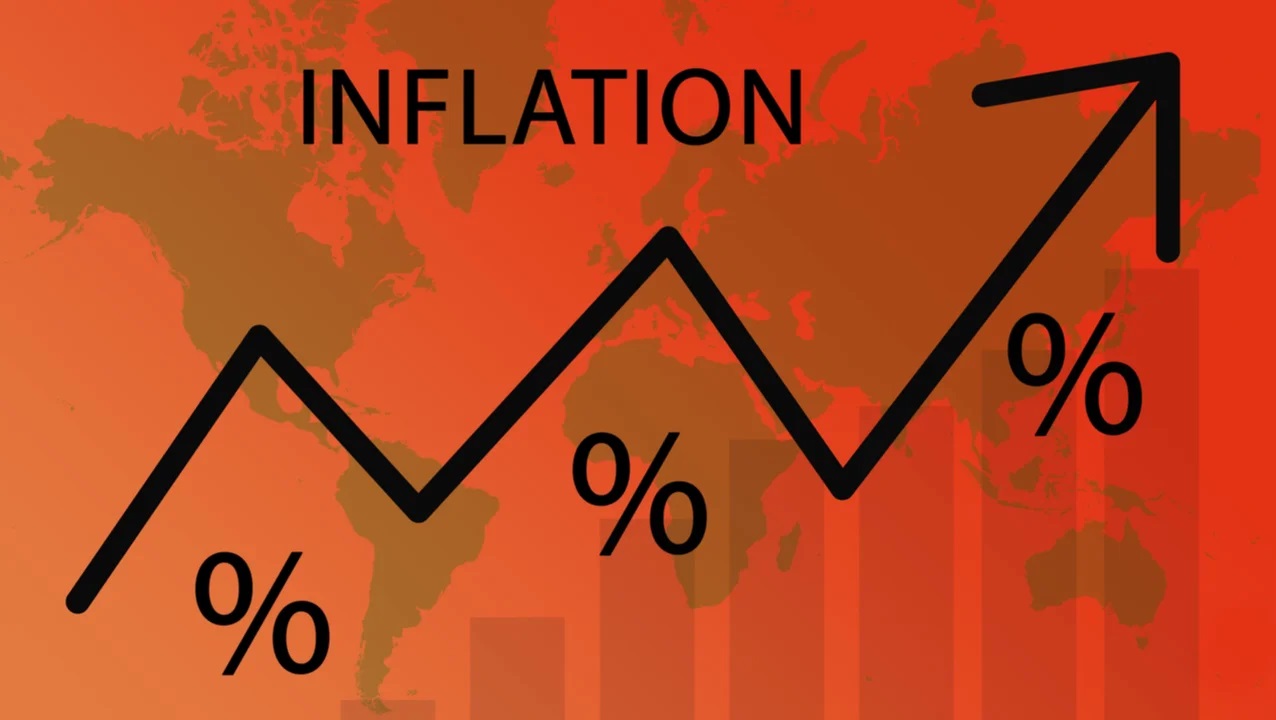
US Inflation Rate Fall to 2.4%, Positive Sign for the Economy

0

The United States has witnessed a significant economic milestone as the inflation rate has dropped to 2.4%, marking the lowest level in three years. This decline is a positive sign for the economy, reflecting a period of stabilizing prices and potential relief for consumers and businesses alike.

Inflation is a measure of the rate at which the general level of prices for goods and services is rising, and subsequently, how purchasing power is falling. Central banks attempt to limit inflation, and avoid deflation, in order to keep the economy running smoothly.

The recent decrease to a 2.4% inflation rate, as reported by the U.S. Labor Department data published on October 10, 2024, indicates a downward trend from the previous rate increase of 2.5%. This is a noteworthy development, considering the historical data which shows that the inflation rate in 2023 was 3.4%, with an average inflation rate of 4.1% for that year. The current rate is a significant drop from the high rates experienced in the past years, such as the 8.0% average in 2022 and the peak of 7.0% in December 2021.

Several factors contribute to this decline in inflation. One of the key elements is the decrease in energy prices, which have seen a substantial reduction over the past year. Energy commodities, including fuel oil and gasoline, have decreased by 15.3% and 22.4% respectively. This has a cascading effect on the cost of goods and services, as transportation and production costs are heavily influenced by energy prices.

Moreover, the Consumer Price Index (CPI) for all items less food and energy increased by 3.3% over the year, which is a moderate rise compared to the overall inflation rate. This suggests that the core inflation, which excludes the volatile food and energy sectors, remains relatively stable.

The Federal Reserve’s monetary policy plays a crucial role in managing inflation. By adjusting interest rates and taking other measures, the Fed aims to control economic growth to a sustainable level. The current low inflation rate may provide the Fed with more flexibility in its policy decisions, potentially leading to a more accommodative stance to support economic growth.

The impact of the lower inflation rate is multifaceted. Consumers can benefit from the reduced cost of living, as their purchasing power increases. This can lead to higher consumer spending, which is a significant driver of economic growth. Businesses, on the other hand, can benefit from lower input costs, which can improve profit margins and encourage investment.

It is important to note that while the current United States inflation rate is a positive indicator, it is essential to monitor the economic trends closely. The next inflation update, scheduled for release on November 13, 2024, will provide further insights into the inflation rate for the 12 months ending October 2024.

In conclusion, the fall in the U.S. inflation rate to 2.4% is a promising sign for the economy. It reflects the effectiveness of monetary policies and the resilience of the economic system. As the country continues to navigate through various economic challenges, this decrease in inflation offers a beacon of hope for continued economic stability and growth.

China Considers Issuing Six Trillion Yuan of Bonds

0

In a bold move to invigorate its economy, China is reportedly considering the issuance of 6 trillion yuan in treasury bonds to fund an aggressive economic stimulus plan. This strategic decision comes at a time when the global economy faces numerous challenges, and nations are seeking innovative ways to sustain growth and financial stability.

The proposed fiscal stimulus, which could span over three years, aims to address several key economic areas. One of the primary objectives is to alleviate the debt burden of local governments, which has been a growing concern for the central administration. By raising substantial funds through treasury bonds, China could provide much-needed support to these local entities, enabling them to manage their debts more effectively and continue contributing to the nation’s overall economic health.

Moreover, the stimulus plan is expected to have a significant impact on the country’s economic landscape. Top economists, including Liu Shijin, former deputy president of the China State Council’s Development Research Center, have suggested that such a measure could be crucial for maintaining momentum in the economy. The additional funds would not only help in debt relief but also potentially finance infrastructure projects, social welfare programs, and other developmental initiatives that could spur economic activity and job creation.

The market’s reaction to Beijing’s proposed stimulus has been mixed, with some analysts advocating for an even more substantial injection of funds. The debate centers around the optimal amount that would balance the need for economic revitalization with prudent fiscal management. Nonetheless, the consensus is that revved-up fiscal spending is essential for sustaining the economic rebound, especially after the central bank’s stimulus efforts in late September.

Investors and policymakers are closely monitoring the developments, as the Standing Committee of the National People’s Congress, China’s top legislature, is expected to review and approve the additional budget funding. This move could mark one of the largest fiscal stimulus efforts in recent years, reflecting China’s proactive approach to managing its economic trajectory amid global uncertainties.

The proposal comes at a time when the global economy faces uncertainty, and nations are seeking sustainable paths to recovery. China’s approach reflects a strategic shift towards fiscal measures to complement monetary policies previously enacted. The funds raised from these bonds are expected to be partially allocated to address the burgeoning debt of local governments, which has been exacerbated by off-balance-sheet borrowing.

Economists and market analysts are closely monitoring the situation, as the size and scope of the stimulus could have far-reaching implications for both the Chinese economy and global markets. The decision to raise such a substantial amount through treasury bonds underscores the government’s commitment to a proactive fiscal policy in mitigating economic challenges.

The potential 6 trillion-yuan bond issuance is a testament to China’s commitment to economic recovery and growth. It underscores the government’s willingness to leverage fiscal tools to ensure the nation’s financial resilience. As the world watches, the outcomes of this stimulus plan could offer valuable insights into the effectiveness of large-scale fiscal interventions in stimulating economic activity and managing public debt.

Weak Naira Presents Opportunity for Nigeria to Boost Its Export – Cardoso

0

At the Nigerian Economic Summit held in Abuja on Wednesday, Central Bank of Nigeria (CBN) Governor Yemi Cardoso highlighted the potential benefits of the naira’s sharp depreciation.

Addressing the issue of the currency’s significant loss in value, he argued that the current situation presents an opportunity for the country to enhance its export sector, as the lower exchange rate makes Nigerian products more competitive on the international market.

He explained that while the naira’s devaluation is not an ideal scenario, it has made exports from Nigeria more attractive.

The governor pointed out that the country’s export competitiveness has increased, attracting greater interest from investors who are looking to capitalize on the favorable exchange rate. This development, he argued, could significantly boost the nation’s trade balance.

“In terms of persuasion, what we need now is to ensure that investments are here,” Cardoso said. “It may seem like a threat in the sense that the exchange rate has come down so low, but that also is an opportunity because it can help to boost your exports. This will make Nigeria much more competitive in the export trade. I just want to encourage people to say that the opportunities are here. Things are recalibrating in a particular direction. It’s not perfect, but there are definitely opportunities for people to single out and invest.”

Cardoso elaborated on the dynamics of the depreciating currency, explaining that when businesses export goods from Nigeria, the costs associated with imports are comparatively high due to the weak naira, thus increasing demand for locally produced goods in foreign markets. The governor indicated that this trend is already evident, with some businesses and investors actively taking advantage of the situation.

He expressed optimism about the country’s export prospects, adding, “By the time you are exporting to other countries with the cost of imports here and the relatively low naira, you will have a situation where the demand for your goods is much higher. I see it happening, others are doing it, and the interest is growing in leaps and bounds.”

However, his remarks have sparked fresh concerns about the CBN’s strategy for managing the country’s ongoing foreign exchange (forex) crisis. Many observers and economists have expressed skepticism, suggesting that the comments may indicate that the central bank is running out of effective strategies to address the country’s forex challenges.

In his speech, Cardoso acknowledged the current difficulties stemming from the naira’s depreciation, which has resulted in over a 170% loss in value in the past year, with the currency trading between 1,685/$ and 1,700/$ in the forex market. While acknowledging these challenges, he stressed that the situation offers a silver lining for Nigeria’s export sector.

According to him, the lower exchange rate could be leveraged to make Nigerian products more attractive to international buyers, potentially boosting the country’s foreign exchange earnings. He pointed to a significant trade surplus of N6.95 trillion recorded in the second quarter of 2024 as a sign of progress in the export sector.

However, there is a growing sentiment that framing the naira’s depreciation as a potential export advantage is more of a stopgap measure rather than a sustainable solution to the deeper issues plaguing Nigeria’s economy.

This belief is buoyed by the argument that the government has failed to adequately address the root causes of the forex crisis, which include chronic underperformance in key economic sectors, a heavy reliance on oil exports, and a shortage of foreign investment.

The central bank’s policies, which have included several currency interventions and adjustments to the official exchange rate, have been unable to prevent the naira from reaching record lows. The lack of forex liquidity in the official market has also driven up the cost of imports, fueling inflation and putting further pressure on businesses and consumers. As a result, the CBN’s focus on boosting exports is seen by some as a desperate attempt to find a quick fix to a long-standing problem.

The Limitations of Nigeria’s Export Capacity

Economists have also raised concerns about Nigeria’s capacity to capitalize on the naira’s depreciation through exports, noting that the country’s export volume remains too low to benefit significantly from a weaker currency.

Nigeria’s exports are predominantly crude oil, which accounts for more than 90% of foreign exchange earnings, leaving the country highly vulnerable to global oil price fluctuations and demand cycles. The nation’s non-oil exports, which could potentially benefit more from a weaker currency, are still relatively insignificant compared to its oil exports, limiting the scope for any meaningful boost to foreign exchange inflows.

In recent years, Nigeria’s crude oil production has been hampered by various challenges, including oil theft, pipeline vandalism, and aging infrastructure. The country’s daily oil output has consistently fallen below its OPEC production quota, further reducing its potential to generate forex from crude sales. With oil revenues already under strain, many believe that relying on the naira’s depreciation to drive export growth may not yield substantial results, as the volume of non-oil exports is insufficient to bridge the forex gap.

Furthermore, experts have also noted that the costs associated with production and export activities in Nigeria are high due to infrastructural deficits, power supply issues, and regulatory hurdles, making Nigerian goods less competitive despite the weaker currency. While a depreciated naira could theoretically make exports cheaper and more attractive, the country’s limited export diversification means that the potential gains are constrained.

Economists have pointed out that for Nigeria to truly benefit from the naira’s depreciation, the government must implement structural reforms aimed at diversifying the economy, boosting non-oil exports, and improving the business environment. This would involve substantial investment in critical infrastructure, reducing bureaucratic bottlenecks, and providing incentives for manufacturers and agricultural producers to scale up their operations.

They also noted a need for policy consistency and clear strategies to attract foreign investment, which has been on the decline in recent years. The uncertainty surrounding Nigeria’s foreign exchange policies, coupled with the high risk associated with doing business in the country, has made it challenging for investors to commit to long-term capital.

Malthusian Catastrophe, Debts And Falling Nigerian GDP

0

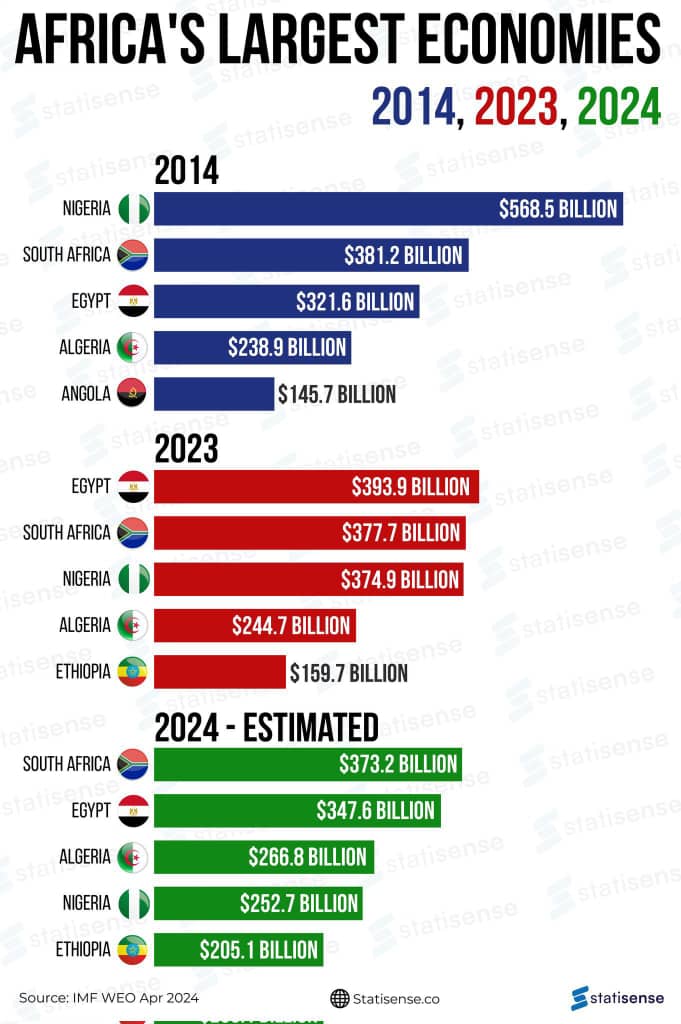
As Nigerians, we are not making economic progress, looking at data from our GDP. You cannot crash from $569B to $375B in eight years, and still claim you are making progress. And within a year, from 2023, we have also dropped more than $100B off the GDP.  Sure, we can claim that oil prices could be blamed. But it is important to note that what oil revenue did not provide, loans did. In other words, as Nigerians, we have had resources since Naira is Naira and USD is USD, whether from oil revenue or loans. We have ramped up the loans with excess of $100B.

Let me add one more thing, drawing from my junior secondary school lecture in agricultural science on Rev Malthus postulation. Malthus noted that resources (say food production) were growing in arithmetic progression and the population was on a geometric progression (more rapid and faster in multiples). He came up with an inflection point – called the Malthusian catastrophe – and that happens when the population has overtaken the resources required to support the people.

Typically, every nation unlocks innovation to “create” more resources so that you will keep having more resources to support the growing population. At the basic state, all nations begin in the invention society era. This plot  shows how the US and China expanded the resources (here GDP) to support the rising populations. In other words, they shifted the equilibrium and avoided the Malthusian catastrophe via the parabolic growth which reversed centuries of economic stagnation.

Unfortunately, for Nigeria, that transition has not happened. Consequently, it has to borrow hoping to “create” more resources to support the population. This is typical in most African economies as they remain stuck in the invention era and are unable to expand opportunities by moving into the innovation era. Loan provides that operational support and that is why Nigeria will keep taking loans. The challenge, unfortunately, is that the loan impacts are triggering a drop in GDP which reduces the per capita for the citizens.

Why Nigeria Continues To Borrow And Will Continue To Borrow

Yellow Card Closes $33 Million Series C Funding to Expand Stablecoin Solutions Across Africa

0

Pan-African cryptocurrency exchange Yellow Card has announced the closure of a $33 million Series C funding round to expand Stablecoin solutions across Africa.

The financing round was led by Blockchain Capital, with participation from Polychain Capital, Third Prime Ventures, Castle Island Ventures, Block, Inc., Galaxy Ventures, Blockchain Coinvestors, Hutt Capital, and Winklevoss Capital.

The funding marks a significant milestone not only for Yellow Card but also for the African Fintech ecosystem, validating the growing role of stablecoins across the continent and their broader global applications.

Speaking on the recent funds raised, CEO and Co-founder Chris Maurice expressed excitement, noting that the investments not only demonstrate YellowCard’s resilience in transforming the future of payments but also highlight the vital role of digital assets for businesses across Africa.

In his words,

“This fundraise not only demonstrates our resilience but also highlights the vital role of digital assets for businesses across Africa. We are excited about the opportunities, partnerships, and journey ahead, and I am proud to work with an incredible cohort of investors that share our vision for the industry and the continent”.

Also commenting, General Partner at Blockchain Capital Aleks Larsen said, “The future of payments lies in fast, affordable rails for everyone, powered by open networks. We couldn’t be more excited to back Yellow Card as they bring Africa on-chain with stablecoins”.

Yellow Card, which self-describes itself as the largest and first licensed stablecoin platform in Africa, has two main products; the core on-and-off-ramp and the API suite, which the CEO describes as “Africa-as-a-service”. The API suite integrates Africa’s banking and mobile money infrastructure

With the recent funds raised, the company will now look to tap more into the opportunities the technology provides by improving its flagship product and API (which has a widget built on top of it. This serves as a gateway for international companies like Coinbase and Block to tap into African markets. The company also disclosed plans to use the funds to strengthen its team, and systems, and continue to lead engagement with regulators across the continent.

Since launching in Nigeria in 2019, Yellow Card has grown into a pioneering force within the industry, operating in 20 African countries and facilitating over $3 billion in transactions. Initially serving retail customers, the Pan-African cryptocurrency exchange has pivoted its focus after recognizing the high costs associated with small retail transactions. Also, the company has since raised its minimum transaction amounts to prioritize businesses, allowing it to work more effectively with around 30,000 businesses across Africa and internationally, providing payments and treasury management solutions primarily through stablecoins.

YellowCard CEO Maurice, says the utility of stablecoins and demand for its technology from businesses moving larger sums has contributed to the company’s transaction volumes surging from $1.7 billion early last year to over $3 billion. As a result, the company’s revenue, which it earns via spread between currency prices, has increased sevenfold since January 2023, now “Well into eight figures.”

“What’s majorly driving adoption for us is utility. Stablecoins are useful. People need them,” remarked the CEO. “They solve problems for people and businesses. People are adopting this technology because they need it. This is not a speculation use case. It’s a utility use case.”

Yellow Card remains committed to empowering African businesses of all sizes by offering seamless international payments and access to stablecoin liquidity, as it continues to lead the charge in bringing Africa on-chain.