DD
MM
YYYY

PAGES

DD
MM
YYYY

spot_img

PAGES

Home Blog Page 2853

Nigerian Telecom Regulator Moves to Sanction Starlink for Increasing Tariff Without Approval

0

The Nigerian Communications Commission (NCC) has announced its intention to sanction Elon Musk’s internet company, Starlink, for increasing its subscription prices in Nigeria without regulatory approval.

This comes after the company unilaterally raised its monthly subscription fees and hardware costs, sparking concerns from stakeholders who accused the NCC of applying double standards by allowing Starlink’s price hike while restricting similar actions by local telecom operators.

Last week, Starlink increased its monthly subscription price in Nigeria by 97%, moving from N38,000 to N75,000, and also raised the cost of its Starlink kit (hardware) by 34%, from N440,000 to N590,000. The company justified these changes by citing “excessive inflation” in Nigeria as the reason behind the adjustments. However, this price hike was implemented without the NCC’s approval, contravening Sections 108 and 111 of the Nigerian Communications Act, 2003, and violating the conditions of Starlink’s license regarding tariffs.

Responding to the issue, the NCC’s Director of Public Affairs, Dr. Reuben Muoka, expressed the regulator’s surprise at Starlink’s unilateral decision, emphasizing that the company had filed a request for a tariff review, but the NCC had yet to communicate a decision before Starlink moved forward with the changes. Muoka noted that Starlink’s action undermined regulatory stability in Nigeria’s telecommunications sector and that the Commission would take appropriate enforcement measures against any licensee who violates these regulations.

“We were surprised that the company jumped the gun by announcing price changes after filing a request to the Commission seeking approval for price adjustment for which the Commission was yet to communicate a decision.

“The action of the company appears to be a contravention of Sections 108 and 111 of the Nigerian Communications Act, 2003, and Starlink’s License Conditions regarding tariffs.

“The Commission will therefore take appropriate enforcement measures against any action by a licensee that is capable of eroding the regulatory stability of the telecommunications industry,” he stated.

Sections 108 and 111 of the Nigerian Communications Act clearly define the NCC’s authority over the regulation of tariffs for licensed operators. According to Section 108, license holders must seek and receive NCC’s approval before implementing any changes to their tariffs or charges. The law prohibits companies from unilaterally setting prices, ensuring that pricing adjustments remain within the regulator’s control to protect consumers and maintain stability in the telecom industry.

Section 111 further empowers the NCC to impose financial penalties on any operator that exceeds the tariff rates approved by the Commission. This section reinforces the regulator’s mandate to ensure compliance, regardless of the operator’s global stature.

Telcos Push to Raise Tariff

Starlink’s price hike has rekindled debates within Nigeria’s telecom sector. Local telecom operators, under the umbrella of the Association of Licensed Telecommunications Operators of Nigeria (ALTON) and the Association of Telecommunications Companies of Nigeria (ATCON), have long called for a review of telecom tariffs due to rising inflation and increased operational costs in the country. These operators argue that the telecom sector is the only industry that has not adjusted its prices despite Nigeria’s challenging economic environment.

On Tuesday, social media influencers were pushing the call for internet data tariff review on X, a trend believed to have been sponsored by telcos.

Despite these calls, both the NCC and the Minister of Communications, Innovation, and Digital Economy, Dr. Bosun Tijani, have resisted tariff hikes by local operators, urging them to find innovative ways to offset inflationary pressures and operational costs.

Implications for the Telecom Sector

However, industry experts have warned that Starlink’s rapid price increase and the resulting regulatory fallout could have far-reaching implications for the Nigerian telecom sector. As a high-profile entrant into Nigeria’s internet market, Starlink has already positioned itself as a crucial player, particularly in delivering internet services to underserved and rural areas.

Thus, many believe that NCC’s move to sanction Starlink would send a deterrent message to both foreign and domestic telecom operators, who may wish to enter the Nigerian market. However, others note that the sanction reinforces the NCC’s role in protecting consumers from arbitrary price changes, ensuring that operators remain accountable for their actions. This, they say, may also prompt other international companies entering the Nigerian telecom market to pay closer attention to local regulations and work more closely with authorities to avoid similar challenges.

For Starlink, these sanctions could result in heavy financial penalties among others, stymieing its ability to expand further in Nigeria.

Increase Your Chances in BlockDAG’s $1M Giveaway Through Friend Referrals And Win Big! Insights on Litecoin & Hedera

0

In the crypto market, established currencies like Litecoin (LTC) and emerging platforms such as Hedera (HBAR) continue to make waves. Recently, Litecoin has demonstrated resilience with a 6% surge in its market value, underscoring its reputation for providing secure and swift transaction capabilities. Meanwhile, Hedera has been drawing attention with its innovative hashgraph technology and strategic partnerships.

BlockDAG remains a focal point in the cryptocurrency sphere with its current $1 million giveaway. This promotion has sparked widespread interest, promising 50 participants a chance to receive $20,000 in BDAG coins. As the event gains traction, participants have discovered that referring friends can significantly enhance their chances of winning. This article explores the mechanisms of this referral process.

Steady Growth for Litecoin

As one of the pioneering cryptocurrencies, Litecoin has been experiencing a positive trend, with its value increasing over 6% in the last week and trading above $65. While Litecoin is known for its efficiency and low transaction costs, the shifting preferences towards newer and potentially more rewarding currencies have posed new challenges. Nonetheless, Litecoin’s proven track record continues to make it a currency worth considering in the broader crypto market.

Hedera’s Market Outlook: A Spectrum of Possibilities

Hedera has been capturing interest with its distinct hashgraph technology, which promises enhanced speed and reduced costs for transactions. Notable milestones such as integration with MetaMask and successful trials in stablecoin remittances have reinforced its market position.

Currently priced at approximately $0.05697 and holding the 43rd position in market capitalization, Hedera shows promise for substantial growth in 2024. Analysts have identified potential resistance levels at $0.0895 and $0.1348, with an ambitious peak possibly reaching $0.2292. Optimistic forecasts suggest Hedera could climb to $0.1407 by year-end, with the potential to achieve as high as $0.3. Should Hedera continue to upgrade and innovate, surpassing its highest recorded value of $0.5701 remains a possibility. However, a downturn in the market could see prices retract to as low as $0.0198.

How to Enhance Your Chances in BlockDAG’s $1M Giveaway

Cryptocurrency enthusiasts are presented with a remarkable chance to enhance their prospects of winning substantial rewards with BlockDAG’s thrilling $1 million giveaway. By utilizing the referral system, participants can significantly improve their likelihood of being among the 50 fortunate recipients who will each receive $20,000 in BDAG coins.

Each friend that participants refer to the giveaway provides them with extra bonus entries, thereby not only boosting their own chances but also amplifying community engagement within the BlockDAG ecosystem. This strategy nurtures a communal spirit and encourages broader participation.

Furthermore, the giveaway’s stipulation for participants to hold at least $100 worth of BDAG coins contributes positively to the ongoing presale, drawing new traders and enhancing the coin’s value due to heightened demand. Currently, the 23rd batch of BDAG coins is priced at $0.0206, and early adopters have experienced returns exceeding 1960% from the initial batch.

BlockDAG’s appeal is evident with its impressive base of over 140,000 unique traders who have collectively acquired more than 13.8 billion BDAG coins. With nearly $92 million amassed in the ongoing presale, the timing is ideal for enhancing one’s cryptocurrency portfolio by leveraging the referral system and maximizing the potential to win.

Best Cryptocurrencies for 2024

Litecoin (LTC) continues to demonstrate growth and maintains its reputation as a dependable option for secure cryptocurrency transactions. For those seeking stability, Litecoin’s established market presence provides a measure of reliability amid the fluctuating conditions of the crypto market. On the other hand, Hedera distinguishes itself with its cutting-edge hashgraph technology and positive growth projections, capturing the attention of those looking for promising technological advancements.

Ultimately, the principle of “the more, the merrier” aptly applies to BlockDAG’s $1 million giveaway. By referring additional friends and engaging more fully with the community, participants can significantly elevate their chances of winning $20,000 worth of BDAG coins. With a modest requirement of a $100 holding in BDAG coins, the potential for remarkable rewards is markedly accessible.


Discover More About BlockDAG:

Website: https://blockdag.network

Presale: https://purchase.blockdag.network

Telegram: https://t.me/blockDAGnetworkOfficial

Discord: https://discord.gg/Q7BxghMVyu

BlockDAG Miner Sales Surge Past $5M with $20 Value Prediction—Cardano Gains, Litecoin Eyes $300

0

As the crypto market evolves at breakneck speed, more investors are jumping in instead of sitting on the sidelines. This shift is apparent with top contenders like BlockDAG taking the lead.

BlockDAG’s miner sales recently crossed the $5 million threshold, with over 12,600 units sold, driving presale earnings to nearly $92 million. Demand for these eco-friendly and energy-efficient miners is surging, driven by their profitability in mining BDAG coins.

After an astonishing 1960% rise, experts forecast that the coin could hit $20 by 2027, sparking a rush to accumulate BDAG coins before the market heats up further.

Meanwhile, Cardano has shown promising gains but faces potential short-term dips. Litecoin, known for its steady growth, could see a breakthrough to $300 if key resistance levels are surpassed.

Cardano Price Analysis: Short-Term Warnings Emerge

Cardano’s (ADA) price climbed from $0.326 on September 16 to $0.415 by September 27, a strong upward trend. However, some caution is advised as the TD Sequential indicator signals a potential short-term correction on the horizon.

Currently, ADA is trading around $0.40, down 0.30% in the last 24 hours but still up 13% over the past week. Analysts suggest that if ADA cannot maintain its position above the $0.40 threshold, it might consolidate between $0.31 and $0.40 for some time, making this a critical level to watch in the near term.

Litecoin Outlook: Could a $300 Target Be in Sight?

Litecoin (LTC) has experienced modest growth, with its price sitting at $67.71 after a 3.8% increase in the last week. This comes after a year of limited movement, where LTC posted only a 5% gain compared to Bitcoin’s massive 139% surge.

Despite a 30% drop in its market cap to $4.3 billion, Litecoin continues to see significant transaction volume. While analysts remain cautious, some believe that if LTC can clear key resistance levels, it could be headed for a $300 target—a goal that would mark a major comeback for the coin.

Why BlockDAG Miners Are Gaining Ground So Quickly

BlockDAG’s $5 million miner sales milestone—achieved through the sale of over 12,600 units—reflects growing interest in its mining technology. This enthusiasm has helped push BlockDAG’s presale earnings to nearly $92 million, with 13.8 billion BDAG coins circulating.

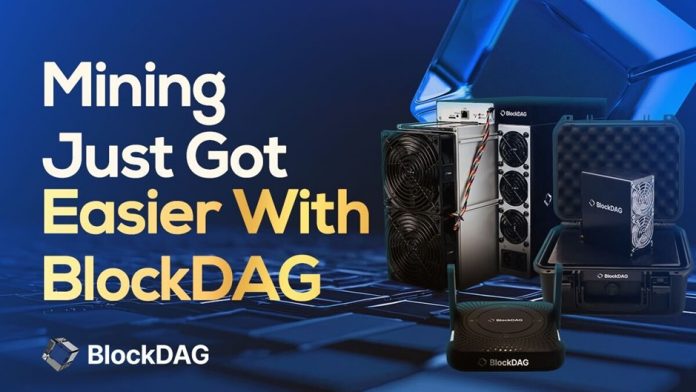
One major driver behind this rapid growth is the appeal of the BDAG coin, supported by the innovative X Miner series. This series includes options for both cloud and hardware mining, capable of generating between 20 and 2000 BDAG coins daily, depending on the setup.

With the introduction of the X1 Miner app, BlockDAG has made mining more accessible than ever. Now, even those without technical expertise can mine up to 20 BDAG coins per day from their smartphones. This move opens up crypto mining to a broader audience, allowing both beginners and seasoned miners to participate.

The hardware options in the X Miner series offer the potential to mine hundreds or even thousands of coins daily, reinforcing BlockDAG’s position as a leader in making crypto mining more eco-friendly and accessible. Analysts suggest the coin might rise to $20 by the year 2027. With the presale price of $0.0206 per BDAG coin, the opportunity for exponential gains is real.

Summing Up

Cardano’s price is looking favorable, but it must stay above $0.40 to avoid a downturn. Litecoin, on the other hand, appears more stable, with indicators pointing to a possible breakout that could push its price toward $300.

Yet, BlockDAG stands out as a top performer in the crypto world. The X Miner series provides an accessible and eco-friendly way to mine crypto, whether you’re a tech expert or a complete beginner.

With BDAG coins having risen by 1960%, and predictions indicate they could climb to $20 by 2027, BlockDAG’s miner sales have skyrocketed, with over 12,600 units sold in record time.

Learn About BlockDAG – Act Now Before Prices Increase:

Presale: https://purchase.blockdag.network

Website: https://blockdag.network

Telegram: https://t.me/blockDAGnetwork

Discord: https://discord.gg/Q7BxghMVyu

FTX Estate’s Bankruptcy Plan Approved in Delaware

0

In a landmark decision, a Delaware judge has approved the bankruptcy plan for the FTX estate, marking a significant step forward in one of the most complex financial cases in recent history. The approval, which came after meticulous consideration of the reorganization plan, will allow for the distribution of recovered assets to the majority of the crypto exchange’s customers and creditors.

The plan, which includes the expected full repayment of customers and creditors with up to $16.5 billion in recovered assets, is a rare outcome in bankruptcy cases, especially in the volatile cryptocurrency market. According to reports, 98% of FTX’s creditors will receive 119% of the amount of their allowed claim as of November 2022, when the exchange filed for bankruptcy protection.

This decision comes nearly two years after FTX spiraled into bankruptcy, a period marked by uncertainty and legal complexities. The company’s efforts to raise funds for the repayment included selling a number of assets, such as venture investments held by the exchange and other investments held by Alameda Research, the crypto hedge fund associated with FTX’s founder, Sam Bankman-Fried.

This development is not just a relief for those directly affected by the collapse of FTX but also serves as a beacon of hope for the future of cryptocurrency regulation and stability. The plan ensures that 98% of the customers who held $50,000 or less on the exchange will receive their repayments within 60 days—a swift and decisive action that underscores the commitment to rectifying the wrongs of the past.

Moreover, the plan sets a precedent for how bankruptcy proceedings of such complex financial entities should be handled, with FTX’s case being hailed as a model for dealing with intricate Chapter 11 bankruptcy cases. The meticulous process of asset recovery and the collaborative efforts of various stakeholders have paved the way for a plan that not only addresses the immediate concerns of repayment but also reflects a broader commitment to transparency and due process.

The case of FTX and SBF has been closely watched by the financial world, not only because of the size of the bankruptcy but also due to the broader implications it holds for the cryptocurrency industry. The approval of the bankruptcy plan by Judge John Dorsey is a testament to the resilience of the legal system in adapting to the challenges posed by new financial technologies and markets.

As the FTX estate moves forward with the implementation of the bankruptcy plan, it sets a precedent for how similar cases might be handled in the future. It also provides a glimmer of hope for those who have been financially affected by the collapse of the exchange, offering them a path to recovery that seemed uncertain just a short while ago.

The FTX bankruptcy case is a reminder of the risks inherent in the cryptocurrency market and the importance of regulatory oversight and financial prudence. It also highlights the potential for recovery, even in the face of seemingly insurmountable odds, through the diligent work of legal professionals and the robustness of the bankruptcy system.

UN Agency Recommends Criminalization of Unlicensed Virtual Asset Service Providers (VASPs).

0

In a significant move to combat cyber fraud, a United Nations agency has put forth a recommendation urging Southeast Asian countries to criminalize the operation of unlicensed Virtual Asset Service Providers (VASPs). This recommendation comes in the wake of a detailed report highlighting the role of some VASPs in facilitating transactions for fraudulent outfits and high-risk gambling sites.

The report, released by the United Nations Office on Drugs and Crime (UNODC), underscores the urgency for governments to acknowledge the severity and reach of cyber-enabled fraud, which has become a global threat with rapidly evolving criminal ecosystems in the region. The UNODC’s call to action is not just about curbing illegal activities but also about protecting the integrity of the financial system and the safety of individuals.

The agency’s recommendations include greater monitoring of organized crime involvement in casinos, junkets, cyber fraud operations, and other businesses linked to scam operations. Additionally, it emphasizes the need for better training for authorities in online gambling operations and money laundering methods enabled by sophisticated technologies, particularly cryptocurrencies.

The report sheds light on the alarming scale of cyber fraud in Southeast Asia, which cost the region up to $37 billion last year. Organized crime groups have been rapidly integrating malware, generative AI, and deepfakes to enhance their fraudulent activities, posing a significant challenge to law enforcement agencies.

Moreover, the UN Human Rights Office has reported that hundreds of thousands of individuals are trafficked to work as online scammers in Southeast Asia. These victims, often coerced into committing crimes, face a range of serious human rights violations, including torture, sexual violence, forced labor, and other abuses. This highlights the dual victimization present in these schemes, where both the defrauded individuals and those forced into scamming operations suffer.

With cybercriminals constantly devising new methods to exploit vulnerabilities, it is crucial for individuals to adopt robust measures to safeguard their personal information and assets. Here are some essential steps you can take to protect yourself from cyber fraud:

Implement a full-service internet security suite that offers protection for your devices, online privacy, and identity. This can help shield your private and financial information when you’re online. Create complex passwords that combine letters, numbers, and symbols. Avoid using the same password across different sites and update them regularly. Consider using a password manager to securely store and manage your passwords.

Regularly update your operating systems and internet security software. Cybercriminals often exploit known vulnerabilities, so staying current with updates can close these security gaps. Manage your social media settings to limit the amount of personal information you share. Be wary of friend requests from strangers and think twice before clicking on links or sharing content.

Secure your home Wi-Fi with a strong password and consider using a VPN for additional security, especially when using public networks. Discuss internet safety with your children and family members. Make them aware of the risks and teach them how to recognize potential cyber threats. Keep up to date with the latest security breaches and understand how they might affect you. This knowledge can help you take timely action to protect your data.

The UN’s recommendations are a clarion call for a coordinated response from Southeast Asian nations. By criminalizing the operation of unlicensed VASPs, the region can take a firm stance against the facilitators of cyber fraud and protect countless individuals from falling prey to these nefarious activities. The implementation of these measures will require a concerted effort from all stakeholders, including governments, financial institutions, and international bodies, to ensure a safer and more secure digital environment for all.