DD
MM
YYYY

PAGES

DD
MM
YYYY

spot_img

PAGES

Home Blog Page 2871

Alibaba Unveils Over 100 Open-Source AI Models, Including Groundbreaking Text-to-Video Generation Tool

0

Alibaba, a global leader in e-commerce, cloud computing, and Artificial Intelligence, has launched more than 100 new open-source AI models, in a bold move to strengthen its foothold in the AI space.

The Chinese tech giant latest release is part of its growing effort to democratize AI technologies, offering tools that span multiple industries and use cases, from natural language processing to computer vision.

The newly released models, known as Qwen 2.5, are designed for use in applications and sectors spanning sectors like automobiles to gaming and science research. These models also have more advanced capabilities in math and coding.

The Hangzhou-based firm is intensifying its Al efforts to stay competitive in the rapidly evolving field. Alibaba claims that its models can understand prompts and generate outputs across multiple formats, rivaling offerings from global Al leaders. The Open-source models allow researchers, academics, and companies to use these tools for building generative Al applications without needing to invest in expensive training processes.

The company’s decision to make its Qwen 2.5 models open-source is a key part of its strategy to attract users globally.  By providing free access to these models, Alibaba hopes to expand its user base and drive wider adoption of its Al technology. Recall that Alibaba first introduced its Tongyi Qianwen model last year and has since released enhanced versions. According to the company, its open-source models have been downloaded 40 million times, showcasing significant interest from the global Al community.

By offering these models to the global community, Alibaba is positioning itself as a key player in the Al landscape, enabling companies of all sizes to harness the power of Al for automation, decision-making, and innovative applications. This move places Alibaba alongside global leaders in the AI space like OpenAl and Google in the race to dominate the Al industry but with a unique emphasis on open-source accessibility.

It is understood that companies like Meta and Google have been investing heavily in similar technologies, particularly in generative Al. However, Alibaba’s decision to make its models open-source gives it a distinct advantage in terms of accessibility and flexibility.

According to Eddie Wu, CEO of Alibaba, the company is making unprecedented investments in Al research and infrastructure. While Alibaba is a leading cloud computing provider in China, it still lags behind global leaders like Amazon and Microsoft. The firm hopes that its latest Al advancements will not only attract domestic customers but also expand its global cloud service market share, helping to accelerate growth in a division that has shown promising signs of recovery.

By rolling out these powerful Al models and tools, Alibaba is aiming to solidify its standing in the global Al and cloud computing race, bringing innovative technologies to users both inside and outside China.

India’s Indodax Hacked for $22M as Worldcoin Undergoes Investigation in Singapore

0
Security lock concept

The Indonesian cryptocurrency exchange Indodax recently faced a significant security breach, resulting in a suspected loss of approximately $22 million in various cryptocurrencies. This incident has prompted the exchange to temporarily disable both its mobile and web applications as it investigates the breach’s full extent.

The attack, which occurred on September 11, specifically targeted Indodax’s hot wallets—online systems used for storing and transacting digital currencies. Blockchain investigation firms PeckShield, Cyvers, and SlowMist were the first to alert the public to the incident. The hackers managed to extract substantial amounts of major cryptocurrencies, including Bitcoin, Tronix, Ether, Polygon, and Shiba Inu.

According to findings by SlowMist, the breach originated from a vulnerability in Indodax’s withdrawal system that allowed unauthorized fund transfers from the hot wallet. Cyvers suggested that additional systems, including the signature machine, might have also been compromised, leading to the breakdown of stolen assets across various cryptocurrencies.

In response to the hack, Indodax took swift action by shutting down its trading operations to conduct thorough system maintenance. The exchange assured its users that measures were being taken to secure all systems and assets. Despite the operational halt, Indodax has reassured its customers that their crypto assets remain secure.

The pattern of the attack bears resemblances to those conducted by North Korea’s notorious Lazarus Group, known for their sophisticated cyberattacks primarily targeting financial institutions. The Lazarus Group was also linked to another major hack in July, where crypto exchange WazirX lost $235 million.

Singapore; Worldcoin Services Undergoing Investigation

In a recent development, Singapore has initiated an investigation involving seven individuals suspected of engaging in the unauthorized trade of Worldcoin accounts and tokens. This move underscores the nation’s commitment to enforcing its Payment Services Act and maintaining a regulated financial environment.

Worldcoin, a cryptocurrency project co-founded by OpenAI’s Sam Altman, has been under global regulatory scrutiny. The project’s unique approach involves the use of biometric data, specifically iris scans, to create digital IDs and distribute free tokens. This innovative method has raised questions about data privacy and the ethical use of biometric information.

The Singaporean authorities’ response to the alleged illegal trading activities associated with Worldcoin is a testament to their proactive stance on fintech regulation. The investigation follows reports of individuals, including migrant workers, being paid to transfer control of their Worldcoin accounts to third parties, a practice that could potentially breach the Payment Services Act.

The Personal Data Protection Commission (PDPC) of Singapore is also engaging with Worldcoin to ensure compliance with the Personal Data Protection Act (PDPA). This highlights the importance Singapore places on the protection of personal and biometric data within the fintech sector.

As the situation unfolds, it will be interesting to observe how Singapore navigates the challenges posed by innovative technologies like Worldcoin, balancing the potential benefits against the need for robust regulatory frameworks to protect consumers and maintain market integrity.

This incident highlights significant vulnerabilities within the cryptocurrency industry, especially concerning the security of hot wallets. It underscores the need for enhanced protective measures across exchanges to safeguard investor assets and maintain trust in the digital currency markets.

The global implications of such attacks are profound, as they not only affect the immediate victims but also shake the confidence of investors and users in the security of cryptocurrency exchanges. This breach serves as a reminder of the persistent and evolving threats in the digital asset space and the importance of robust security protocols.

Viral Cryptocurrency Shaping the Future Real Estate Investments Could Outshine Cardano and Enter Top 10 Cryptocurrencies by 2025

0

Investors trying to find the next big thing, a platform that once lets itself be called by an over-ambitious crypto moon shot. Unfortunately, in the last few years, Cardano has found difficulties in upholding its strategy having been effective in the initial years. The price of Cardano has been trailing and its volume has also witnessed a decline investors might be asking if it is over for Cardano. 

Cardano’s Struggles and Decline

If there was a term that best described the launch of Cardano, it would best be the term enthusiasm. It promised a unique approach to blockchain with peers trying out issues and claims bringing to the market a better and stronger platform than Ethereum. In the 2017 bull run, ADA, the primary utility token of the platform reached its apex price of $1.33. There was slow progress in their roadmap and now the cryptocurrency market is so saturated with competitors that Cardano is left behind its contenders which are Solana, Avalanche, and Polkadot. In addition, there has been a price slump for Cardano as other younger cryptocurrencies enlist more active investors. Many people are asking if Cardano will ever gain back the same performance that it had before, with ADA still being 85% below its peak.

Rexas Finance (RXS): The Future of Real Estate Investments

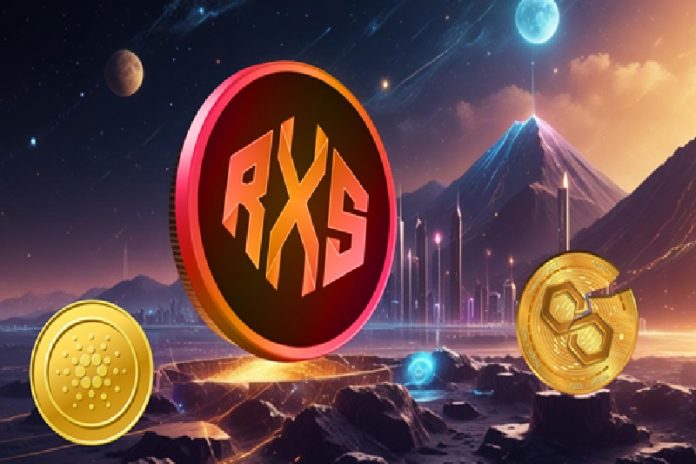
On the other hand, as Cardano finds it difficult to make its supporters’ dream a reality, Rexas Finance is stepping up as a serious competitor in emerging markets, particularly in the real estate markets. Rexas Finance is a unique distribution platform that gives each person the possibility to own or fractionalize assets in real estate anywhere in the world. This will be a great revolution in the world of cryptocurrencies and fingered its integration between the investment of property and technology. So far, the presale of the RXS token has indicated how great this project is. In its first presale stage, 15 million tokens were sold at the price of $0.03 each in less than three days, making $450,000. Stage 2, where the price increased to $0.04 with 20 million tokens available, raised over $800,000 in a shorter time than was expected. This was quite a fast up-take, showing that clever investors know the potential of Rexas Finance as well as the RXS token.

Why Rexas Finance Could Outshine Cardano

The reasons behind such success of Rexas Finance are multiple and differ from the old platforms like Cardano. To begin with, Rexas Finance has embraced the emerging phenomenon of real-world asset (RWA) tokenization, which is a trend likely to witness tremendous growth in the coming years. In attempting to solve the problem of how to tokenize real estate, Rexas Finance is providing a specific and attractive use case that has the potential to attract several people. Furthermore, it is understood that Rexas Finance should be able to react faster to market forces than, for example, Cardano. However, for most of its development, Cardano was rather slow.

These days, Rexas Finance is rushing to grab the opportunities and impress the investors’ demands. Such reader’s interest in the RXS presale indicates that it has a good chance of increasing its market share significantly and becoming one of the leaders in the industry. In addition, market professionals are claiming for RXS, that such an increase could be achieved as soon as in the year 2025 which will warrant RXS’s position as one of the top cryptocurrencies for a long time. 

Conclusion

Over the past couple of years, the concept of crypto has transformed and now and then, it has become apparent that firms that can provide genuine services will win the crypto race. Though Cardano was a competitive pioneer in the market of cryptocurrency for several years, the fact that its developmental processes are slow and do not respond to urgent issues has seen it lose its relevance. Instead, Rexas Finance focused on real estate tokenization and a growing number of investors, and aims to become a significant player in the crypto market. In 2025, Rexas Finance is on its way to completely outperform Cardano and break into the 10 largest cryptocurrencies, which will change the perception of both the blockchain and real estate investment markets.


For more information about Rexas Finance (RXS) visit the links below:

Website: https://rexas.com

Whitepaper: https://rexas.com/rexas-whitepaper.pdf

Twitter/X: https://x.com/rexasfinance

Telegram: https://t.me/rexasfinance


Too Late to Buy Sui (SUI) and Kaspa (KAS)? This New ICO Promises 11X Gain By Launch Date

0

The two biggest runners this year are Sui (SUI) and Kaspa (KASPA), defying broader bearish trends on several occasions. Up by 175% and 260%, respectively, on the yearly charts, new investors would have missed out on significant gains.

With more promising alternatives, savvy investors have been betting instead on emerging cryptocurrencies. In the spotlight is IntelMarkets (INTL). This presale token promises a whopping 11x gain by the launch date and even more after its debut, considering its impending transformation of the global crypto trading market.

IntelMarkets (INTL): Anticipated 11X Gain By Launch Date

IntelMarkets (INTL), an up-and-coming cryptocurrency, is an investor favorite. For several reasons, of course. Mere participation in the presale promises significant gains—as much as 11x. This contributes to the ICO frenzy, pushing raised funds above $360,000 in just a few weeks.

The presale recently entered the second stage, priced at $0.018. This low entry point, coupled with its growth prospects, makes it a more compelling alternative to top altcoins like Sui (SUI) and Kaspa (KAS). With a projected 55x gain after listing on Tier-1 exchanges, it is a new DeFi project to keep on the radar.

Beyond the anticipated and projected gains, its potential transformation of the $36 billion global crypto trading market makes it a strong crypto contender. By integrating AI into blockchain and DeFi, IntelMarkets will build the first-ever AI-based blockchain and trading platform. Its autopilot and self-learning trading robots will assist users in becoming the top 1% of traders, setting it up for massive adoption.

Sui (SUI): Too Late to Buy?

Sui (SUI), a Layer-1 token, is a top-5 cryptocurrency by market capitalization. Rapidly rising to the ranks of the leading DeFi powerhouses, its performance this year has been jaw-dropping. On the yearly charts, the Sui price has been up over 170%.

In shorter timeframes, a 36% increase has been recorded in the past 7 days and over 10% on the daily charts. It trades above $1.2, hot on the heels of the all-time high of $2.18 registered during the March high six months ago.

Given previous growth, the Sui token might seem unappealing to new investors, not with the long list of more promising altcoins. In recent news, Sui announced the upcoming integration of USDC, the biggest regulatory-backed stablecoin. This move highlights its rapid evolution in the DeFi space—an altcoin to watch out for.

Kaspa (KAS): More Room for Growth?

Kaspa (KAS), one of the top altcoins, has defied bearish sentiments on several occasions this year. It has gone on several price discovery journeys, with the latest in August—$0.2. The Kaspa price soared over 260% on the yearly chart, becoming one of the year’s biggest highlights.

On the weekly charts, it is up 4%, with sights set on another price discovery. While it trades 15% below the current all-time high, analysts believe this is a discount. A Kaspa price prediction hints at a jump past $0.5 before the year’s end, putting it on the list of tokens to watch out for.

Although this might seem paltry to the upside potential of emerging cryptocurrencies and new ICOs, it is nonetheless a top crypto to buy for moderate gains. To ride this wave, this is a good time to stack up and expand your portfolio.

Conclusion

While it might be too late to buy Sui (SUI) and Kaspa (KAS), IntelMarkets promises an 11x gain by the launch date and a 55x upswing afterward. This new ICO is an investor favorite as a result, alongside its impending transformation of the wider crypto trading scene with AI.

Buy Presale

Website

Telegram

Coca-Cola Announces Plan to Invest $1bn in Nigeria Over The Next Five Years

1

Coca-Cola Hellenic Bottling Company has announced plans to invest $1 billion in Nigeria over the next five years, marking a major move to further strengthen its operations in one of its most important global markets.

This was disclosed by the company’s Chief Executive Officer, Zoran Bogdanovic, during a meeting with President Bola Tinubu, where the significant contributions of Coca-Cola to Nigeria’s economy were highlighted.

According to a statement from the Special Adviser to the President on Information and Strategy, Bayo Onanuga, Coca-Cola generates approximately N300 billion in annual revenue from Nigeria, returning N90 billion to the government in taxes. The company has been actively investing in its Nigerian operations, with $1.5 billion spent since 2013 on expanding capacity, enhancing supply chain logistics, and workforce development.

Bogdanovic expressed confidence in Nigeria’s potential and reaffirmed Coca-Cola’s commitment to increasing its footprint in the country. He noted, “Since 2013, we have invested $1.5 billion in Nigeria in capacity expansion, transformation of our supply chain infrastructure capabilities, training, and development. I am very pleased to announce that, with a predictable and enabling environment in place, we plan to invest an additional $1 billion over the next five years.”

President Tinubu lauded Coca-Cola for its longstanding partnership with Nigeria and its contribution to employment creation, with the company employing over 3,000 workers across its nine production facilities. He stressed the importance of private sector partnerships in driving sustainable investments that align with his administration’s reforms aimed at improving the business climate. Tinubu also pledged the government’s support for Coca-Cola’s operations, including addressing environmental challenges such as climate change.

Coca-Cola’s decision to expand its investments in Nigeria comes at a crucial time for the federal government, which is seeking to attract foreign investors amid significant exits by multinational companies in recent years.

This latest commitment underscores the company’s belief in Nigeria’s long-term potential, despite the economic, regulatory, and infrastructural challenges that have characterized the business environment in recent years.

Earlier in the year, Coca-Cola was at odds with the Federal Competition and Consumer Protection Commission (FCCPC) over allegations of misleading trade descriptions and unfair marketing tactics. The FCCPC accused Coca-Cola Nigeria Ltd and its bottling subsidiary, NBC, of misleading consumers by promoting the “Original Taste, Less Sugar” variant as having the same formulation as the original Coca-Cola.

The FCCPC further warned that the company’s alleged abuse of market dominance would be subject to penalties under the Federal Competition and Consumer Protection Act (FCCPA) and the Administrative Penalties Regulation 2020 (APR), with regulatory action expected in the future.

Nigeria remains one of Coca-Cola’s largest and most lucrative markets on the African continent. With over 200 million consumers, the country offers immense opportunities for growth, particularly given its youthful population and increasing demand for fast-moving consumer goods (FMCG). Coca-Cola’s operations in Nigeria have significantly contributed to the company’s global revenues.

While Nigeria offers a vast consumer base, it also presents significant challenges. The country has faced persistent economic volatility, foreign exchange shortages, infrastructural deficiencies, and regulatory hurdles. In the wake of these challenges, many multinational companies have either scaled down their operations or exited the Nigerian market altogether. However, for Coca-Cola, the benefits of operating in Nigeria outweigh these obstacles.