DD
MM
YYYY

PAGES

DD
MM
YYYY

spot_img

PAGES

Home Blog Page 2874

Interswitch And NIBSS Collaborate to Enhance Payment Processing and Compliance in Nigeria

0

Interswitch, an African-oriented technology-driven company focused on payments, has announced a strategic partnership with the Nigeria Inter-Bank Settlement System (NIBSS), to introduce innovative solutions aimed at boosting transaction processing efficiency and compliance with Central Bank of Nigeria (CBN) directives.

This partnership focuses on enhancing terminal re-certification and optimizing transaction processing uptime, providing both merchants and consumers with more reliable and efficient payment experiences.

Speaking on the strategic alliance, the Managing Director and CEO of NIBSS, Mr. Premier Oiwoh noted the significance of this collaboration in advancing Nigeria’s payment ecosystem.

He said,

“This partnership with Interswitch marks a pivotal moment in our goal to foster innovation and improve payment system efficiency. By enhancing the tracking and oversight of electronic transactions, we are positioning Nigeria as a leader in the global payments industry.”

Under this agreement, NIBSS will serve as the primary PTSA for Interswitch, creating a foundation for improved transaction efficiency and regulatory compliance.

Also commenting, Akeem Lawal, managing director, of Payment Processing and Switching (Interswitch Purepay), expressed excitement about the partnership, stating that it reinforces the fintech unwavering commitment to maintaining the highest standards in payment processing in Nigeria.

In his words,

“We are delighted to strengthen our collaboration with NIBSS as we align with the CBN’s directive. This partnership reinforces our unwavering commitment to maintaining the highest standards in payment processing in Nigeria, while driving significant value for our stakeholders and the broader industry.

“By bringing our robust infrastructure to bear in this partnership with NIBSS, we will ensure further improvements in connection capacity, system uptime, and transaction success rates. This collaboration ensures full compliance with the CBN’s requirements and delivers a seamless, reliable experience for merchants and consumers across Nigeria”.

In addition to meeting the CBN’s compliance directive, Interswitch and NIBSS are working on introducing solutions for terminal re-certification and optimizing transaction processing uptime.

Through rigorous testing and pilot programs, both companies are committed to ensuring a smooth transition for customers and partners, with a focus on preventing service disruptions. Also, they will continue to roll out new features and solutions, supporting the sustained growth of Nigeria’s financial ecosystem.

The partnership between Interswitch and NIBSS offers several key advantages to Nigeria’s payment system:

Enhanced Transaction Efficiency: By collaborating with NIBSS as the primary Payment Terminal Service Aggregator (PTSA), Interswitch can improve the speed, reliability, and success rates of electronic transactions, leading to smoother payment processes for consumers and merchants.

Regulatory Compliance: This partnership ensures full alignment with the Central Bank of Nigeria’s (CBN) directives, particularly in terms of routing transactions and re-certifying payment terminals. It helps create a more structured and compliant payment infrastructure, reducing regulatory risks for payment operators.

Improved Monitoring and Security: With better oversight of electronic transactions through NIBSS, the partnership enhances security and transparency, reducing fraudulent activities and improving consumer trust in the digital payment ecosystem.

Interswitch and NIBSS partnership underscores the commitment of Both companies to delivering cutting-edge payment solutions that strengthen the resilience and compliance of Nigeria’s payment infrastructure.
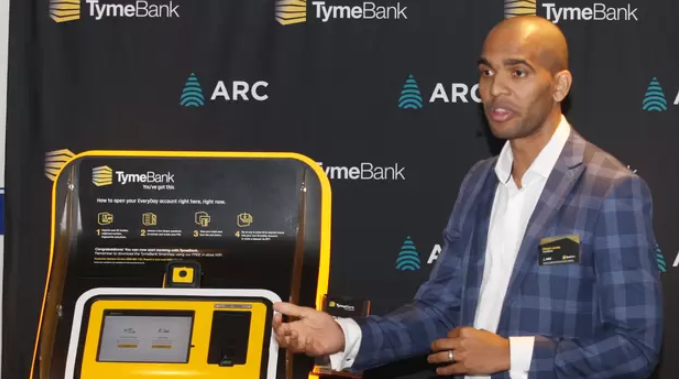
TymeBank Secures $9.5 Million in Funding, Eyes Expansion into Southeast Asia

0

TymeBank, an exclusively digital bank based in South Africa, that disproportionately serves low-income rural customers, has secured $9.5 million (ZAR 169 million) in funding as it set to expand its footprint into Southeast Asia.

The funding round was led by African Rainbow Capital (ARC), a broad-based black-controlled investment company, strengthening its position as a formidable player in the global fintech landscape. ARC, led by billionaire Patrice Motsepe, made this investment at a pivotal moment for TymeBank, which reached profitability in December 2023.

In a statement, ARC highlighted the bank’s strong growth trajectory, with activity rates and deposit growth surpassing expectations. As the fastest-growing digital bank in South Africa, TymeBank’s success has positioned it as a standout player not only in Africa but also in emerging international markets.

Tyme Global, the bank’s Singapore-based holding company, is spearheading the international expansion. In the Philippines, TymeBank’s venture, GoTyme, has already gained significant traction, acquiring 3.58 million customers since its launch in November 2022. GoTyme is on track to reach profitability by late 2025 and serves as a springboard for TymeBank’s planned entry into Indonesia by the end of 2024.

The bank’s international expansion is bolstered by a partnership with the influential Gokongwei family in the Philippines, providing key market entry points in industries such as telecommunications and food manufacturing.

Despite its global ambitions, TymeBank remains focused on its dominance in South Africa, where it continues to support over 50,000 small and medium-sized enterprises (SMEs) through its lending products. Over the year to the end of June, TymeBank deposits have increased by 59% to R6.5bn and merchant credit advances have risen steadily to about R1.8bn. Also, it has leveraged its extensive retail partnerships with Pick n Pay, Boxer, and The Foschini Group (TFG) to create the largest cash-in and cash-out network in the country.

Arguably the fastest-growing bank in South Africa, it expects to hit the 10 million customer mark in the next quarter, having already reached 9.5 million customers by the end of June. Over the year to the end of June, TymeBank deposits increased by 59% to R6.5-billion and merchant credit advances rose steadily to about R1.8-billion.

Management noted that the operational leverage provided by technology was clear net operating income tripled year-on-year while costs increased by 10%. In December 2023, the bank reached break-even and sustained profitability is expected in the coming months.

Looking ahead, TymeBank is eyeing a $150 million Series D funding round as it moves closer to achieving unicorn status. The CEO Coenraad Jonker has also revealed plans for a potential dual public listing on the New York Stock Exchange (NYSE) and Johannesburg Stock Exchange (JSE) by 2028, aiming to secure additional capital and global recognition.

For now, the bank’s focus remains on scaling operations in Southeast Asia, where the demand for digital banking is rapidly increasing, driven by the shift toward cashless transactions and a broader push for financial inclusion. Notably, it’s strategic focus on operational efficiency demonstrated by the tripling of net operating income despite a modest rise in costs has laid the groundwork for sustained profitability.

Elizabeth Warren calls for 75BPS Rate Cut as odds shift on 50BPS Cut

0

In the dynamic world of finance, the debate over interest rate cuts is a critical one, with significant implications for the economy. Recently, Senator Elizabeth Warren, alongside Senators Sheldon Whitehouse and John Hickenlooper, has advocated for a substantial 75 basis points (BPS) cut in federal interest rates. This bold move is suggested as a means to mitigate the risk of economic downturn and to address the high-interest rates that are believed to be exacerbating housing costs and potentially hindering economic growth.

The call for a 75BPS cut comes at a time when the Federal Reserve is expected to make a decision on interest rates, with the market showing a shift in favor of a more conservative 50BPS cut. BlackRock, the world’s leading asset manager, has expressed expectations for smaller cuts, suggesting that the market may be overestimating the likelihood of significant rate reductions. BlackRock’s stance is based on the resilience of the economy and the persistent nature of inflation, which may not subside as much as the bond market anticipates.

BlackRock’s analysis indicates that the probability of a significant 50-basis-point reduction by the Federal Reserve is lower than previously thought. This perspective aligns with the broader sentiment that the Federal Reserve may not be as aggressive in its rate-cutting strategy as some investors expect. Such a stance by BlackRock could influence market dynamics, given the firm’s substantial role in the financial sector.

The implications of BlackRock’s expectations are multifaceted. For the cryptocurrency market, which often reacts sensitively to interest rate adjustments, BlackRock’s forecast could signal a period of stability or a recalibration of investment strategies. Traditional markets may also interpret this as a sign of a more cautious approach by the Federal Reserve towards easing monetary policy, potentially affecting investment portfolios and future market movements.

As the date of the next Federal Open Market Committee (FOMC) meeting approaches, investors and analysts alike will be watching closely for any signs that align with BlackRock’s predictions. The outcome of the meeting could have significant repercussions for various sectors, including precious metals, which have seen prices soar amidst the anticipation of rate cuts.

BlackRock’s insights are a valuable barometer for the financial community, providing a measured perspective amidst a sea of market speculations. As the situation unfolds, it will be interesting to observe how BlackRock’s expectations compare with the actual decisions made by the Federal Reserve and the subsequent ripple effects across global markets.

The Federal Reserve’s decision on interest rates is a balancing act between stimulating economic growth and controlling inflation. A rate cut can encourage borrowing and investment but also runs the risk of overheating the economy and causing inflation to spike. The senators’ push for a 75BPS cut is a proactive measure to prevent a potential economic crisis, emphasizing the need for swift action to support the labor market and overall economic health.

As the Federal Reserve approaches its pivotal meeting, the contrasting views of policymakers and financial institutions like BlackRock highlight the complexities of monetary policy decisions. The outcome of this debate will have far-reaching consequences, not only for the United States but for the global economy as well. Investors, policymakers, and the public alike await with bated breath to see the direction the Federal Reserve will take in this critical juncture of economic policymaking.

Seeking Knowledge in Times of Economic Hardships

0

The current economic landscape in Nigeria is marked by foreign exchange volatility, fuel crises, and rising inflation, which have placed immense financial pressure on individuals, families, and businesses.  Steering economic challenges requires more than resilience; it necessitates informed decision-making, resourcefulness, and a proactive approach to financial literacy. In times like these, knowledge is not just power—it is survival. In this piece, our analyst explores how understanding economic choices, accessing resources, enhancing entrepreneurial skills, and building emergency preparedness can equip individuals to thrive despite economic hardships.

Understanding Economic Choices: Making Informed Decisions

In a volatile economy, understanding the basic principles of economics can make a significant difference in personal financial outcomes. Financial literacy equips individuals with the knowledge to make informed decisions about spending, saving, and investing. During economic downturns, this understanding becomes crucial as it enables people to navigate financial challenges more effectively, prioritizing needs over wants and planning for the future.

Economic literacy involves grasping concepts such as inflation, interest rates, and the impact of government policies on personal finances. For example, knowing how inflation erodes purchasing power can influence decisions on saving in assets that preserve value, such as foreign currency accounts or inflation-indexed bonds. Understanding the effects of currency depreciation can also guide decisions on investments and expenditures, encouraging individuals to seek stable returns in uncertain times.

Accessing Resources: The Link Between Financial Knowledge and Well-being

Research indicates that acquiring financial knowledge can lead to improved mental health and reduced stress—two factors that are especially vital during tough economic times. Financial literacy empowers individuals to understand the resources available to them, such as financial advisory services, budgeting tools, and community support systems. Access to reliable information can demystify complex economic concepts, enabling people to make better financial decisions. Moreover, individuals who seek financial advice often report a better quality of life and enhanced coping mechanisms. They are more likely to engage in proactive financial planning, such as creating budgets, managing debts, and exploring income diversification opportunities. This proactive approach reduces the feeling of helplessness that often accompanies economic hardships, fostering a sense of control and security.

Entrepreneurial Knowledge: A Lifeline for Small Business Owners

For small business owners, financial knowledge is not just beneficial—it is essential for survival. Entrepreneurs with a solid understanding of financial management are better equipped to navigate economic difficulties. This knowledge enables them to identify and leverage tools, resources, and opportunities that can sustain their businesses in tough times.

Key aspects of financial literacy for entrepreneurs include cash flow management, pricing strategies, cost-cutting measures, and investment decisions. Understanding how to maintain liquidity, negotiate better terms with suppliers, and adjust business models in response to market changes can make the difference between thriving and closing shop. Additionally, staying informed about government policies, grants, and low-interest loans can provide critical support during downturns. Entrepreneurs who invest in continuous learning—whether through online courses, mentorship, or networking—are more adaptable and resilient. They can pivot more effectively, finding innovative ways to meet customer needs and maintain revenue streams even when traditional business models are under strain.

Emergency Preparedness: Building Financial Safety Nets

One of the most valuable lessons in financial literacy is the importance of emergency preparedness. Building emergency funds, honing budgeting skills, and planning for unforeseen expenses provide a critical safety net during economic challenges. In Nigeria, where economic volatility is a recurring issue, having a financial cushion can be the difference between stability and crisis. Emergency preparedness involves setting aside funds equivalent to three to six months of living expenses, which can cover essentials during periods of income disruption or unexpected costs. It also includes understanding and utilizing insurance products that protect against health emergencies, property damage, or loss of income. Budgeting skills allow individuals to track their spending, cut unnecessary expenses, and redirect resources towards savings and debt repayment, creating a more secure financial foundation.

In addition to personal finance management, community-based solutions such as cooperatives, savings groups, and microfinance institutions can offer support systems that enhance individual and collective resilience. These networks provide not only financial assistance but also a sense of solidarity and shared knowledge, which can be particularly reassuring during uncertain times.

The Long-Hours Working Bankers and The Rest of the Workforce

1

Lazard CEO Peter Orszag said that Wall Street bankers prefer grueling 80-hour workweeks to the boredom of a 9-5 job during an appearance on The David Rubenstein Show on Bloomberg. The bank boss said Lazard specifically looks for employees who prefer that working style, despite growing concerns over the wellbeing of workers in the industry’- Fortune

Good People, bankers work long hours, and that is the norm. If you cannot take it, maybe do not go there. As a junior banker in Lagos, I was putting in more than 80 hours per week – and I enjoyed it. You leave home at 5am to be on time to get the “system” in shape from 6am, on Mondays. The HP 9000 server series could take a really long time for everything to be ready. Then, you move to Oracle, Flexcube and all the UNIX commands, to bring services up. 

Even though you began at 6am, if you try to leave before 10pm, it would be seen that you were leaving early! That was life in the IT Group and everyone understood that was the game plan.

But you know what? When the pay came, it was blissful, and because of that, no one complained. My allowance for working night shifts in a week was more than what some old generation banks in Lagos were paying entry level staff for a month! It was a privilege to be accepted into that group even though you knew long hours were part of the game. 

Sure, I am not saying that work-life balance is bad; I am saying “NO ONE SHOULD LEGISLATE” how people work. Yes, as a junior banker, work was life, but it was planned for a season. I did it when I needed to do it.

The world should focus on those who work like that for life. Yes, people keep multiple jobs in America, and many work longer hours as guards in Nigeria, and can hardly pay their bills. So, instead of worrying about extremely overpaid bankers for working long hours, the focus should be helping those who work long hours with nothing to show for at the end of the month.