DD
MM
YYYY

PAGES

DD
MM
YYYY

spot_img

PAGES

Home Blog Page 2884

Deglobalization and The Circling of China: Lessons for Africa

0

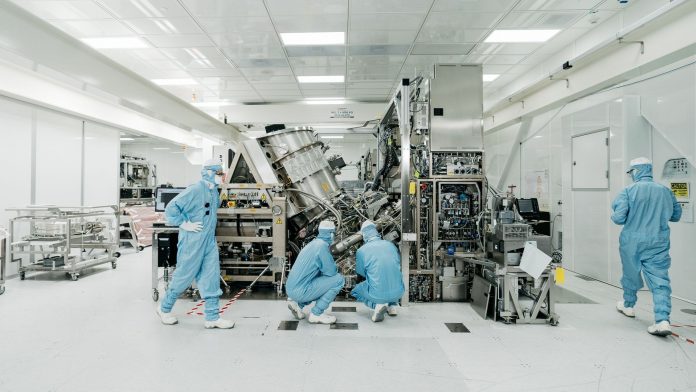
The United States and Europe are circling China with two of the most economically lethal tools of the 21st century: chip CAD design tools and chip machines. For the first, Cadence, the industry-leading maker, has cut-off selling software to China. Cadence controls more than 90% of the market when it comes to making advanced ASIC (application specific integrated circuits) and high-end processors. In the second part, you have the world’s leader on making advanced (extreme ultraviolet) lithography machines;  ASML is unrivaled and it is the global leader.

Yes, for the most advanced ASML machines, China has been cut-off: “The tightening grip of export controls on China’s semiconductor industry just got tighter, as the Netherlands restricted Dutch chip tool giant ASML Holding from servicing some of its most advanced machines in China.”

Good People, Africa needs to get the message: globalization is an illusion. It works when you are benefitting. But when you are losing, the message changes. Europe which colonized and destroyed empires, and which over decades, has been preaching globalization suddenly is afraid of one. Why? If China is part of this game, global trading is bad.

But it is also a message to China: if you have 1.3 billion people, if you empower them to deepen domestic consumption, you may not really have to deal with this 21st century evolving de-globalization. It is the export-first strategy that is bringing this asymmetric friction to you. (Who is this village boy telling China what to do? Allow me, I am a teacher and that is what we do.)

For Nigeria, my message remains that Nigerian ports are porous. I do not believe in uncontrolled open markets in the ways we run them in the country. And that is why anytime the Nigerian customs service has broken revenue records, I feel bad, because that is an indication that Nigeria is deindustrializing. Nigeria needs to learn from Europe where it is restricting the importation of electric vehicles and many things, because China has better comparative advantages to make those, and Europe does not want to lose from the inside.

Can Rexas Finance (RXS) Enter Top 20 Cryptos by Q1, 2025? Why The Cardano and XRP Rival Has Gone Parabolic

0

In the realm of cryptocurrency, everyone’s talking about Rexas Finance (RXS), and there are valid reasons for that. The target RWA (real-world assets) tokenization blockchain platform which is relatively new in the market, has already seen its value and the number of investors rising exponentially. Many are predicting the possible entering of Rexas Finance into the top 20 coins market cap by Q1 2025. For some within the industry, they wonder if such future predictions are possible given that Rexas sees potential in overtaking ADA Cardano and XRP Ripple. In this article, we will understand the reasons why Rexas Finance has gone parabolic and why it would most likely get included within the inside layer of 20 cryptos within the subsequent year. 

Parabolic Increase in the RWA Tokenization Sector

The reason Rexas Finance gained massive traction in a short period can be attested to its approach to real-world asset tokenization. Rexas Finance aims to make it possible to tokenize physical assets like real estate, commodities, IP, and artworks on the blockchain which opens huge untapped markets projected to be in trillions of dollars. In general, fragmentation, conversion, and peculiarly endorsing one or series of assets is called Tokenization. Western investors have been especially interested in those possibilities because they allow them to enhance standard finance using blockchain. Taking into consideration global real estate worth over $379.7 Trillion and commodities approximated at $121.2 Trillion, Rexas Finance provides a connection to one of the most profitable segments of markets. However, the practice of asset tokenization itself is still in its early stages but is believed that it will register tremendous growth as different forms of economic sectors embrace the use of the blockchain for the management of assets. And since Rexas Finance is one of such leaders in this niche, it will be difficult for the company to miss out on opportunities offered by this growth.

Strong Presale Performance and Community Support

The presale performance of Rexas Finance can only be described as historic. At the end of the first stage of the presale, in less than 72 hours, a sum of $200,000 was raised during the presale, confirming the existence of a good number of investors ready to put in their money. It helped create a lot of excitement within the project during the earlier phases and thus fast expansion of its community, ecosystem, etc. The strong presale performance indicates the direction for growth and it is clear that Rexas Finance is going to be highly competitive in the blockchain space in the years to come. The initial investors have already reaped the reward of the upward trend in this project. The value of RXS tokens has recorded a steeper rise. It is safe to say that with all the excitement surrounding the project, the further presale rounds and the upcoming listing on the major exchanges lead to a far greater increase in the demand for RXS. 

Technological Advancement with Respect to Cardano and XRP

Both Cardano (ADA) and XRP (Ripple) are among the most popular cryptocurrencies, Rexas Finance is proving to be a better asset where its use is needed in the real world. Here’s why Rexas Finance may have such an advantage over the aforementioned:

  • Scalability and Speed: Despite its consistent and conservative development methods, Cardano has struggled in the achievement of deploying smart contracts and expanding the ecosystem. It provides higher scalability and integration with proven EVM-compatible blockchains. Transaction costs are cheaper and the transactions themselves are processed faster as well rendering most products advantageous to the developers and users.
  • Real-World Direction: Although a great deal of effort has been made by XRP to capture the cross-border payments space, Rexas Finance underscores an application of real-world asset tokenization that is wider in scope. Real estate, commodities, and intellectual property can all get easier to film or popularize than XRP’s focus on international remittances and financial institutions.
  • User-Dominated System: Thanks to the ease of use of Rexas Finance’s Token Builder, anyone, even those with no programmer skills can create tokens for real-world assets. The token creation process becomes easier and encourages more people to participate. In addition, the Rexas Launchpad helps new projects to collect funds as well.

Rexas Finance appears to be highly competitive with the likes of Cardano and XRP, thanks to a winning combination of scalability, ease of use, together with practical value. With more and more sectors venturing into the use of blockchain technology in managing assets, Rexas Finance’s platform may be what most of these institutions would want, making the number of RXS tokens in demand increase.

Conclusion: Rexas Finance Is Strong Enough to Beat its Competitors and Become One Of The Top 20 Cryptos by 2025

Currently focused on the tokenization of real-world assets, impressive pre-sale results, and strong technology, Rexas Finance is quickly gaining the status of one of the leaders of the crypto market. The other disparity is also worth noting as the institutional investors are showing ever-growing interest in this project making it more promising with exponential growth. Even though Cardinal and XRP are more known, Rexas Finance is much more appealing with its cutting-edge platform and use cases which may displace these two players. The way the project has been developing, one would not be surprised to see RXS in the Top 20 cryptocurrencies by Q1 2025.


For more information about Rexas Finance (RXS) visit the links below:

Website: https://rexas.com

Whitepaper: https://rexas.com/rexas-whitepaper.pdf

Twitter/X: https://x.com/rexasfinance

 Telegram: https://t.me/rexasfinance

Bullish Solana Memecoins That Can 100x Your Portfolio

0

As crypto enthusiasts look for the perfect opportunity to multiply their investments, several opportunities seem to have emerged within the meme coin market. The main projects that have captured investors’ interest include Solana-based meme coins such as Dogwifhat (WIF), Book of Meme (BOME), Popcat (POPCAT), and Angry Pepe Fork (APORK). APORK stands out owing to its unique staking model.

As such, analysts believe that these four cryptos, led by Angry Pepe Fork, have what it takes to multiply investors’ portfolios by 100x in the coming months. Are these coins worth the investment? Let’s find out.

Angry Pepe Fork – A Solana-Based Meme Coin To Lookout For In 2024

Looking to make a name for itself, Angry Pepe Fork means business. The Angry Pepe Fork ecosystem is community-driven, meaning that members will drive its success. Moreover, through its conquer-to-earn model, members can earn APORK tokens and additional rewards by participating in raids, completing quests, and engaging in community events.

Additionally, the Angry Pepe Fork staking model allows APORK buyers to stake their tokens immediately after they acquire them. This means you will not have to wait for the presale to end. Moreover, Angry Pepe Fork staking also offers significant APYs through huge shared rewards pools, meaning that for those buyers who get in early will get bigger staking rewards.

As a Solana-based meme coin like Dogwifhat, Book of Meme, and Popcat, Angry Pepe Fork is here to set the pace with its limited supply of just 1.9B tokens. This approach will ensure long-term value appreciation and scarcity, as the coin is already enjoying a 78% surge from its initial price of $0.014 to $0.025.

Dogwifhat (WIF) Price Prediction

Dogwifhat (WIF) is quickly becoming a major player within the meme coin space, with a market cap of around $1.5B. WIF’s success stems from its fun concept of a dog wearing a hat, which seems to have captured the community’s attention.

Additionally, Solana’s recovery has contributed to Dogwifhat’s price performance. Currently, the WIF price trades at around $1.50, representing a weekly surge of over 3%. If the Dogwifhat price continues with such a trend, it could reach its resistance levels of $2.04 and $2.40.

Moreover, Dogwifhat’s price prediction for 2024 suggests that it might rise to $2.90, with its recent Kraken Pro in Canada listing further increasing its accessibility after an initial listing in February. Additionally, positive market momentum, future upgrades, and developments could see Dogwifhat’s price hit new highs in the coming months.

Book Of Meme (BOME) Price Rebound Despite Pump.fun Warning

After a long period of consolidation, Book Of Meme (BOME) seems to have triggered a healthy rebound, reflecting an over 6.6% surge in the past week. With solid support at around $0.0060, Book Of Meme’s price might soon hit its target of $0.012.

Having recorded a previous surge of 360%, analysts seem optimistic about Book of Meme’s price performance. Moreover, the market sentiment surrounding the coin remains largely bullish, despite Pump.fun, warning to U.S users.

The platform recently issued a public service announcement, warning sensitive Americans not to visit the site in the next 48 hours. This alert hints at potential regulatory scrutiny that might impact US user access. Among the well-known meme coins active in Pump.fun are Dogwifhat and Book Of Meme. However, the news does not seem to have affected any of these coins as the Book Of Meme price prediction for 2024 continues to surge.

Popcat (POPCAT): Making Waves In The Memecoin Sphere

Popcat (POPCAT), a new entrant into the meme coin space, has been making headlines owing to its impressive performance. Popcat and other meme coins have been leading a potential breakout from the recent meme coin dip. This recent uptick suggests that Popcat coin isn’t just a flash in the pan but also a series contender within the meme coin market.

Trading around the $0.56 margin, which represents a 3,300% yearly surge, Popcat’s price performance continues to benefit from increased futures trading support, including Binance. In August, Binance launched perpetual contracts for the coin, boosting the POPCAT price.

OKX Later followed, adding Popcat futures while running a trading contest offering rewards of up to $100. This wave of future trading support and positive sentiment seems to have given Popcat a significant boost while highlighting the volatile yet exciting nature of the crypto market.

Will APORK, WIF, BOME, and POPCAT Achieve a 100x Gain in the Coming Months?

With the meme coin wave closing in, these coins, led by Angry Pepe Fork, are certainly set to undergo a significant surge. Angry Pepe Fork’s unique features have already set it apart from other hyped coins, and investors are already acknowledging its effect on the market. Investing in these coins now could bring huge fortunes to your portfolio.

Visit the Angry Pepe Fork Presale:


Website: https://angrypepefork.com/

Telegram: https://t.me/AngryPepeFork

Socials: https://x.com/AngryPorkCoin

Fresh Blow to Beijing: Netherlands Restrict Dutch Chip Tool Giant, ASML Holding, From Servicing Machines in China

0

The tightening grip of export controls on China’s semiconductor industry just got tighter, as the Netherlands restricted Dutch chip tool giant ASML Holding from servicing some of its most advanced machines in China, SCMP reports, citing industry insiders.

This means mainland semiconductor factories are staring at a potentially significant production slowdown. This development compounds the challenges China already faces from existing U.S. restrictions and could represent a major setback to its technological advancement in a sector critical to national growth.

Earlier this month, Dutch foreign trade and development minister Reinette Klever announced new export controls, which require ASML to apply for licenses to sell and service its 1970i and 1980i immersion deep ultraviolet (DUV) lithography machines to Chinese customers. These machines, known for their versatility in covering various manufacturing nodes, are a vital workhorse in China’s semiconductor factories. Now, the ability to maintain and repair these machines, critical to keeping production yields high, could be disrupted.

This shift comes as part of a broader alignment with U.S. trade restrictions that took effect in November last year, aimed at limiting China’s access to critical technologies over national security concerns. Washington had already placed restrictions on the same equipment, and The Hague’s decision solidified the Western alliance’s strategy to curb China’s semiconductor industry.

Unsurprisingly, China’s commerce ministry has voiced strong objections to this latest move, viewing it as a targeted attempt to stifle its tech growth.

ASML, which enjoys a near-monopoly in the world of advanced chip-making tools, stated that the rule change is “technical” and won’t affect its financial outlook for this year. However, the more immediate concern isn’t ASML’s revenue, but the potentially crippling effect on Chinese foundries that rely heavily on timely maintenance and updates to keep their production lines humming.

According to industry insiders familiar with ASML’s operations, losing access to service engineers and spare parts for these machines could have enormous short-term consequences. Maintenance services, which typically require 24/7 availability to resolve machine failures, are vital to preventing production bottlenecks.

For China, the loss of service could mean delays, inefficiencies, and eventually, a dip in chip output—a blow to its semiconductor ambitions.

ASML has a long history in China, entering the market in 1988 and installing more than 1,000 machines, including lithography tools and inspection systems. Yet, the number of those machines that are now subject to Dutch export controls remains unclear. ASML has said little about how deeply the new restrictions will affect its operations, but industry professionals agree that the real struggle comes not from maintenance alone but from the lack of new advanced lithography machines altogether.

To be clear, ASML is already barred from shipping its most cutting-edge EUV (extreme ultraviolet) machines to China—equipment that is essential for producing chips smaller than 7 nanometers, a threshold crucial for the most advanced applications in everything from AI to mobile processors. Now, the new restrictions also include some immersion DUV systems, such as the 1970i and 1980i models, further choking off China’s access to high-end chip manufacturing technology.

For China, the loss is not just about repairing machines; it’s about the future of its tech sector. Semiconductor factories rely on these machines to compete globally, and without access to the latest equipment, they risk falling behind. It’s not just a hit to one sector, but a ripple that will affect everything from AI development to defense and consumer electronics.

Moreover, the timing could hardly be worse. Mainland China is ASML’s second-largest market by revenue after Taiwan, and in 2023, it accounted for €2.35 billion (US$2.5 billion) in sales—almost half of ASML’s global system sales for the second quarter. But due to a significant backlog, ASML has only been able to fill 50% of its orders from China, exacerbating the country’s existing supply shortages.

The restrictions have left China scrambling to find alternatives, but the road to them is bumpy. Even though ASML’s older-generation dry DUV systems, which use air instead of water for printing circuits, remain unrestricted for now, they are far less efficient for producing the most advanced chips. And, according to Paul Van Gerven, editor at Dutch tech magazine Bits&Chips, the U.S. could introduce further sanctions if the Dutch authorities begin to waver. The race to find loopholes in these restrictions could soon close off entirely.

In the broader geopolitical context, the move is seen as part of a Western effort to limit China’s technological rise, particularly in areas where it could pose a competitive or security threat. The Dutch government’s decision aligns tightly with U.S. policy, and both nations appear committed to maintaining these restrictions despite pushback from Beijing. The fear, from the West’s perspective, is that allowing China unrestricted access to advanced chip-making tools would give the nation an unassailable advantage in AI, military technology, and other high-stakes sectors.

The final piece of this puzzle is ASML itself, which finds itself walking a tightrope between massive financial interests in China and political pressure from Western governments. While it has avoided discussing details about servicing restricted machines in China, ASML’s CFO Roger Dassen has said the company still has “eyes on the tools” in Chinese fabrication plants. But for how long that will remain the case, given the escalating restrictions, is anyone’s guess.

Analysts believe that this could be one of the most significant setbacks to China’s semiconductor industry to date. Losing access to ASML’s advanced machines, maintenance services, and spare parts at a time when the country is trying to reduce its reliance on foreign technology, could slow its tech advancement by years.

Olaf Scholz Rules Out Vote of Confidence in Bundestag in Key Interview

0

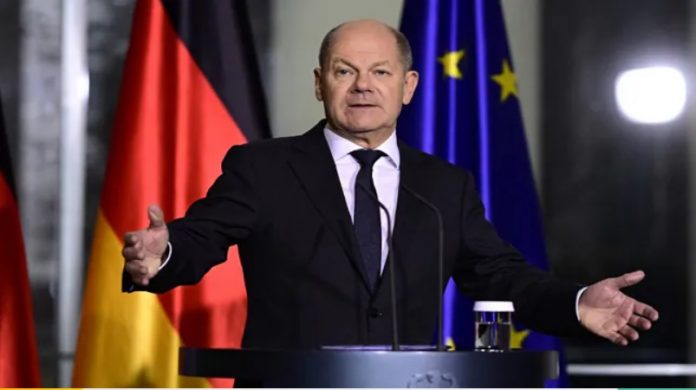
In a significant political development, German Chancellor Olaf Scholz has announced that he will not be seeking a vote of confidence in the Bundestag ahead of next year’s elections. This decision comes amidst a complex political climate in Germany, where the fragmentation of the political landscape has posed challenges to forming stable governments at both state and federal levels.

Chancellor Scholz made this announcement during his annual summer interview with the German public broadcaster ZDF. He emphasized that his coalition government retains a majority in the lower house and remains committed to fulfilling its duties. This move is seen as a response to the recent polling trends and electoral setbacks faced by the three parties constituting the current government coalition.

The chancellor’s stance indicates a strategic approach to governance in the lead-up to the parliamentary elections. By forgoing the vote of confidence, Scholz appears to be signaling confidence in the existing government’s mandate and stability. This decision also suggests a focus on continuity and the completion of the government’s agenda, rather than engaging in what could be a politically risky maneuver.

Volkswagen chief executive says situation ‘alarming,’ cuts needed

The automotive industry is facing a significant shift as Volkswagen’s chief executive, Oliver Blume, has recently described the situation at the company’s core VW brand as “alarming.” The statement comes in the wake of proposed spending cuts and potential plant closures, sparking concern among employees and industry observers alike.

Blume’s comments highlight the challenges that traditional automakers are facing in an evolving market. With a decrease in vehicle purchases in Europe and new competitors from Asia entering the market, Volkswagen is considering radical changes to remain competitive. The company’s commitment to its home country remains strong, with Blume emphasizing the importance of Germany as a location for Volkswagen, a sentiment that resonates with many employees whose families have long-standing ties with the company.

The economic pressures are not unique to Volkswagen; they reflect broader trends affecting the European auto industry. As Blume puts it, “The pie has gotten smaller, and we have more guests at the table.” This metaphor aptly captures the increased competition and the need for automakers to adapt swiftly to maintain their market position.

Despite the potential for job cuts and plant closures, which have not occurred in Germany since 1988, Volkswagen’s leadership is tasked with steering the company through these turbulent times. The proposed reforms aim to save the company significant sums, with figures suggesting a target of €4 billion in savings. The response from the workforce has been one of concern, as evidenced by the gathering of some 25,000 workers at Volkswagen’s headquarters in Wolfsburg to hear management’s defense of the planned cuts.

The situation at Volkswagen is a clear indicator of the broader economic challenges and the need for agility in corporate strategy. As the industry continues to navigate these difficulties, the decisions made by companies like Volkswagen will likely set a precedent for how traditional automakers can survive and thrive in a rapidly changing landscape.

A Polish Ice Hockey team issued an apology following the display of a banner with a Nazi reference during a game against the German team Eisbaren Berlin. The banner, which made a direct reference to the Auschwitz-Birkenau extermination camp located near the city, was unfurled by fans during the Champions Hockey League match.

The incident has sparked a wide array of reactions, highlighting the sensitive nature of historical remembrance and the responsibilities of sports teams to foster respect and unity. The Polish team’s prompt apology reflects an awareness of the gravity of the reference and a commitment to addressing the issue responsibly.

This occurrence serves as a reminder of the profound impact that historical events continue to have on present-day activities, including sports. It underscores the importance of remembrance and the need for continuous dialogue to ensure that such references do not undermine the spirit of sportsmanship and mutual respect that is essential to international sporting events.

The apology from the Polish team is a step towards acknowledging the emotional weight of the past and the role that sports can play in bridging historical divides. It is a call to action for teams and fans alike to be mindful of the symbols and messages they display, ensuring that sports remain a domain where individuals and nations can come together in a spirit of fair play and camaraderie.

Scholz’s remarks have sparked discussions on the future of German politics, particularly in light of the upcoming elections. The chancellor’s acknowledgment of the complexities in forming governments reflects a broader European trend of increasing political diversity and coalition-building challenges.

The implications of this decision will likely resonate throughout the political sphere in Germany, as parties and politicians prepare for the electoral contests ahead. It remains to be seen how this will affect the dynamics of the German political system, and the strategies adopted by various political entities.