DD
MM
YYYY

PAGES

DD
MM
YYYY

spot_img

PAGES

Home Blog Page 29

The $1.7B Presale Revolution: Here’s Why ZKP Eclipses SUI Price Today & Shiba Inu News Cycles

0

The 2026 crypto market is moving fast, and everyone is on the hunt for the next massive winner. While the SUI price today shows some solid strength, the latest Shiba Inu news suggests the famous meme coin is working hard just to stay level. Even though these big names are popular, their massive coin supplies often mean they move like tankers, slow and steady. For regular investors, that can make it tough to find those life-changing returns.

Is there a faster way to grow your portfolio? Many are turning to Zero Knowledge Proof (ZKP), a new project focusing on privacy and AI. It’s a fresh opportunity because it is just starting its journey with a fair launch model.

For anyone looking to move past the old market leaders, ZKP is emerging as the best crypto to buy. By participating in the daily auction, you’re getting an early seat in what looks like a major financial shift. 

ZKP: The Privacy Powerhouse for the AI Era

Zero Knowledge Proof (ZKP) isn’t just another token; it’s a massive four-layer infrastructure built to be the privacy backbone of the global AI economy. Unlike many projects that launch with nothing but a whitepaper, ZKP arrived with $100 million in technology already built and hardware ready to go. Because it uses advanced math to stop data leaks, analysts are calling it the best crypto to buy for people who value real utility.

Think of this as a “Genesis Moment” for digital privacy. It’s a rare chance to get into a potential Top-5 market leader while it’s still in its presale phase. Imagine if you could have grabbed Amazon for $1 in the 90s or Ethereum for pennies in 2015. Experts see the current auction as a massive opportunity to get into a billion-dollar project early.

The market is already paying attention, and capital is flowing into the daily auctions. Investors are rushing to get their share before the projected $1.7 billion raise is complete. With the network already live and Proof Pods shipping to users, ZKP is acting like a blue-chip company at an early-entry price. As the auction price moves up, early movers are positioning themselves for significant gains as ZKP scales toward its long-term potential.

SUI Price Today: Checking the Speed of a Layer-1 Leader

There is plenty of talk about the SUI price today, which is showing impressive resilience around the $1.81 mark. This blockchain is a speed demon, designed to handle thousands of transactions at once. This makes it a go-to for gaming and high-speed payment apps. After a 38% rally earlier this month, many are watching to see if it can break past the $2.00 resistance level.

Even with occasional dips, the SUI price today remains a strong performer. With institutional interest growing and new stablecoins joining the network, Sui’s momentum feels solid. Fans love its “Move” programming language, which keeps assets secure while maintaining lightning-fast speeds. It is an exciting time for this modern powerhouse as it builds out its ecosystem.

Shiba Inu News: Massive Burns and Tech Upgrades

The latest Shiba Inu news has the “ShibArmy” excited as the coin kicks off 2026 with some big moves. We recently saw a massive 10,000% spike in the burn rate, which removed millions of tokens from circulation in a single day. The goal is simple: create scarcity to help the price move as the network gets more use.

Beyond the hype, the most recent Shiba Inu news points to a serious tech shift. The team is adding advanced encryption and privacy features to help the coin evolve past its meme roots. While they are working hard to build value, the huge total supply still keeps the price hovering near $0.0000085. It’s a fascinating journey to see this giant try to transform into a utility-driven tech player.

Why ZKP is the Best Crypto to Buy Right Now

Looking at the SUI price today and the latest Shiba Inu news, it’s clear these coins are steady, but their days of 1000x growth might be behind them. Sui is a tech leader and Shiba Inu is focused on burns, but they are already multi-billion dollar assets. If you want the best crypto to buy for maximum potential, you have to look earlier in the cycle.

Zero Knowledge Proof (ZKP) offers that “early Amazon” feeling. With $100 million in pre-built tech and a fair auction, it’s a high-quality project at a starting price. It’s the best crypto to buy for anyone looking at the long-term future of AI and privacy.

The $1.7 billion presale is moving fast. This is a chance to secure a Top-5 caliber asset for pennies. With a $20 entry fee and a $5 million giveaway happening now, don’t miss your chance to join the ZKP presale auction!

Explore Zero Knowledge Proof:

Auction: https://auction.zkp.com/

Website: https://zkp.com/

X: https://x.com/ZKPofficial

Telegram: https://t.me/ZKPofficia

Missed Cardano & TRON’s Surge? Zero Knowledge Proof’s (ZKP) $20 Entry Could Generate 3000x Profits

0

The crypto market has been performing well lately, with established coins recording impressive figures. Cardano has been rising steadily, triggering fresh Cardano price prediction discussions about whether it can finally break major resistance. Meanwhile, TRON price has been staying strong, displaying resilience that’s grabbed attention from value-focused participants.

But here’s the truth: both projects have already surged substantially, meaning explosive early profits are finished. Where’s the genuine wealth-building potential? What if there was a next big crypto providing something neither can offer, life-changing returns with minimal downside?

Enter Zero Knowledge Proof (ZKP), a fully-operational Layer-1 blockchain that launched with $100 million already invested in infrastructure. The risk/reward calculation is incredible. Your downside? Buying proven technology with real assets. Your upside? Analysts forecast 3000x returns as ZKP captures the privacy market traditional blockchains can’t access.

Cardano Price Prediction: Consistent Growth but Limited Explosiveness

Cardano has been producing consistent performance lately, with its price currently at $0.39 showing gradual appreciation that’s maintaining long-term holders satisfied. The network continues advancing its infrastructure through regular upgrades, and the community stays one of the most committed in crypto.

Most Cardano price prediction frameworks suggest moderate profits ahead, with analysts estimating potential reaches to $0.42-$0.55 by mid-2026 as adoption rises and smart contract functionality expands.

However, here’s the uncomfortable reality: Cardano is already a top 10 cryptocurrency with a massive market cap exceeding $14 billion. When a project hits this size, the physics of growth fundamentally shift. While Cardano price prediction outlooks stay positive for steady appreciation, the days of explosive 100x profits are mathematically finished. ADA has matured into a stable blue-chip asset.

TRON Price: Strong but Already Found

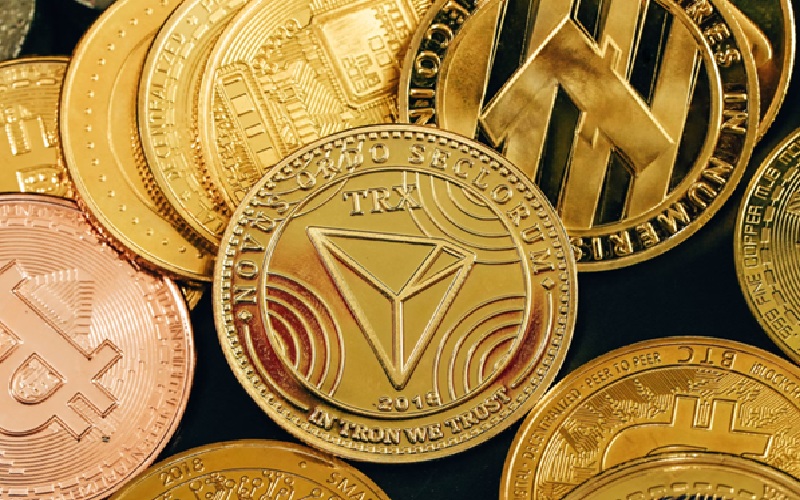
TRON has been maintaining its ground impressively, with the TRON price currently at $0.30 proving remarkable stability even during market pullbacks. The blockchain handles millions of transactions daily, particularly in stablecoin transfers, and has constructed a solid reputation for low fees and quick settlement times.

The network’s focus on content distribution and decentralized applications keeps it relevant, and its established user base delivers consistent demand. Analysts predict possible profits to $0.32-$0.35 in the near term.

But let’s be practical about the opportunity here. TRON sits comfortably in the top 15 cryptocurrencies with a market cap around $26 billion, meaning it’s already a well-known, fully-discovered asset. The TRON price has already witnessed its massive growth phase. Today, you’re examining a mature project where 10x profits would require adding another $234 billion in market value. TRON provides dependability and proven technology, but the window for transformational wealth creation shut long ago.

Zero Knowledge Proof: The Asymmetric Chance of 2026

Zero Knowledge Proof isn’t just another blockchain project promising the moon, it’s already constructed the rocket and filled it up. The team invested $100 million of their own capital before distributing a single coin, building a fully-functional four-layer network that addresses blockchain’s biggest challenge: the inability to keep transactions private. Banks, corporations, and healthcare providers can’t utilize public blockchains because they expose sensitive data. ZKP fixes this with advanced cryptography that verifies transactions without exposing details.

Here’s where it gets wild. Industry analysts are labeling this the next big crypto because of its unbelievable risk/reward setup. What you’re buying isn’t vaporware or promises, it’s ownership in a working supercomputer supported by real infrastructure and physical hardware.

The downside is almost zero. You’re securing proven technology with tangible assets already launched. The upside? Experts estimate returns ranging from 500x to an absolutely staggering 3000x as ZKP captures the enormous privacy market that Ethereum and Solana simply cannot reach.

This lopsided advantage is why the daily auctions are exploding with capital flows. Smart money understands that opportunities this favorable don’t remain available forever. As more participants rush in and the price climbs, this incredible asymmetry vanishes.

Right now, you’re examining minimal risk with life-altering reward potential, the definition of the next big crypto breakout everyone hunts for but rarely discovers.

Final Thoughts

Both Cardano price prediction frameworks and TRON price forecasts indicate modest, steady profits, perfect if you’re satisfied with 2x or 5x returns. These are established giants with proven track records, but their massive market caps mean the explosive growth phase is finished.

Zero Knowledge Proof is different. You’re obtaining a fully-built $100 million infrastructure at ground-floor pricing, with analysts forecasting 500x to 3000x returns as it captures the privacy market. The risk is minimal because the technology already exists. The reward is astronomical because the market hasn’t caught on yet.

This is the next big crypto with virtually no downside and unlimited upside. The daily auctions are climbing fast, meaning today’s price won’t exist tomorrow. You either move now while the asymmetry is in your favor, or observe from the sidelines.

Find Out More about Zero Knowledge Proof:

Auction: https://auction.zkp.com/

Website: https://zkp.com/

X: https://x.com/ZKPofficial

Telegram: https://t.me/ZKPofficial

Top 6 Most Bullish Crypto Coins Poised for Huge Price Surges Over the Next 6 Months

0

When the crypto market shakes a little, the smart frens don’t panic. They check who’s actually showing strength, not just hype. Below is how our six top picks are doing right now, and why they could still explode over the next six months.

Little Pepe (LILPEPE) — The Meme Coin on Steroids

Here’s where things get spicy. LILPEPE is still in presale, going for $0.0022 per token. Early investors who bought at an early stage are already sitting on roughly 120% gains. According to data from the presale, the project has raised approximately $27.7 million and sold 16,760,479,026 tokens to date. The sale is currently in Stage 13, which is over 97% filled.

If Little Pepe launches at $0.0030, that means a 36% upside from the current presale price, not bad for a memecoin?meets?community?driven project riding hype and actual planning.

Beyond the presale numbers, they’ve added legitimacy: audited by CertiK and listed on CoinMarketCap, a rare combo for a memecoin early-stage project.

There’s also a $777,000 giveaway going on, plus a “Mega Giveaway” for big presale buyers from Stage 12 to 17, offering over 15 ETH in prizes. That adds extra incentive for degens who want both hype and reward. LILPEPE’s community is already loud, active, and engaging, and that kind of “apes together strong” energy matters.

Hedera (HBAR)

HBAR has had a rough patch lately. According to recent reports, it “crashed 11.5%,” breaking a key support area as institutional selling ramped up.  As of early November 2025, HBAR was trading around $0.1949. What’s more, some price?prediction models see a rebound: one forecast ranges between $0.27 and $0.40 if bullish momentum returns.  For friends who believe in enterprise-grade chains rather than the next meme pump, HBAR remains a “steady but discounted” bet with potential upside if the macro winds shift.

Sui (SUI)

SUI is showing signs of life again. Live data indicates that each SUI token is currently valued at approximately $1.54, with solid trading volume and increasing activity. Earlier in 2025, some bullish swings sent SUI higher; however, over the past year, it has yet to return to its previous all-time high levels. If things pick up, ecosystem growth, more dApps, and broader adoption, many analysts see room for SUI to outperform slightly in the coming months.

Toncoin (TON)

Toncoin remains a modest but relatively stable bet. Recent market?watch data lists TON at about $1.63 per token. That kind of price stability could make TON a solid pick for frens who want less drama than the meme?coin crowd yet still want exposure to upside potential.

World Liberty Financial (WLFI)

WLFI is interesting, but risky. TWLFI is currently trading at around $0.16. The project has a big circulating supply and high volatility potential. If WLFI can deliver on its promised tokenomics and ecosystem moves, the payoff might be attractive.

Cronos (CRO)

CRO is quietly hovering at a low per?token price these days, with recent listings showing it around $0.108. It’s not glamorous, and the mainstream hype often overlooks it. But for Apes who want long?term plays tied to actual crypto infrastructure, CRO may deliver slow and steady gains if the broader crypto adoption curve rises.

What This Performance Spread Means for You

If you’re all about preservation with a chance of growth, coins like TON, CRO, and maybe SUI offer modest, lower?volatility exposure. HBAR, with its ETF backing and enterprise aspirations, falls into a middle-of-the-road category: higher risk than blue chips, but lower chaos than memecoins.

If you want to go full degen mode and ride hype, WLFI and especially LILPEPE offer the kind of asymmetric reward potential that could pay off big or tank hard.

Personally, if I were stacking bags now, I’d split my capital: take a small chunk to ride the LILPEPE presale (while it’s still cheap and stages remain open), a medium chunk in SUI or TON, and maybe a little in HBAR for long-term stability.


For more information about Little Pepe (LILPEPE) visit the links below:

Website: https://littlepepe.com

Whitepaper: https://littlepepe.com/whitepaper.pdf

Telegram: https://t.me/littlepepetoken

Twitter/X: https://x.com/littlepepetoken

 $777k Giveaway: https://littlepepe.com/777k-giveaway/

Tether Freezes $182M Tied to 5 Wallets on Tron Network

1

Tether, the issuer of the USDT stablecoin, has frozen approximately $182 million in USDT across five wallets on the Tron blockchain. This occurred on January 11, 2026, in what appears to be one of its largest single-day enforcement actions recently.

The affected wallets held balances ranging from roughly $12 million to $50 million each. Blockchain monitoring service Whale Alert flagged the freezes in real time, showing the addresses being blacklisted via Tether’s admin controls on the Tron network where a significant portion of USDT circulates—over $80 billion.

Tether confirmed the action was in response to a formal request from U.S. law enforcement likely involving agencies like the DOJ or FBI as part of an ongoing investigation. While specific details of the probe remain undisclosed, such freezes typically target suspected illicit activities, including money laundering, scams, sanctions evasion, or other criminal use of crypto.

Some reports speculate links to efforts bypassing U.S. sanctions in contexts like Venezuelan oil transactions or similar patterns seen with Iran but this is not officially confirmed. This aligns with Tether’s formal wallet-freezing policy introduced in late 2023, which allows blacklisting addresses to comply with regulations like the U.S. Treasury’s OFAC sanctions list.

Since 2023, Tether has frozen over $3.3 billion in USDT across thousands of addresses around 7,268 wallets blacklisted, per analytics firm AMLBot, with a substantial portion on Tron about $1.75 billion. This far exceeds competitors like Circle’s USDC, which has frozen around $109 million in the same period—highlighting Tether’s dominant market position— USDT holds ~60-64% of the stablecoin market, with total circulation over $180-187 billion.

The event underscores the centralized nature of stablecoins like USDT: issuers maintain admin keys to freeze tokens, enabling quick compliance but raising debates about censorship resistance and user control in crypto.

No immediate major market disruption was reported from this freeze, though it contributes to broader discussions on stablecoin oversight and regulatory tightening in 2026. Tether emphasizes these actions target only high-risk or illicit funds and do not impact ordinary users.

Tether’s freezing policy for USDT, its USD-pegged stablecoin allows the company to blacklist or freeze specific wallet addresses, rendering the USDT held in those addresses unable to be transferred, spent, or redeemed. This is a centralized control mechanism built into the smart contracts on supported blockchains especially prominent on Tron, where much USDT volume occurs.

Tether formalized a voluntary wallet-freezing framework in December 2023. This was primarily to comply with U.S. Treasury’s Office of Foreign Assets Control (OFAC) sanctions requirements, including automatically freezing wallets on the Specially Designated Nationals (SDN) list.

According to Tether’s terms available on their legal page, under sections like law enforcement requests, the company reserves the right to: Freeze addresses or share user information when ordered to do so by authorities e.g., court orders, law enforcement requests from agencies like the DOJ, FBI, Secret Service, IRS-CI, or international equivalents.

Do so voluntarily “if this appears reasonable and necessary” to Tether, such as in cases of suspected illicit activity, fraud, money laundering, terrorism financing, sanctions evasion, or other high-risk behaviors. Tether uses admin/privileged functions in the USDT smart contracts to add addresses to a blacklist. Once blacklisted:The tokens remain visible on-chain and part of the total supply.

Transfers from or to the address are blocked. Redemption for fiat is prevented. This applies across chains but has been most active on Tron due to its dominance in USDT circulation. Tether has emphasized that freezes target only high-risk or illicit funds and do not affect ordinary users. Key stats from recent reports and Tether announcements as of mid-2025 to early 2026: Over $3 billion some sources cite up to $3.3 billion in USDT frozen since 2023.

Thousands of wallets blacklisted around 7,268 per AMLBot analytics, with over 5,000–7,000 total reported in various updates. Collaboration with hundreds of law enforcement agencies e.g., over 310 agencies across 62 jurisdictions, including more than 2,750–2,800 coordinated with U.S. agencies alone.

This far outpaces competitors like Circle’s USDC around $109 million frozen in the same period, reflecting USDT’s larger market share ~60–65% of stablecoins. Examples of use cases include: Freezes tied to terrorism financing e.g., Gaza-based networks.

Sanctions violations like those in Russian exchange Garantex, or broader evasion efforts.Scams (pig butchering, tech support). Money laundering and drug trafficking investigations. Tether often reissues equivalent clean USDT to authorities after freezes in forfeiture cases, aiding recovery.

This policy highlights the centralized nature of fiat-pegged stablecoins like USDT—unlike truly decentralized assets, issuers hold keys/controls for compliance. Tether positions it as essential for fighting crime and maintaining regulatory goodwill, especially amid increasing scrutiny in 2025–2026.

Critics argue it undermines crypto’s censorship resistance and user sovereignty. The policy evolves with regulations, but the dual mandatory/voluntary approach has remained consistent since late 2023.

Trump to Cap Credit Card Interest Rates at 10%

0

President Donald Trump has called for a one-year cap on credit card interest rates at 10%, effective January 20, 2026—the one-year anniversary of his second inauguration.

He announced this on Truth Social on January 9/10, 2026 (depending on time zones), stating: “Please be informed that we will no longer let the American Public be ‘ripped off’ by Credit Card Companies that are charging Interest Rates of 20 to 30%, and even more, which festered unimpeded during the Sleepy Joe Biden Administration. AFFORDABILITY! Effective January 20, 2026, I, as President of the United States, am calling for a one year cap on Credit Card Interest Rates of 10%.”

This revives a pledge from his 2024 campaign, amid U.S. credit card debt exceeding $1.1 trillion and average interest rates hovering around 20-21% per Federal Reserve data.

Trump hasn’t specified how the cap would be enforced—whether via executive action, pressuring companies voluntarily, or legislation. Experts widely agree the president cannot unilaterally impose such a cap on private lenders without congressional approval, as usury/interest rate regulations typically require laws.

Similar bipartisan bills from Sens. Bernie Sanders and Josh Hawley for a longer-term 10% cap have stalled in Congress. The announcement caused immediate drops in financial stocks on January 12/13, 2026. Shares in Capital One, Synchrony, American Express, Visa, Mastercard, and others fell sharply— some 4-8%, reflecting investor concerns over lost interest revenue.

American Bankers Association, Electronic Payments Coalition warned it could reduce credit access, leading to account closures or limits—especially for lower-credit-score borrowers—and push people toward riskier alternatives like payday loans. Bill Ackman called it a “mistake” that might cancel millions of cards, though he supports the broader goal of lower rates.

Consumer advocates and some analyses suggest a 10% cap could save Americans tens to hundreds of billions in interest over time, easing burdens for those carrying balances about 60% of cardholders. It aligns with cross-aisle concerns about affordability, with support from figures like Sanders, AOC, and some Republicans.

This fits Trump’s focus on “affordability” issues, though his administration previously rolled back some Biden-era consumer protections on late fees. Critics note the irony given past deregulatory moves. As of now (mid-January 2026), this remains a proposal/call rather than enacted policy—no legislation has passed, and enforcement details are unclear.

It has sparked debate on balancing consumer relief with credit market risks. If you’re affected by high credit card rates, paying down balances aggressively or shopping for lower-APR options (balance transfers, etc.) remains practical advice in the meantime.

Payday loans are short-term, small-dollar loans typically $500 or less designed to be repaid by your next paycheck, often in 2–4 weeks. They are marketed as quick fixes for emergencies but come with significant risks that can worsen financial hardship rather than resolve it.

Payday loans often carry annual percentage rates (APRs) averaging around 391%, with many ranging from 300% to over 600% depending on the state. Fees are typically $15–$30 per $100 borrowed (e.g., a $15 fee on $100 for 2 weeks equates to ~390% APR). This dwarfs typical credit card rates (12–30%) or personal loans often under 36%.

In unregulated or loosely regulated states, rates can hit 662% or higher. Borrowers frequently can’t repay the full amount on due date, leading to “rollovers” — paying just the fee to extend the loan, adding new fees without reducing principal. Studies show many borrowers take out 10+ loans per year, with lenders earning most revenue from repeat customers stuck in this loop.

It can take months, average ~5 months for a $300 loan and cost hundreds extra in fees, turning a small advance into massive debt.
Lenders often require access to your bank account for automatic withdrawal. Failed attempts trigger multiple nonsufficient funds (NSF) or overdraft fees often $35+ each from your bank, piling on costs even if the lender doesn’t get paid.

Aggressive Debt Collection Practices

Defaulting leads to relentless calls, threats sometimes misleading about legal action, and pressure tactics. This can cause severe stress and, in extreme cases, lead to wage garnishment or lawsuits. While payday loans usually don’t report to major credit bureaus if repaid on time, defaults, collections, or charge-offs can appear and hurt your score significantly. Repeated use signals financial instability.

Unlike traditional loans, payday loans rarely help build credit history positively, offering no benefit for future borrowing. They disproportionately affect low-income individuals, those living paycheck-to-paycheck, and underserved communities, often exacerbating poverty rather than providing relief.

The Consumer Financial Protection Bureau (CFPB) and organizations like the Center for Responsible Lending highlight these issues, noting that payday lending business models rely on borrowers’ inability to repay quickly. Some states ban or cap rates at 36% APR inclusive of fees, making them unavailable or far less predatory there, but in others, they remain widely accessible.

If facing a cash shortfall, consider these lower-risk options first: Ask for extensions on bills (rent, utilities, etc.) or negotiate payment plans.
Use credit union payday alternative loans (PALs) — often capped at 28% APR, $200–$1,000, 1–6 month terms. Borrow from friends/family or use a 0% intro APR balance transfer card, if you have good credit.

Explore local nonprofits, community assistance programs, or earned wage access apps with caution, as some mimic payday risks. Build an emergency fund over time to avoid high-cost borrowing.

Payday loans should be a last resort — the short-term convenience rarely outweighs the long-term damage. If you’re already in a cycle, contact a nonprofit credit counselor or the CFPB for help.