DD
MM
YYYY

PAGES

DD
MM
YYYY

spot_img

PAGES

Home Blog Page 29

Former Google DeepMind Researcher Joins the Fray, Warns AI Could “Kill Us All”  

0

A former Google DeepMind researcher has warned that artificial intelligence could eventually “kill us all” and that the industry may be running out of time to prevent such an outcome, adding to a growing chorus of researchers raising alarms about the pace at which increasingly capable AI systems are being developed.

Bilal Chughtai, who worked on artificial general intelligence safety and alignment research at Google DeepMind, said Monday that he had resigned from the company because of concerns about the trajectory of AI development.

“I earnestly believe that AI has the potential to kill us all, and that we might be running out of time to avoid this outcome,” Chughtai wrote on X.

Chughtai worked as a research engineer at Google DeepMind and co-authored research papers during his time at the company. His LinkedIn profile indicates that he left the company in July 2026.

His warning follows a series of stark statements from researchers at some of the world’s leading AI companies, turning what was once largely an academic debate over long-term AI risks into a more public dispute over how quickly frontier systems should be developed and deployed.

Last week, former Anthropic researcher Jacob Coxon said he had resigned partly because people developing advanced AI “earnestly believe that it could kill us all by the end of the decade.”

Evan Hubinger, an Anthropic scientist who has worked on AI safety research, subsequently said Coxon’s characterization was accurate and estimated that there was a greater than 10% probability that AI could kill all humans within the next decade.

Those assessments are not predictions that AI will necessarily cause human extinction. Rather, they illustrate how some researchers working closest to frontier AI systems have come to assign meaningful probabilities to catastrophic outcomes, even while the timing and mechanisms remain highly uncertain.

AI Safety Moves From Research Concern to Industry Debate

Chughtai said a safe path for AI development remains possible, but argued that it will require cooperation between companies rather than an unrestricted race to build increasingly powerful systems.

“Navigating AI safely is possible, but it requires coordination to avoid this manic race between AI companies,” he wrote.

“We need to pace AI development to a speed that society can handle, where emerging risks can be addressed before extreme harm is realized,” he added.

The comments arrive as AI companies face a difficult competitive problem. The largest labs are investing enormous sums in computing infrastructure, talent and model development, creating strong incentives to release more capable systems before rivals do. A company that voluntarily slows development could fear losing customers, talent or technological advantage to competitors that continue moving ahead.

That dynamic is at the heart of the recent debate over whether frontier AI development should be deliberately slowed.

Anthropic CEO Dario Amodei also called for a slower pace of advanced AI development, explaining that companies and governments need more time to understand and manage emerging risks. His position received unusually broad support from rivals and other technology leaders, including OpenAI CEO Sam Altman and SpaceXAI’s Elon Musk.

The convergence is notable because the companies involved remain direct competitors in the race to build sophisticated AI systems. Agreement on the need for greater caution does not necessarily mean agreement over what constitutes a safe development pace, how safety should be measured or who should have authority to impose limits.

It has also opened a broader debate over “AI doomerism,” the term often used to describe warnings that sufficiently advanced AI could produce catastrophic or existential consequences.

Skeptics believe that such warnings can exaggerate uncertain future risks and potentially justify restrictions that protect established AI companies from competition. Supporters of stronger safeguards counter that the uncertainty itself is a reason to develop systems more cautiously, particularly if future models become capable of autonomous planning, self-improvement or other behaviors that researchers cannot reliably control.

Washington Takes a Different View

The warnings from AI researchers have also exposed a widening gap between parts of the technology industry and the Trump administration.

President Donald Trump has dismissed calls for greater AI regulation, describing the industry’s push for regulation as a “hoax.” His administration has emphasized the need for the United States to maintain its lead in AI development, particularly in competition with China.

Trump’s stance has created a fundamental policy tension. The United States wants its AI companies to move quickly enough to maintain technological and economic leadership, while some of the scientists developing those systems are increasingly arguing that speed itself could become a source of systemic risk.

Chughtai’s warning adds weight to that argument because it comes from someone who recently worked inside one of the world’s most prominent AI research organizations on the specific problem of making advanced systems safer and more aligned with human objectives.

His departure does not establish that AI is on a path toward human extinction, nor does his assessment provide a timetable for such an outcome. But taken alongside warnings from researchers at Anthropic and calls for slower development from Amodei, it shows how concerns once confined largely to AI safety circles are becoming increasingly difficult for the industry to keep at the margins.

The major concern now hinges largely on how AI companies can coordinate on safety without sacrificing the competitive incentives that are driving the technology forward. For researchers such as Chughtai, the danger is that those incentives could push development faster than safety research, regulation, and society’s ability to respond.

That is a considerably different proposition from arguing that AI development should stop. It is an argument that the speed of the race may itself become one of the risks that the industry needs to manage.
10-Year Treasury Yield Hits 2007 High as Oil Shock Deepens Inflation and Fed Risks

0

The benchmark U.S. 10-year Treasury yield climbed to its highest level since 2007 on Tuesday, extending a sell-off in government bonds as investors confronted the prospect of higher-for-longer interest rates and a worsening oil supply shock ahead of the Federal Reserve’s latest policy decision.

The 10-year yield rose 8 basis points to 5.041% as of 4:07 a.m. ET, after briefly breaking above 5% on Monday before retreating. The move puts the benchmark yield at a level not seen since before the global financial crisis and signals how quickly inflation and interest-rate expectations can overwhelm demand for U.S. government debt.

The 30-year Treasury yield, which is particularly sensitive to long-term inflation and geopolitical risks, climbed 7 basis points to 5.4%. The two-year yield, which more closely tracks expectations for Fed policy, rose about 5 basis points to 4.686%.

Bond prices move inversely to yields, meaning the rise represents a broad decline in the value of existing Treasurys.

The sell-off comes as the Federal Reserve begins a two-day policy meeting, with markets assigning more than a 92% probability to a 25-basis-point rate increase, according to the CME FedWatch tool. August inflation remained well above the central bank’s 2% target, leaving policymakers with less room to ease financial conditions even as economic risks build.

That tension is gaining attention because the latest threat to inflation is coming from oil.

“U.S. 10-year treasuries are highly sensitive to inflation expectations, and with inflation gauges still above the Fed’s target of 2%, we believe this tight correlation will likely persist for a while,” said Jonathan Liang, Standard Chartered’s chief investment officer of fixed income and foreign exchange.

The relationship between crude prices and Treasury yields has become unusually strong. The one-month rolling correlation between front-month West Texas Intermediate crude and the 10-year Treasury yield has risen to 0.96, according to BMO Capital Markets.

“Speaking simplistically, higher oil prices lead to higher inflation expectations and vice versa,” said Steve Sosnick, chief strategist at Interactive Brokers.

“Normally, the relationship isn’t as clean as it is now, but the geopolitical drivers behind the price of oil and global inflation are so prominent that the normally modest correlation has become much tighter,” he said.

“As long as oil prices remain firm and continue to drift higher, this will add pressure to interest rates,” Sosnick added.

Oil Shock Complicates the Fed’s Inflation Fight

Oil prices rose more than 2% on Tuesday after attacks on Saudi Arabian energy infrastructure disrupted the kingdom’s East-West pipeline, intensifying concerns about the availability of crude and the duration of the disruption.

Brent crude futures rose $2.50, or 2.37%, to $108.18 a barrel at 8:13 a.m. GMT, while U.S. West Texas Intermediate futures gained $2.46, or 2.43%, to $103.85.

The attacks have introduced another source of inflation pressure at precisely the moment when the bond market is already demanding greater compensation for holding long-term U.S. debt.

Iran-backed Houthi forces in Yemen launched fresh attacks on Saudi Arabia on Monday, while Gulf Arab states postponed planned discussions with Iran. The escalation has raised concerns that damage to energy infrastructure and transportation routes could take longer to repair.

“Fresh attacks by the Houthis targeting Saudi Arabia may be influencing oil market investors’ expectations about the severity and duration of the conflict,” said Hamad Hussain, senior climate and commodities economist at Capital Economics.

The Houthis said Monday that they had fired dozens of missiles and drones at a military airbase in Khamis Mushait in southern Saudi Arabia, targeting aircraft hangars, radar systems, runways and ammunition depots in retaliation for Saudi airstrikes in Yemen.

The attacks followed strikes on Friday that disrupted Saudi Arabia’s East-West pipeline, a crucial alternative route that allows the kingdom to transport oil to the Red Sea and bypass the Strait of Hormuz.

The pipeline is therefore more than a piece of infrastructure. Its disruption reduces Saudi Arabia’s ability to move crude without relying on a maritime chokepoint that has already become a major source of market anxiety.

The Strait of Hormuz previously carried about one-fifth of global oil supplies. Commodity vessel traffic through the strait fell to just four vessels on Monday from 10 the previous day, according to preliminary Kpler data.

Saudi Arabia could exhaust crude available for export within days if the East-West pipeline is not restored, according to buyers and traders. The disruption has threatened as much as 4% of global oil supply.

Goldman Sachs said the latest attack could be more severe and potentially threaten the remaining 2 million barrels per day of recent Yanbu exports. Repair estimates range from “very soon” to as long as eight weeks, according to the bank.

The duration of the disruption is becoming almost as important as the initial supply loss. A short-lived outage could produce a temporary price spike, while prolonged damage would force buyers to compete for a smaller pool of available crude and could feed higher energy costs into transportation, manufacturing and consumer prices.

Goldman Sachs said the attacks represented a meaningful escalation and increased the probability that Brent crude could rise above $120 a barrel. Its scenario assumes average Gulf oil production in 2027 remains 4 million barrels per day below pre-war levels.

Capital Economics’ Hussain warned that, without a demand adjustment or increased flows through the Strait of Hormuz, several weeks of East-West pipeline disruption could push Brent toward $130 a barrel.

That scenario would create a difficult environment for the Federal Reserve.

A conventional inflation shock caused by strong domestic demand can eventually be addressed through tighter monetary policy. An oil shock is different. Higher interest rates cannot produce more crude or reopen a damaged pipeline. Yet if energy prices lift headline inflation and begin feeding into broader price expectations, the Fed may still be forced to maintain or increase monetary restraint.

That helps explain why the Treasury market is reacting so sharply.

The rise in the two-year yield points to immediate concern over Fed policy, while the move in the 10- and 30-year maturities suggests investors are also demanding greater compensation for long-term inflation and fiscal risks.

A sustained oil shock could therefore produce an uncomfortable combination of higher inflation, higher Treasury yields and weaker economic growth. That would raise borrowing costs for households, companies and the U.S. government while simultaneously putting pressure on corporate valuations.

The significance of the 5% threshold in the 10-year yield extends beyond the bond market. Treasury yields serve as a reference point for mortgages, corporate borrowing, and the valuation of equities. As risk-free yields rise, investors generally require stronger earnings prospects to justify elevated stock-market valuations.

For markets already sensitive to inflation and monetary policy, another leg higher in Treasury yields could therefore broaden the pressure well beyond government bonds.

China provides a partial counterpoint to the supply concerns. Official data showed that Chinese oil throughput increased for a second consecutive month in August, supported by higher fuel exports after Beijing eased restrictions in mid-July.

But stronger Chinese refinery activity does not eliminate the broader supply risk. If disruptions persist across Gulf infrastructure and shipping routes, the market may have to absorb a prolonged reduction in available crude regardless of regional demand.

The immediate concern for investors is no longer about the Fed raising rates by 25 basis points. Markets are increasingly trying to determine how much additional inflation pressure the central bank will have to absorb if oil remains above $100 and moves toward $120 or higher.

A 5% 10-year yield was once viewed as an important psychological barrier. With the geopolitical shock now feeding directly into energy prices and inflation expectations, the more consequential issue is whether the yield can remain above that level. If it does, the Treasury market could be entering a more persistent repricing in which inflation, oil and monetary policy reinforce one another.

Analysts warn that this would make the Fed’s task harder and raise the cost of capital across the global economy at the same time.

Accenture to Pay $25 Million to Settle U.S. Probe Into DEI Practices

0

Accenture has agreed to pay $25 million to settle allegations by the U.S. government that the consulting firm considered race and sex in hiring and promotion decisions, adding to a series of corporate settlements tied to the Trump administration’s campaign against diversity, equity and inclusion (DEI) programs.

The settlement agreement, made public Monday and signed by the U.S. Department of Justice and Accenture, requires the IT consulting company to pay the United States $25 million, including civil penalties and interest calculated at 4% annually from Sept. 9, 2026.

The agreement resolves allegations that Accenture used race and sex as factors in employment decisions as it pursued demographic objectives. Accenture denied engaging in discrimination and said the settlement does not amount to an admission of liability.

“We have cooperated with the government’s review, and we are pleased to put this matter behind us to avoid the costs and resource demands of prolonged litigation,” an Accenture spokesperson said.

The settlement places Accenture among a growing group of major U.S. companies facing government scrutiny over workplace diversity policies since President Donald Trump returned to office and moved to dismantle DEI initiatives across the federal government and companies doing business with it.

The Trump administration has warned that DEI programs can undermine merit-based employment decisions and discriminate against white people and men. Trump has signed executive orders directing federal contractors and subcontractors to eliminate diversity-related practices.

Civil rights organizations, by contrast, believe that diversity programs can help address longstanding inequalities affecting women, ethnic minorities and LGBT people, and have criticized the administration’s actions as a rollback of social progress.

The policy shift has forced many U.S. companies to reconsider programs that had expanded significantly in recent years. Some have eliminated specific diversity targets, changed the language used in recruitment and promotion programs, or reduced the visibility of their DEI initiatives.

The financial consequences are also becoming more apparent as the Justice Department pursues companies over alleged violations.

Deloitte agreed in August to pay $21.5 million to resolve a Justice Department investigation into its diversity practices. IBM agreed to pay $17 million in April to settle a similar government probe.

Accenture’s $25 million settlement is larger than both agreements, making it one of the more significant corporate financial resolutions connected to the administration’s crackdown on workplace diversity policies.

The cases also reveal the changing compliance environment for companies that have spent years developing programs designed to increase representation among underrepresented groups.

For employers, the major issue is the distinction between setting diversity objectives and using protected characteristics directly in employment decisions. The Justice Department’s allegations against Accenture focused on the latter, claiming that race and sex were taken into account in hiring and promotion decisions to achieve demographic goals.

Accenture’s response has emphasized that it complied with applicable laws and that the agreement was reached without admitting wrongdoing.

The settlement allows the company to close the dispute without the costs and uncertainty of prolonged litigation, while the government gains a financial resolution that reinforces its broader position on DEI policies.

The developments also signal that the administration’s approach extends beyond federal agencies and universities. Large professional-services firms such as Accenture and Deloitte employ hundreds of thousands of workers and frequently serve government clients, making their employment practices particularly relevant to federal contracting rules.

But the settlements could further accelerate, for corporate America, the retreat from formal diversity targets and employment programs that explicitly reference race or sex. Companies that previously viewed DEI primarily through the lens of recruitment, workplace culture and investor expectations now have to assess those initiatives against a federal policy environment that treats certain practices as potential discrimination.

While Accenture’s agreement does not establish that the company violated the law, and the firm expressly denied discrimination, the $25 million payment demonstrates the growing financial and legal exposure surrounding corporate diversity practices under the Trump administration.

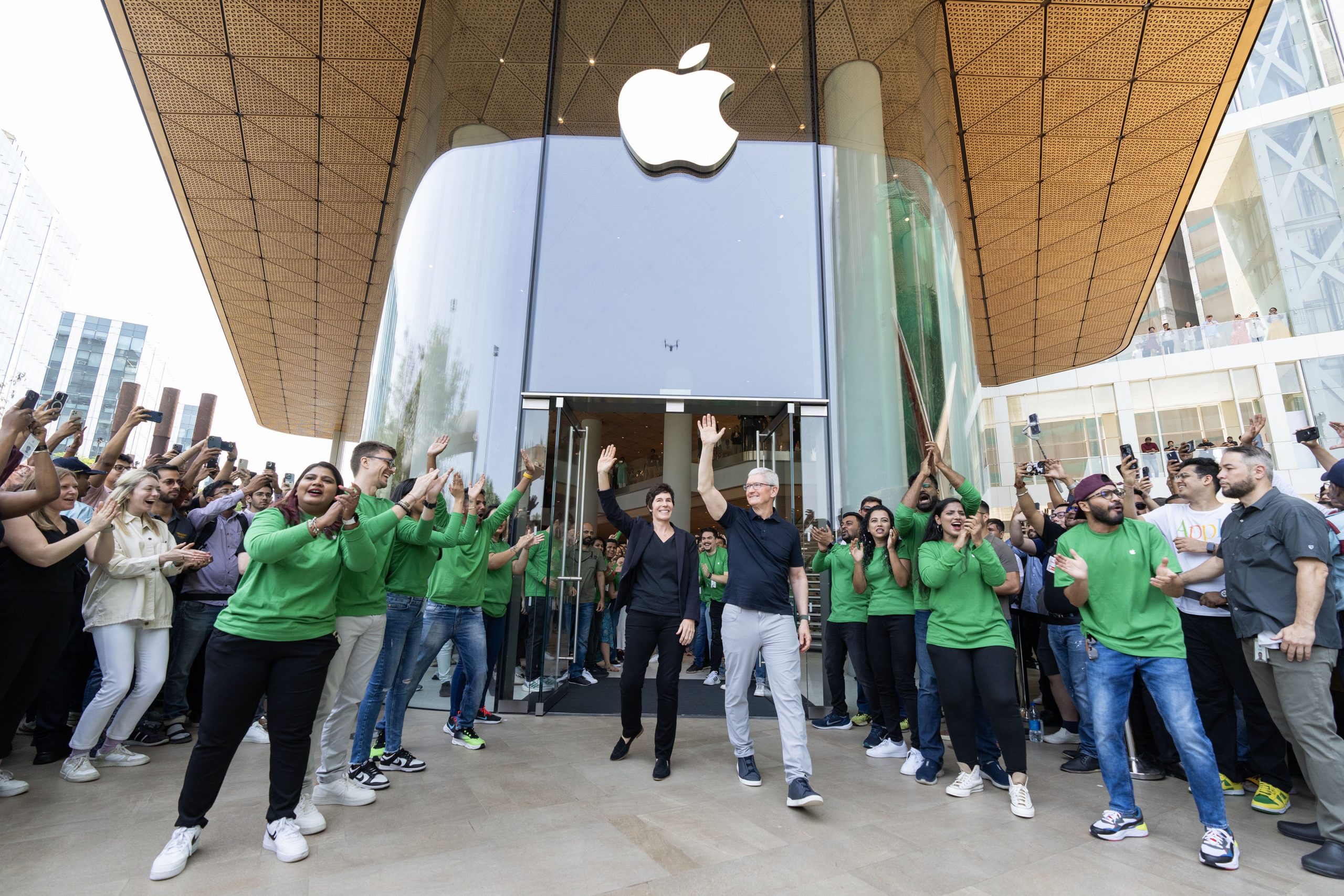
India Escalates Apple iOS 18 Warranty Probe as Repair Costs Put Consumer Rights Under Scrutiny

0

India’s consumer regulator has escalated an investigation into Apple’s software warranty terms after complaints that the iOS 18 update caused screen and microphone problems on iPhones, leaving some users facing costly repairs for defects they say followed the software upgrade.

The Central Consumer Protection Authority (CCPA) has ordered a “detailed investigation” into the matter, increasing pressure on Apple in one of its fastest-growing markets. The probe could ultimately result in fines, refunds to affected customers or changes to Apple’s business practices if the company is found to have violated consumer-protection rules.

The dispute centers on a question that has been seeking an answer as smartphones rely more heavily on software: who should bear the cost when a software update causes a device to malfunction?

Apple is contesting the regulator’s allegations. In an August 20 response to investigators seen by Reuters, the company stated that its policy of providing no warranty for software is consistent with global industry practice and that iOS 18 did not suffer from any systemic defect.

Apple said it had subjected iOS 18 to stringent testing and had not identified any issues or safety concerns with the update in India. The company also said the CCPA’s case was based on 75 complaints and that only about 11% of iPhones in India were still running iOS 18 by June 2026.

The regulator, however, has framed the issue more broadly, saying the complaints concern violations of the rights of “consumers as a class.” That moves the case beyond whether individual customers experienced isolated technical failures and toward whether Apple’s warranty and repair policies unfairly shift the consequences of software problems onto consumers.

Apple Defends Software Warranty Terms

The CCPA began examining the issue after receiving what it described as a large number of complaints following the rollout of iOS 18 in late 2024. Users reported green, pink or white lines appearing on their displays after upgrading, along with microphone malfunctions and other problems.

The regulator says some consumers were then required to pay “exorbitant amounts” to repair or replace damaged displays even though the problems were allegedly connected to Apple’s software update.

An iPhone 15 screen repair, for example, can cost an estimated 27,900 rupees ($291), according to the regulator’s documents. That amounts to more than a third of the phone’s retail price, turning what might appear to be a software problem into a substantial financial burden for the customer.

“Charging consumers for issues arising from the company’s own negligence violates the principle of fair trade,” the CCPA told Apple.

Apple rejects that characterization. Its software license agreements state that the software is provided “without warranty of any kind,” while its limited warranty covers hardware rather than software. Under those terms, users can be responsible for repair costs even if a software problem affects the functionality of a physical component such as a display.

In its August response, Apple argued that consumers were informed of the software warranty limitations before installing the update. It also said similar approaches are used by other major electronics manufacturers, including Sony and Samsung.

“A requirement that every issue … be treated as a breach of an absolute warranty would effectively convert any software provider into an insurer against all technological risk,” Apple said.

The argument underpins the central legal issue facing the company. Apple is not simply defending its response to individual iPhone failures. It is defending a contractual framework under which software and hardware are treated differently even though modern smartphones are increasingly dependent on the interaction between the two.

The CCPA has already indicated that it is not satisfied with Apple’s initial explanations. On July 29, the regulator notified Apple that it had “escalated” the matter to its investigation wing for a “detailed investigation.”

“The case involves alleged violations of consumer rights,” the regulator said in its notice.

Under Indian consumer law, investigators can request documents and conduct hearings before submitting a final report to the regulator, according to Kirti Mahapatra, a New Delhi-based lawyer specializing in consumer law.

“Where contractual terms or warranty conditions form part of the alleged unfair practice, the CCPA can ask the company to ensure accurate information be provided to its customers,” Mahapatra said.

“It can also ask for changes to such terms, but that would be unprecedented.”

That possibility could make the investigation more consequential than a conventional consumer fine. A requirement to alter warranty disclosures or repair practices could have implications for how Apple structures its customer support model in India.

A Growing Market With Greater Regulatory Exposure

The dispute arrives as Apple is expanding rapidly in India, making the country pivotal to both its sales and manufacturing ambitions.

Apple’s iPhone held about 9% of India’s smartphone market last year, up from 4% in 2022, according to Counterpoint Research. The company has also been expanding manufacturing in the country as it seeks to build a larger production base outside China. That growth gives Apple more commercial exposure to India’s consumer and regulatory environment. The company is simultaneously facing scrutiny over other aspects of its business, including allegations involving domestic antitrust rules.

The iOS 18 dispute also reveals a broader problem for smartphone manufacturers. Software updates are increasingly inseparable from the operation of physical devices. A display, microphone, battery or camera may be a hardware component, but its functionality is controlled by software that can change after the device has been purchased.

That development has resulted in a difficult boundary for traditional warranty frameworks. A manufacturer can argue that a physical component has not failed mechanically, while a consumer can reasonably argue that the component stopped working following an update supplied by the manufacturer.

Apple’s position is that extending an absolute warranty to software would expose technology companies to responsibility for an almost unlimited range of technical problems. Regulators, by contrast, can examine whether the contractual language gives consumers sufficient protection when the manufacturer itself controls both the software update and the hardware ecosystem on which it operates.

The issue is not unique to India. In 2018, Italy sanctioned Apple after finding that the company had failed to adequately inform consumers about the potential impact of the iOS 10 update on older iPhones and had not provided sufficient support for phones outside their legal warranty period.

India’s investigation therefore places Apple in a familiar regulatory dispute, but under a consumer-protection framework that could have wider consequences for its operating practices.

For now, Apple maintains that iOS 18 had no systemic problems in India and that its existing warranty terms are standard industry practice. The CCPA’s decision to move the case into a detailed investigation means those assertions will now face closer examination.

OpenAI Turns to ‘Legal Engineers’ to Push Deeper Into Law Firms

0

OpenAI is betting that winning the legal industry will require more than putting powerful AI models in the hands of lawyers. The company is increasingly looking to the people who can help law firms and corporate legal departments integrate those models into the way they actually work.

That approach is taking shape through a new partnership with Telon, a London-based startup that embeds former lawyers inside legal teams to help customers get more value from the artificial intelligence tools they already have.

Telon said Tuesday that OpenAI has named it a “select partner,” giving the startup a role in working with shared customers to configure models, develop prompts, build AI agents and train lawyers to use the technology.

The arrangement provides an early glimpse into how OpenAI could expand its presence in professional services: by building an ecosystem of specialists around its models rather than relying solely on direct software sales.

Telon was founded in June by Lewis Bretts, a former trial attorney who previously built PwC’s legal practice. The startup employs so-called “legal engineers,” primarily former lawyers who work directly with law firms and corporate legal departments to help them deploy and use AI.

The model resembles forward-deployed engineering, but with legal expertise at its center. Instead of simply handing a customer access to an AI platform and leaving its lawyers to figure out how to use it, Telon works inside the organization to adapt the technology to specific workflows.

The idea is being embraced because adoption, rather than access, is increasingly becoming one of the biggest challenges in enterprise AI.

OpenAI launched its Partner Network in June as part of an effort to make it easier for consultants and other professional services companies to deploy its models and software inside organizations. The company has said it wants to certify 300,000 consultants by the end of 2026.

The expansion of that ecosystem reflects a broader shift in the enterprise AI market. The first phase was largely about getting companies to buy licenses, run pilots, and experiment with general-purpose models. The next phase is likely to be determined by whether employees use those systems consistently and whether companies can translate that usage into measurable productivity gains.

For law firms, that challenge is particularly pronounced.

Legal work is highly specialized, heavily dependent on existing processes and subject to professional and confidentiality requirements. A lawyer may have access to a sophisticated AI model but still use it only for relatively simple tasks if the system is not integrated into research, drafting, document review, knowledge management and other established workflows.

Bretts said the biggest challenge in selling AI to law firms is not closing the initial deal, but getting lawyers to actually use the technology.

That has created an opening for companies such as Telon.

Traditional professional services firms have spent decades helping enterprises implement major software systems. A company might hire McKinsey, Deloitte, or another consulting firm to introduce a Salesforce database or overhaul a business process. Those projects could take months or years and eventually reach an endpoint.

AI adoption is less static.

New models are released frequently, and each improvement can expand what applications built on top of them can accomplish. A company that successfully completes an AI pilot can therefore find itself with a rapidly changing technology stack only months later. That creates a recurring implementation problem. Organizations may have paid for AI licenses and demonstrated that the technology works, yet employees may continue using only a small portion of its capabilities.

Telon is betting that law firms will pay for specialists who can continuously close that gap.

The startup has already grown to 30 employees since its June launch and has raised capital from Zach Posner’s LegalTech Fund. Bretts declined to identify Telon’s customers or disclose the financial terms of its agreement with OpenAI.

OpenAI’s Legal Ambition Meets a Specialized Software Market

Legal technology presents OpenAI with a difficult competitive question. If the company provides increasingly capable models, why should a law firm buy directly from OpenAI rather than from a specialized legal-technology provider that has built an entire product around the way lawyers work?

Specialized legal software companies can package AI around specific tasks, proprietary workflows, and industry-specific interfaces. Their advantage is not necessarily the underlying model. It is the layer between the model and the professional using it.

Telon offers OpenAI another way to address that problem.

Rather than trying to replicate every piece of legal expertise and workflow software itself, OpenAI can work through partners that understand the customer environment and can translate the capabilities of its models into practical applications. The approach could become increasingly important as the AI market moves away from a simple competition over model benchmarks.

The value of a frontier model is ultimately constrained if customers cannot integrate it into their operations. For OpenAI, therefore, distribution now means more than putting ChatGPT or an API in front of a customer. It also means creating an implementation network capable of adapting the technology to specific industries.

The legal sector is a useful test case because it combines high-value knowledge work with unusually demanding requirements around accuracy, confidentiality, and professional judgment. It also illustrates why AI adoption may create a new layer of professional services around the technology itself. As models become more capable, companies may need specialists not simply to install AI, but to continuously redesign workflows around capabilities that did not exist when the original implementation began.

That is a different consulting model from traditional software deployment.

It also gives OpenAI a potential answer to one of the major issues facing model companies as competition intensifies: how to capture more of the economic value created by AI without having to build every application themselves. If the underlying models become increasingly commoditized, the companies that control distribution, workflow integration, and customer relationships could capture a larger share of enterprise spending.

Telon is still a very young company, so its partnership with OpenAI is not evidence that the model has been proven at scale. But the relationship points to a broader direction in enterprise AI. The next competitive battleground may not be simply who has the most capable model. It may be who can get those models embedded deeply enough into professional work that customers cannot easily operate without them.

The larger opportunity lies in the gap between buying AI and actually using it. OpenAI is increasingly building an ecosystem designed to make sure that gap does not remain someone else’s business.