DD
MM
YYYY

PAGES

DD
MM
YYYY

spot_img

PAGES

Home Blog Page 2924

What Is a Crypto Launchpad? A Complete Guide

0
What Is a Crypto Launchpad?

Cryptocurrency is a growing technology, with new and innovative solutions constantly being built on the blockchain. Smart contracts play a key role in this progress by enabling the development of chains, protocols, apps, and other blockchain products that benefit both users and developers.

As of August 2024, Statista reports over 10,000 cryptocurrencies, highlighting a market with a global capitalization of $2.1 trillion. This expansion has led to a surge in cryptocurrency projects, with many innovators now exploring decentralized finance (DeFi) to offer new solutions.
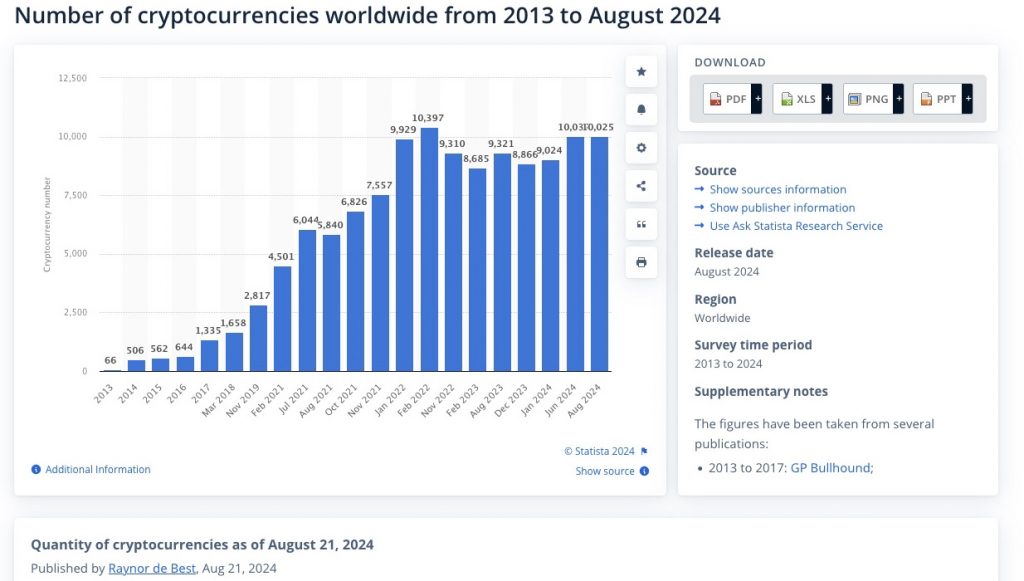
Source: Statista

However, despite the growth opportunities, there are still challenges. With so many projects entering the space, startups often struggle to stand out in the crowded blockchain market. At the same time, investors find it difficult to identify the right projects to invest in.

This is the problem that launchpads aim to solve. So, what are crypto launchpads, and how do they work? Let’s take a closer look.

What is a Crypto Launchpad?

Launchpads serve as incubators that guide crypto projects through the process of penetrating the market, gaining visibility, and raising funds to expand their business. They function like traditional incubators but are specifically focused on crypto. These platforms assist early-stage projects with marketing, fundraising, initial token launches, and distribution.

How Does a Crypto Launchpad Work?
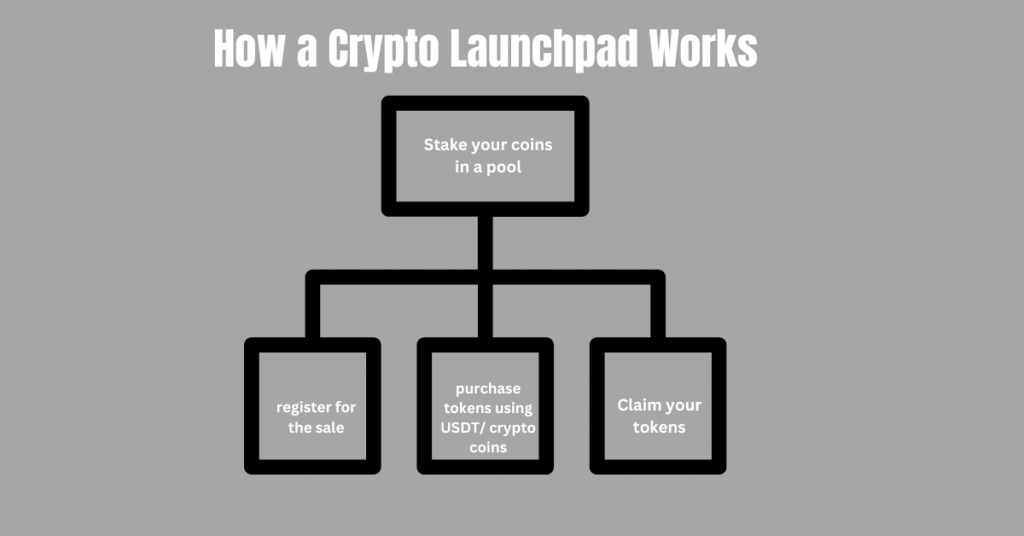
How a Crypto Launchpad Works

Launchpads make crypto fundraising easier by overseeing public sales, where users stake crypto to join an Initial Coin Offering (ICO). Your stake decides your tier, which affects how much of the sale you can access. Payments are usually made with stablecoins like USDT, USDC, or DAI, and there are often minimum and maximum limits for each investor.

Before the sale begins, you’ll need to register. If the sale is undersubscribed, meaning fewer tokens are claimed than available, extra tokens may be offered in a first-come, first-served phase.

Some sales also use a lottery system, where you stake tokens to enter, and winners are chosen at random. If selected, you can buy the tokens. After the sale ends, you can claim your tokens based on your tier and choose whether to hold, stake, or trade them.

Launchpads commonly utilize lockup periods and vesting schedules to ensure commitment and regulate price volatility. Additionally, many launchpads implement staking mechanisms where participants who stake more tokens may receive higher allocations or rewards during the token sale. However, the specifics of these rewards and staking benefits can differ between launchpads and projects.

Different Types of Launchpad Token Sales

Crypto launchpads help connect startups with investors in different ways. They offer crypto assets to early investors through various methods. Here are some common types of launchpad token sales:

Initial Coin Offering (ICO)

Cryptocurrency projects often crowdfund from early investors to enhance scalability. While ICOs are similar to Initial Public Offerings (IPOs) used by traditional companies, they differ because ICOs involve exchanging a portion of future coins rather than shares or equity for investment.

Projects running ICOs may use their own websites or third-party platforms like CoinList to offer investment opportunities. For example, Ethereum held its ICO in 2014, and Tezos held its in 2017.

Initial Dex Offering (IDO)

IDOs happen on decentralized exchanges (DEXs), where Automated Market Makers (AMMs) help with trades. Platforms like DuckDAO and Trustpad let projects launch tokens through IDOs. They use liquidity pools to release tokens, allowing investors to buy them by providing liquidity.

IDO processes are usually controlled by smart contracts, which automatically handle transactions and adjust token prices based on supply and demand. However, because trading within the liquidity pool sets the token’s price, there can be issues like low liquidity and price volatility.

Initial Exchange Offering (IEO)

Centralized exchanges (CEXs) handle Initial Exchange Offerings (IEOs). The exchange vets the project for credibility and potential success, then helps manage the token sale and listing process.

This allows projects to tap into exchanges’ credibility and wide user base to raise capital. As a result, users need to have an account with the exchange before they can participate in the investment process. Examples of such exchanges include Binance and Bybit.

Initial NFT Offering (INO)

Crypto projects use Initial NFT Offerings (INOs) to raise funds. They launch Non-Fungible Tokens (NFTs) on platforms like Magic Eden, OpenSea, Rarible, and NFTb. The INO price depends on the project’s mint price, and the collection is often limited in supply to create scarcity and value.

Projects can launch these NFTs by first creating a mintlist or an allowlist. This list works like a presale, giving early community members or investors the chance to buy at a lower price before the public mint opens. Investors can purchase the NFTs using the native coin of the blockchain the project is launching.

Initial Game Offering (IGO)

When a gaming project is nearing its launch, the team may conduct an Initial Game Offering (IGO) to secure funding. During an IGO, early investors support the project in exchange for valuable in-game assets such as characters, weapons, skins, or tokens that will be important for in-game purchases. Examples of such launchpads include Enjinstarter and xLaunchpad.

What are the Advantages of Crypto Launchpads?

Crypto Launchpads provide several benefits for projects and investors:

For Projects and Founders

Crypto launchpads provide a wide range of opportunities for crypto projects and founders. Below are some of the ways launchpads benefit them.

Streamlined Fundraising

Launchpads enable projects to crowdfund from early investors in a streamlined manner. The platform plays an important role in this process by allowing projects to tap into their existing user base to raise capital.

At the same time, launchpads offer a simple fundraising process that helps projects use funds to better scale their product, expand operations, and focus on other important parts of development.

Visibility Boost

Launchpads contribute to a project’s marketing and promotion efforts. They boost visibility by using their large user base and helping projects reach potential investors.

For instance, exchange launchpads like Binance and Bybit engage in various promotional campaigns to attract investors. They typically use content marketing through channels such as newsletters, social media posts, and banner ads. Additionally, they may employ other strategies like staking rewards, offering exclusive access, and hosting special events to further boost visibility and token appeal.

Trust and Community Building

Crypto launchpads help founders build a supportive community, gain investors’ trust, and establish credibility. Founders can rely on the reputation of an exchange or launchpad to earn the confidence of potential investors.

They can use Question and Answer (Q&A) sessions to address concerns, host webinars for project clarity, and use launchpad support services to build credibility before the launch.

Additionally, projects can use social media contests or offer exclusive access to token sales on launchpads to build community engagement before their official launch. These incentives encourage active participation, helping to attract and nurture potential users in the early stages.

For Investors

Crypto launchpads are beneficial to investors by providing them with access to several opportunities and rewards. Below are some of the advantages of crypto launchpads for investors:

Early Access to Investment Opportunities

Crypto launchpads allow investors to fund early-stage startups in return for future tokens or NFTs. This enables investors to fund promising projects and profit from them as they gain traction to maximize their return on investment (ROI).

Flexibility and Accessibility

The simplicity of launchpads, especially those on centralized exchanges, makes it easier for crypto investors to support high-potential startups and potentially earn future rewards. To participate, investors must stake a specified amount of cryptocurrency, complete KYC (Know Your Customer) verification, and then receive tokens after the launch. Although this process may be unfamiliar to new investors, centralized exchanges help simplify the investment experience.

Additionally, launchpads simplify the vetting process for investors. Since projects are pre-evaluated, it’s easier for investors to find promising opportunities. This reduces the need to research many projects, although investors should still perform their own due diligence.

Reduction Of Price Volatility

Crypto launchpads use vesting and lock-up periods to prevent investors from selling off their assets all at once. These mechanisms require investors to lock up their stakes for a specified period, which can range from a week to several years. This helps to ensure price stability and promotes long-term holding among investors.

Safety and Security

Crypto launchpads strengthen security for investors through smart contracts and multi-signature wallets. Smart contracts automate various processes, including vetting projects, managing token sales, tracking investor contributions, and ensuring fair distribution of tokens, whether through level or lottery systems.

While centralized exchanges like Binance and Bybit provide these benefits, decentralized launchpads such as TrustPad and Polkastarter might offer additional advantages due to their decentralized nature. This further increases transparency and trust.

Furthermore, launchpads employ multi-signature wallets to strengthen security. These wallets require multiple keys to authorize transactions, which helps to protect against fraud and unauthorized access.

Disadvantages of Crypto Launchpads

While launchpads are highly beneficial, they also pose some risks for both founders and investors:

For Founders

Although founders get access to key project opportunities through launchpads, they are not excluded from risks. Below are some of the disadvantages of crypto launchpads for founders:

High Competition Rate

Cryptocurrency launchpads feature many different projects, so each project must compete for visibility to stand out. Because of the large number of projects, raising funds can be highly competitive. Launchpads offer investors a wide variety of options, which may lead them to spread their investments across several projects rather than committing heavily to just one.

Legal or Regulatory Risks

Since cryptocurrency is still growing, projects sometimes face legal scrutiny from financial authorities and the government if they’re unable to adapt to new regulations. Meanwhile, this ensures that projects meet legal requirements, which differ across regions.

At times, legal non-compliance issues may arise, which may result in team penalties. In cases where projects fail to fulfill their promises to investors, it may lead to legal prosecution or a fine.

For Investors

While investors may benefit tremendously from crypto launchpads, there are also challenges. Here are some disadvantages of launchpads for investors:

Project Failure

In cryptocurrency, nothing is fully guaranteed. Although launchpads provide vetting systems before approving projects, the success of these projects cannot be ascertained. Volatility and market manipulation may impact tokens, causing prices to plummet and affecting liquidity.

Non-Compliance Risks

If a project fails to meet legal requirements, it may face legal challenges that could harm its growth. This can also affect the token’s value by causing speculation among investors.

Additionally, legal cases may cause projects to divert funds meant for operational efficiency into fines and other legal settlements.

Lanchpad vs. Launchpool: What Is the Difference?
Launchpad vs. Launchpool

Launchpads and launchpools both allow investors to stake crypto to earn token rewards for future sales. However, a launchpad is a platform that helps projects raise funds and lets investors support crypto startups, while a launchpool is a feature on such platforms that enables investors to stake crypto specifically for token sale rewards. Examples include Trustpad Launchpad and Binance Launchpool.

FAQs

How can I get my project on a crypto launchpad?

To get listed on a crypto launchpad, you must first submit your project details, whitepaper, and team information for evaluation. After due diligence, including background checks and technical verification, you will set up fundraising goals and token sale parameters.

The launchpad then handles marketing, promotion, and the execution of the sale while managing investor contributions.

How can I invest in a token sale?

To invest through a crypto launchpad, start with registration and complete the identity verification process (KYC). After verification, research the listed projects, focusing on the team’s background, technology, and market potential.

Once you’ve made your assessments, participate in the token sale, staking your stablecoin or other crypto assets for the required duration.

After investing, monitor your token’s performance regularly, access your tokens, and explore available trading options to maximize your investment.

What is the Best IDO Launchpad?

Several IDO launchpads are available today, including Trustpad, Polkastarter, DuckDAO, and BSCPad, among others. While these launchpads have received positive reviews over the years, always conduct due diligence and choose a platform that aligns with your goals.

Bottom Line

In summary, crypto launchpads play a key role in helping projects gain visibility, raise funds, and build communities. Besides that, they also offer investors early access to promising opportunities.

Despite the pros, both founders and investors are prone to regulatory risks and unguaranteed project success.

Additionally, the industry is growing, and in the coming years, launchpads may offer more opportunities along with potential risks. Always stay alert for new ecosystems and updates. Also, be sure to research thoroughly before launching or investing in any project.

Disclaimer!: This article is solely for educational purposes, and no piece of information should be considered financial advice. Always do your own research (DYOR) before investing in any aspect of crypto.


Nigeria’s Lost Decade on GDP, Stock Exchange and Currency

1

Revealing lines there: “Nigeria’s economic future is being mapped out in bold projections, with optimistic forecasts laid out by renowned economist Bismarck Rewane. Speaking at the Access Bank Customer Forum in Lagos, Rewane, the Managing Director and CEO of Financial Derivatives Company Limited, painted a picture of a growing economy, steadying at a projected 3.5% growth by 2026.

“That growth, he said, would push Nigeria’s gross domestic product (GDP) to an impressive $400 billion, potentially making the country the second-largest economy in sub-Saharan Africa…He projected that market capitalization would reach N58 trillion by 2026”.

Interesting. So, Nigeria is not #2 in Africa on GDP right now, and we have to work to become #2. Good People, in 2015, we hit $560 billion in GDP. Then elections happened, and now, we have to work hard to hit $400 billion.

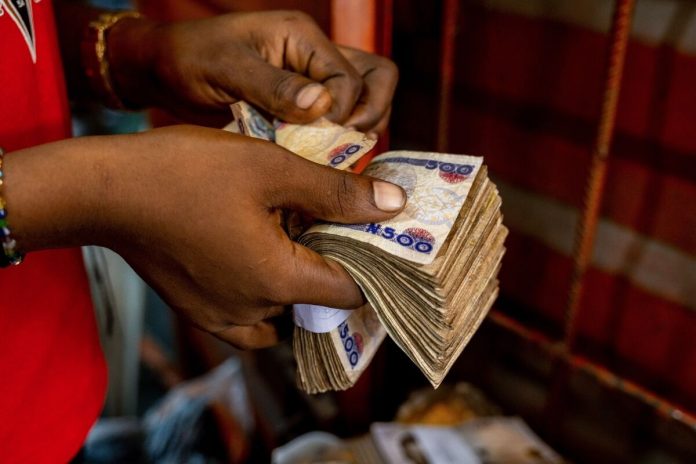
Naira has lost a value of 10x against Francophone Africa’s CFA Franc. In 2015,  Cotonou’s 1CFA Franc currency exchanged for 25 kobo, today, it is close to N2.50. Kenyan shillings have also done the same 10x against the Naira – and Naira continues to bleed. So, how do you grow under such situations? Simply, even this $400 billion GDP by 2026 is not assured.

Then the stock market which we expect to hit N58 trillion by 2026. If you use today’s exchange rate, that is less than $40 billion. South Africa’s stock exchange is well ahead of $1.2 trillion, but Nigeria needs to hit $40 billion by 2026. Right now, the stock market of Botswana is larger than Nigeria’s stock exchange.  A company in South Africa can buy all companies in our stock market with 30% of its global value.

Good People, note one thing: we are underperforming as a country, no matter how we want to put it.  And we have lost a decade. During Christmas, I was in Ovim, and I went to Oriendu Market to shop with Ifeoma (we paid for things but did not collect any…). But instead of the typical “go slow” around the junction, the road was clear. That was when I knew the extent of the economic paralysis in Nigeria!

Nigeria’s GDP will Hit $400bn in 2026 – Bismarck Rewane

Elon Musk’s X Bows, Complies With Supreme Court Order in Brazil

0

Elon Musk, the self-styled champion of free speech, has retreated – after weeks of defiance, where he declared war on Brazil’s Supreme Court, following its ban on his social media platform for disobeying the court’s orders.

Now, Musk’s social network, X, has finally bowed to the demands it once vowed to resist, according to the New York Times.

It’s an unexpected move. Musk, a figure known for his relentless bravado and penchant for controversy, had refused to comply with orders to take down accounts that a Brazilian justice claimed were undermining the country’s democracy. In the midst of this standoff, Musk fired local employees, shuttered X’s offices in Brazil, and refused to pay the mounting fines. His stance was clear: no censorship, no compliance.

But things have changed

The signs emerged on Wednesday when the Supreme Court’s main justice in this matter, Alexandre de Moraes said in a court filing that X had hired new lawyers in Brazil – a shift from the company’s earlier stance, when it refused to obey the Supreme Court order to name its legal representatives.

Late Friday night, X’s legal team quietly filed papers with Brazil’s Supreme Court, revealing that the company had, in fact, complied with the justice’s orders. The accounts that had stirred the ire of the court? Taken down. The fines that Musk scoffed at? Paid. The representative that the company had been dragging its feet to appoint? Finally in place. A concession, plain and simple.

The Times quoted one of those lawyers, Sérgio Rosenthal, saying in a text message on Thursday that X planned to comply with all of the judge’s orders to take down accounts. “The goal is to regularize the company’s situation in Brazil,” he said.

It also noted a different lawyer, André Zonaro Giacchetta, on Saturday morning, saying the conditions to return to Brazil “have already been met, but it depends on the assessment of” Brazil’s Supreme Court.

This is not the image Musk cultivated. The tech magnate, who often frames himself as a gladiator for free speech, especially on his social media platform, now finds himself cornered in a fight he cannot win. And while Musk remains silent on the matter, the paperwork tells a different story: one of a man and a company outmaneuvered.

Brazil’s Supreme Court wasn’t interested in Musk’s flair for the dramatic. Moraes has been steadfast in his mission to keep the country’s democracy from being undermined by online disinformation. He didn’t hesitate to block X across Brazil when Musk refused to comply with orders to remove accounts Moraes deemed threatening to the state.

For Musk, this is not the first time his ideals have clashed with the realpolitik of governing bodies. X has similarly bent the knee to authorities in India and Turkey. But in Brazil, the stakes were higher. X has around 20 million users in the country, a crucial market that Musk couldn’t afford to alienate any longer. Meanwhile, users flocked to rival platforms like Threads and Bluesky, eroding X’s influence with each passing day of the blackout.

And that wasn’t the only complication. Brazil’s Supreme Court had seized $2 million from Musk’s satellite internet company, Starlink, to cover X’s fines. Musk’s ambitions in Brazil were becoming costly, not just for his social network but for his other ventures as well.

Yet, even in defeat, Musk couldn’t help but indulge in theatrics. On Wednesday, X briefly resurfaced in Brazil, bypassing the court-ordered block in what Brazil’s telecom regulator described as a “deliberate disregard” for the Supreme Court’s ruling. Musk took to X, posting cryptically: “Any sufficiently advanced magic is indistinguishable from technology,” he said.

It was a wink, a sleight of hand that suggested the return was something mystical rather than a calculated move. But the court wasn’t amused. Moraes promptly imposed a hefty $1 million per day fine and re-blocked the platform.

Now, Musk faces a difficult reality. X remains inaccessible in Brazil, one of its largest markets, and any hope of regaining traction hinges on the country’s Supreme Court lifting the ban. For all of Musk’s bluster, the power of nation-states has proven formidable.

It’s also a blow to the right-wing commentators in Brazil who had previously rallied behind Musk’s refusal to comply. Figures like Paulo Figueiredo, a prominent pundit who had his account blocked, hailed Musk as a hero for standing up to Brazil’s judiciary. But after the filing, Figueiredo lamented Musk’s capitulation, calling it “a sad day for freedom of expression.”

Musk’s allies, once loyal and admiring, are now left to reconcile their disappointment with their admiration for the man who promised to defy the system but ultimately fell in line.

This entire episode has been a boon for Justice Moraes. Since 2019, he has been a central figure in Brazil’s battle to regulate online speech, ordering the removal of hundreds of accounts that he argues pose a threat to Brazil’s democracy. His actions have been divisive, seen by some as an essential safeguard and by others as overreach. But in this clash with one of the world’s most influential tech moguls, Moraes has emerged victorious.

Musk, for his part, will no doubt continue to rail against government overreach and censorship, but the reality is hard to ignore: even the most powerful tech platforms can be brought to heel when faced with the authority of a state determined to protect its interests.

As X remains blocked, Musk’s once-defiant posture seems less like the stand of a free-speech warrior and more like a costly miscalculation. And in Brazil, at least for now, the voice of the state is louder than the voice of the platform.

Solana (SOL) and Cardano (ADA) Whales Pour into Rexas Finance (RXS) as Presale Stage 2 Ends at Lightning Speed, $1.25M Raised

0

As always in the evolution of the crypto-currency market, new projects appear to offer goods to investors. For example, quite recently, the Rexas Finance (RXS) project has become one of the opportunities worth considering for people with a background in Solana and Cardano ecosystems. About the time the second stage of its presale was closing in record-breaking speed, $1,250,000 was raised, and it became obvious that RXS was on its way to becoming a competent competitor in the field of Real World Asset (RWA) tokenization.

Heating Up of the Allure

The remarkable speed at which Stage 2 of the presale period for Rexas Finance came to a close demonstrates the expanding zeal of notable presence within the cryptocurrency arena. Solana and Cardano’s whales have discovered the opportunity that Rexas Finance has, which has led them to rush for the RXS tokens to buy before the next price increase in stage 3 at $0.05. The presale has thrilled even veteran and novice investors who wanted to use the benefits of RWA tokenization.

RWA Tokenization: Makes All The Difference

Perhaps the most appealing aspect of Rexas Finance lies in the way this company views RWA tokenization. In case anyone forgot, Rexas Finance’s objective is to widen the range of investable assets, especially valuable ones (real estate, art, and other valuable things) that were previously inaccessible to ordinary investors, with the help of blockchain. With tokenization, these assets can be broken down into smaller unit bases, which are simpler to trade and do require less money to a particular extent for investors.

This development not only creates more options for such assets to be owned as investments and reaping profits but also creates very good liquidity in markets, which in the past have been characterized by illiquidity. Rexas Finance aims to eliminate severe challenges in the current asset management industry by offering a marketplace where assets can be easily tokenized, traded, and managed. All these factors have appealed to whales willing to make smart investments with less risk—high liquidity, low transaction costs, and ease of processes.

Rexas Finance’s Unique Proposition

Rexas Finance can stand out from the rest of the competitors in the field of cryptocurrencies by offering a simple and pleasant-to-work platform to its customers that helps them to tokenize real-world assets with ease. The way the interface is made, there is no requirement for any technical ability, making it easy for all users. Such accessibility is important if more people are to be reached and people are given the power to invest.Besides the above-mentioned features, Rexas Finance is also very strict on the security and compliance of all the transactions that are carried out by the users. Various levels of security have been set in place to protect the user’s information and assets, which gives assurances to the investors. This determination to uphold such levels of fidelity has been key to gaining confidence, trust, and support from the cryptosphere.

The Role of Whales in the Ecosystem

The investment made by whales, particularly the ones affiliated with Solana and Cardano, is an endorsement of the vision and capabilities of Rexas Finance. Whales can dictate the state of the market and their presence in a particular project seeks to market it more and attract stakeholders. Their support is an endorsement of Rexas Finance and works towards bringing more investors to the platform.These whales are lured by the huge profits that might entice them, especially since predictions are most RXS tokens have the potential to balloon up after the presale. Stage 2 ends with 100% of the $1,250,000 target met and with the next stage set to increase the token price to $0.05, the pressure for investors has only grown.

Community Engagement and Future Prospects

Rexas Finance is not only about money but also about creating a community. The platform tries to get in touch with its users and potential investors by running contests such as the Rexas Millionaire Giveaway, where participants stand a chance to win big prizes. Such measures not only motivate users to participate but also instill a feeling of commitment among the users, which makes the experience better.Rexas Finance looks forward to using the momentum created to offer more products and services in the future. The data collected from the presale will guide the development of the platform to meet the demands of its expanding user community. Focusing on this will ensure that the company retains its competitiveness due to various rapid advances in the cryptocurrency industry.

Conclusion

The current trend of growing investment in Rexas Finance (RXS) by large holders on Solana and Cardano can be interpreted as a testament to this project’s ambition to revolutionize the traditional model of asset management with the help of RWA tokenization. It is clear, when Stage 2 of the presale ends, having raised $1,250,000 and Stage 2 of the presale has ended, that this is not a new investment opportunity that they would want to miss. Because it is providing the solution of tokenization as well as a secured, collaborative space, Rexas Finance is not simply inviting the public to invest; it is ready to launch a revolution of affordable finance. It would be interesting to watch how the project develops and what new approaches to assets and their trading will be found in the modern digital world.


For more information about Rexas Finance (RXS) visit the links below:

Website: https://rexas.com

Win $1 Million Giveaway: https://bit.ly/Rexas1M

Whitepaper: https://rexas.com/rexas-whitepaper.pdf

Twitter/X: https://x.com/rexasfinance

Telegram: https://t.me/rexasfinance

Nigeria’s GDP will Hit $400bn in 2026 – Bismarck Rewane

0

Nigeria’s economic future is being mapped out in bold projections, with optimistic forecasts laid out by renowned economist Bismarck Rewane. Speaking at the Access Bank Customer Forum in Lagos, Rewane, the Managing Director and CEO of Financial Derivatives Company Limited, painted a picture of a growing economy, steadying at a projected 3.5% growth by 2026.

That growth, he said, would push Nigeria’s gross domestic product (GDP) to an impressive $400 billion, potentially making the country the second-largest economy in sub-Saharan Africa.

“The Nigerian economy will grow at 3.5 per cent (approximately $400bn). Nigeria is on track to becoming the second-largest economy in sub-Saharan Africa,” Rewane declared, setting the tone for what he sees as a bright, albeit challenging, future for the country.

As part of this economic optimism, Rewane also foresaw improvements in Nigeria’s foreign exchange (forex) auction system. He projected that foreign reserves, a critical factor in the country’s economic stability, would grow to $20 billion, further strengthening the nation’s financial standing.

“There will be an efficient forex auction system, and unencumbered foreign reserves will hit $20bn,” Rewane predicted, reflecting his belief in a leaner, more functional system.

However, not all is set on an easy course. While there are gains to be expected, the naira’s performance is less than ideal. According to Rewane, by 2026, the naira is expected to trade at N1,550 to the dollar in the parallel market. This, he explained, will be driven by a combination of intervention funds, diaspora remittances, and exchange rate policies.

“These gains are driven by intervention funds, remittances, and adjustments to exchange rate policies,” Rewane noted, though he acknowledged that the exchange rate was a cause for concern.

Inflation and Interest Rate Forecasts

On the topic of inflation, which has plagued the Nigerian economy in recent years, Rewane offered some relief. He predicted that inflation would drop to 22% by 2026, a notable improvement from its current levels. In tandem with this decline, he expects the monetary policy rate (MPR) to come down to 20% annually, which, in his view, would reduce the prevalence of bad loans in the banking sector.

“We will see inflation drop to 22 per cent, and the MPR is likely to come down to 20 per cent, which will reduce bad loans,” Rewane explained, pointing to the potential for a healthier financial sector with reduced risk.

Petrol Prices and Stock Market Growth

Fuel prices, always a recurring controversial issue in Nigeria, are expected to stabilize at N900 per liter by 2026, according to Rewane. This, he said, would be due to increased production from the Dangote refinery and smaller modular refineries, ensuring a steadier supply of fuel.

“We expect petrol to stabilize at N900 per liter due to increased production from Dangote refinery and modular refineries,” Rewane said, giving Nigerians some hope for fuel price stability.

He also had positive news for the stock market. He projected that market capitalization would reach N58 trillion by 2026, supported by the listing of major companies such as Dangote Refinery and the Nigerian National Petroleum Corporation (NNPC). These developments, he argued, would inject fresh energy into the market and attract more investors.

Commodity Prices on the Rise

Despite the encouraging forecasts for economic growth and inflation, the cost of essential commodities is expected to rise significantly. Rewane predicted that by 2026, a basket of tomatoes would cost N20,000, a bag of rice would sell for N75,000, and a bag of beans would reach N110,000. These price hikes reflect the ongoing pressures on food supply and demand in the country.

Minister of Finance’s Optimism

While Rewane’s forecasts provide a broad outlook, the Minister of Finance, Wale Edun, also weighed in with some encouraging data. According to Edun, Nigeria has experienced a net inflow of approximately $2.35 billion per month into the Central Bank’s reserves over the first seven months of the year, which has helped stabilize the naira in the forex market.

“There has been a net inflow in the first seven months of this year of about $2.35bn every month,” Edun explained. This, he said, had also contributed to improved foreign exchange liquidity.

“We also have foreign exchange liquidity. The gross reserves are up,” he added.

The finance minister credited the government’s efforts for these positive developments.

“On the fiscal side as well, government revenues are growing,” Edun said, highlighting the strides made in improving the country’s fiscal position.

However, he noted that Nigeria’s tax-to-GDP ratio, currently at 10%, and revenue-to-GDP ratio at 15%, were still low, calling for increased spending on infrastructure and social safety nets.

Diverging Views from Taiwo Oyedele

While Rewane’s projections were largely optimistic, Taiwo Oyedele, Chairman of the Presidential Committee on Fiscal Policy and Tax Reforms, voiced a more cautious outlook. He expressed concerns over Nigeria’s current economic challenges, including divestment, poor education, and rising unemployment.

“Our projection is slow, and I do not pray that Bismarck’s projection comes to pass,” Oyedele said, highlighting the issues that continue to impede Nigeria’s economic progress. He also pointed out that the naira had lost ten times more value than the Kenyan shilling, emphasizing the magnitude of Nigeria’s currency depreciation in recent years.

Oyedele stressed the need for more data-driven decision-making to ensure that Nigeria’s policies and reforms are effective.

“We need to use data and evidence so that it can work for us,” he said, advocating for a more informed approach to policy-making.

In closing, Oyedele shared the government’s plans to reduce corporate income tax in the coming years, aiming to ease the tax burden on businesses while improving the efficiency of tax collection to increase revenues.

Bismarck Rewane’s projections, supported by key government insights, suggest a mixed outlook for Nigeria’s economy. While there are clear signs of potential growth, especially in GDP, forex reserves, and the stock market, the challenges of inflation, rising commodity prices, and currency depreciation cannot be overlooked.