DD
MM
YYYY

PAGES

DD
MM
YYYY

spot_img

PAGES

Home Blog Page 2950

Dangote Refinery Faces Local Market Boycott, May Be Forced to Export Most Products

0

The Vice President of Dangote Industries Limited, Devakumar V.G. Edwin, has voiced his frustration over a boycott of Dangote Refinery’s products by local petroleum marketers, despite the refinery’s capacity to supply affordable petroleum products.

Speaking during a Twitter space hosted by Nairametrics on Wednesday, Edwin revealed that despite the refinery’s efforts to provide cheaper products, local traders continue to favor importing refined products from abroad rather than supporting local refining.

Edwin explained that the core vision behind the Dangote Refinery was to reduce Nigeria’s dependence on imported petroleum products by refining domestic crude oil for the local market. However, this goal has been hampered by the reluctance of local marketers to engage with the refinery.

According to him, only about 3% of the refinery’s output is currently sold locally, while the remaining 97%, including diesel and jet fuel, is exported.

“The whole purpose of doing this refinery in Nigeria was to utilize our local crude instead of exporting raw materials and importing finished products,” Edwin stated. “We should be able to refine and use the finished products within Nigeria and produce more to export the surplus.”

Edwin indicated that there may be deliberate attempts by some local marketers to block the Dangote Refinery’s products even though the refinery has reduced prices twice to encourage sales. He noted that marketers continue to resist, even going as far as writing to President Bola Tinubu to complain about the refinery’s pricing strategy, accusing Dangote of undercutting the market.

“They wrote to His Excellency, the president, claiming that we are disturbing the market by dropping our prices,” Edwin said. “We reduced prices to meet market dynamics, but instead of cooperation, they pushed back.”

This resistance has forced the Dangote Refinery to export most of its production, a significant deviation from the refinery’s original goal of supplying the domestic market. Edwin highlighted that the refinery, with a production capacity of up to 54 million liters of refined petroleum products per day, could easily meet Nigeria’s demand, yet local marketers remain hesitant to engage.

Dependence on Imported Crude Oil

One of the other challenges faced by the refinery is inconsistent crude oil supply from local sources. This has forced Dangote Refinery to import crude from countries like the U.S. and Brazil. International oil companies (IOCs), which typically prioritize foreign markets, often sell crude oil at higher prices to local buyers.

Aliko Dangote, Chairman of Dangote Industries, previously announced that the refinery’s operations had already led to a 60% reduction in the local price of diesel. Prior to the refinery’s commencement, diesel sold for approximately N1,700 per liter, but the refinery was able to lower this to around N1,000. Despite the significant depreciation of the Naira, with exchange rates soaring to about N1,500 per dollar, Dangote Refinery has kept diesel prices below N1,200.

Edwin explained that 44% of the refinery’s production capacity could supply 100% of Nigeria’s demand for refined products. Yet the lack of consistent local crude supply, coupled with local marketers’ reluctance to patronize the refinery, means the refinery has had to look internationally for both crude inputs and product exports.

NNPC Wants A Direct Role

Amid these challenges, the Nigerian National Petroleum Corporation (NNPC) has requested a more direct involvement in Dangote Refinery’s operations. According to Edwin, NNPC has asked to permanently station a team of six to ten people at the refinery to oversee crude supply and production processes. The arrangement is part of a crude supply agreement where Dangote Refinery would purchase crude oil from the NNPC in Naira, process it, and sell the refined products back in Naira.

Edwin noted that discussions with the NNPC are still ongoing, with key issues such as crude pricing and the exchange rate for the Naira yet to be finalized. The potential shift from transacting in dollars to conducting business in Naira marks a significant departure from the refinery’s original model, which was designed as a free zone company.

“We are still in talks with the government about receiving crude in Naira,” Edwin said. “Some unresolved issues include the pricing of crude, the pricing mechanism, and determining the appropriate exchange rate for the Naira.”

Impact of Boycott on Nigeria’s Energy Security

The importation of Premium Motor Spirit (PMS) continues to soar, with Nigeria spending N3.22 trillion on petrol imports in the second quarter of 2024 alone, according to data from the National Bureau of Statistics (NBS). This import bill represents a 100% increase compared to the same period in 2023, signaling the ongoing reliance on foreign products despite Dangote Refinery’s ability to meet local demand.

Energy experts have raised concerns over the reluctance of local marketers to support Dangote Refinery, viewing the situation as a deliberate pushback by those benefiting from importing substandard petroleum products into the country. Kelvin Emmanuel, an energy expert, highlighted that some state actors are involved in the conspiracy to block local refining efforts while continuing the importation of lower-quality fuel.

“You see the conspiracy I speak of? These are the people working with state actors to ensure Nigeria doesn’t achieve energy security, while they keep importing ‘dirty’ substandard petrol and diesel that can only be accepted in Nigeria,” Emmanuel stated.

The ongoing importation of substandard products, and a potential boycott of locally refined goods, are a threat to Nigeria’s efforts to achieve energy security and backward integration. Emmanuel explained that international blending plants are under a “take or pay” contract, meaning that the transshipment of substandard fuel into Nigeria will continue until at least the end of 2024.

Tekedia Capital Venture Investing and Portfolio Management program Will Begin On Sept 23

0

The next Tekedia Capital Venture Investing and Portfolio Management program has been scheduled to begin on Sept 23, 2024. All active members of Tekedia Capital Syndicate attend free.

This program is designed to provide learners with hands-on experience in performing investment research, investing capital, and managing a portfolio. The program runs for 4 weeks and it is completely virtual. Besides some pre-recorded courseware developed by eminent capital market experts, the program includes live Zoom sessions.

In the academic component, the program prepares learners to master the institutional structure, and fundamental concepts of asset valuation, in financial markets, using analytical tools to study the valuation of different types of securities. Fundamentally, learners are equipped to understand investment theory, portfolio development and management.

In the practical laboratory component, learners evaluate existing portfolio compositions and past performances, generate new investment ideas, research new opportunities, and make recommendations, based on quantitative and qualitative analyses.

For the syllabus and more, click here.

Nigeria Announces Plan to Generate $100bn from Creative Industry

0

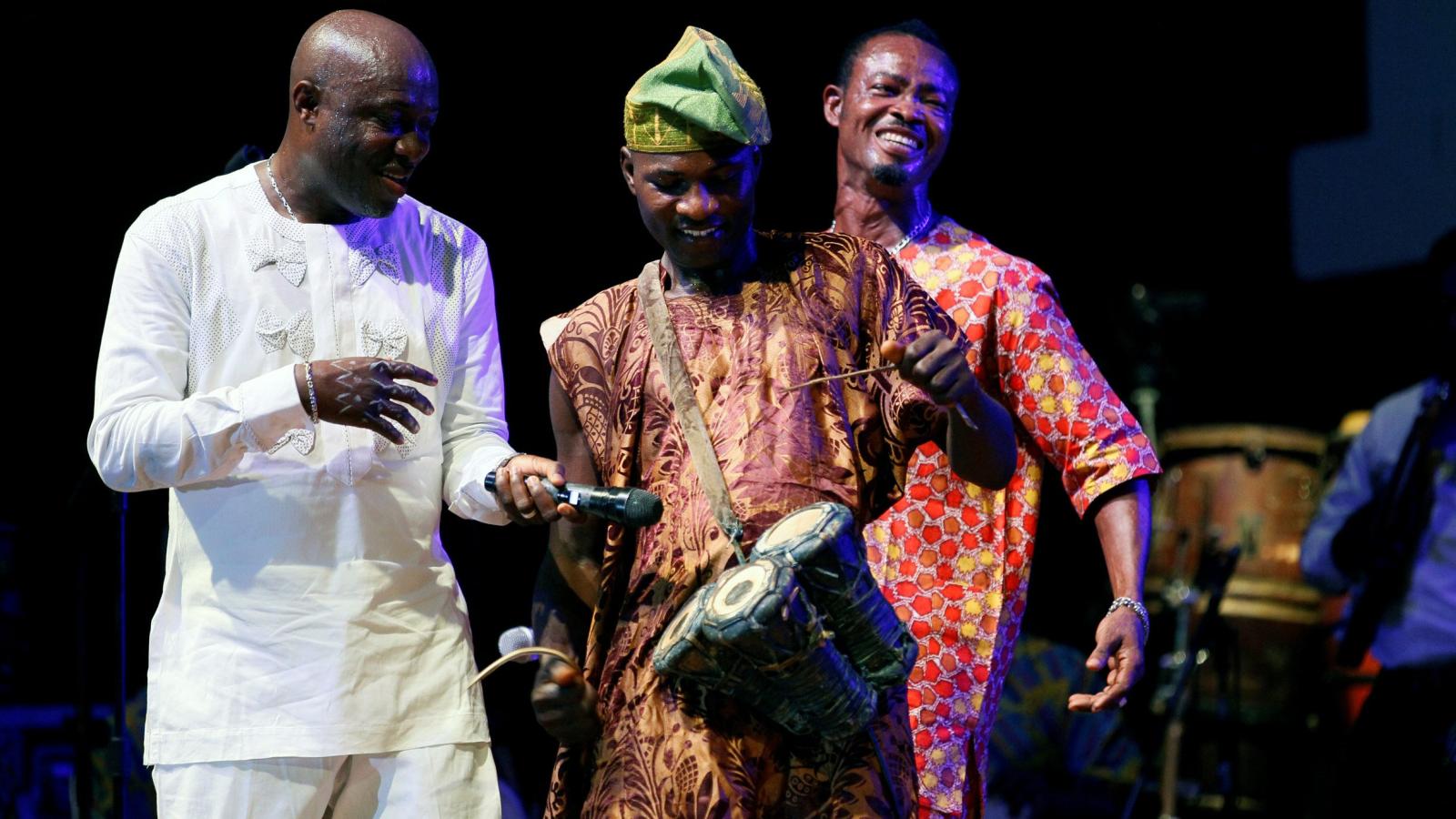
The Nigerian government has set its sights on transforming the nation’s creative industry into a major economic powerhouse, unveiling an ambitious plan to generate $100 billion annually and create over two million jobs.

The blueprint, spearheaded by the Minister of Art, Culture, and the Creative Economy, Hannatu Musa Musawa, was presented to a gathering of local and international investors, signaling a bold new chapter for Nigeria’s creative economy.

Musawa’s plan, presented at a roundtable discussion on Wednesday, outlines a roadmap for harnessing the immense potential of Nigeria’s creative sector. Despite its vast cultural wealth, the industry currently contributes a modest $5 billion to the economy, a figure Musawa sees as only scratching the surface of what could be achieved. With the right mix of investment, technology, and policy reforms, the Minister envisions the sector driving significant economic growth.

Musawa’s confidence in the creative industry is backed by her belief in the sector’s untapped potential.

“If implemented to its fullest, this plan has the potential to generate over $100 billion and create more than two million jobs every year,she said.

The Current State of Nigeria’s Creative Industry

At present, Nigeria’s creative economy spans several sub-sectors, including music, visual media, arts and crafts, heritage and museums, fashion, culinary arts, publishing, and video gaming. These sub-sectors are at various stages of development, contributing to an uneven performance across the industry. The $5 billion contribution to the economy is relatively small, given Nigeria’s position as a cultural leader in Africa, and Musawa believes it is time to unlock the full potential of these sectors.

Strategic Initiatives for Growth

Musawa’s plan is centered around 14 pivotal initiatives grouped under four main pillars: Technology, Infrastructure and Funding, International Culture Promotion, and Intellectual Property Monetization. Each pillar is designed to address specific challenges facing the creative industry, with the aim of making it more globally competitive.

Technology

One of the core components of the strategy is leveraging technology to empower creatives. The Ministry plans to launch a Digital Content Creation Tool Accessibility Program, providing affordable and improved digital tools for Nigerian creatives. This initiative is expected to democratize content creation, giving more people access to the resources they need to produce high-quality work.

Another important element under this pillar is the Nigeria Content Distribution Initiative, which aims to increase nationwide adoption of digital tools for content distribution. This initiative could help creators reach a wider audience, not just within Nigeria but internationally, tapping into the global digital economy.

Additionally, a study to estimate the size of the creative industry will be launched, providing critical data to understand the market and chart a path forward. This data-driven approach will be complemented by efforts to expand internet accessibility in underserved regions, ensuring that digital initiatives have a broader reach.

Infrastructure and Funding

The Infrastructure and Funding pillar focuses on addressing the physical and financial needs of the creative industry. The Ministry will catalog existing infrastructure for the sector, assess its current state, and identify gaps that need to be filled. Through public-private partnerships, the government hopes to develop the necessary infrastructure to support the industry’s growth.

Incentives will also be provided to stakeholders in the creative economy to boost investment, while a Creative Accelerator Program will be launched to provide capital and capacity building for creative businesses. These initiatives are designed to tackle the funding challenges that have traditionally hindered the growth of creative enterprises in Nigeria.

International Culture Promotion

Nigeria’s rich cultural heritage and creative output have long been underutilized on the global stage. The plan aims to change that by establishing a Culture Promotion Office in collaboration with Nigerian embassies abroad. This office will work to promote Nigerian arts, culture, and creative products in international markets, leveraging initiatives like the African Continental Free Trade Area (AfCFTA) to boost exports.

Intellectual Property Monetization

One of the key challenges for Nigeria’s creatives has been the lack of a robust intellectual property (IP) framework. To address this, Musawa’s plan includes the establishment of globally standardized Collection Management Organizations (CMOs) and a Copyright Oversight Initiative in partnership with the Nigerian Communications Commission (NCC). This initiative aims to enhance tracking, monitoring, and enforcement of copyright standards, ensuring that creators are adequately compensated for their work.

Partnering for Success

To support the ambitious job creation target, the Ministry has partnered with BigWin Philanthropy, an international development organization, to deliver a transformative capacity-building strategy. This partnership is aimed at equipping Nigerian creatives with the skills they need to thrive in a rapidly changing global marketplace.

Nigeria’s creative industry has immense potential, but it also faces significant hurdles. According to the National Bureau of Statistics, the sector contributes just 1.2% to Nigeria’s GDP, compared to other African countries like Egypt (4.3%), South Africa (3.0%), and Morocco (2.7%). Moreover, the industry’s contribution to government revenue is a mere 1.0%, far below South Africa’s 12.5%.

Despite these challenges, Musawa’s plan represents a bold step towards realizing the full potential of Nigeria’s creative economy. By focusing on technology, infrastructure, international promotion, and intellectual property, the government is laying the groundwork for a sector that could be a key driver of economic growth in the coming years.

However, many have questioned the feasibility of the plan, arguing that the road to $100 billion and two million jobs is very long for Nigeria to attain now.

Bitcoin ETFs Record Huge Net Inflows; Bullish News For Solana (SOL) and Uniswap (UNI)? Traders Shift to This New ICO Primed for Adoption

0
  • Solana might retest $200 before the end of Q3.
  • Analysts tip Uniswap for a climb above $10.
  • IntelMarkets, a novel AI-powered exchange protocol, is set to disrupt the broader crypto trading landscape.

Bitcoin ETFs mark the first positive inflows in two weeks, recording a net inflow of $28.6 million on September 9. With sentiment turning bullish, investors anticipate an overall market rally. Long positions are being considered for top altcoins like Solana (SOL) and Uniswap (UNI), putting them in the spotlight.

At the same time, traders are paying keen attention to this new ICO: IntelMarkets (INTL). Its unique offering centers around integrating AI into DeFi trading, poised to reshape the wider crypto trading scene. With adoption imminent, traders betting big on the ongoing presale comes as no surprise.

IntelMarkets (INTL): Set to Reshape the Crypto Trading Scene

IntelMarkets (INTL), the latest on investors’ radars, is an emerging altcoin at the intersection between DeFi, blockchain and AI. It prepares to transform the $36 billion global crypto trading market by integrating AI into DeFi trading. Additionally, it will become the first modern trading platform to embed self-learning trading robots into trading.

It further stands out from conventional trading platforms with its dual-chain architecture. The AI-powered trading protocol supports and runs on the Ethereum and Solana blockchains, offering users the flexibility to choose their preferred option. With a multichannel analysis that performs rigorous technical calculations from multiple markets in seconds, traders can maximize opportunities from different asset classes.

The above explains why traders are shifting to this new ICO—adoption is just around the corner. Meanwhile, over $250,000 has been raised since recently making its debut, priced at $0.009 in the first stage. With an opportunity to become an early adopter of the next big thing, it is a more compelling bet than Solana (SOL) and Uniswap (UNI).

Solana (SOL): Poised to Retest $200

Solana (SOL), a DeFi giant and one of the leading cryptocurrencies, is undoubtedly one of the most popular names in the crypto space. Despite lingering bearish pressure, it shows resilience. On a longer timeframe, the past month to be specific, it tumbled by over 9%.

Nevertheless, the $120 price level has proven to be a strong support for Solana (SOL). With a bullish reversal on the horizon, to be sparked by rising interest and confidence, a climb toward the annual peak of $200 is anticipated before the end of Q3. But here is a caveat: this Solana price prediction will likely play out if Bitcoin breaks out above $65,000.

In other news, SOL reached a historic milestone: 5.4 million daily active wallets on September 9th. This marks the highest number of daily active addresses in blockchain history, boosting hopes of a Solana price rally.

Uniswap (UNI): Potential Climb Above $10 Before Month’s End

Uniswap (UNI), a popular DEX that facilitates the automated trading of DeFi tokens, is one of the top cryptos, ranking among the top 25. While the market trades sideways, it has gained considerable strength, trading on the upside.

The past week was eventful for the Uniswap coin, up by 8% on the monthly chart. It retails above $6, inching closer to the next key resistance. According to experts, we might see the Uniswap price above $10 before the month’s end.

Rising DEX activity and Bitcoin’s resurgence will be crucial to the next leg of its bull run. The anticipated interest rate cut later this month is another catalyst for price appreciation. Amidst this, Uniswap (UNI) is one of the altcoins to watch out for.

Conclusion

Amidst Bitcoin ETF net inflow and market excitement, Solana (SO) and Uniswap (UNI) are primed for further upsides. Meanwhile, IntelMarkets, a novel AI-powered exchange protocol, has captured traders’ attention. Given its impending adoption, it is a new DeFi project to bet on.

Discover More About Intel Markets:

Presale: https://intelmarketspresale.com/

Telegram: https://t.me/IntelMarketsOfficial

Twitter: https://x.com/intel_markets

The Equations of Market [video]

0

Join us at Tekedia Mini-MBA to master the equations of market.

Pick your seat if you have not; we will solve 4 equations of market:

  1. Innovation =: invention + commercialization
  2. Great Company =: Awesome Products + Superior Execution
  3. Products =: Integrate(factors of production) d(people, processes & tools)
  4. Differentiate(great products)/d(time) = good life