DD
MM
YYYY

PAGES

DD
MM
YYYY

spot_img

PAGES

Home Blog Page 2972

Navigating the Absence of Catalysts in Cryptocurrency Conundrum

0

In the ever-evolving landscape of cryptocurrency, the search for a significant catalyst to propel the market forward remains a central narrative. JPMorgan, a leading global financial services firm, has recently highlighted the absence of such catalysts, noting the potential implications for crypto assets.

The cryptocurrency market, once known for its meteoric rises and falls, seems to have entered a phase of stagnation. With a total market capitalization hovering around $2 trillion at the end of August 2024, the market has witnessed a 24% decline from its peak in March of the same year. This downturn reflects a broader trend of cooling enthusiasm and a search for new drivers of growth.

JPMorgan’s analysis suggests that the crypto ecosystem is currently facing a dearth of near-term catalysts. This lack of momentum could be attributed to several factors, including regulatory uncertainties, market saturation, and the maturation of the industry. The report also points out that stablecoins have emerged as an outlier, experiencing growth in market cap and volumes compared to the previous month.

The need for a new catalyst is not just about reviving market prices but also about enhancing retail engagement. A catalyst could come in various forms, such as technological innovations, regulatory clarity, or even macroeconomic shifts that favor alternative investments. However, the current market dynamics indicate that the crypto sector may be incrementally more sensitive to macro factors, such as global economic trends and monetary policies.

The performance of cryptocurrency exchange-traded funds (ETFs) also mirrors this sentiment of anticipation for a new spark. Spot ether and bitcoin ETF flows have been described as “somewhat uninspiring,” with the launch of ETH ETFs failing to generate the excitement seen with their bitcoin counterparts earlier in the year. Moreover, spot bitcoin ETFs experienced net outflows, further underscoring the market’s cautious stance.

Clear and favorable regulations could provide a stable environment for cryptocurrencies to thrive. Investors are looking for signs of regulatory frameworks that support innovation while providing adequate consumer protection. Innovations such as Ethereum’s EIP-4844 upgrade, which aims to reduce fees and increase transaction throughput, could serve as a catalyst by improving the scalability and usability of blockchain technology.

Changes in global economic policies, such as interest rate cuts by central banks, could make cryptocurrencies an attractive investment compared to traditional assets. The introduction of cryptocurrencies and related products by major financial platforms like PayPal could lead to wider adoption and increased demand for crypto assets.

The outcome of significant political events, such as the U.S. presidential election, can have an impact on the market, as different administrations may have varying policies regarding cryptocurrencies. While these potential catalysts offer hope for a market revival, it is essential for investors to conduct thorough research and consider the inherent risks associated with cryptocurrency investments.

As the market awaits the next development that could reignite interest and investment, it is clear that the cryptocurrency sector is at a crossroads. Will it find the catalyst it needs to sustain its growth and innovation, or will it continue to be swayed by the broader economic currents? Only time will tell, but one thing is certain: the crypto market’s resilience and adaptability will be put to the test in the coming months and years.


Tekedia Mini-MBA Live Session Begins on Saturday with The Mission of Firms

0

The Live session of Tekedia Mini-MBA ed 15 will begin on Saturday at 7pm WAT. I will teach the mission of firms, and the very reason why we need to have companies. That understanding is very fundamental as we begin a 12-week academic journey to master the mechanics of building companies and advancing professional careers.

Every company in the world has three things to work with: tools, people and processes. Those elements and how you assemble, organize and combine them, will determine so many things in your firm. With them and through them, you will turn inputs (and foundational factors of production) into outputs. The translation of that input into output is what companies do.

But this is not a game where you score yourself because your output must fix the frictions which the customers have. If you create a great output (yes, product or service), the customers will support you, and invest in your mission because your output has solved a problem they have. Hahaha – when they pay you, you earn revenue, and that revenue is the compensation for products you have given them to overcome their frictions. We will look at case studies.

In secondary school physics, you know what frictions are: resistive forces which must be overcome by another force if you must move from one state to another. In other words, a man who is hungry has a friction of hunger, and that hunger must be overcome by another force. That force is FOOD, as when he eats that food, he moves from a state of hunger to a state of being fed! Making that “force of food” amazing is the bedrock of a great restaurant business!

In all forms and ways, companies create FORCES, called products and services. And the best companies are known by their forces (yes, products or services) they make. Apple for iPhone. Dufil Prima for Indomie Noodles. Dangote for cement. McKinsey for advisory.

I welcome everyone to Africa’s finest school for the understanding of the physics of entrepreneurial capitalism. More than 70 professionals, from Google, Access Bank, Microsoft, SAP, NATO Europe, Amazon, Nigerian Breweries, etc will be teaching in this edition. Welcome and thank you for joining us. (Get your Zoom link here )

Ndubuisi Ekekwe;

Lead Faculty, Tekedia Institute


Google Loses Appeal Against EU’s $2.7 Billion Antitrust Fine in Shopping Case

0
The US is after Google also

Tech giant Google has reportedly lost its appeal against a landmark $2.7 billion antitrust fine imposed by the European Union for abusing its dominance in online shopping search services.

The case, initiated by the EU in 2017 fined Google for antitrust violations, accusing the search company of unfairly promoting its comparison shopping service over rivals by manipulating search results, disadvantaging competitors in violation of EU antitrust laws.

In November 2021, Google’s appeal against a 2017 antitrust ruling by the European Commission faced a setback as the General Court of the European Union largely upheld the decision. The court affirmed that Google’s practice of prioritizing its shopping service in general search results was anti-competitive and detrimental to rival comparison services.

However, the court did annul part of the Commission’s findings, stating that it had not proven Google’s conduct affected the general search services market as a whole. Undeterred, Google escalated the case to the Court of Justice of the European Union (CJEU). The CJEU handed down a ruling that again went against Google. It agreed with the General Court’s assessment, concluding that Google’s behavior was discriminatory and not in line with fair competition.

At a press conference, EU competition chief Margrethe Vestager hailed the ruling as a “landmark” moment in regulating Big Tech. She emphasized that the case was among the first major antitrust actions taken against a leading digital company, signifying a turning point in how tech giants are governed and perceived.

“It was one of the first significant antitrust cases brought by a competition agency against a major digital company, and I think this case marked a pivotal shift in how digital companies were regulated and also perceived”, she remarked.

Commenting on the CJEU ruling, Google spokesman Rory O’Donoghue said,

“We are disappointed with the decision of the court. This judgment relates to a very specific set of facts. We made changes back in 2017 to comply with the European Commission’s decision. Our approach has worked successfully for more than seven years, generating billions of clicks for more than 800 comparison shopping services.”

Background Story

In 2017, the European Commission fined Google a record-breaking €2. 42 billion ($2.73BN) for antitrust violations about Google’s Shopping search comparison service in what is widely considered the most significant antitrust ruling in Europe since the 2004 Microsoft decision.

The case centered around Google’s search engine practices, specifically its shopping service. The Commission’s investigation found that Google systematically placed its own comparison shopping results at the top of search pages while demoting those of competitors, which effectively stifled competition in the online shopping space.

The EU findings revealed;

Google gave prominent placement to its comparison shopping service: When a consumer enters a query into the Google search engine concerning which Google’s comparison shopping service wants to show results, these are displayed at or near the top of the search results.

Google Demoted rival comparison shopping services in its search results: Rival comparison shopping services appear in Google’s search results based on Google’s generic search algorithms. Google included several criteria in these algorithms, as a result of which rival comparison shopping services are demoted. Evidence revealed that even the most highly ranked rival service appears on average only on page four of Google’s search results, and others appear even further down.

The latest ruling against the tech giant, is a significant blow, as it sets a precedent for how tech companies with dominant positions should behave in the European market. It is also one of the first major rulings in a series of antitrust cases that the EU has pursued against Google, including investigations into Android’s market dominance and Google’s AdSense service.

Notably, the court’s decision highlights the growing regulatory scrutiny on tech giants, with regulators aiming to ensure a fair and competitive market environment.

Zone Expands Decentralized Payment Network With Integration of Baxi, Fairmoney, KongaPay

0

Zone, Africa’s fastest-growing payment infrastructure company, has announced the integration of three prominent Fintechs across diverse verticals of the payments industry, on its decentralized payment network.

The Fintechs which include Baxi by Onafriq, a leading payment service provider, Fairmoney Microfinance Bank, and KongaPay, a licensed mobile money operator known for its seamless and secure payment solutions, are now part of Zone’s decentralized payment network.

These additions follow the launch of Zone’s decentralized Pos Payment Gateway, ZonePOS, and a strategic partnership with Nigeria Inter-Bank Settlement System

(NIBSS) to decentralize Payment Terminal Service Aggregator (PTS) functions using blockchain technology.

This move builds on Zone’s recent onboarding of major financial institutions like First Bank, UBA, and Zenith Bank. The inclusion of Baxi, a leading payment service provider, FairMoney, and KongaPay, a licensed mobile money operator, underscores the growing appeal of Zone’s regulated blockchain technology across diverse segments of the financial services industry.

By integrating with Zone’s regulated blockchain network, these Fintechs will benefit the following;

1. Direct Transaction Routing: Eliminating intermediaries and reducing failure points, resulting in faster, more reliable, and more scalable transaction processing at lower costs.

2. End-to-end Transparency: Providing automatic reconciliation, which eliminates chargebacks and prevents chargeback fraud.

3. Same-Day Settlement: Delivering quicker value for successful transactions to financial institutions and their customers.

Speaking on this development, Zone’s CEO and co-founder, Obi Emetarom said,

We are excited to welcome Baxi, FairMoney, and KongaPay to our network. Their integration is an important step in our journey to advance the payment landscape in Africa and beyond. It underscores the growing trust in our technology and its ability to deliver on our promise of reliable, frictionless, and universally interoperable payment experiences across various financial service verticals. As we continue to expand and enhance our payment network, we remain committed to connecting every monetary store of value and enabling a truly inclusive financial ecosystem.”

In November 2022, Appzone evolved to Zone, to become Africa’s first layer-1 blockchain network and decentralized infrastructure for payment in Fiat money and digital currencies. Zone allows participating institutions to connect directly with each other and perform payment transactions without an intermediary while completely automating settlement, reconciliation, and dispute management. The absence of an intermediary or middleman in Zone’s architecture saves participating institutions money, enhances reliability, and eliminates reconciliation delays.

The recent integration of Baxi, FairMoney, and KongaPay, along with Zone’s collaboration with NIBSS, signals the growing acceptance of regulated blockchain in mainstream finance. It sets a new standard for payment processing in Nigeria, enhancing customer experiences, operational efficiency, and financial inclusion across Africa and emerging.

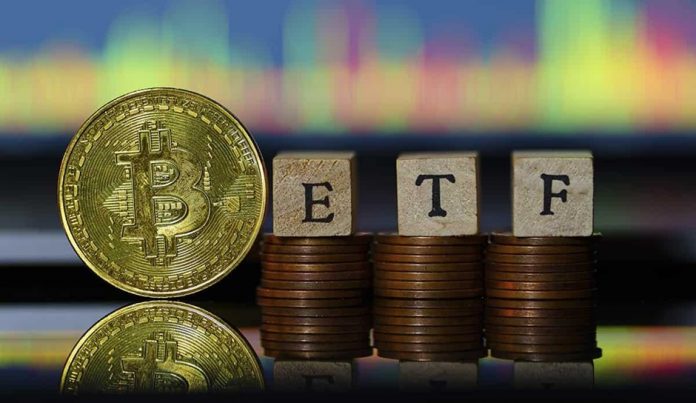
Bitcoin ETFs break 8-Day Outflow Streak

0

The recent performance of Bitcoin Exchange-Traded Funds (ETFs) has been a rollercoaster ride for investors, with the funds experiencing a significant eight-day outflow streak. However, in a remarkable turnaround, these ETFs have recorded $28 million in net inflows, indicating a renewed investor confidence in the cryptocurrency market.

The outflow streak had raised concerns among cryptocurrency enthusiasts and investors, as it suggested a potential loss of interest or a shift in investment strategies. The reasons behind this outflow could be manifold, ranging from market volatility, regulatory uncertainties, to shifts in investor sentiment towards other asset classes.

However, the latest data indicates a reversal of this trend. The $28 million net inflow is a strong signal that investors are once again looking favorably upon Bitcoin ETFs. This could be attributed to various factors, such as positive market developments, favorable regulatory news, or simply the cyclical nature of investment flows in the cryptocurrency space.

Fidelity’s FBTC led the charge with a substantial $28.6 million inflow, followed by Bitwise’s BITB, which added $21.99 million. This suggests that specific products within the Bitcoin ETF space are garnering more attention, possibly due to their unique offerings or management strategies.

It’s important to note that while Bitcoin ETFs have seen this positive influx, Grayscale’s GBTC has continued to see outflows, with $22.76 million leaving the fund. This contrast within the same asset class highlights the diverse strategies and preferences among investors in the cryptocurrency market. The overall trading volume of these ETFs also saw a decline, from $2.39 billion to $1.61 billion, which could be indicative of a broader market trend or a consolidation phase after a period of high volatility.

 CNN’s Coverage of PolyMarket

In a recent segment, CNN turned its focus to the innovative world of blockchain-based prediction markets, highlighting PolyMarket as a leading platform in this domain. This coverage is a testament to the growing interest in decentralized finance (DeFi) and the ways in which blockchain technology is revolutionizing traditional market systems.

PolyMarket operates as a decentralized prediction market platform, allowing users to place bets on the outcomes of various events, ranging from political elections to popular culture phenomena. The platform’s use of blockchain technology ensures transparency and security, providing a trustless environment where market predictions can be made without the need for intermediaries.

The CNN segment delves into how PolyMarket has become a hub for predictive analytics, offering real-time insights into public opinion and future events. With its user-friendly interface and the backing of the Ethereum ecosystem, PolyMarket has seen a surge in activity, especially in the lead-up to significant events like the 2024 Presidential Election.

As mainstream media outlets like CNN cover these emerging technologies, it becomes clear that blockchain-based platforms are not just a niche interest but are gaining recognition for their potential to offer more democratic and accessible financial systems. PolyMarket’s rise reflects a broader trend of integrating blockchain into everyday applications, signaling a new era in the intersection of technology, finance, and media outlets.

Despite the recent downturn experienced by digital asset investment products, with outflows totaling $726 million over the past week, the inflows into Bitcoin ETFs suggest that there is still a strong interest in this investment vehicle. Interestingly, short-Bitcoin products saw minor inflows, hinting that some investors are hedging against further price drops.

The cryptocurrency market remains highly dynamic, with investor sentiment and market trends shifting rapidly. The break in the outflow streak and the subsequent inflows into Bitcoin ETFs could mark the beginning of a new phase of investor optimism. As always, investors should remain vigilant and informed about market trends and perform due diligence before making investment decisions.