DD
MM
YYYY

PAGES

DD
MM
YYYY

spot_img

PAGES

Home Blog Page 2987

Navigating the Data Layer of Artificial Intelligence

0

In the realm of Artificial Intelligence (AI), data serves as the foundational layer upon which all intelligent systems are built. The data layer encompasses the vast, intricate networks of information that AI algorithms use to learn, adapt, and ultimately perform tasks that would otherwise require human intelligence. As we delve into the data layer, we navigate a complex landscape that is both fascinating and challenging.

The data layer is not just about the quantity of data but also about its quality and structure. High-quality, well-structured data can significantly enhance the performance of AI systems. It’s akin to providing a clear, well-drawn map to a traveler in an unknown city; it makes navigation easier and more efficient. Conversely, poor-quality data can lead to AI systems making inaccurate predictions or decisions, much like a traveler relying on a faulty map.

One of the critical aspects of navigating the data layer is understanding the statistics that underpin AI models. Statistics provide the framework for making sense of data, from identifying patterns to making predictions. For decision-makers and professionals looking to harness the power of AI, developing a nuanced understanding of data is crucial. Courses like “Understanding Data: Navigating Statistics, Science, and AI” offered by Michigan Online and Coursera’s specialization on the same topic equip individuals with the essential skills to critically engage with data and AI narratives.

Another layer to consider is the intersection of machine learning—a subset of AI—and data analytics. Machine learning algorithms learn from data without being explicitly programmed, and data analytics focuses on processing and interpreting vast datasets. The synergy between these two fields is powerful, enhancing analytical processes and empowering businesses to navigate complexities with agility.

Managing AI data is a complex task that involves various challenges, which can significantly impact the success of AI projects. Here are some common hurdles encountered in the process:

Data Quality and Preparation: Ensuring high-quality, clean data is available for training AI models is a significant challenge. Data often requires extensive cleaning and preprocessing to be usable, which can be time-consuming and resource intensive.

Data Integration: Combining data from diverse sources to create a unified, coherent dataset is another common obstacle. This integration is crucial for the AI to have a comprehensive understanding and make accurate predictions.

Talent Shortage: There is a notable scarcity of skilled professionals who can manage and interpret AI data effectively. The lack of expertise can hinder the development and implementation of AI initiatives.

Moreover, the rise of AI has brought about discussions on privacy and data protection. Organizations deploying AI tools must consider how their systems collect, process, and disseminate personal data. Navigating the data layer, therefore, also involves understanding the ethical implications and ensuring that AI systems respect privacy and data protection standards.

Navigating the data layer of AI is a multifaceted endeavor that requires a critical understanding of data, statistics, and the ethical considerations surrounding AI. As AI continues to evolve, the data layer will only grow in complexity and significance, making it an ever-important field for study and exploration. For those looking to make informed decisions in an increasingly data-driven world, the journey through the data layer of AI is both a challenge and an opportunity for growth and innovation.

Southeast Governors Roll Out Employment Schemes to Tackle Insecurity

0

In recent years, the Southeast region of Nigeria has grappled with severe insecurity and youth restiveness, with many young people drawn into secessionist movements as a result of economic disenfranchisement and political disillusionment.

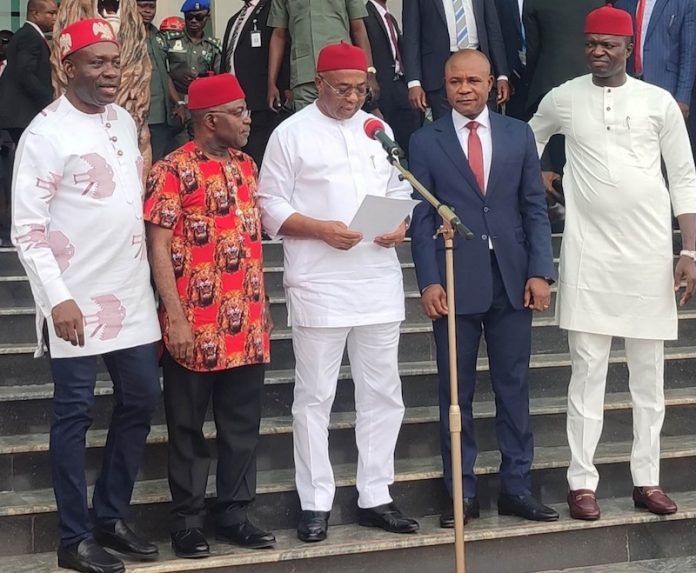
The ongoing unrest, characterized by clashes with security forces, the destruction of infrastructure, and widespread agitation for the actualization of Biafra, has had destabilizing effects on the region. In response, governors from the Southeast states of Anambra, Imo, Enugu, and Abia have launched various youth empowerment programs aimed at addressing the alarming rate of unemployment and reducing insecurity.

However, these belated efforts, while commendable, appear to only tackle the symptoms of a much deeper issue—the region’s long-standing underdevelopment and marginalization, which are widely believed to be the root causes of both the unrest and the calls for secession.

In Anambra State, Governor Prof. Chukwuma Soludo has rolled out the “1youth2skills” program, now in its second phase. The initiative seeks to equip youths with vocational and entrepreneurial skills, offering them a pathway out of unemployment and into self-reliance.

Soludo, in launching the second phase, stated that the program would “teach them how to fish and eliminate hunger.”

Some of the skills that would be learned are listed as follows; furniture, metal fabrication, aluminum fabrication, CCTV installation, confectionary, and leather works as part of the skills.

However, while the program attracted over 183,000 applicants, only 8,620 youths were selected for participation in this phase, reflecting the limited capacity of these initiatives to address the broader issue of widespread joblessness.

Anambra’s initiative is part of a broader strategy to reduce crime and unrest by keeping youths productively engaged. The state’s Commissioner for Youth Development, Mr. Patrick Aghamba, explained that the training lasts for eight months, after which participants are expected to receive start-up capital from the government to establish their own businesses.

“We want to use this to reduce the crime rate in the state. The training will commence soon. It is called the One Youth Two Skills program.

“Phase A is for courses that will take four months and phase B is for courses that will take six months. It is a vocational training and the last phase is entrepreneurship, which is for one month. We will also use one month to do capturing. So the project timeline is eight months,” he said.

Aghamba also explained that participants do not have to be indigenes of Anambra, as long as they reside in the state, underscoring the inclusive nature of the program.

“The age range of the trainees is from 18 to 45 years. It does not matter if you are from Anambra or not, so long as you reside here in Anambra.

“The idea is that even if you’re not from Anambra but you reside here, if we take you out of the street and empower you with skills, the tendency is that you will not be a problem to society, and the rate of crime in the state will reduce,” he said.

Yet, as Osita Obi, coordinator of the Anambra Keke Drivers Union, pointed out, while such initiatives may help reduce crime by empowering young people, they are unlikely to fully solve the issue. Obi notes that some societal deviants remain regardless of the availability of opportunities, reflecting a more complex and entrenched issue.

“For me, I do not think that this initiative can solve crime, but it can contribute a little quota. Every society has deviants, and such deviants, whether there is a job or not, still engage in crime. But on the whole, what the governor is doing is commendable and should be emulated by all,” he said.

Similarly, in Imo State, Governor Hope Uzodinma has introduced the “One Kindred One Business Initiative” (OKOBI), designed to encourage communities to establish businesses that the government would help register as cooperatives.

The Imo State Commissioner for Information, Mr. Declan Emelumba, explained that the program aims to ensure every community has an economically viable venture, but critics argue that such piecemeal efforts do not address the scale of underdevelopment in the region. Currently, there are more than 150 OKOBI registered in Imo State.

While this initiative seeks to stimulate economic activity in rural areas and create jobs, its broader impact is limited by its focus on individual communities rather than a comprehensive regional development plan.

Governor Peter Mbah of Enugu State has similarly sought to empower small businesses through a N1 billion matching fund aimed at boosting Micro, Small, and Medium Enterprises (MSMEs). Mbah’s administration has also disbursed grants worth N4.6 billion to farmers and IT startups, reflecting an effort to stimulate economic growth from the bottom up.

Performing the flag-off, the governor had said it was important to “nurture small-scale entrepreneurs for sustainable growth through the provision of the key enablers since they remain the lifeblood of economic development.”

The intervention included N400,000 disbursement to 187 beneficiaries, N7.5m each to 10 tech startups, an operational grant for solar equipment to 256 beneficiaries, laptop computers, and POS terminals to 269 beneficiaries, and the disbursement of N60,000 to over 16,000 beneficiaries, mostly comprising owners of nano-enterprises on a ratio of 80:20 in favor of women.

In Abia State, Governor Alex Otti has focused on digital skills training and modern farming techniques as a way of empowering young people.

Last month, 300 youths completed training in modern farming techniques at CSS Global Integrated Farms in Nasarawa State, with Abia Governor Otti promising full government support to help them start food production immediately upon their return.

Additionally, Otti has taken significant steps to promote economic growth in rural areas by disbursing N1 billion in interest-free loans to 10,000 people involved in nano, micro, and small businesses. Seventy percent of the beneficiaries are women and youth from across the state’s 184 political wards. Otti is also committed to enhancing digital skills for youths by promoting STEM education, technology, and entrepreneurship to prepare them for job opportunities in the digital economy.

While these initiatives have garnered praise, they also face skepticism about their ability to make a significant dent in the high unemployment rates that drive youth involvement in crime and secessionist movements.

Security experts are pointing out that these initiatives will do little to address the deeper grievances of marginalization that have long plagued the region. While these programs may provide temporary relief by offering job opportunities, they fall short of addressing the structural issues driving unrest and the call for secession.

The Southeast region has long felt marginalized in national politics, with underinvestment in infrastructure and industries, poor access to federal resources, and a lack of meaningful representation in key decision-making bodies. These grievances have fueled the calls for secession, with many youths believing that the Nigerian state has failed to adequately provide for their future.

Nevertheless, the governors themselves have not been immune to criticism. They have been largely blamed for the underdevelopment of the region, with accusations of corruption, mismanagement, and a lack of vision for sustainable economic growth. Thus, many argue that while the governors’ recent moves toward youth empowerment are necessary, they fall short of the bold, comprehensive plans required to reverse the region’s marginalization and foster long-term development.

There has been little indication that the governors have any real strategy to address the infrastructural decay, poor governance, and economic exclusion that have driven the insecurity in the first place.

In essence, while the recent youth empowerment initiatives represent a step in the right direction, they are viewed as reactive measures aimed at addressing the consequences of underdevelopment rather than the root causes.

Security experts believe that without a coordinated effort to tackle the broader issues of marginalization, infrastructural neglect, and political exclusion, the Southeast is unlikely to see a long-term resolution to the insecurity that continues to ravage the region.

It has been noted that the calls for secession are not just about joblessness—they are about a sense of alienation from the Nigerian state, a perception that the region’s potential has been stifled by years of neglect. Experts believe that until these fundamental issues are addressed, the empowerment programs, while laudable, are likely to be seen as little more than band-aid solutions to a much deeper wound.

Subway calls ‘Emergency’ Meeting with Franchisees amid Sales Downturns

0

Subway, the global fast-food chain known for its submarine sandwiches, has recently found itself navigating through turbulent waters as sales have taken a significant downturn. In response to this challenging situation, the company convened a meeting with its North American franchisees to strategize on a path forward. This meeting, held on August 15, 2024, was a pivotal moment for the brand as it sought to address the concerns of its franchisees and outline a plan to recapture market share and customer traffic.

The decline in sales is not an isolated issue for Subway; it reflects a broader trend within the fast-food industry, where many chains are grappling with the task of attracting cost-conscious consumers in an inflationary economic climate. The competition is fierce, and brands like McDonald’s, Taco Bell, and Wendy’s have also been experimenting with aggressive pricing strategies to lure customers.

Subway’s recent acquisition by Roark Capital, a private equity firm, for $9 billion in May 2024, has added another layer of complexity to the situation. The acquisition process, which began in August 2023, faced delays due to a Federal Trade Commission (FTC) review. Now, under new ownership, Subway is under pressure to perform and deliver results to its stakeholders.

Franchisees have expressed concerns that the company’s aggressive discounting strategies, such as steep coupon offers, have not translated into the expected sales growth. Instead, these promotions have reportedly eroded profits, with some stores struggling to break even. The company’s data indicates significant drops in same-store sales, with some areas experiencing declines as steep as 10% compared to the previous year.

The fast-food industry is currently experiencing fierce competition, with many chains introducing aggressive pricing strategies to attract cost-conscious consumers affected by inflation. Subway’s situation is reflective of the broader struggles within the industry, as they attempt to navigate these challenges and find a path to recovery.

One of the key strategies highlighted was the evaluation of promotional offers. Subway has been experimenting with various coupon deals to attract customers, but the effectiveness of these promotions has been mixed. Some franchisees reported that despite the discounts, their sales did not meet expectations, and profitability was compromised.

Subway also addressed the need for strategic pricing in the competitive fast-food market. With competitors like McDonald’s, Taco Bell, and Wendy’s employing aggressive pricing strategies, Subway is looking to find a balance that will not only draw customers but also maintain profitability.

The meeting served as a platform for Subway to reassure its franchisees and outline a plan of action. While the specifics of the strategies were not publicly disclosed, the focus was clear: Subway aims to enhance its market presence and ensure that its franchisees can thrive even in challenging economic times.

The success of these strategies will depend on their implementation and the response from the market. Subway’s efforts to adapt and innovate in the fast-food industry will be closely watched by stakeholders and customers alike. The brand’s ability to navigate through these turbulent times will be a testament to its resilience and commitment to its franchisees and patrons.

The outcome of the meeting and the effectiveness of the new strategies remain to be seen. However, it is clear that Subway is taking steps to address the issues at hand and work collaboratively with its franchisees to improve the situation. The focus now shifts to the implementation of these strategies and their impact on Subway’s market position in the coming months.

SpaceX Starlink Could Win Nigeria’s Mobile Broadband Internet

0

Elon Musk has a clear plan: become the largest broader service provider in sub-Saharan Africa in this decade. In Nigeria, specifically, I do not expect most of the terrestrial telcos to invest significant amounts since they are logging losses every quarter: “Telecommunication companies expect a decline in investments in their network capabilities due to the negative return on capital recorded”.

But as that is happening. “Elon Musk’s Starlink is advancing a plan to enhance internet connectivity across Nigeria by establishing ground stations, signaling a major shift in the country’s telecommunications market.”

Starlink’s ground stations, also known as gateways, are vital for transmitting data between the company’s Low Earth Orbit (LEO) satellites and terrestrial internet infrastructures. These stations act as intermediaries, relaying data from the satellites to internet backbones on the ground and vice versa.

Through the establishment of local ground stations in Nigeria, Starlink aims to streamline data transfer, bypassing the need to route traffic through international data centers, which has traditionally been a bottleneck for Nigerian internet users. This would not only reduce latency but also enhance the overall performance and reliability of internet services in the country.

The CDMA companies destroyed the old NITEL cobwebs of wired telephony, the GSM took down the CDMA providers, and right now, satellite, and specifically SpaceX Starlink, is a threat vector to these GSM operators.

The GSM operators have no grand strategy for rural broadband service, Starlink via its distribution model has an opportunity therein. As Starlink builds these ground stations, expect a massive redesign in the industry.

To Starlink: the Ovim Community League – Diaspora Worldwide will fund 100% of a ground station if you decide to locate one in Ovim, Abia State. It will not cost you a single kobo or cent. We will also pay for all locally associated costs and will offer you FREE land.  Recently, we added a 28-room classroom in my alma mater – Secondary Technical School Ovim and I am supposed to be the alternate Physics supporting teacher, but poor networks from the telcos have not allowed me to teach.

Nigerian PhD holders will save for over 85 years to afford lawmakers’ N160m SUV – Obi

0

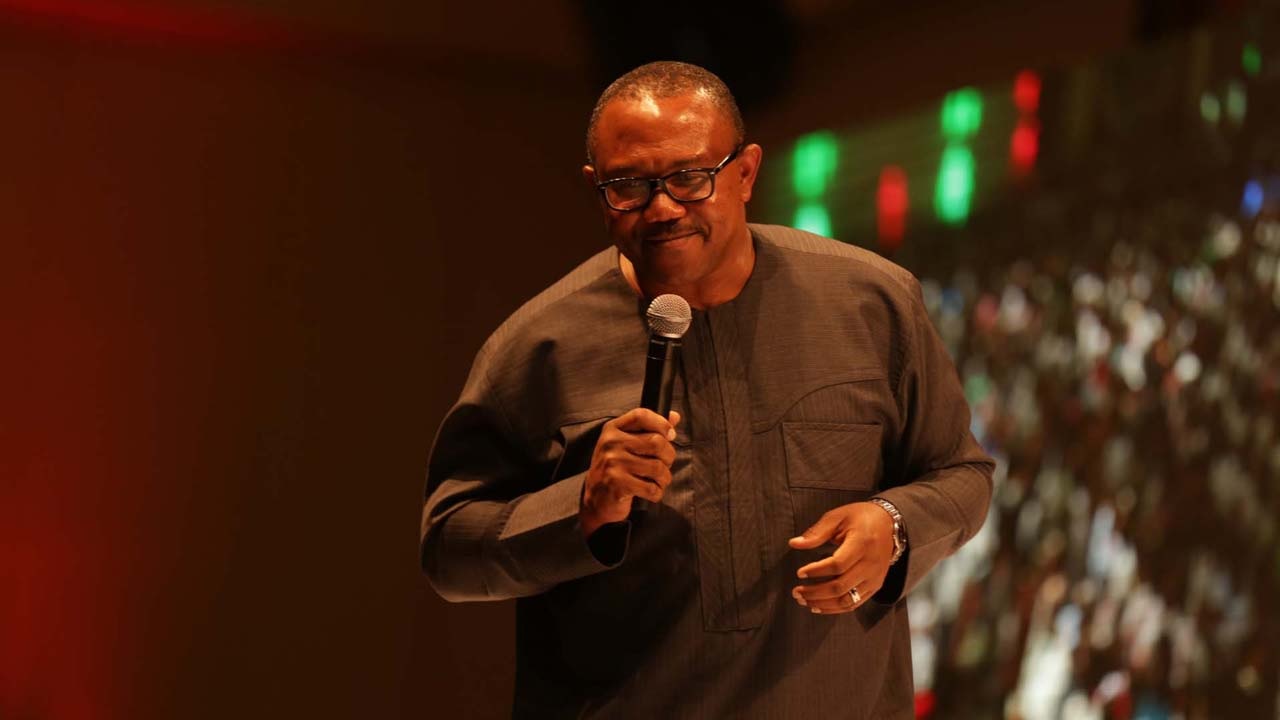
Peter Obi, the Labour Party’s presidential candidate in the 2023 general election, has expressed serious concerns over the pay disparity between Nigerian lawmakers and university lecturers, especially PhD holders.

He said given the current pay gap, Nigerian PhD holders will need to save for over 85 years to afford lawmakers’ N160m SUV. Obi’s remark is in response to the recent comments made by Chris Maiyaki, Executive Secretary of the National Universities Commission (NUC), regarding the state of Nigeria’s education system.

On August 13, during the 2024 Registry Lecture at Babcock University, Ogun State, Maiyaki acknowledged that Nigeria’s university system has experienced a significant decline over the last 30 years. He said that increasing the number of PhD holders could help address the decline in educational standards.

According to him, Nigerian graduates were once celebrated both locally and internationally, but today the system is beleaguered by several issues, including poor governance, academic corruption, and severe underfunding. He noted that the current state of tertiary education is fraught with social vices, economic pressure, manpower shortages, and the persistent disruption of academic calendars due to strikes.

“Some of these are also attributed to poor governance systems and also sometimes the broken family system. We have fallen short in procuring state-of-the-art museum modern current journals, books, and laboratory equipment in some cases,” Maiyaki explained.

He further highlighted that one of the solutions to these challenges would be the production of more PhD holders, which he believes would help stabilize the system.

“We need more PhDs; we need to stabilize. The system has suffered a lot of instability due to a combination of factors. We need sustained constant funding and so many things to be done,” he added.

However, Obi countered that while Maiyaki’s suggestion has merit, it overlooks fundamental obstacles. On August 16, Obi took to X (formerly Twitter) to voice his disagreement with Maiyki’s assertion, noting that the prolonged time it takes to earn a PhD in Nigeria and the inadequate compensation for academics makes it difficult to achieve Maiyaki’s proposed solution.

The former Anambra State governor explained that earning a PhD in Nigeria often takes a minimum of ten years following secondary education due to a combination of inefficiencies, lack of resources, and delays within the system.

“According to the Executive Secretary, the situation requires the production of more PhD holders to address these issues. However, the Executive Secretary’s solution overlooks several obstacles, such as the unnecessarily prolonged time it takes to obtain a PhD in Nigeria and the frustrating disparity between wages and the level of academic attainment in the country,” Obi stated.

He further highlighted that the salary disparity between PhD holders and lawmakers is especially troubling.

“If fortunate, one might be employed as a Lecturer Grade 2 with a monthly salary of around 150,000, often paid irregularly, totaling N1,800,000 annually. In stark contrast, our legislators, whose required educational qualification is merely a secondary school certificate, receive a monthly salary of N21 million, which is more than 10 years’ salary of a PhD holder,” he said.

This striking difference in pay, according to Obi, weakens the motivation to pursue higher education and contributes to a diminishing respect for academic qualifications in Nigeria.

Obi’s comparison between the financial realities of PhD holders and legislators underscores a broader concern about the cost of governance in Nigeria, which many citizens have decried as excessively high. For years, Nigerians have called for a drastic reduction in the financial resources allocated to public officials, particularly members of the National Assembly, whose salaries and allowances are seen as disproportionate to the country’s economic challenges.

The 2024 federal budget allocation for the National Assembly, for example, highlights this imbalance.

According to the Budget Office of the Federation, the total 2024 budget for the National Assembly stands at N514.85 billion. Of this, N49.14 billion is allocated to 109 Senators, each earning a monthly salary of N37.57 million. Meanwhile, the 360 members of the House of Representatives are allocated N78.62 billion, with each receiving N18.20 million per month.

Obi pointed out that these figures are alarming, especially when compared to the annual earnings of PhD holders who contribute significantly to the country’s intellectual and academic growth.

“The wage gap between our legislators and PhD holders, combined with the prolonged time it takes to complete advanced degrees in Nigeria, disincentivizes academic achievement and undermines the value of education in the country,” Obi stated.

He argued that the government must address the wider issue of economic inequality if it hopes to reform the education system.

Obi is known for revamping Anambra’s education sector. Thus, his critique of the NUC’s proposal calls attention to the systemic issues at the heart of Nigeria’s educational decline. While producing more PhD holders might be part of the solution, Obi indicates that the root causes of the country’s educational challenges need to be addressed. He advocates for a comprehensive approach that includes fair compensation for academics, and the provision of adequate resources to universities, financed through a reduction in the cost of governance, particularly the exorbitant pay of lawmakers.

Obi’s comments echo the sentiments of many Nigerians who have long called for reforms in the political and economic system. For years, critics have argued that Nigeria’s governance model is too expensive, with much of the nation’s budget being funneled into maintaining an oversized and overcompensated political class.

The sharp contrast between the financial rewards for public office holders and the meager earnings of highly educated professionals like PhD holders is largely believed to be a reflection of a fundamental misalignment in Nigeria’s priorities.