DD
MM
YYYY

PAGES

DD
MM
YYYY

spot_img

PAGES

Home Blog Page 2990

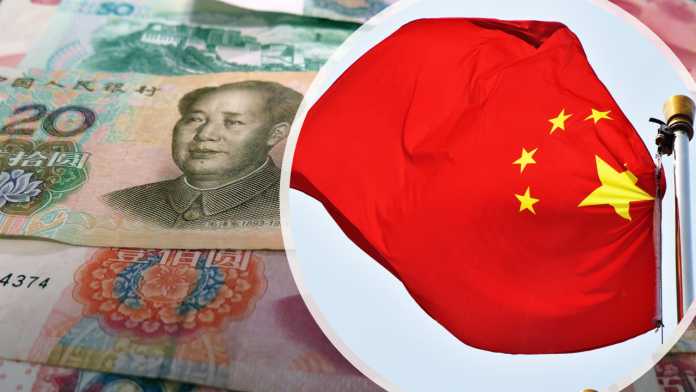
Chinese Bank Loans Fell first time in almost 20 years, as Nigeria’s Inflation Rate Drops

0

The Chinese banking sector has experienced a notable shift, as recent data indicates a decline in new bank loans for the first time in nearly two decades. This development is significant as it reflects broader economic trends and policy measures within the country.

In October 2023, Chinese banks extended 738.4 billion yuan in new yuan loans, a decrease from 2.31 trillion yuan in September, yet surpassing analysts’ expectations. The dip in loan issuance is attributed to a combination of seasonal effects and an unsteady economic recovery, suggesting a cautious approach from both lenders and borrowers amidst economic uncertainties.

The contraction in household loans, including mortgages, which fell by 34.6 billion yuan in October after a rise in September, underscores the cooling down of the property market, a sector that has been a cornerstone of China’s economic growth. Corporate loans also saw a reduction, indicating a possible reassessment of investment and expansion plans by businesses.

Despite the fall in new loans, the overall lending trend remains stable, and the People’s Bank of China (PBOC) has pledged to continue its policy support to spur growth. This includes measures such as cutting banks’ reserve requirement ratios to free up funds for lending and announcing a 1 trillion-yuan sovereign bond issuance.

Here are some of the key implications this decline could have:

Economic Slowdown: A reduction in lending can lead to a slowdown in economic growth, as businesses may face challenges in securing financing for expansion and operations.

Impact on Global Markets: China’s role as a major global economic player means that its lending patterns can influence global financial markets. A decline in Chinese lending could lead to tighter global liquidity conditions.

Debt Sustainability: For countries heavily reliant on Chinese loans, a decrease in lending could exacerbate debt sustainability issues, potentially leading to economic instability or debt crises.

Domestic Challenges: Within China, a decrease in lending could signal efforts to address domestic financial risks, such as high levels of corporate debt or overheated property markets.

Analysts anticipate further policy easing, expecting the central bank to inject more cash to alleviate liquidity strains, especially in light of the upcoming surge in debt offerings. The PBOC’s actions reflect a delicate balancing act of supporting economic growth while managing financial risks, particularly in the bond market where concerns have been raised.

Countries are re-evaluating their strategic economic plans, especially those with significant trade ties to China, to adapt to the changing financial landscape. Central banks and financial regulators in various countries are considering measures to ensure financial stability, such as adjusting interest rates or reserve requirements, to counteract any negative spillover effects. There is an increased emphasis on international cooperation and dialogue to address the potential global economic challenges posed by the decline in Chinese bank loans.

The decline in bank loans is a reflection of China’s broader economic challenges, including a deep property crisis, local debt risks, and policy divergences with Western economies. These factors, coupled with persistent deflationary pressures, complicate the recovery process and necessitate a coordinated fiscal and monetary policy response.

As China navigates these complex economic waters, the world watches closely, understanding that the ripples from these developments can have far-reaching implications on global financial markets and economic stability. The situation calls for a nuanced analysis of China’s financial policies and their impact on both domestic and international economic dynamics.

Nigeria’s Inflation Rate Drops to 33.40% in July

In a significant economic development, Nigeria’s inflation rate has seen a decrease, dropping to 33.40% in July 2024. This marks a moment of respite after a continuous upward trend, with the rate easing from the previous month’s figure of 34.19%. The National Bureau of Statistics (NBS) confirmed this downturn, which is the first in over a year, indicating a potential shift in the economic pressures that have been intensifying in the country.

The reduction in the inflation rate comes as a beacon of hope for the Nigerian economy, which has been grappling with high inflationary pressures. These pressures have been fueled by various factors, including policy changes such as the removal of fuel subsidies, currency devaluation, and increased electricity tariffs. Such measures, while aimed at stimulating economic growth and stabilizing public finances, have had the side effect of driving up inflation, thereby straining the incomes of Nigerian citizens.

Analysts had previously speculated that the inflation rate might have reached its peak in June, suggesting that the effects of currency devaluation could start to wane, leading to a slowdown in inflation. The latest figures seem to affirm this perspective, offering a glimmer of relief amid the cost-of-living challenges faced by the populace. The decrease in the inflation rate is particularly noteworthy as it follows a series of protests by Nigerian citizens over the rising cost of living and governance issues.

The inflation rate decided to take a little dip, cooling down to 33.40%. That’s right, folks, after a relentless game of Marco Polo with rising numbers, it seems like inflation finally heard someone shout “Fish out of water!”

Now, don’t get too excited—33.40% is still quite the party animal, but it’s a welcome change from the 34.19% backstroke it was doing in June. It’s like that one guest who’s been hogging the pool floaties finally letting someone else have a turn. And let’s be honest, we could all use a break from the high dive of prices.

Analysts suggest that the devaluation effects are starting to wear off like a bad sunburn. And while the citizens of Nigeria might still be feeling the heat of cost-of-living pressures, this dip in the rate is like finding out there’s an open bar at the poolside—definitely a reason to celebrate, albeit cautiously.

The dip in the inflation rate could also be indicative of the beginning of a stabilization phase for the Nigerian economy, as the government’s reforms may start to bear fruit. However, it is crucial to maintain cautious optimism, as the road to economic recovery and stability is often long and complex. The government and policymakers will need to continue monitoring the situation closely, adjusting measures as necessary to ensure sustainable economic health.

This development also holds implications for investors and businesses, both domestic and international. A stabilizing inflation rate can foster a more predictable economic environment, which is conducive to investment and growth. It can also provide a measure of confidence to consumers, potentially leading to increased spending and economic activity.

As Nigeria navigates through these economic waters, the focus will be on whether this decrease in inflation the start of a consistent trend or a temporary respite is. The coming months will be critical in determining the effectiveness of the government’s economic strategies and their impact on the everyday lives of Nigerians.


Starbucks’ Strategic Move in Leadership Change

0

In a surprising turn of events, Starbucks Corporation has announced a significant shift in its leadership structure, marking the end of Laxman Narasimhan’s tenure as CEO. This decision comes amidst a period of financial turbulence for the coffeehouse giant, with reported declines in revenue and challenges in its largest markets, the U.S. and China.

Laxman Narasimhan, who took the helm in March 2023, brought with him a wealth of experience from his previous role as CEO of Reckitt, where he was noted for his focus on e-commerce expansion and workforce support during the pandemic. His approach to leadership, which included a notable practice of not working past 6 pm, was seen as a progressive stance on work-life balance. However, this philosophy may have clashed with the demanding nature of steering a global brand through a period of economic hardship.

Starbucks’ performance under Narasimhan’s guidance has been closely scrutinized, with the company facing two consecutive quarters of declining same-store sales. The pressure mounted further with the involvement of activist investors like Elliott Management and Starboard Value, who have recently acquired stakes in the company and have been vocal about their perspectives on the company’s direction.

In response to these challenges, Starbucks has appointed Brian Niccol, the chief executive at Chipotle, as the new CEO. Niccol is credited with a successful tenure at Chipotle and is expected to bring a transformative vision to Starbucks. His appointment has been met with a positive reaction from the market, with Starbucks’ stock experiencing a significant surge following the announcement.

One of Niccol’s significant accomplishments was doubling the company’s revenue from $4.8 billion in 2018 to $9.9 billion in 2023. This remarkable growth was a result of several strategic initiatives that modernized Chipotle’s operations and expanded its reach. Niccol introduced digital advancements such as online ordering, delivery services, and a digital system that allowed cooks to read orders without relying on physical tickets. These changes not only improved operational efficiency but also enhanced customer experience by reducing wait times.

Under Niccol’s leadership, Chipotle saw an impressive increase in its number of locations, growing from 2,441 to nearly 3,000. The company’s stock performance reflected this success, soaring 443% compared to the S&P 500’s 73% rise over the same period. Moreover, Chipotle’s net income more than doubled between 2018 and 2020, reaching $355.8 million.

Niccol’s approach also focused on menu innovation, introducing new items that catered to evolving consumer tastes while maintaining the brand’s commitment to quality ingredients. Despite facing challenges such as labor market shifts and the need for price adjustments due to increased costs, Niccol’s tenure at Chipotle is marked by a balance of maintaining the brand’s core values and embracing change to remain competitive in the fast-casual dining space.

The corporate landscape is often unpredictable, and leadership changes are a testament to a company’s adaptability in the face of shifting market dynamics. As Starbucks navigates through this transition, the industry will be watching closely to see how Niccol’s leadership will influence the company’s strategies and whether it will steer Starbucks back to a path of growth and profitability.

For Starbucks, this change signifies more than just a new CEO; it represents a strategic pivot in addressing the challenges that lie ahead. With Brian Niccol at the helm, Starbucks is poised to embark on a new chapter, one that stakeholders hope will be marked by revitalized energy, innovative strategies, and a return to the robust growth that has characterized the brand’s storied history.

Former Google CEO Eric Schmidt Discusses Massive Nvidia-Based AI Investments, Predicts Surge in Stock Market Price

0

American businessman and former software engineer who served as the CEO of Google from 2001 to 2011 Eric Schmidt, has recently highlighted the growing trend among tech giants making substantial investments in Nvidia-based AI data centers.

During a talk at Stanford, Schmidt revealed that several tech companies are planning to invest heavily in Artificial Intelligence infrastructure, with costs potentially reaching up to $300 billion. He noted that a significant portion of this investment is flowing into Nvidia, a giant AI chipmaker that currently dominates the market for AI data center chips, which is about to see its stock market price surge massively.

He said,

“I am talking to the big companies, and the big companies are telling me they need $20 billion, $50 billion, $100 billion very very hard. If $300 billion is all going to Nvidia, you know what to do in the stock market. That’s not a stock recommendation”.

He noted that a significant portion of this investment is flowing into Nvidia, a company that dominates the market for Al data center chips. Nvidia has already experienced a revenue surge of more than 200% for three consecutive quarters, driven by soaring demand from cloud providers and leading Al model developers.

However, Wall Street is beginning to question whether the chipmaker’s top clients might be overspending on Al infrastructure. Nvidia is expected to provide further details when it reports its quarterly results on August 28. While Schmidt acknowledged that Nvidia won’t be the only beneficiary in the Al space, he pointed out that there aren’t many other clear alternatives. He believes that large companies with the resources to invest heavily in Nvidia chips and data centers will gain a technological edge over smaller competitors who can’t match their spending power.

“At the moment, the gap between the frontier models there are only three and everyone else appears to be getting larger. Six months ago, I was convinced that the gap was getting smaller, so I invested lots of money in the little companies. Now I’m not so sure.”

He added that it will be challenging for competitors to catch up with Nvidia, as many of the critical open-source tools used by Al developers are based on Nvidia’s CUDA programming language.

Lately, Nvidia is experiencing an unprecedented surge in demand, driven by significant investments from cloud companies and leading Al model developers. As artificial intelligence continues to revolutionize various industries, tech giants are increasingly relying on Nvidia’s advanced Al chips to power their cutting-edge technologies and infrastructure.

Cloud service providers, essential to the deployment and scaling of Al solutions, are heavily investing in Nvidia’s GPUs to enhance their capabilities and meet the growing needs of their clients. These investments are critical for supporting the development of Al models, which require immense computational power to process  and analyze vast amounts of data.

Leading Al developers, who are at the forefront of creating sophisticated Al models, are alsocontributing to the demand for Nvidia’s technology. These models, which range from natural language processing to computer vision and beyond, depending on the efficiency and performance of Nvidia’s GPs to achieve groundbreaking results.

As Al continues to advance, the reliance on Nvidia’s hardware has only intensified, making the company a central player in the Al ecosystem, coupled with the surge in demand which has translated into remarkable financial performance for Nvidia.

Latin American B2B Paytech Conduit Raises $6M to Expand Services to Africa

0
A customer makes a purchase. 

Conduit, a Latin American B2B payment platform has raised $6 million in funding led by Helios Digital Ventures to expand into Africa.

In August 2023, Conduit launched its B2B cross-border payments platform for businesses in Latin America, recognizing the significant challenges businesses in countries like Colombia, Brazil, and Mexico face when trying to connect to the global financial system. Many of these businesses struggle with access to dollars, reliable SWIFT connections, and other essential payment rails.

The situation is similar in Africa, where businesses in countries like Kenya and Nigeria also encounter these difficulties. Following the launch of its platform, Conduit enables businesses to perform cross-border transactions in US dollars via ACH or SWIFT, regardless of whether they have a U.S. entity.

For years, most businesses have relied on traditional banks, but high costs and slow processes are pushing some to adopt fintech solutions that promise lower costs and fast settlements. In a bid to solve this challenge Conduit, pivoted from crypto to traditional banking to bridge traditional finance with decentralized finance (DeFi). The fintech backed then by $17 million in seed funding from investors developed analytics tools for institutional investors in DeFi.

The fintech expansion into Africa follows the platform’s strategic shift away from crypto-backed products towards traditional banking services, a change that has garnered significant traction in markets that struggle with accessible payment infrastructures.

“We identified this as a much more pressing and tangible pain point than the bubble of decentralized finance. These are real-world issues faced by traditional businesses that need a better, faster, and more transparent way to transact with their suppliers and partners across borders,” Co-founder and CEO Krill Gertman remarked.

Despite the promise of DeFi and stablecoins like USDC or USDT, the practical challenges remain significant. Most businesses still need to convert stablecoins into local currencies to manage rent, salaries, and other operational costs. While Conduit still helps bridge this gap by facilitating these conversions, allowing businesses to off-ramp stablecoins into local currencies where needed, Gertman noted that Conduit is now much closer to a traditional fintech.

He further states that since the pivot, Conduit’s annualized transaction volume has surged from a few hundred million dollars to over $5 billion. Of this, 20% comes from businesses in Kenya and Nigeria, where the startup began its expansion last December. The platform is also experiencing a 25% month-on-month revenue increase across both regions, partly driven by transaction fees.

“We see even greater potential in Africa, with impressive early growth and volumes we think might surpass Latin America by early next year. However, Africa’s local currencies are much more fragmented, and the connections between these currencies are often more complex. It’s interesting because even though these challenges are prominent, it also presents potentially even bigger opportunities”, the CEO stated.

Conduit’s expansion in Africa is being spearheaded by Eric Wainaina, the former director of The Kenyan Wall Street. He will manage the fintech’s operations in the region, with plans to further expand into other African countries such as Ghana and South Africa. In these markets, Conduit will compete with established players like Aza Finance, Verto, and Waza, offering businesses a more streamlined and cost-effective way to manage their cross-border transactions.

Nigeria NGX Should Allow Startups To Raise Funds in USD, Now that Government Can Offer Bonds in USD

0

Something BIG can happen on Monday in Nigeria. Yes, I will understand the protocol which the Nigerian stock exchange (NGX) has put in place to enable the federal government of Nigeria to raise $500 million via US dollar denominated bond in Nigeria.

The Federal Government of Nigeria is preparing to issue its first-ever dollar-denominated domestic bond on Monday, aiming to raise $500 million from a mix of local and international investors. This groundbreaking move comes as the government seeks to diversify its funding sources and attract foreign investment into the country.

The announcement, made by Dr. Gbadebo Adenrele, Managing Director of Investment Banking at United Capital Group, during a hybrid roadshow organized by the Debt Management Office (DMO), signals a pivotal moment in Nigeria’s financial markets. Adenrele confirmed that the auction will open next week on Monday, with more details to be communicated to investors.

I am wishing that it works and works really well. Because if that is the outcome, NGX should then remove the veil, and allow private companies, especially tech startups, to also go to NGX and raise money in US dollars! When I say NGX, the Securities & Exchange Commission 9SEC) is included.

The USD bond in Nigeria could open a new element in how private companies are being funded in Nigeria. NGX/SEC – if you can do it for the federal government, you should also do it for private companies. In the past, you had argued that it was not possible, without some changes,  but it seems we have figured out what to do.

Let us go all the way, and IPO in Lagos in USD (lol).